2027 Low-Cost Online Addiction Counseling Support Associate Degree Programs with Financial Aid: FAFSA, Grants, and Scholarships

Co-Founder and Chief Data Scientist
Choosing an online addiction counseling support associate degree is a cost decision as much as an academic one. SAMHSA's latest national survey, released in 2024, estimated that 48.5 million people ages 12 and older had a substance use disorder, keeping demand strong for trained support staff in behavioral health settings.
This guide is for students comparing affordable online associate programs, especially those depending on FAFSA, grants, and scholarships. You'll learn how aid works, what costs to verify, and how to identify the lowest realistic out-of-pocket option.
Key Things You Should Know
- FAFSA can unlock Pell Grants, federal loans, work-study, state aid, and some institutional aid, but only if the online associate program is offered by a Title IV-eligible accredited institution.
- The maximum federal Pell Grant is $7,395 for the current award cycle, which can cover a large share of published tuition at many public two-year colleges, where College Board reported average in-district tuition and fees of $4,050 for 2024-25.
- The best financial choice is not always the program with the lowest advertised tuition; compare net price, fees, transfer credit, scholarship renewal rules, and whether aid changes if you enroll part time.
Which Low-Cost Online Addiction Counseling Support Associate Degree Programs Offer Financial Aid?
Low-cost online addiction counseling support associate degree programs that offer financial aid are usually found at public community colleges, technical colleges, state colleges, and some nonprofit private colleges that participate in federal student aid. The degree title may vary: common options include an Associate of Applied Science in Substance Abuse Counseling, Associate of Science in Human Services with an addiction studies concentration, Associate of Arts in Behavioral Health, or a transfer-oriented counseling pathway.
The key distinction is whether the school and the specific program are eligible for Title IV federal student aid. A fully online program can be FAFSA-eligible, but online delivery alone does not determine eligibility. Students comparing a cheapest online counseling degree should therefore confirm both cost and aid participation before applying.
The table below summarizes the main program types students are likely to encounter and how each usually affects financial aid, transfer value, and career preparation.
| Program type | Typical award | Financial aid potential | Best fit | Cost issue to verify |
| Public community college addiction counseling program | AA, AS, or AAS | Often FAFSA-eligible if the college participates in Title IV aid | Students seeking the lowest published tuition and local transfer options | Out-of-district or out-of-state online tuition rates |
| Technical college human services or substance use counseling program | AAS or career diploma stackable into an associate degree | Often FAFSA-eligible for degree programs, but shorter certificates vary | Students seeking direct workforce preparation | Whether all required courses count toward aid-eligible credits |
| State college online behavioral health pathway | AA or AS | Often FAFSA-eligible | Students planning to transfer to a bachelor's degree later | Higher lower-division tuition than nearby community colleges |
| Private nonprofit online associate program | AA, AS, or AAS | May be FAFSA-eligible if accredited and Title IV-approved | Students who need flexible start dates or broader online support | Whether institutional grants offset higher tuition |
| Nondegree online addiction counseling certificate provider | Certificate only | Often not FAFSA-eligible unless embedded in an eligible program | Students needing continuing education rather than a degree | Full cost may be out of pocket |
An associate degree in this field typically requires about 60 credits and may include courses in addiction theory, counseling ethics, case management, crisis intervention, group counseling, pharmacology of substance use, and human services documentation. Some programs include a practicum or field experience, which can be valuable for employment but may require local placement approval.
Admissions requirements are usually accessible: a high school diploma or GED, placement testing or transcripts, an application, and sometimes a background check for fieldwork. Students with prior college credit should ask whether transfer credit applies to both graduation requirements and financial aid pace-of-completion rules.
How Does FAFSA Work for Online Addiction Counseling Support Associate Degree Programs?
FAFSA is the Free Application for Federal Student Aid, and it is the gateway to most federal grants, federal student loans, federal work-study, and many state or college-based aid programs. For an online addiction counseling support associate degree, FAFSA works the same way it does for campus programs as long as the school is eligible and the student meets basic federal aid requirements.
After a student submits the FAFSA, the school receives financial information and prepares an aid offer. That offer may include grants that do not need to be repaid, loans that must be repaid, and work-study that depends on job availability. FAFSA eligibility does not mean the program will be free, and it does not mean every student will receive the same package.
Students should follow a deliberate process because small mistakes can delay aid or make one program look cheaper than it really is.
- Confirm the school participates in federal student aid by checking the institution's financial aid page and asking for the school's federal school code.
- Verify that the specific online associate degree, not just the college, is Title IV-eligible and leads to an approved credential.
- Submit the FAFSA using accurate income, household, and dependency information.
- List every school under serious consideration so each can prepare an aid offer.
- Review the Student Aid Index, Pell eligibility, loan amounts, and any missing documents requested by the college.
- Compare net price after grants and scholarships before deciding whether to accept loans.
The redesigned FAFSA process introduced for the 2024-25 cycle changed how aid eligibility is calculated and how tax data is shared. For students, the practical takeaway is to start early, respond quickly to verification requests, and avoid assuming last year's aid estimate will be identical this year.
Enrollment intensity matters. Many associate degree students attend part time, but Pell Grant amounts, state grants, and institutional awards may decrease when a student takes fewer credits. Students should ask the financial aid office how aid changes at 12, 9, 6, and fewer than 6 credits per term.
What Grants Can Help Pay for an Online Addiction Counseling Support Associate Degree?
Grants are usually the most valuable form of financial aid because they generally do not need to be repaid if the student meets enrollment and academic requirements. For low-cost online addiction counseling support associate degree students, the strongest grant options often come from federal, state, and college sources.
The maximum federal Pell Grant is $7,395 for the current award cycle. Because College Board reported average public two-year in-district tuition and fees of $4,050 for 2024-25, a full Pell Grant can make many community college programs significantly more affordable, although books, technology fees, transportation for fieldwork, and living costs may remain.
The table below compares the grant sources students should evaluate when estimating out-of-pocket cost.
| Grant source | Who may qualify | How it can help | Common limitation |
| Federal Pell Grant | Undergraduate students with financial need who have not already earned a bachelor's degree | Can reduce tuition, fees, books, and other education-related costs | Award changes with eligibility and enrollment intensity |
| Federal Supplemental Educational Opportunity Grant | Students with exceptional financial need at participating colleges | Adds grant aid on top of Pell for eligible students | Campus funds are limited and not all schools participate |
| State need-based grant | Residents meeting state income, enrollment, and school requirements | Can make an in-state online public program much cheaper | Deadlines and residency rules can be strict |
| Workforce or behavioral health training grant | Students entering high-need human services or behavioral health roles | May support tuition, fees, books, or required training expenses | May require employment goals, local residency, or service commitments |
| Institutional grant | Students selected by the college based on need, merit, program, or priority population | Can close gaps left by federal and state aid | Renewal may require a minimum GPA or credit load |
Students should not assume grant availability is automatic. Deadlines, residency rules, satisfactory academic progress, and required credit loads can determine whether aid continues after the first term.
A smart grant search includes more than the FAFSA. Students can contact state higher education agencies, county workforce boards, community foundations, tribal education offices, and college financial aid offices to ask whether behavioral health, addiction counseling, peer support, or human services training funds are available.
Scholarships for online addiction counseling support associate degree students may come from colleges, community foundations, recovery advocacy organizations, behavioral health employers, professional associations, and local nonprofits. Unlike grants, scholarships may place more emphasis on career goals, essays, service, lived experience, academic performance, or commitment to working in underserved communities.
Scholarship searches are strongest when students look for both broad counseling-related awards and local awards that receive fewer applicants. Students planning to continue beyond the associate level can also review pathways into online masters programs for counseling, since some institutions offer stackable scholarships or transfer incentives for students who stay in the same academic system.
The table below shows scholarship categories that commonly match this field and the student profile each category tends to serve.
| Scholarship category | Likely sponsor | Student profile | What to check before applying |
| Behavioral health workforce scholarship | College, state agency, employer, or nonprofit | Students preparing for addiction, mental health, or human services support roles | Whether the award requires work in a specific region or setting |
| Community college foundation scholarship | College foundation or local donor | Students enrolled in an eligible associate degree at that college | Minimum credit load, GPA, essay, and renewal rules |
| Recovery and community service scholarship | Local nonprofit or advocacy group | Students with volunteer, peer support, or community service experience | Documentation requirements and privacy considerations |
| First-generation or adult learner scholarship | Community foundation or college | Working adults, parents, career changers, and first-generation students | Whether online and part-time students qualify |
| Transfer scholarship | Four-year college or university partner | Associate degree students planning a bachelor's degree | Required associate degree type, GPA, and articulation agreement |
The most common scholarship mistake is applying once and stopping. Many awards are annual, and associate degree students can often apply again after completing credits, improving grades, or declaring a program concentration.
Students should also compare scholarship restrictions. A $1,000 award that can pay for books and technology may be more useful than a larger award that applies only to tuition if Pell or state grants already cover tuition.
Financial aid can reduce the cost of an online addiction counseling support associate degree substantially, especially at public two-year colleges. The amount depends on tuition, residency status, fees, Pell eligibility, state grants, scholarships, transfer credits, and whether the student borrows.
To estimate the real cost, students should separate published cost from net cost. Published cost is the school's advertised tuition and required fees. Net cost is what remains after grants and scholarships are applied. Out-of-pocket cost is what the student must pay through savings, payment plans, employer benefits, or loans.
The table below illustrates how the same aid amount can have different effects depending on the program's published price. These are decision examples, not guaranteed awards.
| Scenario | Published tuition and required fees | Grant and scholarship aid | Estimated remaining direct cost | Decision takeaway |
| Low-cost public in-district program | $4,050 per academic year | Up to $7,395 Pell Grant if fully eligible | $0 for direct tuition and fees, with possible remaining funds for other costs | Often the strongest value if the program fits career and transfer goals |
| Moderate-cost online public program | $7,500 per academic year | $5,000 in combined grant aid | $2,500 before books and supplies | May be affordable if fees are low and completion time is short |
| Higher-cost private nonprofit program | $14,000 per academic year | $8,000 in combined aid | $6,000 before books and supplies | Can still cost more even with a larger aid package |
| Non-FAFSA certificate provider | $5,000 program cost | $0 federal student aid | $5,000 out of pocket unless another sponsor pays | Low sticker price may not mean lowest cash cost |
Books, online course fees, background checks, drug screening, practicum insurance, proctoring, and graduation fees can change the final bill. These costs may not appear in headline tuition, so students should request a full cost-of-attendance estimate before enrolling.
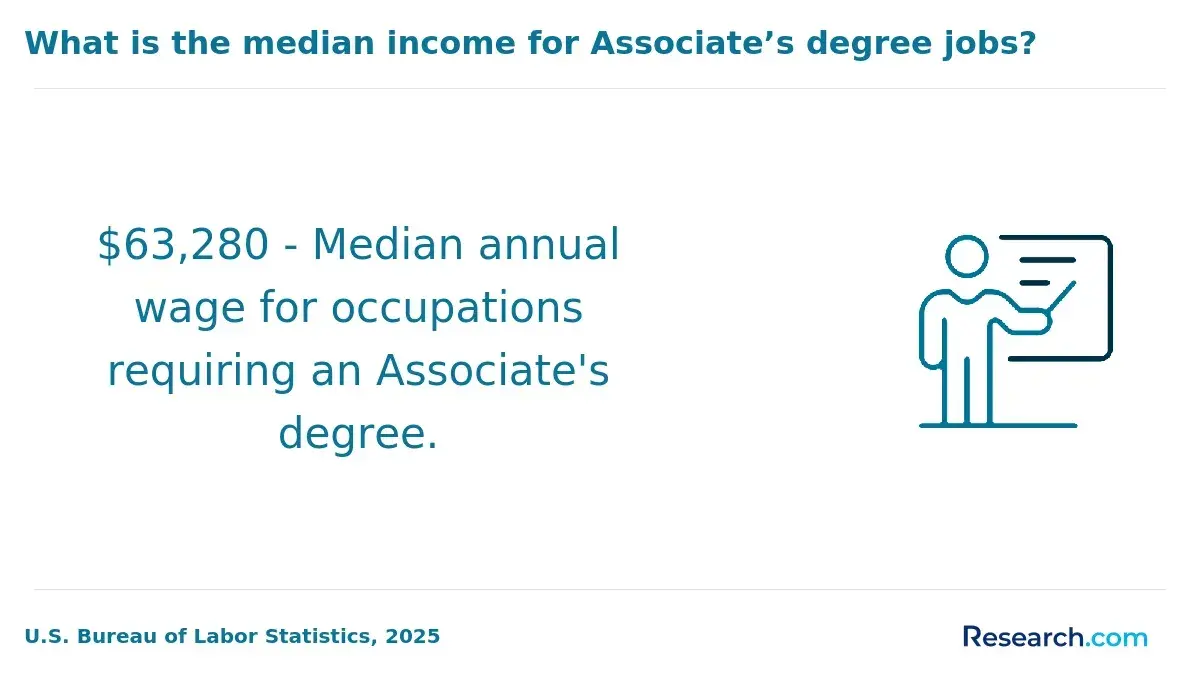
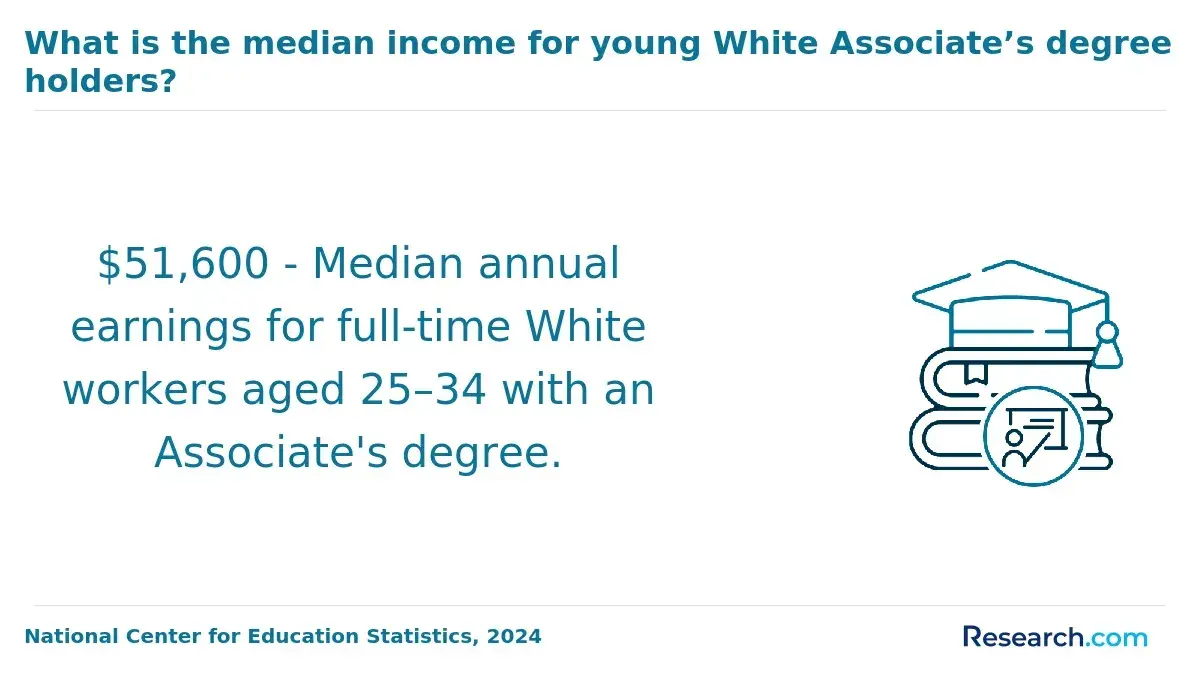
Career value should also be part of the calculation. The BLS reported a May 2024 median annual wage of $59,190 for substance abuse, behavioral disorder, and mental health counselors, but many counseling roles require additional education, supervised experience, or state credentials. An associate degree may support entry-level human services, recovery support, case aide, residential treatment, or transfer pathways, while higher-scope counseling roles often require more education.
Financial aid packages can differ widely across online addiction counseling support associate degree programs because colleges package federal, state, institutional, and loan aid differently. A higher-cost school may offer more institutional aid, but that does not automatically make it cheaper than a lower-tuition community college.
When comparing aid offers, students should focus on the aid that reduces cost rather than the aid that postpones cost. Grants and scholarships reduce net price. Loans reduce the amount due now but increase future repayment obligations.
The table below gives a practical way to read award letters side by side.
| Comparison factor | Why it matters | Better sign | Red flag |
| Gift aid amount | Shows grants and scholarships that reduce the bill | Large share of aid is grants or scholarships | Aid package looks large mostly because of loans |
| Direct cost after gift aid | Shows likely tuition and fee balance | Balance is manageable without heavy borrowing | Fees remain high after aid is applied |
| Enrollment requirement | Aid may change if credits drop | Awards are available for the student's realistic schedule | Aid assumes full-time enrollment the student cannot maintain |
| Renewal condition | Scholarships and institutional grants may not be automatic | Requirements are clear and realistic | Renewal depends on a high GPA, limited funds, or annual competition |
| Transfer credit treatment | Accepted credits can reduce total cost and time | Prior credits apply directly to degree requirements | Credits transfer only as electives or do not reduce aid-eligible coursework |
| Program completion support | Dropping or repeating courses can increase total cost | Online advising, tutoring, field placement help, and clear course sequencing | Required courses are not offered often enough for timely completion |
Students should ask each school for an aid offer based on the same enrollment plan. Comparing one full-time package against another school's part-time package can distort the net price.
A common mistake is choosing the award letter with the largest total aid amount. If the largest package includes unsubsidized loans or a high remaining balance, it may be less affordable than a smaller package at a lower-cost school.
Employer tuition assistance can be a strong funding source for students already working in behavioral health, healthcare, social services, corrections, community outreach, or residential treatment. Some employers support addiction counseling support education because it can improve staffing pipelines, compliance readiness, and employee retention.
Federal tax rules allow eligible employer educational assistance benefits to be excluded from taxable income up to $5,250 per year. For a low-cost associate program, that amount can cover a meaningful portion of tuition and fees, especially when combined with grants or scholarships.
Students should review employer benefits carefully before assuming the money is available. The following questions help clarify whether tuition assistance will actually reduce out-of-pocket cost.
- Does the employer pay the school directly, reimburse after grades are posted, or require the employee to pay first?
- Are online associate degrees in addiction counseling, human services, or behavioral health considered eligible programs?
- Is there a minimum grade, credit load, employment status, or length-of-service requirement?
- Does the employee have to remain with the organization after receiving assistance?
- Can employer aid be combined with Pell Grants, state grants, scholarships, or payment plans?
- Will practicum hours, schedule changes, or field placement requirements conflict with work shifts?
Other benefits may also help. Workforce Innovation and Opportunity Act funding, vocational rehabilitation support, AmeriCorps education awards, military education benefits, tribal education support, and union training funds can reduce costs for eligible students. Rules vary, so students should get written confirmation before enrolling.
Employer support is especially useful when a student is deciding between a short workforce-focused AAS and a transfer-focused AA or AS. If the employer values immediate job skills, the AAS may offer faster workplace value; if advancement requires a bachelor's later, a transfer-oriented pathway may be stronger.
Accreditation affects both financial aid and long-term value. For federal aid, the institution must be accredited by an agency recognized for Title IV purposes and must participate in federal student aid. Programmatic accreditation is less common at the associate level in addiction counseling support, but state credentialing bodies, employers, and transfer universities may still review coursework content closely.
Students who plan to continue into higher-level counseling education should verify transferability early. Some associate courses transfer smoothly into bachelor's programs in psychology, social work, human services, or behavioral health, while others may count only as electives. Students considering future graduate study can compare longer pathways, including accelerated mental health counseling programs online, to understand how today's associate credits may fit tomorrow's requirements.
Enrollment status also affects aid. Full-time students may receive larger term-based aid and finish faster, but part-time students may be better able to work, avoid borrowing, and manage family responsibilities. The lowest total cost is often the plan the student can actually complete without repeated withdrawals.
Before enrolling, students should verify these accreditation and enrollment details directly with the school and, when relevant, with the state credentialing board.
- Is the institution accredited and approved to participate in Title IV federal student aid?
- Is the online associate degree itself eligible for FAFSA-based aid?
- Does the curriculum meet educational requirements for any state-recognized addiction counseling support credential?
- Will online courses, practicum hours, and field placements be accepted by transfer universities or credentialing agencies?
- How does aid change below full-time, half-time, or minimum enrollment levels?
- What satisfactory academic progress standards apply to GPA, completion rate, and maximum timeframe?
A major red flag is vague language such as "financial aid available" without a clear explanation of federal aid participation, eligible programs, or accreditation. Students should ask for written confirmation, not just verbal reassurance from admissions staff.
A low-cost online addiction counseling support associate degree with financial aid is most beneficial for students who need an affordable entry point into behavioral health work or a lower-cost first step toward a bachelor's degree. It can be especially practical for working adults, parents, rural students, first-generation students, and people who cannot relocate for campus-based study.
The degree may fit students who want roles such as behavioral health technician, recovery support specialist, case management assistant, residential treatment staff member, intake support worker, or human services aide. Job titles and minimum requirements vary by state and employer, so students should compare local postings before choosing a program.
Students are most likely to benefit when several conditions are true.
- They qualify for Pell Grants, state grants, employer benefits, or scholarships that reduce the price before loans.
- They can complete required online courses and any fieldwork without interrupting employment or caregiving responsibilities.
- They choose a program aligned with local credentialing rules for addiction counseling support or peer recovery roles.
- They plan to use transfer credits toward a bachelor's degree if higher-level counseling work is the long-term goal.
- They prefer a shorter, lower-risk credential before committing to a more expensive degree.
Some students should consider another pathway. If the goal is independent clinical counseling, an associate degree alone is usually not enough; many clinical counseling roles require a master's degree, supervised experience, and licensure. Students who want the lowest academic barrier can review easiest counseling degree programs, but they should still check accreditation, transferability, and credential outcomes rather than choosing only by perceived difficulty.
The associate route can be a strong financial decision when it limits borrowing and builds transferable credit. It is less attractive when a program is not aid-eligible, credits do not transfer, or the advertised career outcomes require credentials the program does not satisfy.
How Should Students Minimize the Total Cost of an Online Addiction Counseling Support Associate Degree?
Students can minimize the total cost of an online addiction counseling support associate degree by comparing the full cost of completion, not just tuition per credit. The goal is to find the lowest realistic net price for a program that is accredited, aid-eligible, transferable if needed, and aligned with career or credentialing goals.
A strong cost-control strategy should include both financial aid steps and academic planning steps. The following sequence helps students turn advertised affordability into a realistic payment plan.
- Shortlist only accredited colleges that clearly identify the online associate degree as eligible for federal student aid.
- Request the total estimated cost for tuition, required fees, books, technology, background checks, practicum expenses, and graduation fees.
- Submit the FAFSA early and list every school under serious consideration.
- Ask each school for a net price estimate based on the same credit load and residency status.
- Apply for state grants, college foundation scholarships, employer tuition assistance, and local behavioral health workforce awards.
- Send official transcripts and ask how each accepted transfer credit reduces required credits and total cost.
- Compare full-time and part-time plans based on aid, work schedule, completion time, and risk of withdrawal.
- Accept grants and scholarships first, consider payment plans next, and borrow only after estimating repayment.
- Verify whether courses transfer into a bachelor's program before choosing an AA, AS, or AAS pathway.
- Get key promises in writing, including aid renewal rules, field placement expectations, and online fees.
Students should be cautious of programs that pressure them to enroll before receiving a full aid offer, avoid clear answers about accreditation, advertise scholarships without explaining renewal conditions, or present loans as if they are discounts. True affordability depends on what the student pays or borrows by graduation.
The best choice is usually the program with the strongest combination of low net cost, manageable schedule, recognized accreditation, clear transfer or workforce value, and support services that improve the odds of completion.
Other Things You Should Know About Addiction Counseling Support
Many programs offer all academic courses online, but fieldwork, practicum, observation, or internship requirements may need to be completed in person at an approved local site. Students should ask how placements are arranged before enrolling.
Addiction counseling support usually refers to entry-level or paraprofessional work under supervision, such as recovery support, intake assistance, or case support. Licensed counseling typically requires higher education, supervised clinical hours, examinations, and state licensure.
Many programs require a background check, drug screening, immunization record, or liability insurance before fieldwork. Requirements vary by school, state, and placement site, and certain criminal history issues may affect practicum or employment eligibility.
An AA or AS is often better for transfer to a bachelor's degree, while an AAS is usually more career-focused and may include more applied courses. The better option depends on whether the student wants immediate workforce preparation or a longer counseling education pathway.
- How Drug Convictions Affect Federal Financial Aid - Delaware County Community College https://www.dccc.edu/how-drug-convictions-affect-federal-financial-aid/
- How Does the FAFSA Work? (2026 Guide) https://www.credible.com/student-loans/how-does-fafsa-work
- 50+ Scholarships & Resources for Counseling Master's Students https://www.onlinemastersdegrees.org/student-resources/counseling/
- Human Services - Addiction Counseling and Treatment A.A.S. - Career Degree https://www.clcillinois.edu/programs/bssdv/human-services/addiction-counseling-and-treatment-aas-career-degree
- 2025 Most Affordable Online Substance Abuse Counseling Degrees https://www.onlineu.com/most-affordable-colleges/substance-abuse-counseling-degrees
- Guide To Online Addiction Counseling Degrees https://www.accreditedschoolsonline.org/counseling/bachelors/addiction-counseling/
- Scholarships & Other Financial Assistance - Texas Association of Addiction Professionals https://www.taap.org/page/900
- Addiction Counseling Online Degree Schools - Addiction Counselor Degree Programs https://beal.edu/programs/addiction-counseling/
- FAFSA Eligibility: Requirements & Income Limits | Ascent Funding https://www.ascentfunding.com/blog/fafsa-eligibility/
- Counseling Scholarships https://onlinecounselingprograms.com/become-a-counselor/resources/scholarships/