2027 Longitudinal Data Analysis in an Online Data Science Master's: Courses, Projects, and Program Selection

Co-Founder and Chief Data Scientist
Studying longitudinal data analysis in an online data science master's requires more than finding "statistics" in a course list. If you want to analyze patient histories, customer behavior, or other data collected over time, you need a program that teaches repeated-measures methods and lets you apply them in a substantial project. This guide shows how to assess that depth, compare online programs, and decide whether the degree fits your career goal.
Key Things You Should Know
- Look for instruction in repeated-measures or multilevel modeling, missing data, and time-dependent prediction - not just a course title that mentions statistics.
- A strong project follows the same people or entities over time and addresses within-subject dependence, timing, and data leakage.
- The U.S. Bureau of Labor Statistics reports a $120,230 median annual wage for data scientists in May 2025; that occupational figure is not a salary forecast for master's graduates.
What Is Longitudinal Data Analysis in Data Science?
Longitudinal data analysis examines measurements collected from the same person, organization, device, or other entity at multiple times. Unlike a dataset with one independent row per entity, repeated observations are related. An analysis that ignores that relationship can produce misleading uncertainty estimates or overstate how well a predictive model will work on new people.
Graduate-level work may include mixed-effects models, generalized estimating equations, multilevel models, missing-data methods, and models that account for changes over time. A student should understand what question each method answers: a population-average trend, for example, is not identical to an individual's trajectory. Time-series forecasting can be useful, but forecasting one aggregate series does not, by itself, demonstrate skill with repeated observations from many entities.
The subject is particularly relevant when decisions depend on change: whether a treatment outcome improves across visits, when equipment begins to fail, or how customer engagement develops after enrollment. In each case, the analyst must distinguish an observed pattern from a causal effect that the study design may not establish.
What Courses Do Online Data Science Master's Programs Include?
Course lists vary, so evaluate the sequence rather than expecting every program to offer a course named "Longitudinal Data Analysis." Useful foundations include statistical inference, regression, probability, programming, and data management. Subsequent coursework may place repeated-measures methods in applied statistics, biostatistics, multilevel modeling, panel-data analysis, or an advanced modeling elective.
The distinctions below help separate general exposure from the depth needed to carry out an independent project. Course descriptions, syllabi, and assignments provide better evidence than titles alone.
| Curriculum evidence | What it indicates | Limitation |
| Longitudinal data mentioned in a survey course | Introductory exposure to the problem | May offer little modeling practice |
| A unit on mixed-effects or repeated-measures models | Some method-specific instruction | May not cover missingness or project design |
| A dedicated course or advanced elective | Room for model interpretation and diagnostics | Availability and online scheduling still need confirmation |
| Relevant coursework plus a supervised project | Opportunity to apply methods to messy data | Project topics and faculty support may be constrained |
Also check whether machine learning courses teach validation for data with multiple records per entity. Randomly splitting rows can put one person's earlier records in training and later records in testing, producing an overly optimistic result. If you are comparing a broader set of quantitative degrees, you can find a data analytics master's program and apply the same syllabus-level test; the degree label alone does not establish longitudinal depth.
How Do Longitudinal Data Projects Prepare Students for Data Careers?
A useful longitudinal project demonstrates decisions that employers cannot see in a polished chart alone: how observations were linked, what counted as the starting point, how missing visits were handled, and whether evaluation reflected the intended real-world use. For example, a project predicting an outcome from successive customer interactions should avoid using interactions that occurred after the prediction date.
When examining a prospective capstone, use these questions to judge whether it will build transferable evidence of your skills:
- Can students work with multiple observations per entity and document changes in measurement timing or follow-up?
- Will they compare an appropriate longitudinal model with a simpler baseline and explain the difference?
- Can they assess missing data, uncertainty, and model performance without mixing the same entities improperly across evaluation groups?
- Does supervision cover data access, privacy, reproducible code, and a clear explanation for a nontechnical stakeholder?
Projects involving health, employee, or other sensitive records need particular care with permissions and disclosure. If automated decisions are part of your career goal, AI governance and ethics graduate study options may provide a useful comparison - but ethics coursework complements rather than replaces statistical training. Do not assume every program will approve a capstone using your employer's data or provide access to clinical records.
What Are the Admission Requirements for an Online Data Science Master's?
Requirements differ by institution. Before applying, check the current admissions page for degree, transcript, programming, mathematics, and statistics requirements; also confirm whether professional experience, recommendation letters, or test scores are requested. A background in any one major should not be treated as automatic eligibility or disqualification.
For this specialty, readiness matters beyond formal admission. Calculus and linear algebra support model concepts; probability and statistical inference support interpretation; and programming experience helps with reshaping repeated records and checking results. If you lack one of these foundations, ask whether preparatory coursework formally satisfies a prerequisite. Self-study may improve your readiness without meeting an institution's stated requirement.
How Long Does an Online Data Science Master's Take and Cost?
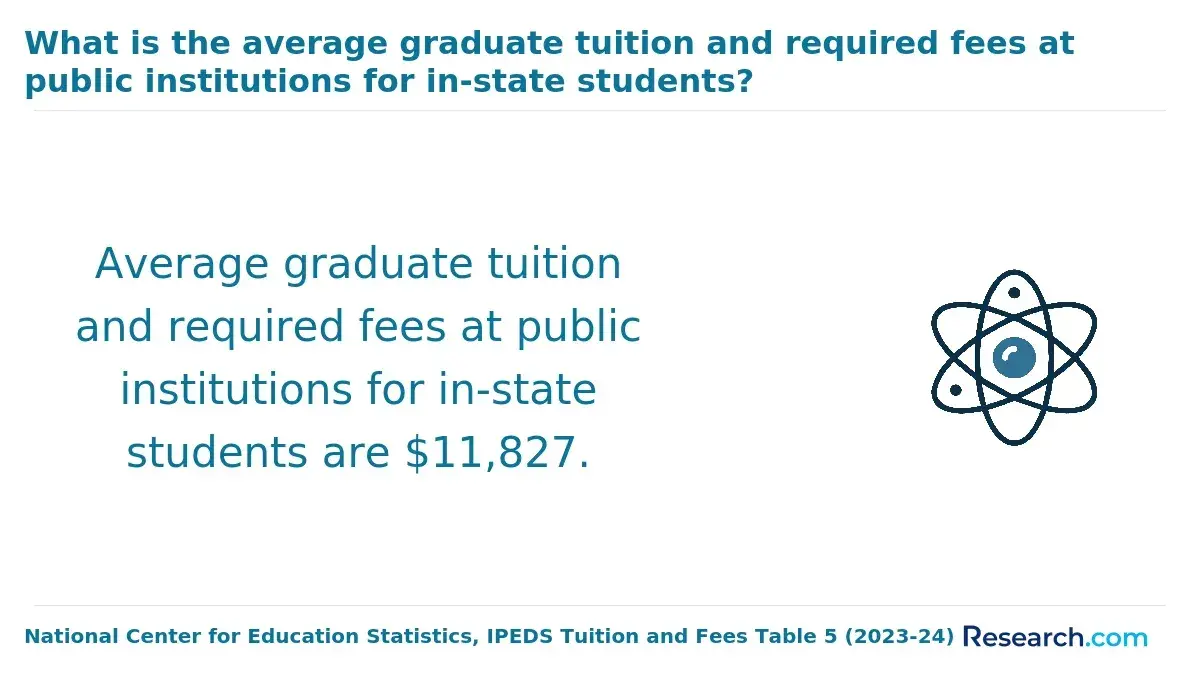
There is no reliable single duration or price for an online data science master's: credit requirements, course availability, enrollment pace, residency rules, and fees differ. A program that offers relevant electives only occasionally could also take longer to complete on your preferred schedule. Request a term-by-term plan showing when the longitudinal course and project supervision are actually available.
Build a comparable cost estimate for each program from its current official tuition and fee schedule. Keep these components separate so a low advertised tuition figure does not obscure the amount you would pay:
- Tuition for the credits your degree plan requires, at the rate applicable to your enrollment and residency status.
- Mandatory program, technology, and university fees, plus any required travel or materials.
- Potential additional terms, prerequisite coursework, and borrowing costs if you will finance the degree.
- Employer tuition assistance or other aid you have confirmed you can use - not awards you merely hope to receive.
If budget is the binding constraint, machine learning graduate programs on a $20,000 budget offer a cost-focused comparison. Check their repeated-measures coursework separately: an affordable machine learning curriculum may not teach the longitudinal methods you need.
How Do Online and Campus-Based Data Science Master's Programs Compare?
The relevant distinction is access to instruction and supervision, not an assumption that one format is inherently more rigorous. An online program may suit a working professional who needs to remain employed, while a campus program may make in-person research collaboration easier. Either can be a poor fit if its longitudinal elective is unavailable when you need it or its project rules do not support your topic.
Ask whether lectures are live or asynchronous, when office hours occur, how group work is scheduled, and whether project advising is available to online students on the same terms as to campus students. Confirm any required campus visits before comparing costs. If finishing quickly is a priority, accelerated AI master's program options can provide a scheduling comparison, but a shorter AI-focused degree is not necessarily a substitute for sustained longitudinal modeling practice.
How Can You Verify Data Science Program Accreditation and Quality?
Verify that the institution holds recognized institutional accreditation through the accreditor's directory and confirm the status directly if anything is unclear. Then check the institution's current program information for authorization to enroll students in your state. Accreditation and state authorization answer different questions; neither proves that a specific elective is offered online or that a particular faculty member can supervise your project.
For subject-specific quality, request recent syllabi, a sample degree plan, project requirements, and information about faculty whose work involves longitudinal or related statistical methods. Rankings and broad descriptions of "advanced analytics" are weaker evidence than assignments showing repeated-measures modeling, sound validation, and interpretation. If the school does not publish completion or graduate outcome data for the online program, do not assume campus-wide figures represent its students.
What Careers Can You Pursue After Studying Longitudinal Data Analysis?
Longitudinal skills can support data scientist, statistician, biostatistician, and analytics roles involving repeated observations. The best target depends on your other skills and domain experience. A healthcare-focused role may place more weight on study design and missing follow-up; a product analytics role may emphasize user histories, experimentation, and communication with decision-makers.
Match your program search to the work you want to show employers. Choose deeper statistical electives and supervised analysis if your goal is to interpret changes or research outcomes. Prioritize data engineering, model validation, and deployment alongside longitudinal methods if you want to build production predictions from event histories. If your intended work centers primarily on developing AI systems, use AI degree fit for different career ambitions to compare that path with a broader data science degree.
What Salary and Job Outlook Can Data Science Master's Graduates Expect?
The U.S. Bureau of Labor Statistics reports that the median annual wage for data scientists was $120,230 in May 2025. This describes workers in the occupation, not starting pay or an outcome caused by earning a master's degree. Your prior experience, location, employer, specialization, and role will affect individual offers.
BLS projects 35% employment growth for data scientists from 2025 to 2035. That outlook indicates substantial projected demand for the occupation, but it does not show how many positions specifically require longitudinal analysis or guarantee a job after graduation. When a school publishes graduate salary or placement figures, check who was counted, the response rate, graduates' prior experience, and whether the figures describe the online program you are considering.
Do Data Science Master's Graduates Need Certifications or Licenses?
A general data scientist role does not have a universal professional license attached to the master's degree. Employers may value evidence of particular tools or platforms, but a certification is not a substitute for demonstrating that you can design and interpret a sound analysis. Requirements can differ for specialized positions, particularly when a role combines analytics with work governed by another profession's rules.
Before paying for an optional certification, inspect job postings for your target role and region. If they emphasize research design or repeated-measures modeling, a well-documented project may be more relevant than a general software credential. Verify any role-specific credential requirements with the employer or applicable licensing body rather than assuming the degree fulfills them.
Other Things You Should Know About Data Science
Yes. Different entry dates are common, but you must define whether "time" means calendar date, time since enrollment, age, or another measure. That choice affects the question your analysis answers.
Without a reliable way to link responses to individuals, you generally cannot analyze individual change. You may still compare aggregate results across survey waves, but you should not describe them as tracked respondent trajectories.
Only if your employer authorizes the use and release. Removing names alone may not sufficiently protect sensitive records. When permission is unavailable, publish a method explanation or use data you are permitted to share.
Usually. A concise account of the question, data permissions, modeling choices, limitations, and findings helps reviewers understand your judgment. Share code and data only where their licenses and privacy conditions allow it.
References
- Post-Secondary Employment Outcomes (PSEO) Data | U.S. Census Bureau https://lehd.ces.census.gov/data/pseo_experimental.html
- Cost of Attendance (Budget) | 2025-2026 Federal Student Aid Handbook https://fsapartners.ed.gov/knowledge-center/fsa-handbook/2025-2026/vol3/ch2-cost-attendance-budget
- What's the Difference Between Asynchronous and Synchronous Learning? | Ohio State Online https://online.osu.edu/content-hub/blogs/whats-the-difference-between-asynchronous-and-synchronous-learning/
- 2025-2026 Tuition and Fees - Student Account Services | University of Kentucky https://studentaccount.uky.edu/tuition-and-fees/past-tuition-and-fees/2025-2026-tuition-and-fees
- Tuition & Fees | State University System of Florida https://www.flbog.edu/universities/parents-students/tuition-fees/
- Longitudinal individual predictions from irregular repeated measurements data | Scientific Reports | Nature Index https://www.nature.com/articles/s41598-022-26933-1
- GEE for Repeated Measures Analysis | Columbia University Mailman School of Public Health https://www.publichealth.columbia.edu/research/population-health-methods/repeated-measures-analysis
- Masters Captstone - Columbia DBMI https://www.dbmi.columbia.edu/masters-captstone/
- Master's in Data Science | utexas.edu https://cdso.utexas.edu/msds
- Online Master's in Data Science at UWF https://uwf.edu/programs/online/data-science-ms/