2027 Is Demand for Machine Learning Degree Graduates Growing or Declining?

Co-Founder and Chief Data Scientist
Many students considering a machine learning degree face uncertainty about future job prospects amid rapid industry changes. Despite fears of automation reducing demand, the U. S. Bureau of Labor Statistics projects a 15% growth in employment for computer and information research scientists, a category including machine learning specialists, from 2021 to 2031. This steady increase reflects growing adoption of machine learning across sectors such as healthcare, finance, and technology. This article examines current trends in machine learning education and employment, aiming to help readers assess whether pursuing a machine learning degree aligns with long-term career opportunities and market demand.
Key Things to Know About the Demand for Machine Learning Degree Graduates
- Employment for machine learning degree graduates is increasing, with a 23% rise in job postings over the last five years, reflecting strong demand across tech and finance sectors.
- Projected job growth for machine learning roles is approximately 31% through 2030, much faster than average occupations, indicating a robust future outlook.
- Industry shifts toward AI specialization and data ethics are creating new niche opportunities, emphasizing adaptability and continuous skill development for long-term career success.
What Factors Are Driving Demand for Machine Learning Degree Professionals?
Recognizing the forces driving demand for machine learning degree professionals can help prospective students evaluate the long-term value and stability of their educational investment. Several key factors contribute to the increasing employment opportunities in this field.
- Industry Growth: Expanding sectors such as technology, healthcare, finance, and automotive increasingly depend on machine learning to improve products and services. This growth sustains a strong demand for skilled professionals who develop and implement advanced algorithms.
- Technological Advancement: Breakthroughs in artificial intelligence, greater computing power, and big data availability enable more sophisticated machine learning applications. Employers prioritize candidates who can adapt to evolving tools and techniques.
- Regulatory Influence: Changing policies promote transparency and ethical AI use, requiring professionals knowledgeable in compliance alongside technical skills. This broadens the scope of expertise companies seek to ensure responsible deployment.
- Employer Skill Requirements: There is growing emphasis on interdisciplinary abilities, where professionals combining machine learning knowledge with domain-specific understanding or strong communication skills have an edge. This trend opens up diverse job prospects.
- Demographic Shifts: The nationwide digital transformation boosts adoption of intelligent systems beyond traditional tech hubs, expanding the market for specialists in this area. Regional accreditation standards for machine learning degrees play a key role in maintaining quality education to meet this demand.
For prospective students exploring related areas, consider reviewing online speech pathology programs as another example of accredited professional pathways.
Which Machine Learning Occupations Are Seeing the Highest Growth Rates?
Growth rates are a crucial indicator for students evaluating machine learning career paths, as they reflect future job availability and industry vitality. Employment in STEM fields in the United States is projected to grow by 8% through 2030, signaling a strong market for technical skills. These trends lead into an analysis of occupations with the highest demand for machine learning graduates.
- Machine Learning Engineer: Expected to grow by roughly 22% over the next decade, this role is driven by expanding AI-powered products and automation solutions. Typically requiring at least a master's degree, engineers design and deploy scalable AI systems across industries.
- Data Scientist: With about 15% growth, data scientists specializing in machine learning are vital for extracting actionable insights from complex data sets. Businesses increasingly rely on these professionals, who usually hold advanced degrees in computer science or data science.
- Deep Learning Engineer: This occupation sees growth near 20% fueled by innovations in neural networks for image and speech recognition. Deep learning engineers frequently hold specialized graduate degrees to develop and optimize these models.
- AI Research Scientist: Growing at approximately 14%, these scientists drive continuous algorithmic innovation and advancements in computing power. A strong academic background, often a PhD, in machine learning or related fields is common.
- Machine Learning Specialist: Projected growth is around 13%, centered on implementing tailored AI models across diverse sectors. Master's level education in relevant technical fields is typically required for these roles.
Students aiming for these fields should consider reliable educational paths such as an engineering online degree that offers strong machine learning curricula to prepare for the highest demand occupations for machine learning graduates.
Which Industries Hire the Most Machine Learning Degree Graduates?
Knowing which sectors hire the most machine learning graduates offers valuable insight into career prospects and job security after completing this degree. Several industries stand out for their ongoing and growing demand for these specialized skills.
- Technology and Software Development: This field leads in employing machine learning professionals, with roles like data scientist, AI specialist, and algorithm engineer. These companies rely on machine learning to build personalized technology, enhance recommendation systems, and drive automation.
- Healthcare and Biotechnology: Machine learning graduates contribute by improving medical imaging, accelerating drug discovery, and supporting predictive diagnostics. Positions such as clinical data scientists and bioinformatics analysts help healthcare providers deliver more precise patient care through data-driven solutions.
- Finance and Insurance: The sector makes extensive use of machine learning for tasks like detecting fraud, assessing risk, and advancing trading algorithms. Graduates often work as quantitative analysts or model developers to optimize financial decision-making and operational accuracy.
- Automotive and Manufacturing: This industry employs machine learning professionals to advance autonomous vehicles, refine predictive maintenance, and streamline production processes. Roles commonly include machine learning engineers and systems analysts focused on operational efficiency.
- Retail and E-commerce: Businesses apply machine learning to analyze customer behavior, manage inventory dynamically, and implement pricing strategies. Data analysts and AI developers play key roles in enhancing consumer experiences and boosting sales performance.
Job prospects for machine learning graduates differ widely across the U.S. due to the uneven distribution of industries, urban development, and economic variables. Several regional factors help explain these disparities in demand.
- High-Demand States: Areas like California's Silicon Valley and Massachusetts' Boston region host numerous tech companies and startups, consistently creating abundant roles for machine learning specialists.
- Industry Hubs: Financial centers such as New York focus machine learning efforts on fintech and data analytics, highlighting how local industry strengths shape job opportunities.
- Urban vs. Rural: Metropolitan areas usually offer a richer supply of positions and professional networks, whereas rural locations have fewer openings, often prompting considerations of relocation for career advancement.
- Cost of Living: While cities with high living expenses may provide attractive salaries, these earnings can be offset by greater costs, affecting overall financial benefits and quality of life.
- Remote and Hybrid Work: The increased adoption of flexible work arrangements broadens access for machine learning professionals beyond traditional tech hubs, helping to reduce geographic disparities in opportunity.
The level of education plays a crucial role in determining job opportunities, career growth, and competitiveness in machine learning fields. Higher degrees often lead to more specialized roles and greater professional advancement. The following comparison outlines how different degree levels impact employability and job prospects.
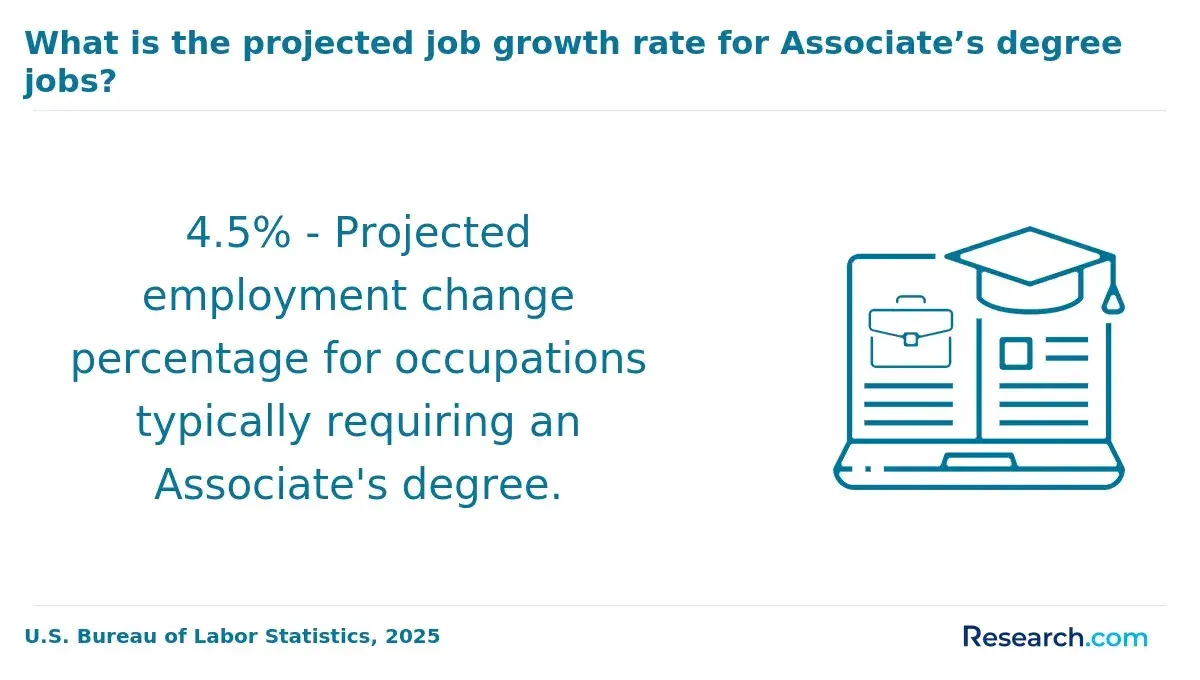
- Associate Degree: Typically prepares graduates for entry-level jobs such as data technicians or junior analysts. These positions usually involve limited engagement with advanced machine learning tasks and offer a basic introduction to the field.
- Bachelor's Degree: Opens access to roles like machine learning engineer or data scientist, focusing on foundational knowledge and practical skills. This level enhances job prospects significantly in machine learning job prospects by education level in the United States.
- Master's Degree: Equips students with advanced, specialized expertise enabling them to pursue senior roles such as algorithm developer or research scientist. Professionals with this qualification tend to have increased leadership opportunities and higher earning potential.
- Doctorate Degree: Emphasizes innovation and cutting-edge research, qualifying holders for academic posts, specialized R&D positions, and consultancy roles. This degree represents the pinnacle of professional competitiveness in how degree level impacts employability in machine learning careers.
For those seeking further education options beyond machine learning, exploring online degrees in psychology may provide flexible alternatives with growing demand.
Grasping the skills that employers prioritize is essential for graduates aiming to launch successful careers in machine learning. These competencies ensure graduates can contribute immediately and stay ahead in an industry that evolves swiftly. Below are some of the key abilities companies value most:
- Programming Expertise: Proficiency in languages like Python, R, or Java is vital for coding, testing, and deploying machine learning models efficiently. This capability allows professionals to build scalable solutions in real-world environments.
- Mathematical Foundations: Solid knowledge of linear algebra, calculus, and probability supports a deeper understanding of how algorithms function and how to fine-tune them for improved performance.
- Data Management Skills: The capacity to preprocess, clean, and transform complex datasets is critical for preparing high-quality inputs that drive accurate and reliable model training.
- Algorithmic Understanding: Awareness of various machine learning approaches enables practitioners to select and apply the most suitable techniques tailored to specific problems.
- Effective Communication: The ability to clearly articulate technical concepts and collaborate across teams fosters better project alignment and successful implementation of solutions.
When speaking with a graduate of a machine learning degree program, he reflected on the transition from academic theory to practical application. He noted, "Even with solid coursework, adapting to the fast pace of real projects was challenging. I had to quickly learn how to interpret ambiguous datasets and present my findings to non-technical stakeholders." He emphasized that beyond technical skills, resilience and the willingness to seek feedback played key roles in meeting employer expectations and overcoming initial uncertainty.
Fluctuations in job demand have a significant impact on starting salaries, wage growth, and long-term earning potential for machine learning graduates. Employment in computer and information research science fields, including machine learning roles, is projected to grow 22% from 2020 to 2030, contributing to upward pressure on salaries. Several key factors illustrate how demand influences compensation trends.
- Starting Salaries: High demand for limited talent pools often drives employers to offer competitive starting salaries to attract top candidates quickly, ensuring they don't lose out to rivals.
- Wage Growth: Continued rising demand accelerates wage increases over time, rewarding experienced professionals as companies seek to retain and incentivize skilled machine learning practitioners.
- Long-Term Earning Potential: Sustained demand encourages firms to invest more heavily in machine learning expertise, improving career advancement opportunities and overall lifetime earnings for graduates.
- Market Balance: Labor market conditions depend on the supply of graduates relative to demand; when machine learning talent is scarce, individuals can negotiate higher pay, whereas an oversupply may limit salary growth.
Understanding these dynamics helps prospective machine learning students and professionals anticipate how their salaries may evolve based on broader labor market trends documented by the U.S. Bureau of Labor Statistics.
Rapid advances in artificial intelligence are profoundly altering workforce demands, increasing the need for skilled machine learning professionals. The World Economic Forum anticipates AI-related technologies will generate 97 million new jobs worldwide by 2025, many requiring expertise in machine learning.
The influence of AI on this field can be seen in several key areas:
- Automation of Routine Tasks: As AI handles more repetitive processes, machine learning experts can direct their efforts toward complex challenges. This shift enhances the value of advanced skills over entry-level roles, improving career growth opportunities.
- Emergence of Specialized Roles: New positions like AI ethics officers and machine learning infrastructure engineers are diversifying career paths. These specialized roles address the expanding complexity and ethical considerations of AI systems.
- Evolving Skill Sets: Professionals now need to master data engineering, model transparency, and AI system integration. Continuous learning is essential to stay competitive in this fast-changing landscape.
- Industry Hiring Trends: Sectors such as healthcare, finance, and autonomous vehicles are investing heavily in machine learning talent. These shifts contribute to stronger job stability and long-term professional prospects.
When I spoke with a recent graduate of a machine learning degree program, she reflected on the impact of AI's growth on her career. She described the intense pace of adapting to new tools and frameworks, explaining, "It was challenging to keep up with the technology's rapid evolution, but that made the learning process exciting and rewarding." She emphasized how hands-on projects helped build confidence in tackling real-world problems, stating that learning to balance theory with practical application has been crucial. Her experience highlights that while the demands can be high, the opportunities for those who embrace continual growth are substantial.
Long-term career stability is an important consideration for students and professionals evaluating their paths in machine learning. Several key factors influence the durability of this field and its ability to provide sustained opportunities over time.
- Employment Trends: Consistent growth in job openings for machine learning-related roles reflects a healthy demand across industries like healthcare, finance, and technology. This trend supports stable job prospects and aligns with the growing use of data-driven decision-making.
- Industry Reliance: As organizations increasingly integrate AI solutions to enhance efficiency and innovation, the need for skilled machine learning experts strengthens. This expanding reliance suggests a career that is less vulnerable to sudden shifts or obsolescence in the North American market.
- Adaptability: The fast pace of technological change in machine learning demands continuous skill development. While this can pose challenges, it cultivates lifelong learning habits and enables professionals to adjust and thrive amid evolving economic conditions.
- Advancement and Reskilling: Career growth opportunities abound, allowing machine learning specialists to progress into roles such as data scientists, AI researchers, or technical managers. The availability of accelerated online degrees and certifications also helps maintain relevance and flexibility over time.
In terms of long-term job prospects for machine learning graduates, these combined factors create a robust foundation for a sustainable career. Is machine learning career stability in North America supported? The convergence of steady demand, industry dependence, adaptability, and continued professional development strongly affirm that it is.
The demand for machine learning degree graduates in the United States has steadily increased due to the expanding integration of data-driven technologies across various sectors. Labor market analyses show that job growth in artificial intelligence and machine learning-related fields is expected to remain robust, often outpacing other technology roles.
Employers in healthcare, finance, manufacturing, and tech are actively hiring candidates skilled in machine learning algorithms and data analysis. Understanding machine learning graduate salary trends and employment prospects by region further highlights the strong market position for these professionals.
The value of a machine learning degree depends on factors like degree level, skill set alignment, and industry needs. Advanced degrees such as master's or PhDs tend to open doors to specialized and research-focused roles, while proficiency with tools like Python, TensorFlow, and cloud computing enhances employability.
Geographic location and the specific industry segment also influence job availability and compensation. Prospective students exploring educational opportunities may find it useful to review options among online degrees that offer relevant curricula, helping them make a practical long-term investment decision in this competitive field.
What Graduates Say About the Demand for Their Machine Learning Degree
- Bruno: "Pursuing a machine learning degree was a transformative choice for me. Not only did it deepen my understanding of complex algorithms, but the return on investment became clear as I landed a role that doubled my previous salary. This degree truly propelled my career into a new, exciting direction."
- Miya: "Reflecting on my decision to enroll in a machine learning program, I realize how crucial it was for my professional growth. The skills I acquired opened doors to advanced positions and projects that I previously thought unreachable. Today, I feel confident that the knowledge I gained offers lasting value beyond immediate financial benefits."
- Evan: "From a professional standpoint, earning a machine learning degree significantly enhanced my credibility and technical expertise in the industry. The investment paid off steadily through better job opportunities and the ability to lead innovative initiatives at work. This degree gave me the tools to thrive in a competitive market."
Other Things You Should Know About Machine Learning Degrees
The most common educational background for a career in machine learning is a bachelor's degree in computer science, data science, statistics, or related fields. However, many roles, especially research-oriented or advanced positions, require a master's degree or PhD specializing in machine learning or artificial intelligence. Practical experience with programming, algorithms, and data analysis is also essential alongside formal education.
Certifications can complement a machine learning degree by providing practical skills and demonstrating commitment to continuous learning. Popular certifications include those offered by cloud providers and institutions focused on AI and data science tools. While not always mandatory, certifications often improve job prospects by validating applied knowledge and technical competencies in machine learning workflows.
Economic trends, such as advancements in AI and automation, are expected to increase the demand for machine learning graduates in 2027. As industries seek efficiencies and innovation, skilled professionals are needed to develop and implement complex algorithms, reshaping sectors like healthcare, finance, and automotive.
Tech, finance, healthcare, retail, and manufacturing hire the most machine learning graduates in 2027. Employers in these sectors commonly ask for a bachelor’s or master’s degree, strong Python and SQL skills, and experience with cloud platforms such as AWS, Azure, or Google Cloud.
- AI Jobs Growth https://www.aimaps.ai/
- Which Industries are Posting the Most A.I. Jobs? https://www.dice.com/career-advice/which-industries-are-posting-the-most-a.i.-jobs
- Leading Companies Hiring CSE (AI & ML) Graduates in 2025 https://srisriuniversity.edu.in/leading-companies-hiring-cse-ai-ml-graduates-in-2025/
- Is Machine Learning a Good Career? (2025 Guide) | BrainStation® https://brainstation.io/career-guides/is-machine-learning-a-good-career
- America's 10 Best states for getting a job in the AI boom rather than being replaced by it https://www.cnbc.com/2024/07/12/americas-10-best-states-for-finding-job-ai-boom.html
- What Are the Top Skills Employers Look For in the Age of AI? https://blog.udallas.edu/tower-thoughts/what-are-the-top-skills-employers-look-for-in-the-age-of-ai
- How to Become a Machine Learning Engineer, A.I. Engineer & Get Hired | Zero To Mastery https://zerotomastery.io/career-paths/become-a-machine-learning-engineer/
- The Surprising States Hiring the Most AI Workers Right Now—and What You Need to Get Hired https://www.investopedia.com/the-surprising-states-hiring-the-most-ai-workers-right-now-and-what-you-need-to-get-hired-11844229
- The Growing Demand for Machine Learning: A Career Guide for Students https://www.lingayasvidyapeeth.edu.in/the-growing-demand-for-machine-learning-a-career-guide-for-students/
- Machine Learning Engineer Job Outlook 2025: Top Skills & Trends – 365 Data Science https://365datascience.com/career-advice/career-guides/machine-learning-engineer-job-outlook-2025/