2027 Highest Level of Machine Learning Degree You Can Achieve: Academic Progression Explained

Co-Founder and Chief Data Scientist
Many prospective students and professionals face uncertainty about the highest level of machine learning degree available and how it impacts career growth. According to the National Center for Education Statistics, enrollment in graduate programs focused on artificial intelligence and machine learning increased by 35% over the past five years, reflecting growing demand for advanced skills in this field. Understanding the academic progression-from bachelor's degrees through doctoral programs-helps clarify the qualifications needed for top industry roles or research positions. This article outlines the full educational pathway and explains the significance of each degree level to help readers make informed decisions about their machine learning careers.
Key Benefits of the Highest Level of Machine Learning Degree
- Achieving the highest level of a machine learning degree signifies mastery of complex algorithms, enabling innovation in AI and data-driven technologies with strong problem-solving skills.
- Graduates often secure leadership roles, influencing strategy and development in tech industries, with 20% higher average salaries compared to bachelor-level holders.
- Doctoral studies open research opportunities, contributing to academic journals and advancing machine learning, fostering flexible careers in academia and industry.
What is the Highest Level of Machine Learning Degree You Can Earn?
The highest level of machine learning degree you can earn is typically a doctoral degree, such as a Ph.D. in machine learning, artificial intelligence, or a related field. This credential represents the pinnacle of academic achievement, involving original research that pushes the boundaries of knowledge. Ph.D. programs require several years of advanced coursework, focused research, and dissertation completion, allowing students to develop deep expertise and innovative solutions to complex challenges.
This advanced machine learning degree program is best suited for individuals pursuing careers in academia, high-level research, or leadership positions within technology sectors. Academic progression usually starts with a bachelor's degree in computer science or a related discipline, followed by a master's degree emphasizing machine learning techniques and theory, before advancing to the doctoral level.
A Ph.D. allows for research independence and specialization and typically takes about 4 to 6 years to complete after a master's degree. Demand for Ph.D.-level talent in AI and machine learning has surged by over 40% in the past five years, highlighting its value for innovation-driven roles. Prospective students interested in accelerating this journey might explore accelerated doctoral programs in education online to understand flexible pathways available in advanced degrees.
What Are the Admission Requirements to the Highest Level of Machine Learning Degree?
Admissions criteria for the highest level of a machine learning degree, such as a PhD, are intensely selective due to limited program capacity and the advanced specialization required. Recent statistics indicate that only about 14% of doctoral applicants in computer science fields gain admission, underscoring the competitive nature of these programs. Knowing the eligibility criteria for advanced machine learning degrees helps prospective students prepare stronger applications that align with rigorous academic and research standards.
Typical admission requirements for a machine learning PhD program include:
- Prior degrees: Applicants usually must hold a relevant master's degree or a strong bachelor's degree in computer science, mathematics, or closely related fields, ensuring foundational knowledge in the area.
- Academic performance: A high GPA is vital to demonstrate consistent academic excellence and readiness for graduate-level coursework and research demands.
- Professional or research experience: Experience in machine learning or related domains significantly enhances an application by showcasing practical skills and familiarity with current methodologies.
- Standardized tests: While some programs may still require the GRE, its importance is declining and many institutions have made it optional or waived it altogether.
- Research proposal: A clearly articulated research plan that outlines intended study topics and objectives is critical to demonstrate readiness for independent scholarly work.
- Letters of recommendation: Multiple references from academic mentors or professionals are expected to vouch for the candidate's aptitude and research potential.
- Interviews: Some programs include interviews to evaluate candidates' qualifications, communication skills, and fit within the faculty's research environment.
For applicants looking into compatible preparatory programs, some consider exploring options for engineering degrees online that provide relevant foundations. The admission requirements for machine learning PhD programs demand focused preparation to meet these advanced standards and succeed in this highly specialized academic journey.
What Core Subjects Are Studied in the Highest Level of Machine Learning Degree?
Coursework at the highest level of a machine learning degree, such as a doctoral or terminal degree, goes far beyond the foundational knowledge covered in undergraduate or master's programs. This advanced study centers on deep theoretical understanding, original research, and innovative problem-solving within complex systems. Recognizing the advanced machine learning subjects studied at this stage is crucial for students aiming to contribute significant new insights or take on leadership roles in academia, industry, or research institutions.
These programs typically emphasize a curriculum designed to build expertise in cutting-edge investigation and development. The highest level machine learning degree curriculum includes the following core subjects:
- Advanced Statistical Learning: Concentrates on probabilistic models, Bayesian inference, and statistical theory, enabling a rigorous grasp of uncertainty and data-driven decision-making in real-world applications.
- Deep Learning and Neural Networks: Examines complex architectures, optimization strategies, and theoretical analysis intended to advance pattern recognition and representation learning techniques.
- Optimization Methods: Focuses on both convex and non-convex optimization algorithms necessary for efficiently training sophisticated models and enhancing performance across large-scale systems.
- Reinforcement Learning and Decision Processes: Covers sequential decision-making models and algorithms vital for autonomous systems and adaptive agents in dynamic environments.
- Machine Learning Theory: Addresses computational learning theory, generalization bounds, and algorithmic complexity, providing the formal foundations that underpin all machine learning methodologies.
Students mastering this curriculum develop a deep and nuanced comprehension of machine learning's theoretical and practical challenges, preparing them to lead innovative research initiatives or inform high-impact applied projects. For those exploring different academic paths, it's helpful to compare options such as the cheapest online psychology degree, which illustrate the breadth of advanced graduate education available across disciplines.
Considering the length and time commitment of a doctoral program in machine learning is essential for prospective students aiming to balance academics with personal and professional goals. The duration impacts planning for research, career advancement, and financial investment. With this in mind, understanding typical timelines helps set realistic expectations and prepare accordingly.
Doctoral studies in machine learning generally span four to six years for full-time students who can focus primarily on coursework and research. Part-time enrollment often extends this period beyond six years, as students juggle professional responsibilities alongside academic demands. The research or dissertation phase is usually the most intensive and time-consuming component, requiring original contributions that can lengthen completion time depending on the complexity of the chosen topic.
Prior preparation significantly affects how quickly students move through their studies. Those with strong foundations in computer science, statistics, or related disciplines often navigate early coursework more efficiently, whereas individuals from different academic backgrounds may need extra time to acquire necessary prerequisites. Additionally, professional commitments sometimes necessitate part-time study, which prolongs the overall journey.
According to national education data, science and engineering doctorates average about 6.8 years to complete in the United States, though machine learning programs might trend slightly shorter due to focused specialization and growing industry demand.
Skill development at the highest stage of a machine learning degree moves beyond general knowledge and applied methods to focus on deep expertise, original research, and leadership growth. This advanced level challenges students to think independently and lead innovation in complex and evolving environments.
- Advanced analytical thinking: Learners refine their ability to break down intricate problems using rigorous mathematical and computational techniques, often through demanding research and coursework.
- Research and problem-solving: Students independently conduct experiments, invent new algorithms, and rigorously test ideas, contributing novel insights to the machine learning field.
- Strategic decision-making: Graduates develop the skill to critically assess technology choices, balancing model performance, operational costs, and ethical considerations in both academic and industry scenarios.
- Leadership and communication: They often direct research teams or mentor peers, delivering complex concepts clearly to diverse audiences and producing comprehensive technical documentation and publications.
- Ethical judgment: Emphasis is placed on recognizing and managing the societal implications and potential risks related to AI and machine learning deployment.
A professional who completed this level shared that the journey was marked by intense moments of uncertainty and discovery. "There were times when progress felt elusive, especially designing original algorithms," he recalled. "But the process of iterative experimentation and critical feedback taught me resilience. Leading a research group also pushed me to develop patience and clarity in communication, which were just as vital as technical skills." He described how balancing ethical concerns with innovation often led to challenging discussions, shaping a broader perspective beyond pure technology. This experience reinforced that mastering machine learning at this level extends into being a thoughtful leader and a responsible innovator.
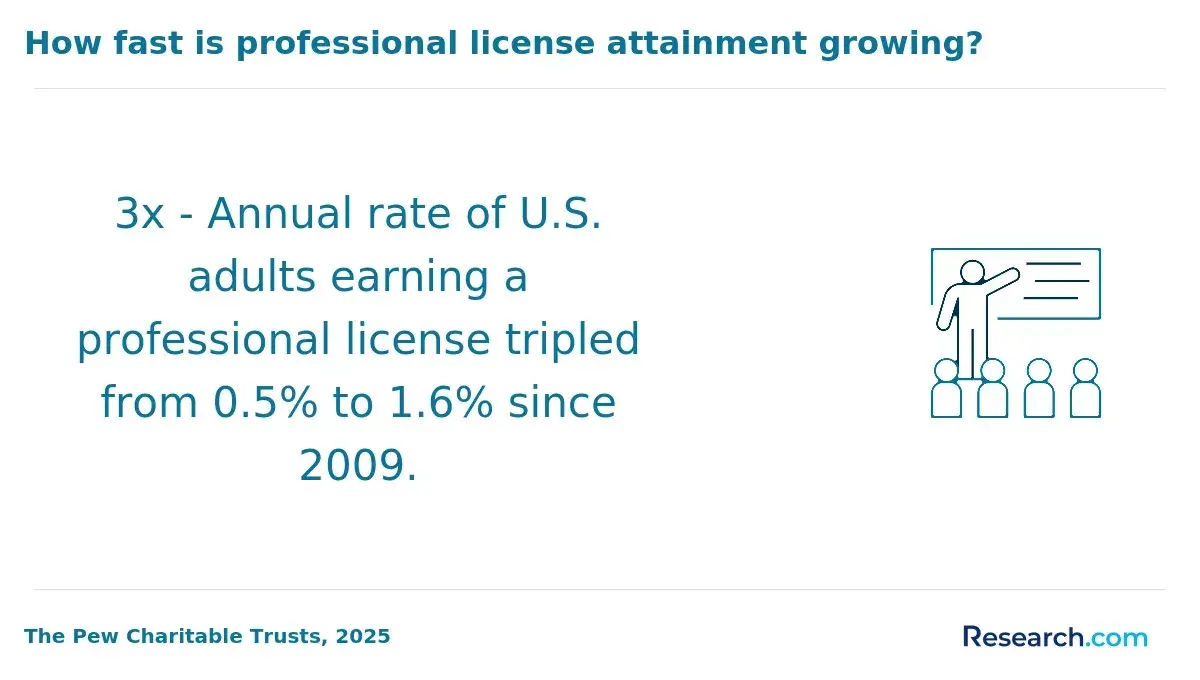
Graduates holding the highest level of a machine learning degree, typically a PhD, often pursue professional certifications to complement their deep academic expertise. These credentials provide practical validation of specialized skills that enhance employability and bridge academic theory with industry demands.
Such advanced machine learning certifications help doctoral graduates showcase applied knowledge in tools, platforms, and ethical AI practices, strengthening their leadership potential and cross-functional collaboration abilities. Below are examples of prominent certifications that supplement postgraduate machine learning certification programs:
- TensorFlow Developer Certificate: This certification demonstrates proficiency in building and deploying machine learning models using TensorFlow, a leading open-source framework. It complements a PhD's theoretical training by emphasizing practical skills essential in research and industry applications alike.
- AWS Certified Machine Learning - Specialty: Focused on cloud-based machine learning implementation, this credential is highly valued as 94% of enterprises adopt cloud services. It highlights a graduate's ability to design, deploy, and maintain scalable ML solutions on AWS platforms, extending leadership and technical competence.
- Certified Artificial Intelligence Practitioner (CAIP): This certification covers ethical AI guidelines, project management, and applied AI techniques, bridging gaps not always addressed in academic programs. It signals readiness for leadership roles and sophisticated industry collaboration.
Employers increasingly seek candidates combining advanced machine learning certification programs with thorough academic grounding, as certified professionals often experience faster promotions and salary growth per the LinkedIn Workplace Learning Report. For those considering foundational degree options, an accelerated online bachelor's degree can serve as an early step before advancing to doctoral studies and professional certifications.
For students contemplating a terminal or doctoral-level machine learning program, recognizing the breadth of career opportunities is crucial to aligning their education with long-term ambitions. Industry trends show a projected increase of more than 40% in demand for AI and machine learning specialists by 2025, highlighting the value of advanced qualifications. Exploring these career avenues helps clarify how top-level expertise translates into impactful professional roles.
- Research and Development: Graduates often lead innovation by creating novel algorithms and advancing machine learning theory. These roles emphasize pushing the boundaries of technology through experimentation and scholarly contributions.
- Senior Data Science: In these positions, professionals oversee complex data projects, guiding teams to deliver actionable insights. They leverage their deep knowledge to solve challenging problems at scale.
- Machine Learning Engineering: Designing and deploying scalable AI systems is central to engineering roles, where graduates apply both theoretical and practical skills to build robust applications.
- Academic Positions: Doctoral expertise enables teaching at universities and publishing research, shaping the next generation of machine learning talent and influencing the field's development.
- Policy and Advisory Roles: Graduates also step into roles that combine technical insight with strategic thinking to influence AI ethics, governance, and regulatory frameworks across industries.
- Industry Diversity: Career opportunities span multiple sectors including technology, healthcare, finance, and government, reflecting machine learning's wide applicability and impact.
When asked about her journey, a professional who completed the highest level of machine learning degree shared that balancing rigorous research demands and personal challenges was both intense and rewarding. She recalled times of deep frustration when experiments failed but emphasized that perseverance and mentorship were key to breakthroughs. The degree not only deepened her technical expertise but also boosted her confidence to lead interdisciplinary teams and contribute to strategic decisions. "It wasn't just about mastering algorithms," she explained, "it was learning how to think critically and communicate complex ideas effectively." This experience ultimately opened doors to leadership roles that she found deeply fulfilling.
Salary outcomes play a vital role for students pursuing terminal degrees in machine learning, as these programs require a significant commitment of time and resources. Industry data shows that the average salary for machine learning PhD graduates often surpasses that of those with lower degrees by a substantial margin, underscoring the long-term value of advanced education. This article explores detailed salary trends and career implications for doctorate holders in this field.
- Early-career earnings: Graduates holding a machine learning doctorate degree salary in the US typically start between $120,000 and $140,000 annually, which generally exceeds earnings of master's holders by 20-30% in similar roles.
- Long-term earning potential: With increased experience and responsibility, salaries for PhD graduates can reach $200,000 or more, often outpacing those with lower academic credentials over time due to career progression and specialized expertise.
- Industry variation: Specialized sectors like healthcare and finance tend to offer higher salaries compared to academia or government positions, reflecting the demand for advanced skills in high-stakes environments.
- Leadership and specialized roles: Advanced degrees open pathways to leadership positions such as principal data scientists or research directors, where individuals command premium compensation based on expertise and strategic impact.
Understanding these salary dynamics helps prospective students evaluate the return on investment when considering a doctorate in machine learning. For professionals exploring alternative routes, there are also valuable online certifications that can enhance earning potential in this evolving field.
Pursuing a doctoral or terminal degree in machine learning requires thorough evaluation due to the significant commitment involved. With the number of computer science PhDs rising by over 35% in the past decade, interest and demand in advanced AI expertise continue to grow. Considering key factors can guide you in determining if this path aligns with your goals.
Reflect on these important aspects when deciding:
- Career Goals: Identify whether leadership roles in research, academia, or specialized industry positions motivate you, as these often benefit most from a doctoral credential.
- Research Interests: A deep passion for original contributions or theoretical advancements fosters success and fulfillment in rigorous doctoral programs.
- Time and Financial Commitment: Prepare for a multi-year investment, usually 4 to 6 years, with considerable funding required, which demands careful personal and financial planning.
- Academic Preparation: Strong foundations in math, computer science, or related disciplines are essential to handle advanced coursework and research challenges.
- Long-Term Impact: Consider how a terminal degree may enhance your ability to influence your field, secure leadership roles, and achieve specialization in machine learning.
Advanced degrees in machine learning continue to grow in value as demand for specialized skills increases across tech sectors. Research from the National Science Foundation highlights that doctorate holders in computer science-related fields typically experience higher median salaries and enjoy lower unemployment compared to those with only bachelor's or master's qualifications. This trend underscores the potential professional and financial benefits tied to pursuing the highest academic credential in the field.
Earning a doctoral degree in machine learning provides deep theoretical understanding and engagement with innovative research, positioning graduates as top experts sought after for leadership in academia, industry, and research organizations. This advanced expertise often translates into greater career flexibility, enabling graduates to pursue roles such as tenure-track professors, senior research scientists, or data science executives that require extensive knowledge and original contributions. The terminal degree also offers a competitive edge in fields where innovation and complex problem-solving are priorities.
That said, the decision to invest in a PhD program requires careful consideration of the significant time commitment-typically 4 to 6 years-and the academic rigor involved, including sustained original research and publication demands. Financial factors also play a critical role since funding opportunities vary widely and may not cover all living expenses.
Candidates must evaluate their ability to balance program workload with personal or professional responsibilities, ensuring they are prepared for the sustained dedication required. Ultimately, aligning the degree pursuit with clear career objectives and readiness for the challenges ahead is crucial for making the most of this advanced educational path.
What Graduates Say About Their Highest Level of Machine Learning Degree
- Tino: "The highest level of machine learning degree program was a significant financial investment, approximately $70,000, but it was entirely worth it. I gained deep expertise in neural networks, natural language processing, and advanced algorithmic design that transformed my problem-solving approach. This program has been a game-changer in advancing my career, enabling me to lead innovative AI projects with confidence."
- Messan: "Paying nearly $65,000 for the utmost degree in machine learning was a careful decision, but it equipped me with critical skills in data modeling, reinforcement learning, and statistical analysis. Reflecting on this journey, I appreciate how it sharpened my analytical mindset and broadened my technical toolkit, which now drives my strategic decisions at work. The investment went beyond money-it was a profound professional growth experience."
- Everett: "At about $72,000, the cost of the highest level machine learning degree was undoubtedly substantial, yet it provided unparalleled expertise in deep learning architectures, computer vision, and scalable data systems. The competencies I developed allowed me to elevate my role within my company and contribute to highly complex projects that require precision and innovation. This degree marked a pivotal moment in my professional development."
Other Things You Should Know About Machine Learning Degrees
Yes. A postdoctoral fellowship is a common next step after a machine learning Ph.D. and usually lasts 1 to 3 years. It is hosted by a university, research institute, or industry lab and focuses on publishing, grant writing, and independent research under a senior investigator.
Interdisciplinary studies are highly encouraged during doctoral research in machine learning. Students often integrate knowledge from fields such as statistics, computer vision, natural language processing, neuroscience, or robotics to enrich their research. This broad approach helps address complex real-world problems and can enhance innovation in machine learning methodologies.
Networking and collaboration play a crucial role in the success of machine learning doctoral candidates. Engaging with peers, faculty advisors, and industry experts can lead to research partnerships, job opportunities, and exposure to cutting-edge developments. Many programs promote teamwork through research groups, workshops, and internships, which help expand professional connections.
- Machine Learning Skills: Your Guide to Getting Started https://www.coursera.org/articles/machine-learning-skills
- Journey to ML, Part 2: Skills of a (Marketable) Machine Learning Engineer | by Matthew McAteer | Medium https://medium.com/@matthewmcateer/journey-to-ml-part-2-skills-of-a-marketable-machine-learning-engineer-dcff8b240e21
- Best Online Machine Learning Degrees: 2025 Rankings & Directory https://www.mastersinai.org/degrees/online-machine-learning-degrees/
- A Guide to The Top Machine Learning Certifications For 2025 | DataCamp https://www.datacamp.com/blog/top-machine-learning-certifications
- Ask HN: Is a masters in ML worth it? | Hacker News https://news.ycombinator.com/item
- How long are AI ML courses - IABAC https://iabac.org/blog/how-long-are-ai-ml-courses
- School of IT/Artificial Intelligence and Machine Learning - INTERNATIONAL EUROPEAN UNIVERSITY, POLAND | EUROPE | STUDY IN POLAND | STUDY IN EUROPE | MBBS | GENERAL MEDICINE | BUSINESS | ENGINEERING | IT | EUROPE https://ieu.com.pl/european-school-of-it-home/school-of-it-artificial-intelligence-and-machine-learning/
- Which Industries Benefit from Machine Learning? — School of Data Science https://datascience.virginia.edu/news/which-industries-benefit-machine-learning
- 6 Popular Machine Learning Certifications: Your Guide for 2025 https://blog.trainocate.com/6-popular-machine-learning-certifications-your-guide-for-2025/
- Machine Learning Engineer Degree: How to Get One | OPIT https://www.opit.com/magazine/machine-learning-engineer-degree-what-is-it-and-how-to-get-one/