
2027 Is an Online Social Work Bachelor's Degree Worth It?

Co-Founder and Chief Data Scientist
An online bachelor's degree in social work can be a practical route into human services for adults who cannot relocate, commute several days a week, or pause work and caregiving responsibilities. The real question is not whether the classes are online; it is whether the program is accredited, affordable, field-placement ready, and aligned with the kind of social work job or graduate degree you want next.
Online delivery is now common enough that students can compare programs by cost, accreditation, support services, practicum expectations, transfer credit, and outcomes instead of assuming campus programs are automatically stronger. According to the Council on Social Work Education, 42% of accredited social work programs now offer online degree options, reflecting growing acceptance in the field.
This guide explains how to judge the value of an online social work bachelor's degree in practical terms: what it may cost, how employers view it, what salary outcomes look like, which jobs it can lead to, and what to check before enrolling so your degree supports career advancement, graduate school plans, and licensure-related goals.
Key Things to Know About the Value of an Online Social Work Bachelor's Degree
- Online social work bachelor's degrees often cost less than traditional programs-veterans can leverage military benefits to reduce expenses and maximize return on investment.
- Accredited programs meet professional standards, ensuring graduates are eligible for licensure and respected by employers and graduate schools.
- Graduates typically see career advancement in social services, with a 12% job growth projected through 2032, reflecting strong demand for qualified social workers.
What Are the Real Costs of Earning an Online Social Work Bachelor's Degree, and How Do They Compare to On-Campus Programs?
The real cost of an online social work bachelor's degree is more than tuition. Students should compare tuition, fees, technology needs, textbooks, field placement expenses, lost work time, and available aid before deciding whether an online program is cheaper than an on-campus option.
Online social work bachelor's degree programs typically charge tuition ranging from $200 to $500 per credit hour, based on data from IPEDS and the College Board's Trends in College Pricing report. That range can be similar to campus tuition, but the total bill often differs because online students may avoid commuting, parking, campus housing, and some facility-based fees.
- Tuition per credit hour: Some online programs use a flat online tuition rate, while campus programs may charge different rates for in-state and out-of-state students. Military-affiliated students and in-state residents should check whether discounts apply.
- Mandatory fees: Online learners generally pay technology or course fees ranging from $50 to $150 per term. These may be lower than campus-based activity, recreation, transportation, or facilities fees, but they still affect the net price.
- Required technology: Students should budget for a reliable computer, webcam, software access, and high-speed internet. Upfront technology costs typically fall between $500 and $1,000.
- Books and course materials: Digital textbooks and open educational resources can lower costs, but some courses still require paid texts, assessment tools, or subscriptions.
- Field placement costs: Even online social work programs may require in-person field experiences. Students may need to budget for transportation, background checks, immunizations, fingerprinting, or schedule changes at work.
- Childcare and commuting: Remote coursework can reduce travel and childcare costs, especially for working parents, but synchronous classes or local practicum hours may still require planning.
Examples of accredited online social work bachelor's programs priced below the national average include Fort Hays State University, University of Central Florida, Arizona State University Online, and Upper Iowa University. Students comparing these options should look beyond the published tuition rate and request a full cost estimate.
The most useful affordability number is the net price, not the sticker price. Sticker price is the published cost before aid. Net price reflects what students may actually pay after grants, scholarships, tuition discounts, and other assistance. Mid-career professionals, veterans, transfer students, and first-generation college students should compare federal grants, state aid, employer tuition reimbursement, military education benefits, and institutional scholarships before ruling out a program based on published tuition alone.
Transfer credit policies can also change the total cost. A program with a slightly higher per-credit rate may be less expensive overall if it accepts more previous credits and shortens the time to graduation. Students comparing affordability across fields can also review easy master's programs to understand how program length, transfer policies, and delivery format affect total education costs.
What Is the Return on Investment (ROI) of an Online Social Work Bachelor's Degree Over a Career Lifetime?
The ROI of an online social work bachelor's degree depends heavily on how much you pay, how much debt you take on, whether the program is accredited, and whether it leads to the roles you actually want. Social work is not usually chosen for high starting salaries, so the strongest ROI often comes from choosing an affordable program, graduating on time, minimizing loans, and using the degree as a foundation for advancement or graduate study.
Return on investment in higher education compares the total cost of earning a degree with the earnings, job access, stability, and advancement opportunities the degree can support. The Georgetown University Center on Education and the Workforce emphasizes considering both short- and long-term earning potential alongside program affordability and career stability when assessing ROI.
The PayScale College ROI Report offers discipline-specific data showing that social work bachelor's degrees generally produce modest but steady financial returns compared to other fields. A practical ROI estimate should include:
- Degree cost: Online social work programs often cost between $15,000 and $30,000, reducing upfront debt significantly when compared with higher-cost pathways.
- Lifetime earnings: Early-career social workers earn about $40,000 annually, with mid-career salaries rising to roughly $60,000.
- 10-year ROI: Graduates from affordable online programs typically recoup costs or see positive returns within 10 years because tuition is lower and salaries are steady.
- 20-year ROI: Over two decades, total earnings substantially exceed degree investments, especially when graduates move into supervisory, specialized, or advanced-practice roles.
Compared with the national average ROI for all bachelor's degrees, social work graduates may start at lower salaries. The value proposition is strongest for students who want a stable service-oriented career, can keep borrowing low, and plan strategically for roles in case management, child welfare, behavioral health, community services, or nonprofit administration.
- Cost efficiency: Online study can improve ROI by reducing commuting, relocation, and housing costs.
- Career access: A bachelor's degree can qualify graduates for many entry-level social service roles and can make them more competitive than applicants without a related credential.
- Professional credibility: An accredited program is far more valuable than a low-cost program that lacks recognition from employers, graduate schools, or licensing bodies.
- Graduate school pathway: A bachelor's degree in social work can support later MSW study, which may be necessary for advanced or clinical roles depending on state requirements.
- Nonfinancial return: Social work careers often provide mission-driven work, community impact, and long-term professional purpose, which matter to many students even when salary growth is moderate.
Students considering leadership, administration, or policy roles may later compare graduate options, including a doctorate in leadership, but the first ROI priority is choosing a bachelor's program that is accredited, affordable, and realistic to complete.
How Do the Salary Outcomes for Online Social Work Bachelor's Graduates Compare to Those With Traditional Degrees?
Salary outcomes for online and traditional social work bachelor's graduates are generally comparable when the online degree comes from a properly accredited institution. Employers usually focus more on accreditation, field experience, skills, references, location, and licensure eligibility than on whether coursework was completed online or on campus.
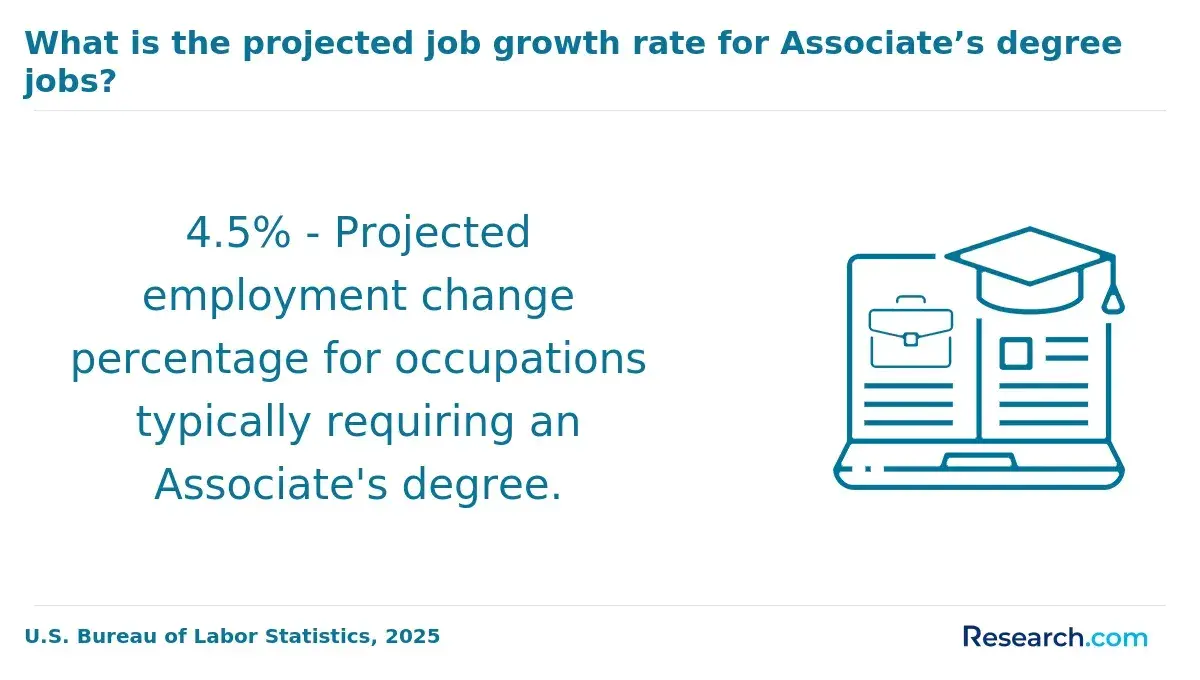
Data from the Bureau of Labor Statistics, PayScale, and LinkedIn Salary Insights reveal that median starting salaries for graduates holding an online or traditional bachelor's degree in social work average around $45,000, though this varies by region. After a decade, mid-career earnings typically range between $60,000 and $65,000. Professionals specializing in clinical practices or leadership roles often surpass these figures.
- Median starting salary: Online and on-campus social work graduates generally begin near $45,000, with local labor markets and employer type playing a major role.
- Mid-career earnings: At 10 years in the field, salaries often climb to between $60,000 and $65,000, particularly for workers with strong experience, supervisory duties, or specialized service areas.
- Institutional reputation: Degrees from CSWE-accredited programs or schools with strong reputations can improve job prospects and support salary progression.
- Geographic market: Urban areas, high-cost regions, and states with greater social service funding may offer more competitive compensation.
- Experience and specialization: Advanced credentials, such as Licensed Social Worker credentials and clinical licenses, typically improve earning potential, although requirements differ by state and role.
IPEDS data highlight that employment rates for online social work graduates align closely with on-campus cohorts, implying that program delivery mode carries limited influence on income. The bigger salary drivers are job setting, population served, state funding levels, union or government pay scales, and whether the graduate eventually earns an MSW or qualifies for advanced licensure.
A realistic first-five-year salary expectation is between $40,000 and $50,000, with steady gains as graduates build experience. Students who need the highest immediate earnings may want to compare social work with adjacent fields, but those committed to social services should focus on keeping education costs low and choosing a program with strong field placement support.
What Career Paths and Job Opportunities Are Available to Online Social Work Bachelor's Degree Graduates?
An online social work bachelor's degree can prepare graduates for entry-level human services, case management, community outreach, child welfare, behavioral health support, and nonprofit roles. It is important to distinguish these roles from licensed clinical social work positions, which commonly require graduate education and supervised practice depending on state rules.
- Social service specialist: Helps individuals and families address needs related to housing, employment, benefits, safety, and community resources. These roles are common in public welfare agencies and nonprofit organizations and usually require a bachelor's degree.
- Case manager: Coordinates care, tracks client progress, documents services, and connects people with healthcare, housing, mental health, disability, or social support resources. Case management roles are common in hospitals, government agencies, managed care organizations, and nonprofits.
- Mental health technician: Supports clinicians and care teams in psychiatric hospitals, residential treatment centers, or behavioral health facilities. A bachelor's degree may be sufficient for some roles, while some employers may request certification or prior direct-care experience.
- Child welfare worker: Focuses on child safety, family support, foster care coordination, reunification services, and court-related documentation. A bachelor's degree is generally expected, and additional licensure or an MSW may improve advancement options.
- Community outreach coordinator: Plans, promotes, and coordinates social service, public health, education, or prevention programs. These roles often require strong communication, data tracking, partnership-building, and program coordination skills.
According to the Bureau of Labor Statistics, social service careers are projected to grow about 12% over the next ten years, outpacing average job market growth. Demand is notably strong in mental health, substance abuse treatment, and elder care services.
Program focus matters. Students interested in substance abuse counseling, gerontology, child and family services, public benefits, healthcare navigation, or community advocacy should choose electives, field placements, and capstone projects that match those goals. The best program is not always the cheapest or fastest; it is the one that can place students in relevant supervised settings and help them graduate with usable experience.
Students comparing online program structures across different career fields may also review online game design programs to see how costs, schedules, and applied learning requirements vary by discipline.
What Student Support Services Do Online Social Work Bachelor's Programs Provide to Promote Success and Retention?
Strong online social work programs do more than post lectures and assignments. They provide advising, writing support, tutoring, field placement coordination, mental health resources, career services, and technical help designed for students who may be working, parenting, serving in the military, or returning to college after time away.
- Academic advising: Advisors help students understand degree requirements, sequence courses correctly, evaluate transfer credits, and stay on track for graduation. In social work, advising should also address field placement timing and graduate school planning.
- Tutoring and writing labs: Social work coursework often requires research papers, case notes, reflection assignments, policy analysis, and APA-style writing. Online writing centers and tutoring can be especially valuable for students returning to academic writing after a long break.
- Field placement support: A critical service is help identifying approved local agencies, completing placement paperwork, and meeting supervision requirements. Students should ask whether they must find their own placement or whether the school provides direct coordination.
- Mental health counseling: Social work education can involve emotionally demanding topics such as trauma, poverty, abuse, addiction, and family crisis. Confidential telehealth counseling can help students manage stress, anxiety, and burnout risk.
- Career services: Effective programs offer resume reviews, interview preparation, job search coaching, alumni connections, and employer partnerships in social services, healthcare, government, and nonprofit settings.
- Technology support: Online learners need reliable help with learning platforms, video sessions, proctored exams, library databases, and accessibility tools.
- Retention data and outcomes: Institutions reporting high retention and on-time graduation rates often attribute success to accessible advising and tutoring. According to the National Survey of Student Engagement (NSSE), students who regularly use these services tend to complete degrees more promptly.
Before enrolling, ask when support services are available. A program that offers advising only during weekday business hours may not work well for evening students, full-time employees, or caregivers.
Is an Online Social Work Bachelor's Degree Respected by Employers and Recognized Across Industries?
An online social work bachelor's degree is generally respected when it comes from a regionally accredited institution and, for professional social work preparation, a program with appropriate Council on Social Work Education recognition. Employers are less concerned with the online format when the curriculum, field experience, and credential meet professional expectations.
A 2023 survey conducted by the Society for Human Resource Management (SHRM) found that more than three-quarters of employers regard online degrees as equivalent to traditional ones, provided the programs hold appropriate accreditation. Degrees awarded by regionally accredited institutions with approval from the Council on Social Work Education (CSWE) tend to maintain equal standing.
In healthcare, mental health services, community agencies, government programs, and nonprofit leadership, online social work degrees generally carry the same weight as campus-based degrees when students complete required field experience and can demonstrate job-ready skills. Employers usually care about documentation, ethics, communication, crisis response, cultural competence, and the ability to work with vulnerable populations.
Some roles may still have additional requirements. Government agencies, school-based positions, child welfare departments, and clinical settings may require background checks, state-specific credentials, supervised experience, or graduate education. Certain clinical roles may prefer or require an MSW and in-person supervised practice, regardless of whether the bachelor's degree was online or campus-based.
Leading employers such as the Department of Veterans Affairs, Kaiser Permanente, and national nonprofit organizations including the United Way have publicly expressed openness to recruiting graduates from reputable online social work programs. Data from university career placements reinforce the growing acceptance and competitiveness of these online credentials in the workforce.
- Accreditation: CSWE and regional accreditation are central to employer recognition and academic credibility.
- Sector acceptance: Healthcare and nonprofit employers often treat online and on-campus degrees similarly when graduates have relevant field experience.
- Recruitment patterns: Major employers recruit from reputable online programs, especially when graduates meet role-specific qualifications.
- Licensing requirements: State rules may require supervised in-person training, exams, or graduate study for certain titles and roles.
- Outcome transparency: Students should review employment rates, field placement partners, alumni roles, and employer feedback before enrolling.
What Accreditation Standards Should an Online Social Work Bachelor's Program Meet to Be Considered Legitimate?
A legitimate online social work bachelor's program should be offered by an institution with recognized institutional accreditation and should meet professional social work standards relevant to the student's goals. Accreditation affects financial aid eligibility, credit transfer, employer recognition, graduate school admission, and licensure-related pathways.
- The six regional accreditors: Recognized by the U.S. Department of Education, these include the Higher Learning Commission (HLC); Southern Association of Colleges and Schools Commission on Colleges (SACSCOC); New England Commission on Higher Education (NECHE); Middle States Commission on Higher Education (MSCHE); Northwest Commission on Colleges and Universities (NWCCU); and WASC Senior College and University Commission (WSCUC).
- National accreditation: National accreditation is typically awarded to vocational, technical, or faith-based schools. It is less widely accepted in social work and may limit credit transfer, employer recognition, or graduate school options.
- Programmatic accreditation: The Council on Social Work Education (CSWE) provides specialized accreditation for social work degrees, helping ensure that curricula meet professional standards required for licensure-related and advanced career pathways.
- Verification: Applicants should confirm accreditation through the Council for Higher Education Accreditation (CHEA) or the U.S. Department of Education (ED) databases rather than relying only on marketing materials.
- Risks of unaccredited programs: Enrolling in an unaccredited or lapsed program can jeopardize federal financial aid eligibility, transfer credit, graduate school admission, employer recognition, and licensing eligibility.
More than 90% of social work students are enrolled in regionally accredited institutions, highlighting a clear preference for programs that meet established academic and professional standards.
Students should also check whether accreditation applies to the specific program and campus or online format they are considering. If a school says accreditation is pending, ask what happens if approval is delayed or denied before your expected graduation date.
How Long Does It Take to Complete an Online Social Work Bachelor's Degree, and What Factors Affect the Timeline?
Most online social work bachelor's degrees require about 120 credit hours and take around four years of full-time study. The actual timeline can be shorter or longer depending on transfer credits, enrollment intensity, course availability, field placement scheduling, and whether the program uses accelerated or competency-based formats.
Accelerated formats with eight-week courses can help students complete requirements faster, but they are not automatically easier. Shorter terms often require more weekly reading, writing, discussion, and assignment time. Working adults should be realistic about how many courses they can handle at once.
Competency-based education (CBE) pathways can further accelerate completion by allowing students to move ahead after demonstrating mastery instead of waiting for a fixed term to end. Year-round enrollment can also reduce downtime by allowing students to continue through summer or between traditional semesters. These formats may help disciplined students complete their degrees in two to three years instead of the typical four.
Schools such as Western Governors University and Southern New Hampshire University have established online social work bachelor's programs with average completion times ranging from 2.5 to 3.5 years, depending on transfer credits and commitment. Western Governors University, for example, offers a fully online, competency-based social work degree designed for flexible pacing that helps students graduate faster by leveraging prior experience.
- Credit requirement: Most social work bachelor's degrees require about 120 credits, usually completed over four years in traditional formats.
- Transfer credits: Prior college coursework, military training, and approved exams may reduce the number of credits needed.
- Accelerated courses: Eight-week terms can speed progress but require strong time management.
- Competency-based education: CBE can reduce repetition for students who already know the material and can demonstrate mastery quickly.
- Year-round enrollment: Continuous course offerings can help students avoid long breaks and maintain momentum.
- Field placement timing: Practicum or internship availability may affect graduation dates, especially if placements have limited schedules.
- Cost and career impact: Faster completion can reduce tuition expenses and help students enter the social work workforce sooner.
Students comparing online pacing in other disciplines can review degrees in social media to see how online timelines vary across program types.
What Financial Aid, Scholarships, and Tuition Assistance Are Available for Online Social Work Bachelor's Students?
Online social work bachelor's students may qualify for the same major types of aid as campus students, provided the school and program meet eligibility requirements. The most important first step is completing the Free Application for Federal Student Aid (FAFSA) early because some funds are limited and awarded on a first-come, first-served basis.
- Federal Pell Grants: These need-based grants do not require repayment and can provide awards up to $7,395 for the 2023-2024 academic year. Eligibility depends on financial need, enrollment status, and cost of attendance.
- Direct Subsidized and Unsubsidized Loans: Subsidized loans pause interest accrual while enrolled at least half-time, while unsubsidized loans accumulate interest immediately. Loan amounts vary by academic year and dependency status.
- Institutional scholarships: Colleges may offer awards for transfer students, adult learners, first-generation students, military-affiliated students, or students committed to public service.
- Social work scholarships: Some scholarships target students preparing for child welfare, behavioral health, community service, or work with underserved populations.
- Employer tuition reimbursement: Human services agencies, healthcare systems, government employers, and nonprofits may help employees pay for job-related education.
- Federal work-study: Eligible students may use part-time work opportunities to help cover costs while gaining experience related to public service or community programs.
Notable awards and funding sources include:
- National Association of Social Workers (NASW) Minority Fellowship Program: Provides critical support for social work students from underrepresented backgrounds focusing on social justice careers.
- Jane B. Aron Doctoral Fellowship in Social Work and Social Welfare: Primarily for doctoral students, but some affiliated scholarships may benefit undergraduates at select institutions.
- State Social Work Grant Initiatives: State-specific grants support social work students dedicated to local community service, with eligibility and amounts varying by location.
Students planning to continue beyond the bachelor's degree should also compare future graduate costs early. For example, those who expect to pursue an MSW can review options such as the cheapest online master's in social work while deciding how much debt to take on during the bachelor's stage.
The strongest affordability strategy is layering aid sources. Combine grants, scholarships, transfer credits, employer support, military benefits if applicable, and careful course planning to reduce borrowing. Always ask the school for a full cost-of-attendance estimate that includes tuition, fees, books, technology, field placement expenses, and any required campus visits.
Students comparing reputable online program structures in other fields can also review resources such as the electrical engineering degree online admissions rankings.
What Are the Admission Requirements for Online Social Work Bachelor's Degree Programs?
Admission requirements for online social work bachelor's programs vary widely. Some programs are selective and expect a stronger academic record, while others are designed for broader access, transfer students, and working adults. Applicants should review both general university admission rules and any separate requirements for entry into the social work major.
Most programs require a high school diploma or GED and official transcripts. Competitive programs may require a minimum GPA, often around 3.0, while open-access institutions may accept lower GPAs or impose no minimum. Students transferring from community colleges or other universities should ask how prior credits apply to general education, electives, and social work major requirements.
Testing policies differ. Some schools request SAT or ACT scores, while others waive standardized tests for adult learners, transfer applicants, or students who meet GPA or credit thresholds. Prerequisite courses may also matter, especially at selective schools that expect foundational coursework in psychology, sociology, or English composition.
- GPA requirements: Competitive programs typically require a minimum 3.0 GPA; open-access programs may accept lower GPAs or have no minimum.
- Educational credentials: A high school diploma or GED is mandatory across programs.
- Official transcripts: Applicants usually need transcripts from high school and any colleges previously attended.
- Standardized testing: Some schools ask for SAT or ACT scores; others waive them, especially for non-traditional students.
- Prerequisite coursework: Selective programs often expect psychology, sociology, or English composition, while open programs may allow students to complete prerequisites after enrollment.
- Application materials: Some programs may ask for a personal statement, recommendation letters, resume, or explanation of interest in social work.
- Admission timeline: Rolling or continuous admissions can help working parents, veterans, and career changers start when their schedules allow.
Applicants who do not meet standard criteria can improve their chances by completing community college coursework, earning strong grades in prerequisite classes, gaining relevant volunteer or human services experience, and submitting thoughtful recommendation letters. A short conversation with an admissions counselor can clarify whether it is better to apply directly, transfer later, or start as a pre-major student.
How Should Prospective Students Evaluate and Choose the Right Online Social Work Bachelor's Degree Program for Their Goals?
Prospective students should choose an online social work bachelor's program by matching the program to their career goal, state requirements, schedule, budget, and support needs. A low-cost program is not a good value if it lacks the accreditation, field placement support, or student services needed to help you graduate and compete for jobs.
- Accreditation: Verify institutional accreditation and the program's social work accreditation status. This protects credit transfer, graduate school eligibility, employer recognition, and licensure-related plans.
- Cost and ROI: Compare total cost, not just tuition. Include fees, books, technology, placement-related expenses, travel, and time away from work. Use the U.S. Department of Education's College Scorecard and school net price calculators to estimate affordability.
- Program format and flexibility: Check whether courses are asynchronous, synchronous, accelerated, part-time, full-time, or competency-based. Make sure the schedule matches your work and family responsibilities.
- Field placement support: Ask how placements are arranged, whether the school has partners in your area, and what happens if you live far from approved agencies.
- Career outcomes data: Review graduation rates, job placement data, alumni roles, graduate school acceptance patterns, and employer partnerships.
- Student support services: Confirm that online students receive advising, tutoring, writing help, library access, counseling, career coaching, and technical support.
- Transfer credit policies: Ask for a formal transfer credit audit before enrolling, especially if you are a veteran, community college transfer student, or returning adult learner.
- Licensure alignment: Contact the relevant state licensing board or review state rules if your goal involves a protected title, school role, or clinical pathway.
Hidden costs deserve close attention. Technology fees, proctored exam expenses, textbooks, background checks, immunizations, placement travel, and mandatory residency sessions may not be obvious in advertised tuition. Build a side-by-side comparison of your top programs using the IPEDS Data Center and each school's official cost information.
Before applying, complete these steps:
- Request a written cost estimate: Ask the school to include tuition, fees, books, technology, and expected field placement costs.
- Ask for a transfer credit audit: Confirm how previous credits will apply before you commit.
- Speak with field placement staff: Do not rely only on admissions staff for practicum details.
- Review outcomes: Look for graduation, retention, employment, and graduate school data.
- Track financial aid deadlines: Submit FAFSA and scholarship applications early.
- Plan your weekly schedule: Estimate study time, class meetings, assignments, and future field hours before choosing full-time or part-time enrollment.
What Graduates Say About the Value of Their Online Social Work Bachelor's Degree
- Santino: "Choosing the online social work bachelor's degree program was a game changer for me because it allowed me to balance my full-time job while advancing my education. The tuition was surprisingly affordable compared to traditional programs, which made the investment feel worthwhile given the professional growth I've experienced. Earning this degree opened doors for higher-level positions in nonprofit organizations, and I truly feel more confident in my ability to make an impact."
- Jaime: "Reflecting on my journey through the online social work bachelor's degree program, the flexibility was invaluable-especially as a parent managing a busy household. The program's online format meant I could study at my own pace without compromising family time. Beyond cost savings, the curriculum's focus on practical skills helped me transition into a rewarding career in community health services, proving the program's worth far beyond just the degree itself."
- Everett: "From a professional standpoint, this online social work degree elevated my credentials in the eyes of employers and colleagues alike. I appreciated how the curriculum integrated theory with real-world applications, which prepared me well for direct practice roles. Although the cost was modest, the return on investment has been substantial, with new job opportunities and increased responsibilities reflecting the program's value."
Other Things You Should Know About Social Work Degrees
Online social work bachelor's programs usually deliver coursework through video lectures, discussion boards, and interactive assignments. Students can access materials on their own schedules but must meet deadlines just like in-person classes. Many programs incorporate virtual simulations and live sessions to enhance engagement, helping students develop practical skills remotely. The experience can be flexible but requires strong self-discipline and time management.
Students often have options to specialize in areas such as child and family welfare, mental health, gerontology, or community development within online social work bachelor's programs. These concentrations tailor coursework to specific populations or issues, preparing graduates for targeted roles in social services. Specializations support career advancement by deepening knowledge in chosen fields and enhancing employability.
An online social work bachelor's degree from an accredited program is generally respected by graduate schools and meets prerequisites for advanced social work education. Accreditation by the Council on Social Work Education (CSWE) is crucial for eligibility in most master's programs. Graduates should maintain strong academic records and relevant experience to enhance their competitiveness for graduate admissions.
References
- How Long Does It Take to Get a MSW Degree? | ValidGrad.com https://validgrad.com/blog/how-long-does-it-take-to-get-a-msw-degree-the-real-timeline-nobody-talks-about/
- Aurora's Online BSW Prepares Grads for a Variety of Careers https://online.aurora.edu/program-resources/bachelor-social-work-job-opportunities/
- 7 Things to Consider When Taking an Online BSW Degree https://nohoartsdistrict.com/7-things-to-consider-when-taking-an-online-bsw-degree/
- How Long Does it Take to Become a Social Worker? https://socialworklicensemap.com/become-a-social-worker/how-long-does-it-take/
- Bachelor’s degrees in social work (BSW) online https://www.onlinemswprograms.com/online-social-work-degrees/bsw/
- BSW Online https://socialwork.ucalgary.ca/future-students/bachelor-social-work/two-year-bsw-program/online-bsw
- Scholarships for Online Social Work Students https://www.onlinecolleges.me/financial-aid/scholarships/social-work/
- Online Bachelor of Social Work (BSW) Degree https://online.pennwest.edu/programs/social-work/index.php
- Choosing a bachelor's in social work | edX https://www.edx.org/resources/how-to-choose-a-bachelors-in-social-work
- How to Choose a Social Work Program - Social Work Education Center https://www.socialworkdegree.net/how-to-choose-a-social-work-program/


