2027 Industry Demand for Secondary Education Master's Graduates: Job Outlook & Hiring Trends

Co-Founder and Chief Data Scientist
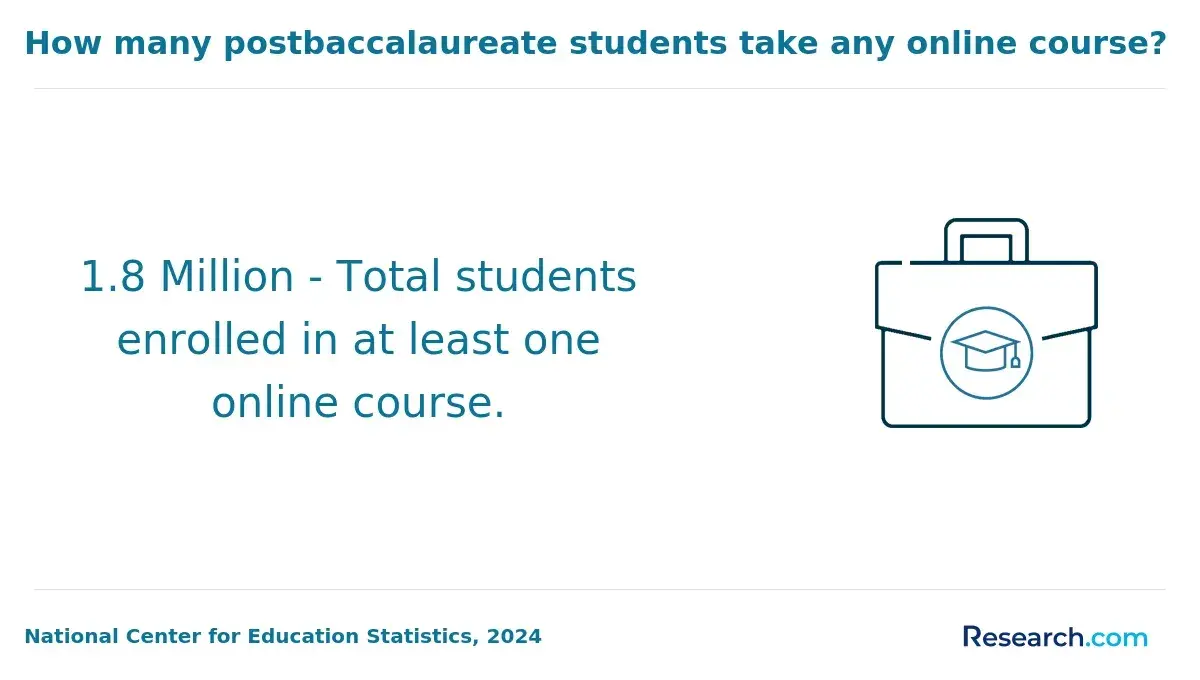
The employment landscape for secondary education master's graduates reflects increasingly nuanced employer expectations shaped by credential requirements and role specialization. Positions such as curriculum coordinator, instructional coach, and student affairs specialist now often demand applied skills in data analysis, educational technology, and compliance with evolving certification standards. According to the National Center for Education Statistics, nearly 45% of graduate enrollments in education programs in 2024 are working adults seeking flexible online formats-a trend emphasizing access and balance for budget-conscious learners and career changers. Advanced study in secondary education equips professionals to meet these shifting priorities through targeted leadership development and industry-aligned projects.
This article examines hiring trends, credential trends, and program features helping readers assess how a secondary education master's degree fits their career ambitions, financial considerations, and specific labor market goals.
Key Things to Know About Industry Demand for Secondary Education Master's Graduates
- Demand increasingly favors candidates with role-specific credentials like special education or STEM endorsements, reflecting employers' shift toward targeted expertise over general master's qualifications, which limits broader job mobility.
- Workforce data shows a rising need for secondary educators skilled in hybrid classroom management, pressuring programs to integrate digital pedagogy to meet evolving employer expectations for blended learning environments.
- According to 2024 NCES data, enrollment flexibility through asynchronous online courses mainly aids adult learners balancing work, but extended program length often increases overall costs, affecting candidates' timing and financial planning.
What is the current job outlook for secondary education master's graduates?
The job outlook for secondary education master's graduates reflects a complex interplay between regional staffing needs, credential rigor, and evolving instructional demands. Understanding these forces reveals why advanced degrees, specialized certifications, and technological fluency increasingly determine who secures competitive roles and how career trajectories unfold.
- Industry Demand Focus: Employment trends for secondary education master's graduates correlate strongly with school district budgets and evolving policy priorities. Districts with growing student populations show steady hiring, but budget constraints temper the volume of openings, especially in public systems.
- Credential Differentiation: Master's degrees emphasizing subject-specific expertise or instructional leadership typically unlock higher salary scales and leadership roles. Graduates without targeted specialization or licensure enhancements often face limited advancement in salary and responsibilities.
- Geographic Variation: Metropolitan areas offer a wider array of openings across diverse school types, while rural districts may have fewer jobs but often experience acute teacher shortages. This mismatch shapes mobility decisions and the nature of available employment incentives.
- Licensure Requirements: Valid teaching credentials remain a baseline expectation, with many states requiring additional certifications in ESL, special education, or educational technology to remain competitive. Absence of these narrow credentials can exclude candidates from many positions despite holding a master's degree.
- Technology Adaptation: Schools increasingly seek educators proficient in digital instruction and remote learning platforms. Graduates who integrate technology seamlessly into pedagogy possess a tangible advantage as blended learning becomes a core operational model.
- Career-Stage Mobility: Advancement from secondary teaching into curriculum development or administrative roles depends heavily on demonstrated professional growth and adaptability. This dynamic favors graduates who strategically augment credentials and skills to match labor market expectations over time.
For job seekers focused on cost-effective, accredited online secondary education master's programs that align with these hiring realities, it is critical to prioritize pathways that balance flexibility with clear employability outcomes. Those evaluating programs should consider how well offerings integrate licensure preparation and real-world skill development to meet these market-driven demands.
Ultimately, graduates who understand these practical constraints and plan accordingly navigate the job outlook more successfully, leveraging the degree not just for entry but for sustainable career progression consistent with evolving sector needs and regional disparities. This measured approach aligns with detailed insights on the best 4 year degrees that emphasize return on investment and workforce readiness.
Which industries hire the most secondary education master's graduates?
Industries that employ graduates with a master's in secondary education prioritize advanced pedagogical skills and content expertise to meet evolving educational demands. These hiring patterns are deeply influenced by regulatory requirements, funding models, and operational complexities unique to each sector.
- Public K-12 School Districts: As the largest employers, public districts require master's-level teachers to fulfill state certification mandates and uphold curriculum standards. These roles often involve leadership responsibilities and a focus on instructional quality linked to student achievement, reflecting the premium placed on the master's credential for career advancement.
- Private and Charter Schools: These schools, less bound by credential mandates, seek graduates for their innovative teaching and subject specialization, particularly in STEM and language immersion. Graduates here typically engage in curriculum development and extracurricular programs, highlighting these institutions' adaptability and competitive differentiation strategies.
- Educational Consulting and Curriculum Firms: Employers in this niche leverage master's graduates' theoretical knowledge and classroom experience to design or modify educational products and policies. The demand reflects a need for professionals who can bridge research and practical application in diverse learning environments.
- Community Colleges and Workforce Agencies: Growing emphasis on adult education and career-technical education has expanded opportunities for secondary education graduates. Positions in these settings require a blend of secondary education expertise and vocational training insight, responding to labor market shifts and lifelong learning priorities.
- Healthcare and Nonprofit Sectors: Although less traditional, these sectors employ graduates in roles like health education and youth programming. The ability to design effective curricula tailored to specific populations underscores the master's degree's versatility beyond standard classroom roles.
The overall demand for secondary education master's graduates is tightly linked to sectors where complex accountability, specialized skills, and pedagogical innovation drive employment decisions rather than broad certification alone. This nuanced landscape guides budget-conscious professionals toward programs emphasizing practical application, flexibility, and strong connections to these diverse employer needs.
What are the most common job titles for secondary education master's degree holders?
Employer demand for secondary education master's graduates is often signaled through nuanced job titles that reflect distinct competency expectations and career trajectories rather than generic teaching roles. These titles convey how employers differentiate candidates based on advanced skills in pedagogy, leadership, curriculum expertise, and certification status, influencing salary, advancement, and work arrangements.
- Secondary School Teacher: This fundamental role emphasizes direct classroom instruction and content mastery across disciplines like math, English, or science. Employers expect strong classroom management and practical teaching skills, often requiring state certification; the position typically represents entry or mid-level roles within public or private schools.
- Instructional Coach: Positioned between teaching and administration, this job demands both mentoring abilities and applied pedagogical knowledge. Instructional coaches rarely hold full classroom loads, instead focusing on teacher development and curriculum alignment, making the role a common pathway toward leadership but with fewer direct teaching hours.
- Curriculum Coordinator: This title reflects a shift toward program oversight, compliance monitoring, and educational research. It requires deeper policy understanding and collaboration across departments, frequently entailing supervisory responsibilities and serving as a bridge to district-level administration or academic advising.
- Department Chair or Lead Teacher: Representing intra-school advancement, these roles involve operational leadership, resource advocacy, and strategic planning within a subject area. Employers use these titles to denote staff who balance teaching with management duties, often rewarding them with differentiated pay and influence.
- Educational Consultant or Assessment Specialist: These specialized roles indicate a move beyond classroom teaching into research, data analysis, and systemic improvement. They require advanced credentials or endorsements, reflecting increasing employer emphasis on evidence-based practices and continuous school improvement.
For example, a recent graduate explored job postings listed as both "instructional coach" and "curriculum specialist" across several districts and noticed the latter consistently required experience with program evaluation and policy knowledge.
This distinction helped clarify where her master's-level training fitted best. Initially hesitant about transitioning away from classroom teaching, she found comfort in knowing her skills aligned with multiple roles, some offering hybrid work models and clearer advancement routes, ultimately guiding her decision to pursue specialized credentials that employers valued most.
How does the salary for secondary education master's graduates compare to other advanced degrees?
Salary outcomes for secondary education master's graduates reveal distinct market dynamics compared to other advanced degree holders in the United States. Unlike fields where wages reflect rapidly shifting industry demand, compensation in secondary education is more tightly linked to standardized pay scales, licensure requirements, and public sector funding constraints.
This creates a unique hiring context where salary growth and job roles differ substantially from disciplines such as business, engineering, or healthcare.
- Industry Premium: Advanced degrees in business or healthcare often command higher initial salaries due to direct alignment with revenue-generating roles and competitive labor markets. In contrast, secondary education salaries are shaped by education budgets and contract negotiations, limiting wage premiums despite comparable graduate-level qualifications.
- Role Specialization: Secondary education master's graduates frequently pursue licensed teaching positions or specialized instructional roles, where pay is driven by tenure and certification rather than market scarcity. This reduces flexibility but enhances job stability relative to less regulated fields.
- Credential Signaling: The value of a master's degree in secondary education lies heavily in licensure pathways, which function as critical employment prerequisites. Unlike some fields where advanced degrees directly boost marketability across industries, secondary education credentials signal specific pedagogical expertise tied to regulated hiring structures.
- Geographic and Sector Variation: Public school districts versus private or nonprofit employers show significant salary variation, and regional differences matter as districts in high-cost areas may offer competitive packages to attract qualified educators. This geographic variability impacts return-on-investment calculations for secondary education programs.
- Advancement Ceiling: Salary increments in secondary education often plateau due to rigid contract scales, in contrast to faster progression seen in business or healthcare sectors where performance incentives and leadership roles substantially increase earnings.
- ROI Tradeoff: Graduates weighing a secondary education master's degree should consider the tradeoff between lower immediate salary potential and enduring job security with benefits. For budget-conscious learners seeking flexible, affordable options, exploring affordable online master's programs with strong licensure outcomes remains a pragmatic choice.
What hiring trends are shaping demand for secondary education master's talent?
Recent hiring patterns reveal a clear shift toward valuing applied skills and leadership potential in secondary education master's graduates, rather than relying solely on academic credentials. Employers increasingly seek candidates who demonstrate proficiency with emerging digital tools and can navigate hybrid or remote teaching environments, reflecting widespread integration of technology in K-12 education.
- Technical Specialization: Mastery of educational software and digital pedagogy is becoming a baseline expectation. Candidates comfortable adapting curriculum through technology gain a competitive edge, especially where remote learning persists or fluctuates.
- Leadership Readiness: Beyond delivering instruction, roles often require educators who can mentor colleagues, contribute to program design, or lead cross-functional initiatives. Demonstrated collaborative and communication skills factor heavily into advancement opportunities.
- Credential Compliance: Updated certifications aligned with state and district licensing mandates are essential. Employers prioritize candidates whose endorsements precisely match subject matter and student population needs to ensure regulatory adherence.
- Data-Driven Problem Solving: Graduates who apply evidence-based methods, including analyzing student data to tailor interventions, stand out. Practical problem-solving is increasingly valued over theoretical knowledge alone.
- Cross-Disciplinary Collaboration: Success depends on the ability to communicate effectively across teams and with stakeholders beyond the classroom. This skill supports integrated support services and holistic educational strategies.
The evolution of secondary education employment reflects these nuanced demands. Candidates investing in versatile, up-to-date competencies can better position themselves for roles with broader responsibilities, improved salary potential, and resilience amid ongoing shifts in instructional technology and policy environments.
What skills and specializations are most in demand for secondary education master's roles?
Employers targeting candidates with a master's in secondary education emphasize the ability to navigate increasingly complex classroom and institutional demands rather than generic teaching skills. This specificity shapes recruitment, with a marked preference for expertise that aligns closely with evolving pedagogical challenges and district-level priorities.
In practical terms, hiring managers often screen for candidates who demonstrate applied mastery in both curriculum development and technology-enabled instruction, reflecting the sector's dual focus on content delivery and adaptive learner engagement.
The skills in demand extend beyond classroom instruction to roles that intersect with assessment, equity initiatives, and instructional leadership, reinforcing the value of a nuanced graduate-level skill set in workforce positioning.
- Curriculum Design Proficiency: Mastery in creating differentiated lesson plans and assessment strategies that address diverse learner needs is essential. This capability aligns with employer priorities on equity and inclusion, ensuring graduates can support varied student populations effectively.
- Content Specialization: STEM fields like mathematics, biology, and computer science remain high-demand specializations due to persistent teacher shortages, while English language arts and bilingual education reflect demographic shifts and accountability standards. Dual certification enhances employability by enabling candidates to fill multiple programmatic roles.
- Technological Fluency: Competence with learning management systems, data analytics, and virtual instruction models is increasingly non-negotiable. Employers expect graduates to integrate these tools to manage dynamic, often hybrid, learning environments efficiently.
- Assessment and Feedback Expertise: Proficiency in formative and summative assessments allows educators to provide actionable feedback that improves student outcomes, a key factor in tenure-track and leadership hiring decisions.
- Leadership and Policy Literacy: Skills in mentoring, curriculum leadership, and implementing school-wide initiatives distinguish candidates ready for instructional coaching or administrative roles, reflecting a trend toward internal capacity building and accountability.
These specializations driving secondary education master's job growth increasingly determine a graduate's ability to secure roles beyond the classroom, emphasizing adaptability to shifting instructional demands and evolving policy landscapes.
For adult learners and career changers balancing cost and flexibility, choosing programs with demonstrated outcomes in these competencies is critical for maximizing return on investment. Additionally, those seeking interdisciplinary knowledge may explore related fields such as an art therapy masters to enhance their skill portfolio within education and related healthcare systems.
How do employers describe the value of secondary education master's graduates?
Employers assessing secondary education master's graduates emphasize their readiness to address complex instructional challenges and administrative demands that extend beyond initial teaching credentials. This advanced training is linked to measurable competencies that hiring managers actively seek when staffing roles that require deeper curricular insight and leadership potential.
Unlike bachelor's-level candidates, master's graduates often enter recruitment pools with demonstrated skills in strategic planning and collaborative problem-solving, crucial for roles demanding immediate impact on school initiatives and student success.
- Technical Depth: Employers value candidates for their sophisticated knowledge of curriculum development and data-driven instructional design, which align closely with district objectives for measurable academic improvement.
- Applied Problem-Solving: Real-world project experience and field-engaged internships inform graduates' ability to implement innovative teaching strategies that respond to diverse learner profiles and evolving educational standards.
- Leadership Readiness: Preparation for departmental or cross-functional leadership is a distinct advantage, with coursework and practicum elements focusing on educational policy, team dynamics, and mentorship roles within schools.
- Credential Alignment: Where job descriptions specify master's-level licensure or certification requirements, these degrees fulfill regulatory expectations and are often non-negotiable prerequisites for specialized positions like instructional coach or curriculum specialist.
- Cross-Functional Communication: Graduates' training in integrating technology and culturally responsive practices enhances their capacity to engage diverse stakeholders, from students to parents and administrative teams, a key factor in hiring decisions.
One secondary education master's graduate recounted an interview experience during a late 2023 hiring cycle where school leaders explicitly contrasted her application with others holding only bachelor's credentials. The panel probed her experience with formative assessments and technology integration, key components emphasized in her master's coursework.
They acknowledged her demonstrated capacity to lead a pilot program on differentiated instruction but expressed concern about balancing specialized knowledge with flexibility needed for broader teaching assignments.
Ultimately, while her higher-level skills positioned her favorably for a curriculum-focused role, the discussion highlighted how employers weigh both depth and versatility, especially when budgets limit expanded staffing. This nuanced feedback gave her insight into how master's training is weighed not merely as a credential but as a complex factor influencing candidate selection and role fit in the secondary education job market.
What ROI do secondary education master's graduates typically see from their degree investment?
Return on investment (ROI) for secondary education master's graduates extends beyond immediate salary boosts to include how graduates translate advanced qualifications into tangible, career-specific advantages. For example, a working teacher pursuing an online program with employer tuition support may offset upfront costs while positioning for district leadership roles, a pathway not guaranteed just by holding a degree.
The timing of financial returns varies, with opportunity costs especially relevant for full-time students who forgo income, contrasted with part-time learners balancing work and study. Understanding employer expectations and local credential requirements is essential to assessing whether the degree enhances job stability or promotion potential in dynamic school systems.
- Tuition Investment: The sticker price matters less when employer reimbursement or financial aid reduces net cost, making lower-debt programs critical for budget-conscious learners.
- Flexible Scheduling: Online and part-time options enable continued employment, minimizing lost wages and maintaining professional momentum during study.
- Credential Relevance: Fields with strict licensure or certification prerequisites demand aligned degrees to unlock pay scale increments or specialized roles.
- Job Market Dynamics: Graduates in high-need areas like STEM or special education face stronger hiring demand, accelerating placement and ROI compared to saturated regions.
- Career Transition Leverage: Those seeking to shift teaching specialties or assume administrative roles rely on degree credentials combined with local policy fit, not degree presence alone.
Successful ROI evaluation includes analyzing how tuition, program design, credential requirements, and regional labor markets intersect to produce meaningful career outcomes rather than assuming uniform financial benefit.
What job search and hiring strategies work best for secondary education master's candidates?
Job search outcomes for secondary education master's graduates depend heavily on strategic alignment with employer expectations and efficient navigation of hiring filters. Districts increasingly prioritize candidates who demonstrate not just certification but a clear understanding of curriculum standards and district-specific challenges.
In practice, a generalist approach to applications often results in repeated screening hurdles, whereas tailoring materials to highlight how master's coursework addresses real classroom or leadership needs reduces mismatch and improves interview invitations.
Adapting job search tactics for secondary education master's roles also entails differentiating oneself through convincing evidence of applied skills rather than generic résumé statements, a crucial point given how many districts rely on automated initial screenings and referrals.
- Credential Positioning: Articulate how graduate-level coursework builds instructional expertise or leadership capacity beyond basic teacher certification. Use concrete examples from practicum or projects to link theory with classroom realities, helping hiring managers see tangible value.
- Portfolio Evidence: Develop a digital portfolio showcasing curriculum designs, assessment samples, or technology integration plans. This creates concrete proof of readiness and supports claims of applied instructional effectiveness not easily conveyed through text resumes alone.
- Employer Targeting: Research district priorities and certification trends, then tailor applications to fit local standards and certification requirements. This reduces screening friction and signals a practical fit for specific roles.
- Interview Preparation: Prepare to discuss secondary-level challenges such as classroom management and differentiated instruction with data-driven examples. This shows an understanding that matches the nuanced demands of grade-level teaching contexts.
- Transferable Skills Framing: Translate master's achievements into language hiring managers associate with outcomes in secondary education settings, positioning candidates for roles that may include leadership or curriculum development.
- Timing Applications: Align job search efforts with typical hiring cycles-often late winter through early summer-to increase candidate visibility and interview opportunities.
Secondary education master's candidates can significantly improve their job search and hiring success by adopting strategies that clearly communicate their advanced preparation and relevant experience. Emphasizing applied projects, specialized coursework, and field-specific credentials within targeted job-title research enables candidates to align their qualifications with employer screening criteria effectively. Leveraging professional networking channels alongside well-prepared portfolios or writing samples further strengthens candidacies.
Moreover, avoiding generic résumé claims is critical; candidates should focus on specific contributions and outcomes. Identifying realistic career advancement or even career-change pathways within secondary education helps clarify long-term goals. Overall, the best strategies balance showcasing graduate-level expertise with practical considerations of the secondary education job market's unique demands.
For those balancing education with working responsibilities or scouting cost-effective options, it's worth comparing programs recognized for flexibility and measurable outcomes. One can find data on top online electrical engineering schools as an example of how program rankings and ROI analyses support informed postgraduate decisions in related fields.
How will future trends like AI and automation affect hiring for secondary education master's graduates?
Emerging technologies like AI and automation are reshaping employer expectations for secondary education master's graduates without rendering their roles obsolete. Rather than replacing educators, these tools are changing job design, making skills in both traditional teaching and new digital competencies essential.
Schools increasingly deploy learning analytics and adaptive technologies, requiring graduates to handle complex digital workflows and interpret student data effectively. This reality reflects a broader shift in how secondary education master's graduates are evaluated during hiring, emphasizing judgment-driven application of technological insight rather than routine task automation.
For example, a district using AI to track student engagement will prioritize teachers capable of translating those insights into tailored instructional strategies that maintain equitable outcomes.
Current hiring trends illustrate these shifting demands:
- Technical Integration: Employers seek graduates fluent in education software and digital assessment tools to ensure smooth adoption of emerging technologies in classrooms.
- Data-Informed Judgment: Understanding and acting on student data trends is critical, as educators must balance algorithmic recommendations with professional judgment in diverse learning contexts.
- Ethical Leadership: Professionals must demonstrate awareness of the ethical implications of technology use, addressing equity and privacy concerns in increasingly data-driven environments.
- Collaborative Change Management: Leadership skills are valued as educators often spearhead cross-functional efforts to implement tech-driven instructional models and foster faculty adaptation.
- Flexible Teaching Models: The rise of hybrid and remote learning expands the need for adaptability in delivery methods and engagement strategies.
The ongoing evolution in employer expectations reveals that graduates who combine pedagogic expertise with digital and ethical competencies hold a stronger position in the competitive hiring landscape.
This is especially true for those prepared to navigate AI-enhanced resources responsibly and lead innovation within school systems emphasizing data-driven decision-making. Those aware of these industry trends can better shape their training and career paths, recognizing how roles evolve amid the increasing presence of automation and AI.
This dynamic environment aligns with broader insights about AI trainers, reflecting how technology changes role design across fields, including secondary education master's graduate hiring. Understanding how AI and automation impact secondary education master's graduate hiring is critical to meeting future employer expectations while maintaining a meaningful educational role.
What Do Graduates Say About Industry Demand for Secondary Education Master's Graduates?
- Jase: "Balancing my full-time job and family commitments was a major challenge, so I opted for a Secondary Education master's program that offered evening classes and a strong focus on practical skills. I found that employers today really value portfolios and demonstrated classroom management during internships over just holding a license, which helped me land a teaching role faster than expected. However, the trade-off has been slower salary growth without additional certifications."
- Kyro: "After dedicating years to the workforce, I made a mid-career shift by enrolling in a Secondary Education master's that emphasized remote learning methodologies and digital tools. Limited by tuition costs, I chose a program that integrated hands-on virtual teaching internships, which proved invaluable when schools started prioritizing tech-savvy teachers. That experience opened doors, but I've noticed advancement is often capped unless you pursue further state certification."
- Aaron: "I was initially overwhelmed by the workload of a Secondary Education master's program while juggling part-time jobs, but I chose it for the comprehensive curriculum that promised real classroom experience. Although passing the licensure exam was tough, securing an internship helped me build a network and gain practical insight employers look for, especially in competitive districts. Still, I quickly realized that without additional endorsements, my career options remain somewhat limited."
Other Things You Should Know About Secondary Education Degrees
Program flexibility directly impacts your ability to balance work and study, which is crucial since many secondary education master's candidates are working professionals. A rigid curriculum with limited evening or online options can delay graduation or force students to reduce work hours, affecting income and career momentum. Prioritizing accredited programs offering asynchronous learning and part-time enrollment options allows you to maintain professional growth while meeting employer expectations for advanced credentials.
While a master's degree can open doors, many school districts emphasize hands-on teaching experience or proven instructional outcomes more heavily than just holding a degree. In districts facing budget constraints, the preference is often for candidates who can demonstrate classroom management skills and adaptability immediately. Those pursuing a secondary education master's should seek programs with built-in practicum or residency components that provide evaluable real-world experience to better align themselves with these hiring preferences.
Specialized tracks, such as STEM education or special education, tend to align more closely with targeted hiring demands and often result in faster placement or higher starting roles. However, specialization can narrow your job market if you decide to change regions or focus later on. For career changers or budget-conscious learners, opting for a general secondary education master's with elective flexibility might balance initial affordability with longer-term adaptability in varying school systems.
The job outlook for secondary education master's graduates in 2027 is positive, with projected growth in teaching positions driven by increasing enrollment rates and heightened demand for quality education. Graduates can expect a competitive edge in securing roles such as instructional coordinators and specialized teachers.
References
- Teacher Salary Benefits: Master's Degree Impact Guide https://creditsforteachers.com/differences-in-teacher-salaries-and-benefits-of-a-masters-degree/
- Attracting & Retaining Top Higher Ed Talent in 2026 & Beyond https://thegroove.io/blog/blog/attracting-retaining-top-higher-ed-talent
- Is an MS in Secondary Education Worth It? | University of Bridgeport https://www.bridgeport.edu/news/why-ms-secondary-education-is-worth-it/
- Is Grad School Worth It? A Comprehensive Return on Investment Analysis - FREOPP https://freopp.org/whitepapers/is-grad-school-worth-it-a-comprehensive-return-on-investment-analysis/
- Why You Should Get a Master’s Secondary Education Degree - Graduate Programs for Educators https://www.graduateprogram.org/blog/why-you-should-get-a-masters-secondary-education-degree/
- Effective job search strategies https://agmu.edu/en/effective-job-search-strategies
- Your Guide to Education Careers in 2026: Hiring Trends, Entry Points, and How to Stand Out https://www.escco.org/our-agency/esc-blog/default-board-post-page-dbpp/~board/esc-blog/post/education-careers
- 10 Jobs for a Master of Education: Advance Your Teaching https://www.park.edu/blog/10-jobs-for-a-master-of-education-advance-your-teaching/
- AI's Impact on Graduate Jobs: A 2025 Data Analysis | IntuitionLabs https://intuitionlabs.ai/articles/ai-impact-graduate-jobs-2025
- How Universities Can Find the Right Job Candidates in 7 steps https://changinghighered.com/universities-find-the-right-job-candidates/