2027 Cost per Credit for Online Secondary Education Master's Programs: Tuition Comparison Guide

Co-Founder and Chief Data Scientist
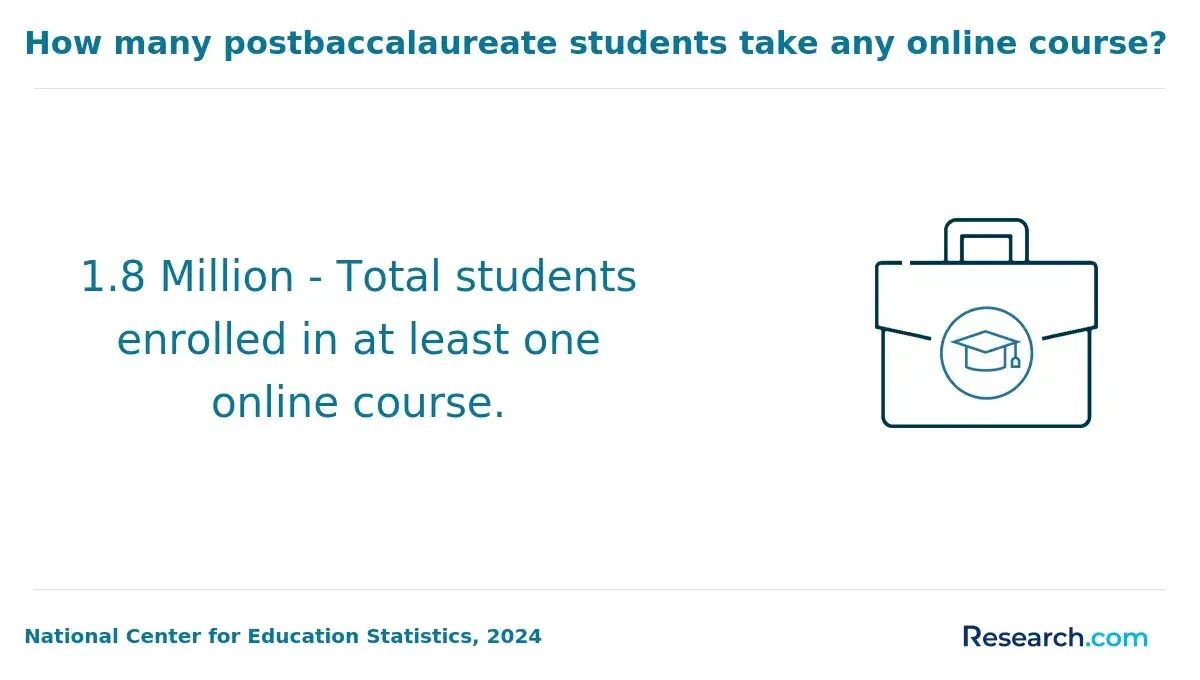
When comparing online secondary education master's programs, cost per credit often obscures deeper financial commitments. Variations in residency policies, mandatory fees, and accreditation standards can create wide disparities in overall expenses. With online enrollment among adult learners growing 7% annually according to the National Center for Education Statistics, understanding these subtleties helps avoid surprise costs that impact long-term affordability and credential value.
Evaluating tuition alongside financial aid options and licensure alignment ensures prospective students choose pathways that support career mobility and professional recognition. This analysis equips candidates to navigate complex pricing landscapes with a comprehensive, data-driven approach to program investment.
Key Things to Know About the Cost per Credit for Online Secondary Education Master's Programs
- Per-credit tuition often varies widely between public and private institutions, but hidden costs like technology fees and exam charges can add 10-15% to the total; underestimating these skews overall affordability assessments.
- Accreditation type directly influences employer recognition and teacher licensure eligibility, meaning the cheapest per-credit option may limit career mobility or require costly credential upgrades later.
- Residency policies affect pricing transparency and enrollment timing: out-of-state rate differences can exceed 50%, complicating decisions for remote learners balancing immediate cost savings against long-term access.
What Is the Average Cost per Credit Hour for Online Secondary Education Master's Programs, and How Does It Compare Across Institution Types?
Focusing on the average cost per credit hour rather than total tuition reveals critical insights that shape practical decision-making for prospective students in online secondary education master's programs. Because program lengths and credit requirements vary widely, relying solely on total tuition can obscure the real pricing dynamics, especially for working professionals who may accelerate coursework, leverage transfer credits, or enroll part-time according to life demands. For example, a candidate weighing an in-state public university against a private nonprofit must consider how the per-credit differential affects their incremental investment and potential return, as employers and licensure boards often treat these credentials equivalently regardless of sticker price.
The most recent data from the Integrated Postsecondary Education Data System (IPEDS) highlights this variation across institution types. Public universities generally offer the most affordable per-credit rates for in-state students, with fees often in the $300-$450 range. Out-of-state tuition typically doubles these rates at public institutions, a factor that significantly impacts students relocated or studying remotely. Private nonprofit schools uniformly command higher per-credit costs between $600 and $900 but exhibit fewer residency distinctions. Private for-profit institutions showcase the greatest variability in per-credit pricing-commonly $400 to $700-reflecting diverse institutional pricing strategies and additional fees which may or may not be transparent in advertised rates.
Sticker price per credit can diverge from actual student expenses due to program-level fees such as technology surcharges, practicum costs, or licensing preparation expenses that inflate per-credit costs beyond tuition alone. Moreover, financial aid profoundly influences net pricing: scholarships, grants, and employer tuition assistance often lower effective costs and should be scrutinized alongside published rates to avoid misleading comparisons. Such nuances underscore the importance of comparative analysis that extends beyond headline numbers.
This guide systematically unpacks key variables affecting tuition:
- Institution Type clarifies public, private nonprofit, and for-profit cost structures;
- Residency Status quantifies in-state versus out-of-state pricing gaps;
- Program Fees identify hidden costs beyond raw tuition;
- Financial Aid explores how net prices might deflate gross charges; and
- Accreditation and Licensure sweep in professional validation requirements that dictate a program's market viability.
By pairing the average cost per credit hour for online secondary education master's programs with total program cost considerations, this article ensures readers can generate an actionable cost framework that captures the true investment and supports informed enrollment decisions across diverse student profiles, including those comparing offers or balancing practical financial constraints. Interested readers may also explore how pricing trends in education compare to other fields by reviewing resources for degrees like online masters in speech pathology.
How Many Credit Hours Are Typically Required to Complete an Online Secondary Education Master's Program, and How Does That Affect Total Tuition?
The total credit hours required to complete an online Master's program in Secondary Education can create significant financial variability, often shaping long-term return on investment. For working professionals, understanding how credit hour requirements and associated fees compound tuition expenses is critical to avoiding unexpected cost overruns that might undermine career transition plans.
Online master's programs in Secondary Education generally demand anywhere from 30 to over 60 credit hours. This wide range depends on factors such as whether the program requires a thesis, the intensity of practicum or internship mandates, and specific accreditation standards. Because tuition is almost always charged per credit, programs requiring more credit hours multiply per-credit rates into substantially higher total tuition.
- Credit Hour Range: Accelerated tracks may approach 30 credits, but more comprehensive programs-often those emphasizing extensive field experience or research-exceed 60 credits, significantly increasing the overall cost.
- Practicum and Internship Credits: Many programs include mandatory practicum or internship components with additional fees or elevated per-credit charges reflecting supervision and administrative costs, which can distort comparisons based solely on base tuition rates.
- Hidden Costs Impact: Lower per-credit prices can be misleading if paired with higher total credit requirements or compulsory practicum fees, resulting in an all-in cost that surpasses programs with higher nominal rates but fewer credits.
- Total Tuition Calculation: Calculate your total investment by multiplying the per-credit cost by total credits required, then add any required practicum or administrative fees. For instance, a 45-credit program charging $500 per credit with a $1,000 practicum fee results in a $23,500 total.
Prospective students should always focus on total program cost rather than per-credit rates alone to ensure accurate, apples-to-apples comparisons. Factoring in credit-hour requirements and hidden fees helps align financial commitment with realistic career outcomes and licensure pathways in Secondary Education.
Which Online Secondary Education Master's Programs Offer the Lowest Cost per Credit Hour Among Accredited Institutions?
Selecting an accredited online secondary education master's program with low per-credit tuition can be pivotal for professionals funding their own graduate studies or recent graduates evaluating long-term costs. However, affordability by itself doesn't guarantee accessibility or equal value in the job market. Some of the lowest cost per credit hour online secondary education master's programs come from regionally accredited universities, but hidden fees and enrollment conditions often raise the effective price and impact scheduling flexibility.
- Institution: Fort Hays State University
- Per-Credit Cost: Approximately $218
- Total Credits: 36
- Estimated Tuition: $7,848
- Fees & Conditions: Technology and course fees excluded; no residency distinction enhances accessibility for out-of-state students.
- Institution: University of Central Missouri
- Per-Credit Cost: Around $240
- Total Credits: 36
- Estimated Tuition: $8,640
- Fees & Conditions: Uniform tuition regardless of residency; application requires minimum GPA; additional fees such as background checks may apply.
- Institution: Lamar University
- Per-Credit Cost: About $255
- Total Credits: 36
- Estimated Tuition: $9,180
- Fees & Conditions: Online learning fees mandatory; cohort-based schedules reduce flexibility.
- Institution: Southern Arkansas University
- Per-Credit Cost: Nearly $270
- Total Credits: 36
- Estimated Tuition: $9,720
- Fees & Conditions: Uniform tuition for all students; some mandatory administrative fees apply periodically.
- Institution: Western Governors University
- Per-Credit Cost: Generally $350-$400 per competency unit (approximating credit hours)
- Total Credits: Variable, typically around 36
- Estimated Tuition: $12,600-$14,400
- Fees & Conditions: Flat-rate tuition per term, pace-based progress can reduce overall time and cost.
These tuition estimates illustrate the importance of considering both sticker price and ancillary costs like fees, cohort commitments, or residency policies when comparing accredited online secondary education master's degrees with affordable tuition. Students located in certain states or balancing work schedules may find cohort restrictions or unlisted fees to significantly raise the net cost or reduce program suitability. Tuition rates also evolve annually, so verification with institutions remains essential before enrollment decisions.
For prospective students weighing these tradeoffs alongside employability and licensure requirements, resources such as the cheapest online psychology degree guides offer helpful templates for building a holistic cost comparison beyond per-credit figures.
How Do In-State vs. Out-of-State Tuition Rates Apply to Online Secondary Education Master's Programs, and Which Schools Offer Flat Tuition Regardless of Residency?
Public universities traditionally charged out-of-state online learners higher tuition than in-state students due to taxpayer subsidies benefiting residents. This created a pronounced cost disparity for students pursuing online secondary education master's degrees from outside the institution's state, often doubling or tripling per-credit expenses. Recently, however, many universities have shifted toward flat tuition models that apply identical rates regardless of residency to attract a geographically diverse enrollment and reduce financial barriers. This shift reflects a strategic response to competitive pressures and acknowledges the growing national reach of online education.
Despite this trend, some institutions maintain differential tuition models, placing prospective out-of-state students at a notable disadvantage financially. This distinction can mean several thousand dollars in additional costs over the duration of a master's program-an important consideration for self-funding learners or those with constrained budgets. Furthermore, tuition reciprocity agreements like the Western Interstate Commission for Higher Education (WICHE) and the Southern Regional Education Board (SREB) offer discounted rates to students from member states, partially mitigating out-of-state fee inflation but adding a layer of complexity when estimating total program expenses.
For students prioritizing cost-effectiveness and clarity in tuition expectations, verifying residency policies directly with each university's bursar or financial aid office is essential. Published program websites may not always maintain updated tuition data or reflect recent policy changes. This diligence will help avoid surprises in all-in cost calculations critical to sound financial planning and program selection.
- University of Florida: Applies a uniform per-credit rate for online secondary education master's students, eliminating residency distinctions.
- University of North Carolina at Greensboro: Implements residency-neutral tuition, supporting equitable access for all online enrollees.
- University of Nebraska-Lincoln: Charges a flat tuition rate regardless of student residence for its online secondary education graduate programs.
- University of Wisconsin-Milwaukee: Offers a consistent per-credit price across state lines, expanding accessibility to national applicants.
- Mississippi State University: Provides residency-independent tuition pricing for its online education master's offerings.
Nevertheless, substantial tuition disparities remain in certain states and programs, potentially deterring qualified out-of-state candidates despite the flexibility granted by online delivery. Prospective students must weigh these financial trade-offs alongside licensure requirements, accreditation status, and program reputation to ensure a graduate credential delivers lasting professional value without imposing unsustainable debt.
One graduate recalled her admissions journey, noting how the rolling admissions process contributed to uncertainty; she applied early but delayed acceptance because she wasn't sure if an out-of-state tuition waiver would be available by the time she enrolled. She emphasized how clarifying pricing policies with the financial aid office helped her make a timely decision, balancing cost concerns with her readiness to start. The experience underscored the importance of proactive communication and strategic timing for applicants navigating variable residency rules and fluctuating tuition models in online secondary education programs.
What Mandatory Fees Are Added to Per-Credit Tuition for Online Secondary Education Master's Programs, and How Much Do They Increase the Real Cost?
Actual costs for online secondary education master's programs often exceed the advertised per-credit tuition because of mandatory fees that many students overlook. These additional charges, which can add 10% or more to total expenses, vary but commonly include several categories that accumulate over the degree's duration, altering budget expectations significantly.
- Technology Fees: Charged each term to sustain online platforms and support, these fees often range from $50 to $200 per semester, impacting students regardless of credit load.
- Program Fees: Specialized coursework or materials, such as software licenses and faculty support specific to master's-level content, may add several hundred dollars throughout the program, reflecting the degree's practical demands.
- Student Services Fees: Access to counseling, career advising, or library resources often requires additional fees, typically between $100 and $300 per semester, supporting services that are essential but sometimes underappreciated in remote learning scenarios.
- Graduation and Application Fees: These one-time costs, usually $100 or more, cover administrative steps necessary for degree conferral and commencement, representing a distinct final expense beyond tuition.
Clinical or Practicum Surcharges: For programs requiring supervised field experiences, fees covering background checks, placement coordination, or supervision can be substantial, occasionally exceeding $500 over the program span.
These fees are usually disclosed in institutional fee schedules, but not always prominently alongside per-credit tuition rates. For accurate financial planning and comparison, students must secure complete fee breakdowns from programs and calculate blended per-credit costs that include these mandatory charges. Relying solely on advertised tuition risks underestimating total investment and could skew decisions about affordability and expected returns on graduate education in secondary education.
How Do Online Secondary Education Master's Program Costs Compare Between Public and Private Universities?
Online secondary education master's tuition comparison reveals that public universities typically offer significantly lower per-credit rates than private counterparts, mainly due to state subsidies, tuition caps, and economies of scale. For place-bound or financially cautious students, this can mean reduced upfront costs, but the decision involves tradeoffs beyond the sticker price. Public institutions often deliver programs at scale with larger cohorts, which can impact individualized attention and faculty availability. Conversely, private nonprofit universities are increasingly offering competitively priced online programs nationwide without residency restrictions, appealing to students seeking flexibility or specialized support regardless of location.
- Cost Structure: Public university rates benefit from state funding and policies favoring in-state students, whereas private schools rely on tuition revenue and generally charge uniform rates.
- Value Proposition: Private institutions often justify higher per-credit costs with smaller cohort sizes, lower faculty-to-student ratios, and tailored career services designed to enhance employability and professional network development.
- Brand and Reputation: For many employers, especially regionally or in specialty areas within secondary education, private university brands may offer stronger recognition, influencing long-term career prospects beyond initial financial investment.
- Accreditation and Licensure: Ensuring the online program holds appropriate regional accreditation and meets state licensure requirements remains critical across all institution types to safeguard credential validity and employment eligibility.
- All-in Costs: Focusing solely on per-credit tuition overlooks mandatory fees, technology expenses, textbooks, and financial aid possibilities-all of which shape the actual total investment in an online secondary education master's degree.
This nuanced comparison underscores that working professionals and recent graduates must assess both measurable tuition differences and qualitative program features in any cost-conscious enrollment decision. Evaluating the total cost of attendance-rather than just per-credit rates-can help avoid unexpected financial burdens and support successful transitions into secondary education careers. For those researching related programs, resources like online schools for real estate provide additional context on affordable online degrees across fields.
Are There Online Secondary Education Master's Programs With Tuition Locked In at Enrollment, and How Does Tuition Lock Affect Long-Term Cost Planning?
Tuition lock policies in online secondary education master's programs can significantly influence long-term financial planning, especially for those balancing work, family, and study over extended periods. Programs offering a tuition lock maintain the per-credit rate fixed for the entirety of a student's enrollment, which shields part-time students from unpredictable annual tuition hikes that inflate total costs. However, these policies are neither universal nor uniform; some locks apply only to a specific admission cohort, others reset yearly or after a certain number of terms, and maintaining eligibility often requires continuous enrollment without breaks. Losing the locked rate usually means reverting to current, often higher prices, which can disrupt carefully arranged budgets and delay graduation plans.
- Scope: Tuition locks may be limited to an entry cohort, an academic year, or a defined number of semesters.
- Conditions: Continuous enrollment or reenrollment is typically mandatory to keep the fixed rate.
- Financial Protection: Particularly valuable for part-time or delayed completers exposed to tuition inflation.
- Verification: Securing written confirmation and clarifying forfeiture conditions is essential.
- Limitations: Mandatory fees or ancillary costs might not be included, affecting overall expenses.
One graduate recalled navigating the rolling admissions of an online secondary education master's program. After submitting initial materials, the candidate hesitated to confirm enrollment, needing time to evaluate financial aid offers and clarify the tuition lock's stipulations. This delay caused uncertainty about maintaining the locked rate and potential exposure to increased tuition if deferred too long. Only after persistent communication with the admissions office did the student secure written assurance of the tuition guarantee, highlighting the critical need for proactive inquiry and documentation when timing and budgeting decisions are tightly coupled.
What Financial Aid, Scholarships, and Employer Tuition Benefits Are Available to Reduce the Net Cost of an Online Secondary Education Master's Degree?
Reducing the net cost of an online secondary education master's degree requires navigating a complex financial aid landscape, where sticker prices often mask the actual investment needed. Realistically, federal unsubsidized loans remain a foundational option for most graduate students, offering predictable borrowing terms though they accrue interest immediately. For example, a working professional balancing full-time employment might find these loans essential, especially since institutional scholarships at the master's level are typically more limited and competitive than in undergraduate admissions cycles.
- Federal Loans: Graduate students usually qualify for unsubsidized loans, which help finance tuition but start accruing interest from disbursement.
- Graduate Assistantships: These positions can reduce tuition via stipends or waivers but are frequently reserved for on-campus students, limiting accessibility for online learners.
- Institutional Scholarships: Available merit- or need-based awards can directly lower per-credit costs but require early application and strong academic credentials, with fewer opportunities compared to undergraduate programs.
- Professional Association Awards: Various education associations provide targeted grants, particularly for those entering high-need fields or underserved regions, adding value beyond just cost savings.
- Employer Tuition Reimbursement: Employed students should assess their workplace benefits carefully; IRS rules exclude up to $5,250 annually from taxable income for employer-provided education assistance, making negotiation of tuition reimbursement an impactful strategy in sectors with high demand for secondary educators.
Since many financial aid policies and eligibility requirements differ by delivery format and institution, prospective students must engage directly with the financial aid offices of chosen programs to obtain realistic net cost estimates rather than relying solely on advertised tuition. This approach is particularly important given that recent enrollment cycles show a rise in part-time and online secondary education master's students, indicating a growing need to clarify aid availability for remote learners.
Focusing on net costs over sticker prices enables better financial planning-and for place-bound or first-generation students, understanding these nuances is critical to making an informed investment in a graduate credential that will be recognized by employers and licensing boards. Assessing costs in combination with accreditation and program structure supports making a well-founded decision and reinforces the value of selecting a recognized nonprofit university for long-term professional legitimacy.
How Does the Cost per Credit for Online Secondary Education Master's Programs Differ by Delivery Format-Synchronous, Asynchronous, or Hybrid?
Cost per credit differences among online secondary education master's programs often reflect the delivery format's underlying operational demands rather than straightforward tuition disparities. Synchronous programs require robust live-session platforms, real-time staff engagement, and strict scheduling, which raises fixed institutional costs. These investments can translate into higher per-credit fees, but they also impose scheduling rigidity that may extend time-to-degree for working professionals, effectively increasing total program costs. Asynchronous programs alleviate these pressures by leveraging pre-recorded content and flexible deadlines, supporting greater scalability and often enabling lower tuition per credit.
Yet, tuition differences by delivery mode are not always pronounced in secondary education master's degrees. Many programs price competitively across formats due to licensure requirements and market reputation, which are critical for graduates' employability in education. Hybrid formats, blending online study with required campus presence, tend to mirror synchronous tuition rates but introduce hidden indirect expenses such as travel, lodging, or childcare, factors frequently overlooked in cost comparisons.
- Technological Investment: Synchronous programs demand real-time interaction tools and staff availability, increasing fixed costs and sometimes tuition per credit.
- Scalability: Asynchronous formats scale efficiently, often supporting lower tuition rates without sacrificing content quality.
- Scheduling Constraints: Synchronous formats limit flexibility, which can prolong time to degree if working students struggle to attend live sessions regularly, inadvertently raising total costs.
- Hidden Costs: Hybrid models may require travel or accommodations for on-campus components, adding unaccounted expenses outside tuition.
- Fit and Progress: Matching delivery format to personal obligations and learning style can accelerate completion speed, making even modestly higher per-credit costs more cost-effective overall.
Prospective students analyzing the cost per credit for online secondary education master's programs by delivery format must also consider financial aid availability, accreditation status, and licensing alignment to ensure their investment yields market-respected credentials. Working professionals or place-bound learners might find asynchronous options financially advantageous but should verify program recognition. Meanwhile, recent graduates should weigh tuition differences for synchronous asynchronous and hybrid secondary education master's degrees against long-term career outcomes and total educational costs.
For additional insights on related online program investments, researching a cyber security course online can illustrate how delivery format impacts cost and scalability across fields.
What Is the Minimum GPA Requirement for Secondary Education Master's Program Admission, and How Does Selectivity Relate to Per-Credit Cost?
Meeting the minimum GPA requirement for online secondary education master's programs is a baseline, not a guarantee of admission, especially given selective programs' applicant pools frequently exceed stated minimums. Most institutions set a 3.0 undergraduate GPA as the threshold; however, some adopt more flexible standards as low as 2.75 to accommodate practical experience or holistic credentials, while highly selective programs demand 3.5 or above. For example, an applicant with a 3.0 GPA might find admission challenging at top-tier programs where the average admitted GPA is higher, making moderately selective programs a more viable path.
Contrary to assumptions, program selectivity-measured by GPA floor, acceptance rates, or cohort sizes-does not consistently determine per-credit tuition cost. While some selective online secondary education programs charge premium rates, notable exceptions exist where moderately selective institutions maintain tuition competitive with less selective peers. Likewise, certain programs with lower GPA cutoffs or larger cohorts sometimes have high tuition, suggesting factors beyond selectivity influence cost structures. This nuance is critical for candidates budgeting tightly and seeking best value.
Applicants should adopt an admissions strategy anchored in realistic self-assessment, identifying one or two programs where their academic profile is decisively competitive. This approach minimizes wasted application fees and aligns tuition investment with probable admission. Since employer preference and licensure boards increasingly emphasize accredited and well-structured programs, balancing selectivity and cost ensures not just entry but program viability for long-term employability in secondary education settings.
Minimum GPA Threshold: Typically 3.0 undergraduate GPA, with a range of 2.75 to 3.5 reflecting program selectivity.
Selectivity and Cost: No direct correlation; some highly selective programs charge premiums, but competitive tuition appears across selectivity levels.
Competitive Applicant Pools: Average admitted GPA often surpasses minimums, affecting chances for borderline applicants.
Admissions Strategy: Target programs where GPA aligns with or exceeds averages to optimize admission and cost efficiency.
Workforce Implication: Choosing realistic programs enhances licensure readiness and employment prospects, supporting a prudent tuition investment.
What Graduates Say About the Cost per Credit for Online Secondary Education Master's Programs
- Jase: "Balancing a full-time job and family made it impossible for me to attend traditional classes, so I chose an online secondary education master's program for its flexibility. The time management skills I gained were vital, but I still found the workload heavier than expected. Ultimately, the program helped me secure a teaching position at a charter school where practical experience and a solid portfolio mattered more to hiring managers than licensure."
- Kyro: "Cost was my biggest constraint, so I opted for a program that offered affordable tuition and a good balance of theory and practice. I debated pursuing certification but realized many districts valued internships and classroom readiness more than formal credentials. After graduation, I landed an internship that turned into a full-time role, though I've noticed salary caps when trying to advance without additional licensure."
- Aaron: "Switching careers in my thirties meant I needed a program that would move me quickly into the workforce. I chose an online secondary education master's that emphasized remote teaching and digital tools. While I initially struggled with the balancing act of study and job hunting, the program's focus on tech integration gave me an edge in schools prioritizing virtual classrooms, though competition remains fierce and schools often prefer candidates with more on-site experience."
Other Things You Should Know About Secondary Education Degrees
Regionally accredited programs generally command higher per-credit costs, reflecting stronger recognition from employers and state licensure boards. While nationally accredited institutions may offer lower tuition, their degrees often face skepticism in professional settings, especially in public school hiring and certification. For students prioritizing long-term career impact and employability, investing in a regionally accredited program usually yields better returns despite the upfront cost difference.
Beyond per-credit tuition, students should budget for technology fees, course materials, and potential residency requirements. Considering these expenses helps in planning effectively and avoiding unexpected financial burdens in 2027.
Per-credit cost alone is an insufficient metric; students should pair it with program length, credit requirements, accreditation status, and potential financial aid availability. Prioritizing low per-credit rates without considering total credits or hidden fees can result in more expensive or lower-quality outcomes. Evaluating cost per credit within the broader context of program rigor and employability ensures an investment aligned with both budget and career goals.
For-profit institutions often advertise competitive per-credit prices but may include higher fees or lack full regional accreditation, impacting credit transferability and employer recognition. Additionally, these programs sometimes exhibit lower graduation and licensure exam pass rates, affecting program value. Applicants should weigh short-term savings against potential diminished career prospects and consider nonprofit options that historically maintain stronger academic support and outcomes.
References
- A Step-by-Step Guide on how to start your studies in Poland | study.gov.pl https://study.gov.pl/how-to-apply
- How Long Does It Take to Get a Master's Degree? https://www.snhu.edu/about-us/newsroom/education/how-long-does-it-take-to-get-a-masters-degree
- Average Cost of a Master's Degree: 2025 Analysis https://educationdata.org/average-cost-of-a-masters-degree
- Rolling Admissions Colleges: Pros, Cons and Top Schools - East Coast Scholars https://www.eastcoastscholars.com/rolling-admissions-colleges-pros-cons-and-top-schools/
- Cost of Online College vs. In-Person | Touro University Worldwide https://www.tuw.edu/school-news/cost-of-online-college-vs-in-person/
- How Online College Costs Vary in the US and Europe https://orlandomom.com/how-online-college-costs-vary-in-the-us-and-europe/
- The Cost and Return Investment of Post-secondary Education https://www2.gov.bc.ca/gov/content/education-training/post-secondary-education/data-research/cost-of-post-secondary-education
- How Long Does It Take to Get Masters in Education https://aituedu.org/how-long-does-it-take-to-get-masters-in-education/
- Rolling Admissions: Key Insights https://www.themoodmeter.com/rolling-admissions-pros-cons-and-strategies/