2027 How to Compare Leave-of-Absence Policies in Online Data Science Master's Programs

Co-Founder and Chief Data Scientist
A leave-of-absence policy can determine whether an online data science master's degree remains workable when a job change, health issue, or family obligation interrupts study. For prospective students, the key question is not simply whether a school permits a break.
It is whether approval protects your place in the program, when required courses return, and what happens to aid and loans. This guide gives you a consistent way to compare those terms before enrolling or requesting leave.
Key Things You Should Know
- Compare written rules for eligibility, approval, maximum time away, and reentry; permission to pause does not necessarily reserve a seat in your next course. Map the leave against prerequisite and capstone schedules.
- A one-term pause can delay graduation longer if a required course is offered infrequently.
- Get separate answers about tuition refunds, financial-aid eligibility, loan repayment, and student benefits. Academic approval alone does not settle those questions.
What Is a Leave of Absence in an Online Data Science Master's Program?
A leave of absence is an institution-approved interruption of enrollment with a defined route back to study. It differs from simply not registering, withdrawing permanently, or dropping an individual course. Schools may use these terms differently, so the written graduate policy - not the label alone - determines your status.
Also distinguish an academic leave from a leave that meets applicable financial-aid requirements. Approval from a program director does not by itself establish continued aid eligibility or prevent a student loan from entering repayment. This distinction matters especially if you plan to stop enrolling for a full term rather than reduce your course load.
How Do Online Data Science Programs Compare Leave Eligibility and Approval Rules?
Compare policies using the same proposed scenario: your reason for leaving, date of last attendance, expected return term, and courses remaining. A policy that looks generous in general may be restrictive for a newly admitted student or someone already completing a capstone.
The distinctions below show why a simple "leave allowed" entry is not enough for a program comparison. They describe possible policy designs, not verified terms at any particular school.
| Policy dimension | More continuity for the student | Potential interruption risk |
| Eligibility | Leave available after enrollment under stated conditions | Minimum completed credits or other restrictions |
| Decision process | Written criteria and a stated approval authority | Discretionary approval with unclear documentation |
| Return status | Clear procedure to resume the existing degree plan | Reapplication or review under a newer curriculum |
| Timing | Published request and return deadlines | Deadlines that are difficult to find or fall before course registration |
Ask whether the rule applies equally to online, part-time, and newly admitted students. If you are comparing data science with best master's programs in data analytics, evaluate each program's actual graduate handbook rather than assuming a different degree title implies a different level of flexibility.
What Should a Leave-of-Absence Policy Include for Data Science Students?
A useful policy explains both how to stop and how to restart. For data science students, the return plan should address courses that build on earlier programming, statistics, or machine-learning work - not merely state that enrollment can resume.
Before treating a policy as workable, obtain written answers to these connected questions:
- Status: Who approves leave, what documentation is required, and does the student remain in the degree program?
- Dates: What are the request deadline, permitted leave period, extension process, and return-notice deadline?
- Academics: Do degree-completion limits keep running, and which catalog and course requirements apply on return?
- Money and access: How are charges, aid, loans, insurance, software, computing resources, and advising affected?
- Reentry: Is course registration guaranteed, subject to capacity, or dependent on a new approval?
Choose a program with documented answers over one that offers only an informal promise of flexibility. A verbal assurance may not resolve a later disagreement between the program, registrar, and financial-aid office.
How Long Can Students Pause an Online Data Science Master's Degree?
There is no single pause length that applies to all online data science master's programs. Institutions may define leave by term or another period, limit the number of leaves, require extensions, and set a separate maximum time to finish the degree. Do not assume that time on leave is excluded from the completion clock.
The practical question is when you can take the next required course, not only when leave ends. A short leave may fit a program with frequent starts; it can be more disruptive where a prerequisite or capstone begins only on a particular schedule. Students considering accelerated online data science master's options should check this especially carefully: a compressed path may leave less room to recover from a missed course sequence.
Request two dates in writing: the last date you may return without losing your academic standing and the earliest realistic date you could resume your remaining courses.
What Reasons Qualify for a Graduate Program Leave of Absence?
Qualifying reasons vary by institution. Policies may address medical needs, caregiving, military service, work changes, or other personal circumstances, but schools can impose different documentation and approval rules for each. Some circumstances may also involve legal protections or accommodation processes that are separate from an ordinary discretionary leave.
Describe your situation to the appropriate office without assuming you must disclose sensitive details to every instructor. Ask what documentation is necessary, who receives it, and whether a reduced course load, deferred start, accommodation, or leave would better preserve your progress. If you have not yet started classes, confirm whether the school calls your request a deferral rather than a leave; the rules may differ.
How Does a Leave Affect Online Data Science Course Sequencing?
Data science coursework often depends on prerequisites and project continuity. Missing one term can affect access to an advanced course, an elective, a group project, or a capstone even when the leave itself is approved. An approved return date therefore is not the same thing as a feasible graduation date.
Use this sequence to test the academic impact before submitting a request:
- Mark completed courses and identify every remaining prerequisite, elective, and capstone requirement.
- Check when each required course is next expected to run and whether online sections have capacity limits.
- Ask an academic advisor to map both your original schedule and a return schedule, including any curriculum changes.
- Confirm how unfinished team work, capstone approvals, datasets, or project access will be handled.
This matters most when your intended specialization relies on a small number of electives. For example, students considering compare AI master's ethics and governance options should separately confirm whether the particular elective or track courses they want will be available after a pause; a published course list is not an offering guarantee.
How Can a Leave Affect Financial Aid and Student Loan Repayment?
Stopping enrollment can change eligibility for current or future aid, and withdrawing after a term begins may trigger a recalculation of federal aid. The result depends on factors including attendance dates, the school's determination of your enrollment status, the aid program, and whether you return. Academic leave approval alone does not answer those financial questions.
Loan repayment is a separate issue. If your enrollment falls below the level required for your loans, a grace period may begin or repayment may resume; prior use of a grace period and the type of loan matter. Contact the financial-aid office and your loan servicer before leaving, rather than assuming the academic leave pauses payments.
Ask for an individualized explanation of any aid adjustment, balance owed to the school, next-term aid requirements, and expected loan status. A pause that preserves program standing may still create an immediate cash-flow problem.
What Happens to Tuition, Enrollment, and Student Benefits During Leave?
Tuition treatment depends heavily on when the interruption occurs. Leaving before a term starts, dropping during an add/drop period, and withdrawing after instruction begins can have different charge and refund consequences. Compare the academic calendar with the published refund schedule before choosing a departure date; approval for leave does not automatically erase tuition already charged.
Ask the registrar or student-services office what status appears on your record and which benefits continue. Online students should specifically check library access, licensed software, cloud or computing credits, advising, career services, and any health coverage tied to enrollment. Employer tuition assistance may have its own completion or repayment conditions, independent of the university's refund policy.
A common mistake is to compare only tuition already paid. The relevant cost also includes a possible balance after aid adjustments, replacement software or computing access, and any course that must be retaken.
How Does a Leave Affect Degree Completion and Program Reentry?
Reentry is strongest when the school specifies whether you keep your place in the degree, which catalog applies, what notice you must give, and whether required courses will be available. If a leave expires or reapplication becomes necessary, you could face changed requirements; do not assume previously completed work will automatically fit a revised plan.
Before departure, save the approved leave decision and an advisor-approved path through the remaining courses. Before returning, check registration deadlines, any required refresher work, access to current tools, and whether your original capstone topic or supervisor remains available. If reapplication is possible, review the current admissions rules rather than relying on those from your first application. Requirements can differ even among adjacent fields, including ML graduate programs without personal statement requirements.
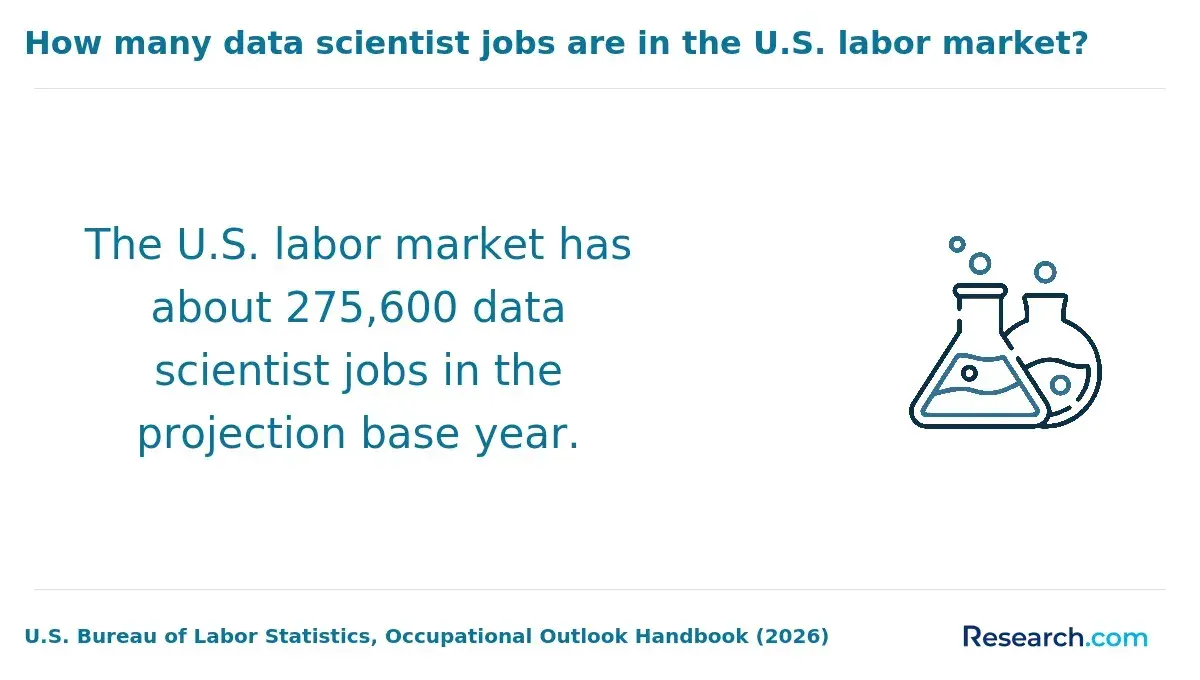
The U.S. Bureau of Labor Statistics projects 35% employment growth for data scientists from 2025 to 2035. That occupational projection is not a reason to rush back before you are ready or a guarantee of work after graduation; use your achievable completion plan, not a market forecast, to judge the cost of a delay.
How Can Students Verify a Reputable Online Data Science Program's Policy?
Start with the current graduate catalog, student handbook, registrar's leave procedure, academic calendar, and tuition-refund schedule. Then check any online-program rules that differ from university-wide rules. Confirm that the institution and program offering the degree are the ones named in the official materials, rather than relying on a marketing summary or a third-party description.
Send your proposed leave-and-return scenario to the program advisor, registrar, and financial-aid office. Ask each office to identify the applicable written rule and resolve conflicting answers before you commit. In particular, seek confirmation of your return status, next available required courses, completion deadline, charges, aid treatment, and loan-reporting implications.
If you are also deciding whether a data science program or an AI-focused degree fits your goals, how to select the right artificial intelligence degree is a separate academic-fit question. Apply the same leave-policy checks to whichever degree you choose. Favor the program whose documented interruption rules fit your likely constraints, not simply the one advertising the fastest completion time.
Other Things You Should Know About Data Science
Transcript notation varies by institution. Ask the registrar whether leave appears at all and whether a course withdrawal, if applicable, is recorded separately.
Possibly, but do not assume it will count for credit. Ask your program whether capstone enrollment, faculty supervision, data access, and research approvals must remain active.
Check first. Your program may restrict outside enrollment, and approval for a course elsewhere does not necessarily mean its credits will apply to your degree.
You can apply, but some internships require current enrollment or access to university sponsorship. Confirm eligibility with the employer and your program before relying on an internship as part of your leave plan.
References
- Student Loan Repayment | studentaid.gov https://studentaid.gov/manage-loans/repayment
- Rule 3342-3-01.12 - Ohio Administrative Code https://codes.ohio.gov/ohio-administrative-code/rule-3342-3-01.12
- General Requirements for Withdrawals and the Return of Title IV Funds | 2024-2025 Federal Student Aid Handbook https://fsapartners.ed.gov/knowledge-center/fsa-handbook/2024-2025/vol5/ch1-general-requirements-withdrawals-and-return-title-iv-funds
- Considerations for Taking a Leave of Absence | sandiego.edu https://usdkb.sandiego.edu/s/article/Considerations-for-taking-a-Leave-of-Absence
- Educational Psychology - University Wiki Service https://cloud.wikis.utexas.edu/wiki/spaces/edp/pages/31032308/Leave+of+Absence+Withdrawals+and+Dismissals
- Withdrawal Implications for Recipients of Financial Aid | usc.edu https://cataloguepubs.usc.edu/cat2013/index.html%3Fp=800.html
- Academic Leave Of Absence (LOA) For Graduate Students | UC Irvine Graduate Division - https://grad.uci.edu/academic_leave_of_absence_policy-1/
- Continuous Enrollment | Cal Poly Graduate Education https://grad.calpoly.edu/continuous-enrollment
- Leaves and Withdrawals | Cornell University https://catalog.cornell.edu/enrollment-credit-requirements/leaves-withdrawals/
- Leave of Absence Policy | The New School Catalog https://catalog.newschool.edu/academic-progress-standing/withdrawal-and-leaves/leave-of-absence-policy