2027 How to Choose an Online Sport Psychology Doctorate Program: Accreditation, Cost, Format, and Career Fit

Co-Founder and Chief Data Scientist
An online Sport Psychology doctorate can be a strong fit if you want advanced training in performance, motivation, mental skills, coaching, research, or athlete well-being, but the wrong program can create licensing, cost, or career-fit problems. The U. S. Bureau of Labor Statistics reported a $94,310 median annual wage for psychologists in May 2024, showing why credentials matter in psychology-related roles.
This guide is for working adults, coaches, clinicians, educators, and performance professionals comparing online options. You will learn how to evaluate accreditation, cost, format, curriculum, and long-term career alignment before enrolling.
Key Things to Know About Choosing Sport Psychology Doctorate Programs
- Start with accreditation and career purpose: APA accreditation matters most if you want clinical or counseling psychologist licensure, while many online sport and performance psychology doctorates are designed for non-licensure consulting, teaching, coaching, or research roles.
- Use total cost, not tuition alone: NCES data published in 2024 shows average graduate tuition and required fees vary sharply by institution type, with public universities generally lower than private nonprofit institutions, so per-credit prices can be misleading without a full cost estimate.
- Expect major differences in format and workload: many Sport Psychology doctorates require roughly 60 to 120 credits, and online formats may be asynchronous, scheduled live, hybrid, cohort-based, or self-paced, which can change how manageable the program is alongside work and family.
What criteria should you use to assess an online Sport Psychology doctorate program?
The best way to assess an online Sport Psychology doctorate program is to compare it against your intended outcome, not against a generic idea of prestige. Sport psychology is an interdisciplinary field that can connect psychology, counseling, kinesiology, exercise science, coaching, education, leadership, and performance consulting, so two programs with similar titles may prepare students for very different roles.
Start by deciding whether you need a doctorate for licensure, academic research, university teaching, consulting with athletes, executive performance work, coaching leadership, or advancement in an existing career. A program that is excellent for mental performance consulting may not satisfy clinical psychology licensure requirements, and a clinically oriented program may include far more practicum and internship requirements than a working coach or educator needs.
The table below summarizes the major criteria to compare when building a shortlist. Use it to separate "nice-to-have" features from requirements that directly affect eligibility, affordability, and career fit.
| Criterion | What it tells you | Why it matters |
| Institutional accreditation | The school has been reviewed by a recognized accrediting agency | It affects federal financial aid, credit transfer, employer recognition, and basic academic credibility |
| Program purpose | Whether the doctorate is clinical, counseling, performance-focused, research-focused, or education-focused | It determines whether the degree aligns with licensure, consulting, teaching, or leadership goals |
| Curriculum depth | The balance of sport psychology, research methods, ethics, assessment, intervention, and dissertation work | It shows whether the program builds advanced expertise rather than offering a broad psychology overview |
| Faculty expertise | Whether faculty publish, consult, supervise, or practice in sport and performance psychology | It affects mentorship, dissertation support, networking, and applied training quality |
| Practicum or residency requirements | Whether the program includes in-person, supervised, or field-based experiences | It can affect travel costs, licensure preparation, and hands-on skill development |
| Online format | Whether courses are asynchronous, live online, hybrid, cohort-based, or self-paced | It determines whether the schedule fits your work, family, and time-zone constraints |
| Total cost | Tuition, fees, books, travel, dissertation expenses, and lost work time | It gives a more realistic view of return on investment than tuition alone |
If your interests overlap with athlete conditioning, wellness, or movement science, compare how much physiology and kinesiology content the doctorate includes. Some students find that reviewing an online exercise science degree helps clarify whether they want a psychology-centered doctorate or a more exercise-science-oriented academic path.
Before applying, turn the criteria into a short decision process. This keeps you from choosing based only on name recognition, advertising, or a ranking list.
- Write one primary goal for the degree, such as licensure, sport performance consulting, university teaching, research, or leadership advancement.
- Remove any program that cannot clearly explain whether it is licensure-oriented or non-licensure-oriented.
- Compare accreditation, credit requirements, delivery format, practicum expectations, and dissertation model side by side.
- Ask admissions for a complete cost-of-attendance estimate, including fees and required travel.
- Review faculty profiles and recent dissertation topics to see whether the program supports your area of interest.
How do you check if an online Sport Psychology doctorate program is accredited?
Accreditation is the first thing to verify because it affects academic legitimacy, financial aid eligibility, employer recognition, and, in some cases, professional licensing. For online Sport Psychology doctorate programs, you should check both institutional accreditation and any relevant program-level recognition.
The practical challenge is that many students assume "accredited" means the same thing everywhere. It does not. Institutional accreditation applies to the university as a whole, while programmatic accreditation applies to a specific program or professional preparation pathway.
Use this step-by-step process before you submit an application or pay an enrollment deposit.
- Find the school's official accreditation page, usually linked from the university footer, catalog, or consumer information page.
- Confirm that the accreditor is recognized by the U.S. Department of Education or the Council for Higher Education Accreditation.
- Search the accreditor's own directory rather than relying only on the school's marketing page.
- Check whether the doctorate itself has programmatic accreditation, approval, or professional recognition if your goal requires it.
- Ask the program in writing whether the degree is intended to meet psychologist, counselor, or other state licensure requirements.
- Contact your state licensing board if you plan to pursue a regulated credential, because requirements vary by state and can change.
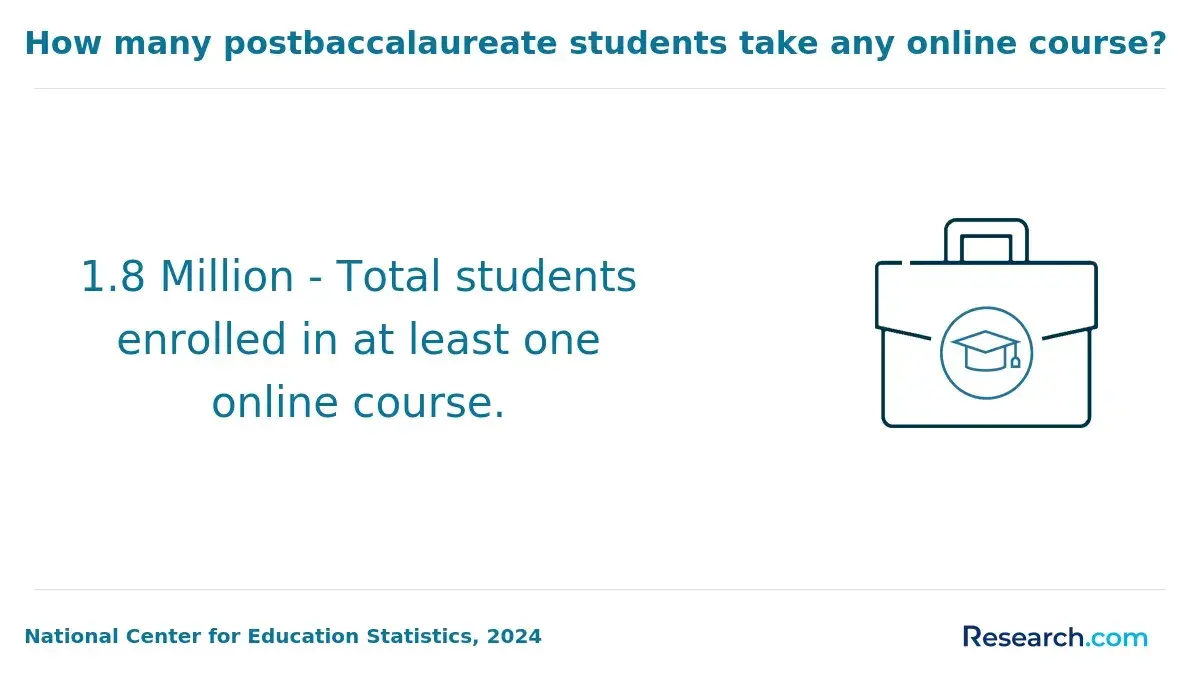
One important data point for online psychology students is that, according to APA accreditation information available in 2024, APA-accredited doctoral psychology programs are not generally offered as fully online programs. This matters because students seeking clinical or counseling psychologist licensure should not assume that an online sport psychology doctorate will satisfy the same requirements as an APA-accredited clinical, counseling, or school psychology doctorate.
If a school uses phrases such as "nationally recognized," "aligned with standards," or "designed for professionals," read carefully. Those phrases may describe curriculum design, but they are not the same as recognized accreditation.
What programmatic accreditations matter most for an online Sport Psychology doctorate?
The programmatic accreditation that matters most depends on what you want to do after graduation. Sport psychology is not regulated in the same way in every career setting, and there is no single programmatic accreditor that covers every online Sport Psychology doctorate.
The table below explains the most relevant forms of recognition and what they typically signal. It also shows why you should avoid assuming that a sport psychology title automatically leads to clinical practice authority.
| Accreditation or recognition | Applies to | What it usually signals | Key limitation |
| APA Commission on Accreditation | Doctoral programs in clinical, counseling, and school psychology; internships; postdoctoral residencies | Strongest signal for psychologist licensure preparation in many states | It does not accredit sport psychology as a standalone doctoral specialty |
| Regional or institutional accreditation | The university or college as a whole | Baseline academic legitimacy and federal aid eligibility | It does not prove that the specific doctorate meets licensure or certification requirements |
| MPCAC accreditation | Some counseling and psychology master's-level programs | Quality review for certain counseling or applied psychology programs | It is not usually the main credential for doctoral psychologist licensure |
| AASP Certified Mental Performance Consultant pathway | Individual certification, not degree accreditation | Alignment with mental performance consulting competencies | AASP certification requirements are separate from earning a doctorate |
| State licensing board approval or acceptance | Clinical, counseling, or psychology licensure pathways | Whether a degree may meet state-specific educational rules | Rules vary, and approval in one state does not guarantee approval in another |
If your goal is to become a licensed psychologist, prioritize APA-accredited doctoral pathways and confirm supervised experience requirements with the state board. If your goal is mental performance consulting, coaching, research, or teaching, an institutionally accredited doctorate with strong sport psychology coursework and qualified faculty may be more relevant than APA accreditation, but it still needs to be transparent about its limits.
Students comparing psychology pathways sometimes look at applied specialties before committing to a doctorate. For example, reviewing forensic psychology master's programs can help clarify how different psychology subfields handle credentials, practice boundaries, and employer expectations.
Assessing cost means estimating the full price to finish, not just the advertised per-credit tuition. Online doctorates can look affordable at first, but the final cost depends on credit load, transfer policy, fees, residencies, dissertation continuation rules, and how long you remain enrolled.
Because there is no federal dataset that isolates only online Sport Psychology doctorate tuition, use current school-published tuition together with national graduate tuition benchmarks. NCES data published in 2024 shows that graduate tuition and required fees differ widely by institution type, which means a private nonprofit, public, or private for-profit label can affect cost but should not be used as the only measure of value.
When a program publishes per-credit tuition, multiply it by the required credits and then add mandatory fees. Many Sport Psychology doctorates fall in a broad graduate range because they may require about 60 to 120 credits depending on whether they are PhD, PsyD, EdD, or professional doctorate programs.
Use these cost categories when requesting a written estimate from admissions or financial aid. They are the most common items that change the true price of an online doctorate.
| Cost component | Where it appears | Why it affects your decision |
| Tuition per credit | Program tuition page or catalog | It is the largest visible cost and must be multiplied by total required credits |
| Required university fees | Billing office, catalog, or student accounts page | These may be charged per term, per credit, or per course |
| Residency or intensive travel | Program handbook or academic calendar | Travel, lodging, meals, and missed work can add substantially to total cost |
| Dissertation or capstone continuation | Graduate catalog | Students who need extra terms may pay ongoing enrollment or supervision fees |
| Practicum or supervision expenses | Field placement handbook | Some applied experiences may require background checks, insurance, site fees, or travel |
| Technology and materials | Course syllabi or online learning requirements | Software, assessment tools, textbooks, and hardware requirements can vary by course |
If you need a quick affordability screen, ask the school for these numbers before applying. Prices should be listed in a written estimate rather than described only in general terms.
- Total tuition based on the exact number of required credits
- All mandatory fees charged per course, term, credit, residency, or dissertation phase
- Estimated travel cost for any required campus visit, intensive, residency, or practicum event
- Maximum federal unsubsidized loan eligibility for graduate students, which Federal Student Aid lists as up to $20,500 per academic year for eligible borrowers
- Whether Grad PLUS loans, assistantships, employer tuition benefits, military benefits, or institutional scholarships may apply
Financial aid availability should not be treated as a discount. Loans can improve access, but they also increase long-term repayment obligations, so compare monthly repayment scenarios before choosing a higher-cost program.
Online Sport Psychology doctorate programs can differ more by format than by title. A program described as "online" may still include live class meetings, campus residencies, supervised fieldwork, cohort deadlines, or dissertation milestones that limit flexibility.
The table below compares the most common delivery formats. Use it to judge whether a program fits your weekly schedule, travel limits, learning style, and need for structure.
| Format | How it works | Best fit | Potential drawback |
| Fully asynchronous online | Students complete weekly work without required live class meetings | Working adults with unpredictable schedules or time-zone constraints | Less real-time interaction and more need for self-direction |
| Synchronous online | Students attend scheduled live virtual classes | Learners who want discussion, accountability, and faculty interaction | May conflict with work, coaching schedules, or family responsibilities |
| Hybrid online | Most coursework is online, with required campus or site-based sessions | Students who want online flexibility plus in-person skill development | Travel costs and scheduling requirements can be significant |
| Cohort-based | Students move through courses with the same group | Learners who value peer support and a predictable sequence | Less flexibility if you need to pause or reduce course load |
| Self-paced or competency-based | Students progress as they complete required competencies or assessments | Highly independent learners with strong time-management skills | May offer less structured faculty contact or fewer scheduled milestones |
A current trend in online doctoral education is greater demand for flexible formats, especially among working professionals. However, flexibility should not mean lack of supervision, weak faculty access, or unclear academic standards.
If you are comparing sport psychology with related wellness or performance fields, look at whether the program emphasizes psychology theory, applied mental skills, research, coaching, or human movement. This distinction can matter as much as format when deciding whether a doctorate is the right investment.
Pacing flexibility determines whether you can realistically finish the doctorate without burning out. Online programs may advertise flexibility, but the actual pace is shaped by course sequencing, residency dates, dissertation deadlines, comprehensive exams, and minimum enrollment rules.
Most online Sport Psychology doctorate students should plan for a multi-year commitment. Published program plans commonly place doctoral completion in the range of about 3 to 7 years, depending on transfer credits, enrollment intensity, dissertation progress, and whether the student enters with a master's degree. Because no national dataset reports a precise average completion time for online Sport Psychology doctorates alone, use each program's published time-to-completion and attrition information rather than assuming the shortest advertised timeline is typical.
Use these pacing questions to test whether the program's flexibility is real. They are especially important if you work full time, coach seasonally, travel with teams, or have caregiving responsibilities.
- Can I enroll part time, and if so, what is the minimum course load each term?
- Are courses offered every term, or will missing one course delay graduation by a year?
- Are live class sessions required, and are recordings available if work conflicts occur?
- How many hours per week does the program expect for reading, research, writing, and discussion?
- When do dissertation milestones begin, and how often must I meet with my chair?
- Is there a maximum time limit for completing the doctorate?
Faster pacing makes sense if you have strong research skills, stable work hours, funding in place, and a clear dissertation topic. Slower pacing may be better if you are balancing employment, family obligations, practicum requirements, or a career transition, but it can increase total fees if the program charges ongoing enrollment or continuation costs.
A strong Sport Psychology doctorate curriculum should go beyond motivational techniques. It should teach students how to understand performance behavior, evaluate research, apply ethical interventions, work with diverse athletes and performers, and communicate findings in professional settings.
Credit requirements vary by degree type and entry point, but many doctoral programs in this area require substantial coursework plus dissertation, capstone, practicum, or research components. Treat the curriculum as evidence of what the program is built to produce: researchers, consultants, educators, clinicians, coaches, or leaders.
The table below summarizes curriculum areas that deserve close attention. These are not just course titles; they are signals of whether the program provides advanced doctoral-level preparation.
| Curriculum area | What to look for | Why it matters |
| Sport and performance psychology theory | Motivation, confidence, attention, resilience, stress, team dynamics, and performance under pressure | These courses form the core of applied sport psychology practice |
| Research methods and statistics | Quantitative, qualitative, mixed-methods, measurement, and research design training | Doctoral graduates need to evaluate evidence and complete original scholarly work |
| Ethics and professional practice | Scope of practice, informed consent, confidentiality, referral, multicultural competence, and professional boundaries | Sport psychology often involves vulnerable clients, teams, minors, and performance organizations |
| Assessment and intervention | Mental skills training, performance profiling, consultation models, and outcome evaluation | These courses show whether the program prepares students for applied work rather than theory alone |
| Dissertation or capstone | Clear milestones, faculty supervision, proposal support, and realistic completion expectations | The final project often determines how long the doctorate takes and how useful it is professionally |
| Specialization options | Athlete mental health, coaching, military performance, performing arts, leadership, youth sport, or health behavior | Specialization helps align the program with your intended population or work setting |
If you want to work with children, adolescents, school-based athletes, or youth sport organizations, examine whether the curriculum includes developmental psychology and family or school systems content. Students interested in that population may also compare related child psychology master's programs to understand how youth-focused training differs from sport performance training.
A common curriculum mistake is choosing the program with the most appealing course titles without checking syllabi, faculty expertise, or applied training requirements. Ask for sample syllabi and recent dissertation topics if the public catalog is too vague.
A Sport Psychology doctorate matches your career goals when the degree's accreditation, curriculum, faculty, field experiences, and professional outcomes all point toward the role you actually want. The same doctorate may be a smart investment for one student and a poor fit for another.
Start by naming your target role as specifically as possible. "I want to work in sport psychology" is too broad; "I want to consult with collegiate athletes on performance skills," "I want to teach sport psychology at a university," or "I want to pursue clinical psychologist licensure with an athlete mental health focus" will lead to very different program choices.
Use the comparison below to connect goals with program features. This is a fit check, not a guarantee of employment or licensure.
| Career goal | Program features to prioritize | Features to question |
| Licensed psychologist working with athletes | APA-accredited clinical, counseling, or school psychology pathway; supervised clinical training; state licensure alignment | Non-licensure sport psychology doctorates that do not include required clinical preparation |
| Mental performance consultant | Applied sport psychology coursework, ethics, supervised consulting, performance assessment, and alignment with certification pathways | Programs with little applied practice or no faculty connected to performance consulting |
| University teaching or research | Research methods, statistics, dissertation support, publication opportunities, and faculty scholarship in sport psychology | Programs that emphasize professional practice but provide limited research training |
| Coaching leadership or athletic administration | Courses in leadership, team dynamics, motivation, organizational performance, and athlete development | Programs built mainly for clinical practice if you do not need licensure |
| Career change into psychology-related work | Clear prerequisites, bridge coursework, advising, and realistic explanations of scope of practice | Programs that imply a doctorate alone allows independent clinical practice |
Labor-market data can help frame expectations, but it should not be treated as a personal outcome forecast. The BLS projected faster-than-average employment growth for psychologists in its 2024-published outlook, but sport psychology-specific roles vary by employer, region, licensure status, and consulting experience.
If you are still comparing psychology specialties, look at adjacent fields and their credential expectations. For instance, understanding how much do forensic psychologists make can help you compare salary context, licensure requirements, and specialization trade-offs across psychology careers.
Before enrolling, ask yourself three final questions: Will this program qualify me for the credential I need, will the schedule and cost remain manageable if life gets complicated, and will the curriculum help me build evidence of expertise that employers, clients, or universities will value?
What red flags should I watch out for in an online Sport Psychology doctorate program?
Red flags do not always mean a program is illegitimate, but they do mean you should slow down and verify claims. Doctoral study is too expensive and time-consuming to choose based on vague promises, aggressive admissions calls, or unclear accreditation language.
The table below contrasts common warning signs with healthier signals of credibility. Use it when reviewing program websites, admissions emails, and enrollment documents.
| Red flag | Why it is concerning | Credible alternative |
| The program claims to be "fully accredited" but does not name the accreditor | Accreditation claims are meaningless without a recognized agency and verifiable status | The school lists its accreditor and the accreditor's directory confirms the status |
| Admissions suggests the doctorate automatically leads to licensure | Licensure depends on state rules, program type, supervised experience, and exams | The program clearly states whether it is licensure-oriented and advises students to contact state boards |
| Total cost is hard to find | Missing fee information can hide residency, technology, or dissertation continuation charges | The school provides a written cost estimate and explains fee policies |
| Faculty sport psychology expertise is unclear | Weak faculty alignment can limit mentorship and dissertation support | Faculty profiles show relevant research, consulting, supervision, or applied experience |
| The program promises unusually fast completion with little research or dissertation work | Doctorates require advanced scholarly or applied preparation | The curriculum includes rigorous coursework, milestones, and transparent completion expectations |
| Residency, practicum, or fieldwork expectations appear only after admission | Late disclosure can create financial and scheduling problems | Requirements are published in the catalog or handbook before enrollment |
Diploma mill concerns have become more visible as online doctoral programs have expanded and students use AI tools to compare options quickly. AI can help organize tuition, format, and accreditation information, but it should not replace checking accreditor directories, state boards, catalogs, and written school policies.
If you encounter one or more red flags, take these steps before moving forward.
- Pause the application process until accreditation and licensure claims are verified independently.
- Request the graduate catalog, program handbook, tuition schedule, and sample degree plan.
- Ask for written answers about total cost, residency requirements, dissertation expectations, and state licensure alignment.
- Speak with current students or alumni if the program can connect you without pressuring them or you.
- Compare at least three programs before deciding, even if one school offers a fast admission decision.
The biggest mistake is treating convenience as the same thing as quality. A credible online doctorate can be flexible, but it should still be transparent, rigorous, properly accredited, and honest about what the degree can and cannot do.
Other Things You Should Know About Sport Psychology
Some programs require a relevant master's degree, while others admit students with a bachelor's degree and include master's-level coursework along the way. Check prerequisites carefully because psychology, counseling, kinesiology, statistics, or research methods courses may be required before doctoral study begins.
It depends on state law and your license status. In many states, the title "psychologist" is legally protected, so a doctorate alone may not be enough. If you are not licensed as a psychologist, terms such as mental performance consultant or performance coach may be more appropriate, depending on your training and scope of practice.
Employer acceptance depends on the school's accreditation, the program's rigor, your experience, and whether the degree matches the role. Employers are more likely to value an online doctorate when it comes from an accredited institution, includes relevant applied or research work, and does not overstate licensure preparation.
Common requirements include transcripts, a resume, statement of purpose, recommendation letters, writing sample, interview, and sometimes proof of prior graduate coursework or professional experience. Competitive applicants usually explain a clear research or career goal rather than submitting a generic interest in sports.
- Online Sports Psychology Degrees & Programs https://www.sportspsychology.org/degree/
- Psychology-Based Training & Coaching Accreditation Criteria | AIOBP https://www.aiobp.org/accreditations-and-criteria/
- How To Become A Sports Psychologist | Psychology.org https://www.psychology.org/careers/sports-psychologist/
- How to Build a Successful Sport Psychologist Career: A Step-by-Step Guide https://www.drpaulmccarthy.com/post/how-to-build-a-successful-sport-psychologist-career-a-step-by-step-guide
- Login http://oiccpress.com/ttlt/article/download/15767/17323
- Combining Synchronous and Asynchronous Learning | Harmonize Blog https://harmonizelearning.com/blog/synchronous-asynchronous-learning/
- Online Ed.D. in Sport & Performance Psychology at UWS https://www.uws.edu/academics/programs/sport-performance-psychology/edd/
- 2025 Most Affordable Online Master's in Sports Psychology https://www.onlineu.com/most-affordable-colleges/sports-psychology-masters-degrees
- Doctor of Sports Psychology | Advanced Sport and Exercise Psychology Program at ISN https://www.isn.edu.au/doctor-of-psychology
- Society for the Teaching of Psychology https://teachpsych.org/E-xcellence-in-Teaching-Blog/12197763