
2027 How Long Does It Take to Earn an Online Crisis Management Doctorate? Timelines, Credits, and Dissertation Options

Co-Founder and Chief Data Scientist
Estimating the time to finish an online crisis management doctorate is difficult because programs vary by credit load, research format, residencies, and transfer rules. The stakes are high: NCES data published in 2024 shows average annual graduate tuition and required fees were about $12,596 at public institutions and $29,931 at private nonprofit institutions.
This guide is for emergency management, public safety, homeland security, and organizational resilience professionals comparing doctoral options. You will learn how timelines, credits, dissertation choices, and pacing decisions affect total time, cost, and career fit.
Key Things to Know About Online Crisis Management Doctorate Program Timelines
- Most online crisis management doctorate programs take about 3 to 5 years after a master's degree, while research-heavy PhD-style paths can take longer if the dissertation extends beyond planned coursework.
- Post-master's programs commonly require about 42 to 60 doctoral credits, with total time shaped by whether credits are taken continuously, part-time, or with summer enrollment.
- Dissertation requirements are still common, but some professional doctorates use applied research projects, capstones, or doctoral portfolios that may be easier to align with a working professional's crisis leadership role.
What is the typical completion time for online Crisis Management doctorate programs?
An online crisis management doctorate typically takes 3 to 5 years for students entering with a relevant master's degree. The shorter end usually applies to structured professional doctorates with year-round coursework and an applied doctoral project; the longer end applies to part-time students, traditional dissertations, delayed research approvals, or programs with residencies and practicum expectations.
"Crisis management doctorate" is often used as a practical search term rather than a single standardized degree title. You may see related programs called emergency management, homeland security leadership, disaster science, public safety leadership, strategic security, organizational resilience, or risk management doctorates. Students comparing doctoral study with a lower-level online criminal justice degree should understand that doctoral timelines are driven less by weekly class attendance and more by research milestones.
The table below summarizes realistic completion windows by enrollment pattern. Use it to estimate whether the degree fits your work schedule before comparing tuition or dissertation formats.
| Enrollment pattern | Typical completion time | Best fit | Main timeline risk |
| Full-time, year-round | About 3 to 4 years | Students with employer flexibility, strong research focus, and predictable weekly study time | Burnout or difficulty sustaining dissertation progress while working |
| Part-time, continuous enrollment | About 4 to 6 years | Working professionals in emergency management, public safety, healthcare preparedness, or corporate continuity roles | Slow progress if only one course is taken at a time and summers are skipped |
| Research-intensive PhD-style path | Often 5 years or more | Students targeting faculty, policy research, think tank, or advanced research roles | Extended dissertation data collection, committee revisions, or publication expectations |
| Accelerated professional doctorate | About 2.5 to 3.5 years when available | Students with transfer credits, a clear applied research topic, and year-round availability | Compressed workload and limited room for professional disruptions |
National doctoral time-to-degree data can help set expectations, but it should not be applied too literally to this niche. The National Center for Science and Engineering Statistics reported in its 2024 release of the Survey of Earned Doctorates that U.S. research doctorate recipients had a median time of roughly 7 years from graduate school entry to doctorate completion.
Online professional doctorates can be shorter because they are often designed around post-master's coursework and applied research, but the statistic is a useful warning: the dissertation stage can stretch far beyond the catalog plan if it is not managed early.
How many total credit hours are required for an online Crisis Management doctorate?
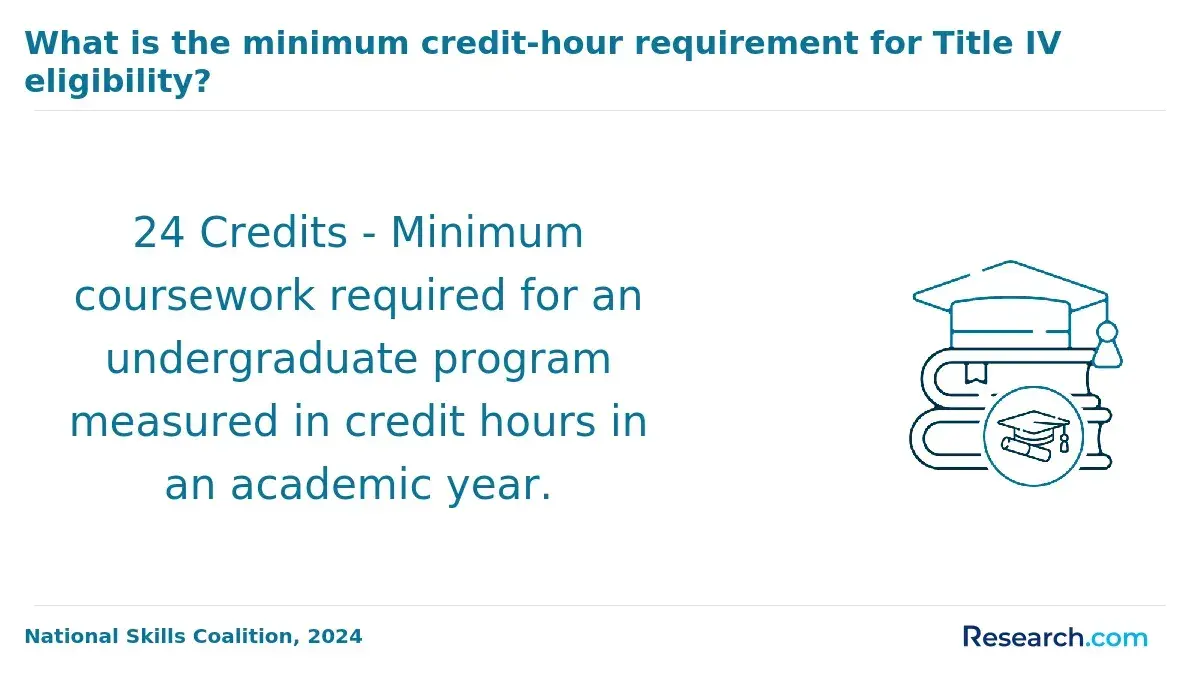
Most online crisis management doctorate programs require approximately 42 to 60 post-master's credits. Programs that admit students directly after a bachelor's degree may require substantially more because they include master's-level coursework before doctoral specialization.
Credit hours matter because they convert directly into time and cost. If a program uses 3-credit courses, a 48-credit doctorate may involve about 16 course-equivalent requirements, including research, electives, and dissertation or capstone credits.
Students comparing graduate tuition should also review the broader criminal justice degree price landscape, because related public safety programs may use similar tuition structures, technology fees, and per-credit billing models.
| Doctoral format | Common credit range after a master's degree | Typical academic emphasis | Timeline implication |
| Professional doctorate in emergency management, public safety, or homeland security leadership | 42 to 54 credits | Applied leadership, policy, organizational resilience, crisis communication, and decision-making | Often the most structured path for working professionals |
| PhD in disaster science, emergency management, security studies, or a related field | 48 to 72 credits | Original research, methods, theory, and academic scholarship | May take longer because dissertation expectations are usually broader |
| Doctorate with embedded specialization | 45 to 60 credits | Core leadership or public administration doctorate with a concentration in crisis, safety, security, or risk | Timeline depends on how many specialization courses are offered each year |
| Bachelor's-to-doctorate pathway | Often 70 or more credits | Master's foundations plus doctoral coursework and research | Longer total timeline, but may reduce duplicated applications |
Do not compare credit totals without checking what the credits represent. A 45-credit program with 12 dissertation credits may not be faster than a 54-credit program with a tightly sequenced applied project if the dissertation has open-ended revision cycles. Ask whether dissertation, capstone, practicum, and residency credits are included in the advertised total.
Is a dissertation required for an online Crisis Management doctorate?
A dissertation is required in many online crisis management doctoral programs, especially PhD and research-focused doctorates. A dissertation is an original research study that identifies a problem, reviews existing literature, uses an approved methodology, collects or analyzes evidence, and defends findings before a faculty committee.
The dissertation can support academic, policy, consulting, and senior leadership goals because it demonstrates independent research ability. It can also be the part of the degree most likely to delay graduation. Unlike coursework, the dissertation is not completed simply by attending class each term; progress depends on topic approval, committee feedback, research ethics review, data access, writing quality, and defense scheduling.
The table below breaks down the typical dissertation sequence. It helps you identify where delays commonly occur before choosing a program.
| Dissertation stage | What happens | Why it affects time |
| Topic development | You narrow a crisis management problem into a researchable question | Unclear or overly broad topics can add months of revision |
| Proposal and literature review | You justify the study, summarize existing scholarship, and define the method | Committee feedback can require multiple drafts |
| Research ethics approval | The institution reviews human-subjects risk, consent, and data protection | Studies involving employees, disaster survivors, or public agencies may need careful review |
| Data collection and analysis | You conduct interviews, surveys, document analysis, simulations, or case research | Agency access, participant recruitment, or incomplete records can slow progress |
| Final defense | You present findings and respond to committee questions | Defense calendars and final revisions can extend the last term |
A dissertation makes sense if you want to teach, publish, lead research initiatives, advise agencies, or build credibility in a specialized area such as disaster recovery, cyber crisis coordination, hospital emergency preparedness, school safety, or critical infrastructure resilience. It may be less ideal if your primary goal is a practice-oriented leadership credential and you have limited access to data or research participants.
Are there alternatives to completing a dissertation for online Crisis Management doctorate programs?
This distinction matters for students who work in emergency operations, environmental risk, occupational safety, public health preparedness, or corporate continuity. If your goals overlap with safety systems or prevention-oriented leadership, you may also want to compare doctoral plans with the best online environmental health and safety programs to understand whether a doctorate is necessary for your target role.
Before choosing a non-dissertation route, compare the alternatives carefully. The following options can shorten or clarify the final stage for some students, but they are not automatically easier.
- Applied doctoral project: Best for students who want to design, assess, or improve a crisis management process in an agency, company, hospital, school system, or nonprofit.
- Capstone project: Best for students who want a structured final deliverable, such as a continuity plan, risk assessment framework, training model, or policy implementation plan.
- Program evaluation: Best for students with access to an existing emergency preparedness, mitigation, response, or recovery initiative that can be evaluated with evidence.
- Doctoral portfolio: Best for programs that assess multiple competencies through research papers, leadership artifacts, presentations, and reflective analysis.
A non-dissertation option may help you finish faster if the project scope is clearly defined, faculty feedback is timely, and your workplace supports access to data. It may not save time if the program still requires multiple research approvals, extensive revisions, or a final defense similar to a dissertation.
How do practicums or clinical hours affect the online Crisis Management doctorate timeline?
Most crisis management doctorates do not use "clinical hours" in the same way counseling, nursing, psychology, or social work doctorates do. However, some programs include practicums, residencies, field-based projects, simulations, leadership labs, internship-style experiences, or applied research in a professional setting.
These requirements affect your timeline when they must be completed during specific terms, require supervisor approval, or depend on access to agencies during emergencies, exercises, audits, or continuity planning cycles. A practicum that looks small on paper can delay graduation if it requires background checks, site agreements, travel, or data-use permission.
Use the following checklist before enrolling to understand whether field requirements will fit your schedule:
- Ask whether any practicum, residency, simulation, or field project is mandatory for graduation.
- Confirm whether requirements can be completed at your current workplace or must be completed through an approved external site.
- Ask whether virtual residencies are accepted or whether travel to campus is required.
- Check whether your employer must sign a site agreement, data-use agreement, or supervision form.
- Find out whether practicum credits are included in the total credit count or billed separately.
Students with demanding emergency response schedules should pay close attention to timing. A hurricane season, wildfire season, major security event, public health incident, or agency budget cycle can make it harder to complete site-based assignments exactly when the program expects them.
What factors determine how fast you can finish an online Crisis Management doctoral degree?
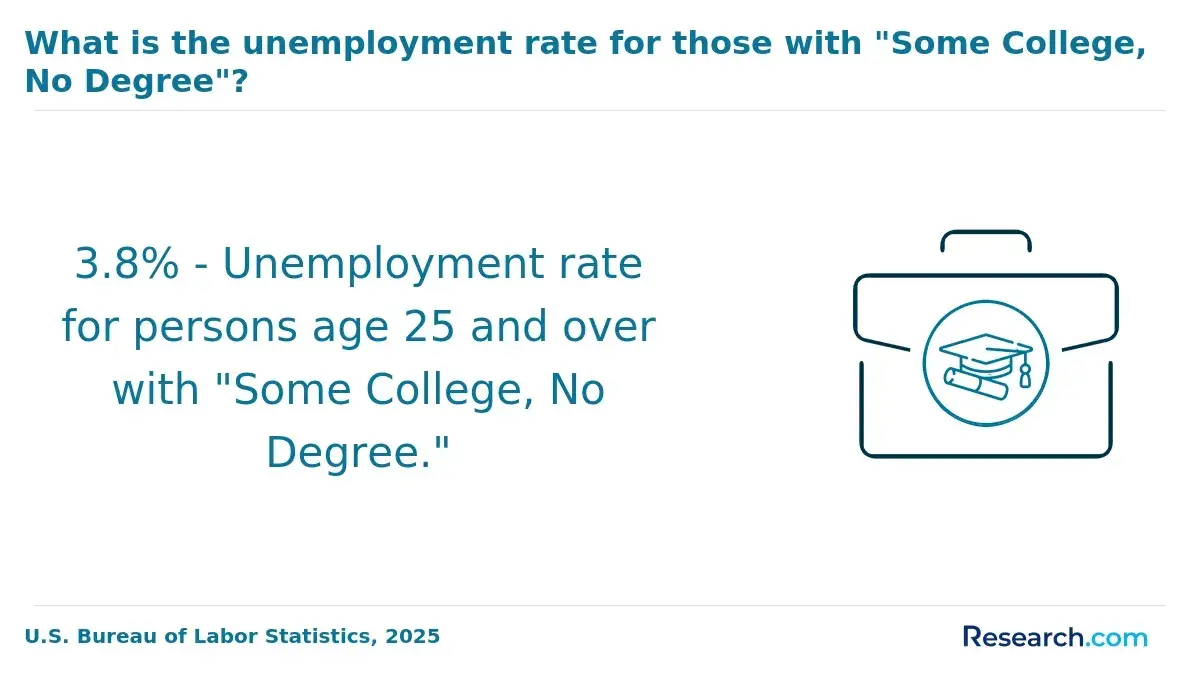
The fastest path depends on more than motivation. Your timeline is shaped by enrollment intensity, course sequencing, transfer credit, research readiness, faculty availability, employer support, and whether the program offers continuous enrollment. The BLS reported a May 2024 median annual wage of $86,130 for emergency management directors, which can help frame ROI discussions, but salary outcomes vary by sector, geography, prior experience, and whether the doctorate is required for the role.
Prospective students should compare time investment with total cost, opportunity cost, and career fit. A doctorate may be worthwhile if you need advanced research credibility, want to teach, lead large-scale resilience programs, move into executive public safety roles, or consult on complex risk systems. It may not be the best next step if a certification, master's certificate, leadership training, or targeted graduate coursework would meet your career goal faster.
The table below summarizes the main factors that commonly speed up or slow down completion. Use it as a screening tool when speaking with admissions advisors.
| Factor | How it can speed completion | How it can delay completion |
| Enrollment pace | Taking 2 courses per term and summer courses can compress coursework | Taking one course at a time may stretch the degree by multiple terms |
| Course sequencing | Frequent course starts and multiple sections reduce waiting | Required courses offered once per year can create bottlenecks |
| Research topic readiness | A focused topic aligned with faculty expertise can move quickly | A topic outside faculty capacity may require redesign |
| Dissertation or capstone support | Milestone deadlines, writing labs, and committee matching reduce drift | Unclear feedback cycles can leave students stalled |
| Employer support | Study leave, flexible shifts, or project access can protect progress | Emergency deployments and overtime can interrupt terms |
| Financial planning | Stable funding supports continuous enrollment | Stopping out for cost reasons can trigger reactivation or policy issues |
Cost planning should include tuition, fees, books, residency travel, dissertation continuation credits, and the value of time away from paid work or promotion opportunities. Students considering earlier credentials before doctoral study can compare options such as the best online associate degree programs in criminal justice, but associate-level credits generally do not reduce doctoral credit requirements.
Are there fast-track or accelerated online Crisis Management doctorate options available?
Accelerated online crisis management doctorate options exist, but they are less common than standard part-time formats. Acceleration usually comes from shorter terms, year-round enrollment, embedded dissertation development, generous transfer credit, cohort scheduling, or a professional doctoral project instead of a traditional dissertation.
The table below compares standard and accelerated structures. It can help you decide whether a faster plan is realistic for your work and family schedule.
| Program feature | Standard online doctorate | Accelerated online doctorate |
| Term structure | Traditional semesters or longer sessions | Short 7- or 8-week sessions, multiple starts, or year-round calendars |
| Course load | Often 1 course at a time for working adults | May require overlapping courses or continuous enrollment |
| Research timeline | Dissertation begins after the core coursework | Topic development may begin in the first year |
| Transfer credit | Limited or evaluated later | Evaluated early and applied to a published degree plan |
| Best fit | Students who need flexibility | Students with predictable schedules and strong academic preparation |
An accelerated doctorate makes sense when you can protect 15 to 25 hours per week for coursework, writing, reading, and research. It is risky if your professional role includes unpredictable deployments, rotating shifts, disaster response travel, or mandatory overtime.
Before selecting a fast-track program, take these steps to test whether the advertised pace is realistic:
- Ask for a term-by-term degree map showing every course, residency, research milestone, and dissertation or capstone credit.
- Confirm whether summer enrollment is required to meet the advertised timeline.
- Ask how many students actually finish within the accelerated timeframe.
- Request written confirmation of transfer credit before committing financially.
- Check whether dissertation or capstone chairs are assigned early enough to prevent research delays.
Can you transfer graduate credits into an online Crisis Management doctorate program?
Many online crisis management doctorate programs allow some transfer of graduate credit, but policies vary widely. Common limits include a maximum number of transferable credits, minimum grade requirements, age limits on older coursework, relevance to the doctoral curriculum, and restrictions on transferring dissertation or capstone credits.
Transfer credit can shorten the degree only if it replaces required doctoral coursework. Elective credit may reduce cost but not necessarily time if the remaining required courses are still offered in a fixed sequence. Credits from a completed master's degree are not always transferred one-for-one because many doctoral programs already assume the master's degree as an admission requirement.
Use this process to maximize transfer credit without overestimating the time savings:
- Collect official transcripts, syllabi, course descriptions, and proof of graduate-level credit hours before applying.
- Map each prior course to a specific doctoral requirement rather than asking generally whether credits transfer.
- Ask whether transferred credits reduce total credits, elective credits only, or specific required courses.
- Confirm whether there is an expiration window for research methods, statistics, security, public administration, or emergency management courses.
- Get the approved transfer evaluation in writing before making a deposit or enrolling in the first term.
The biggest mistake is assuming that a prior master's degree automatically removes a year from the doctorate. In many post-master's doctorates, the master's degree qualifies you for admission, while only selected overlapping graduate credits reduce the doctoral plan.
Is there a maximum time limit to complete an online Crisis Management doctorate?
Yes. Many universities set a maximum doctoral completion window, often around 7 to 10 years, although exact limits vary by institution and program. The limit may start at initial enrollment, doctoral candidacy, or the first term after transfer credits are accepted.
Maximum time limits matter because students in crisis management fields often face unpredictable work demands. Emergency activations, public safety incidents, agency leadership changes, military obligations, family responsibilities, or funding gaps can interrupt progress. If you exceed the time limit, the school may require reactivation, updated coursework, a new dissertation proposal, additional fees, or dismissal from the program.
Before enrolling, ask these policy questions so the maximum window does not become a hidden risk:
- When does the doctoral time limit begin: admission, first course, candidacy, or dissertation enrollment?
- Are approved leaves of absence excluded from the maximum completion clock?
- What happens if a student pauses during the dissertation or capstone stage?
- Can old credits expire before the degree is finished?
- Are extension petitions available, and who approves them?
A program with a generous time limit may be safer for students in unpredictable response roles. A shorter limit may still work if the curriculum is highly structured, dissertation support is strong, and your employer can protect study time.
How can students avoid delays in their online Crisis Management doctorate timeline?
The best way to avoid delays is to treat the doctorate as a managed project, not a collection of courses. Build a written timeline before enrolling, update it each term, and align your research topic with available faculty, accessible data, and your professional schedule.
These practical steps can reduce the most common sources of delay for online doctoral students:
- Create a credit map that shows required courses, electives, research methods, residencies, practicum requirements, dissertation or capstone credits, and expected completion terms.
- Choose a research topic early, but keep it narrow enough to complete with realistic data access and faculty expertise.
- Ask for dissertation or capstone milestones in writing, including proposal deadlines, committee review timelines, and defense scheduling windows.
- Protect weekly study blocks with your employer or family before the term begins, especially during research methods and writing-heavy courses.
- Use writing centers, library consultations, statistics support, and faculty office hours before problems become delays.
- Keep copies of approvals, committee feedback, transfer evaluations, practicum forms, and degree audits in one place.
- Avoid skipping summer terms if the advertised timeline assumes continuous enrollment.
Red flags include vague answers about dissertation support, no published degree map, unclear residency expectations, transfer promises that are not documented, and programs that advertise fast completion without explaining course load or research milestones. If a school cannot explain how students move from coursework to proposal to defense, the timeline may be less predictable than the marketing suggests.
Other Things You Should Know About Crisis Management
Yes, many students do. The more important question is whether your schedule can support consistent weekly reading, writing, research, and meetings. Full-time work is most manageable with part-time enrollment, asynchronous courses, and a research topic connected to your professional environment.
Some do, and some do not. Programs may require short residencies, doctoral intensives, dissertation defenses, simulations, or orientation sessions. Always confirm whether these are virtual, in person, optional, or mandatory before enrolling.
It can be, especially when the university is institutionally accredited and the curriculum fits the role. Employers usually care about relevance, leadership experience, research ability, and whether the degree supports the organization's needs. Accreditation and program fit matter more than online delivery alone.
Choose a PhD if your goal is academic research, teaching, publication, or theory development. Choose a professional doctorate if your goal is senior practice, executive leadership, consulting, policy implementation, or applied organizational problem-solving.
References
- How long does it take to write a PhD thesis? https://hazelhall.org/2017/01/11/how-long-does-it-take-to-write-a-phd-thesis/
- How Long Does a PhD Dissertation Take? A Practical Step-by-Step Guide | tlooto: The Most Powerful AcademicGPT https://tlooto.com/media/en-US/74
- What is a Doctoral Dissertation? PhD & Professional Doctorate https://onlinedissertationhelp.co.uk/what-is-a-doctoral-dissertation
- How Long Does It Take to Get a PhD? Complete Timeline Guide https://streamlinedai.app/blog/how-long-does-it-take-to-get-a-phd
- a part-time and distance PhD https://patthomson.net/2017/05/18/a-part-time-and-distance-phd/
- Online phd doctorate in Mediation and Conflict Resolution https://www.euclid.int/online_doctorate_mediation/
- How Long Does It Take to Complete an Online Doctorate? https://acacia.edu/blog/how-long-does-it-take-to-complete-an-online-doctorate-timeline-workload-and-expectations/
- Online Ph.D. in Crisis Human Services | AcademicEarth.org https://academicearth.org/ph-d-in-crisis-human-services/


