2027 Highest-Paying Jobs with a Strategic Management Doctorate: Salaries, Career Paths, and Growth Outlook

Co-Founder and Chief Data Scientist
A Strategic Management doctorate can open doors to executive, consulting, academic, and strategy leadership roles, but the payoff depends heavily on specialization, experience, and industry. The U. S. Bureau of Labor Statistics reported a 2024 median wage of $206,680 for chief executives, showing why salary outcomes matter before committing to doctoral study. This guide is for professionals comparing doctoral pathways, promotion options, or a move into higher-paying strategy work. You will learn which roles pay the most, what employers value, and how to judge whether the degree fits your goals.
Key Things to Know About High-Paying Jobs in Strategic Management
- The highest-paying pathways for Strategic Management doctorate holders are usually executive leadership, corporate strategy, management consulting, business school faculty roles, and research-driven innovation leadership.
- Recent U.S. labor data shows strong demand in adjacent strategy-heavy occupations, including 9% projected growth for management analysts and 23% for operations research analysts from 2024 to 2034.
- The degree has the strongest salary value when paired with senior experience, quantitative strategy skills, industry expertise, and evidence that the candidate can turn research into measurable business results.
Is there high demand for Strategic Management doctorate graduates?
Demand is strongest when the doctorate is used as a strategic differentiator rather than as a stand-alone credential. A Strategic Management doctorate, often offered as a PhD in management, DBA with a strategy concentration, or related organizational leadership doctorate, develops advanced research, competitive analysis, organizational design, innovation, and decision-making expertise. Employers value those skills when they need leaders who can evaluate complex markets, restructure business models, or guide transformation using evidence instead of intuition alone.
The most direct demand signal comes from occupations that rely on strategic analysis and organizational decision-making. The Bureau of Labor Statistics projects 9% employment growth for management analysts from 2024 to 2034, which is faster than the average for all occupations. For doctorate holders, this suggests opportunity in senior consulting, corporate transformation, and advisory roles, especially when they bring industry experience in healthcare, technology, finance, logistics, or higher education.
Doctorate demand also varies by career target. Universities may value theory-building research and teaching fit, while corporations may care more about executive presence, analytics, change leadership, and the ability to link strategy to profit, growth, risk reduction, or operational performance. Professionals considering a doctorate in organizational leadership online should compare its curriculum with strategy-focused doctoral programs if their goal is executive or consulting advancement.
The practical takeaway is that high demand exists, but it is concentrated. A doctorate is most useful when it helps you move from execution into strategy ownership, from management into enterprise leadership, or from practice into teaching and research. It is less likely to produce a major pay jump if you lack managerial experience, a clear specialization, or access to employers that reward doctoral-level strategic expertise.
Which Strategic Management doctorate specializations lead to high-paying roles?
The best specialization depends on the job market you want to enter. General strategic management can be valuable for academic or broad executive tracks, but niche specializations often produce stronger salary leverage because they map more clearly to employer pain points.
The table below shows common doctoral specialization areas and the high-paying roles they most often support. Use it to connect coursework, dissertation topics, and professional projects with a target labor market.
| Specialization | Best-fit high-paying roles | Why employers value it |
| Corporate strategy and competitive advantage | Chief strategy officer, strategy director, corporate development leader | Supports market entry, portfolio decisions, mergers, and business model redesign |
| Innovation and entrepreneurship | Innovation executive, venture strategy leader, product strategy director | Connects research, commercialization, growth strategy, and new venture creation |
| Operations strategy | Operations strategy executive, transformation leader, supply chain strategy director | Links strategy to productivity, resilience, quality, and cost control |
| Organizational change and leadership | Chief transformation officer, organizational development executive, change management partner | Helps organizations execute strategy through culture, structure, talent, and governance |
| Business analytics and decision science | Strategy analytics director, AI strategy lead, operations research leader | Turns data into competitive decisions, scenario planning, and performance models |
| Global strategy | International strategy executive, global market expansion leader | Supports cross-border growth, risk analysis, localization, and international partnerships |
Operations strategy is especially useful for professionals who want to combine doctoral-level strategic thinking with measurable business performance. Candidates who are not ready for a doctorate may compare earlier-stage options such as an MBA operations management online before deciding whether doctoral study is necessary for their target role.
For the highest-paying roles, avoid choosing a specialization only because it sounds broad or prestigious. A stronger approach is to review job postings for your target titles, identify repeated skill requirements, and choose a dissertation or applied research agenda that proves you can solve those problems.
How competitive are the applications for high-paying Strategic Management jobs?
Applications are highly competitive because the best-paid roles are not entry-level doctorate outcomes. Chief strategy officer, managing director, senior consultant, dean, and corporate transformation roles typically attract candidates with graduate education, leadership experience, industry networks, and a record of measurable results.
The competitiveness also differs by track. Academic roles are limited by tenure-line hiring cycles and publication expectations. Corporate roles are limited by executive openings, internal promotion pipelines, and employer preference for candidates who have already led strategic initiatives. Consulting roles are competitive because firms evaluate both intellectual ability and client credibility.
Before applying, candidates should understand the main sources of competition. These factors often matter as much as the doctorate itself:
- Senior experience: High-paying strategy roles often require prior ownership of budgets, teams, markets, products, or transformation initiatives.
- Proof of business impact: Employers look for evidence such as revenue growth, cost savings, successful market entry, turnaround work, or improved operating performance.
- Research credibility: Academic and research-heavy roles may require peer-reviewed publications, conference presentations, grants, or a strong dissertation fit.
- Industry fluency: Strategy expertise is more valuable when paired with knowledge of a specific sector, such as healthcare, SaaS, financial services, energy, logistics, or manufacturing.
- Executive communication: Candidates must be able to translate complex research into clear recommendations for boards, C-suite leaders, faculty committees, or clients.
A common mistake is assuming the doctorate will override a thin leadership record. For most high-paying roles, it is better to position the degree as evidence that you can diagnose complex strategic problems, evaluate alternatives, and lead decisions under uncertainty.
There is no single national salary dataset for "Strategic Management doctorate holders," so the most reliable approach is to examine related U.S. occupations that commonly use doctoral-level management, strategy, analytics, or teaching expertise. The Bureau of Labor Statistics reported a 2024 median annual wage of $101,190 for management analysts, while chief executives had a 2024 median wage of $206,680. This wide spread shows why job level and industry matter more than the degree title alone.
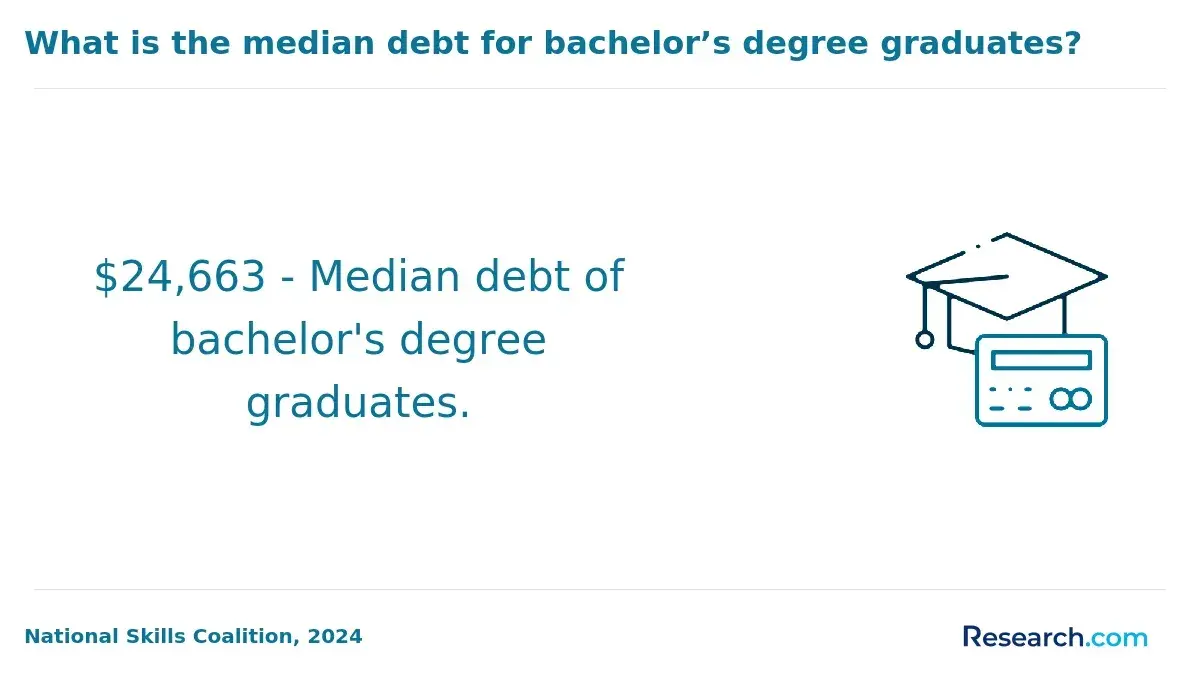
For cost planning, national graduate tuition data is a useful baseline but not a perfect Strategic Management doctorate estimate. Recent National Center for Education Statistics data published in 2024 shows average graduate tuition and required fees of $12,596 at public institutions and $29,931 at private nonprofit institutions for the 2022-23 academic year. Full cost of attendance can be higher once fees, books, residency travel, technology, lost work time, and dissertation expenses are included.
The table below summarizes realistic salary contexts by career stage. It is not a guarantee; it is a decision aid for comparing whether doctoral study could support your next step.
| Career stage or target | Common roles | Typical salary context |
| Mid-career manager moving into strategy | Strategy manager, internal consultant, transformation manager | Often aligned with management analyst, operations, or corporate manager pay bands |
| Senior strategy specialist | Director of strategy, analytics strategy lead, organizational development director | Often reaches upper management salary bands when tied to revenue, operations, or growth outcomes |
| Executive track | Chief strategy officer, chief transformation officer, chief executive | Can approach or exceed BLS executive wage benchmarks, especially with bonuses and equity |
| Academic track | Business professor, research faculty member, academic administrator | Depends strongly on institution type, tenure status, discipline, publication record, and administrative duties |
| Consulting track | Principal consultant, partner-track advisor, independent strategy consultant | Can be high but varies with firm tier, client base, utilization, and business development ability |
If you are still comparing business education options, an online business degree may be a lower-cost first step before a doctorate, especially if your immediate goal is promotion into management rather than research-intensive strategy leadership.
To estimate your personal return on investment, compare the total cost of the doctorate with the realistic salary difference between your current role and the role you can credibly target after graduation. Include the time it may take to publish, build a consulting portfolio, or qualify for executive promotion.
The highest-paying jobs are typically senior leadership, consulting, and specialized strategy roles where doctoral training supports complex decision-making. Some jobs do not require a doctorate, but the credential can help candidates stand out when paired with executive experience, research credibility, and a strong record of strategic results.
The table below uses recent U.S. labor market wage benchmarks from BLS occupational categories that closely align with common Strategic Management doctorate career paths. Actual compensation may include bonuses, equity, consulting fees, or academic summer pay that are not fully captured in base wage data.
| High-paying role | Closest BLS wage benchmark | 2024 median wage | Why a Strategic Management doctorate can help |
| Chief executive officer or president | Chief executives | $206,680 | Supports enterprise strategy, governance, competitive positioning, and evidence-based decision-making |
| Chief strategy officer | Top executives | Varies by organization | Applies doctoral research to corporate portfolio choices, market entry, growth, and transformation |
| Computer and information systems strategy executive | Computer and information systems managers | $171,200 | Combines business strategy with AI, digital transformation, data governance, and technology investment decisions |
| Operations strategy executive | Architectural and engineering managers | $167,740 | Valuable in manufacturing, infrastructure, logistics, and technical operations where strategy affects productivity and scale |
| Marketing strategy executive | Marketing managers | $161,030 | Supports competitive positioning, customer strategy, market research, and growth planning |
| Human capital or organizational strategy executive | Human resources managers | $140,030 | Connects workforce strategy, organizational design, culture, and change execution |
| Training and leadership development executive | Training and development managers | $127,090 | Applies organizational learning research to leadership pipelines and strategic capability building |
| Senior management consultant | Management analysts | $101,190 | Uses research methods, diagnostics, and strategic frameworks to advise organizations on complex change |
| Business school professor | Postsecondary business teachers | $98,880 | Requires advanced research ability and subject expertise; pay varies by rank, institution, and discipline |
| Strategy analytics or operations research leader | Operations research analysts | $91,290 | Uses quantitative modeling, scenario analysis, and decision science for strategic planning |
Readers should treat these salaries as occupational anchors, not degree-specific promises. The strongest outcomes usually come from roles where the doctorate directly improves the candidate's ability to lead strategy, publish research, advise executives, or build high-value organizational capabilities.
Earnings can range from upper-middle management pay to executive-level compensation, depending on role, sector, geography, and performance incentives. Base salary is only part of the picture for high-paying strategy roles; bonuses, profit sharing, stock options, consulting retainers, and academic administrative stipends can materially change total compensation.
The most important salary question is not "What does the doctorate pay?" but "What role does the doctorate help me access?" A professional who uses the degree to move from a department manager role into a corporate strategy director role may see a different payoff than someone who uses it to enter academia or independent consulting.
Use this sequence to estimate your likely earnings before enrolling:
- Identify three target job titles you would realistically pursue after the doctorate, such as strategy director, chief transformation officer, or business professor.
- Review salary data for those job titles in your state, industry, and organization size rather than relying only on national medians.
- Check current job postings to see whether employers request a doctorate, prefer one, or mainly require executive experience.
- Estimate the full program cost, including tuition, fees, residency travel, books, technology, and any income reduction while studying.
- Compare your current compensation with the expected pay band for your target roles and calculate how many years it may take to recover the investment.
A Strategic Management doctorate is usually easier to justify financially when it supports a specific promotion, consulting niche, tenure-track goal, or executive transition. It may be harder to justify if the candidate is early in their career, lacks management experience, or chooses a program without strong career outcomes and alumni networks.
Industry choice can have as much influence on compensation as the degree itself. Employers pay more when strategic decisions affect large budgets, regulated risk, complex operations, intellectual property, technology transformation, or market expansion.
The table below compares industries where Strategic Management doctorate holders may find strong salary potential. It combines occupational fit with typical employer reasons for paying a premium for advanced strategy expertise.
| Industry | High-paying role examples | Why the industry values doctoral-level strategy expertise |
| Technology and software | Digital strategy executive, AI strategy lead, product portfolio strategist | Strategy decisions affect innovation speed, platform competition, data use, and scalable growth |
| Management consulting | Principal consultant, strategy partner, transformation advisor | Clients pay for advanced problem diagnosis, research-backed recommendations, and change execution |
| Healthcare and life sciences | Healthcare strategy executive, organizational transformation leader | Organizations face regulation, cost pressure, workforce challenges, and care model redesign |
| Finance and insurance | Corporate strategy executive, risk strategy director, market intelligence leader | Strategy work often involves risk, analytics, capital allocation, and competitive positioning |
| Manufacturing and logistics | Operations strategy leader, supply chain transformation executive | Employers value productivity, resilience, network design, and process innovation |
| Higher education | Business professor, dean, research center director | Doctoral training is central to research, teaching, academic leadership, and institutional strategy |
| Government and defense contracting | Strategic planning director, organizational effectiveness executive | Large-scale missions require evidence-based planning, performance measurement, and policy alignment |
Current trends are reshaping the highest-paying industries. AI strategy, data governance, digital transformation, and workforce redesign are increasing demand for leaders who can evaluate both technology and organizational consequences. A doctorate can be valuable in these settings if the graduate can translate research into practical decisions leaders can implement.
High-paying employers reward Strategic Management doctorate holders for skills that connect rigorous analysis with organizational impact. The degree is most marketable when it produces not only academic knowledge but also decision tools, leadership credibility, and evidence of applied results.
The table below maps valuable skills to the job functions where they tend to increase earning potential. Use it to evaluate whether a doctoral program's curriculum and dissertation structure align with your target role.
| Skill | High-paying job function | How to demonstrate it |
| Strategic analysis | Corporate strategy, consulting, executive leadership | Market assessments, competitor analysis, portfolio reviews, growth recommendations |
| Quantitative research | Analytics strategy, operations research, policy evaluation | Statistical modeling, survey design, forecasting, causal analysis, dashboards |
| Qualitative research | Organizational change, culture strategy, leadership development | Interviews, case studies, thematic analysis, organizational diagnostics |
| Financial and performance thinking | Executive leadership, corporate development, transformation | Business cases, ROI analysis, operating metrics, cost-benefit evaluation |
| Change leadership | Transformation, organizational development, human capital strategy | Change plans, stakeholder maps, adoption metrics, leadership communication |
| Teaching and knowledge translation | Academia, executive education, consulting | Publications, workshops, case writing, presentations, client education |
| AI and digital strategy literacy | Technology strategy, operations redesign, innovation leadership | AI governance proposals, automation roadmaps, digital maturity assessments |
To build these skills in a way employers can evaluate, create evidence while you study. Strong assets include an applied dissertation, publishable research, executive briefings, consulting case studies, conference presentations, and measurable workplace projects tied to strategy execution.
One red flag is a program that is research-heavy but disconnected from your career target. Another is a program that promises executive outcomes but offers little training in analytics, strategy implementation, or doctoral-level research methods. The strongest programs make it clear how students develop both scholarly depth and practical strategy capability.
Career stability tends to be strongest in sectors where organizations consistently need planning, governance, leadership development, research, and change management. Stability does not always mean the highest salary, but it can improve long-term ROI by reducing job volatility and supporting steady advancement.
Public universities, healthcare systems, government agencies, defense contractors, large nonprofit systems, and established corporations often provide stable roles for Strategic Management doctorate holders. These sectors usually need leaders who can manage complex stakeholders, evaluate programs, implement strategy, and make long-term decisions under constraints.
The Bureau of Labor Statistics projects 7% growth for postsecondary teachers from 2024 to 2034, which suggests continued demand in higher education, although tenure-track business faculty roles remain competitive. Professionals who want stability but are not ready for doctoral study may first explore the best organizational development master's programs online to build leadership and change-management credentials before committing to a doctorate.
For career stability, evaluate sectors using these criteria:
- Budget resilience: Look for employers with durable funding sources, diversified revenue, or long-term contracts.
- Strategic complexity: Stable demand is stronger where organizations regularly manage regulation, workforce change, technology adoption, or service redesign.
- Internal promotion pathways: Large organizations may offer strategy, transformation, learning, analytics, and executive tracks under one employer.
- Credential alignment: Academic and research organizations often require doctorates, while corporate employers may treat the doctorate as preferred rather than required.
- Geographic flexibility: Online teaching, consulting, and remote strategy roles can reduce dependence on one local labor market.
The most stable path is often a hybrid one: maintain industry expertise, build a research profile, and develop teaching or consulting options. This gives doctorate holders more than one way to monetize the credential if one sector slows hiring.
What do employers of high-paying jobs look for when hiring Strategic Management doctorate holders?
Employers hiring for high-paying strategy roles look for evidence that the candidate can create value, not just evidence that the candidate completed advanced coursework. The doctorate helps most when it signals disciplined thinking, research capability, and the ability to lead decisions in ambiguous conditions.
For corporate and consulting roles, hiring teams often evaluate whether the candidate can move between board-level strategy and operational execution. For academic roles, committees focus more on research agenda, teaching ability, publication potential, and fit with departmental needs.
To position yourself well, build a profile that includes the following:
- A clear specialty: State whether your strength is corporate strategy, innovation, operations strategy, organizational change, analytics, global strategy, or another defined area.
- Measurable outcomes: Quantify strategic work when possible, such as growth initiatives, cost reductions, process improvements, market expansion, or leadership development results.
- Research-to-practice evidence: Show how your dissertation, publications, or applied projects solve real organizational problems.
- Executive communication samples: Prepare board briefs, strategy memos, teaching demos, consulting decks, or published articles that show you can communicate clearly.
- Relevant network signals: Build relationships with alumni, faculty, executives, conference peers, consulting partners, and professional associations before you begin an active job search.
Common mistakes can limit earning potential. Candidates often overestimate the salary impact of the doctorate alone, target roles that do not value doctoral training, choose dissertation topics with little market relevance, or wait until graduation to build a network. Avoid these mistakes by checking job postings early, speaking with alumni in your target roles, and selecting projects that produce marketable evidence.
When shortlisting doctoral programs, look beyond reputation. Ask whether graduates move into executive, consulting, academic, or research roles; whether the curriculum includes advanced methods and applied strategy; whether faculty research aligns with your goals; and whether the program format allows you to keep building professional experience while studying.
Other Things You Should Know About Strategic Management
It can be respected if the school is institutionally accredited, the curriculum is rigorous, and the student produces strong research or applied strategy work. Employers are more likely to value the degree when it is paired with leadership experience and measurable results.
A DBA is often better for applied executive, consulting, and organizational problem-solving roles. A PhD is usually better for research-intensive academic careers. Either can support high-paying work if the program, dissertation, and professional experience match the target role.
Many programs take about three to seven years, depending on full-time or part-time enrollment, dissertation progress, transfer credits, and program structure. Working professionals should consider whether the timeline fits their promotion window and financial goals.
Only if the degree clearly supports a realistic career move that can offset the cost. Compare tuition, fees, lost time, and opportunity cost against the roles you can credibly pursue, and ask whether a master's degree, MBA, certificate, or targeted experience could achieve the same goal for less.
- Top Degrees in Demand for the Future: 2026 & Beyond https://skillifysolutions.com/blogs/career-growth/top-degrees-in-demand-for-the-future/
- What Is AI Literacy and How a Doctorate in AI Fits the Path? https://imetworldwide.com/blogs/dba-vs-phd-which-pays-more-in-2026/
- What Are the Career Options With a PhD in Business? https://www.ucumberlands.edu/blog/what-jobs-can-you-get-with-a-phd-in-business
- Top Strategic Leadership Careers in 2026: Roles, Salaries & Skills https://www.michiganstateuniversityonline.com/resources/leadership/top-strategic-leadership-careers-in-2026-roles-salaries-skills/