2027 From Customer Service to HR Coordination: When Does a BS in Business Administration Make Sense?
Audited and Verified:
Our Editorial and Data Verification Process
Research.com uses government datasets, official education statistics and primary institutional information to support its career and degree guides. Our review process checks factual accuracy, occupational definitions, source dates and the requirements associated with the credentials discussed.
How This Article Was Fact-Checked
Our editorial team verifies salary estimates, employment projections, education requirements and program information against original data providers and official organizations. Salary figures are checked against the relevant occupational definitions and reporting periods. Information about licensure, accreditation and required in-person training is reviewed separately.
Fact-checked and verified on:

Co-Founder and Chief Data Scientist
Customer service work can prepare you for parts of HR coordination: answering sensitive questions, keeping accurate records, and helping people navigate procedures. But moving into HR also requires knowledge of hiring processes, employee data, and workplace policies. If you are considering a BS in Business Administration, the decision is whether its broad training and bachelor's credential will close gaps that experience or shorter training cannot. This guide helps you assess that fit, identify realistic entry roles, and compare the time and cost of earning the degree.
Key Things You Should Know
- A BS in Business Administration makes the most sense when target HR jobs prefer a bachelor's degree and you also want broader options in operations, training, or management support.
- Customer service experience transfers to HR coordination, but you still need evidence of skills in confidential records, scheduling, workplace procedures, and business software.
- The U.S. Bureau of Labor Statistics projects 6% employment growth for human resources specialists from 2025 to 2035; that occupation-wide forecast does not promise an HR job to every business graduate.
What Is a BS in Business Administration, and Who Is It For?
A Bachelor of Science in Business Administration is an undergraduate degree covering several business functions rather than HR alone. Programs commonly combine accounting, economics, management, marketing, quantitative work, and general education. Some offer an official HR concentration; others offer only HR-related electives. Check the catalog rather than assuming the same degree title means the same curriculum.
For a customer service employee, the degree can be useful if it meets a bachelor's preference in local HR postings while preserving options outside HR. It may be less efficient than targeted training if you already hold a bachelor's degree and need only HR-specific knowledge. A BBA may serve a similar goal, while a specialized HR degree may offer more relevant coursework but less breadth.
If speed matters because you are already working, compare remaining requirements—not just advertised duration—among US fast-track undergraduate business degree options. A shorter calendar does not necessarily mean fewer courses or less work.
When Does a BS in Business Administration Make Sense for Career Changers?
The strongest case is a clear gap between your current qualifications and the HR coordination jobs you want. Review several local postings: note whether a bachelor's degree is required or preferred, which HR systems or tasks appear repeatedly, and whether employers accept related administrative experience. A degree can address the education requirement, but it cannot replace evidence that you can handle the work.
Customer service experience may translate into employee support, issue tracking, scheduling, and careful communication. The larger gaps are often confidential personnel records, hiring workflows, onboarding, and policy administration. Seek a supervised stretch assignment, HR-adjacent administrative role, or relevant project while studying. If postings emphasize specialized HR preparation rather than a general bachelor's, compare education options for future HR professionals before committing.
A BS is less compelling when you already meet the education requirement, can move internally with employer training, or cannot justify the remaining cost for the roles available to you. Ask an HR manager or recruiter which gap would prevent them from interviewing you; their answer can clarify whether to pursue a degree, a course, or experience first.
What Careers Can You Pursue After Earning a BS in Business Administration?
For this transition, HR assistant, recruiting coordinator, onboarding coordinator, and HR coordinator are more useful roles to investigate than HR manager. Titles vary by employer: a coordinator may arrange interviews and maintain records at one organization but also support benefits administration at another. Read the duties, not just the title.
Related options include training coordinator, administrative specialist, and operations coordinator. Those roles can use customer service strengths while building experience with internal processes. An HR specialist role may be a later or immediate target depending on the posting, your prior responsibility, and the employer; the degree alone does not establish specialist or supervisory readiness.
If project coordination interests you more than personnel work, compare the tasks and curriculum before changing direction. Colleges accepting coursework toward project management bachelor's study may be worth examining if you have prior credits, but only an official evaluation can establish how those credits apply.
Requirements vary, but the business core typically introduces accounting, economics, finance, marketing, management, statistics or quantitative reasoning, and business communication. For an HR transition, look beyond course titles: organizational behavior can help you understand teams, while analytics and spreadsheet assignments can prepare you to interpret staffing or training data. Neither substitutes for instruction in HR procedures and responsible handling of employee information.
Compare the actual HR electives and applied assignments available to you. Useful subjects may include staffing, compensation, employment law, and training, but an elective is not an official concentration unless the school awards one. An internship or capstone can help you demonstrate relevant work only if it is available, approved under program rules, and feasible alongside your job.
If your interest is shifting toward project work, compare course sequences with fast-track business degree options rather than assuming accelerated programs allow you to take every desired elective. Required courses and their availability may control your timeline.
An online program may let you keep a customer service schedule, but "online" does not mean self-paced. Ask about live sessions, weekly deadlines, proctored exams, group projects, and any campus visits. Campus study may offer easier access to in-person recruiting and classmates, but commuting and fixed meeting times can make completion harder while working.
The better format is the one in which you can complete required courses and gain HR-relevant experience without repeatedly interrupting enrollment. When reviewing ranked US college pathways in online business, verify each program's current schedule, student support, and access to internships or career services; a ranking cannot establish your personal fit.
Schools commonly request a high school credential or prior college transcripts, but admission rules, GPA standards, and business major prerequisites vary. Some students enter the institution first and complete accounting, mathematics, or other courses before entering the major. Prior customer service employment may strengthen an application without replacing formal prerequisites.
If you have college credits, request an evaluation showing not only what transfers but what satisfies general education, the business core, and electives. Gather transcripts and check the school's current business administration degree entry requirements before building a completion plan. Admissions staff can clarify eligibility; an official degree audit is needed to establish remaining requirements.
A bachelor's degree commonly takes about four years of full-time study from the beginning; a working adult's remaining time depends on applicable transfer credits, course availability, and enrollment pace. Compare schools using the courses left after an official evaluation, not the credits they advertise as transferable.
Total cost includes tuition and mandatory fees as well as books, software, travel or exam expenses, and potentially lost work hours. Employer tuition assistance can help, but check eligibility, reimbursement timing, grade conditions, and any repayment obligation. Use online business administration program cost-and-time comparisons as a starting point, then obtain school-specific estimates for your remaining courses. A lower advertised tuition rate may not produce the lowest completion cost.
There is no single salary for this degree. The U.S. Bureau of Labor Statistics reports a $75,940 median annual wage for human resources specialists in May 2025. That figure covers workers across experience levels and is not a starting salary for HR coordinators or new business graduates. Job duties, location, industry, and your prior experience matter more to an individual offer.
For a sound financial comparison, look at pay ranges in local coordinator postings and weigh plausible earnings against your remaining education cost—not the occupation-wide median. If project coordination is another path you are considering, accredited project management degree cost breakdowns can help you compare education costs, but they cannot predict your salary in either field.
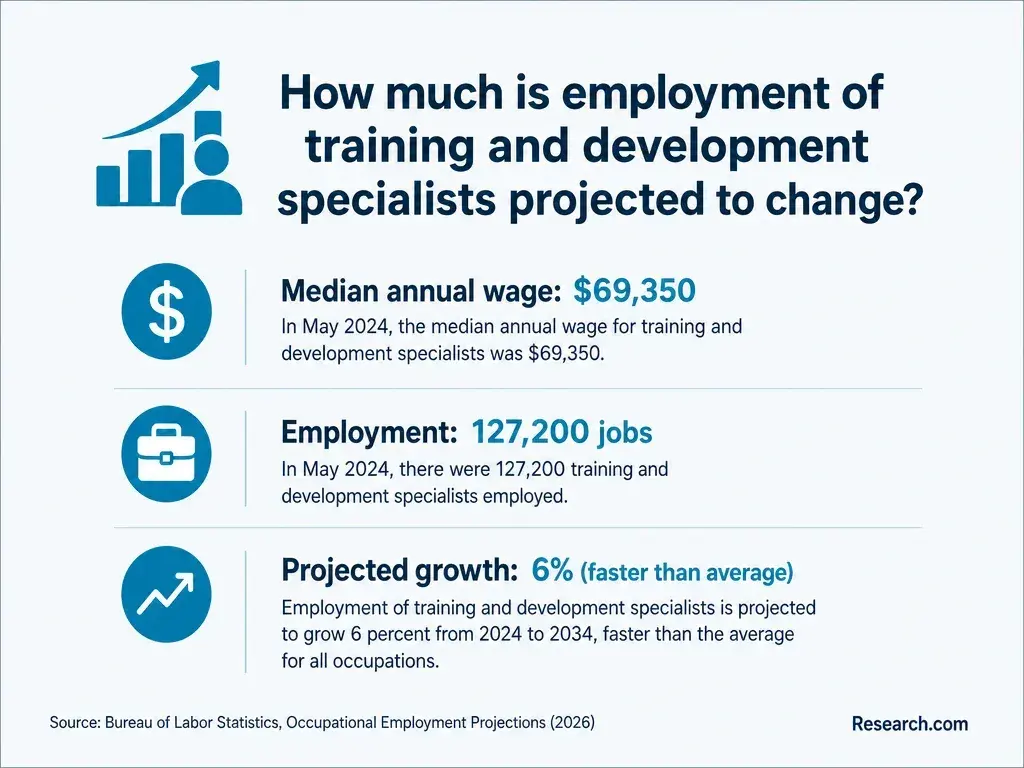
The BLS projects 6% growth in U.S. human resources specialist employment from 2025 to 2035. That is an occupation forecast, not a placement rate for BS in Business Administration graduates. Local openings, employer requirements, and competition for entry-level HR work should carry more weight in your decision.
Customer service employees can improve their prospects by documenting work that resembles HR coordination: accurate case records, scheduling, process explanations, and appropriate escalation of sensitive issues. If hiring posts demand a bachelor's degree but you must keep working, compare realistic course schedules—including online project management undergraduate funding guidance only if that alternative career path is genuinely under consideration. An unrelated degree should not be chosen solely because its financing looks attractive.
How Can You Choose an Accredited Business Administration Program?
First, confirm the institution's recognized accreditation and the exact degree it awards. Then check whether any claimed AACSB, ACBSP, or IACBE accreditation covers the relevant business school or program; institutional and business-specific accreditation have different scopes. Accreditation matters, but it does not establish that graduates obtain HR jobs.
For this career change, request the current curriculum, an official transfer evaluation, a remaining-cost estimate, and details of HR electives, applied projects, and career support. Ask whether working students can access HR-related internships or use an approved workplace project; do not assume your current job qualifies. If your goal is specifically leading teams rather than entering HR, compare leadership bachelor's degrees with accelerated pacing against the business program's actual courses and completion requirements.
The best choice is the program that closes a documented qualification gap at a manageable cost while leaving room to build relevant experience.
Other Things You Should Know About Business Administration
Only if the program approves the role and its duties under its internship rules. Your employer may also need to agree to supervision and any proposed project.
Not universally. Check the postings you intend to pursue and the certification provider's eligibility rules before paying for an exam or course.
Use accurate examples of scheduling, records, policy explanations, and resolving sensitive requests. Do not describe customer interactions as employee relations work if they were not.
Get permission first. Remove personal and confidential information, follow employer intellectual-property rules, and distinguish your own contribution from the team's work.
- Considering a Career Change to HR? Do This First | Rasmussen University https://www.rasmussen.edu/degrees/business/blog/career-change-to-hr/
- What Degree Do You Need for Human Resources? | snhu.edu https://www.snhu.edu/about-us/newsroom/business/what-degree-do-you-need-for-human-resources
- Which HR Career Path Is Right for You? | Explore the Options | Tulane University https://online.law.tulane.edu/blog/finding-your-hr-career-path
- 5 Human Resources Degrees | northcentralcollege.edu https://www.northcentralcollege.edu/news/2023/03/15/5-human-resources-degrees
- 13-1071.00 - Human Resources Specialists https://www.onetonline.org/link/summary/13-1071.00
- Do You Need a Degree to Work in HR? | HRCI https://www.hrci.org/community/blogs-and-announcements/hr-leads-business-blog/hr-leads-business/2022/02/14/do-you-need-a-degree-to-work-in-hr
- Human Resources (HR) Coordinators: Everything To Know | indeed.com https://www.indeed.com/career-advice/finding-a-job/hr-coordinator
- 8 HR Entry-Level Jobs to Explore: Salaries, Tasks, and Requirements | Coursera https://www.coursera.org/articles/hr-entry-level-jobs
- HR Job Requirements: What You Need To Know in 2026 | AIHR https://www.aihr.com/blog/hr-job-requirements/
- HR Coordinator Job Description, Skills and Responsibilities | LHH https://www.lhh.com/en-us/insights/job-descriptions/hr-coordinator