2027 Flexible Online Respiratory Therapy Associate Degree Programs: Part-Time, Hybrid, Evening, and Self-Paced Options

Co-Founder and Chief Data Scientist
Choosing an online respiratory therapy associate degree is really a scheduling decision as much as an academic one. NCES reporting published in 2024 shows that more than half of U. S. undergraduates took at least one distance education course, which helps explain why working adults are comparing flexible health programs more carefully.
This guide is for students balancing work, family, prerequisites, and clinical training. You will learn how part-time, hybrid, evening, and self-paced formats differ, where flexibility has limits, and how each option can affect campus attendance, clinical placement, cost, and time to completion.
Key Things You Should Know
- Most entry-level respiratory therapy associate degrees are not fully online because accredited programs must include hands-on labs, simulations, and supervised clinical rotations; "online" usually means online lecture courses paired with campus or clinical attendance.
- Part-time and evening formats can reduce weekly workload but often extend completion beyond the typical two-year full-time associate degree timeline, while self-paced formats are more common for general education or bridge coursework than for clinical respiratory therapy competencies.
- The career stakes are meaningful: the U.S. Bureau of Labor Statistics reported a $77,960 median annual wage for respiratory therapists in May 2024 and projects much faster-than-average employment growth for 2024 to 2034, making accreditation and licensure eligibility more important than convenience alone.
What Flexible Online Respiratory Therapy Associate Degree Formats Are Available?
Flexible online respiratory therapy associate degree programs usually combine online academic coursework with in-person skill development. The main formats differ by when you attend class, how often you visit campus, how quickly you move through courses, and how clinical rotations are scheduled.
The table below compares the formats students most often encounter. Use it to separate true flexibility from marketing language, especially because respiratory therapy is a patient-care field with required competencies.
| Format | How coursework is delivered | Campus or clinical attendance | Typical student fit | Main trade-off |
| Part-time online or hybrid | Fewer courses per term, often with online lectures | Labs and clinical rotations still required | Working adults, parents, and students taking prerequisites slowly | Lower weekly load but longer completion time |
| Hybrid | Online lectures plus scheduled in-person labs | Regular campus visits and local clinical sites | Students who can commute for labs but want fewer classroom hours | Convenient lectures, but not location-free |
| Evening or weekend | Scheduled live classes or labs outside standard daytime hours | Clinical rotations may still occur during daytime hospital shifts | Students with daytime jobs or caregiving duties | Class timing may be flexible, but clinical timing may not be |
| Asynchronous online | Recorded lectures, modules, and assignments with deadlines | In-person skills checks and clinicals required | Independent learners with changing weekly schedules | More control over study hours, less live interaction |
| Self-paced or competency-based | Progress based on demonstrated mastery where offered | Clinical skills cannot usually be completed entirely at home | Students with prior college credit or strong self-management skills | Fast progress is possible in some courses, but clinical sequencing can slow the pace |
Respiratory therapy programs are different from many online health majors because the degree prepares students for direct patient care. If you are interested in healthcare but prefer non-clinical online study, a health information management degree online may offer more fully online options than an entry-level respiratory therapy program.
In practical terms, the most flexible program is not always the one with the most online coursework. It is the one whose lab calendar, clinical sites, prerequisite sequence, and attendance rules fit your actual weekly schedule.
How Do Part-Time Online Respiratory Therapy Associate Degree Programs Work?
Part-time online respiratory therapy associate degree programs spread the curriculum over more terms. Instead of taking a full block of respiratory care courses, labs, and general education classes together, students may take a lighter load while keeping access to online lectures and scheduled in-person requirements.
This format works best when the school has a formal part-time plan rather than simply telling students to "take fewer classes." Respiratory therapy courses are often sequential, meaning one course must be passed before the next clinical or lab course begins.
Before choosing part-time enrollment, ask the program how it handles the following scheduling issues:
- Whether respiratory therapy courses are offered every term or only once per academic year
- Whether clinical rotations can be reduced to fewer days per week or must be completed in fixed blocks
- Whether part-time students remain eligible for the same clinical placement priority as full-time students
- Whether financial aid, scholarships, or health insurance requirements change below full-time enrollment
- Whether there is a maximum time limit for completing the professional phase of the program
The biggest advantage of part-time study is workload control. Students who work 30 to 40 hours per week may find that a lighter course load improves retention and reduces the risk of withdrawing from demanding science and clinical courses.
The biggest drawback is time. A program advertised as a two-year associate degree may take three years or more if prerequisites, respiratory care courses, and clinical rotations are spread out. That may be worthwhile, but only if the extended timeline is planned from the beginning.
How Do Self-Paced and Competency-Based Respiratory Therapy Associate Degree Programs Work?
Self-paced and competency-based education are often confused with asynchronous online learning, but they are not the same. In a self-paced course, students may move through modules at their own speed within school limits. In a competency-based course, progress depends on proving mastery of required skills or knowledge, not simply sitting through a set number of class sessions.
For respiratory therapy, this flexibility usually has boundaries. General education subjects such as English composition, psychology, or basic math may be available in self-paced formats, while respiratory care labs, simulations, ventilator training, and clinical competencies usually follow a fixed schedule.
The table below shows where self-paced flexibility is most realistic in an associate respiratory therapy pathway. It can help you avoid assuming that every course in the degree will move at your preferred speed.
| Program component | Self-paced potential | Why it matters |
| General education courses | Often possible, depending on the college | Can help students finish prerequisites before entering the professional sequence |
| Foundational science courses | Sometimes limited by lab requirements | Anatomy, physiology, and microbiology may require scheduled lab work |
| Respiratory therapy theory courses | Sometimes asynchronous, rarely fully self-paced | Course sequencing often aligns with lab and clinical readiness |
| Skills labs and simulation | Usually not self-paced | Faculty must verify hands-on competency in person or through approved simulation processes |
| Clinical rotations | Generally fixed or semi-fixed | Hospitals and clinics set availability, shift times, supervision, and attendance standards |
Self-paced study can be valuable if you already have strong science preparation, transfer credits, or a predictable study routine. It can be risky if you need frequent instructor feedback or tend to fall behind without weekly class meetings.
A common mistake is assuming self-paced means unlimited time. Most colleges still set term deadlines, course expiration rules, competency assessment windows, and progression requirements. Ask for those rules in writing before enrolling.
Yes, some colleges offer evening respiratory therapy classes, but the format is usually evening-based rather than entirely evening-only. Lectures may meet after work hours, and some labs may be scheduled in the evening, yet clinical rotations often depend on hospital and clinic availability.
Evening programs are designed for students who cannot attend regular daytime classes. They can be especially useful for career changers, medical assistants, certified nursing assistants, military-affiliated students, and parents who have daytime responsibilities.
Before relying on an evening schedule, compare the parts of the program separately. The following questions help reveal whether the program truly fits your availability:
- Are all respiratory therapy lectures offered in the evening, or only selected courses?
- Are lab checkoffs available after standard work hours every term?
- Can clinical rotations be completed during evenings or weekends, or are weekday daytime shifts required?
- How many nights per week should students expect to be on campus or online live?
- What happens if an evening clinical site is unavailable in a required semester?
The best candidates for evening respiratory therapy programs have stable weekly availability, reliable transportation, and backup plans for late labs or early clinical shifts. Students with rotating work schedules should be cautious because missing labs or clinical hours can delay progression.
Evening study can reduce conflicts with daytime employment, but it does not make the program lighter. The academic workload, patient-care standards, exams, and clinical documentation requirements are typically the same as in daytime programs.
Synchronous online courses meet at set times through live video or virtual classroom sessions. Asynchronous courses let students complete recorded lectures, readings, discussion posts, quizzes, and assignments on a deadline-based schedule without attending at a specific hour.
In respiratory therapy, synchronous learning may be used for case discussions, exam reviews, care planning, and faculty-led demonstrations. Asynchronous learning may be used for lecture content, terminology, cardiopulmonary physiology review, and preparatory assignments before lab.
The table below summarizes the decision trade-offs. It is useful for students comparing flexibility with the need for structure and real-time feedback.
| Course style | Scheduling flexibility | Best for | Potential challenge |
| Synchronous online | Moderate | Students who learn well through live instruction and class discussion | Set meeting times may conflict with work shifts |
| Asynchronous online | High for lecture study | Students with irregular schedules and strong time-management habits | Less immediate feedback unless faculty support is strong |
| Hybrid synchronous | Moderate to low | Students who want online lectures but can attend scheduled labs | Campus visits and live sessions may cluster during busy weeks |
| Blended asynchronous plus lab | High for theory, low for hands-on work | Students who can study independently but attend required skill sessions | Online progress must stay aligned with lab readiness |
Students who prefer healthcare technology, records, coding, compliance, or data work may find that the best online CAHIIM accredited health information management degree programs offer more asynchronous flexibility because they do not require the same hands-on respiratory care competencies.
For respiratory therapy students, the safest approach is to ask for a sample weekly schedule. A program may advertise asynchronous lectures but still require live exams, mandatory review sessions, in-person simulations, or fixed clinical documentation meetings.
Hybrid respiratory therapy associate degree programs combine online instruction with face-to-face learning. They are often the most realistic flexible option for entry-level students because they reduce classroom commuting while preserving hands-on training.
Campus visits are usually required. In respiratory therapy, students must learn how to use oxygen delivery systems, aerosol therapy equipment, mechanical ventilators, airway clearance devices, pulmonary function tools, and patient assessment procedures. These skills require supervised practice and competency verification.
Hybrid programs may use several kinds of in-person attendance. Understanding each one helps you estimate travel time and missed work more accurately:
- Scheduled campus labs for equipment practice, simulations, and skills checkoffs
- Clinical rotations at hospitals, long-term care facilities, sleep labs, pulmonary rehabilitation centers, or other approved sites
- On-campus orientations before the first professional term or before clinical placement
- Proctored exams, remediation sessions, or practical exams when required by the program
- Occasional intensive sessions where multiple labs or assessments are completed over a short period
A hybrid program may still require commuting one or more days per week during some terms. Clinical rotations may also start early in the morning, run for long shifts, or change by semester. Students who live far from campus should ask whether local clinical placement is guaranteed, merely attempted, or unavailable.
The main benefit of hybrid study is balance. You may complete lecture-heavy work online while gaining supervised experience in settings that mirror professional practice. The main limitation is that hybrid does not mean remote; it means fewer but still meaningful in-person requirements.
A full-time respiratory therapy associate degree often takes about two academic years after prerequisites are included or sequenced, but flexible pathways vary widely. The timeline depends on whether you enter with college credits, how the professional courses are sequenced, and whether clinical rotations are available when you need them.
Use the table below as a planning guide rather than a guarantee. Schools structure respiratory therapy cohorts differently, and clinical placement capacity can affect how quickly students move through the program.
| Enrollment format | Common completion pattern | What can extend the timeline | What can shorten the timeline |
| Full-time hybrid | Often the fastest standard route | Failed prerequisites, limited clinical slots, or waiting for a cohort start | Completed prerequisites and continuous enrollment |
| Part-time | Usually longer than the standard plan | Courses offered once per year or clinical rotations that cannot be split | Taking general education courses before the professional phase |
| Evening | May match or exceed the standard timeline | Limited evening lab or clinical availability | A lockstep evening cohort with predictable scheduling |
| Self-paced components | Variable | Clinical and lab courses that must follow a fixed sequence | Fast completion of eligible general education or prerequisite courses |
| Transfer-heavy pathway | Potentially shorter before the professional phase | Credits that do not apply to required science or program courses | Approved anatomy, physiology, math, and communication credits |
The most important timeline question is not "How fast can I finish?" but "Can I follow the required sequence without stopping out?" A slightly longer plan that fits your schedule may be better than an accelerated option that creates repeated conflicts with work or caregiving.
Respiratory therapy programs may also require a minimum grade in science courses, current CPR certification, background checks, immunizations, drug screening, and health documentation before clinical placement. Delays in any of these requirements can affect graduation timing.
For respiratory therapy, accreditation is not just a quality signal; it can affect exam eligibility, licensure pathways, transfer options, and employer recognition. Entry-level students should look for programmatic accreditation from the Commission on Accreditation for Respiratory Care, commonly known as CoARC, and institutional accreditation for the college itself.
Accreditation and transfer friendliness are related but different. Accreditation addresses whether a program meets recognized educational standards. Transfer friendliness addresses whether your credits will be accepted by another school or applied toward a future bachelor's degree.
When evaluating a flexible online or hybrid respiratory therapy associate degree, verify these items before applying:
- Confirm the program's current CoARC accreditation status directly with the accreditor or through the program's official accreditation disclosures.
- Check whether the degree prepares students for the credentialing exams commonly required for respiratory therapy licensure pathways.
- Ask whether online, evening, and part-time students graduate from the same accredited program as daytime students.
- Review transfer agreements with four-year colleges, especially if you plan to complete a bachelor's degree later.
- Ask how prior college credits are evaluated and whether science courses have expiration limits.
- Confirm state licensure requirements where you plan to work, because requirements can vary by state board.
Red flags include vague accreditation language, pressure to enroll before receiving a written degree plan, unclear clinical placement policies, and programs that describe themselves as online but cannot explain lab or clinical attendance requirements.
Transfer-friendly programs usually provide clear course equivalencies, articulation agreements, and advising for students who may later pursue leadership, education, advanced practice, or healthcare administration roles.
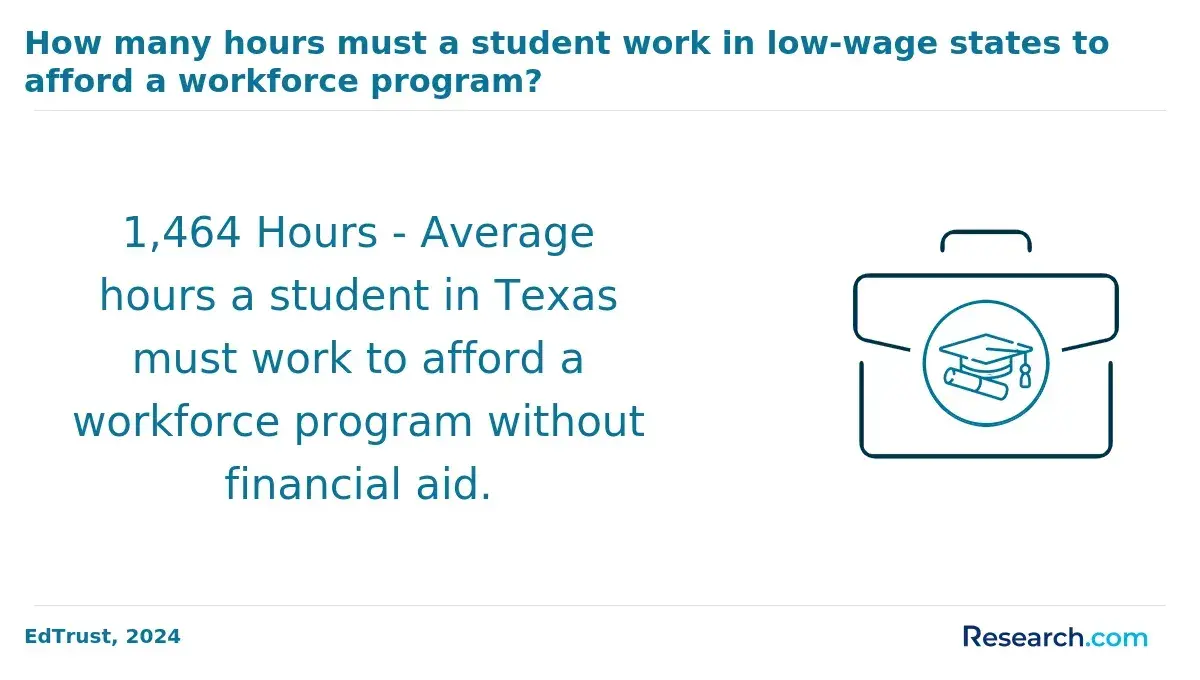
Costs vary by state, residency status, college type, lab fees, uniforms, background checks, clinical travel, textbooks, exam preparation, and whether you extend the program part time. Flexibility can help you keep working, but it does not automatically lower tuition.
Recent national cost benchmarks can help frame your expectations before you compare individual schools. The College Board's 2024 Trends in College Pricing reported average published tuition and fees of $4,050 for in-district public two-year colleges in 2024-25; respiratory therapy students should expect program-specific costs on top of general tuition.
Common cost items to compare include:
- $4,050 average published in-district tuition and fees at public two-year colleges for 2024-25, before program-specific expenses
- Respiratory therapy lab, simulation, and equipment fees that may be billed by course or term
- Clinical compliance costs such as immunizations, drug screening, background checks, CPR certification, and health insurance documentation
- Transportation, parking, and possible lost wages for labs or clinical shifts
- Credentialing exam preparation, licensing application fees, and graduation expenses
Financial aid may be available if the college and program are eligible for federal aid and you meet enrollment requirements. Part-time students can often receive aid, but award amounts, satisfactory academic progress rules, and loan eligibility may differ from full-time enrollment.
Respiratory therapy can be a strong healthcare pathway for students who want direct patient care, but it is not the only route. If you are weighing clinical work against administrative or data-focused roles, comparing health information management salary information can help you think more clearly about return on investment across healthcare career paths.
To estimate the real cost, calculate tuition and fees across the full expected timeline, not just one semester. A part-time plan with lower term bills can still cost more overall if extra terms add fees, commuting, or repeated course materials.
How Should You Choose the Best Flexible Online Respiratory Therapy Associate Degree Program for Your Schedule?
The best flexible program is the one that matches your career goal, learning style, commute range, clinical availability, and weekly time budget. For respiratory therapy, you should prioritize accreditation and clinical feasibility before convenience claims.
A practical comparison process can prevent expensive mistakes. Work through these steps before committing to a school:
- Define your non-negotiable schedule limits, including work shifts, caregiving hours, commute distance, and days you cannot attend clinicals.
- Request a term-by-term degree plan that shows online courses, campus labs, exams, and clinical rotations separately.
- Ask whether the program is cohort-based, part-time-friendly, evening-based, asynchronous, or simply hybrid with fixed attendance days.
- Verify CoARC accreditation, institutional accreditation, exam preparation, licensure alignment, and state-specific requirements.
- Compare total cost over your likely completion timeline, including fees, travel, clinical compliance, and possible reduced work hours.
- Ask current students or advisors where scheduling problems most often occur, especially during clinical placement terms.
- Choose the format that you can sustain through the hardest semester, not just the first online course.
Different formats fit different students. Part-time study fits students who need a lower weekly workload. Hybrid study fits students who can commute reliably for hands-on training. Evening study fits students with stable daytime conflicts. Self-paced study fits independent learners, but it is most useful when applied to eligible general education courses rather than clinical competencies.
Students who see themselves moving into management later may eventually compare respiratory therapy experience with degrees such as a masters in healthcare administration, especially if they want to pursue supervisory, operational, or policy-focused healthcare roles after gaining clinical experience.
Common mistakes include choosing the lowest-tuition option without checking clinical travel, assuming hybrid means rare campus visits, enrolling part time without confirming course rotation, and overlooking transfer policies. Avoid these by asking for written answers and comparing programs by total fit, not by online convenience alone.
Other Things You Should Know About Respiratory Therapy
Respiratory therapy may not be the best fit if you want a mostly online degree with little in-person training. Entry-level programs require labs and clinical rotations because the job involves direct patient care, equipment use, assessment, and emergency response.
Some students do, especially in part-time or evening formats, but it can be difficult during lab-heavy and clinical terms. Ask the program for the expected weekly time commitment before assuming a full-time job will remain manageable.
They can, if the online or hybrid option is part of an appropriately accredited entry-level respiratory therapy program. Always confirm accreditation, exam eligibility, and state licensure alignment before enrolling.
An entry-level associate degree is designed to prepare students for initial respiratory therapy practice and required credentials. An RT-to-degree or completion program is usually for people who are already credentialed respiratory therapists and want an additional academic credential.
- Respiratory Therapy https://www.ntc.edu/academics-training/programs/all/associate-degree/respiratory-therapy
- Eligibility and Requirements https://www.kumc.edu/school-of-health-professions/academics/departments/respiratory-care-and-diagnostic-science/academics/respiratory-care-degree-programs/respiratory-care-metc/eligibility-and-requirements.html
- Respiratory care https://www.starkstate.edu/academics/explore-all-programs/respiratory-care/
- Local Respiratory Therapy Programs Report 100% Employment Rate for Recent Graduates - Kettering College https://kc.edu/local-respiratory-therapy-programs-report-100-employment-rate-for-recent-graduates/
- Online/Hybrid Respiratory Therapy | 18 Month Program | WVJC https://www.wvjc.edu/respiratory-therapy-online/
- Respiratory Care Therapist AAS Degree https://www.lonestar.edu/programs-of-study/respiratory-care-aas.htm
- Respiratory Therapy Associate Degree https://chartercollege.edu/programs/health-care/respiratory-therapy-aas/
- Respiratory Therapist Associate’s Degree | Platt College https://plattcollege.edu/programs/school-of-medical-sciences/respiratory-therapy/
- Respiratory Care Program Information Session https://www.broward.edu/academics/health-sciences/respiratory/
- Respiratory Therapy | Ozarks Tech (OTC) https://ozarkstech.edu/programs/health-services/respiratory-therapy/