2027 Flexible Online Criminal Justice Administration Doctorate Programs: Part-Time, Hybrid, and Self-Paced Options

Co-Founder and Chief Data Scientist
Choosing a criminal justice administration doctorate is often a scheduling decision as much as an academic one. Many applicants are police leaders, corrections administrators, federal employees, analysts, or instructors who cannot pause full-time work.
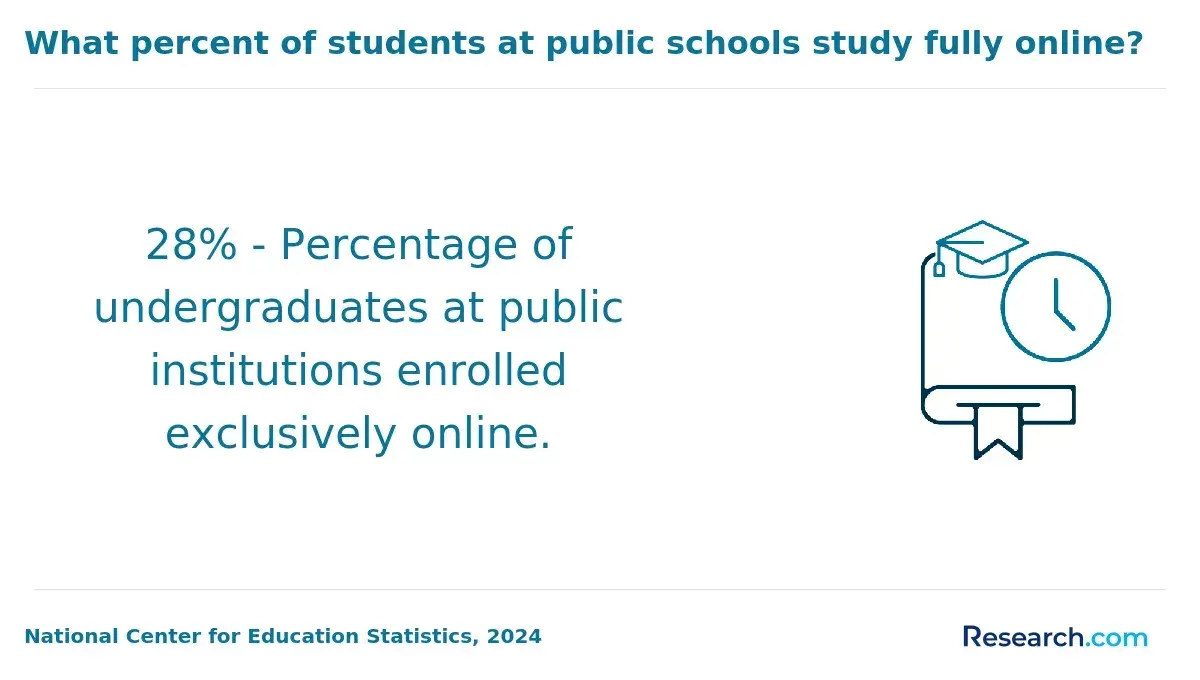
NCES reported in 2024 that more than half of postbaccalaureate students took at least one distance education course, showing how normal online graduate study has become. This guide explains part-time, hybrid, and asynchronous formats so you can compare flexibility, cost, residency, completion time, and career value before enrolling.
Key Things You Should Know
- Flexible online criminal justice administration doctorates are usually professional doctorates, such as a Doctor of Criminal Justice, Doctor of Public Administration with a criminal justice focus, or PhD with online delivery, part-time students commonly finish in about 4 to 7 years depending on dissertation, capstone, transfer credit, and course load.
- "Self-paced" rarely means unlimited pacing at the doctoral level; most programs use asynchronous weekly modules, cohort deadlines, dissertation milestones, and faculty-supervised research checkpoints rather than open-ended completion.
- Cost and ROI should be judged against total program price, employer tuition support, and career goal, the 2025-26 federal graduate Direct Unsubsidized Loan annual limit is $20,500, so high-cost programs may require Graduate PLUS loans, employer aid, payment plans, or out-of-pocket funding.
Which Flexible Online Criminal Justice Administration Doctorate Programs Offer Part-Time Options?
Part-time options are most common in practitioner-focused criminal justice administration doctorates designed for adults already working in justice, public safety, homeland security, corrections, courts, emergency management, policy, or higher education. These programs usually assume students will take one or two courses per term while continuing full-time employment.
The strongest fit is often a professional doctorate rather than a traditional full-time research PhD. A Doctor of Criminal Justice, Doctor of Public Administration, Doctor of Strategic Leadership, or public safety-focused doctorate may emphasize applied research, executive decision-making, budgeting, ethics, interagency collaboration, and evidence-based policy. Students who are still comparing earlier academic pathways can start with an online criminal justice degree before committing to doctoral study.
The table below summarizes the doctorate types most likely to support part-time enrollment. Use it to identify the format that matches your career goal instead of choosing only by program title.
| Doctorate Type | Part-Time Fit | Common Focus | Best For |
| Doctor of Criminal Justice | Very strong | Justice administration, policy, leadership, applied research | Police, corrections, courts, probation, and public safety leaders |
| Doctor of Public Administration with Criminal Justice Concentration | Strong | Public management, budgeting, governance, agency reform | Students aiming for executive public-sector roles |
| PhD in Criminal Justice or Criminology | Moderate to limited | Theory, advanced research methods, teaching, scholarship | Future faculty, researchers, and policy analysts |
| Doctorate in Public Safety or Homeland Security Leadership | Strong | Risk, emergency coordination, security strategy, organizational leadership | Public safety administrators and security executives |
When reviewing a program, look beyond the word "online." A genuinely part-time-friendly doctorate should publish clear course-load options, maximum time-to-degree rules, dissertation or capstone sequencing, leave-of-absence policies, and whether students can pause between terms without losing standing. If a school only advertises an accelerated full-time plan, ask whether part-time enrollment is formally allowed or simply tolerated.
How Do Hybrid and Fully Online Criminal Justice Administration Doctorate Programs Differ?
Hybrid and fully online doctorates can both work for employed students, but they solve different problems. Fully online programs reduce travel and relocation barriers, while hybrid programs may offer stronger face-to-face networking, research mentoring, and cohort identity through occasional campus sessions.
The comparison below shows the practical differences. The best choice depends on your schedule, location, learning style, employer support, and need for in-person academic community.
| Format | How It Works | Advantages | Trade-Offs |
| Fully online | Courses, advising, research meetings, and most student services are delivered remotely | Best for students with rotating shifts, family obligations, or long travel distances | Requires strong self-management and proactive communication with faculty |
| Hybrid | Most coursework is online, with required campus weekends, summer institutes, or short residencies | Helpful for networking, intensive research workshops, and cohort bonding | Travel, lodging, leave time, and schedule conflicts can increase total cost |
| Low-residency online | Online study with limited required in-person sessions at key milestones | Balances flexibility with structured doctoral support | Residency dates may be fixed and difficult to change |
| Executive cohort | Students move through a set sequence together, often with synchronous sessions | Good for accountability and professional networking | Less flexible if you need to slow down or stop out temporarily |
A fully online doctorate may be better if your work schedule is unpredictable, you are outside commuting distance, or you cannot reliably travel. A hybrid doctorate may be worth the added cost if you learn best through in-person discussion, want closer faculty access, or need a structured academic community to stay on track.
Do Online Criminal Justice Administration Doctorate Programs Offer Self-Paced or Asynchronous Learning?
Some online criminal justice administration doctorates advertise asynchronous learning, but that is not the same as a fully self-paced program. Asynchronous courses usually let you watch lectures, read materials, and post discussions on your own schedule within a weekly deadline. Self-paced learning, by contrast, would allow students to move through material as quickly or slowly as they want, which is uncommon in doctoral education.
Doctoral programs limit self-pacing because advanced research requires faculty feedback, ethics review, committee approval, peer discussion, and staged dissertation or capstone milestones. Flexibility usually appears in the weekly schedule, not in the complete removal of deadlines.
Before enrolling, ask admissions or the program director how flexible the online format actually is. These questions help separate true working-adult design from vague marketing language:
- Are lectures recorded, live, or both, and are live sessions mandatory?
- Can students complete weekly work at any time before the deadline, or are there required log-in times?
- How often do doctoral students meet with faculty advisors, dissertation chairs, or research committees?
- Are exams proctored at fixed times, or can students choose approved testing windows?
- Can students reduce their course load during demanding work periods without delaying dissertation eligibility?
- What happens if a student misses a required synchronous session because of court duty, deployment, emergency response, or shift work?
The most flexible programs are transparent about rhythm. They publish term dates, synchronous requirements, technology expectations, and dissertation checkpoints before you apply. If the school cannot explain how asynchronous learning works at the doctoral level, treat that as a red flag.
How Long Does It Take to Complete a Flexible Online Criminal Justice Administration Doctorate?
A flexible online criminal justice administration doctorate typically takes longer than a full-time campus program because students often balance coursework with leadership roles, field schedules, family responsibilities, and research. The usual completion range is about 3 to 7 years, with the dissertation or applied doctoral project often driving the final timeline.
The table below shows common pacing models. These are planning ranges, not promises, because schools set different credit requirements, transfer policies, residency rules, and dissertation expectations.
| Enrollment Pace | Typical Course Load | Common Completion Range | Best Fit |
| Accelerated full-time | Multiple courses each term plus continuous research progress | About 3 to 4 years | Students with strong employer support or reduced work obligations |
| Standard part-time | One or two courses per term | About 4 to 6 years | Working professionals who need predictable weekly workload |
| Extended part-time | Reduced load, occasional breaks, or slower dissertation progress | About 5 to 7 years | Students with shift work, caregiving duties, deployments, or agency leadership demands |
| ABD completion or transfer-friendly pathway | Advanced standing plus dissertation or final research sequence | Varies widely | Students with prior doctoral credits or completed doctoral coursework |
Time-to-degree matters because longer enrollment can increase fees, technology charges, and opportunity costs. It can also affect motivation. A flexible program should give you enough time to finish without making the pathway so open-ended that dissertation progress stalls.
To keep the timeline realistic, map your program backward from the dissertation or capstone. Confirm when you choose a chair, when research methods courses occur, when proposal approval happens, and whether Institutional Review Board review is required for interviews, surveys, agency data, or human-subjects research.
How Do Flexible Online Criminal Justice Administration Doctorate Programs Accommodate Working Professionals?
Programs built for working professionals usually combine online delivery with predictable academic pacing, applied assignments, and faculty who understand public-sector schedules. This matters because criminal justice students may work nights, rotate shifts, respond to emergencies, testify in court, supervise facilities, or manage agency crises that do not fit a traditional graduate calendar.
Strong programs typically accommodate employed doctoral students in several practical ways. Look for features that reduce friction without lowering academic expectations:
- Asynchronous weekly modules that let students study before or after shifts.
- Evening or weekend synchronous sessions when live attendance is required.
- Applied assignments tied to policy analysis, agency performance, budgeting, ethics, or leadership problems.
- Research projects that can be completed using approved public data, agency data, interviews, or case studies.
- Faculty advising calendars that support students in different time zones.
- Optional course sequencing plans for one-course-per-term students.
- Leave-of-absence policies for deployment, promotion training, family emergencies, or major job changes.
A key current trend is the growth of data-driven and technology-supported justice administration. AI-assisted report review, predictive analytics, body-camera evidence management, cybercrime, digital forensics, and automated records systems are changing what leaders need to understand. A flexible doctorate should help students evaluate these tools ethically rather than simply use technology as a buzzword.
Working professionals should also evaluate faculty availability. A flexible schedule is not helpful if dissertation feedback takes months or if required research courses are offered only once a year. Ask current students how quickly instructors respond, how dissertation chairs are assigned, and whether the program has enough faculty for the number of doctoral candidates.
What Are the Attendance and Residency Requirements for Flexible Online Criminal Justice Administration Doctorates?
Attendance and residency requirements vary widely, even among programs that describe themselves as online. Some programs have no campus requirement, while others require short residencies for orientation, research seminars, comprehensive exams, dissertation proposal defense, or final defense.
Residency is not automatically a disadvantage. A short in-person session can help students meet faculty, build a dissertation plan, and form a professional network. The problem is surprise. Travel requirements can add airfare, lodging, meals, childcare, and time away from work.
Review these requirements before applying, not after admission:
- Whether orientation is online, optional, or mandatory on campus.
- How many residencies are required during the full program.
- Whether residencies occur on weekdays, weekends, or during summer sessions.
- Whether dissertation proposal and final defense can be completed remotely.
- Whether comprehensive exams require synchronous attendance or proctored testing.
- Whether internship, practicum, or field-based research requirements can be completed near your home or workplace.
- Whether travel costs are included in the published cost of attendance.
Also ask about attendance rules for online discussions and live seminars. Some doctoral programs require substantive weekly participation, while others grade attendance in synchronous sessions. If your job includes emergency callouts, court appearances, or mandatory overtime, choose a program with clear accommodation procedures.
How Much Do Flexible Online Criminal Justice Administration Doctorate Programs Cost?
The cost of a flexible online criminal justice administration doctorate depends on tuition per credit, total credits, dissertation continuation fees, residency travel, technology fees, books, and how long you remain enrolled. A lower per-credit rate is not always cheaper if the program requires more credits or charges several years of dissertation fees.
When comparing cost, separate direct tuition from financing limits and hidden expenses. Students reviewing the broader criminal justice degree price should apply the same total-cost logic at the doctoral level.
- $20,500 is the 2025-26 annual federal Direct Unsubsidized Loan limit for graduate and professional students before considering Graduate PLUS loans or other aid.
- $0 in required campus travel is possible in fully online programs, but hybrid or low-residency programs may add airfare, lodging, meals, parking, and missed-work costs.
- $0 employer cost may be possible when an agency, university, military benefit, or public-sector tuition assistance program covers approved credits, but coverage rules often exclude fees or dissertation continuation charges.
The table below shows the main cost drivers. Use it to compare total program cost rather than relying on advertised tuition alone.
| Cost Factor | Why It Matters | What to Verify |
| Tuition per credit | Doctoral programs may require many credits beyond the master's degree | Whether the rate is fixed, cohort-based, or subject to annual increases |
| Total required credits | A lower rate can be offset by a higher credit requirement | How many credits are required after transfer or advanced standing review |
| Dissertation or capstone fees | Students may pay continuation fees after coursework ends | Whether fees apply every term until final approval |
| Residency expenses | Hybrid requirements can change the real cost of attendance | Whether travel is mandatory and how often it occurs |
| Employer or military benefits | Tuition support can significantly reduce out-of-pocket cost | Whether the program, course load, and grades meet benefit rules |
| Time-to-degree | Longer enrollment can increase fees and delay career benefits | Maximum time limits and average dissertation completion patterns |
Common mistakes include comparing only tuition per credit, ignoring dissertation fees, assuming online means no residency cost, and borrowing the full approved amount without calculating monthly repayment. Before committing, request a written full-program estimate from the school's financial aid or student accounts office.
Which Students Benefit Most From Flexible Online Criminal Justice Administration Doctorate Programs?
Flexible online criminal justice administration doctorates are best for students who already have professional experience and need a credential that supports leadership, teaching, policy, or applied research goals. They are usually not the fastest route into entry-level criminal justice work.
Students who benefit most tend to have a clear reason for doctoral study. The degree may make sense if you want to move from operational leadership into executive administration, teach at the college level, lead policy research, consult on justice reform, or qualify for senior roles where a doctorate strengthens credibility.
The best-fit and poor-fit patterns below can help you decide whether the investment matches your stage of life and career.
| Student Profile | Fit Level | Reason |
| Midcareer criminal justice leader | Strong | The program can connect advanced leadership theory with agency-level problems |
| Instructor seeking long-term higher education roles | Strong | A doctorate may support teaching, curriculum leadership, or applied scholarship |
| Policy analyst or public-sector manager | Strong | Research and administration training can support evidence-based decision-making |
| Recent bachelor's graduate with little field experience | Weak to moderate | A master's degree or work experience may provide better near-term value |
| Student seeking entry-level law enforcement employment | Weak | Agencies usually prioritize academy eligibility, background standards, fitness, and experience over doctoral credentials |
If you are earlier in your education path, a doctorate may be premature. Students building foundational credentials may want to compare the best online associate degree programs in criminal justice before moving into bachelor's, master's, and doctoral study.
You should consider a different option if you mainly want a promotion that your agency grants through experience, civil service exams, specialized training, or command school. A doctorate can be valuable, but it should not replace practical qualifications that your employer actually uses for advancement.
Does Program Flexibility Affect Career Outcomes for Online Criminal Justice Administration Doctorate Graduates?
Program flexibility can affect career outcomes indirectly, but it does not automatically improve or weaken them. Employers usually care more about institutional accreditation, relevance of the doctorate, leadership experience, research skills, writing ability, and evidence of ethical judgment than whether courses were online, hybrid, or campus-based.
For students pursuing administrative advancement, the doctorate is often a credibility and capability credential rather than an entry ticket. The U.S. Bureau of Labor Statistics reported a May 2024 median annual wage of $77,270 for police and detectives, but many senior administrative roles are shaped by rank, agency size, location, union rules, civil service systems, and executive appointment processes. That means a doctorate may support advancement, but it does not override employer-specific promotion rules.
Career outcomes are strongest when the program format helps you complete meaningful work. A flexible program that lets you study an agency retention problem, correctional reentry model, emergency coordination issue, or digital evidence policy can produce a dissertation or capstone that has direct professional value.
Students interested in adjacent public safety, compliance, and risk fields may also compare the best online environmental health and safety programs, especially if their goals include workplace safety, regulatory compliance, emergency preparedness, or organizational risk management rather than criminal justice administration specifically.
Academic career outcomes require separate scrutiny. If your goal is a tenure-track faculty role, a research-intensive PhD may be more appropriate than a professional doctorate. If your goal is adjunct teaching, administrative teaching, curriculum design, or practitioner education, an applied doctorate may be enough, depending on the institution and subject area.
How Should Students Choose the Most Flexible Online Criminal Justice Administration Doctorate Program?
The most flexible program is not simply the one with the fewest campus visits. It is the program that lets you finish rigorous doctoral work on a schedule you can sustain while meeting your career goal, budget, and research interests.
Use the following sequence to compare programs in a practical way. It moves from nonnegotiable quality checks to personal fit factors.
- Confirm institutional accreditation through a recognized accreditor and verify that the doctorate is awarded by the institution listed in official databases.
- Match the degree type to your goal, choose a PhD for research-heavy academic goals and a professional doctorate for applied leadership, administration, or policy practice.
- Request a full curriculum map showing course sequence, dissertation or capstone milestones, comprehensive exams, residencies, and maximum time-to-degree.
- Ask whether part-time enrollment is formally supported and whether students can take one course per term without losing access to required courses.
- Compare total cost, not only tuition per credit, including fees, residency travel, dissertation continuation, books, and financing charges.
- Review faculty expertise to see whether at least two faculty members can support your likely research area.
- Ask for student support details, including writing help, methodology support, library access, statistical software, career services, and dissertation chair assignment procedures.
- Check whether the program publishes outcomes such as completion patterns, dissertation support processes, alumni roles, or doctoral student handbooks.
Be alert for red flags. Avoid programs that will not provide a full cost estimate, cannot explain residency requirements, pressure you to enroll quickly, make broad salary promises, lack clear dissertation support, or describe online learning without specifying synchronous attendance rules.
A good final test is to build a weekly calendar before you apply. Block work, commute, family time, sleep, class sessions, reading, writing, and research. If the schedule only works in an ideal week, the program may not be flexible enough for real life.
Other Things You Should Know About Criminal Justice Administration
Most doctoral programs require a master's degree, often in criminal justice, criminology, public administration, public safety, homeland security, sociology, legal studies, or a related field. Some may accept applicants from other disciplines if they have relevant professional experience or complete prerequisite coursework.
No. A Doctor of Criminal Justice is usually an applied professional doctorate focused on leadership, policy, and practice. A PhD is usually more research-oriented and may be better for students who want tenure-track academic or advanced research careers.
Usually no. Law enforcement certification, peace officer standards, academy training, background checks, and physical requirements are controlled by state agencies and employers. A doctorate may support leadership or teaching goals, but it does not replace required certification.
Many do, but some professional doctorates use an applied dissertation, doctoral capstone, or practice-based research project. Applicants should compare final project requirements carefully because they affect workload, timeline, faculty support, and career relevance.
References
- 2025 Most Affordable Online Criminal Justice Degrees https://www.onlineu.com/most-affordable-colleges/criminal-justice-degrees
- Doctor of Criminal Justice | Online with Limited Residency | Tiffin University https://go.tiffin.edu/doctorate-programs/doctor-of-criminal-justice/
- Top Online Criminal Justice Degrees https://www.criminaljusticeprograms.com/online-criminal-justice-degrees/
- Online Criminal Justice Degrees (Types, Benefits & FAQ) https://www.allcriminaljusticeschools.com/criminal-justice/criminal-justice-online-degree/
- Most Affordable Online Criminal Justice Degrees https://www.affordablecollegesonline.org/degrees/criminal-justice-programs/
- Difference between Hybrid, Online & In-Class Degree Programmes | BSBI https://www.berlinsbi.com/blog/what-is-the-difference-between-hybrid-online-and-in-class-degree-programmes
- Online Doctorate in Criminal Justice https://www.criminaljustice.com/online-degrees/doctorate-in-criminal-justice/
- Online PhD in Criminal Justice: Find Top Programs https://www.phds.me/online-programs/criminal-justice-doctorate/