
2027 Fastest Online Associate Degree Completion Programs

Co-Founder and Chief Data Scientist
Already earned college credits but never finished an associate degree? The fastest route back depends less on the length of online classes than on which credits a college accepts and what requirements remain.
Cost matters, too: College Board reported average published tuition and fees of $4,050 for in-district students at public two-year colleges in 2024-25. That figure is a starting point, not the price of your unfinished degree. This guide helps returning students compare online completion pathways, estimate a realistic timeline and total cost, and spot requirements that could delay graduation.
Key Things You Should Know
- The fastest credible pathway is the one that applies the most eligible prior credit to your specific degree requirements - not necessarily the one advertising the shortest classes.
- Many associate degrees require about 60 credits, but transfer limits, residency rules, course sequencing, and required in-person work determine how many credits you still need.
- Compare a written credit evaluation and full remaining cost before enrolling; the $4,050 public two-year tuition-and-fees average for 2024-25 is not an individualized completion price.
Top 10 Fastest Online Associate Degree Completion Programs
Business Programs
Business administration AA or AS pathways can work well for students who have already completed general education courses and intend to pursue a bachelor's degree. An AAS in business may emphasize accounting, software, or workplace applications instead.
Compare how prior business courses satisfy major requirements, not just how many credits transfer. Online coursework may be readily available, but a required capstone or infrequently offered class can still set the graduation date. For a transfer goal, confirm that the destination university will apply the courses toward its business major.
Healthcare Programs
Healthcare administration or health information associate programs may offer substantial online coursework, making them worth investigating when a student already has applicable credits. Clinical healthcare programs are different: labs, placements, and program-specific admission can limit acceleration or require in-person attendance.
Ask whether older science courses still count and whether any credential the program prepares students for has separate eligibility rules. Choose a healthcare pathway by the work or further study it supports, not by an advertised completion time alone.
Information Technology Programs
IT support, networking, and cybersecurity associate pathways may suit students with prior computing coursework or documented industry training. Some colleges evaluate certifications for credit, but an evaluation, not possession of a credential alone, determines the award.
Check whether technical courses have age limits, prerequisites, scheduled virtual labs, or proctored assessments. An AAS may prioritize job skills, while an AS may better align with a bachelor's program; compare the actual curriculum and transfer agreement before deciding.
Nursing / Pre-Nursing Programs
A pre-nursing AA or AS may be available online, but completing it does not itself qualify someone for registered nurse licensure or guarantee admission to a nursing program. An associate degree in nursing usually requires selective admission, labs, supervised clinical work, and eligibility for the licensing examination; it should not be assumed to be fully online.
Prior general education credits may shorten the remaining academic work without shortening the clinical sequence. Verify state board approval, nursing accreditation where relevant, placement expectations, and admission requirements.
Criminal Justice Programs
Criminal justice AA, AS, and AAS options often include online courses that can accommodate returning students. The quickest appropriate choice depends on whether the goal is transfer, an employer's degree requirement, or foundational study for public-safety work.
A degree does not replace agency hiring standards, academy training, background checks, or other role-specific requirements. Request confirmation that earlier sociology, government, and criminal justice courses fulfill degree requirements rather than transferring only as electives.
Psychology / Counseling Programs
Psychology AA or AS programs are generally starting points for bachelor's-level study; introductory courses and general education credits may make completion relatively straightforward. An associate degree alone does not qualify someone to practice as a licensed counselor or psychologist.
Compare transfer agreements and the destination school's psychology prerequisites before choosing a fast pathway. Students seeking near-term employment should ask which entry-level support roles local employers consider and whether those roles require additional training or screening.
What Are the Fastest Online Associate Degree Completion Programs?
The fastest online associate degree completion program is the eligible pathway that leaves you with the fewest requirements you can actually schedule and finish. There is no universally fastest major or college: a student with most requirements complete may finish sooner than someone entering a program with short course terms but substantial prerequisites.
The comparison below shows which program types may offer speed and what can prevent it. These are pathway characteristics, not verified rankings of individual colleges:
| Pathway | Potential advantage for a returning student | Likely constraint |
| General studies AA or AS | May apply a broad range of prior general education credits | Elective credit may not advance a later bachelor's major |
| Business or criminal justice AA or AS | Prior introductory courses may meet major requirements | Required courses may be offered only in certain terms |
| IT or healthcare administration AAS | Relevant technical coursework or assessed credentials may apply | Technical-credit recency rules or labs may limit reuse |
| Clinical healthcare or nursing degree | Accepted prerequisites may reduce coursework before admission | Selective entry and clinical schedules can govern the timeline |
If finishing any suitable associate degree is the goal, easiest associate degrees can provide ideas for fields to explore. "Easiest" is not the same as fastest: compare each field against your transcript and intended next step.
How Long Do Online Associate Degree Completion Programs Take?
Most associate degrees require roughly 60 semester credits. A completion pathway can take a few terms when many applicable credits are already earned, or substantially longer when major courses, prerequisites, or clinical work remain. A short class is not a short degree, and an advertised timeline may assume that entrants already hold a specified amount of transferable credit.
For a usable graduation estimate, ask the college for a written evaluation identifying credits accepted, credits applied to general education and the major, and credits still required at the institution. Then check when each remaining course is offered, whether prerequisites must be taken in sequence, and whether the proposed course load fits your schedule.
Confirm whether summer enrollment or a particular start date is assumed. Best online self paced colleges may be worth exploring if pacing is your main constraint, but verify whether the specific degree requirements are available in that format.
How Much Do Fast Online Associate Degree Programs Cost?
The price to compare is the cost of your remaining degree, not the published price per credit alone. College Board's 2024-25 average of $4,050 in published tuition and fees for in-district public two-year students describes a full academic year; it does not account for your residency, remaining credits, aid, or a particular college's charges.
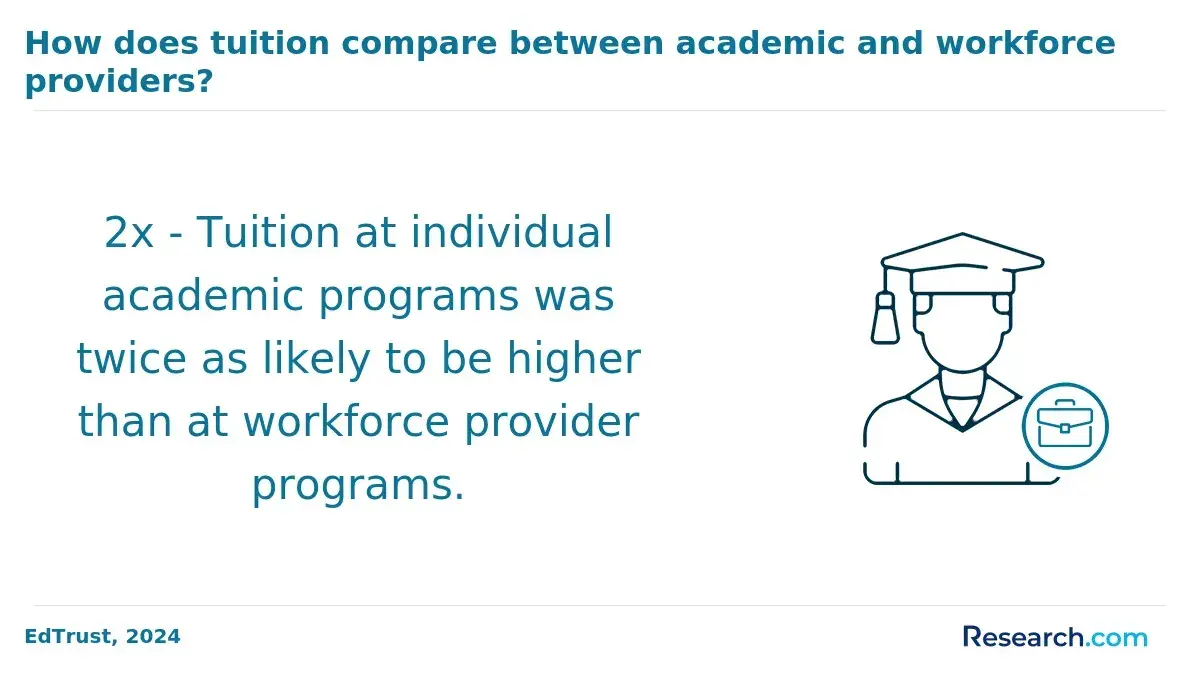
Ask each school for an estimate covering remaining tuition, mandatory online or course fees, books, technology, and any travel or placement costs. A program with higher per-credit tuition could cost less overall if it applies substantially more of your previous coursework.
Check whether financial aid is available for the program and your enrollment level, and compare grants, scholarships, employer assistance, and payment plans before considering loans. Students beginning their search can compare accredited online colleges that accept FAFSA, then confirm current aid eligibility and their own estimated net cost directly with each school.
What Admission Requirements Apply to Online Associate Degree Completion Programs?
Returning students generally need to apply to the college and submit official transcripts from every previous institution for a transfer evaluation. Admission to the college is not always admission to a major: nursing and some allied-health programs may have separate prerequisites, grades, testing, deadlines, or competitive selection.
Transfer rules also differ. Ask whether the college requires a minimum number of prior credits for its completion pathway, caps accepted credit, requires a minimum grade, limits the age of science or technical courses, or accepts coursework only from particular types of institutions.
Military training, examinations, industry certifications, and other prior learning may be evaluated for credit under a published policy; work experience is not automatically college credit. Finally, verify the minimum credits you must earn from the degree-granting school.
Are Fast Online Associate Degree Programs Accredited?
An online associate degree can be accredited, but online delivery itself is not an accreditation status. Verify the institution's recognized accreditation through its accreditor or the U.S. Department of Education's accreditation records.
Accreditation can matter for federal aid, employer requirements, and future transfer, though it never guarantees that another college will accept a course.
For regulated fields, check additional requirements. A nursing program, for example, must meet applicable state board standards for the licensure route; programmatic accreditation may also matter to later education or employers.
Ask the relevant licensing board whether the program and its clinical arrangements meet requirements in the state where you plan to practice before enrolling.
How Do Online Associate Degree Completion Programs Compare With Campus Programs?
Online study can remove a commute, but it does not automatically offer flexible deadlines or eliminate in-person work. This comparison highlights which format constraints are most likely to affect completion speed:
| Format | Potential benefit | Possible time constraint |
| Asynchronous online | Coursework can often be accessed around work hours | Assignments may still have fixed weekly deadlines |
| Scheduled online | Live instruction and regular contact | Required meeting times can restrict course load |
| Hybrid | Online study alongside required hands-on work | Campus visits or placements may dictate scheduling |
| Campus-based | On-site labs and direct access to facilities | Travel and fixed class times may slow progress |
Before selecting an online program, confirm whether orientations, exams, labs, practicums, internships, or clinical placements require attendance at specific times or locations. A nearby campus program with more frequent offerings may finish sooner than an online program whose final required course runs infrequently.
What Coursework Is Included in Accelerated Associate Degree Programs?
Associate degrees typically combine general education, major coursework, and electives. AA and AS degrees often support transfer, while AAS degrees often emphasize workforce preparation, but the actual curriculum and transfer agreement matter more than the abbreviation. Accelerated terms cover required material in less calendar time; they do not remove degree requirements.
For a returning student, the key distinction is between credits that transfer and credits that apply. Previous writing or math courses might satisfy general education requirements, while another accepted course may count only as an elective.
Major courses can have prerequisites; technical subjects may include labs; and clinical fields can require supervised practice. Request a degree audit showing every unmet requirement before planning a course load.
What Careers and Salaries Follow Fast Online Associate Degrees?
Career fit depends on the field, local hiring standards, and what you have done beyond the degree. Business, IT, healthcare administration, and criminal justice programs may support applications for relevant entry-level roles, while transfer-oriented psychology or pre-nursing degrees chiefly prepare students for further education. Neither an associate credential nor a fast graduation date guarantees a job.
Occupational wages should not be read as associate graduate salaries. For context, the U.S. Bureau of Labor Statistics reported a 2024 median annual wage of $93,600 for registered nurses; that figure covers working nurses across education and experience levels.
An aspiring RN must complete an eligible nursing program and meet state licensure requirements, including the required examination. For counseling or other advanced professional goals, plan the subsequent degrees and licenses as part of the total timeline.
A fastest masters degree is a later-stage consideration, not a shortcut from an associate degree; master's admission generally requires a bachelor's degree first.
How Can Students Choose a Reputable Online Associate Degree Program?
Compare programs using your own transcript and end goal, rather than a school's shortest advertised timeline. The following sequence helps turn marketing claims into a realistic enrollment decision:
- Define the goal: finishing a credential, transferring into a particular bachelor's major, entering a specific occupation, or meeting an employer requirement.
- Request written evaluations from more than one institution showing accepted credits, where each credit applies, unmet requirements, and residency credits.
- Map remaining courses by term, including prerequisites, start dates, labs, clinical work, and any required live or campus attendance.
- Compare the full remaining cost and confirm institutional accreditation, aid eligibility, and any program approval or licensure requirements.
- Ask an advisor to confirm the estimated graduation term in writing and, if you plan to transfer, check how the receiving university will apply the completed courses.
Watch for vague claims that every prior credit will count, promises of completion based only on short class terms, or assurances that an online degree automatically meets licensing rules. If a school cannot explain the remaining coursework, schedule, and cost before you commit, keep comparing.
Other Things You Should Know About
Possibly, if an evaluation applies enough previous credit and all remaining requirements are available on a workable schedule. Ask for a degree audit rather than relying on a general completion-time claim.
No. A college may accept a course but apply it only as an elective, or decline it under grade, age, subject, or institutional policies. Residency requirements also limit how much of a degree can be completed elsewhere.
It may, if the college offers a prior-learning assessment process and awards credit for documented learning. Ask which evidence it accepts, what the evaluation costs, and how awarded credits apply to your degree.
Do not assume so. Nursing education generally includes hands-on labs and supervised clinical work. Confirm the program's required locations, state approval, and licensure eligibility before applying.
References
- Credit for Prior Learning - Ohio Department of Higher Education https://highered.ohio.gov/initiatives/access-acceleration/credit-for-prior-learning
- Cost of Attendance (Budget) | 2025-2026 Federal Student Aid Handbook https://fsapartners.ed.gov/knowledge-center/fsa-handbook/2025-2026/vol3/ch2-cost-attendance-budget
- Fast Facts: Undergraduate graduation rates (40) | ed.gov https://nces.ed.gov/fastfacts/display.asp
- Online Learning Programs | wichita.edu https://www.wichita.edu/academics/oal/online_programs/index.php
- Transfer Credit and Credit for Prior Learning | gtcc.edu https://www.gtcc.edu/student-life/records-and-transcripts/transfer-credit-and-credit-for-prior-learning.php
- Credit for What You Know | Online https://cps.unh.edu/online/apply-register/transfer-credit-evaluation/credit-what-you-know
- Transferring Credit | Undergraduate Admissions | University of Houston https://www.uh.edu/undergraduate-admissions/apply/transfer/transferring-credit/
- Transfer Credit Policies - FIU Transfer & Transition Services https://transfer.fiu.edu/transfer-101/credit-options/transfer-credit-policies/
- Frequently Asked Questions (FAQ) | Mitchell Hamline School of Law https://catalog.mitchellhamline.edu/frequently-asked-questions-faq


