2027 Fastest Accredited Online Organizational Leadership Programs: Accelerated Degrees and Completion Times

Co-Founder and Chief Data Scientist
Choosing the fastest online organizational leadership degree is really a question of credits, format, and accreditation, not just an advertised timeline. The National Center for Education Statistics reported in 2024 that many undergraduates now study partly or fully online, making flexible completion paths more important for working adults.
This guide explains which accredited programs can move quickly, who they fit, and how transfer credits, course load, prerequisites, capstones, and field-based projects can change your real graduation date.
Key Things You Should Know
- The shortest realistic bachelor's completion paths are usually 12 to 24 months for students entering with about 60 to 90 transferable credits; students starting with few credits should expect closer to 3 to 4 years even in accelerated formats.
- The fastest formats typically use 4-week, 5-week, 7.5-week, or 8-week online terms, frequent start dates, year-round enrollment, and generous transfer policies that may accept up to 90 semester credits or 135 quarter credits.
- Competency-based and adult-completion programs can be fastest for experienced professionals, but accreditation, residency requirements, major-course sequencing, capstones, and maximum course-load rules determine the actual completion time.
Which Colleges Offer the Fastest Accredited Online Organizational Leadership Programs?
The fastest accredited online organizational leadership programs are usually not "fast" because they remove coursework. They are fast because they compress terms, accept substantial prior college credit, offer multiple starts per year, and let adult learners finish upper-division leadership requirements without relocating.
The table below compares well-known U.S. institutions that offer online organizational leadership, organizational management, or closely related leadership degrees through accredited colleges. Use it as a starting point, then verify the current catalog, transfer evaluation, and course schedule before applying.
| College or university | Online program type | Acceleration features | Best fit | Accreditation note |
| National University | Online bachelor's in organizational leadership or related leadership-focused major | 4-week classes, monthly starts, and transfer-friendly quarter-credit structure | Students who want very short terms and can handle one intensive course at a time | Institutionally accredited by WSCUC |
| University of Arizona Global Campus | Online bachelor's in organizational management or related leadership field | 5-week courses and up to 90 transfer credits commonly considered for bachelor's programs | Adult learners with previous credits who prefer sequential online courses | Institutionally accredited by WSCUC |
| Arizona State University Online | Online organizational leadership bachelor's pathway | 7.5-week online courses and multiple annual starts | Students who want a large public university with accelerated session lengths | Institutionally accredited by HLC |
| Colorado State University Global | Online bachelor's in organizational leadership | 8-week courses, monthly starts, and transfer-friendly adult learner policies | Students seeking a fully online public nonprofit option with predictable sessions | Institutionally accredited by HLC |
| Southern New Hampshire University | Online business administration degree with organizational leadership concentration or related pathway | 8-week undergraduate terms and up to 90 transfer credits for many bachelor's programs | Students who want frequent terms, broad transfer review, and a business-aligned curriculum | Institutionally accredited by NECHE |
| University of Massachusetts Global | Online organizational leadership bachelor's completion pathway | Online sessions, transfer pathways, and adult-focused advising | Working adults returning with previous credits or military experience | Institutionally accredited by WSCUC |
| University of Louisville | Online organizational leadership and learning bachelor's completion program | Designed for adult learners; may award credit for relevant workplace, military, or training experience after review | Students with significant professional experience who want a completion-oriented public university degree | Institutionally accredited by SACSCOC |
A key distinction is that some programs are full bachelor's degrees, while others are bachelor's-completion programs. Completion programs can be much faster only if you already have enough lower-division credits to enter near junior standing.
How Long Does It Take to Complete an Accredited Online Organizational Leadership Degree?
An accredited online organizational leadership bachelor's degree generally requires about 120 semester credits, although quarter-credit schools use a different credit scale. "Fastest" means the shortest verified path to completing all remaining degree requirements, not the shortest course length printed on a homepage.
The table below shows common timelines based on starting point. This matters because the same program may take one student 15 months and another student 4 years depending on transfer credits, enrollment intensity, and course availability.
| Starting point | Typical remaining credits | Fast realistic completion time | More manageable completion time | Main factor that changes the timeline |
| No prior college credit | About 120 semester credits | About 3 years with heavy year-round enrollment | About 4 years | General education and prerequisite sequencing |
| Some college credit | About 60 to 90 credits remaining | About 18 to 30 months | About 2 to 3 years | How many credits transfer into required categories |
| Associate degree completed | About 30 to 60 credits remaining | About 12 to 24 months | About 18 to 30 months | Major residency rules and upper-division course rotation |
| Extensive transfer credit plus prior learning | Often under 45 credits remaining after review | About 12 to 18 months | About 18 to 24 months | Prior learning approval, capstone timing, and maximum course load |
| Online master's in organizational leadership | Often about 30 to 36 graduate credits | About 12 to 18 months | About 2 years | Graduate course intensity and whether a thesis, capstone, or practicum is required |
Shorter terms do not always mean less work. A 3-credit course in 8 weeks typically compresses the same academic expectations into half the time of a traditional 16-week course, so students may read, write, discuss, and complete projects at a faster pace.
Students still comparing whether organizational leadership is the right program in college should look beyond speed and ask whether the curriculum matches their target roles in supervision, operations, human resources, nonprofit administration, project coordination, or training and development.
How Do Accelerated and Competency-Based Online Organizational Leadership Programs Work?
Accelerated online programs use shorter academic sessions, continuous enrollment, and carefully sequenced courses to reduce calendar time. Competency-based programs go further by letting students move through material when they can demonstrate mastery, which may benefit experienced managers who already understand workplace communication, budgeting, conflict resolution, and team leadership.
These formats can speed graduation in different ways. The list below explains the main models and why each one affects time to degree differently:
- Short-term courses: Four-week, 5-week, 7.5-week, and 8-week courses allow more starts per year, but assignments arrive quickly and missed deadlines can be harder to recover from.
- Year-round enrollment: Taking courses in fall, spring, and summer can reduce idle time between requirements, especially when courses are offered every term.
- One-course-at-a-time formats: These can help working adults focus, but completing only one course per term may not be faster unless terms are very short and offered continuously.
- Stacked course loads: Taking two accelerated courses at once can shorten the calendar, but it can feel like a full-time job when both courses require papers, group projects, and weekly discussions.
- Competency-based pacing: Students with strong prior knowledge may complete assessments faster, while students new to leadership theory may need a traditional pace.
- Capstone-based completion: Many organizational leadership programs end with a project applying leadership theory to a workplace problem; capstones can delay graduation if offered only in certain terms.
Organizational leadership usually does not have the same clinical-hour rules found in nursing, counseling, or teacher licensure programs. However, some schools include internships, applied projects, or workplace-based assignments, so students should confirm whether any in-person or employer-supported activity is required.
An online organizational leadership degree should come from an institution accredited by an agency recognized by the U.S. Department of Education or the Council for Higher Education Accreditation. Institutional accreditation is the baseline signal that the college has been reviewed for academic quality, financial stability, governance, student support, and credit-bearing instruction.
Programmatic accreditation is less common for organizational leadership than for fields such as nursing, engineering, counseling, or law. If the degree is housed in a business school, optional business accreditation from organizations such as AACSB, ACBSP, or IACBE may add value, but it is usually not required for leadership roles unless an employer specifically asks for it.
Students should verify accreditation before applying because speed is not useful if credits do not transfer or graduate schools question the credential. A safe review process includes the following checks:
- Search the college in the U.S. Department of Education's accreditation database and confirm the institution name matches the school offering the online program.
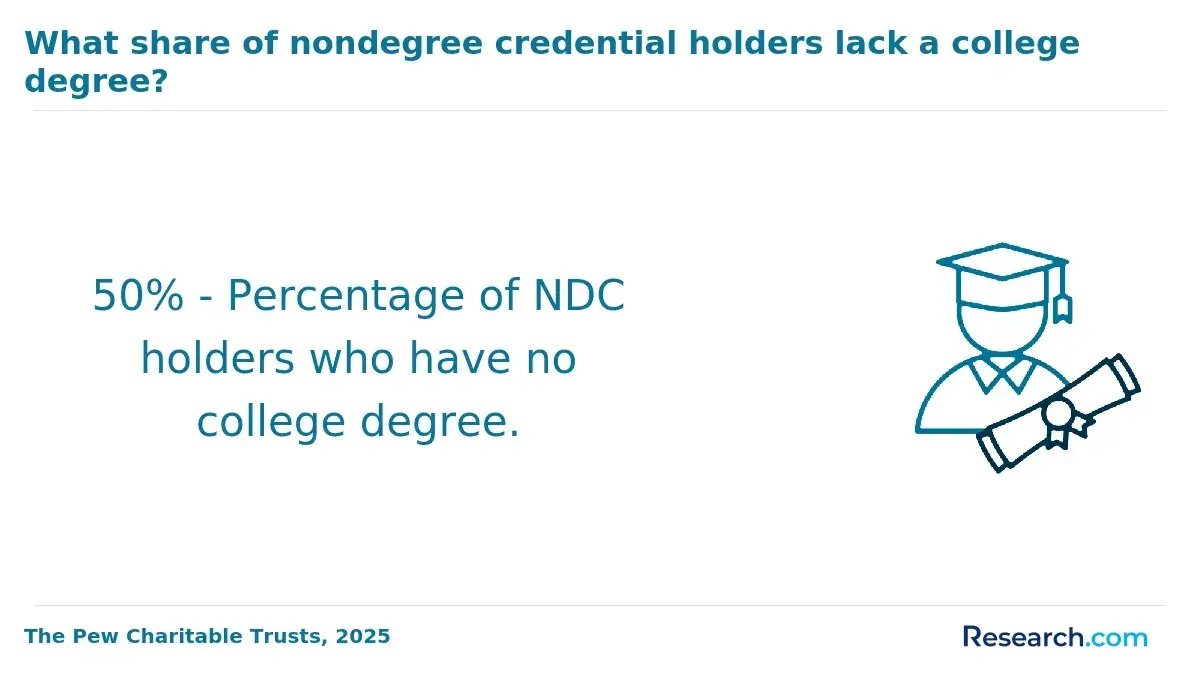
- Check whether the program is a degree, concentration, certificate, or noncredit credential, because these labels have different academic and employment value.
- Ask whether online students receive the same transcript and diploma wording as campus students, especially if the school operates several online divisions.
- Confirm whether the college is authorized to enroll students in your state, since state authorization can affect availability even for fully online programs.
- Review transfer and graduate-school policies if you plan to continue into an MBA, MPA, human resources master's degree, or doctoral program later.
Accreditation should be nonnegotiable for students using federal financial aid. Federal Student Aid generally requires enrollment at an eligible accredited institution, so unaccredited "fast degree" offers can create major financial and academic risk.
Transfer credit is often the biggest difference between a fast completion plan and a traditional timeline. Many online bachelor's programs require about 120 semester credits, and some schools may accept up to 90 transfer credits toward that total, leaving roughly one year of full-time upper-division work if every transferred course applies cleanly.
The table below shows how different types of prior learning may reduce remaining requirements. It also shows why an official transfer evaluation is more reliable than a verbal estimate from an admissions call.
| Credit source | How it may shorten the degree | Common limitation | What to verify |
| Regionally accredited college courses | May satisfy general education, electives, or lower-division major requirements | Old credits, low grades, or mismatched course content may not apply | Whether credits count toward the degree plan, not just total credits |
| Completed associate degree | May clear many lower-division requirements and support junior-standing entry | Some bachelor's programs still require specific prerequisites | Whether the school has an articulation agreement with your prior college |
| Military training | May convert documented training into elective or applied learning credit | Credit awards vary by institution and degree requirements | How Joint Services Transcript recommendations are evaluated |
| Professional certifications or corporate training | May count through prior learning assessment, portfolio review, or ACE recommendations | Usually capped and may require fees or documentation | Whether the credits apply before your intended graduation term |
| Portfolio-based prior learning | May award credit for college-level learning gained through work experience | Not all experience is creditworthy, and review takes time | Required essays, evidence, evaluator timelines, and maximum credit limits |
| Exam-based credit | May satisfy lower-division requirements through approved exams | Upper-division leadership courses may not be replaceable | Which exams are accepted and minimum scores required |
If you are early in your college journey, earning an online associates degree first can sometimes create a cleaner transfer path into an organizational leadership bachelor's program. The fastest route is not always starting at the bachelor's school; it is the route that moves the most usable credits into your final degree plan.
To shorten your timeline without creating transfer problems, request a written degree audit before enrollment. Ask the school to identify completed requirements, remaining requirements, course rotation, capstone timing, residency minimums, and the earliest possible graduation term based on your actual transcript.
Admission requirements for accelerated online organizational leadership programs vary by level. Bachelor's-completion programs often look for previous college credit, while full bachelor's programs may admit first-year students with a high school diploma or equivalent. Graduate programs usually require a bachelor's degree and may ask for a resume, statement of purpose, or professional experience.
Frequent start dates are one of the biggest advantages of accelerated online programs. However, a quick start does not automatically mean a quick finish if transfer review, financial aid processing, or prerequisite placement is incomplete. Consider the following:
- Undergraduate first-year admission: Common requirements include a high school diploma or GED, transcripts, an application, and sometimes placement information for writing or math.
- Bachelor's-completion admission: Schools may require a minimum number of prior college credits, a minimum GPA, and official transcripts from every institution attended.
- Graduate admission: Online master's programs commonly require an accredited bachelor's degree, transcripts, resume, goals statement, and sometimes recommendations.
- Rolling or monthly starts: These can reduce waiting time, but students should submit transcripts early because transfer evaluation can take longer than the application itself.
- Cohort starts: Some programs admit groups on fixed dates, which can provide structure but may delay enrollment if you miss a deadline.
- Prerequisite checks: Business, statistics, writing, or general education gaps may add courses before upper-division leadership work begins.
Students who want a fast but low-friction first credential may also compare the easiest associate degree to get with a bachelor's-completion route. That comparison is useful if your immediate goal is to build transferable credits before committing to a full organizational leadership degree.
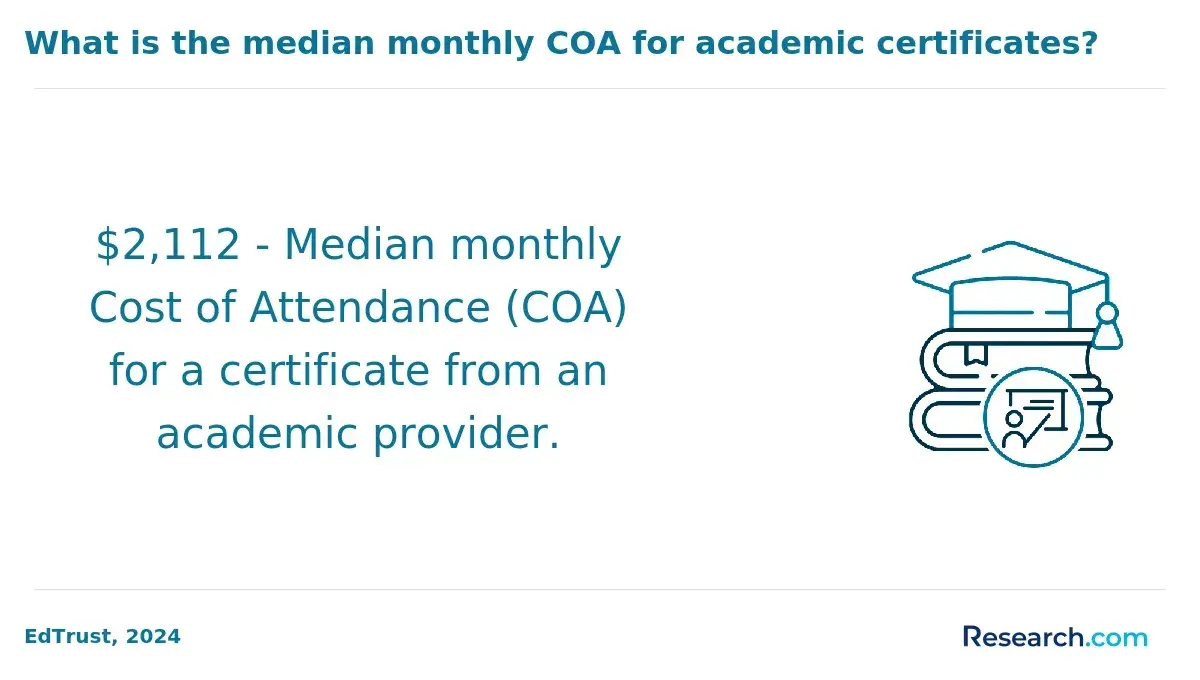
The cost of a fast online organizational leadership degree depends on tuition, transfer credits, fees, books, technology charges, prior learning assessment fees, and how long you remain enrolled. Faster completion can lower some costs, but it can also increase short-term cash-flow pressure if you take more credits per term.
Federal financial aid may be available when the school and program are eligible. For context, the maximum Federal Pell Grant for the 2024-25 award year was $7,395, which can meaningfully reduce out-of-pocket cost for eligible undergraduates but may not cover the full cost of attendance at many institutions.
When comparing costs, separate the published price from the price of finishing your remaining credits. The items below are the numbers and charges that most directly affect affordability:
- Tuition per credit or per term, multiplied by only the credits you still need after transfer evaluation
- Online, technology, graduation, transcript, portfolio review, and prior learning assessment fees
- Books, digital materials, proctoring, and course-resource subscriptions
- Summer enrollment costs, which may or may not be packaged the same way as fall and spring aid
- Employer tuition assistance, military benefits, scholarships, grants, federal loans, and payment plans
- Potential retake costs if an accelerated course load leads to withdrawal or a failing grade
Fast programs are not automatically cheaper. A self-paced or short-term program may save money if you complete credits efficiently, but it can cost more if you withdraw, repeat courses, or discover late that some credits do not apply to the degree.
It can also help to compare organizational leadership with career-specific credentials in regulated fields. For example, a search for the cheapest paralegal certificate online ABA approved involves different accreditation and approval questions than an organizational leadership degree, where institutional accreditation and transfer fit are usually the central concerns.
Yes, many students work full time while completing an accelerated online organizational leadership degree, but the best course load depends on job schedule, family responsibilities, writing speed, and experience with online learning. Leadership courses often require discussion posts, case analyses, team projects, presentations, and applied workplace assignments, so the workload can be steady even when there are no labs or clinical rotations.
The table below compares common enrollment patterns for working adults. It can help you choose a pace that is fast enough to matter but realistic enough to sustain.
| Enrollment pace | Typical pattern | Speed advantage | Work-life risk | Who it fits |
| Part time | One course per accelerated term | Steady progress with lower weekly pressure | Longer calendar time | Students with unpredictable jobs, caregiving duties, or limited study time |
| Moderate full time | Two courses in some terms or continuous year-round enrollment | Can shorten completion without overloading every session | Busy weeks during major papers and group projects | Working adults with predictable schedules and strong time management |
| Aggressive accelerated | Two or more courses per short term when allowed | Fastest route for remaining credits | Higher withdrawal, burnout, or grade risk | Students with strong academic preparation and flexible work arrangements |
| Competency-based | Self-paced completion of assessments within subscription or term periods | Potentially very fast for experienced learners | Requires high self-direction and consistent progress | Professionals who already know much of the material and can study independently |
A practical strategy is to start with one accelerated course, evaluate the workload, then increase intensity only after confirming that your grades, sleep, work performance, and family responsibilities remain manageable. The fastest sustainable pace is usually better than the fastest theoretical pace.
Accredited online organizational leadership degrees are generally respected when they come from legitimate institutions, match the student's career goals, and develop usable skills. Employers are usually more concerned with accreditation, relevant experience, leadership ability, communication, problem solving, and measurable workplace impact than whether classes were completed online.
The degree can support roles in supervision, operations coordination, human resources, training and development, nonprofit administration, project support, and team leadership. It is not usually a direct licensure degree, so students targeting regulated careers should check separate state or professional requirements.
Labor-market data provides useful context without promising individual outcomes. The U.S. Bureau of Labor Statistics reported a May 2024 median annual wage of $122,090 for management occupations, which shows that leadership-related roles can sit in a higher-wage occupational group; however, actual pay depends on industry, location, experience, role level, and whether the job requires specialized technical knowledge.
Graduate schools may accept an accredited online organizational leadership degree, but requirements vary. Programs in business, public administration, human resources, and organizational development may align naturally, while specialized graduate programs such as masters child and adolescent mental health pathways may require psychology prerequisites, fieldwork, or licensure-focused coursework that an organizational leadership major does not provide.
Students should also consider the rise of AI and automation in management work. Organizational leaders increasingly need to interpret data, guide change, manage hybrid teams, evaluate AI-supported workflows, and communicate ethically about technology adoption. Programs that include analytics, change management, project management, and organizational communication may be more useful than programs that focus only on broad leadership theory.
How Should You Compare the Fastest Accredited Online Organizational Leadership Programs?
The best accelerated program is the one that gets you to a legitimate credential quickly without creating avoidable academic, financial, or career risk. A school with a slightly longer advertised timeline may be the better choice if it accepts more of your credits, offers stronger advising, costs less, or aligns better with your target role.
Use the following steps before enrolling. They are designed to reveal your real graduation timeline, not just the marketing timeline:
- Verify institutional accreditation through an official accreditation database and confirm the online program is part of the accredited institution.
- Request a written transfer evaluation showing exactly which credits satisfy general education, major, elective, and residency requirements.
- Ask for a term-by-term degree plan through graduation, including summer options and capstone availability.
- Confirm the shortest possible timeline for your specific transcript, not for an ideal transfer student.
- Ask how many accelerated courses students commonly take while working full time and what support is available if the load is too heavy.
- Compare total remaining cost, not just tuition per credit, including fees, books, assessment charges, and retake risk.
- Review whether courses are asynchronous, synchronous, cohort-based, or self-paced, because format affects scheduling flexibility.
- Check whether the curriculum includes skills tied to your goals, such as conflict resolution, project management, HR fundamentals, data-informed decision-making, change management, or nonprofit leadership.
Several red flags should slow down your decision. Be cautious if a school promises a degree in an unrealistically short time without reviewing transcripts, avoids clear accreditation details, guarantees credit for all prior experience, will not provide a written degree plan, or describes accelerated courses as easier than traditional courses.
A strong final comparison should balance speed, legitimacy, cost, support, and career fit. If two accredited programs can both get you to graduation within a similar timeframe, choose the one with clearer advising, better transfer transparency, stronger student support, and a curriculum that directly supports your next job move.
Other Things You Should Know About Organizational Leadership Programs
No. Organizational leadership focuses more on leading people, managing change, communication, ethics, conflict resolution, and team performance. Business administration is usually broader and may include accounting, finance, marketing, operations, and economics.
Many do not require traditional internships, especially adult-completion programs. Some include capstones, applied projects, or workplace-based assignments, so students should check whether any employer participation or field experience is required.
Often, yes. Year-round enrollment can reduce waiting time between requirements, especially in programs with 5-week, 7.5-week, or 8-week terms. The trade-off is a heavier annual workload and less time for breaks.
Common pathways include team lead, operations coordinator, training specialist, HR generalist, project coordinator, nonprofit program manager, and supervisor roles. Job level depends heavily on experience, industry, location, and prior technical skills.
- Master's in Organizational Leadership | Columbia College https://www.columbiasc.edu/academics/graduate/masters-organizational-leadership
- Online Organizational Leadership Major https://www.hamline.edu/academics/online-bachelors-organizational-leadership-major
- MBA in Leadership Online: Compare Top Programs https://www.onlinemastersdegrees.org/best-programs/mba-programs/leadership/
- Types of Financial Aid for Online Colleges https://www.umassglobal.edu/blog-news/types-financial-aid-online-colleges
- Organizational Leadership B.S. https://manhattan.edu/academics/programs/organizational-leadership-bs
- Regionally Accredited Online Colleges: What You Need to Know | Tiffin University https://go.tiffin.edu/blog/regionally-accredited-online-colleges-what-you-need-to-know/
- 2025 Best Organizational Leadership Degrees Online https://www.onlineu.com/degrees/organizational-leadership
- The Best EdD in Organizational Leadership Programs of 2025 https://www.eddprograms.org/schools/organizational-leadership/
- Top 40 Low-Cost Online Master's in Educational Leadership https://www.greatvaluecolleges.net/affordable/online-masters-organizational-leadership/