2027 Fastest Accredited Online Homeland Security Degree Programs That Accept Transfer Credits

Co-Founder and Chief Data Scientist
The fastest route to an accredited online homeland security degree usually starts with credits you already have. Transfer students are increasingly common: the National Student Clearinghouse Research Center reported that transfer enrollment rose 4.4% in fall 2024, making credit mobility a practical graduation strategy.
This guide is for adult learners, military students, community college graduates, and degree completers who want the quickest legitimate path without choosing a weak program. You'll learn how to compare transfer limits, residency rules, accelerated formats, accreditation, costs, and realistic time-to-degree before enrolling.
Key Things You Should Know
- The fastest realistic path is usually a 120-credit bachelor's program that accepts 75 to 90 applicable transfer credits, leaving about 30 to 45 credits that can often be finished in 8 to 18 months with full-time accelerated online study.
- Transfer-friendly options to investigate first include Thomas Edison State University, American Public University, Embry-Riddle Aeronautical University Worldwide, University of Arizona Global Campus, Southern New Hampshire University, Purdue Global, and Wilmington University, but the fastest choice depends on which credits apply to the major.
- A high transfer ceiling is not enough: residency requirements, upper-division homeland security coursework, capstone rules, credit-for-prior-learning limits, and accreditation status determine whether transferred credits actually shorten graduation time.
What Are the Fastest Accredited Online Homeland Security Degree Programs That Accept Transfer Credits?
The fastest accredited online homeland security degree programs are usually degree-completion programs designed for students who already have college credit, military training, public safety experience, or an associate degree. For readers comparing quick online degrees, homeland security can be a practical option when the school offers short terms, frequent start dates, generous transfer review, and a curriculum that matches prior coursework in criminal justice, emergency management, cybersecurity, public administration, or political science.
The programs below are not "fast" for every student. They are strong candidates because they are institutionally accredited, available online, and commonly publish transfer-friendly policies. The most important column is not the advertised transfer maximum; it is the condition attached to that maximum.
| School and online program to investigate | Institutional accreditation | Transfer-friendly feature | Why it may be fast | Best fit |
| Thomas Edison State University, BS in Homeland Security and Emergency Management | Middle States Commission on Higher Education | Highly transfer-oriented adult-degree model; accepts many approved college, exam, military, and evaluated learning credits subject to degree rules | Can be one of the fastest options for students who already have broad general education, electives, and upper-level credits | Adult learners with extensive prior credits who need maximum credit evaluation flexibility |
| American Public University, BA in Homeland Security | Higher Learning Commission | Up to 90 transfer credits may be considered toward a bachelor's degree | Monthly starts, 8-week courses, military transcript review, and homeland-security-specific curriculum support faster sequencing | Military, veteran, law enforcement, emergency response, and working adult students |
| Embry-Riddle Aeronautical University Worldwide, BS in Homeland Security | Southern Association of Colleges and Schools Commission on Colleges | Transfer credit may be accepted toward the degree, with bachelor's students generally needing a required portion through Embry-Riddle | Online and Worldwide formats are built for working adults and may pair well with aviation, safety, emergency response, and security backgrounds | Students interested in transportation security, aviation security, emergency planning, or global security operations |
| University of Arizona Global Campus, BA in Homeland Security and Emergency Management | WASC Senior College and University Commission | Up to 90 approved transfer credits may be applied to many bachelor's programs | 5-week courses can help students move quickly if prerequisites and major requirements are satisfied | Degree completers who want short course blocks and a homeland security plus emergency management focus |
| Southern New Hampshire University, BS in Criminal Justice with Homeland Security and Counterterrorism concentration | New England Commission of Higher Education | Up to 90 transfer credits may be accepted toward a bachelor's degree | 8-week undergraduate terms and broad acceptance of prior college credit can shorten completion for students whose credits fit criminal justice requirements | Students who want a criminal justice degree with homeland security specialization rather than a homeland security degree title |
| Purdue Global, BS in Emergency Management with homeland security-related coursework or concentration options | Higher Learning Commission | Up to 75% of a bachelor's degree may be fulfilled through eligible transfer and prior learning credits | Quarter-style online terms and prior-learning review may reduce remaining coursework | Students focused on disaster response, continuity planning, and emergency operations |
| Wilmington University, BS in Emergency Management and Disaster Preparedness | Middle States Commission on Higher Education | Transfer-friendly bachelor's completion structure, including review of prior college and workforce-relevant learning | Online course availability and applied emergency management curriculum can help students with public safety backgrounds progress efficiently | Students who want emergency management, disaster preparedness, and public-sector security roles |
The best first step is to request an unofficial transfer evaluation from at least three schools before applying. A program that accepts 90 credits but applies only 60 to your degree will usually be slower than a school with a lower advertised ceiling but a better course-to-requirement match.
How Fast Can You Complete an Online Homeland Security Degree With Transfer Credits?
Completion speed depends on how many credits apply to the degree, how many upper-division major courses remain, and whether the school lets you take overlapping accelerated terms. A standard U.S. bachelor's degree is typically 120 credits, so every applicable block of transfer credit can remove entire terms from the plan.
This table shows realistic timeline ranges for students in accredited online programs. It assumes the student is academically prepared, takes courses continuously, and does not need to repeat prerequisites.
| Applicable credits at enrollment | Approximate credits remaining | Typical full-time accelerated timeline | What usually determines the final pace |
| 90 credits | 30 credits | About 8 to 12 months | Residency minimums, capstone timing, and whether upper-level homeland security courses are offered every term |
| 75 credits | 45 credits | About 12 to 18 months | Major-course sequencing and whether electives can be filled with transferred or prior-learning credits |
| 60 credits | 60 credits | About 18 to 24 months | Whether an associate degree satisfies general education and how many major prerequisites remain |
| 30 credits | 90 credits | About 24 to 36 months | Course load, financial aid pace rules, and work or family obligations |
| 0 credits | 120 credits | About 3 to 4 years | Accelerated terms can help, but the student is still completing the full degree |
Students often overestimate speed by counting all previously earned credits instead of only the credits that satisfy the new degree audit. To get a realistic timeline, ask each school to identify which requirements remain after transfer evaluation: general education, homeland security core, upper-division courses, electives, writing requirements, and capstone.
Before choosing the fastest plan, confirm the workload. A student taking 12 to 15 credits in compressed 5-week or 8-week sessions may be handling multiple intensive courses at once, which can be difficult for working adults in public safety, military, or shift-based roles.
How Many Transfer Credits Can You Apply Toward an Online Homeland Security Degree?
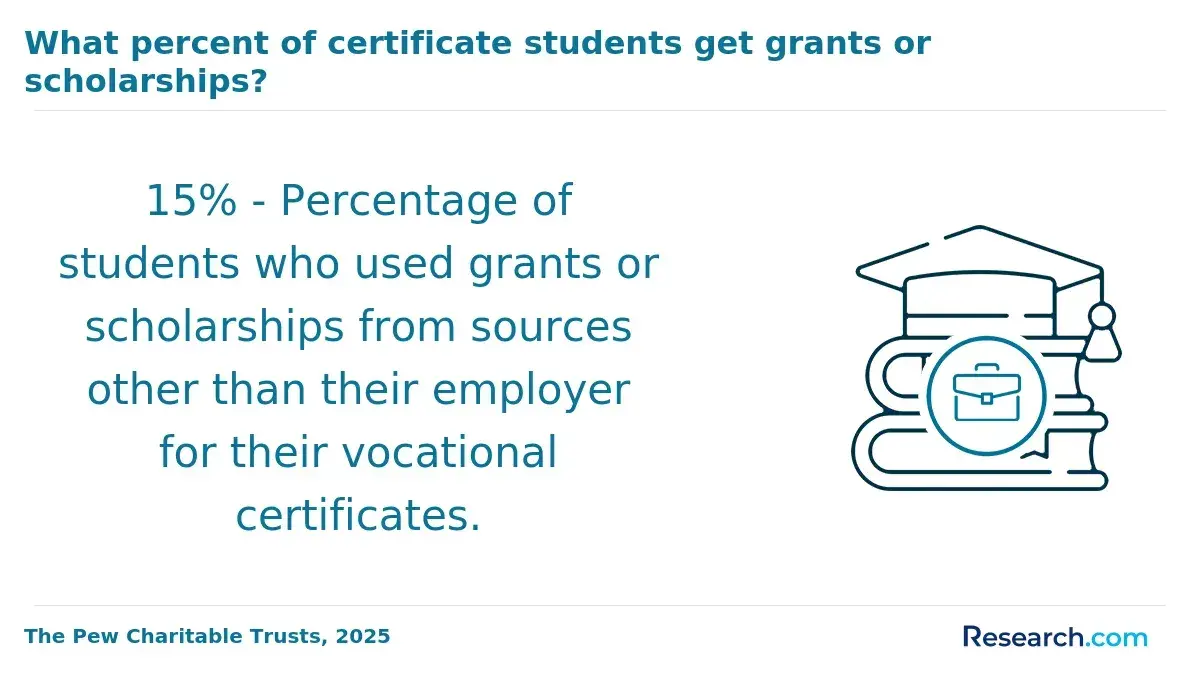
Many accredited online bachelor's programs allow up to 75%, 90 credits, or a similar portion of the degree to be completed through transfer credit. However, the school may accept a credit on your transcript while still deciding that it counts only as a free elective rather than a homeland security, emergency management, criminal justice, or general education requirement.
The distinction below is critical because only applicable credits shorten your actual graduation timeline.
| Credit category | What it means | Effect on speed | Example |
| Accepted credits | Credits the institution recognizes as valid college-level work | May or may not shorten the degree | A prior business elective is accepted by the school but does not satisfy a homeland security major requirement |
| Applicable credits | Credits that fill specific requirements in your degree plan | Directly reduces remaining courses | An emergency management course satisfies a program core requirement |
| Elective credits | Credits that count toward the 120-credit total but not the major or general education core | Helpful only if the degree still has open electives | Military physical education credit fills a free elective slot |
| Upper-division credits | Junior- or senior-level coursework, often numbered 300 or 400 | Very valuable because many bachelor's degrees require upper-level credits | A 300-level terrorism studies course transfers into the major |
| Excess credits | Credits the school accepts but cannot use because the degree area is already full | Does not speed completion | A student has 30 criminal justice credits, but the new program can use only 18 of them |
When comparing programs, ask for a degree audit rather than a general transfer estimate. The audit should show exactly where each course lands and which courses remain.
How Can You Verify Accreditation for Fast Online Homeland Security Degree Programs?
Accreditation is what separates a legitimate fast online degree from a risky shortcut. Institutionally accredited schools are more likely to qualify for federal financial aid, have credits recognized by other colleges, and be accepted by employers or graduate programs. This is the same reason students comparing prestigious online universities should look beyond brand recognition and verify the accreditor itself.
Use this process before sending transcripts, paying an application fee, or enrolling in an accelerated schedule.
- Confirm institutional accreditation through the U.S. Department of Education's Database of Accredited Postsecondary Institutions and Programs or the accreditor's own directory.
- Check that the online campus, global campus, or adult-degree division is included under the same accredited institution or separately accredited as stated.
- Read the current academic catalog for transfer limits, residency requirements, academic standing rules, and credit-for-prior-learning caps.
- Ask whether the homeland security program is a degree, concentration, certificate stack, or specialization because the credential title can affect employer interpretation.
- Verify whether the program has any state authorization restrictions for online students in your state.
- Be cautious if a school promises guaranteed completion in a few months, avoids naming its accreditor, pressures you to enroll immediately, or says every prior credit will transfer before reviewing transcripts.
Homeland security bachelor's programs usually do not require specialized programmatic accreditation in the same way nursing, counseling, or teaching programs often do. For most students, institutional accreditation, curriculum relevance, transfer transparency, and employer recognition are the key quality checks.
Which Types of Transfer Credits Can Count Toward an Online Homeland Security Degree?
Online homeland security programs often draw from several academic areas, which can help transfer students. Credits in criminal justice, emergency management, public administration, cybersecurity, political science, intelligence studies, communications, and sociology may apply if they match the degree plan.
Schools may evaluate several credit types, but each type has different documentation requirements and limits. The list below shows what to gather before requesting a review.
- Prior college courses: Send official transcripts from every institution attended, including community colleges, four-year schools, and any dual-enrollment coursework.
- Associate degrees: Ask whether an AA, AS, AAS, or applied public safety degree satisfies general education as a block or transfers course by course.
- Military training: Submit a Joint Services Transcript or Community College of the Air Force transcript so the school can evaluate ACE-recommended credit.
- Professional training: Provide documentation for law enforcement academy, fire service, emergency medical services, FEMA, corrections, or security-related training if the school evaluates workforce learning.
- Standardized exams: Ask whether CLEP, DSST, or similar exam credits can satisfy general education or elective requirements.
- Industry certifications: Cybersecurity, emergency management, project management, and public safety certifications may be reviewed by some schools for elective or major-related credit.
- Prior learning assessment portfolios: Some adult-focused universities allow students to document college-level learning from work experience, but portfolio credit is not automatic and may require fees, essays, or faculty review.
The safest approach is to collect syllabi for older courses, especially if the title is broad. A course called "Special Topics in Public Safety" may transfer more favorably if the syllabus proves it covered terrorism, incident command, critical infrastructure, risk analysis, or emergency operations.
How Do Residency and Major Requirements Affect Transfer Credits for an Online Homeland Security Degree?
Residency requirements are one of the main reasons a student with 90 transfer credits may still need more than 30 credits to graduate. In this context, "residency" usually means the minimum credits you must complete through the degree-granting school, not where you physically live.
Major requirements can also slow completion because schools often require a set number of upper-division homeland security courses from their own curriculum. Compare these rules before choosing the program with the highest transfer maximum.
| Requirement | Why it matters | Fast-program question to ask |
| Institutional residency | Sets the minimum number of credits you must take at the school granting the degree | What is the minimum number of credits I must complete with your institution? |
| Major residency | May require a certain number of homeland security major credits from the school | How many major courses must be completed through your program? |
| Upper-division requirement | Can require junior- or senior-level credits even if you have many lower-division transfers | How many 300- or 400-level credits remain after my transfer evaluation? |
| Capstone requirement | Often must be taken at the degree-granting institution and may be offered only in certain terms | When is the capstone offered, and what prerequisites must be completed first? |
| General education distribution | Credits may transfer but fail to satisfy writing, math, science, ethics, or diversity categories | Does my associate degree waive general education, or will you evaluate course by course? |
A common mistake is transferring into a program without confirming upper-division requirements. Many community college credits are lower division, so a student may have enough total credits but still need several advanced major courses before graduation.
Can Prior Learning, CLEP, Military Training, or Certifications Help You Finish an Online Homeland Security Degree Faster?
Yes, but only when the school has a formal policy for evaluating nontraditional credit and when the credit fits your degree plan. Prior learning can be especially useful for military students, first responders, emergency managers, law enforcement personnel, cybersecurity workers, and public-sector employees with documented training.
Use the following sequence to avoid paying for credits that do not shorten the degree.
- Ask the school for its maximum combined limit for transfer credit, exam credit, military credit, ACE-reviewed training, and portfolio credit.
- Submit official transcripts first so the advisor can identify remaining gaps instead of duplicating credits you already have.
- Target exams such as CLEP or DSST only for requirements that are still open, usually general education or lower-division electives.
- Request a military or professional training evaluation before enrolling in similar introductory public safety courses.
- Compare portfolio fees against tuition savings because portfolio assessment can be worthwhile for experienced professionals but inefficient for students with limited documentation.
- Confirm whether nontraditional credits count toward residency, upper-division, or major requirements, since many schools restrict where these credits can apply.
Prior learning is most powerful when it fills general education and elective gaps, allowing you to save your remaining course load for required homeland security major courses. It is less useful when the program has strict major residency rules or limited elective space.
How Much Does a Fast Online Homeland Security Degree Cost After Transfer Credits and Financial Aid?
The cost of a fast online homeland security degree depends less on the sticker price for a full bachelor's degree and more on the number of credits you still need to complete. The College Board's 2024 Trends in College Pricing reported average published tuition and fees of $11,610 for in-state students at public four-year institutions for 2024-25, which shows why reducing even one year of coursework can materially change the total cost.
Students comparing homeland security with the best degrees to make money should evaluate cost against career goals, not just speed. Homeland security can lead to public safety, emergency management, intelligence analysis support, cybersecurity-adjacent, compliance, and risk roles, but pay varies widely by employer, location, experience, clearance eligibility, and whether the job requires graduate education.
Use a remaining-cost calculation instead of relying on advertised annual tuition. The major cost categories usually include the following.
- Remaining tuition: Multiply the number of credits left after transfer evaluation by the school's current per-credit tuition rate.
- Mandatory fees: Include technology, graduation, transcript, online learning, course material, and portfolio assessment fees if applicable.
- Books and materials: Some online programs include digital materials in tuition, while others charge separately by course.
- Prior-learning fees: CLEP, DSST, portfolio, certification review, and transcript evaluation fees can be worthwhile but should be compared with the tuition they replace.
- Financial aid: Federal Pell Grants, federal loans, employer tuition assistance, military education benefits, state grants, and scholarships may reduce out-of-pocket cost, but eligibility depends on enrollment status and school participation.
- Opportunity cost: A faster program can reduce time away from advancement opportunities, but an unrealistic course load can also risk failed courses and extra tuition.
For many transfer students, the best-value option is not always the cheapest per credit. A higher per-credit school that applies more transfer credits may cost less overall than a lower-tuition school that requires many credits to be retaken.
How Do Accelerated, Competency-Based, and Self-Paced Online Homeland Security Degree Programs Compare?
Fast online degree programs are not all built the same way. Some use short scheduled terms, some allow self-paced progress, and some award credit after competency mastery. The right model depends on your work schedule, self-discipline, prior knowledge, and need for predictable financial aid pacing.
Students sometimes compare homeland security programs with unrelated accelerated fields, such as marriage and family therapy online programs accredited, but the rules are different. Counseling programs may involve clinical hours and licensure alignment, while homeland security bachelor's programs usually move faster because they are not built around state clinical licensure.
The table below compares the main online formats from a transfer student's perspective.
| Format | How it works | Potential speed advantage | Possible drawback | Best for |
| Accelerated scheduled terms | Courses run in short 5-week, 8-week, or similar sessions with set deadlines | Frequent starts and year-round enrollment can shorten calendar time | Heavy workload if multiple compressed courses overlap | Students who want structure and predictable deadlines |
| Traditional online semesters | Courses follow standard semester schedules but are delivered online | Often easier to balance with work and family responsibilities | May take longer because fewer start dates are available | Students who need a steadier academic pace |
| Competency-based education | Students progress by demonstrating mastery rather than spending a fixed time in class | Can be very fast for students with strong prior knowledge | Homeland security-specific CBE bachelor's options are less common than business or IT options | Experienced professionals who can write, research, and test well independently |
| Self-paced independent study | Students complete coursework within a flexible completion window | Can speed individual courses if the student works quickly | Requires strong self-management and may have limits on financial aid or course availability | Highly disciplined students with irregular work schedules |
The fastest format is the one you can complete successfully. If you work rotating shifts or deploy frequently, a slightly slower self-paced or asynchronous program may be more realistic than a tightly scheduled accelerated term.
Are Fast Accredited Online Homeland Security Degrees Respected by Employers and Graduate Schools?
Fast accredited online homeland security degrees can be respected when the institution is properly accredited, the curriculum is relevant, and the graduate can connect the degree to practical skills. Employers generally care about the school's legitimacy, the credential level, experience, communication ability, leadership potential, analytical judgment, and, for some roles, background checks or clearance eligibility.
Online degree acceptance is now common across many fields, but the same evaluation logic applies whether a student is researching homeland security or an online math bachelor's degree: accreditation, rigor, curriculum fit, and evidence of competence matter more than the delivery format alone.
Labor-market outcomes vary by role. The U.S. Bureau of Labor Statistics reported a May 2024 median annual wage of $86,130 for emergency management directors, a role that may value emergency planning, interagency coordination, risk assessment, and public communication experience. That figure should be used as context, not a promise, because many homeland security graduates start in adjacent roles such as public safety administration, security operations, intelligence support, compliance, emergency preparedness, or law enforcement.
To make a fast online degree more credible, build evidence alongside the credential. Useful signals include internships, public-sector experience, FEMA or incident command training, cybersecurity fundamentals, GIS or data analysis skills, strong writing samples, emergency operations planning projects, and leadership experience in military, public safety, or community organizations.
Graduate schools typically review institutional accreditation, GPA, prerequisite coursework, recommendations, writing ability, and fit with the target program. A fast degree is not automatically a disadvantage, but weak grades, unaccredited credit sources, or a transcript filled with non-applicable shortcuts can create problems later.
Other Things You Should Know About Homeland Security
No. Criminal justice focuses heavily on law enforcement, courts, corrections, and legal processes, while homeland security usually covers terrorism, emergency management, border and transportation security, critical infrastructure, intelligence, disaster preparedness, and interagency response. Some programs combine the two through a criminal justice degree with a homeland security concentration.
Some federal, intelligence, defense contractor, and cybersecurity-adjacent roles may require a clearance, but many emergency management, public safety, compliance, and local government roles do not. A degree does not grant a clearance; clearance decisions are handled separately by the employer or federal process.
It depends on your target role. Homeland security is broader for national security, terrorism, intelligence, and infrastructure protection interests. Emergency management is often stronger for disaster planning, response coordination, continuity planning, and public-sector preparedness roles.
Yes, many programs are designed for working adults, but course load matters. One accelerated course at a time may be manageable for full-time workers, while multiple compressed courses can be demanding. Ask for a term-by-term plan before committing to the fastest schedule.
References
- Types of Homeland Security Degrees | Compare Schools https://www.criminaljusticeprograms.com/specialty/homeland-security-degrees/
- Monroe Community College https://www.monroecc.edu/etsdbs/mccatpub.nsf/hegis+codes/Homeland+Security+(AS+DEGREE)
- How to Pay for a Degree in Cybersecurity | CyberDegrees.org https://www.cyberdegrees.org/resources/how-to-pay-for-a-degree/
- Top Online Master’s Degree Programs in Homeland Security for 2025 https://www.onlinemastersdegrees.org/best-programs/homeland-security/
- Homeland Security Requirements (Degrees, Jobs & Salary) https://www.allcriminaljusticeschools.com/federal-law-enforcement/homeland-security/
- Online Bachelor's Degree: Homeland Security https://www.umgc.edu/online-degrees/bachelors/homeland-security
- Homeland Security Degree Programs https://www.criminaljusticedegreeschools.com/degrees/homeland-security-degree/
- Bachelor of Science in Homeland Security https://www.trident.edu/bachelors-online/homeland-security-degree/
- Search icon https://waldorf.edu/degree-programs/bachelors/ba-homeland-security/
- Homeland Security Degree Online | Find Top Programs & Information https://www.firescience.org/homeland-security-degree-programs-online/