2027 Cheapest Accredited Online Homeland Security Degree Programs That Accept FAFSA

Co-Founder and Chief Data Scientist
Key Things You Should Know
- The cheapest FAFSA-eligible online homeland security bachelor's programs commonly publish undergraduate tuition from about $270 to $434 per credit before fees, books, residency discounts, or transfer-credit savings.
- FAFSA participation means the institution can process federal aid, but it does not guarantee a grant, scholarship, full funding, or eligibility for every student in every enrollment situation.
- Career ROI depends on total borrowing, transfer credits, experience, location, and role; the BLS reported a 2024 median annual wage of $86,130 for emergency management directors, one relevant homeland security career path.
Which Are the Cheapest Accredited Online Homeland Security Degree Programs That Accept FAFSA?
The cheapest accredited online homeland security degree programs that accept FAFSA are generally offered by public universities, military-friendly online universities, and accredited distance-learning institutions with lower per-credit tuition. The best comparison is not just advertised tuition; it is the estimated total cost after transfer credits, grants, fees, and residency rules.
The table below highlights accredited U.S. institutions with online homeland security or closely related homeland security and emergency management bachelor's programs that participate in federal student aid. Tuition changes frequently, so use these figures as a decision-starting benchmark and confirm the current cost directly with each school before applying.
| School | Online program | Institutional accreditation | Published online tuition benchmark | Estimated 120-credit tuition before aid | Why it may be affordable |
| Columbia Southern University | B.S. in Homeland Security | Distance Education Accrediting Commission | About $270 per credit | About $32,400 | Low flat online tuition and adult-learner format |
| University of Alaska Fairbanks | Bachelor's in Security and Emergency Management with homeland security-related study | Northwest Commission on Colleges and Universities | About $289 per credit for many undergraduate eCampus courses | About $34,680 | Public university pricing and online delivery |
| SUNY Canton | B.S. in Homeland Security | Middle States Commission on Higher Education | About $295 per credit for New York residents; higher for many nonresidents | About $35,400 for resident tuition benchmark | Public SUNY tuition and fully online pathway |
| Waldorf University | B.A. in Homeland Security | Higher Learning Commission | About $330 per credit | About $39,600 | Flat online tuition and transfer-friendly structure |
| University of Maryland Global Campus | B.S. in Homeland Security | Middle States Commission on Higher Education | About $324 per credit for Maryland residents; higher for out-of-state students | About $38,880 for resident tuition benchmark | Strong transfer pathways and military-affiliated discounts |
| American Public University System | B.A. in Homeland Security | Higher Learning Commission | About $350 per credit for standard undergraduate tuition; lower for many military students | About $42,000 | Monthly starts, military-friendly pricing, and broad transfer-credit options |
| Thomas Edison State University | B.S. in Homeland Security and Emergency Management | Middle States Commission on Higher Education | About $419 per credit for New Jersey residents; higher for many nonresidents | About $50,280 for resident tuition benchmark | Designed for adult transfer students with flexible credit acceptance |
| Eastern Kentucky University | B.S. in Homeland Security | Southern Association of Colleges and Schools Commission on Colleges | About $434 per credit for many online undergraduate courses | About $52,080 | Established public university program with emergency management and security focus |
These estimates are tuition-only and assume a full 120-credit bachelor's degree completed at the listed rate. The real price can be lower if you transfer credits, qualify for the Pell Grant, receive state aid, earn employer tuition assistance, use military education benefits, or choose a school that accepts prior learning credit.
For most students, the strongest shortlist includes at least three schools: one with the lowest published tuition, one with the best transfer-credit policy, and one with the strongest fit for your career target. A slightly higher-tuition program can cost less overall if it accepts more previous credits or offers a larger institutional grant.
How Does FAFSA Eligibility Work for Online Homeland Security Degree Programs?
FAFSA eligibility for an online homeland security degree depends on the institution, the program, and the student. The Free Application for Federal Student Aid is not a scholarship application for one specific major; it is the gateway schools use to determine eligibility for federal grants, federal loans, work-study, and sometimes state or institutional aid.
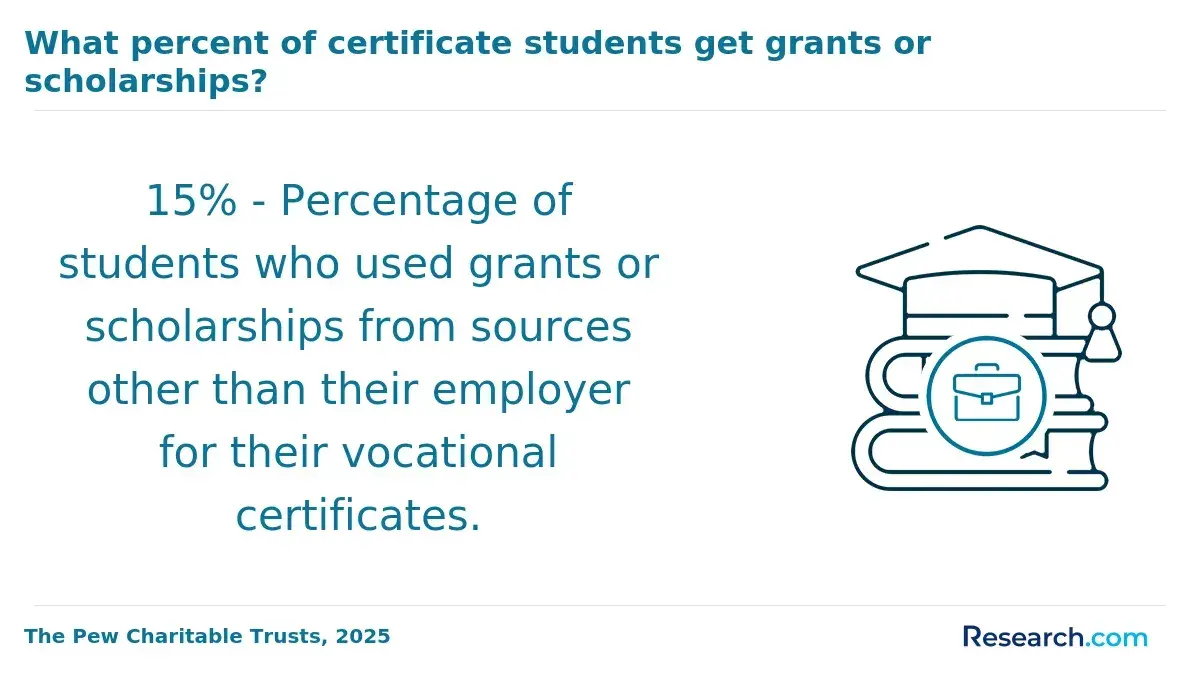
A program is generally FAFSA-eligible when the school participates in Title IV federal student aid programs and the student is enrolled in an eligible degree or certificate program. Online delivery by itself does not make a program ineligible, but short nondegree certificates, unapproved programs, or unusual enrollment patterns may not qualify.
Before enrolling, ask the financial aid office to confirm the following items in writing. This protects you from assuming that "online" and "FAFSA accepted" automatically mean your exact program, start date, and course load are covered.
- Whether the institution participates in federal Title IV student aid programs.
- Whether the specific online homeland security degree is an aid-eligible program.
- Whether your planned enrollment status is full-time, three-quarter-time, half-time, or less than half-time for aid purposes.
- Whether the school uses standard terms, nonstandard terms, or self-paced formats that affect disbursement timing.
- Whether prior credits, repeated courses, or satisfactory academic progress rules could affect continued aid eligibility.
A common mistake is thinking FAFSA acceptance means the program will be fully paid for. In reality, federal aid is based on eligibility formulas, enrollment intensity, cost of attendance, dependency status, lifetime aid limits, and whether the aid is a grant or loan. Students comparing homeland security programs with other online options should also look at institutional credibility; lists of prestigious online universities can help frame what accreditation and online reputation look like across the broader distance-learning market.
How Much Does an Online Homeland Security Degree Cost After Financial Aid?
The cost of an online homeland security degree after financial aid is the school's cost of attendance minus grants, scholarships, employer support, military benefits, and any other gift aid. Loans can make enrollment possible, but they do not reduce the price; they shift payment into the future with repayment obligations.
For the current federal aid cycle, the maximum Pell Grant is $7,395 for eligible students. For a low-tuition online program, that amount may cover a meaningful share of annual tuition; for a higher-cost private or out-of-state program, it may cover a smaller portion of the total bill.
The table below shows how aid can change a student's practical cost. It uses sample scenarios rather than promises, because actual aid depends on the FAFSA result, enrollment level, school cost of attendance, state aid rules, and institutional awards.
| Cost scenario | Tuition benchmark | Example grant or scholarship impact | What the student should watch |
| Lowest-tuition online program | About $32,400 for 120 credits before fees | A Pell-eligible student may reduce annual out-of-pocket tuition substantially | Fees, textbooks, course load, and whether all courses are aid eligible |
| Public university resident rate | About $35,000 to $39,000 for 120 credits before fees | State grants or resident discounts may improve affordability | Residency rules and whether online tuition differs from campus tuition |
| Transfer-heavy completion pathway | Cost depends on remaining credits only | Prior credits can reduce both tuition and time to completion | Maximum transfer limits, upper-division credit rules, and major requirements |
| Higher-tuition program with stronger aid | May exceed $50,000 before fees | Institutional scholarships can narrow the price gap | Renewal requirements, minimum GPA, and whether aid applies every term |
When comparing offers, focus on net price and total borrowing, not only the financial aid award total. An offer that includes a large loan may look generous, but a smaller grant package at a lower-tuition school could be safer financially.
Which Affordable Online Homeland Security Degree Programs Offer the Best Value?
The best-value affordable online homeland security program is the one that combines legitimate accreditation, low net cost, strong transfer acceptance, flexible scheduling, and relevant coursework. Homeland security programs usually cover emergency management, intelligence analysis, terrorism studies, risk assessment, cybersecurity basics, public administration, crisis communication, and critical infrastructure protection.
The table below compares value factors that matter after you identify schools that are both accredited and FAFSA-eligible. This helps separate "cheap" from "worth choosing."
| Value factor | Why it matters | When a higher-cost program may be worth it |
| Transfer-credit acceptance | Reduces the number of credits you must pay for | When the school accepts substantially more prior college, military, or professional training credit |
| Career alignment | Homeland security roles vary across emergency management, law enforcement support, intelligence, cybersecurity, and public safety administration | When the curriculum includes the concentration or electives closest to your target role |
| Online flexibility | Working adults may need asynchronous courses, multiple start dates, or part-time pacing | When flexibility improves your chance of finishing without stopping out |
| Student support | Advising, transfer evaluation, tutoring, and career services can affect completion | When stronger support lowers the risk of wasted credits or delayed graduation |
| Total borrowing | Debt affects ROI long after graduation | When better grants or employer partnerships offset higher tuition |
Low tuition makes the most sense for students who already have public safety, military, emergency services, logistics, cybersecurity, or government experience and need a bachelor's credential to qualify for advancement. A broader career strategy may include comparing homeland security with other best degrees to make money, especially if your primary goal is maximum earnings rather than public safety or government service.
You should be cautious about choosing the cheapest program if it has limited major coursework, weak advising access, low transfer clarity, or poor fit for your intended employer. For example, a student aiming at emergency management leadership may value public administration and disaster planning coursework more than a general security curriculum with fewer management courses.
Are the Cheapest Online Homeland Security Degree Programs Properly Accredited?
The cheapest online homeland security degree programs can be properly accredited, but students need to verify this carefully. Accreditation is a quality-control and eligibility issue: it affects federal aid participation, credit transfer, graduate school admission, and sometimes employer recognition.
For FAFSA purposes, the school must be accredited by an agency recognized by the U.S. Department of Education and must participate in Title IV federal aid programs. Many online homeland security degrees are housed at institutionally accredited universities, but not every low-cost online provider meets that standard.
Use this step-by-step check before you submit a deposit or rely on a financial aid estimate. It is especially important when comparing lower-cost online schools with similar-sounding names.
- Search the school in the U.S. Department of Education's Database of Accredited Postsecondary Institutions and Programs.
- Confirm the accreditor listed for the institution, not only a marketing claim on the program page.
- Check the school's federal school code or ask the financial aid office to confirm Title IV participation.
- Ask whether the specific homeland security degree is approved for federal aid.
- Confirm whether the degree is a bachelor's, associate, certificate, or concentration, because aid eligibility and employer value can differ.
- Ask how credits from the program transfer to graduate schools or other institutions if you plan to continue your education.
A red flag is any school that emphasizes speed, guaranteed jobs, or "no FAFSA needed" while avoiding direct answers about institutional accreditation. Another warning sign is a program that cannot clearly explain tuition, fees, refund policies, or whether your online degree appears the same as other degrees on the transcript.
What FAFSA Grants and Federal Aid Can Pay for an Online Homeland Security Degree?
Federal aid for an online homeland security degree can include grants, loans, and, at some schools, work-study. The most important distinction is that grants and scholarships reduce the price you pay, while loans must be repaid.
The main federal aid categories below are commonly relevant to eligible undergraduate students. Availability depends on the FAFSA result, enrollment status, school participation, annual limits, and federal rules.
- Federal Pell Grant: Need-based grant aid for eligible undergraduate students who have not already earned a bachelor's degree in most cases.
- Federal Supplemental Educational Opportunity Grant: Additional need-based grant aid at participating schools, usually limited by institutional funding.
- Direct Subsidized Loan: Need-based federal loan for eligible undergraduates, with the government paying interest during certain in-school periods.
- Direct Unsubsidized Loan: Federal loan that is not based on financial need, with interest generally accruing while the student is in school.
- Federal Work-Study: Part-time work funding at participating schools, though fully online students should ask whether remote or local options are available.
For dependent undergraduate students, federal Direct Loan annual limits commonly range from $5,500 to $7,500 depending on year in school, while independent undergraduates may qualify for higher annual limits. That can help cover remaining costs, but borrowing the maximum every year can weaken ROI if the degree does not align with a realistic career plan.
Students should also ask about state grants, institutional scholarships, employer tuition reimbursement, union education benefits, military tuition assistance, GI Bill benefits, and public safety agency partnerships. These sources can matter as much as federal aid when comparing the cheapest published tuition against the lowest real out-of-pocket cost.
How Do Transfer Credits Lower the Cost of an Online Homeland Security Degree?
Transfer credits can be the single biggest cost reducer in an online homeland security degree. Because bachelor's degrees often require about 120 credits, a student who transfers an associate degree or substantial prior coursework may pay for far fewer credits than a first-time freshman.
The table below shows why transfer policy can change the affordability ranking. A school with higher per-credit tuition may cost less if it accepts more of your completed credits toward the major and general education requirements.
| Transfer situation | Credits still needed | Cost effect at $300 per credit | Decision point |
| No transfer credits | 120 credits | $36,000 before fees | Lowest tuition matters more because the student pays for the full degree |
| Associate degree transfer | About 60 credits | $18,000 before fees | Transfer acceptance may matter more than small tuition differences |
| Military, academy, or professional training credit | Varies by evaluation | Potentially lowers required credits | Ask for a formal credit estimate before enrolling |
| Many electives accepted but few major credits | May still need extensive upper-division coursework | Savings may be smaller than expected | Confirm how credits apply, not just how many are accepted |
To use transfer credits strategically, request an unofficial review before applying when possible and a formal degree audit before committing. Ask whether the school accepts credits from regionally or nationally accredited institutions, military transcripts, CLEP or DSST exams, FEMA-related coursework, law enforcement academy training, emergency medical services training, or prior learning assessment portfolios.
Students seeking the fastest affordable route should compare transfer-heavy homeland security programs with other quick online degrees, because the shortest path is usually the one that accepts the most applicable prior credit rather than the one with the shortest advertised term length.
Which Students Benefit Most From a Low-Cost Online Homeland Security Degree With FAFSA?
A low-cost online homeland security degree with FAFSA is most useful for students who need an accredited credential but must control debt. It is especially practical for working adults who cannot relocate, public safety professionals seeking advancement, veterans or active-duty service members with training credit, and transfer students who already completed general education courses.
The strongest fit usually falls into a few student profiles. These examples can help you decide whether low cost should be your top priority or just one factor.
- Working public safety employees: Police, fire, corrections, EMS, dispatch, transportation security, and emergency services workers may benefit from a flexible degree that supports promotion into planning, operations, or administration.
- Military-affiliated students: Students with military training may reduce degree cost through transfer credit, tuition assistance, or veteran education benefits.
- Community college transfers: Students with an associate degree can often cut the remaining price sharply if the bachelor's program has a clear transfer pathway.
- Career changers entering government or nonprofit emergency roles: A low-cost program can reduce risk while building foundational knowledge in disaster response, intelligence, and infrastructure protection.
- Students planning graduate study: Keeping bachelor's debt low can preserve borrowing capacity for a master's degree in emergency management, public administration, cybersecurity, criminal justice, or a related field.
Students should avoid choosing mainly on low cost if they need a highly specialized technical pathway, such as advanced cybersecurity engineering, data science, or forensic computing. They should also be cautious if they are unsure about public sector work; someone drawn more to counseling, public health, or family services may want to compare adjacent fields such as marriage and family therapy online programs accredited before committing to a security-focused curriculum.
How Does the Cost of an Online Homeland Security Degree Affect Career ROI?
The ROI of an online homeland security degree depends on whether the total cost is proportionate to the roles you can realistically pursue. Homeland security is not one job; it can connect to emergency management, border and transportation security, intelligence analysis support, risk management, cybersecurity policy, law enforcement administration, disaster planning, and public safety leadership.
The BLS reported a 2024 median annual wage of $86,130 for emergency management directors. That figure is useful because emergency management is one of the clearest civilian career pathways connected to homeland security study, but it should not be read as an entry-level salary or a guaranteed outcome.
Use the table below to connect degree cost with career-value thinking. The goal is to estimate whether your likely borrowing is manageable relative to your intended path, not to assume the degree automatically produces a specific salary.
| Career direction | How the degree may help | ROI consideration |
| Emergency management | Builds knowledge of disaster planning, response coordination, mitigation, and recovery | Experience and local government budgets often influence advancement |
| Public safety administration | Supports promotion from frontline roles into supervisory or planning positions | Best ROI when paired with existing agency experience |
| Transportation or infrastructure security | Connects security planning with risk assessment and regulatory awareness | Location and agency hiring needs matter |
| Intelligence or analysis support | Introduces threat assessment, research, and security policy concepts | Some roles prefer additional analytical, language, cyber, or graduate training |
| Cybersecurity policy or resilience | Provides governance and critical infrastructure context | Technical cybersecurity roles may require deeper IT credentials |
A low-cost degree usually improves ROI by reducing debt, but the cheapest option is not automatically best. A program with stronger internships, employer recognition, transfer efficiency, or a better-aligned concentration may justify a higher net price if it improves completion odds or matches your target role more closely.
If your main motivation is salary growth rather than homeland security work specifically, compare this major with an online math bachelor's degree, computer science, cybersecurity, accounting, or data analytics pathway. Homeland security can be valuable, but its payoff is often strongest when combined with public safety experience, military background, technical skills, or government career goals.
How Should Students Choose the Cheapest FAFSA-Eligible Online Homeland Security Degree?
To choose the cheapest FAFSA-eligible online homeland security degree wisely, compare schools in stages: eligibility first, then net cost, then academic fit, then career value. This prevents a common mistake: falling for a low advertised tuition rate before confirming accreditation, aid eligibility, transfer credit, and total completion cost.
Use this practical checklist before you enroll. It is designed to help you compare real affordability rather than marketing claims.
- Confirm institutional accreditation through a recognized accreditor and verify that the school participates in federal student aid.
- Ask whether the specific online homeland security degree is eligible for FAFSA-based aid.
- Request a full tuition-and-fee estimate for the number of credits you still need, not the full 120 credits if you are a transfer student.
- Submit transcripts early and ask for a degree audit showing how credits apply to general education, electives, and major requirements.
- Compare gift aid separately from loans so you can see the true discount versus future debt.
- Ask about technology fees, graduation fees, course materials, proctoring costs, residency requirements, and any in-person obligations.
- Review curriculum fit for your career target, such as emergency management, intelligence, cybersecurity policy, or public safety leadership.
- Check academic calendar flexibility, course availability, and whether part-time enrollment affects aid or time to completion.
- Ask career services about internships, agency partnerships, alumni outcomes, and support for federal, state, local, or private-sector security careers.
- Calculate estimated borrowing at graduation and compare it with realistic entry or advancement opportunities in your region.
The right choice is usually the lowest net-cost accredited program that you are likely to finish and that supports your career goal. If two programs are similar in price, choose the one with clearer transfer rules, stronger advising, better course availability, and a curriculum closer to the role you want.
Do not ignore alternatives if your goals are still flexible. Homeland security is a strong fit for public safety and emergency-focused students, but students drawn to quantitative analysis, technology, healthcare administration, or business should compare program outcomes before committing to one major.
Other Things You Should Know About Homeland Security
Yes. Many bachelor's programs admit students without prior public safety experience. However, internships, volunteer emergency management work, security-related certifications, or relevant part-time work can help you build a stronger career profile while enrolled.
An associate degree may qualify students for some entry-level security, emergency services, or public safety support roles, but many analyst, management, and government advancement paths prefer or require a bachelor's degree. Requirements vary by employer and agency.
Most academic programs do not require a security clearance for admission. Some jobs connected to intelligence, defense contracting, cybersecurity, or federal agencies may require clearance later, and clearance decisions depend on the employer and federal review process.
Common courses include emergency management, terrorism studies, intelligence analysis, critical infrastructure protection, cybersecurity fundamentals, risk assessment, ethics, public administration, disaster response, and homeland security law or policy.
References
- Types of Homeland Security Degrees | Compare Schools https://www.criminaljusticeprograms.com/specialty/homeland-security-degrees/
- Pardon Our Interruption https://www.aiuniv.edu/degrees/criminal-justice/bachelors-homeland-security
- Online Bachelor's Degree: Homeland Security https://www.umgc.edu/online-degrees/bachelors/homeland-security
- Top Online Master’s Degree Programs in Homeland Security for 2025 https://www.onlinemastersdegrees.org/best-programs/homeland-security/
- 2025 Most Affordable Homeland Security Degrees Online https://www.onlineu.com/most-affordable-colleges/homeland-security-degrees
- Financial Aid For Online Colleges https://www.affordablecollegesonline.org/financial-aid/financial-aid-for-online-colleges/