2027 Fastest Accredited Online Care Coordination Programs: Accelerated Degrees and Completion Times

Co-Founder and Chief Data Scientist
Choosing the fastest online care coordination program is really about speed without shortcuts. The U.S. Bureau of Labor Statistics projects healthcare occupations to generate about 1.9 million openings each year from 2024 to 2034, making flexible pathways into patient navigation, case management, and health services roles especially relevant.
This guide is for students comparing accredited online degrees, bachelor's completion programs, and accelerated formats. You'll learn how advertised timelines depend on transfer credits, course load, prerequisites, prior learning, and fieldwork, so you can identify programs that are genuinely fast and still academically credible.
Key Things You Should Know
- The fastest realistic path is usually a bachelor's completion program that accepts up to about 90 transfer credits; students who enter with substantial prior college credit may finish in roughly 12 to 24 months, while first-time bachelor's students commonly need about 3 to 4 years.
- Accelerated online care coordination programs often use 5-, 7.5-, 8-, or 10-week courses, but shorter terms mean compressed weekly work, not less work; full-time students often move fastest, while working adults may need a part-time plan.
- Competency-based and prior-learning-friendly programs can shorten the calendar, especially when they allow credit for healthcare certifications, military training, professional experience, or completed general education courses, but each school sets its own limits and residency rules.
Which Colleges Offer the Fastest Accredited Online Care Coordination Programs?
The fastest accredited online care coordination programs are rarely labeled only as "care coordination degrees." They are commonly offered as online degrees in health and human services, healthcare administration, community health, public health, health services management, or patient advocacy with coursework in case management, population health, health systems, communication, ethics, and care transitions.
For speed, compare the program's transfer-credit ceiling, term length, start-date frequency, and whether the curriculum is built for adult learners. The table below summarizes examples of accredited online programs that can support care coordination career goals and may be relatively fast for students who bring eligible transfer credits.
| College or university | Online program type relevant to care coordination | Fast-format features to verify | Best fit |
| Western Governors University | Online health and human services or healthcare-focused bachelor's pathway | Competency-based pacing, 6-month terms, transfer review, flat-term model | Self-directed students with healthcare experience who can progress quickly through mastered material |
| Southern New Hampshire University | Online health and human services or healthcare administration-related bachelor's pathway | 8-week undergraduate terms and generous transfer-credit policies | Students who want structured accelerated terms and frequent course starts |
| Arizona State University Online | Online community health or health-related bachelor's pathway | 7.5-week courses and multiple start dates | Students seeking a large public university option with compressed online classes |
| Purdue Global | Online healthcare administration, health and wellness, or human services-related pathway | Accelerated online terms, transfer-credit review, prior learning options in some programs | Adult learners with previous credits or professional healthcare training |
| Franklin University | Online healthcare management or health services-related bachelor's pathway | Adult-focused online scheduling and transfer-friendly degree completion | Students returning to finish a bachelor's degree while working |
These examples should be treated as a starting point, not a final ranking. Before applying, ask each school whether the degree title, concentration, and course sequence align with the care coordination roles you want, such as patient navigator, care coordinator, community health specialist, utilization coordinator, or case management assistant.
If you are mainly searching for the shortest possible route to any accredited bachelor's credential, compare care coordination options with broader 1 year degree programs to understand how transfer-heavy completion pathways differ from full four-year degrees.
How Long Does It Take to Complete an Accredited Online Care Coordination Degree?
"Fastest" means the shortest realistic calendar time from enrollment to graduation, not just the shortest course length. "Accelerated" usually means compressed terms, year-round enrollment, heavier course loads, competency-based progression, or generous transfer policies. "Completion time" depends on how many credits you still need, whether required courses are offered every term, and whether any practicum, internship, or capstone must be completed on a fixed schedule.
The table below shows realistic timelines for common online care coordination-related degree paths. Use it to estimate your own timeline based on how many credits you already have and how many courses you can take at once.
| Pathway | Typical credits remaining | Fastest realistic completion range | What can extend the timeline |
| Bachelor's completion program | About 30 to 60 credits | About 12 to 24 months | Missing prerequisites, limited transfer approval, course sequencing, part-time enrollment |
| Full online bachelor's degree from scratch | About 120 credits | About 3 to 4 years | Working full time, taking summers off, changing majors, repeating courses |
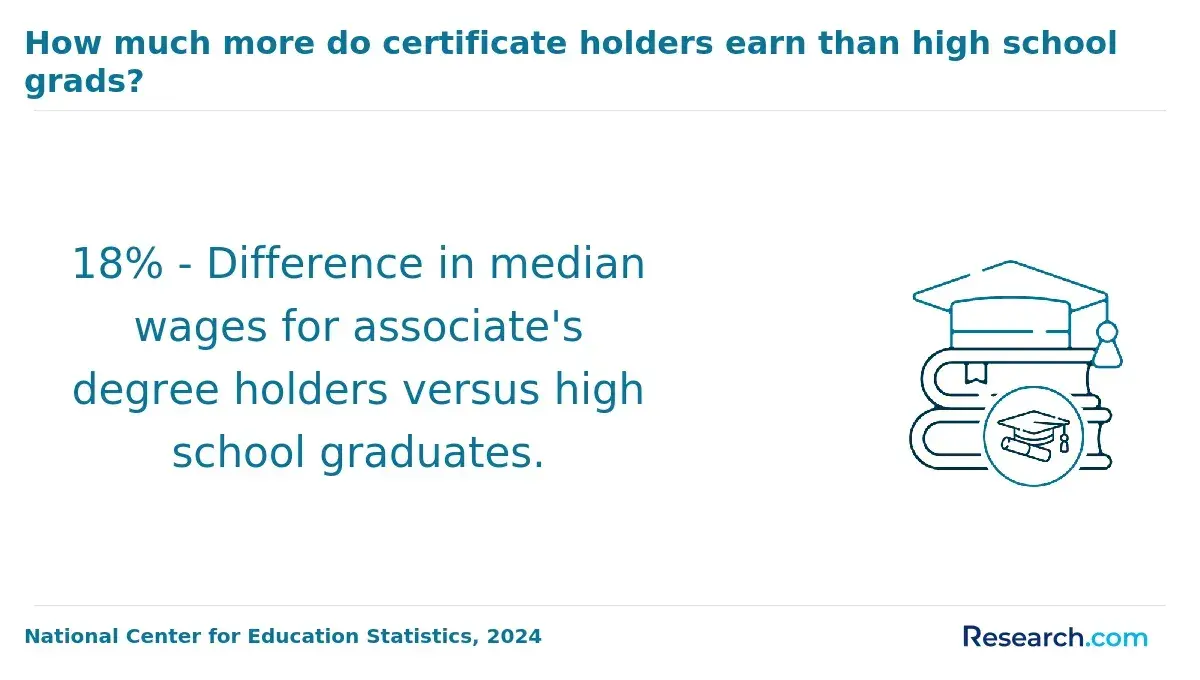
| Associate-to-bachelor's pathway | About 60 credits after associate degree transfer | About 18 to 30 months | General education mismatches or upper-division residency requirements |
| Competency-based bachelor's pathway | Varies by transfer and demonstrated mastery | Potentially faster than term-based study for experienced students | Slow assessment completion, writing-heavy courses, lack of time for independent study |
| Graduate certificate or post-bachelor's care coordination credential | Usually fewer credits than a degree | Often under 1 year when offered fully online | Cohort starts, practicum requirements, employer or licensure prerequisites |
A student with 90 accepted transfer credits may need only the final 30 credits of a bachelor's degree, while a first-time student needs the full curriculum. That difference is why the "fastest" program for one student may not be the fastest for another.
How Do Accelerated and Competency-Based Online Care Coordination Programs Work?
Accelerated care coordination programs compress the academic calendar or let students move through material at a faster pace. Competency-based programs go further by allowing students to demonstrate mastery through assessments instead of waiting for a traditional semester to end.
These formats can shorten time to graduation, but only if the student can keep up with the workload. The most common fast formats include the following:
- Short-term online courses: Five-, 7.5-, 8-, or 10-week courses cover the same learning outcomes in less calendar time, so weekly reading, discussion, exams, and projects are more concentrated.
- Year-round enrollment: Programs with summer terms and multiple annual start dates can reduce idle time between courses.
- Stacked course loads: Some students take two accelerated courses at once, but this can feel like a full-time job when classes are writing-heavy.
- Competency-based pacing: Students progress by passing assessments, which may favor experienced healthcare workers who already understand medical terminology, care transitions, quality improvement, or patient communication.
- Prior learning assessment: Schools may award credit for documented professional training, certifications, military learning, or portfolios, reducing the number of required courses.
The trade-off is intensity. A shorter term can be efficient for one or two courses, but students juggling shifts, caregiving, or unpredictable work schedules should ask whether deadlines are flexible or fixed. If you are comparing healthcare pathways, the same pacing questions also matter in clinical fields such as nurse practitioner programs, where time to completion may be shaped by clinical placement and licensure rules.
What Accreditation Should an Online Care Coordination Program Have?
At minimum, choose an institutionally accredited college or university recognized by the U.S. Department of Education or the Council for Higher Education Accreditation. Institutional accreditation matters for federal financial aid, transferability, employer recognition, and graduate school eligibility.
Programmatic accreditation is more role-specific. Care coordination itself is not always tied to one required programmatic accreditor, but related fields may have additional standards. Public health, nursing, social work, health information management, dietetics, and healthcare administration programs may follow different accreditation expectations depending on the degree title and career goal.
Use the checklist below before you enroll, especially if you are choosing a fast program primarily because of its advertised timeline:
- Confirm institutional accreditation directly through official accreditation databases, not only the school's marketing page.
- Ask whether the degree qualifies for the specific roles, certifications, licenses, or graduate programs you may pursue later.
- Check whether credits from the program are commonly accepted by regionally accredited graduate schools.
- Verify whether any fieldwork, internship, practicum, or capstone is required and whether online students must find their own site.
- Review state authorization rules if you live outside the school's home state or may move before graduating.
If your long-term care coordination goals connect to nutrition counseling, clinical dietetics, or population health nutrition, accreditation becomes even more specialized; students considering that route should compare requirements for dietetics masters programs before choosing a general healthcare degree.
How Can Transfer Credits and Prior Learning Shorten an Online Care Coordination Degree?
Transfer credit is often the biggest factor in finishing quickly. A program with 8-week courses may still take years if you start with no credits, while a less flashy program may be faster if it accepts more of your prior coursework.
The table below shows how common credit scenarios can affect the remaining time to an online bachelor's degree related to care coordination. These are planning ranges, not guarantees, because every school evaluates credits differently.
| Student starting point | Possible credits accepted | Likely remaining work | Planning implication |
| No prior college | 0 credits | Full degree curriculum | Choose a program with year-round terms and clear advising to avoid delays |
| Some college, no degree | 15 to 60 credits | General education plus major courses | Request an unofficial transfer evaluation before applying broadly |
| Completed associate degree | Often around 60 credits if aligned | Upper-division major and elective courses | Look for articulation agreements and bachelor's completion maps |
| Healthcare certificate or military training | Varies widely | May reduce electives or technical requirements | Ask about ACE credit, portfolio assessment, and prior learning fees |
| Near-complete bachelor's credits | Up to the school's maximum transfer limit | Residency requirement and major core | Confirm the minimum credits that must be completed at the new school |
To move as fast as possible, gather transcripts early and ask for a written degree audit. A verbal estimate from admissions is useful, but a formal evaluation is what tells you how many credits actually apply to the program.
Students can often shorten the path by following these steps before committing to a program:
- Request official transcripts from every college attended, even if the coursework seems unrelated.
- Ask whether old science, statistics, psychology, sociology, or medical terminology courses still count or have expiration limits.
- Submit documentation for healthcare certifications, military learning, employer training, or professional development.
- Compare not only total accepted credits but also how many credits apply to the major, electives, and general education requirements.
- Get the final graduation plan in writing, including required courses, term sequence, and expected completion date.
What Are the Admission Requirements and Start Dates for Accelerated Online Care Coordination Programs?
Admission requirements depend on the degree level. Bachelor's programs usually require a high school diploma or equivalent, transcripts, and sometimes a minimum GPA. Bachelor's completion programs may require prior college credit, while graduate certificates may require a completed bachelor's degree and healthcare or human services experience.
Start dates matter because a program with frequent starts can reduce waiting time. Many accelerated online colleges offer multiple starts per year, while cohort-based programs may admit students only a few times annually. Missing one prerequisite or transcript deadline can delay graduation by an entire term.
Before applying, review the items that commonly affect whether you can start immediately or must wait:
- Transcript processing time: Schools cannot complete a transfer evaluation until they receive official records from previous institutions.
- Minimum GPA rules: Some programs offer provisional admission, but others require a specific GPA for full entry into the major.
- Prerequisite courses: Statistics, anatomy and physiology, medical terminology, psychology, ethics, or healthcare systems courses may be required before upper-division work.
- Technology requirements: Online programs may require proctored exams, webcams, secure browsers, learning management system access, and reliable internet.
- Background checks or immunization records: These may be required if the program includes fieldwork in healthcare or community settings.
- State authorization: Students should confirm that the college is authorized to enroll online learners in their state.
The fastest applicants are usually those who submit transcripts early, respond quickly to credit-evaluation requests, and choose a first-term course load that is ambitious but realistic. Starting too aggressively and withdrawing from courses can slow progress more than beginning with a manageable schedule.
How Much Does a Fast Online Care Coordination Degree Cost, and Is Financial Aid Available?
Cost depends on tuition per credit, transfer credits, fees, textbooks, technology costs, and whether the school charges by credit hour or by term. A fast program is not automatically cheaper; it only lowers cost if you reduce the total credits you must pay for or finish quickly enough to avoid extra terms and fees.
Federal financial aid may be available if the school is properly accredited and the student meets eligibility rules. For the 2025-26 award year, the maximum Federal Pell Grant is $7,395, which can materially reduce out-of-pocket costs for eligible undergraduates but may not cover the full price of attendance.
When comparing costs, focus on total program price after transfer credits rather than only the published tuition rate. The table below highlights the cost factors most likely to change what you actually pay.
| Cost factor | Why it matters for accelerated students | Question to ask |
| Tuition model | Per-credit pricing favors transfer-heavy students; flat-term pricing may benefit students who complete many courses quickly | Will I pay per credit, per term, or by subscription period? |
| Transfer credits | Accepted credits can reduce both time and tuition | How many of my credits apply to graduation, not just admission? |
| Fees | Technology, graduation, assessment, transcript, and portfolio fees can add up | What fees are mandatory for online students? |
| Books and materials | Some online programs include digital resources while others bill separately | Are textbooks included in tuition? |
| Fieldwork expenses | Background checks, transportation, uniforms, or site requirements may apply | Are there practicum or placement-related costs? |
Students should complete the FAFSA, ask about employer tuition assistance, and compare scholarships for adult learners, healthcare workers, transfer students, and military-affiliated students. If you are comparing healthcare degrees by affordability and time, it can also be useful to review cost structures in adjacent fields such as online pharmacy programs, where tuition models and clinical requirements can vary substantially.
Can You Work Full Time While Completing an Accelerated Online Care Coordination Degree?
Yes, many students work full time while earning an online care coordination degree, but the fastest timelines are easier for students who can dedicate consistent weekly study time. Accelerated courses can be demanding because assignments, discussions, exams, and projects arrive quickly.
A realistic workload plan matters more than the advertised term length. The table below compares common enrollment patterns so working adults can estimate the trade-off between speed and sustainability.
| Enrollment pattern | Typical pace | Best for | Main risk |
| One accelerated course at a time | Slower but steady | Full-time workers, caregivers, shift workers | Longer calendar time to graduation |
| Two accelerated courses at a time | Fast full-time pace | Students with predictable schedules and strong academic habits | Burnout or missed deadlines |
| Competency-based heavy pace | Potentially very fast | Experienced healthcare professionals who can study independently | Progress can stall without structure |
| Traditional part-time pace | Most flexible | Students balancing multiple obligations | Program changes or life events may interrupt momentum |
Students who work full time should ask whether classes are asynchronous, whether exams require scheduled proctoring, and how much group work is required. Care coordination programs often involve writing, case analysis, communication exercises, and healthcare policy assignments, so students should plan for regular weekly work rather than weekend-only cramming.
A slower timeline may be the better option if you are new to healthcare, returning to school after a long break, or balancing unpredictable responsibilities. Finishing in 18 months is not better than finishing in 24 months if the faster plan leads to failed courses, withdrawals, or unnecessary debt.
Are Accelerated Online Care Coordination Degrees Respected by Employers and Graduate Schools?
Employers and graduate schools generally focus on accreditation, degree relevance, skills, experience, and performance rather than whether a program was completed online or on campus. An accelerated online degree from a properly accredited institution can be respected when the curriculum is rigorous and aligned with the student's career goal.
Care coordination roles vary widely. Some are administrative or community-facing, while others require clinical credentials such as RN licensure, social work licensure, or a graduate healthcare credential. The BLS reported a 2024 median annual wage of $117,960 for medical and health services managers, but that figure reflects a broad management occupation and should not be treated as an entry-level care coordinator salary.
Students should match the degree to the job posting they want. Common care coordination-related roles may include:
- Care coordinator: Helps patients navigate appointments, referrals, resources, and care transitions, often under the direction of clinical or administrative teams.
- Patient navigator: Guides patients through healthcare systems, insurance processes, screenings, treatment steps, and follow-up needs.
- Community health worker or specialist: Connects individuals and communities with health education, preventive services, and local resources.
- Case management assistant: Supports documentation, service coordination, discharge planning, and communication among providers.
- Healthcare services supervisor: Oversees operational workflows, quality initiatives, staff coordination, or patient access processes, typically with additional experience.
If your goal is advanced clinical practice, a general care coordination bachelor's degree may not be enough. For example, nurses planning a family nurse practitioner pathway should compare prerequisites and clinical expectations for the best online post master's FNP program options rather than assuming a nonclinical care coordination degree will meet those requirements.
How Should You Compare the Fastest Accredited Online Care Coordination Programs?
The best fast program is the one that gets you to the right credential quickly without creating avoidable transfer problems, accreditation issues, unmanageable workload, or career mismatches. Start by defining your target role, then compare programs by actual credits remaining and required course sequence.
Use the following process to compare programs before enrolling:
- Identify your target job titles and collect several current job postings to see whether employers prefer healthcare experience, a bachelor's degree, RN licensure, social work credentials, or case management training.
- Verify institutional accreditation and any relevant programmatic accreditation for your intended career path.
- Request a written transfer evaluation from each school and compare how many credits apply directly to graduation.
- Ask for a term-by-term graduation plan showing required courses, electives, prerequisites, capstone requirements, and earliest possible completion date.
- Confirm whether courses are asynchronous, synchronous, competency-based, cohort-based, or self-paced.
- Calculate total cost after transfer credits, fees, materials, and likely financial aid rather than comparing tuition rates alone.
- Ask how often required major courses are offered because a single course available only once per year can delay graduation.
- Check student support services, including online tutoring, writing help, career services, academic advising, and fieldwork support if applicable.
Watch for red flags. Be cautious if a school promises a universal completion time, avoids accreditation questions, gives only a verbal transfer estimate, hides fees, or says "accelerated" without explaining course load and sequencing. Also avoid assuming that every healthcare-related degree leads to every healthcare role; clinical career paths have separate requirements.
Other Things You Should Know About Care Coordination
They overlap, but they are not always identical. Care coordination often focuses on communication, referrals, follow-up, and helping patients move through the healthcare system, while case management may involve more formal assessment, service planning, documentation, and utilization review depending on the employer and credential requirements.
Not always. Some care coordinator and patient navigator roles are open to candidates with degrees in health services, human services, community health, or healthcare administration. However, clinical care coordination, utilization review, and some case management roles may require RN licensure or another professional license.
It may help you meet education expectations for some credentials, but certification rules vary. Many case management or patient navigation certifications require a mix of education, work experience, supervised practice, or a clinical license, so check the certifying organization before choosing a program.
Employers often look for communication, empathy, documentation accuracy, healthcare system knowledge, cultural competence, problem-solving, privacy awareness, and the ability to coordinate across providers, insurers, patients, and community resources.
References
- 5 Healthcare Programs You Can Complete in Less than a Year https://www.invest529.com/blog/5-healthcare-programs-you-can-complete-in-less-than-a-year/
- 5 Fast-Track Education Options in Healthcare Without Cutting Corners https://www.mariposatraining.com/blog-posts/5-fast-track-education-options-in-healthcare-without-cutting-corners
- Accelerated Nursing Programs https://www.allnursingschools.com/articles/accelerated-nursing-programs/
- Admission Requirements - Mercy College https://www.mchs.edu/admissions/lets-get-started/admission-requirements/
- Accredited Training Menu - Care Coordination NEW - Personalised Care Institute https://www.personalisedcareinstitute.org.uk/accredited-training-menu-care-coordination-new/
- Accelerated Nursing Program vs. Traditional: Key Differences https://beal.edu/accelerated-nursing-program-vs-traditional/
- Online Career Training | Certificate Programs | CareerStep https://www.careerstep.com/
- Accelerated vs Traditional Healthcare Programs Comparison https://integrityhealthed.com/healthcare/accelerated-vs-traditional-healthcare-training-which-one-works-better/
- Frequently Asked Questions https://www.aacnnursing.org/essentials/tool-kit/faqs
- Admission Requirements https://www.elms.edu/school-of-nursing/bachelor-science-programs/accelerated-second-degree-in-nursing/admissions-requirements/