2027 English as a Second Language Degree Completion Programs for Working Adults

Co-Founder and Chief Data Scientist
Many working adults face barriers when pursuing an english as a second language degree completion program-uncertainty about credit transfer policies, rigid class schedules, and unclear accreditation standards can hinder progress. Approximately 62% of graduates in these programs report significant salary increases within two years, underscoring the financial value of selecting a quality institution.
High-quality programs accommodate prior learning credits, offer flexible scheduling, and maintain industry-recognized accreditation to ensure return on investment. This article discusses essential criteria to evaluate such programs, helping readers align educational choices with career advancement, financial limits, and life responsibilities.
Key Things to Know About English as a Second Language Degree Completion Programs for Working Adults
- Maximize credit for prior learning by submitting military transcripts and professional training certificates-up to 30% of degree requirements may be waived, accelerating completion and reducing costs.
- Employers and state licensure boards increasingly prefer programs accredited by CAEP or regional agencies-these endorsements ensure rigorous curricula aligned with ESL teaching standards.
- Working adults qualify for federal Pell Grants and employer tuition reimbursement-64% of ESL degree completers in 2023 used at least one form of financial aid, easing education affordability.
What Are English as a Second Language Degree Completion Programs, and Who Are They Designed For?
English as a Second Language degree completion programs for working adults provide tailored pathways for those who have earned some college credits but need a flexible and accelerated route to finish their bachelor's degree. Unlike traditional four-year or graduate programs, these programs emphasize fast pacing, credit-for-prior-learning policies, and flexible scheduling designed for adult learners balancing career and family commitments.
- Accelerated Pacing: Students focus exclusively on remaining degree requirements, enabling quicker graduation compared to conventional timelines.
- Credit-for-Prior-Learning Policies: They accept previously earned college credits, military training evaluated by ACE (American Council on Education), and professional experiences to minimize redundancy and reduce costs.
- Flexible Scheduling: Courses are often offered online, during evenings, or weekends to accommodate working professionals and adults with family responsibilities.
- Target Audiences:
- Adults with some college credits but no degree aiming to complete their education.
- Military veterans whose ACE-credited training applies toward degree requirements.
- Working professionals looking for credential-gated promotions or career advancement.
- Career changers requiring formal credentials to enter the ESL teaching or support fields.
- Accreditation and Quality: Programs comply with established standards assuring credit transferability and employer and licensure board recognition.
- Financial Accessibility: Comprehensive guidance on financial aid, scholarships, and employer tuition assistance is offered, recognizing the unique challenges of adult learners.
- Career Outcomes: Graduates are well-prepared for education, administration, and language support roles responding to workforce demands.
Research from organizations such as the National Student Clearinghouse, the American Association of State Colleges and Universities, and the Lumina Foundation confirms the legitimacy and growth of flexible ESL degree programs designed for adult learners. For students planning their degree completion journey, selecting programs that maximize prior credit, align with career goals, and provide flexible delivery options is critical. To explore further educational opportunities, consider an ai online degree as another example of targeted, affordable online pathways.
How Do English as a Second Language Degree Completion Programs Differ From Traditional On-Campus Degree Programs?
English as a Second Language degree completion programs offer significant distinctions compared to traditional on-campus degree programs-differences between online and on-campus English as a Second Language degree completion programs matter most to working adults juggling career and family commitments. These programs emphasize flexibility and accessibility, departing from the more rigid schedules typical of conventional undergraduate studies.
- Scheduling Formats: Completion programs often feature evening, weekend, online, and hybrid courses to fit diverse adult schedules, unlike traditional formats that generally require daytime campus attendance during fixed semesters.
- Pacing Options: Many allow self-paced enrollment or accelerated cohorts, supporting faster or slower progress tailored to personal availability; in contrast, traditional degrees follow uniform semester pacing assuming full-time study.
- Residency Requirements: These programs commonly minimize or eliminate campus residency, enabling most coursework to be completed asynchronously online, whereas traditional programs expect regular in-person presence for classes, labs, and exams.
- Coursework Delivery: A large portion of coursework can be completed asynchronously in completion programs, offering unmatched study flexibility compared to synchronous instruction prevalent in campus-based programs.
- Structural Accommodations: Features like multiple or rolling start dates, streamlined advising tailored to adult learners, and flexible credit transfer policies-especially beneficial for military veterans and students with prior learning-distinguish completion programs from the fixed fall and spring semesters of traditional degrees.
Enrollment data from the National Center for Education Statistics and IPEDS highlight steady growth in degree completion programs over the past decade, driven by increasing demand from working adults seeking less disruptive credential pathways. While both program types confer the same Bachelor of Arts or Bachelor of Science in English as a Second Language, the student experience diverges markedly.
Degree completion pathways minimize disruption through accelerated timelines, online accessibility, and credit maximization strategies that recognize prior learning. This model supports working adults more effectively than traditional undergraduate formats, which tend to follow a full-time residency model incompatible with ongoing employment.
For adults evaluating options, understanding flexible scheduling for working adults in English as a Second Language degree completion programs is crucial. Prospective students may benefit by exploring programs recognized for quality and employer or licensure acceptance, as well as financial aid opportunities. To research program options that maximize these advantages, consider exploring an online accelerated bachelor's degree as a strategic credential pathway.
What Prior Credits and Experiences Count Toward a English as a Second Language Degree Completion Program?
Transfer Credits: These programs generally accept credits from regionally accredited colleges-though transferability depends on each institution's policies. Credits from nationally accredited or unaccredited schools often won't transfer.
Military Credits: Many schools grant credit for military training evaluated by the American Council on Education (ACE). This is particularly beneficial for veterans, but some programs deny or limit these credits without clear justification.
Professional Certifications: Certain certifications tied to teaching or language education may count toward degree requirements in select programs.
Prior Learning Assessment (PLA): PLA allows students to convert workplace learning, volunteer experience, or informal education into academic credits, reducing both time and tuition expenses.
Credit-by-Examination: Exams like CLEP and DSST are accepted by some programs, enabling students to earn credit by demonstrating subject mastery.
Transfer credit acceptance varies with the originating institution's accreditation and each school's standards. Prospective students should always request official transcripts and arrange a pre-enrollment credit evaluation to clarify accepted credits and set realistic timelines.
Research from the Council for Adult and Experiential Learning (CAEL) shows that robust credit recognition through PLA and related channels can markedly shorten degree completion times and decrease costs-key advantages for adults balancing multiple commitments.
Be cautious of schools rejecting ACE credits or imposing arbitrary caps on transfer credits lacking clear academic reasoning. The American Association of Collegiate Registrars and Admissions Officers (AACRAO) guidelines serve as a reliable measure of equitable credit transfer practices.
A professional who graduated from the English as a Second Language degree recalled the credit evaluation process as both confusing and hopeful. "Initially, I wasn't sure which experiences would count. The paperwork and transcript requests felt overwhelming," he shared. "But the PLA assessment was a turning point-it recognized my years of tutoring and informal teaching. That credit saved me months of coursework." He stressed the importance of early credit review, noting, "Knowing what transfers helped me plan financially and emotionally. It made pursuing the degree achievable while working full time."
What Is the Minimum GPA Requirement for English as a Second Language Degree Completion Programs?
English as a second language degree completion programs generally expect applicants to meet a minimum GPA requirement-often between 2.0 and 2.5 on a 4.0 scale-from previous college coursework. This baseline measure helps ensure students possess the academic foundation needed for advanced study. However, many programs provide conditional admission options for working adults whose GPAs fall just below these thresholds, frequently offering targeted academic support such as tutoring or limited course loads to aid in success.
In some cases, institutions adopting open admission policies recognize extensive professional experience or military training-often evaluated through ACE credits-as a valuable substitute for traditional GPA standards. Such holistic reviews, common among Higher Learning Commission (HLC)-accredited programs, consider letters of recommendation, personal statements, and career history alongside academic records to assess readiness.
Returning adults with previously low GPAs might benefit from academic forgiveness or fresh-start policies that reset cumulative GPA calculations after a period of non-enrollment, enhancing eligibility for degree completion. Prospective students exploring minimum GPA requirements for english as a second language degree completion programs should request formal academic evaluations from each school to realistically gauge admissibility prior to committing to applications.
Those navigating these options can also explore resources like PsyD online offerings to better understand how flexible admissions criteria may support their educational goals and accommodate professional demands.
- GPA Requirement: Typically a minimum 2.0 to 2.5 cumulative GPA on past college work.
- Conditional Admission: Support and probationary status for slightly below-standard GPAs.
- Professional Experience: Recognized especially for veterans or professionals, supplementing or replacing GPA evaluation.
- Academic Forgiveness: Policies that permit GPA resets after non-enrollment periods.
- Holistic Review: Combining academic records with letters, experience, and personal statements.
- Pre-Admission Evaluation: Formal assessment to clarify eligibility before applying.
How Are English as a Second Language Degree Completion Programs Structured Around Full-Time Work Schedules?
English as a second language degree completion programs for working adults typically offer diverse scheduling options-such as evening cohorts, weekend intensives, fully asynchronous online courses, and hybrid formats blending in-person with virtual learning. These flexible designs help students managing 40-plus hour workweeks to integrate studies smoothly alongside job and family duties. Programs generally recommend a term credit load of 6 to 9 credits for full-time working students, balancing steady progress with manageable commitments.
Many of these programs use a cohort learning model, where students advance together as a stable group through the curriculum. This structure promotes accountability and peer support, while providing scheduling predictability-critical for those needing to coordinate coursework months in advance with professional and personal responsibilities. Evidence from the National Student Clearinghouse Research Center indicates cohort-based students show higher persistence and graduation rates than their peers in traditional enrollment settings, highlighting the model's effectiveness in fostering completion among working adults.
When assessing program suitability, prospective students should inquire about several key factors:
- Course Flexibility: How does the program handle cancellations and offer make-up options for unavoidable work conflicts?
- Student Support: Is there a dedicated success advisor to assist with scheduling and keep students on track?
- Cohort Stability: What is the size and consistency of cohorts to ensure dependable peer interaction and course delivery?
Reflecting on her experience, a professional who progressed through an English as a Second Language degree described the balancing act as challenging but rewarding. She recounted occasional stress from overlapping deadlines and work demands but valued the close-knit cohort for encouragement and accountability. "Having classmates who understood the juggling-both my career and family-made it easier to stay committed," she explained. Dedicated advisors helped her navigate unexpected schedule changes, preventing setbacks that might have otherwise delayed graduation. Her story illustrates how thoughtfully structured programs provide the necessary support and flexibility for working adults to succeed.
Is Online or Hybrid Delivery Available for English as a Second Language Degree Completion Programs?
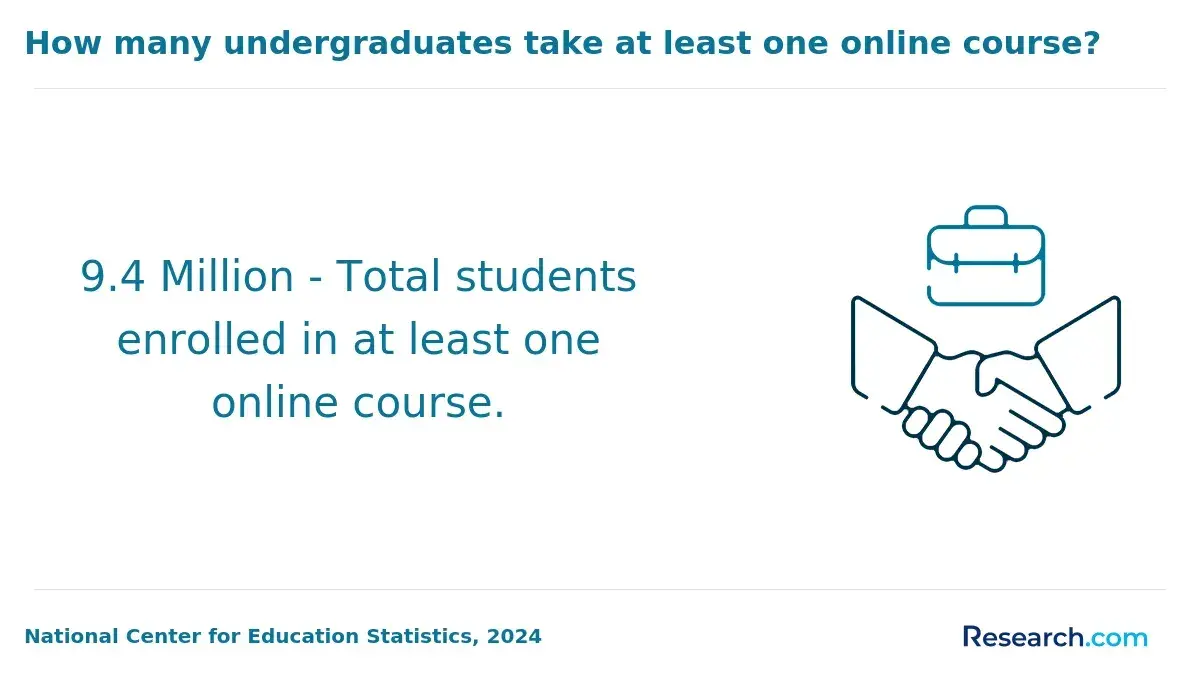
Recent data from the NCES Integrated Postsecondary Education Data System shows that in 2023, about 62% of adult learners pursuing degree completion enroll in fully online programs, while roughly 25% choose hybrid models combining online and on-campus components. The COVID-19 pandemic hastened institutions' ability to deliver robust online education, particularly in fields like English as a Second Language (ESL), with the Online Learning Consortium noting advancements in personalized support and faculty training for adult learners.
Primary program delivery formats include:
- Synchronous Live Sessions: Real-time video classes offer direct interaction but require scheduled attendance, which can challenge adults balancing varied work hours or residing in different time zones.
- Asynchronous Recorded Lectures: Pre-recorded content accessed anytime provides maximum flexibility, ideal for shift workers or caregivers, though it limits immediate class engagement.
- Blended Hybrid Models: These combine online coursework with occasional in-person intensives or workshops-beneficial for hands-on teaching certifications but requiring travel and time off.
When assessing ESL completion programs, adult learners should prioritize:
- Faculty Credentials: Confirm instructors possess specialized ESL expertise and advanced degrees.
- Student-to-Faculty Ratios: Smaller online classes promote individualized attention and support.
- Academic Support Services: Virtual access to tutoring, writing centers, and advising is essential.
- Accreditation: The online program must hold the same institutional accreditation as on-campus offerings to ensure legitimacy and credit transfer.
Prospective students should inquire during enrollment consultations about class scheduling, technology platforms, residency requirements, and policies on credit transfer or recognition of prior learning. Choosing between fully online, hybrid, or in-person formats hinges on personal learning preferences, career demands, and location-factors that significantly influence completion success.
How Long Does It Take to Complete a English as a Second Language Degree Completion Program?
Time to complete an English as a Second Language degree completion program varies widely based on prior credits, enrollment intensity, and specific program components. Students starting with about 60 transferred credits often require two to three years part-time, while those with 90 credits-closer to junior status-may finish in 12 to 18 months if enrolled continuously. Those with significant prior learning recognized through Prior Learning Assessment (PLA) can sometimes graduate in as little as one year, depending on credit awarded.
Several critical factors influence these timelines:
- Credit Transfer and PLA: The greater the amount of prior learning formally accepted, the fewer credits remain, shortening time-to-degree substantially.
- Enrollment Intensity: Accelerated or full-time study reduces duration, although many working adults balance jobs and studies under part-time schedules.
- Fixed Program Components: Required internships, capstone projects, or field experiences often dictate a non-negotiable minimum time regardless of academic progress.
- Program Scheduling: Flexible formats such as online or evening classes support quicker completion for adult learners with life and work commitments.
Financially, each semester saved lowers total tuition costs and minimizes foregone earnings-factors especially important for career changers and mid-career professionals. Graduating earlier also enables entry into a higher salary bracket sooner. Prospective students should request, preferably in writing, average time-to-degree data specific to their credit standing rather than relying on advertised minimums that often presume ideal credit transfers and full-time enrollment.
What Accreditation Should a English as a Second Language Degree Completion Program Hold?
When evaluating an English as a second language degree completion program accreditation standards should be a top priority to ensure the credential's recognition and value. Regional accreditation-awarded by agencies such as the Higher Learning Commission (HLC), the Middle States Commission on Higher Education, and the Southern Association of Colleges and Schools Commission on Colleges (SACSCOC)-represents the highest standard in U.S. higher education. This accreditation is widely accepted by employers, graduate schools, and the federal student aid system. Programs with regional accreditation typically offer better transferability of credits, which is especially important for working adults and military veterans with ACE-credited training seeking to maximize prior learning.
National accreditation, commonly granted by entities like the Distance Education Accrediting Commission (DEAC), generally carries less prestige and may restrict the transferability of credits. Some regionally accredited schools do not accept credits from nationally accredited ones, potentially limiting students' opportunities for further education or career advancement. Caution is advised when considering programs accredited solely by national or unrecognized bodies due to possible reputational and financial risks.
Programmatic accreditation-though more common in fields such as engineering (ABET), business (ACBSP, AACSB), or social work (CSWE)-rarely applies directly to english as a second language programs. However, if present, it can impact outcomes like professional licensure eligibility, hiring prospects, and graduate admissions.
Verification is key: prospective students should independently confirm accreditation through the U.S. Department of Education's Database of Accredited Postsecondary Institutions and Programs (DAPIP) rather than relying solely on institutional claims. Making informed decisions about program accreditation helps ensure alignment with career goals, financial circumstances, and life obligations. For related educational pathways, exploring options such as the accelerated online finance degree may also offer advantageous structures and outcomes.
How Much Do English as a Second Language Degree Completion Programs Cost, and What Financial Aid Is Available?
Costs for english as a second language degree completion programs vary based on institution type and credit requirements. Public regional universities typically charge between $250 and $500 per credit hour, private nonprofit colleges range from $600 to $1,200, and for-profit institutions usually fall at the higher end. Aside from tuition, mandatory fees often total several hundred dollars per semester, while expenses for technology, learning materials, and required residencies or intensives can add up to $1,000 annually depending on the program's design. These costs reflect data from NCES and College Scorecard net price sources, offering a realistic picture of total investment.
Financial aid options tailored for working adults pursuing affordable english as a second language degree completion programs include:
- Pell Grants: Available to eligible part-time learners based on financial need, reducing tuition without repayment obligations.
- Employer Tuition Reimbursement: Many employers reimburse part or all of degree costs upon proof of course completion, an essential resource for adult students.
- Military Benefits: Veterans and military spouses can access GI Bill and MyCAA assistance for tuition support.
- Institutional Scholarships: These specifically target returning adult learners, improving affordability for non-traditional students.
Completing the FAFSA carefully unlocks further aid opportunities for adults filing independently. Additionally, those paying out-of-pocket might qualify for tax benefits such as the Lifetime Learning Credit and the IRS Section 127 employer educational assistance exclusion, though consulting a tax professional is recommended to navigate program eligibility and filing nuances.
When comparing total costs among programs, consider credit transfer policies, employer reimbursement, and net tuition after financial aid. These factors often reduce actual expenses significantly, making sticker price a poor proxy for real cost. Working adults with prior credit and employer benefits can dramatically lower their out-of-pocket commitment.
For prospective students seeking specific pathways, evaluate program structure and credentials carefully. Explore options like the online degree in mechanical engineering for examples of affordability and career focus, which may offer insights relevant to ESL degree completion comparisons.
What Career Outcomes Can Working Adults Expect After Completing a English as a Second Language Degree?
Completing a bachelor's degree in English as a Second Language provides working adults with significant professional advantages that extend beyond entry-level opportunities. Labor market data from the Georgetown University Center on Education and the Workforce and College Scorecard reveal a wage boost-typically between 15% and 30%-compared to individuals with some college but no degree.
- Career Advancement: Graduates gain eligibility for promotions and credential-gated roles such as licensed ESL instructors or program leaders.
- Salary Premium: The degree often results in a notable income increase, reflecting the value employers place on both the credential and demonstrated expertise.
- Professional Positioning: Working adults leverage their existing experience alongside the degree, allowing direct pursuit of senior or management positions rather than starting at the entry level.
- Credential Requirements: Those aiming for licensure, management roles, or graduate study should ensure their program fulfills specific credential standards prior to enrollment.
- Employment Stability: Alumni surveys indicate many maintain or improve their employment status throughout their studies by effectively balancing work and coursework.
How Do Employers View a English as a Second Language Degree Completed Through a Completion Program?
Employer research from sources like the Society for Human Resource Management (SHRM) and the National Association of Colleges and Employers (NACE) shows that hiring managers focus on an institution's accreditation and program legitimacy rather than the student's enrollment path, including prior learning assessments (PLA) or credit transfers. Degrees-such as those in English as a second language-earned through completion programs at accredited schools are indistinguishable on diplomas from traditional degrees.
- Accreditation: Degrees from regionally or nationally accredited institutions assure quality and are valued equally regardless of completion program design.
- Resume Presentation: Candidates should list their degree as awarded without mentioning "completion." Interview discussions can highlight how the program is tailored for adult learners and leverages prior experience as an asset.
- Employer Scrutiny: Federal jobs aligned with Office of Personnel Management (OPM) guidelines or licensed professions regulated by state boards may examine degree format more closely. Students in such fields should confirm acceptance with HR or licensing entities before enrolling.
- Professional Experience: For most private-sector ESL roles, demonstrated skills and references weigh more heavily than how the degree was obtained-validating completion degrees as credible credentials.
- Decision Factors: Prospective students benefit from choosing programs recognized by employers and licensing bodies, maximizing credit for military or prior learning, and accessing financial aid suited to working adults.
What Graduates Say About English as a Second Language Degree Completion Programs for Working Adults
- Jason: "Choosing a program with rigorous accreditation standards was a game-changer for me-it guaranteed the quality and recognition of my degree in the job market. The flexible scheduling formats allowed me to balance full-time work while still progressing steadily, which I found essential. Plus, understanding the cost considerations upfront helped me avoid surprise expenses and plan my finances effectively. This pathway truly supported my professional growth without overwhelming my daily routine."
- Camilo: "Reflecting on my experience, I value how credit transfer policies in high-quality completion programs acknowledged the courses I had already completed-saving me time and money. The program's structural features, such as targeted course sequences and relevant content, made learning purposeful and connected directly to my career goals. Also, the career outcomes promised weren't just marketing-they aligned perfectly with real opportunities I accessed after graduation."
- Alexander: "From a professional standpoint, I found that programs designed specifically for working adults stood out because of their adaptable scheduling formats and clear articulation agreements for credit transfers-both crucial for flexibility. The investment was reasonable when compared to generic undergraduate alternatives, especially considering the targeted curriculum and strong accreditation standards. Completing the degree has clearly elevated my career prospects and confirmed the program's value beyond just a diploma."
Other Things You Should Know About English as a Second Language Degrees
English as a second language degree completion programs typically provide a range of support services tailored to working adults. These include academic advising, tutoring, career counseling, and technical support for online learning platforms. Many programs also offer flexible scheduling and access to student communities to help balance work, study, and personal commitments effectively.
Yes, credits earned in a reputable English as a second language degree completion program often transfer to graduate programs, especially those related to education, linguistics, or curriculum development. However, it is essential to confirm credit transfer policies with both the undergraduate and potential graduate institutions to ensure alignment. Choosing an accredited program increases the likelihood that credits will be recognized by graduate schools.
Networking is a crucial element in English as a second language degree completion programs, particularly for working adults aiming to expand their professional opportunities. These programs often facilitate connections with peers, instructors, and industry professionals through cohort models, online forums, and community events. Strong networks can lead to job referrals, mentorship, and access to specialized teaching resources, which enhance career advancement.
References
- Online Degree vs. Traditional: Choosing the Right Path https://beal.edu/online-degree-vs-traditional/
- Why Learning ESL (English as a Second Language) Can Transform Your Career - ABC Access Business College https://abccollege.ca/why-learning-esl-english-as-a-second-language-can-transform-your-career/
- Fully Funded Master's Programs in Teaching English as a Second Language (TESL) | ProFellow https://www.profellow.com/fellowships/fully-funded-masters-programs-in-teaching-english-as-a-second-language-tesl/
- How Long Will It Take Me to Learn English as a Second Language? https://www.ict.edu/uncategorized/how-long-will-it-take-me-to-learn-english-as-a-second-language/
- Language requirements - SWPS University https://english.swps.pl/programs/apply/language-requirements
- How Long Does it Take English Language Learners to Acquire English? https://www.lecturabooks.com/how-long-does-it-take-english-language-learners-to-acquire-english/
- Online Masterâs in English as a Second Language Education | Indiana Wesleyan University https://www.indwes.edu/program/ms-english-second-language-education/
- English as a Second Language (ESL) https://www.aic.edu/school-of-education/program/english-as-a-second-language-esl/
- Credit Transfer & Accreditation of Prior Learning https://www.wittenborg.eu/credit-transfer.htm