2027 Easiest Online Public Administration Doctorate Programs to Get Into: Admission Requirements, GPA, and Workarounds

Co-Founder and Chief Data Scientist
Online Public Administration doctorates are becoming more accessible as universities redesign doctoral study for working public-sector, nonprofit, and policy professionals. The timing matters: BLS May 2024 data show management occupations had a median annual wage of $122,090, making advanced credentials attractive for leadership-track applicants.
This guide is for students who want a doctorate but worry about selective admissions, older low GPAs, or standardized tests. You will learn which program formats are easiest to enter, what requirements usually matter most, and how to use practical admissions workarounds without choosing a weak or unaccredited program.
Key Things About the Easiest Online Public Administration Doctorate Programs
- The easiest online Public Administration doctorate options are usually applied DPA, executive doctorate, or public policy and administration programs with holistic review, rolling admissions, and professional capstone tracks rather than small, research-intensive PhD cohorts.
- A 3.0 graduate GPA is the most common baseline, but many programs review applicants conditionally if they submit a GPA addendum, show stronger recent graduate work, or complete post-baccalaureate or bridge coursework.
- GRE and GMAT requirements are increasingly avoidable in online professional doctorates; applicants with a master's degree, public-sector leadership experience, certifications, or strong writing samples often have better waiver options than first-time graduate applicants.
Are online Public Administration doctorate programs competitive?
Yes, but they are usually competitive in a different way than traditional on-campus PhD programs. Online Public Administration doctorates often serve mid-career professionals, so admissions committees may weigh leadership experience, policy writing, management background, and mission fit alongside GPA. That can make them more accessible for applicants whose academic record is imperfect but whose professional record is strong.
There is no reliable national dataset that publishes acceptance rates specifically for online Public Administration doctorates by delivery format. That matters because a school may advertise flexible admissions while still limiting cohort size, faculty advising capacity, or dissertation supervision slots.
The best way to evaluate selectivity is to ask the admissions office for the most recent applicant-to-admit ratio, cohort size, and number of conditional admits.
The table below shows the practical signals that usually separate highly selective doctoral programs from easier-entry online formats. Use it to judge accessibility before spending time and money on an application:
| Program signal | More competitive interpretation | Easier-entry interpretation |
| Degree type | Research PhD in public administration, public policy, or political science | Applied Doctor of Public Administration or executive public leadership doctorate |
| Cohort size | Small, faculty-matched cohort with limited advisor capacity | Larger online cohort, multiple starts per year, or rolling review |
| GPA rule | Hard 3.25 or 3.5 minimum with few exceptions | 3.0 preferred or conditional review available |
| Testing | GRE required with no waiver path | GRE/GMAT optional, waived, or not required |
| Research fit | Requires faculty match before admission | Reviews leadership goals, writing ability, and applied policy interests |
| Final project | Traditional dissertation only | Dissertation-in-practice, applied capstone, or policy project option |
For most working professionals, the trade-off is straightforward: the easiest-entry programs may be more flexible and career-applied, while the most selective PhD programs may be better for tenure-track academic research goals. Neither option is automatically better; the right choice depends on whether you want to lead agencies, consult on policy, teach, conduct original scholarship, or qualify for senior administrative roles.
What are the easiest online Public Administration doctorate programs to get into?
The easiest programs to enter are typically not "easy" academically. They are easier at the admissions stage because they reduce barriers: no GRE, flexible GPA review, professional experience credit, multiple start dates, and applied final projects.
Applicants who are not ready for doctoral-level research may be better served by strengthening their graduate record first through a 1 year MPA online before applying.
The table below compares the online doctorate formats that tend to be more accessible for Public Administration applicants. It is not a ranking of individual schools; instead, it shows the degree structures that usually create lower admission barriers:
| Program type | Why it may be easier to enter | Best fit | Trade-off to check |
| Online Doctor of Public Administration | Often designed for working professionals and may use holistic admissions | Agency managers, nonprofit executives, city or county leaders | May be less research-focused than a PhD |
| Executive DPA or public leadership doctorate | Professional achievements may offset older academic weaknesses | Applicants with substantial leadership experience | May require periodic residencies or intensive weekends |
| Online PhD in Public Policy and Administration | Some programs waive testing and allow applied specializations | Applicants who want research plus online flexibility | Faculty research fit may still matter |
| Doctorate with dissertation-in-practice or capstone | Admissions may emphasize problem-solving and workplace impact | Practitioners solving public-sector or nonprofit challenges | May not fit all academic hiring goals |
| Conditional-admission doctorate | Allows applicants below the standard GPA to prove readiness in initial coursework | Low-GPA applicants with strong recent performance or experience | Progression may depend on earning a minimum grade early |
When comparing schools, prioritize regional accreditation, transparent tuition, doctoral student support, faculty availability, and whether the final project matches your career goal. A high acceptance rate is useful only if the program has credible outcomes, strong advising, and a curriculum that aligns with public administration rather than a loosely related management doctorate.
What is the minimum GPA requirement for online Public Administration doctorate programs?
Most online Public Administration doctorate programs set a minimum or preferred graduate GPA around 3.0, but policies vary. Some programs calculate GPA from the most recent master's degree only, while others review cumulative undergraduate and graduate records.
A few more selective doctoral programs may expect a higher GPA, especially if they are research-heavy or have small cohorts.
The table below explains how common GPA thresholds usually function in admissions. This helps you decide whether to apply directly, ask about conditional admission, or strengthen your record before applying:
| GPA range | Likely admissions interpretation | Applicant position |
| 3.5 or higher | Academically strong for most professional doctorates | Focus on research fit, leadership goals, and writing sample |
| 3.0 to 3.49 | Meets the most common minimum or preferred standard | Competitive if experience and recommendations are strong |
| 2.75 to 2.99 | Below the standard cutoff at many schools but not always disqualifying | Needs GPA addendum, recent coursework, or conditional review |
| Below 2.75 | High-risk for direct doctoral admission | Usually needs graduate-level repair coursework before applying |
Applicants should also ask whether the school uses cumulative GPA, last 60 credits, graduate-only GPA, or major GPA. This is important because an applicant with a weak undergraduate record but a strong MPA, MBA, MSW, or related graduate degree may be more competitive than the cumulative number suggests.
Can you get accepted into an online Public Administration doctorate program with a low GPA?
Yes, but the lower the GPA, the more evidence you need to show doctoral readiness. A low GPA is easiest to overcome when it is old, limited to undergraduate coursework, followed by stronger graduate performance, or connected to circumstances you can explain professionally without making excuses.
The most effective low-GPA strategy is to give the admissions committee a reason to believe your past GPA does not represent your current ability. These workarounds are commonly useful for Public Administration doctoral applicants:
- Write a brief GPA addendum that explains the context, identifies what changed, and points to stronger recent performance or professional responsibilities.
- Complete one or two graduate-level courses in public policy, research methods, statistics, budgeting, or organizational leadership and earn strong grades before applying.
- Ask whether the program recalculates GPA using graduate credits, upper-division credits, or the most recent 60 credits.
- Apply to programs that offer conditional admission, provisional admission, or a doctoral foundations course as a readiness checkpoint.
- Use a writing sample, policy memo, grant proposal, strategic plan, or published professional report to demonstrate current analytical ability.
A strong GPA addendum should be concise. The best version does not blame professors, employers, or personal circumstances at length. It says what happened, what improved, and why the applicant is now ready for doctoral-level reading, research, and writing.
Common mistakes include failing to submit an addendum when invited, applying only to programs with hard GPA cutoffs, and assuming professional experience automatically overrides academic weakness. Experience helps, but doctoral committees still need evidence that you can complete advanced coursework and an independent research or applied project.
Do online Public Administration doctorate programs require GRE or GMAT scores?
Many online Public Administration doctorate programs no longer require GRE or GMAT scores, especially professional DPA and executive doctoral programs. Testing is more likely to appear in research-focused PhD programs, programs housed in traditional graduate schools, or departments that use quantitative scores to evaluate applicants without recent academic records.
The table below summarizes common test policies and how they affect applicants. Because policies can change by admission cycle, verify the rule in writing before assuming a waiver applies:
| Test policy | What it means | Who benefits most |
| GRE/GMAT not required | The application is reviewed without standardized test scores | Experienced professionals and applicants with strong graduate records |
| Test optional | Scores may be submitted but are not mandatory | Applicants with strong scores that can offset a weaker GPA |
| Waiver available | The school may waive testing based on education or experience | Applicants with a master's degree, certifications, or leadership background |
| Required | Scores must be submitted unless a rare exception is approved | Applicants with time to prepare and competitive scores |
GRE and GMAT bypasses usually depend on the strength of the rest of the application. A master's degree, public management experience, military leadership, budgeting responsibility, professional licensure, grant administration, or supervisory work can help support a waiver request.
If a program says testing is optional, do not automatically skip the exam. Submit scores if they are strong enough to improve your profile, especially if your GPA is below 3.0 or your background lacks recent quantitative coursework. Skip scores when they are average or weak and the program clearly states that non-submitters are not penalized.
Is prior professional experience required for Public Administration doctorate programs?
Prior experience is not always formally required, but it is often one of the strongest advantages in online Public Administration doctoral admissions. Applied programs are built around real administrative problems, so committees want evidence that applicants understand organizations, budgets, stakeholders, policy constraints, and public service ethics.
Applicants from government, healthcare administration, public safety, education administration, nonprofit leadership, social services, and consulting can all be competitive if they connect their experience to Public Administration. Those still deciding between public service leadership and direct practice may also compare doctoral pathways with the best online MSW programs, especially if their goals involve clinical licensure or human services delivery rather than agency-wide administration.
Admissions committees may value the following types of experience because they connect directly to doctoral-level Public Administration work:
- Managing public budgets, grants, procurement, compliance, or performance reporting.
- Supervising teams in government, nonprofit, military, education, healthcare, or public safety settings.
- Writing policy briefs, program evaluations, strategic plans, legislative analyses, or community needs assessments.
- Leading cross-sector partnerships, stakeholder meetings, public engagement initiatives, or equity-focused programs.
- Using data to improve services, evaluate outcomes, or recommend administrative reforms.
Applicants with little experience should not assume they are disqualified, but they should target programs that accept early-career students and provide strong research-methods support. If a program is explicitly "executive" or designed for senior leaders, limited experience may be a bigger barrier than GPA or testing.
Can non-Public Administration majors qualify for a doctorate in the discipline?
Yes. Many online Public Administration doctorate programs accept applicants from related fields such as political science, sociology, criminal justice, social work, business, education, healthcare administration, economics, urban planning, emergency management, and nonprofit management.
The key question is not whether your previous major says "Public Administration," but whether you can show preparation for policy analysis, organizational leadership, ethics, budgeting, and research.
Applicants with a social science background may already have useful preparation in institutions, inequality, community systems, and research methods. For example, students exploring an earlier academic pathway can compare foundational options such as the best online bachelors in sociology programs before later moving into graduate public administration or policy work.
Degree-mismatch applicants usually have three workable routes. The right one depends on how much formal preparation they already have and how soon they want to apply:
- Use leveling courses if the program requires specific preparation in statistics, research methods, public finance, policy analysis, or administrative theory.
- Request a bridge plan if the school offers non-degree graduate courses that can be completed before full doctoral enrollment.
- Ask about Prior Learning Assessment or portfolio review if your professional work includes policy writing, budgeting, program evaluation, compliance, or administrative leadership.
Prior Learning Assessment can be useful, but it is not automatic credit for years worked. A strong portfolio usually includes job descriptions, work products, supervisor verification, training certificates, professional licenses, project outcomes, and a reflective statement explaining how the experience maps to graduate-level competencies.
Are online Public Administration doctorate programs less competitive than on-campus programs?
Online programs can be less competitive at the admissions stage, but this is not always true. Delivery format alone does not determine selectivity. A selective university can run a highly competitive online doctorate, while a campus-based professional doctorate may use open or rolling admissions.
What often makes online programs more accessible is their design for working adults: flexible start dates, larger applicant pools, asynchronous coursework, and less dependence on physical classroom capacity.
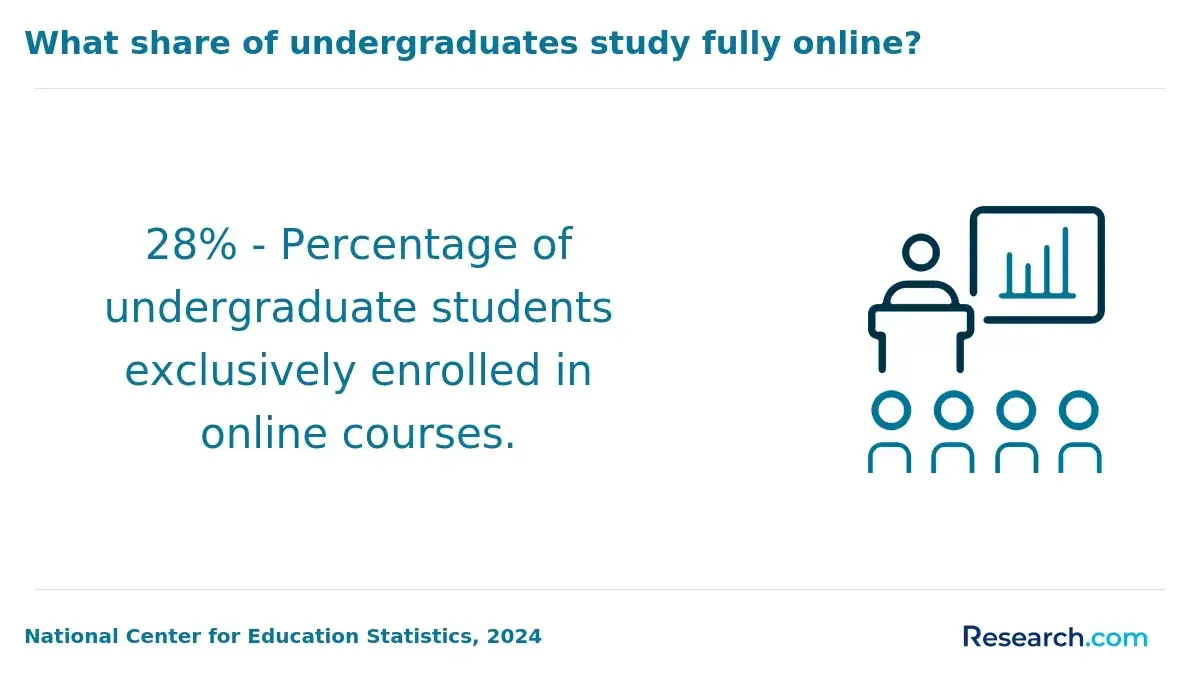
NCES reporting released in 2024 continues to show that distance education remains a major part of U.S. higher education, especially for adult and graduate learners.
For applicants, this means online doctoral formats are no longer a fringe option; however, mainstream acceptance also means students must compare quality carefully rather than assuming online equals easier or cheaper.
The table below compares online and on-campus Public Administration doctoral options from an admissions and fit perspective. Use it to decide whether flexibility or research intensity matters more for your goal:
| Factor | Online doctorate | On-campus doctorate |
| Admissions accessibility | Often more flexible, especially in professional programs | May be more selective if cohort size and faculty advising are limited |
| Work compatibility | Usually stronger for full-time professionals | May require relocation or daytime availability |
| Faculty research match | Important in PhD programs, less central in some applied DPA programs | Often central, especially for funded PhD tracks |
| Networking | Can be national and practice-oriented | Can be more intensive locally or academically |
| Cost structure | May reduce relocation and commuting costs | May offer assistantships in some research programs |
| Best for | Working professionals seeking advancement, consulting, or applied leadership roles | Students seeking academic research careers, funded study, or intensive faculty mentorship |
The main trade-off is funding and mentorship. Some on-campus PhD programs are harder to enter but may offer assistantships, while online professional doctorates may be easier to access but require students to self-fund more of the cost. Before choosing the "easiest" program, compare total tuition, fees, residency travel, dissertation or capstone support, and employer tuition assistance.
Are there online Public Administration doctorate programs that do not require a traditional dissertation?
Yes. Some online Public Administration doctorates offer an applied capstone, dissertation-in-practice, policy project, or portfolio-based final project instead of a traditional five-chapter research dissertation.
These options can be attractive for practitioners who want to solve a real administrative problem rather than pursue a purely theoretical research agenda.
The table below explains the main final-project models you may see in online Public Administration doctoral programs. This distinction matters because the final project affects timeline, faculty support needs, and career fit:
| Completion model | Typical focus | Best fit | Important limitation |
| Traditional dissertation | Original scholarly research with formal methodology and literature contribution | Applicants considering academic research or policy scholarship | Can take longer if research design or committee feedback stalls |
| Dissertation-in-practice | Applied inquiry into a real organizational or policy problem | Public-sector and nonprofit leaders solving workplace challenges | Still requires rigorous research and writing |
| Applied capstone | Policy analysis, program evaluation, strategic intervention, or administrative improvement plan | Practitioners seeking direct professional impact | May not be viewed the same as a dissertation for some faculty roles |
| Portfolio model | Integrated evidence of doctoral competencies across projects | Experienced professionals with substantial work products | Availability is program-specific and should be verified early |
A capstone pathway may feel more manageable, but it should not be mistaken for a shortcut. Strong programs still require research methods, data analysis, ethical review when applicable, literature synthesis, and formal defense or presentation. The advantage is alignment: your final project can often connect directly to a city, agency, nonprofit, or policy challenge you already understand.
How can students increase their chances of getting into a Public Administration doctorate program?
The strongest applicants do not simply search for the highest acceptance rate. They build an application that proves readiness, fit, and follow-through. This is especially important for online doctoral programs, where persistence, writing discipline, and time management matter as much as raw academic metrics.
Applicants whose leadership goals lean more toward systems, process improvement, logistics, or enterprise operations should also compare whether a public administration doctorate is the right credential or whether an MBA operations management online better matches their career path. Choosing the right degree type improves both admissions fit and return on investment.
Use the following sequence to improve your admission odds before submitting applications:
- Shortlist only regionally accredited institutions and verify whether the doctorate is a DPA, PhD, public policy doctorate, or related interdisciplinary program.
- Request the current admissions rubric, including GPA calculation method, GRE or GMAT waiver rules, conditional admission policy, and recent cohort size.
- Match your statement of purpose to the program's strengths, such as public finance, nonprofit leadership, urban governance, emergency management, health policy, or program evaluation.
- Prepare a focused writing sample that shows policy reasoning, evidence use, clear structure, and professional judgment.
- Choose recommenders who can discuss your analytical ability, leadership maturity, ethical judgment, and capacity to finish long projects.
- If your GPA is weak, submit a concise addendum and attach evidence of recent academic or professional growth.
- Ask whether transfer credits, prior doctoral coursework, certificates, or Prior Learning Assessment can reduce time or cost without weakening learning outcomes.
The table below highlights common application mistakes that can make even an "easy-entry" program risky. Review these before applying so you do not trade admissions convenience for poor fit:
| Common mistake | Why it hurts |
| Applying without verifying regional accreditation | May limit employer recognition, transfer options, and eligibility for some financial aid pathways |
| Choosing a program only because it has flexible admissions | Can lead to poor dissertation support, weak fit, or unnecessary debt |
| Ignoring total cost beyond tuition | Residency travel, technology fees, continuation fees, and dissertation extensions can change affordability |
| Submitting a generic personal statement | Fails to show why the program, faculty, and curriculum match the applicant's goals |
| Assuming no GRE means no rigor | Can lead applicants to underestimate research, writing, and time demands |
| Failing to ask about capstone or dissertation support | May create delays near the end of the program, when students most need advising structure |
A Public Administration doctorate is usually worth considering if you want senior public-sector leadership, nonprofit executive roles, policy consulting, applied research, teaching in practice-oriented programs, or credibility in governance and administrative reform.
It may not be the right investment if you need a credential quickly, want licensure in a regulated profession, dislike research writing, or can reach your goal with a master's degree plus certification.
Other Things You Should Know About Public Administration
Most online Public Administration doctorates take about three to five years, depending on transfer credit, enrollment pace, research progress, and whether the final project is a dissertation or applied capstone. Part-time students who pause during the dissertation stage may take longer.
Costs vary widely by institution, credit load, residency requirements, and dissertation continuation fees. Before enrolling, compare total program cost rather than per-credit tuition alone, and ask about employer tuition assistance, military benefits, payment plans, and federal financial aid eligibility.
Regional institutional accreditation is the main baseline to verify. Programmatic accreditation is less standardized at the doctoral level in Public Administration, but students should still check whether the school, department, and curriculum are respected by employers in their target sector.
The degree can support advancement in government leadership, nonprofit administration, public policy analysis, emergency management, public budgeting, consulting, higher education teaching, and applied research. Outcomes depend on prior experience, location, employer expectations, and how well the doctoral specialization matches the role.
References
- Best Online Ph.D. in Public Administration Programs (2026) – PublicAdministrationPolicy.org https://publicadministrationpolicy.org/degree/phd-in-public-administration/
- Application Requirements https://calbaptist.edu/academics/programs/online-doctor-of-public-administration/application-requirements
- Doctor of Public Administration (DPA) Online: Top Programs https://www.phds.me/online-programs/doctor-of-public-administration-dpa/
- 4 Careers You Can Pursue with a Doctoral Degree in Public Administration https://smceducation.com/blog/careers-phd-public-administration/
- Tips for Applying to Doctoral Programs | AASL Knowledge Quest https://knowledgequest.aasl.org/tips-for-applying-to-doctoral-programs/
- Doctoral Public Affairs Education https://www.naspaa.org/resources/why-public-service-degree/doctoral-public-affairs-education
- Earning an Online Ph.D. in Public Administration https://www.gograd.org/online-phd-programs/best-public-administration-degrees/
- Public Administration and Policy https://www.albany.edu/rockefeller/programs/phd-public-administration-and-policy
- What Is the Difference Between Accredited and Non-Accredited Colleges? https://anchoru.com/what-is-the-difference-between-accredited-and-non-accredited-colleges/
- Online Master of Public Administration - Graduate School of Public Policy https://www.schoolofpublicpolicy.sk.ca/programs/masters-programs/online-master-of-public-administration.php