2027 Does an Online Elementary Education Master's Degree Qualify You for Licensure?

Co-Founder and Chief Data Scientist
Imagine completing an online elementary education master's degree only to discover that the program falls short of your state's licensure requirements. Nearly 40% of graduates from distance education programs face delays or denials in licensure due to unmet practicum hours, lack of regional accreditation, or incompatible state board policies. This misalignment can jeopardize job prospects and professional credibility. Understanding the nuances of state-specific licensing criteria, required supervised clinical experience, and nationally recognized examinations is crucial. This article examines these factors in detail to help prospective students choose an online elementary education master's program that effectively qualifies them for licensure nationwide.
Key Benefits of Qualifying for Online Elementary Education Master's Degree Licensure
- Online elementary education master's degrees generally satisfy state licensure requirements by offering accredited programs with supervised clinical hours aligned with national credentialing standards.
- They provide flexible scheduling, ideal for working professionals, career changers, and re-entry students balancing employment or family commitments during licensure preparation.
- Candidates must verify state-specific policies and exam requisites, as interstate licensure portability and acceptance of online credentials vary significantly across jurisdictions.
What Is a Elementary Education Master's Degree, and What Forms Does It Take Online?
Prospective students and career changers evaluating an online elementary education master's degree must understand how degree types and delivery formats influence licensure eligibility. Recognizing these distinctions helps ensure that the chosen program aligns with state licensure requirements. Key factors to consider include the following:
- Degree Types: Elementary education master's degrees include options such as Master of Science (M.S.), Master of Arts (M.A.), or professional education degrees like the Master of Education (M.Ed.). The M.S. and M.A. degrees focus more on research and subject expertise, while professional degrees emphasize pedagogy and licensure preparation, which is often critical for accredited online elementary education programs.
- Online Delivery Formats: Programs are delivered synchronously (real-time), asynchronously (self-paced), or in hybrid formats combining both. This flexibility can impact how students meet practicum and supervision requirements.
- Cohort vs. Self-Paced Models: Many programs organize learners into cohorts to foster peer interaction and structured progression. Self-paced formats provide flexibility but may reduce direct faculty support essential for fulfilling licensure practicum components.
- Common Online Formats: The prevalent model combines asynchronous study with cohort progression to accommodate working professionals while maintaining community and accountability, a balance important in teacher preparation.
- Licensure Considerations: The choice of master's degree type and program format affects eligibility for state licensure boards, which often mandate accredited, professional education degrees with supervised clinical hours. Awareness of these factors is crucial to avoid programs that do not meet licensing standards.
For those seeking accelerated options, reviewing 1 year online masters programs can offer insight into well-structured online master's degrees.
Do State Licensing Boards Recognize Online Elementary Education Degrees for Licensure Purposes?
Prospective students pursuing an online elementary education master's degree must carefully evaluate how state licensing boards recognize these credentials, as requirements vary significantly across jurisdictions. Such understanding helps ensure that a chosen program aligns with state-specific licensure criteria.
- State-Level Governance: Licensure authority rests with individual state boards of education, resulting in notable differences in their acceptance of online credentials. While some states have formal policies on online degree recognition, others assess applications on a case-by-case basis, impacting eligibility for certification.
- Online Versus On-Campus Degree Recognition: Most states recognize online degrees if the program is regionally accredited and includes required supervised clinical or practicum hours. However, a few states insist on degrees from traditional on-campus programs or apply extra scrutiny to online credentials, influencing licensure outcomes.
- Examples of State Policies: States like California and Texas provide explicit guidelines that recognize certain accredited online programs, whereas states such as New York often evaluate online degrees individually, emphasizing accreditation and practicum quality in their review process.
- Key Licensure Components: Completion of supervised practicum hours, passing state-specific licensure examinations, and fulfilling continuing education requirements remain critical regardless of the degree's delivery mode.
- Contacting State Boards: Due to these variations, applicants should contact their specific state licensing board before enrolling to confirm that an online program meets all licensure requirements. Notably, a 2023 survey found that over 75% of state education agencies now formally accept online degrees for licensure purposes under defined conditions.
Those seeking affordable options may consider an online school that accepts FAFSA, which can help manage educational expenses while meeting state requirements for licensure with an online elementary education master's degree.
What Supervised Clinical or Practicum Hours Are Required for Elementary Education Licensure After an Online Degree?
Prospective students in online elementary education master's programs must verify the clinical or practicum hours mandated by state licensing boards, as nearly 90% require documented field experience before granting licensure. These supervised hours ensure candidates gain essential classroom skills regardless of how their degree was earned.
- State-Specific Hours: Requirements vary widely, often demanding between 12 and 20 weeks or more of supervised teaching experience. These hours usually must be completed under the guidance of qualified educators in classroom settings approved by the state.
- Placement Coordination: Online programs often assist by partnering with local schools near students' residences to arrange practicum or internship experiences. This local arrangement helps students fulfill hands-on requirements without relocating.
- Residency Considerations: Most states expect practicum hours to be performed within the student's home state. Exceptions occur if the online institution holds licensure in multiple states, but verifying with local boards is crucial to confirm allowable locations for completing hours.
- Approval and Documentation: Candidates frequently encounter difficulties submitting verification forms and securing site approvals. It is important to communicate proactively with both program advisors and state licensing authorities to avoid delays or rejections.
A professional who enrolled in an online elementary education master's program that accepted transfer credits recalled the complexity of satisfying supervised hour requirements. "I had to coordinate extensively with both my online school and a nearby elementary school to ensure my site supervisor met state criteria," he shared. The process involved multiple communications to confirm paperwork was submitted correctly and timelines aligned with state deadlines. He also noted feeling uncertain at times about whether hours logged out of state would be accepted, emphasizing the importance of early verification. Despite these challenges, completing supervised hours locally ultimately provided valuable real-world experience and confidence necessary for licensure.
Graduates of online elementary education master's programs generally qualify to take the same state elementary education licensure exams as those attending on-campus programs, assuming their coursework meets state accreditation standards. Alignment of the program curriculum with the key content areas of these exams improves candidate readiness, regardless of whether instruction was in person or online. However, since elementary education teacher certification testing requirements by state can vary, it is important to verify eligibility directly with the relevant credentialing or testing agencies. Notably, over 60% of teacher preparation programs have incorporated online learning elements, reflecting broader acceptance of distance education in this field.
- Praxis Core Academic Skills for Educators: This foundational exam assesses essential skills in reading, writing, and mathematics. It often serves as a prerequisite for entering elementary education programs or obtaining licensure credentials.
- Praxis Elementary Education Content Knowledge: Focused on subject expertise, this exam evaluates knowledge in reading, language arts, math, science, and social studies critical for teaching at the elementary level.
- State-Specific Pedagogy or Professional Knowledge Tests: Many states require additional testing on instructional methods, classroom management, and relevant educational laws to ensure candidates meet localized professional standards.
- Supervised Clinical Practice Evaluations: Although not an exam, states commonly mandate practicum or clinical teaching experiences that include performance assessments. These typically require in-person or hybrid participation to complete licensure requirements.
Prospective students should carefully assess how an online program aligns with these exam areas and state-specific policies to avoid licensure application delays or denials. Applicants might also consider interstate licensure portability and post-licensure continuing education obligations as part of their decision. For those interested in further academic options, exploring an engineer degree online may offer additional pathways in education-related fields.
Prospective students examining online elementary education master's programs often consider GPA requirements as a key factor in gauging eligibility and future licensure potential. Recent data from the National Center for Education Statistics indicates that nearly 60% of master's degree programs in education enforce minimum GPA standards to uphold academic quality.
- Typical GPA Requirements: Accredited programs generally demand a minimum undergraduate GPA around 3.0 on a 4.0 scale. Some institutions may offer flexibility for applicants with slightly lower GPAs if accompanied by relevant professional experience or successful completion of prerequisite courses.
- Online vs On-Campus: GPA criteria typically remain consistent across both online and on-campus formats within the same university. Nonetheless, fully online schools might implement more lenient admission policies to attract a wider applicant pool.
- Licensing Board Standards: State licensing authorities usually do not set explicit GPA benchmarks for teacher licensure. Instead, they depend on candidates graduating from accredited graduate programs that enforce their own academic thresholds.
- Licensure Exam Eligibility: While GPA does not directly determine eligibility to attempt licensure exams, a low GPA could reflect academic challenges that might affect exam performance.
- State Board Policies: Applicants should verify standards with their specific state boards, as some may consider GPA or accreditation status when reviewing licensure applications, particularly if the GPA is near the admission cutoff.
One professional who changed careers after completing an online elementary education master's noted, "I was initially concerned my undergraduate GPA would hold me back. However, the program's support and my practical experience helped me meet all requirements confidently." She emphasized how checking specific state regulations early made a big difference, preventing surprises during licensure application. "Knowing the program's accreditation and understanding board expectations gave me peace of mind while balancing work and studies." This perspective underscores the importance of researching both GPA policies and licensure rules thoroughly before enrolling.
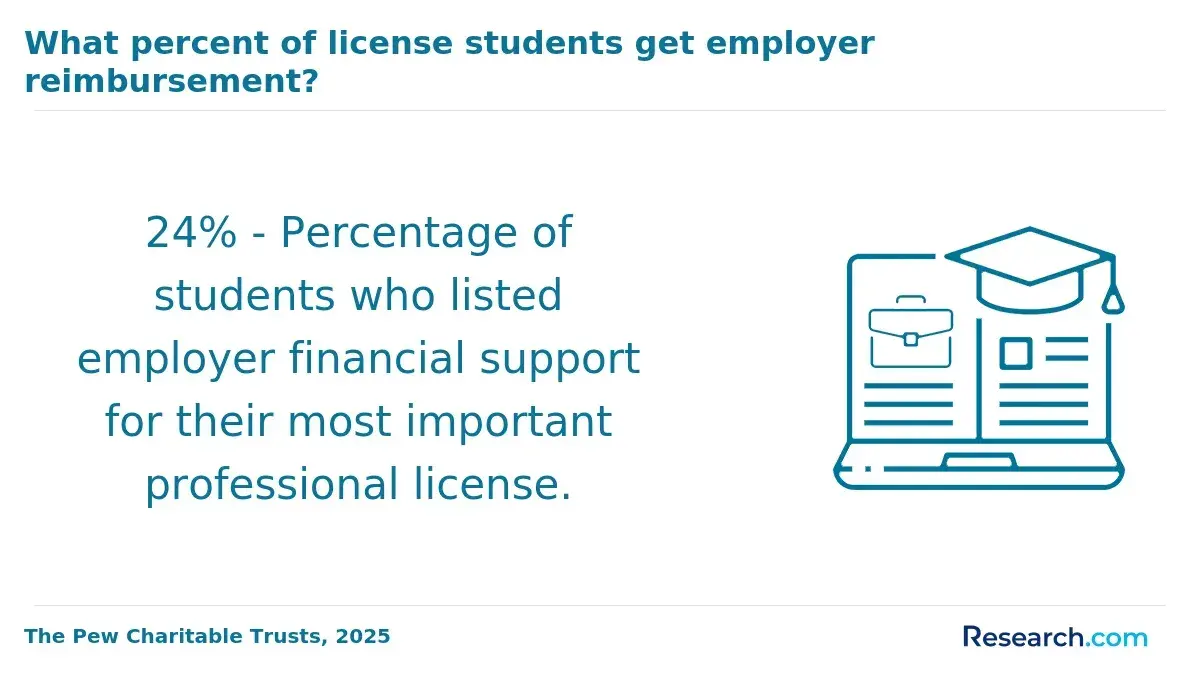
Enrollment in online elementary education master's degree programs has surged by more than 50% recently, highlighting the importance of understanding residency requirements for licensure. Many state boards and accrediting bodies still require some in-person training to ensure candidates gain supervised, practical experience. Below are key aspects related to fulfilling these residency obligations.
- In-Person Training Mandates: Despite the online format, hands-on components such as clinical practice or student teaching must often be completed face-to-face to meet licensure standards and guarantee quality instructional preparation.
- Flexible Completion Options: Online programs frequently provide intensive residencies, hybrid coursework, or coordinate approved local placements. These options accommodate students who cannot relocate while still meeting state requirements.
- Licensing Board Review: State certification boards assess residency completion and transfer credit acceptance during the licensure application process. Compliance with these requirements is critical before candidates receive official endorsement.
- Recent Regulatory Adjustments: Some states have introduced allowances for virtual practicums or extended deadlines for finishing in-person components, reflecting adaptations since the pandemic. However, policies vary widely, so staying informed about current rules is essential.
Licensure portability is a key consideration for online elementary education master's degree students who may pursue teaching careers in states other than where they completed their degrees. Around 45% of educators currently hold licenses outside their original state of certification, making it essential to understand how credentials transfer across state lines.
- Interstate Compacts: While the Interstate Teacher Assessment and Support Consortium (InTASC) Model Core Teaching Standards influence many states' policies, there is no universal compact specifically for elementary education licensure. Some regional agreements, however, facilitate credential reciprocity between participating states.
- Endorsement Agreements: Numerous states have endorsement or reciprocity arrangements allowing licensed teachers from other states to apply for licensure without repeating full requirements. These agreements often require verification of specific clinical hours or coursework completed as part of an online master's program.
- Challenges for Online Graduates: Licensing boards may scrutinize online degrees more closely, especially if supervised clinical experiences occurred virtually or out-of-state. Variations in state standards can cause delays or denials when assessing these credentials.
- Evaluation by State Boards: Each state's licensure board independently evaluates out-of-state credentials, focusing on accreditation, coursework quality, and testing compliance. Online students must be ready to provide detailed documentation to satisfy these requirements.
- Actionable Steps: Prospective students should thoroughly research their target state's licensure policies and reciprocity options, confirm the program's clinical experiences align with state mandates, and directly contact state licensing boards to clarify transferability for online degrees.
Students pursuing an online elementary education master's degree should be aware of the common reasons licensing boards deny licensure applications, especially since these issues often disproportionately affect online program graduates. Understanding these factors is vital to avoid costly setbacks and ensure the chosen program meets specific state standards for licensure.
- Accreditation Deficiencies: Many state boards reject applications from candidates who graduated from programs lacking recognized and reputable accreditation. Without proper accreditation, the curriculum might not meet stringent standards, causing denials that are common among online elementary education graduates who lose licensure eligibility due to these oversights.
- Incomplete Supervised Hours Documentation: Licensure requires verified practicum or clinical hours under supervision. Applicants may face denial when their online program does not adequately document these hours or fails to align them with state mandates, a frequent state licensure denial factor for online elementary education degree holders.
- Coursework Misalignment: Each state mandates specific content and pedagogy standards for elementary education licensure. Programs that do not closely align with these requirements-particularly in foundational teaching methods or state-adopted curricula-heighten the risk of licensure denial for graduates of online degrees.
- Background Check Issues: Criminal records or incomplete background screenings prevent approval. Some online program applicants underestimate the depth of these background checks or face challenges with disclosures, which can result in application rejection.
- Appeals and Corrective Steps: Graduates denied licensure usually have options to appeal by providing additional evidence or completing further coursework. Many states offer mechanisms to address deficiencies, but acting quickly and consulting licensing boards is essential to navigate this process successfully.
For prospective students comparing options, carefully assessing an online program's accreditation status, practicum supervision, coursework alignment with state requirements, and transparency about background check policies is critical. To explore affordable options that meet rigorous standards, consider reviewing the cheapest online masters with reputable accreditation and clinical components.
For prospective online elementary education master's degree students, knowing the required technology and simulation resources is essential for preparing to meet licensure criteria. Graduates with master's degrees in elementary education often earn median salaries over $60,000, providing a strong financial incentive to choose programs that align with licensure standards and practical requirements.
- Technology Platforms: Programs frequently rely on learning management systems like Canvas or Blackboard combined with synchronous video tools such as Zoom to deliver interactive coursework, supporting communication between students, mentors, and supervisors essential for simulation and virtual practicum requirements for elementary education licensure programs.
- Simulation Labs and Virtual Classrooms: Online programs integrate virtual simulation labs replicating classroom environments where students practice teaching methods. These are assessed by accrediting bodies to ensure technology standards online elementary education programs require for licensure-track students are adequately met.
- Telehealth and Observation Tools: Certain platforms allow licensed educators to remotely observe practicum teaching in real-time and give feedback, fulfilling supervised clinical hour mandates required by state boards.
- Accreditation and Licensing Evaluations: Accrediting agencies like CAEP evaluate online programs' technology infrastructure and clinical models to verify they meet competency criteria. State licensing boards scrutinize whether technology-enabled practicums comply with teaching hours crucial for licensure eligibility.
- Student Due Diligence: Prospective students should inquire about digital tools used for simulations, faculty support during practica, and how programs ensure state licensure compliance. Emerging pilot programs featuring AI teaching simulations may soon influence evolving technology expectations. For comparison across fields, also consider exploring options like a 2 year construction management degree.
For graduates of online elementary education master's programs, ongoing professional development is essential to maintain teaching licenses and comply with state regulations. Data indicates that nearly 90% of states require continuing education (CE) or professional development for license renewal, highlighting the need for intentional planning to satisfy these demands.
- State-Specific CE Requirements: Each state's renewal policy defines a set number of CE credits or hours within a designated timeframe, often every 3 to 5 years, concentrating on topics like instructional strategies, content mastery, and updated education laws.
- Online CE Availability: The rise of online learning has increased flexible access to approved CE courses, enabling educators to complete requirements remotely. However, not all states recognize every online course, so checking state board endorsements is crucial before enrollment.
- Professional Association Standards: Groups such as the National Education Association set CE benchmarks and may provide or endorse courses aligned with licensure rules, helping ensure the quality and relevance of CE offerings.
- Ethics and Specialized Training: Many states mandate ethics, diversity, or specialized subject training as part of CE. Graduates should seek programs that include or apply credits toward these areas to meet renewal criteria without complications.
- Proactive CE Planning: Early career planning allows educators to smoothly integrate CE obligations. Choosing accredited providers recognized by state boards supports timely and effective license renewal.
Evaluating an online elementary education master's degree for state licensure eligibility is vital for prospective students aiming for professional teaching credentials. Over 70% of education candidates prioritize programs that align with licensure requirements when making their choice.
- Accreditation Verification: Ensure the program holds accreditation from reputable agencies like CAEP or regional bodies. This confirms it meets the academic and professional standards necessary for licensure.
- State Board Consultation: Contact your state's education licensure board to learn about specific certification criteria and any unique stipulations associated with online degrees, which can differ widely by jurisdiction.
- Curriculum Alignment: Compare the program's coursework and required credit hours against your state's licensure standards, emphasizing core subjects, teaching methods, and required assessments.
- Clinical/Practicum Confirmation: Verify that supervised clinical experiences or practicum hours are provided and correspond with state mandates, as hands-on training is often a licensure prerequisite.
- Review of Public Documents: Use state board licensure guidelines and program disclosure statements made available by institutions to check transparency and program-state requirement compatibility.
- Professional Advice: Speak with program advisors and licensed educators to gain first-hand insights on licensure pathways and the practicality of completing the program within your state's regulatory framework.
Completing these due diligence steps before enrollment significantly reduces the risk of graduating without fulfilling licensure requirements, saving time and financial resources in the long run.
What Graduates Say About Qualifying for Online Elementary Education Master's Degree Licensure
- Jaime: "Choosing an online elementary education master's program was the perfect fit for my busy schedule and desire to advance my career. Before enrolling, I carefully confirmed that the program was accredited and met state requirements for licensure verification, which gave me peace of mind. Graduating with this degree not only opened doors for me to become a certified teacher but also deeply enhanced my instructional skills in a flexible learning environment."
- Enzo: "Pursuing an online elementary education master's degree felt like the most efficient way to launch my teaching career while balancing other commitments. I took the necessary step of checking with the state licensing board to ensure the program's curriculum aligned with the licensure prerequisites, which was crucial. Reflecting on the journey, I am grateful for how the program's online format equipped me with both theory and practical strategies to confidently step into my new role as a licensed educator."
- Rowan: "The impact of earning my online elementary education master's degree was profound, especially knowing it qualified me for teaching licensure. I meticulously verified the program's accreditation and its acceptability for licensure in my state before applying, which was an essential step in my professional planning. The flexibility of online learning allowed me to focus on building my pedagogical knowledge while simultaneously preparing for licensure exams, ultimately shaping my growth as a competent educator."
Other Things You Should Know About Elementary Education Degrees
State education departments usually accept online coursework only if the program is regionally accredited and includes state-required pedagogy credits, supervised fieldwork, and a licensure-approved recommendation. Some states also require specific content courses and passing scores on exams such as Praxis or a state teacher assessment.
Accreditation by recognized agencies, such as the Council for the Accreditation of Educator Preparation (CAEP), ensures the program meets quality standards essential for licensure. Many state boards require degrees from accredited programs for eligibility to apply for teacher certification. Without proper accreditation, graduates may face difficulties gaining licensure or transferring credits between states.
In 2027, key factors for licensure from an online program include program accreditation, state-specific requirements, and any necessary in-person components like student teaching. Verify that the program is accredited by a recognized body, as this can impact your eligibility to apply for a teaching license.
- Education - Elementary MEd https://www.umb.edu/academics/program-finder/education-elementary-med/
- Continuing Education Unit (CEU) Credit for Professional Development | HeadStart.gov https://headstart.gov/professional-development/article/continuing-education-unit-ceu-credit-professional-development
- Elementary Education: Elementary Education, M.Ed. (Licensure) https://catalog.utc.edu/preview_program.php
- Online Master of Education in Elementary Education -Faulkner University https://www.faulkner.edu/online/online-masters-degrees/master-of-education-in-elementary-education-class-a-certification/
- Edit This Favorite https://www.nasdtec.net/page/Teacher_Mobility_Interstate_Compact
- Teacher Licensure https://livehandbook.org/k-12-education/workforce-teachers/teacher-licensure/
- 10 Best Online Schools for Transferring Graduate School Credits https://www.geteducated.com/elearning-education-blog/4-critical-questions-to-ask-when-transferring-masters-programs/
- Elementary Education Master’s Degree Online | University of Phoenix https://www.phoenix.edu/online-education-degrees/elementary-teacher-education-masters-degree.html
- Elementary Education Residency Licensure Certificate Program - Davidson-Davie Community College https://www.davidsondavie.edu/academics/education/elementary-education-residency-licensure-certificate-program/
- Can Online Teachers Meet State Standards? https://www.elevatek12.com/blog/elevate-in-action/can-online-teachers-meet-state-standards/