2027 DNP Psychiatric-Mental Health NP Programs for Nurses in Washington: BSN and MSN Entry Routes and Clinical Training
Audited and Verified:
Our Editorial and Data Verification Process
Research.com uses government datasets, official education statistics and primary institutional information to support its career and degree guides. Our review process checks factual accuracy, occupational definitions, source dates and the requirements associated with the credentials discussed.
How This Article Was Fact-Checked
Our editorial team verifies salary estimates, employment projections, education requirements and program information against original data providers and official organizations. Salary figures are checked against the relevant occupational definitions and reporting periods. Information about licensure, accreditation and required in-person training is reviewed separately.
Fact-checked and verified on:

Co-Founder and Chief Data Scientist
A Washington nurse choosing a psychiatric-mental health nurse practitioner (PMHNP) DNP program needs more than a list of schools. The right route depends on whether you hold a BSN, already have graduate NP preparation, or need a new population focus - and whether a program can support your clinical training where you live.
This guide explains the entry routes, coursework, supervised practice, costs, and credentials to check so you can compare programs without mistaking a doctoral degree for automatic eligibility to practice as a PMHNP.
Key Things You Should Know
- BSN-entry and MSN-entry PMHNP DNP routes serve different applicants; an MSN in leadership or another NP specialty does not automatically satisfy PMHNP preparation.
- Plan for substantial supervised practice: ANCC's PMHNP certification pathway specifies at least 500 faculty-supervised clinical hours in the specialty, while DNP programs assess doctoral practice-hour requirements separately.
- Before committing, confirm the exact PMHNP track, who secures Washington clinical sites, the full attendance schedule, and eligibility for national certification and Washington APRN licensure.
What are DNP psychiatric-mental health nurse practitioner programs in Washington?
A PMHNP DNP is a practice-focused doctorate that combines advanced psychiatric nursing preparation with doctoral-level work in evidence-based practice, systems improvement, and leadership. A qualifying PMHNP track prepares an RN to assess and manage mental health conditions across the lifespan within applicable law and clinical standards. A general DNP in leadership does not, by itself, provide that specialty preparation.
Washington applicants can investigate PMHNP DNP offerings at institutions such as the University of Washington, Washington State University, and Seattle University. Treat these as starting points, not a fixed list of available entry routes: ask each school which PMHNP tracks are accepting students for your intended term and where it can support placements.
This is postlicensure education, not an initial nursing program. Someone who is not yet an RN must first complete an RN-licensure pathway; fast-track LPN programs with online coursework lead toward a different license and do not provide direct entry to PMHNP practice.
What are the BSN and MSN entry routes for Washington PMHNP DNP programs?
BSN-to-DNP generally fits a licensed RN with a BSN who needs both initial PMHNP preparation and the doctorate. MSN-to-DNP is less uniform: a school may offer a post-master's PMHNP specialty route, a doctorate for an already-certified PMHNP, or a DNP completion route with no new NP specialty. The award "DNP" does not tell you which one applies.
The distinction matters most for applicants with prior graduate work. An FNP, nurse educator, or leadership MSN may reduce some repeated coursework after faculty review, but it does not replace required psychiatric population-focus education and supervised clinical experiences. An already-certified PMHNP may need doctoral coursework and a practice project rather than another full NP specialty sequence.
An RN without a BSN should request a written eligibility review rather than assume direct entry. ADN-to-MSN degree progression may be one route to graduate study, but the eventual DNP program must determine whether those credentials meet its admission and specialty requirements.
What accreditation should Washington PMHNP DNP programs have?
Check three separate questions: whether the university has recognized institutional accreditation, whether its nursing degree has applicable nursing program accreditation, and whether the specific curriculum and clinical preparation meet the requirements for the credential and state where you intend to practice. CCNE and ACEN are nursing accreditors; neither an institution's accreditation nor a program's DNP label proves that a particular track prepares PMHNPs.
Ask the school for its nursing accreditation status and scope, its PMHNP graduates' eligibility for the American Nurses Credentialing Center (ANCC) certification examination, and its determination about Washington APRN licensure preparation.
If you may practice elsewhere, ask about that state separately. Leadership-focused online DNP program comparisons can help illustrate why an accredited doctorate without PMHNP clinical preparation is not an interchangeable option.
Expect a school to review your nursing degrees and transcripts, RN license, academic record, professional goals, recommendations, and readiness for graduate clinical work. Requirements for RN experience, interviews, statistics coursework, GPA, and an existing APRN credential vary by entry route and institution. Admission to a university also does not necessarily mean admission to its PMHNP track.
MSN applicants should submit course descriptions and records of supervised clinical hours, especially if they want prior work assessed. An RN's psychiatric experience is valuable context but is not automatically accepted in place of graduate PMHNP clinical hours.
Before applying, ask whether the program requires a Washington RN license at admission or before placement, whether it admits residents of your state, and what background, immunization, or site requirements could affect clinical eligibility.
Applicants comparing nursing schools with flexible admission criteria should not use general admission difficulty as a proxy for PMHNP-track access. Verify the specialty's own prerequisites, application deadline, and placement capacity.
Online coursework can reduce commuting, but PMHNP preparation still requires approved, supervised clinical care. Hybrid programs may also require scheduled video sessions, simulation, intensives, or campus visits. Campus-based study offers more in-person contact but does not necessarily remove travel to clinical sites.
The most consequential difference is often placement responsibility, not lecture delivery. Ask each program whether it finds preceptors, helps identify sites, or expects students to propose both; when agreements must be finalized; and whether placements are available near your home. A program's assistance policy may differ from the arrangements described in preceptor-provided FNP program comparisons, so verify the policy for its PMHNP track specifically.
Working nurses should obtain a term-by-term schedule showing synchronous classes, on-site days, and expected clinical availability before assuming they can maintain full-time employment. Clinical appointments may follow a preceptor's weekday schedule even when lectures are asynchronous.
PMHNP study typically builds on advanced assessment, pathophysiology, and pharmacology, then develops psychiatric assessment, diagnosis, psychotherapy, psychopharmacology, and care across age groups and settings. DNP coursework adds evidence appraisal, quality improvement, population health, and a supervised practice-focused project. The exact sequence and accepted prior courses depend on the program.
Clinical training should provide faculty-supervised opportunities to apply psychiatric assessment and treatment skills with the populations required by the specialty. ANCC's PMHNP certification pathway specifies at least 500 faculty-supervised clinical hours in the role and population focus; the school must also account for its DNP practice-hour expectations.
Ask how it distinguishes direct patient-care hours, other doctoral practice experiences, simulation, and previously completed graduate hours. Employment hours are not automatically transferable.
An FNP credential or one of the short online family nurse practitioner certificates prepares for a different population focus and cannot substitute for PMHNP clinical education. For a DNP project involving clinical records or patient-facing change, confirm site permission, privacy safeguards, and the institution's required review before collecting data.
BSN-entry students generally have more specialty and doctoral coursework to complete than already-prepared PMHNPs entering a post-master's DNP. An MSN holder changing specialties may fall between those cases. Published program length is only a starting estimate: part-time enrollment, course sequencing, placement delays, and project completion can change the finish date.
There is no reliable single Washington price without a specific school, entry route, residency classification, and enrollment plan. Use each program's current tuition schedule to calculate total billed credits and fees, then add books, screening and immunization costs, travel, campus visits, certification and licensing fees, and any reduction in work hours. Ask whether tuition changes during continuous enrollment and whether an unfinished project requires additional paid terms.
Compare planning the cost of PMHNP education against a school-specific estimate, not an advertised per-credit figure alone. If your goal is PMHNP certification rather than a doctorate, request a comparable total-cost estimate for an eligible MSN or post-graduate certificate.
Graduation does not itself authorize advanced practice. An eligible graduate must meet ANCC's requirements for the Psychiatric-Mental Health Nurse Practitioner - Across the Lifespan certification, pass the certification examination, and satisfy the Washington State Board of Nursing's requirements for APRN licensure and the applicable prescribing authority. Keep the required RN license active and confirm the board's current application, verification, and renewal rules.
An MSN-prepared RN who completes eligible short online psychiatric nursing certificates may also pursue the PMHNP credential without first earning a DNP, if the certificate and prior education satisfy certification and state requirements. That can be a more direct route when doctoral-level practice improvement is not the applicant's goal.
For telehealth or practice outside Washington, check the patient's jurisdiction independently. Washington licensure and national certification do not automatically authorize care in every state.
Licensed, certified PMHNPs may work in outpatient psychiatry, integrated primary care, community mental health, hospitals, or telehealth, subject to employer requirements and the laws governing each practice location. Their responsibilities can include assessment, treatment planning, medication management, psychotherapy within their preparation and role, and care coordination. New graduates still need setting-specific onboarding and support.
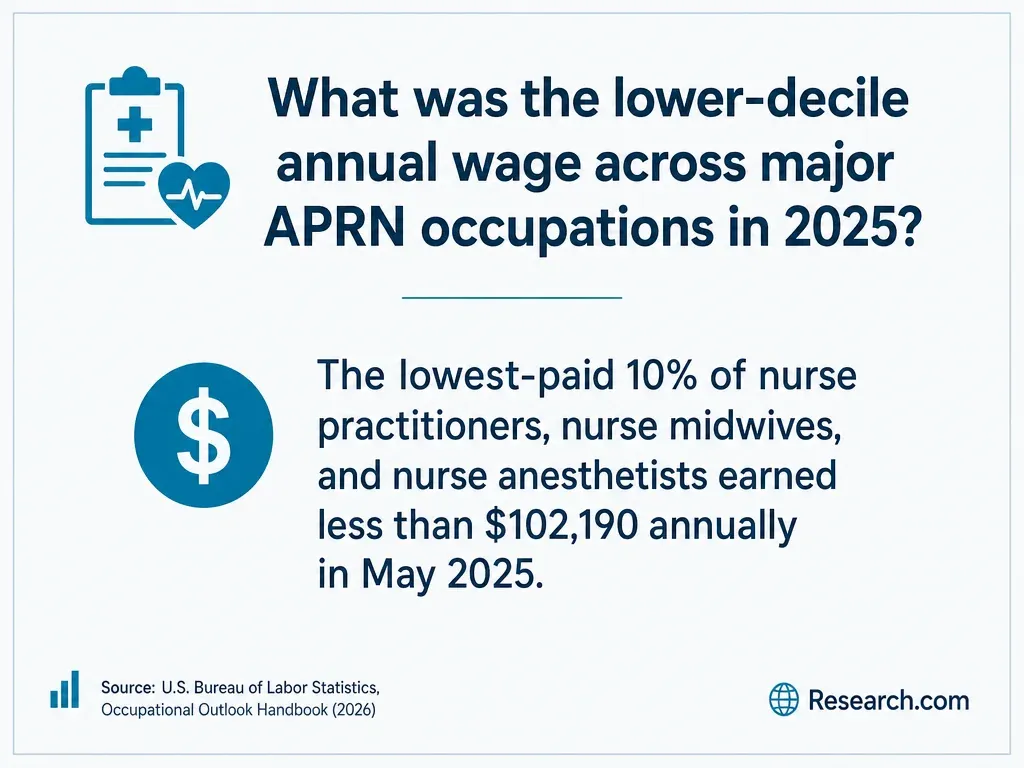
The U.S. Bureau of Labor Statistics reports wages for the broader nurse practitioner occupation, not a separate Washington PMHNP DNP salary. Those figures cannot establish what a new PMHNP, a doctoral graduate, or a particular employer will pay. Compare actual offers by salary or reimbursement model, benefits, patient volume, administrative time, supervision and consultation resources, and any loan-repayment terms.
For an RN whose goal is career advancement rather than psychiatric prescribing practice, RN-to-BSN education for working registered nurses may address a nearer-term qualification gap at substantially less educational commitment than a PMHNP DNP.
What is the job outlook for psychiatric-mental health nurse practitioners in Washington?
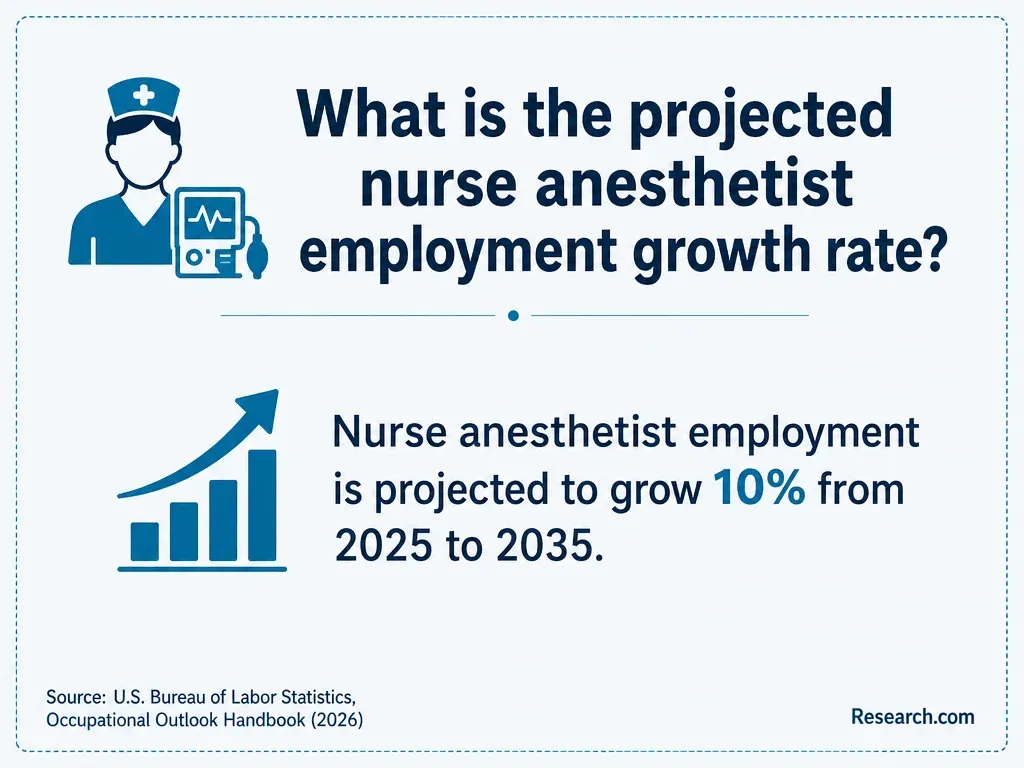
National BLS projections for nurse practitioners indicate strong occupation-wide growth, but BLS does not publish a separate projection that predicts openings for Washington PMHNP DNP graduates. Statewide demand also does not guarantee a suitable first job in a particular county, setting, or schedule.
To test the local market, review current Washington postings for required PMHNP certification, experience, patient population, and on-site versus telehealth work. Compare those requirements with the program's clinical exposure and graduate support. If employment prospects motivate the degree, weigh them against total borrowing: lower-tuition advanced practice nursing programs are worth considering only when their specific track meets your PMHNP and Washington practice goals.
Other Things You Should Know About Nursing
Possibly, if the school approves the site, preceptor, patient experiences, supervision, and separation of student learning from paid duties. Obtain approval before counting any hours.
No. It can strengthen an application and clinical judgment, but it does not replace required graduate PMHNP education, certification, or APRN licensure.
Generally, no. A DNP project is practice-focused; its format, site permissions, and review requirements are set by the program and participating organization.
Request a written degree plan, total-cost estimate, required attendance dates, clinical-placement policy, and confirmation that the specific track supports your intended certification and practice jurisdiction.
- Advanced Practice Programs | ca.gov https://www.rn.ca.gov/education/apprograms.shtml
- Cost of Attendance (Budget) | 2025-2026 Federal Student Aid Handbook https://fsapartners.ed.gov/knowledge-center/fsa-handbook/2025-2026/vol3/ch2-cost-attendance-budget
- Facilitating Well-Rounded Clinical Experience for Psychiatric Nurse Practitioner Students | nih.gov https://pmc.ncbi.nlm.nih.gov/articles/PMC9760220/
- Advanced Registered Nurse Practitioner (ARNP) License | Washington State Board of Nursing https://nursing.wa.gov/licensing/licensure-requirements/arnp-license
- MSN: Psychiatric Mental Health Nurse Practitioner | gwu.edu https://nursing.gwu.edu/programs/msn/psychiatric-mental-health-nurse-practitioner
- Clinical Placement Standards, Compliance, and Expectations | Current Students https://students.nursing.uw.edu/policies/policy-3-1-clinical-placement-standards-compliance-and-expectations/
- Psychiatric Mental Health Nurse Practitioner (PMHNP) | Washington State University https://nursing.wsu.edu/graduate-program-options/dnp/psychiatric-mental-health-nurse-practitioner/
- Psychiatric Mental Health Nurse Practitioner | UW School of Nursing https://nursing.uw.edu/academics/dnp/pmhnp/
- BSN to DNP - Psychiatric Mental Health Nurse Practitioner | Herzing University https://www.herzing.edu/nursing/dnp/bsn-to-dnp/pmhnp
- Nurse Practitioner, Psychiatric Mental Health, DNP | Seattle University https://www.seattleu.edu/academics/all-programs/nurse-practitioner-psychiatric-mental-health-dnp/