2027 DNP Adult-Gerontology Acute Care NP Programs for Nurses in Wyoming: BSN and MSN Entry Routes and Clinical Training
Audited and Verified:
Our Editorial and Data Verification Process
Research.com uses government datasets, official education statistics and primary institutional information to support its career and degree guides. Our review process checks factual accuracy, occupational definitions, source dates and the requirements associated with the credentials discussed.
How This Article Was Fact-Checked
Our editorial team verifies salary estimates, employment projections, education requirements and program information against original data providers and official organizations. Salary figures are checked against the relevant occupational definitions and reporting periods. Information about licensure, accreditation and required in-person training is reviewed separately.
Fact-checked and verified on:

Co-Founder and Chief Data Scientist
For a Wyoming nurse seeking an adult-gerontology acute care nurse practitioner (AGACNP) role, the hardest program decision may be whether the education will actually support clinical training and practice in Wyoming. A DNP can provide the doctoral degree, but the track must also prepare graduates for the AGACNP population focus. This guide compares BSN and MSN entry, explains what to verify about out-of-state and online programs, and shows how to assess placements, cost, certification eligibility, and career fit before enrolling.
Key Things You Should Know
- There are two principal DNP entry routes: BSN-to-DNP for RNs who need initial AGACNP preparation, and MSN-to-DNP for nurses whose prior specialty education must be evaluated individually.
- Wyoming residence does not establish eligibility for an online program or a local clinical placement; obtain written confirmation of both before paying a deposit.
- A DNP is not an NP credential. Check the program's AGACNP track, supervised clinical preparation, certification eligibility, and Wyoming APRN requirements separately.
What are DNP adult-gerontology acute care nurse practitioner programs in Wyoming?
An AGACNP DNP is a practice doctorate with a nurse practitioner track focused on adults, including older adults, with acute, critical, or complex chronic illness. Preparation commonly involves evaluation and management across settings such as hospitals, specialty services, and post-acute care. The AGACNP track - not the DNP letters alone - is what makes the program relevant to this advanced practice role.
For a Wyoming resident, a "program in Wyoming" may mean a campus-based option in the state or an out-of-state program that enrolls Wyoming students and approves Wyoming clinical sites. Do not infer that a university offering a DNP also offers an AGACNP track. Ask for the exact degree-and-track name, enrollment eligibility for Wyoming residents, and available clinical-placement arrangements for your intended entry term.
These are postlicensure options for nurses, not ways to obtain an initial RN license. Someone still entering nursing would need a separate prelicensure route; even fast-track practical nursing application planning addresses a different credential and starting point.
How do BSN and MSN nurses enter DNP AGACNP programs?
The right route depends less on the highest degree printed on a transcript than on whether the nurse has already completed formal AGACNP education. The comparison below shows what each applicant needs the receiving program to evaluate.
| Starting point | Potential route | Decisive question |
| BSN-prepared RN | BSN-to-DNP AGACNP | Does the track include initial AGACNP coursework and supervised clinical preparation? |
| MSN-prepared RN without NP preparation | AGACNP DNP track, if offered | Which graduate courses apply, and which NP requirements must still be completed? |
| MSN-prepared NP in another population focus | AGACNP DNP track or post-graduate AGACNP certificate followed by doctoral study | What formal gap analysis and new population-focused clinical experience are required? |
| Already-certified AGACNP with an MSN | Post-master's DNP | Is the goal doctoral practice preparation rather than a second initial NP qualification? |
Critical-care RN experience can strengthen an application, but it does not replace supervised NP education. Likewise, FNP certification does not authorize someone to assume AGACNP preparation is complete. Request a written review of transcripts, course descriptions, prior clinical-hour records, and certification status before relying on a shortened plan.
An ADN-prepared RN who has not earned a BSN or MSN may need an additional bridge first. Guidance on continuing from an ADN into MSN study can clarify that earlier step, but the eventual AGACNP program still controls its entry requirements.
Which accreditation and licensure requirements apply to Wyoming AGACNP students?
Four distinct checks matter: the institution's accreditation, nursing program accreditation, permission to enroll a Wyoming student, and whether the specific AGACNP education supports the intended certification and Wyoming APRN application. A school's general DNP accreditation statement is not, by itself, confirmation that its AGACNP track admits or places Wyoming residents.
Ask the school to identify its institutional accreditor and the nursing program accreditation applicable to the degree, such as CCNE or ACEN where relevant. Then obtain written answers about Wyoming enrollment and clinical authorization. For practice after graduation, check the Wyoming State Board of Nursing's APRN requirements and the current eligibility rules of the certification organization for the specific AGACNP examination the school targets. Graduation, national certification, RN licensure, and state APRN authority are separate steps.
This distinction also explains why comparing RN-to-BSN practice expectations cannot answer whether an AGACNP track supplies the supervised advanced-practice preparation needed for certification.
An initial AGACNP track typically combines advanced assessment, pathophysiology, pharmacology, diagnostic reasoning, and management of acutely ill adult and older-adult patients. Supervised experiences should build population-focused judgment, communication, documentation, and safe care coordination. Doctoral coursework commonly adds evidence appraisal, quality improvement, leadership, and a practice-focused DNP project.
Read the actual course and clinical sequence rather than relying on a broad "acute care" label. Check whether it develops the patient and setting exposure required by the program and intended certification pathway. Simulation may support learning, but it should not be assumed to replace required supervised patient-care experiences.
Population focus is a substantive difference, not a marketing variation. An online PMHNP certificate program guide concerns psychiatric-mental health NP preparation; it is not an alternative way to qualify as an AGACNP.
Online coursework can reduce repeated travel from Wyoming, but an online AGACNP DNP is not an online-only clinical education. Students may still need live classes, scheduled simulation, campus visits, and in-person supervised placements. A campus-based program may provide more regular face-to-face instruction, yet its location can make travel or relocation impractical.
For nurses balancing shifts or caregiving, compare the fixed commitments: required login times, clinical days, site operating hours, simulation dates, and project meetings. Ask whether the school finds and secures preceptors, approves student-proposed sites, or expects students to do most of that work. Also ask what happens if a Wyoming placement falls through.
Fast-track DNP study options may help frame a format comparison, but a short advertised timeline is meaningful only if the AGACNP track, clinical sequence, and Wyoming placement can all be completed within it.
Expect a program to review RN licensure, the required prior nursing degree, academic record, recommendations, and a statement of goals. Some programs also evaluate recent acute-care experience, interview performance, or graduate coursework. Requirements and minimums vary, and admission to a university does not necessarily mean admission to its AGACNP track.
MSN applicants should disclose whether their degree included NP preparation and, if so, its population focus. Obtain transcripts, syllabi, clinical-hour documentation, and current certification information for a formal review. Separately, ask about background checks, immunizations, and other conditions for entering a clinical site; meeting academic admission standards may not clear a student for placement.
Prelicensure admissions guides, including those covering accelerated BSN programs with accessible admissions, serve applicants who still need RN preparation. They should not be used to predict graduate AGACNP admission.
There is no reliable Wyoming-wide completion time or price for this specific track. A BSN entrant must complete initial graduate AGACNP preparation as well as doctoral requirements; an MSN entrant's remaining work depends on documented prior education and the school's gap analysis. Course sequencing, placement availability, and DNP project progress can extend either route beyond an advertised minimum.
Compare written, individualized cost estimates - not tuition rates alone. Include all required credits, university and clinical fees, books and technology, travel or lodging for campus visits, placement-related expenses, certification and licensure applications, and income lost to clinical scheduling. Ask how tuition changes if a clinical course or project must be repeated or continued into another term.
Nurse practitioner program tuition comparisons can identify possible schools to investigate, but only a program-specific AGACNP degree plan and fee schedule can support a useful total-cost comparison.
Potential settings include Wyoming hospitals, emergency or critical-care services, specialty practices, and other approved sites caring for acutely or complexly ill adults. A setting's name alone does not make it suitable: the school must approve the patient population, learning activities, preceptor qualifications, supervision, and evaluation. Availability also depends on site agreements and the capacity of local clinicians to precept.
Before enrolling, ask the program which Wyoming sites it has used for AGACNP students, who initiates affiliation agreements, whether placements outside your community may be necessary, and when a site must be secured. An RN job at a hospital does not automatically become an NP clinical placement, and paid RN shifts should not be counted as supervised NP hours without the program's explicit approval.
The same issue applies when an MSN-prepared nurse considers online FNP certificate routes after an MSN: a family-practice placement does not automatically meet AGACNP population and competency requirements.
With the required certification and Wyoming APRN authority, an AGACNP may pursue roles involving acutely or complexly ill adults in hospital services, specialty teams, or other appropriate settings. Duties and practice authority depend on state law, employer privileges, and demonstrated competencies. An experienced ICU RN may have useful clinical context but still needs NP onboarding for the new role.
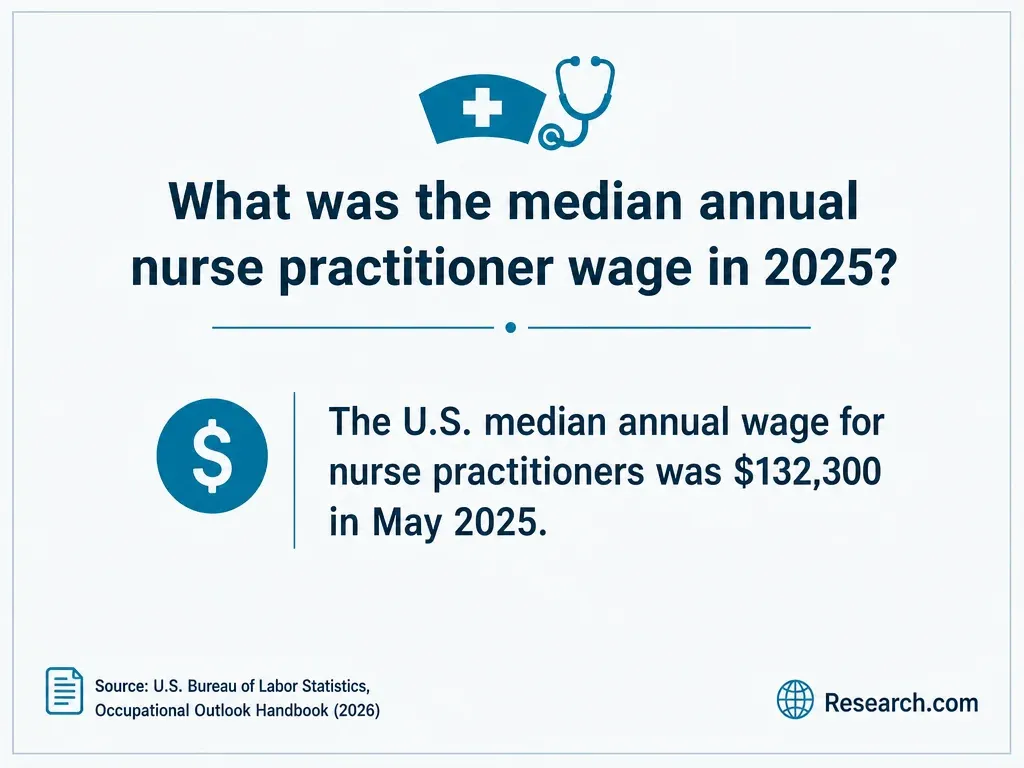
The U.S. Bureau of Labor Statistics reports nurse practitioner wages and employment projections for the occupation as a whole, not a separate Wyoming AGACNP or DNP-graduate salary. Use its occupational figures for broad context rather than as a projected personal return. For a realistic comparison, examine local AGACNP job postings and offers alongside schedule, call expectations, benefits, employer support, and total education cost.
If the intended job is longitudinal primary care rather than acute care, investigate FNP preparation instead. Even one-year FNP admission requirements describe a different population-focused route, not a shortcut into an AGACNP position.
How do students choose a reputable DNP AGACNP program?
Start with the outcome: initial AGACNP preparation, a change from another NP population focus, or doctoral study after existing AGACNP certification. Then request a degree plan and written answers specific to your credentials, Wyoming residence, and intended clinical location. A strong program choice is one whose academic, placement, and regulatory claims hold up under those checks - not simply the one with the fewest advertised months.
Before accepting an offer, verify the following with the responsible parties:
- Confirm the exact AGACNP track, applicable accreditation, Wyoming enrollment eligibility, and intended certification examination with the program.
- Request a documented review of prior graduate courses, supervised hours, and remaining requirements if entering with an MSN.
- Get the clinical-placement process, geographic limits, required visits, and contingency plan in writing.
- Compare individualized total costs and confirm the current Wyoming APRN application requirements with the state board.
Finally, ask for track-specific completion and certification-exam outcomes, including the reporting period and number of graduates; small cohorts can make percentages misleading. Broad lists of nursing schools with no TEAS score requirement address a different admissions screen and cannot establish the quality of a graduate AGACNP track.
Other Things You Should Know About Nursing
No. AGACNP preparation focuses on adults and older adults. Nurses seeking pediatric advanced practice should evaluate a program and certification pathway aligned with pediatric patients.
Not solely because the clinician holds Wyoming authority. The patient's location and the other state's applicable licensure and practice rules matter; check those rules before providing care.
No. Certification and APRN authority have separate maintenance requirements. Follow the certifier's renewal rules and the Wyoming board's current requirements.
Possibly, with the required employer and school permissions and appropriate privacy and oversight safeguards. Employment does not itself authorize access to patient data for a project.
- Wyoming State Board of Nursing - Wyo. Gov https://wsbn.wyo.gov/
- Apply to the Nurse Corps Scholarship Program | hrsa.gov https://bhw.hrsa.gov/programs/nurse-corps/scholarship/apply
- AGACNP Acute Care Nurse Practitioner DNP Program | OHSU Admission Requirements and Application Process https://www.ohsu.edu/school-of-nursing/acute-care-nurse-practitioner-adult-gerontology
- Adult-Gerontology Acute Care Nurse Practitioner, D.N.P. | University of New Hampshire https://www.unh.edu/program/doctor-nursing-practice/nursing-adult-gerontology-acute-care-nurse-practitioner
- DNP- AG Acute Care Nurse Practitioner | College of Nursing https://nursing.fsu.edu/academics/doctor-nursing-practice-dnp/dnp-ag-acute-care-nurse-practitioner
- Common Questions for the Adult-Gerontology Acute Care Nurse Practitioner Post-Graduate Certificate https://www.rosalindfranklin.edu/academics/college-of-nursing/degree-programs/adult-gerontology-acute-care-nurse-practitioner-pgc/common-questions/
- homepage-dnp-licensure | uwyo.edu https://www.uwyo.edu/stateauth/licensure-certification/nursing-licensure-program-pages/dnp-nursing-program/index.html
- Adult Gerontology Acute Care Nurse Practitioner | UW School of Nursing https://nursing.uw.edu/academics/dnp/agnp-ac/
- Clinical Collaborations | Nell Hodgson Woodruff School of Nursing https://www.nursing.emory.edu/degrees-programs/simulation-and-clinical-experience/clinical-collaborations
- DNP-Post Baccalaureate Entry | jefferson.edu https://www.jefferson.edu/academics/colleges-schools-institutes/nursing/degrees-programs/doctor-nursing-practice/post-bachelor-science-nursing-bsn.html