2027 DNP Adult-Gerontology Acute Care NP Programs for Nurses in Texas: BSN and MSN Entry Routes and Clinical Training
Audited and Verified:
Our Editorial and Data Verification Process
Research.com uses government datasets, official education statistics and primary institutional information to support its career and degree guides. Our review process checks factual accuracy, occupational definitions, source dates and the requirements associated with the credentials discussed.
How This Article Was Fact-Checked
Our editorial team verifies salary estimates, employment projections, education requirements and program information against original data providers and official organizations. Salary figures are checked against the relevant occupational definitions and reporting periods. Information about licensure, accreditation and required in-person training is reviewed separately.
Fact-checked and verified on:

Co-Founder and Chief Data Scientist
A Texas RN choosing a DNP adult-gerontology acute care nurse practitioner program needs to establish more than whether the doctorate fits a work schedule. The track must prepare the nurse for the intended patient population, provide approved clinical experiences, and support eligibility for national certification and Texas APRN licensure.
This guide compares BSN and MSN entry routes, explains what to verify about Texas programs and placements, and puts time, cost, and career claims in context so applicants can choose a route that matches their existing preparation.
Key Things You Should Know
- BSN-to-DNP AGACNP tracks provide initial nurse practitioner preparation; an MSN-to-DNP track qualifies for AGACNP certification only if it includes the required specialty education and clinical training.
- Use 750 supervised direct patient-care hours, identified in national NP education standards, and approximately 1,000 post-baccalaureate DNP practice hours as benchmarks to investigate - not as a promise about any school's approved hour plan.
- Before paying a deposit, confirm the exact track, clinical placement responsibilities, eligibility for the ANCC AGACNP-BC or AACN ACNPC-AG examination, and Texas Board of Nursing requirements.
What are DNP adult-gerontology acute care NP programs in Texas?
A DNP adult-gerontology acute care nurse practitioner program combines practice-focused doctoral study with preparation to assess, diagnose, and manage adolescents or adults with complex, acute, or critical illness within the AGACNP role and applicable law. It is a postlicensure RN pathway, not initial RN education. Graduates may seek NP roles in settings such as hospitals and specialty services, but the setting alone does not define their authorized scope.
The distinction matters most to nurses comparing degree titles. A DNP in leadership can be valuable without preparing its graduate as an NP; an AGACNP track must contain population-focused education and supervised care. Someone who is not yet an RN needs an initial licensure route first. Entry-level MSN options for career changers address that earlier step, not immediate entry into AGACNP practice.
What are the BSN and MSN entry routes for Texas AGACNP DNP programs?
BSN entry generally means an RN with a nursing bachelor's degree completes graduate NP coursework, AGACNP clinical education, and DNP requirements in one planned sequence.
MSN entry requires a closer look at what the prior master's degree actually covered. An already-certified AGACNP may need primarily doctoral coursework and a practice project; an MSN-prepared educator, leader, or differently certified NP may need substantial new specialty coursework and clinical hours. The receiving school determines any credit or competency recognition through its own review.
The comparison below identifies the question each applicant should settle before applying.
| Applicant's starting point | Likely educational need | Decision-critical check |
| BSN-prepared RN, not an NP | Full AGACNP preparation plus DNP study | Does the BSN-to-DNP track explicitly prepare graduates for AGACNP certification? |
| MSN-prepared, certified AGACNP | Potential post-master's DNP route | Which prior practice hours and courses will the school document toward graduation? |
| MSN-prepared RN or NP in another focus | AGACNP specialty preparation and a school-approved gap analysis | Does the route actually add the needed population-focused clinical education? |
An ADN-prepared RN should not assume direct BSN-to-DNP eligibility. Master's nursing study after an ADN may offer a bridge, but its eventual AGACNP and doctoral options must be checked separately.
Which Texas DNP AGACNP programs are accredited and certification eligible?
Texas schools to investigate include Baylor University's AGACNP DNP offering and UTHealth Houston's AGACNP doctoral pathway. Treat these as starting points, not a verified list of currently open, equivalent tracks: offerings, entry routes, campus requirements, and application cycles can change. Ask each school for the catalog and certification-eligibility statement governing your intended entry term.
Confirm institutional accreditation and the scope of nursing program accreditation - commonly through CCNE or ACEN - using the accreditor's directory and the school's current disclosure. Then confirm with the program that its specific AGACNP sequence meets the educational requirements of the intended certifier and supports an application to the Texas Board of Nursing.
Accreditation of a university, or even of its DNP degree, does not establish that every DNP concentration prepares NPs. This is especially important when comparing a guide to DNP programs without traditional clinicals, which should not be mistaken for initial AGACNP preparation.
Texas AGACNP DNP applicants should expect schools to review an active, unencumbered RN license, qualifying nursing degree and transcripts, academic performance, references, a statement of goals, and relevant nursing experience.
A program may specify acute or critical care experience, an interview, or particular state licenses for its clinical sites. Admission requirements and clinical-site onboarding requirements are separate; the latter may include screening, immunizations, and site-specific training.
Experienced ICU or emergency RNs bring useful context, but bedside experience does not replace graduate NP education. Likewise, a prior master's degree does not establish the advanced assessment, pathophysiology, pharmacology, and AGACNP competencies a particular route requires. Ask for a written evaluation of prior coursework and supervised hours before relying on a shortened plan.
Applicants still progressing toward RN licensure should complete that step first; practical nursing entry pathways with flexible coursework do not independently satisfy an RN requirement for these programs.
AGACNP coursework typically integrates advanced health assessment, pathophysiology, pharmacology, diagnostic reasoning, and management of acute and complex adult-gerontology conditions. Supervised experiences should develop population-specific judgment across appropriate patient presentations, while DNP coursework addresses evidence appraisal, systems improvement, and a practice-focused project. A project is not the same thing as supervised NP patient-care hours.
National NP education standards identify 750 direct patient-care clinical hours as a minimum benchmark for NP preparation. DNP programs also commonly plan around 1,000 post-baccalaureate practice hours; how an individual program counts previous graduate practice hours, doctoral activities, and direct NP care must be confirmed with the school.
The totals are not interchangeable. Request an hour-by-hour curriculum map showing supervised direct care, simulation, other DNP practice experiences, approved preceptors, and any credit granted for prior work.
Population focus matters as much as the total. For an NP changing specialties, accelerated mental health NP certificate study would address a different population-focused role; its clinical hours should not be assumed to satisfy an AGACNP gap analysis.
Online delivery usually describes where didactic coursework occurs, not where clinical learning happens. Both online and campus-based AGACNP DNP routes can require in-person clinical shifts, simulation, intensives, and faculty evaluations. A nearby campus may simplify scheduled skills activities; an online route may reduce routine travel but shift more responsibility to the student to secure feasible sites and preceptors.
Before choosing on convenience, ask who finds and approves placements, how far students may travel, whether the school accepts a proposed employer site, and what happens if a placement is delayed. Also request dates for required campus visits and live sessions. These questions matter more than the "online" label, just as they do in online and hybrid LPN-to-RN pathways - although the two routes lead to different licenses and roles.
A BSN-to-DNP route generally takes longer and includes more specialty coursework than a post-master's DNP for an already-certified AGACNP. An MSN-prepared nurse changing population focus may fall between those cases - or need a separate certificate before doctoral completion. Published "fastest" timelines are useful only after a school evaluates the applicant's transcript, clinical record, course sequence, and intended enrollment pace.
Texas schools may charge by credit, semester, or program, with different resident, nonresident, and online fees. Because a single advertised tuition figure cannot establish an applicant's total cost, request a written estimate for the exact entry route and pace. The estimate should include tuition, mandatory fees, clinical travel, campus visits, supplies, background checks, certification and licensure expenses, and potential lost earnings during placements.
Compare that total with lower-tuition advanced practice nursing programs only after confirming that each alternative offers AGACNP preparation and workable clinical sites.
Graduation does not itself grant certification or APRN authority. Graduates seeking Texas AGACNP practice must meet the current eligibility rules for a population-focused national examination, obtain the applicable certification, and satisfy the Texas Board of Nursing's APRN licensure requirements while maintaining the required RN license.
Relevant certifications include the American Nurses Credentialing Center's AGACNP-BC and AACN Certification Corporation's ACNPC-AG; applicants should check the current handbook for the examination their program supports.
Verify the Board's application, education, certification, and prescriptive-authority rules before planning a job start date. An NP credential is not interchangeable with an MSN concentration in education: lower-tuition BSN-to-MSN education options may fit a teaching goal but do not, by themselves, establish AGACNP eligibility. Employers also assess privileges, orientation, and setting-specific competence after licensure.
AGACNP graduates may pursue hospitalist, critical care, cardiology, oncology, surgical-service, or other specialty NP positions serving the appropriate population. The actual role depends on the employer's service model, the clinician's certification and Texas authority, and demonstrated competence; a DNP does not guarantee a particular specialty assignment or pay premium.
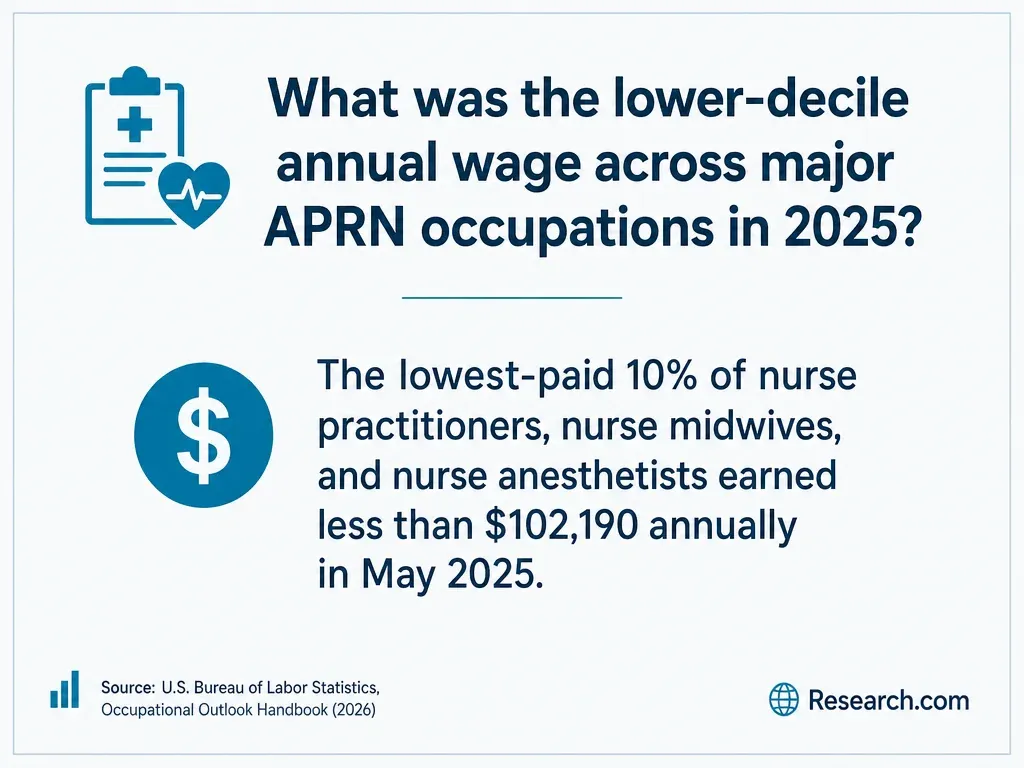
The U.S. Bureau of Labor Statistics reports wages for the broader nurse practitioner occupation, not separately for Texas AGACNPs or DNP graduates. A useful salary comparison therefore combines the latest BLS Texas NP wage estimate with local postings and written offers that specify shift coverage, call, experience requirements, benefits, and orientation.
An RN deciding whether NP practice is worth the additional education can also compare likely opportunities after RN-to-BSN project-based learning options; that degree-completion route supports different roles and does not confer NP authority.
What is the job outlook for adult-gerontology acute care nurse practitioners in Texas?
BLS projects substantial growth for nurse practitioners nationally, but its occupation-wide projection does not predict Texas AGACNP openings, demand in a particular hospital, or the salary of a new graduate. Texas opportunities will also depend on specialty service needs, clinical training capacity, employer hiring standards, and location. Use current Texas workforce projections and local employer vacancies to test demand where you intend to practice.
Applicants should separate market opportunity from program speed. A comparison of online DNP timelines for working nurses is relevant only if the shorter route supplies the AGACNP preparation the target job requires. Before enrolling, identify several realistic Texas employers, compare their NP certification and experience requirements, and ask programs where recent AGACNP graduates completed clinical placements and found work - without treating anecdotes as a placement guarantee.
Other Things You Should Know About Nursing
No. AGACNP-BC and ACNPC-AG are nurse practitioner credentials. An RN critical care certification recognizes a different role and does not confer NP eligibility.
AGACNP preparation is not a general pediatric NP pathway. Ask the program, certifier, Texas Board of Nursing, and prospective employer about the precise patient population and role before accepting pediatric responsibilities.
Yes, if the nurse separately completes each credential's qualifying preparation and maintains both certifications and applicable licensure. One certification does not automatically extend the other's population focus.
No. Prescribing requires compliance with applicable Texas prescriptive-authority rules and, where relevant, federal registration and employer policies. Confirm the requirements before assuming a job's prescribing duties are authorized.
- Advanced Practice Registered Nurse Roles - StatPearls - NCBI https://www.ncbi.nlm.nih.gov/books/NBK589698/
- APRN Practice FAQ - Texas Board of Nursing https://www.bon.texas.gov/faq_practice_aprn.asp.html
- Online DNP - Adult Gerontology Acute Care Nurse Practitioner (AGACNP) Program | Baylor University https://onlinenursing.baylor.edu/programs/dnp-agacnp
- Online Acute Care Nurse Practitioner (AG-ACNP) | Georgetown https://nursing.georgetown.edu/degree-programs/masters/ag-acnp-online/
- Adult-Gerontology Acute Care Nurse Practitioner | School of Nursing https://uthscsa.edu/nursing/programs/graduate/bsn-to-dnp/overview/adult-gerontology-acute-care-nurse-practitioner
- Adult/Gerontology Acute Care Nurse Practitioner (AGACNP) | Texas Woman's University https://twu.edu/nursing/master-of-science-in-nursing-msn/adultgerontology-acute-care-nurse-practitioner-agacnp/
- Adult/Gerontology Acute Care - Cizik School of Nursing | UTHealth Houston https://nursing.uth.edu/programs/dnp/bsn-to-dnp/adultgero-acute-care/
- MSN Adult-Gerontology Acute Care Nurse Practitioner | Texas Tech University Health Sciences Center https://www.ttuhsc.edu/programs/msn-adult-gerontology-acute-care-nurse-practitioner
- Acute Care Adult-Gerontology Nurse Practitioner | psu.edu https://www.nursing.psu.edu/acute-care-adult-gerontology-nurse-practitioner/
- Adult-Gerontology Acute Care Nurse Practitioner | Texas Christian University https://www.tcu.edu/academics/programs/adult-gerontology-acute-care-nurse-practitioner.php