2027 DNP Adult-Gerontology Acute Care NP Programs for Nurses in Delaware: BSN and MSN Entry Routes and Clinical Training
Audited and Verified:
Our Editorial and Data Verification Process
Research.com uses government datasets, official education statistics and primary institutional information to support its career and degree guides. Our review process checks factual accuracy, occupational definitions, source dates and the requirements associated with the credentials discussed.
How This Article Was Fact-Checked
Our editorial team verifies salary estimates, employment projections, education requirements and program information against original data providers and official organizations. Salary figures are checked against the relevant occupational definitions and reporting periods. Information about licensure, accreditation and required in-person training is reviewed separately.
Fact-checked and verified on:

Co-Founder and Chief Data Scientist
A Delaware RN seeking an adult-gerontology acute care nurse practitioner role needs more than a DNP program with a convenient schedule. The program must provide the right population-focused education, approved clinical experiences, and a route to certification and Delaware APRN licensure.
This guide compares BSN and MSN entry points, explains what to verify when a school advertises a DNP, and shows how placement arrangements, cost, and prior graduate preparation should shape the decision.
Key Things You Should Know
- Two entry routes require different scrutiny: A BSN-prepared RN needs an AGACNP track; an MSN-prepared RN needs a documented review of prior coursework and clinical hours before assuming a post-master's DNP will add that specialty.
- A DNP title is not proof of AGACNP eligibility: Confirm the exact track, supervised acute care experiences, certification eligibility, and Delaware APRN requirements before enrolling.
- Clinical access is a deciding factor: Online coursework does not eliminate approved patient-care placements, preceptor requirements, or possible campus visits.
What are DNP adult-gerontology acute care NP programs in Delaware?
A DNP adult-gerontology acute care nurse practitioner program prepares licensed RNs for advanced assessment and management of acutely and critically ill patients across the adult-gerontology population. The AGACNP population focus is distinct from adult-gerontology primary care, family practice, and non-APRN DNP leadership study. Its clinical preparation must match the acute care role - not merely take place in a hospital.
For a BSN-prepared RN, the relevant route is a BSN-to-DNP program with an identifiable AGACNP track. For an MSN-prepared nurse, the answer depends on what the MSN already covered. An AGACNP who wants doctoral practice preparation may need a post-master's DNP, while an MSN-prepared educator, leader, or different type of NP generally needs additional AGACNP-specific education and supervised care. The school must determine that gap; an existing graduate degree does not erase it.
An RN whose highest nursing credential is an associate degree should first establish which graduate entry routes accept that background. Associate-degree RN to MSN options may be a step toward graduate study, but the eventual program must still provide AGACNP preparation if acute care practice is the goal.
Which Delaware schools offer BSN-to-DNP and MSN-to-DNP AGACNP pathways?
Do not treat a Delaware school's general DNP listing as a confirmed BSN-to-DNP or MSN-to-DNP AGACNP opening. Track names, entry routes, and admitting terms can change. The University of Delaware and Wilmington University are Delaware institutions a prospective doctoral nursing applicant may investigate, but their DNP offerings should not be counted as AGACNP pathways without a current, explicit confirmation from the school of the specialty, entry route, and eligibility for the applicant's intended term.
The distinction is especially important for an MSN-prepared nurse: a post-master's DNP may build practice-improvement or leadership skills without awarding a new NP population focus. Post-MSN DNP pathways in systems leadership serve a different purpose from AGACNP clinical preparation.
If no Delaware-based school confirms the exact route needed, expand the search to out-of-state programs that accept Delaware residents and can approve Delaware clinical sites. Ask each school, in writing, whether its named track admits BSN- or MSN-prepared applicants, whether it prepares graduates for AGACNP certification, and whether it can support the required placements in Delaware. This is more reliable than counting schools that advertise only a general DNP or an adult-gerontology primary care track.
What are the admission requirements for Delaware DNP AGACNP programs?
Admission is a school- and track-specific decision. Applicants should expect review of an active RN license, nursing degree and transcripts, academic performance, professional references, and relevant clinical experience; schools may also require a statement, interview, or other materials. Acute care RN experience can strengthen preparation, but it does not substitute automatically for graduate AGACNP clinical hours.
For an MSN applicant, request a written gap analysis using transcripts, course descriptions, and documented supervised clinical hours. It should identify any missing advanced assessment, pathophysiology, pharmacology, population-focused coursework, or direct-care experiences. A nurse already certified as an AGACNP should ask a different question: which prior graduate credits and practice hours, if any, apply to the DNP?
Before applying, confirm the required license jurisdiction, experience expectations, application deadline, and whether admission to the university also means admission to the AGACNP track. For a broader look at assembling a doctoral application, see DNP admissions and applicant preparation; a less selective general DNP is not a substitute for the specialty required here.
Online, hybrid, and campus-based formats mainly describe how academic instruction is delivered. None makes AGACNP clinical education virtual. An online program may require scheduled live classes, simulation sessions, skills assessments, intensives, or travel, while a campus-based program may allow clinical placements away from campus.
Compare programs against your actual work and caregiving calendar, including 12-month FNP program options that may offer a shorter completion timeline. Ask for the number and timing of required visits; whether classes are asynchronous; when clinical shifts occur; and who secures, contracts with, and approves Delaware sites and preceptors. Also ask what happens if a proposed site declines or a preceptor becomes unavailable. A lower-travel format may still be impractical if rotations require weekday availability that an employer cannot accommodate.
AGACNP education combines advanced pathophysiology, pharmacology, assessment, diagnostic reasoning, and management of complex acute illness with supervised population-focused care. Students must learn to evaluate changing conditions, communicate with interprofessional teams, document decisions, and work within their developing competence. Simulation can support those skills, but it should not be assumed to replace required supervised patient-care hours.
Clinical plans need closer inspection than a total-hours claim. When comparing online FNP programs with preceptor support, ask the program which settings and patient encounters meet its AGACNP objectives, who qualifies as a preceptor, how faculty evaluate performance, and how hours are documented for graduation and certification eligibility. An applicant's ICU or emergency nursing job is valuable experience, but ordinary RN employment hours are not automatically graduate NP clinical hours.
Doctoral study also commonly includes a practice-focused improvement project. Confirm its approval process, site access, data and privacy rules, faculty oversight, and timeline. A proposed project is not evidence of improved patient outcomes, and access to employer records requires appropriate permission.
There is no defensible single Delaware AGACNP DNP price or completion time without a confirmed track, entry point, credit evaluation, and current tuition schedule. A BSN-to-DNP student generally has more graduate coursework and specialty preparation ahead than an already-qualified AGACNP entering a post-master's DNP. An MSN-prepared nurse changing population focus may need additional coursework and supervised care before, or alongside, doctoral requirements.
Request an individualized degree plan and a term-by-term cost estimate. Compare tuition by credit and residency status with mandatory fees, clinical compliance costs, books, technology, campus travel, certification and licensing expenses, and potential reductions in paid work. Ask whether required courses run every term and what happens financially if clinical placement delays graduation.
If the immediate goal is AGACNP certification rather than a doctorate, a qualifying MSN or post-graduate certificate may cost less and take less time, depending on prior preparation. Lower-cost master's nursing pathways after a BSN are useful comparisons only when their specific specialty track leads toward the intended acute care role.
Accreditation is a necessary check, not a shortcut for evaluating specialty fit. Verify the institution's accreditation and the nursing program's current accreditation status and scope with the relevant accreditor, such as CCNE or ACEN. Then separately confirm that the particular AGACNP track provides the education required for the intended certification exam and Delaware APRN application.
These checks answer different questions. Institutional accreditation concerns the school; nursing program accreditation concerns covered programs; certification eligibility concerns the graduate's qualifying specialty education; and Delaware's licensing authority makes the individual APRN decision. When evaluating shorter online post-master's FNP certificates, confirm that the program's specialty, accreditation, and curriculum match the intended certification pathway. A school's general accreditation, or accreditation of a different NP track, does not by itself establish that its DNP prepares AGACNPs. Request written confirmation for the entry term under consideration.
Practicing as an AGACNP in Delaware requires more than graduation. A nurse must maintain the required RN licensure, complete qualifying AGACNP education, obtain the applicable national certification, and meet Delaware's requirements for APRN licensure. The Delaware Board of Nursing determines state authorization; the certifying organization determines exam eligibility and certification.
The two national AGACNP certification routes commonly considered are the American Nurses Credentialing Center's adult-gerontology acute care NP certification and AACN Certification Corporation's ACNPC-AG credential. Review the selected organization's current eligibility rules against the program's written certification-eligibility statement. Also confirm Delaware application, prescribing, and practice requirements directly with the board before planning independent responsibilities.
Certification in another NP population focus does not authorize AGACNP practice by itself. For example, online FNP certificate routes after an MSN prepare for a different population focus and should not be mistaken for an acute care credential.
Delaware AGACNP graduates may pursue roles with hospital-based teams, specialty services, critical care, or other acute care employers when their license, certification, experience, and employer privileges match the work. Responsibilities and onboarding vary substantially. An experienced ICU RN newly licensed as an NP still needs role-specific orientation and demonstrated advanced-practice competence.
Use salary figures carefully. U.S. Bureau of Labor Statistics nurse practitioner wage data describe the broader occupation, not Delaware AGACNPs or DNP graduates specifically; an occupation-wide median cannot predict an individual offer. When comparing shorter online PMHNP certificate programs, request actual compensation ranges for local openings and examine shift expectations, call, benefits, orientation, scope, and whether an employer prefers or requires a doctorate. A DNP should be evaluated against those real opportunities, not an assumed salary premium.
How strong is demand for adult-gerontology acute care NPs in Delaware?
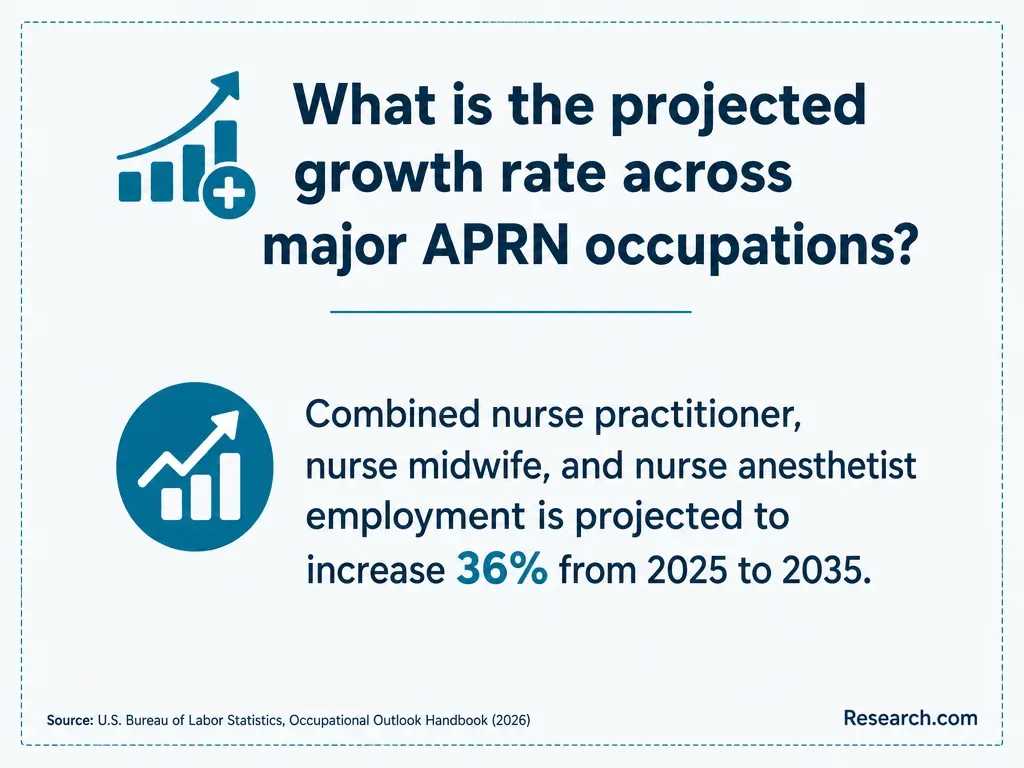
Acute care services create a plausible need for appropriately prepared NPs, but broad nurse practitioner growth projections cannot establish the number of Delaware AGACNP vacancies. The state is a small labor market, and a job labeled "nurse practitioner" may require a different population certification, previous NP experience, or a particular service-line background.
Test demand before committing to a program, including by comparing shorter online DNP programs with your intended specialty and career goals. Review recent Delaware-area postings for the required certification and experience, speak with prospective clinical sites and employers about hiring and preceptorship capacity, and check whether nearby Pennsylvania or Maryland positions are realistic under those states' licensing rules.
If the available roles are mainly primary care or another specialty, changing to that focus should be a deliberate career decision—not an assumption that its preparation is interchangeable with AGACNP education.
Other Things You Should Know About Nursing
Potentially, yes, if you separately meet each certifying organization's education, examination, and maintenance requirements. Your state licenses and employer privileges must also cover the work you perform.
No. An RN compact privilege does not replace the APRN authorization required to practice in an advanced practice role.
Contact the program's clinical placement team promptly. Do not begin hours with a replacement until the school approves the site, preceptor, and required arrangements.
Not necessarily. DNP projects are generally practice-focused, while a PhD dissertation is research-focused. The school determines the project format and required oversight.
- Advanced Practice Registered Nurse (APRN) License | State of Delaware https://dpr.delaware.gov/boards/nursing/apnlicense/
- Course Transfer Policy and Procedure | Frontier Nursing University https://frontier.edu/admissions/apply/course-transfer-policy-and-procedure/
- Adult-Gerontology Acute Care Nurse Practitioner Postgraduate Certificate | Purdue University Global Academic Catalog https://catalog.purdueglobal.edu/graduate/nursing/adult-geronotology-acute-care-nurse-practitioner-certificate/
- Adult Gerontology Acute Care Nurse Practitioner... - UD Catalog https://catalog.udel.edu/preview_program.php
- Tuition & Fees | Delaware State https://www.desu.edu/admissions/financial-aid/tuition-fees
- BSN to DNP vs. MSN to DNP: Which Pathway Works for You? | Herzing University https://www.herzing.edu/blog/bsn-dnp-vs-msn-dnp-which-pathway-works-you
- Cost of Attendance | University of Delaware https://www.udel.edu/students/student-financial-services/coa/
- Adult-Gerontology Acute Care Nurse Practitioner | Elms College https://www.elms.edu/school-of-nursing/doctor-nursing-practice/adult-gerontology-acute-care-nurse-practitioner-agacnp/
- AGACNP Career Profile - nursing | Purdue Global https://www.purdueglobal.edu/blog/nursing/agacnp-career-guide/
- 24 Del. Admin. Code § 1900-8.0 - Rules and Regulations... - LII | LII / Legal Information Institute https://www.law.cornell.edu/regulations/delaware/24-Del-Admin-Code-SS-1900-8.0