2027 Data Science Master's ROI When You Move from Analyst to Scientist

Co-Founder and Chief Data Scientist
Key Things You Should Know
- A master's is most compelling when your target roles require statistical modeling or machine learning that your current analyst work does not demonstrate.
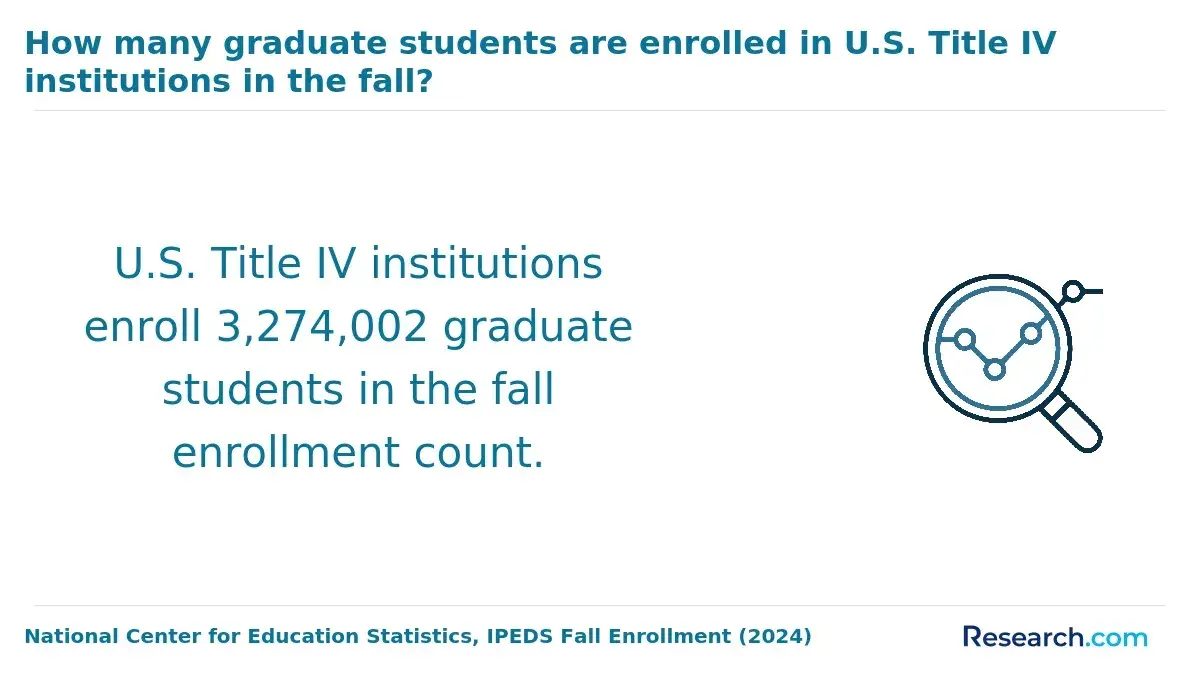
- The U.S. Bureau of Labor Statistics projects 35% growth in data scientist employment from 2025 to 2035, but strong occupational demand does not establish demand for any particular degree.
- Calculate ROI against the career path you could take without enrolling; include fees, financing, foregone earnings, and the chance that your role or pay will not change.
Is a Data Science Master's Worth It for Moving from Analyst to Scientist?
It can be worth it if it closes a demonstrable gap between your analyst experience and the scientist jobs you want, at a cost you can recover through a plausible career change. It is less likely to pay off if you already build and evaluate models at work, the program duplicates your skills, or you must leave a well-paid job to attend.
Compare two realistic paths over the same time horizon: continuing to work while building relevant projects, and completing the degree. For each, estimate your likely role and after-tax earnings - not just the salary attached to an attractive job posting. The degree's incremental benefit is the difference between those paths. Subtract tuition, mandatory fees, other necessary expenses, financing costs, and any earnings lost while studying. If the incremental annual earnings after graduation do not outweigh those costs, there is no financial payback under those assumptions.
Test the estimate against a less favorable outcome: you finish but remain an analyst, or move into a scientist role later than expected. A program's reported graduate salary, if available, needs context: ask how many graduates responded, whether they were already experienced professionals, whether the figure measures salary level or salary increase, and when outcomes were measured. Neither a salary comparison nor a new job title proves the degree caused the change.
What Is the Career Path from Data Analyst to Data Scientist?
Analysts often bring valuable experience with SQL, data quality, metrics, reporting, and explaining results to stakeholders. The transition usually requires evidence that they can also frame a predictive or inferential question, choose and validate an appropriate method, and explain its limitations. Job titles vary by employer, so compare duties rather than assuming every "data scientist" posting requires the same skills.
The table distinguishes adjacent roles by the evidence a hiring manager would need to see; it is not a fixed promotion ladder.
| Target role | Likely overlap with analyst work | New evidence to demonstrate |
| Senior or product analyst | Metrics, experimentation, stakeholder decisions | Independent study design and defensible causal reasoning |
| Decision or applied data scientist | Business questions, SQL, communication | Reproducible modeling, evaluation, and uncertainty analysis |
| Machine learning-focused scientist | Data preparation and domain knowledge | Stronger programming, model validation, and collaboration on production systems |
Seek an internal modeling project before committing to graduate school: it can reveal whether you enjoy the work and whether your employer will recognize the new skills. Build a portfolio around the decision a model supports, the baseline it improves on, and where it fails. If AI-focused roles are the goal, access to practitioners may also matter; compare AI master's programs with strong graduate networks alongside curriculum rather than treating networking as a substitute for technical evidence.
How Much Can Data Scientists Earn After a Master's Degree?
The Bureau of Labor Statistics reports a $120,230 median annual wage for U.S. data scientists in May 2025. That is an occupation-wide figure, not a starting salary for master's graduates or the pay increase an analyst can expect. Experience, location, employer, responsibilities, and the distinction between base pay and total compensation all affect an individual offer.
For an ROI estimate, use your current compensation and pay ranges for specific jobs you could credibly pursue after graduation. Compare those jobs with roles you could reach through experience alone. A move into a better-paid position may reflect prior analyst experience, an internal promotion, new skills, the degree, or a combination; do not attribute the entire difference to tuition spending.
What Education and Skills Do Data Scientists Need?
A graduate degree is one way to develop the skills, not a universal condition for the job. The Bureau of Labor Statistics identifies a bachelor's degree as the typical entry-level education for data scientists and notes that some employers prefer or require advanced degrees. For an analyst, the useful question is whether target postings demand capabilities you cannot yet demonstrate.
Prioritize statistical inference and experimental design; programming beyond one-off scripts; machine learning with sound validation; and communication about uncertainty, bias, and business consequences. Your existing domain expertise can make your work more useful: understanding how a metric is generated may prevent a technically polished but misleading model.
If mathematics or programming is the gap, check whether prerequisites are required for admission or merely recommended preparation. Analysts considering an AI-focused degree can examine options for bridging skill gaps before graduate AI study; confirm directly whether a bridge course satisfies a specific program's formal prerequisite.
What Do Data Science Master's Programs Teach?
Relevant programs typically combine statistics, computing, data management, and applied projects, but their depth differs. For analyst-to-scientist ROI, the deciding issue is whether coursework leads to evidence you could not readily produce in your present job: for example, a carefully evaluated model, a well-designed experiment, or a reproducible end-to-end project.
Read course descriptions and project requirements, not just course titles. A passing mention of machine learning is different from a dedicated course with substantial model evaluation. If you want to work on AI systems that depend on reliable pipelines, compare artificial intelligence master's degrees with data systems training with data science programs; the better fit depends on whether your target work emphasizes infrastructure, modeling, or both.
A capstone is most valuable when you can show the problem definition, data limitations, baseline, validation choices, and implications for a real decision. Ask whether working students can use an approved employer problem and what support they receive in finding suitable data.
How Do Online and Campus Data Science Master's Programs Compare?
Format affects ROI mainly through employment continuity, schedule, and access to projects - not through an automatic difference in degree quality. An online option may let an analyst keep earning while studying; a campus option may provide easier access to in-person research or recruiting. Either can be a poor fit if required meetings conflict with work or the program lacks the technical depth you need.
Verify whether classes are live or asynchronous, when team projects meet, whether exams or campus visits are required, and whether part-time students can access career services. A shorter calendar can reduce time to completion but may increase weekly workload. Analysts whose goal is specifically AI and whose schedule is the constraint can also compare AI master's options for a shorter study schedule, while checking actual pacing and prerequisites rather than relying on an advertised minimum.
What Are the Admission Requirements for a Data Science Master's?
Requirements vary by program. Schools may expect a bachelor's degree and preparation in programming, calculus, linear algebra, or statistics; some consider professional experience or offer preparatory coursework. Do not assume that an analyst title fulfills a prerequisite - or that a missing course automatically rules you out.
Before applying, compare your transcript and work samples with the published requirements. Ask admissions staff which courses are mandatory, whether equivalent coursework counts, and whether work experience can demonstrate readiness. An application should connect your analyst projects to the program's technical demands: explain what you built, how you evaluated it, and what you need to learn next.
How Long Does a Data Science Master's Take and Cost?
Completion time and total cost depend on credit requirements, course availability, enrollment pace, residency pricing, and the published fee schedule. A low per-credit tuition rate does not establish the least expensive path if the program requires more credits or costly attendance arrangements.
Build a written comparison using the same cost categories for every school: tuition; mandatory university and course fees; required software, equipment, or materials; and any travel or campus attendance. Add interest if you expect to borrow, and foregone earnings if you reduce work hours. Then subtract confirmed employer tuition assistance or scholarships, noting any reimbursement conditions. If your intended career is AI rather than broader data science, you can explore lower-cost online AI programs as alternatives, but compare their full requirements and costs on the same basis.
Ask each school for its current tuition and fee schedule, typical part-time course sequence, and maximum time allowed to finish. Do not assume the fastest advertised completion schedule is compatible with full-time work.
How Can You Verify Data Science Program Accreditation?
Check that the institution holds recognized institutional accreditation; do not assume a data science degree needs a separate, field-specific accreditation to be legitimate. Search the U.S. Department of Education's accreditation database or the Council for Higher Education Accreditation directory, then confirm the institution's current status and exact name with the accreditor. A school's own accreditation statement is a useful starting point, not the only check.
For an online program, separately confirm that the school can enroll students in your state. Accreditation does not establish state authorization, program quality, transfer-credit acceptance, or employer recognition. Treat an unclear institutional identity or a claim that cannot be matched to an accreditor's record as a reason to investigate before paying a deposit.
What Jobs and Certifications Can Follow a Data Science Master's?
Depending on coursework and prior experience, an analyst may pursue applied data scientist, product data scientist, decision scientist, or machine learning-oriented roles. The degree alone does not establish readiness for each: compare your projects with the actual methods, coding expectations, and domain knowledge in target postings.
Certifications can demonstrate familiarity with a particular cloud platform or tool, but they are usually a supplement to - not a replacement for - evidence that you can solve and evaluate a data problem. If postings you want repeatedly specify a platform, a focused certification may be worthwhile. If they emphasize statistical reasoning and project ownership, prioritize substantive work samples instead.
Other Things You Should Know About Data Science
Data scientist is not generally a licensed occupation in the U.S. Particular industries may impose separate rules on data use, privacy, or professional activities, so check the requirements of the work you intend to perform.
Only with appropriate permission and in line with your employer's confidentiality and data-use policies. If approval is unavailable, use public, synthetic, or independently created data and describe your methods without exposing protected information.
Some research-intensive positions may prefer or require one, while many applied scientist roles do not. Read the qualifications and day-to-day duties for your specific targets before choosing a master's as your final credential.
Sometimes, but policies vary. Get written confirmation of which courses can apply, grade requirements, time limits, and whether admission to the certificate also grants admission to the degree.
References
- Financial Value Transparency and Gainful Employment | Federal Register https://www.federalregister.gov/documents/2023/10/10/2023-20385/financial-value-transparency-and-gainful-employment
- Tuition, Fees, & Aid - UChicago Data Science Institute https://datascience.uchicago.edu/education/tuition-fees-aid/
- Data Science Program Costs - USC Rossier School of Education https://rossier.usc.edu/programs/masters/data-science-for-learning-applications/data-science-program-costs/
- Skills or degree? The rise of skill-based hiring for AI and green jobs - ScienceDirect https://www.sciencedirect.com/science/article/pii/S0040162525000733
- Tuition/Financial Aid | MS in Data Science | UCLA Samueli https://www.msol.ucla.edu/data-science-engineering/admissions/tuition-financial-aid/
- Global demand for data science professionals: What's going on? | Uncover IE https://www.ie.edu/uncover-ie/demand-for-data-science-professionals-master-in-business-analytics-and-data-science/
- MS Data Science - Notre Dame financial aid https://financialaid.nd.edu/apply-or-renew/graduate-students/graduate-program-costs/ms-data-science/
- Program Fees | Master of Science in Data Science | University of Connecticut https://masters.datascience.uconn.edu/program-fees/
- Cost & Financial Aid - Master of Data Science - UC Irvine https://mds.ics.uci.edu/financial-aid-tuition/
- Beyond the Unicorn? Job Roles in Data Science | springer.com https://link.springer.com/article/10.1007/s12599-025-00954-2