2027 Customer Support Ticket Routing Capstones: What to Look for in a Data Science Master's

Co-Founder and Chief Data Scientist
A customer support ticket routing capstone can show whether a data science master's program teaches students to solve an operational problem, not just train a text classifier. For prospective students interested in applied natural language processing, the important questions are whether they can obtain suitable data, evaluate routing decisions realistically, and work with stakeholders who understand the support process.
This guide explains what a strong project looks like and which program features make it feasible.
Key Things You Should Know
- Look for a capstone that compares an automated routing model with the existing process and measures misroutes, human-review needs, and performance across ticket types - not accuracy alone.
- Confirm access to usable, appropriately protected ticket data and an advisor who can support both natural language processing and operational evaluation; a course title alone does not establish either.
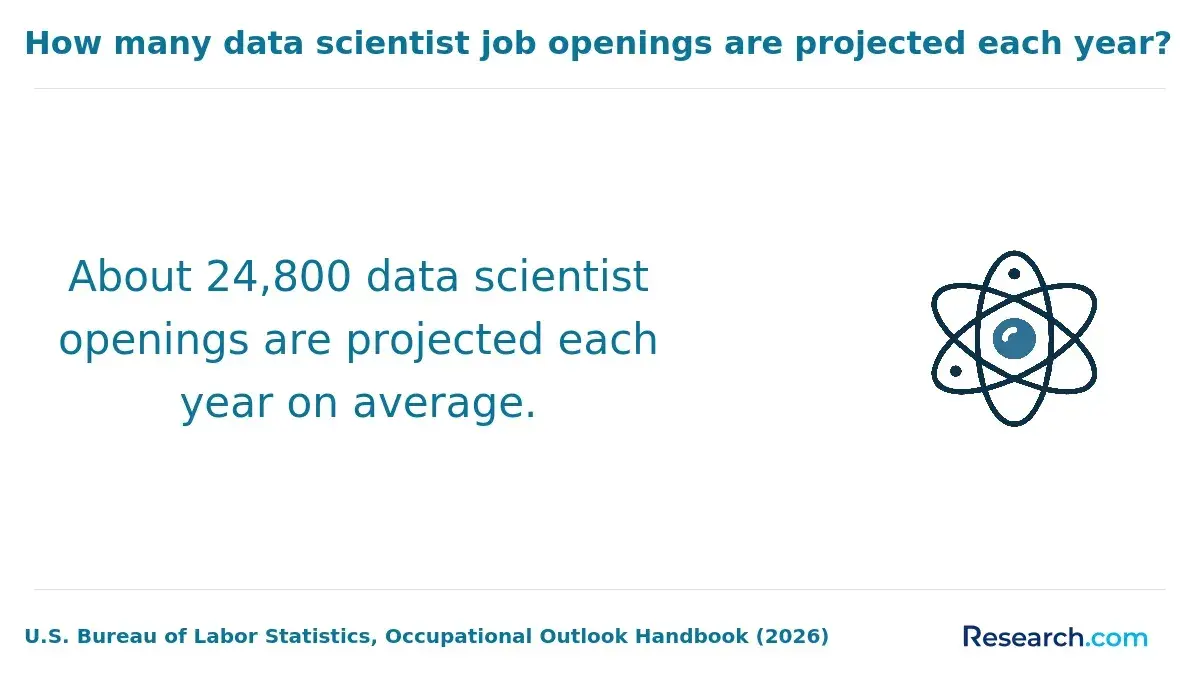
- Career demand is broader than this project: the U.S. Bureau of Labor Statistics projects 35% growth in data scientist employment from 2025 to 2035, but that forecast does not predict an individual graduate's prospects.
What is a customer support ticket routing capstone in a data science master's program?
It is an applied project that uses information available when a request arrives - such as its subject, message, channel, and permitted account context - to recommend the team or queue best equipped to handle it. A strong capstone defines the decision precisely: routing a new ticket to a department is different from assigning it to an individual agent or predicting its urgency.
The output should be more than a model. It should explain the current workflow, show how routing recommendations would reach staff, and identify when the system should defer to a person. Programs may offer general capstones rather than ticket-routing projects specifically, so ask whether students can propose a topic and obtain approval for an external dataset or employer partnership.
How do customer support ticket routing projects use machine learning and natural language processing?
Natural language processing turns ticket text into features a model can use; machine learning estimates which destination fits a new request. A sensible project starts with a simple baseline, such as existing keyword rules or a conventional text classifier, before testing more complex language models. Greater complexity is useful only if it improves the decisions the support team cares about.
Historical destination labels need scrutiny. A ticket may have been sent to the wrong queue and later reassigned, while a newly created team may have little training data. Evaluate on tickets received after the training period where possible, rather than randomly mixing older and newer requests; that better tests how the model handles changing products, policies, and queue names. Report results by queue as well as overall, since a high-volume category can conceal poor performance elsewhere.
Generative AI can help interpret ambiguous language, but it also introduces questions about data exposure, inconsistent outputs, and review. For routing, a system that reliably recommends a queue and flags uncertainty may be more valuable than one that generates an elaborate explanation.
What should a customer support ticket routing capstone include?
Use the following checklist to judge a proposed project or a program's sample capstones. Each component helps distinguish an operational study from a polished notebook built around an unreliable label.
- Problem and data definition: Specify the available fields, routing destinations, time period, and whether reassignment history reveals a better label than the initial destination.
- Privacy and permission: Establish who may access ticket text, how sensitive information will be removed or protected, and whether the resulting work may appear in a public portfolio.
- Baselines and evaluation: Compare against current rules or a simple model; examine per-queue results, costly misroutes, and the share of tickets that require human review.
- Implementation and reproducibility: Document cleaning, data splits, model versions, and a testable handoff - for example, a prototype that returns a suggested queue and an uncertainty signal.
- Stakeholder interpretation: Explain who maintains queue definitions, how staff correct mistakes, and what evidence would justify a limited pilot rather than immediate deployment.
A common mistake is treating the historical assigned queue as unquestionably correct. Another is publishing realistic ticket examples without permission. For patient-service or healthcare support requests, sensitive-data handling and domain-specific review become especially important; students pursuing that setting can also compare artificial intelligence degree options for healthcare professionals.
Which data science master's curriculum best prepares students for ticket routing projects?
Prioritize a sequence that connects statistics, Python or another suitable programming language, data engineering, machine learning, and natural language processing to an applied project. Look inside course descriptions and recent student work: a passing mention of language models is not equivalent to repeated practice with text data, evaluation, and error analysis.
The most useful advanced work addresses issues a routing project actually encounters: imbalanced classes, changing labels, temporal validation, model monitoring, and communicating trade-offs to nontechnical stakeholders. Database instruction matters because ticket histories, reassignment events, and queue definitions may live in separate systems. Project supervision matters just as much; confirm that an advisor can help scope the data and that the capstone schedule allows time for permissions and revision.
Choose a data science program with strong applied NLP and capstone support if the goal is to improve a support workflow. If the goal is deeper model development across AI applications, compare a guide to online AI programs instead. Neither degree label, by itself, proves the depth of the relevant coursework.
How do online and campus-based data science master's programs compare?
Delivery format matters mainly because ticket-routing capstones depend on feedback, secure data access, and collaboration. Neither format automatically provides those resources. This comparison highlights the practical difference to investigate before choosing a program.
| Format | Potential advantage for this capstone | Constraint to verify |
| Online | May allow a working student to develop a project connected to an existing employer. | Advisor availability, group meeting times, and rules for using employer data remotely. |
| Campus-based | May make in-person collaboration with faculty or project partners easier. | Whether a relevant partner and approved ticket dataset are actually available. |
Ask both types of program how students find sponsors, receive technical feedback, and present restricted-data projects. An online option is more suitable when continued employment provides legitimate access to a project and the schedule supports regular supervision. Campus access is more valuable when its faculty or partnerships offer resources the student cannot obtain independently.
What admission requirements apply to data science master's programs?
Requirements vary by institution; do not assume a computer science bachelor's degree is required or that work experience substitutes for a stated prerequisite. For this topic, the most consequential preparation is the ability to program, reason statistically, and work with messy records. Review each program's current admissions page for its actual coursework, application materials, and policies.
An applicant without that background can distinguish preparation from formal eligibility: an independent ticket-classification project may demonstrate initiative, but it does not automatically satisfy a required graded course. If that distinction affects your options, compare graduate AI options for career changers without a CS degree and ask admissions staff how they evaluate your specific coursework and experience.
How long does a data science master's take and how much does it cost?
Completion time and total cost depend on a program's credit requirements, course availability, enrollment pace, and tuition and fee schedule. A capstone involving real support data may also require time to arrange permissions before modeling begins. Do not assume that a shorter published pathway leaves enough room for data acquisition, stakeholder feedback, and revisions.
Compare programs using the same cost boundary: required credits multiplied by the applicable tuition rate, plus mandatory fees and any relevant materials, travel, or lost earnings. Check whether a slower pace changes fees or tuition exposure, and whether employer support applies to the chosen program. For options designed around a tighter schedule, consult data science graduate programs for a shorter study timeline; then confirm the current schedule and capstone requirements directly with each school. Without current, comparable school-specific schedules, a precise price comparison would be misleading.
How can students verify a data science master's program's accreditation?
Check the institution's stated accreditor against the accreditor's own directory or an official U.S. Department of Education recognition resource. Then confirm that the particular master's program is offered by that institution and that its delivery format is authorized for your location, if applicable. Institutional accreditation does not, by itself, verify NLP depth, capstone quality, or access to a ticket dataset.
Treat a claim such as "accredited data science capstone" cautiously unless the school identifies what is accredited and by whom. For this decision, accreditation is a baseline institutional check; course evidence, project rules, and supervision determine whether the program fits the proposed work.
What careers and salaries can a data science master's support?
A well-executed routing capstone may provide portfolio evidence for applied data scientist, machine learning, NLP, or analytics roles, particularly where teams work with service operations. It is not proof that a graduate qualifies for every such role; employers also assess prior experience, engineering skills, and domain knowledge.
The U.S. Bureau of Labor Statistics reports a $120,230 median annual wage for data scientists in May 2025. That figure describes employed workers in the occupation, not starting pay or a salary caused by a master's degree. Readers comparing target sectors can use data science graduate earnings across the economy for broader context, while checking job postings for the skills and experience their preferred roles actually request.
What job outlook and certifications matter for data science graduates?
The U.S. Bureau of Labor Statistics projects 35% employment growth for data scientists from 2025 to 2035. That occupation-wide forecast signals potential demand, but it does not measure openings specifically for ticket-routing specialists or guarantee that a degree holder will find a job.
For this project, a defensible capstone usually offers more direct evidence of ability than an unrelated certification: an interviewer can inspect the baseline, error analysis, privacy decisions, and proposed human-review process. A tool-specific certification may help when it matches technology named in target job postings, but it should not replace evidence that the student can evaluate a routing system responsibly. Before enrolling, compare the program's capstone examples with the work those postings describe.
Other Things You Should Know About Data Science
Yes, for a clearly labeled prototype. Issue reports can support text classification, but their users, categories, and routing process may differ from a customer support operation. Explain that limitation rather than presenting the results as deployment-ready.
Not necessarily. Reply generation is a separate task with different accuracy and review risks. A focused routing project is stronger than an expanded project whose recommendations and generated answers cannot both be evaluated well.
Yes, if the dataset and evaluation support it. Check that each language has sufficient authorized examples and report performance separately; an overall score can hide poor routing for a smaller language group.
Ownership and publication rights depend on the employer's agreements and the school's policies. Obtain written guidance before moving data into university systems or posting code, examples, or results publicly.
References
- Capstone Projects - UVA School of Data Science https://datascience.virginia.edu/degrees/info/capstone-projects
- What is Interpretability? | Stanford HAI https://hai.stanford.edu/ai-definitions/what-is-interpretability
- Data Science Capstone Experience - Purdue Online https://www.purdue.edu/online/data-science/data-science-capstone-experience/
- Data Science Capstone Experience | jhu.edu https://engineering.jhu.edu/ams/academics/graduate-studies/masters-data-science/data-science-capstone-experience/
- Capstone Sponsorships - Columbia's Data Science Institute https://datascience.columbia.edu/partnerships/engage/capstone-sponsorships
- 6 Questions to Ask Before Pursuing a Master's Degree in Data Science | UW Online Collaboratives https://uwex.wisconsin.edu/stories-news/6-questions-to-ask-before-pursuing-a-masters-degree-in-data-science/
- A Data Augmentation Strategy against Imbalance and Noise | aaai.org https://ojs.aaai.org/index.php/AAAI/article/view/30157/32052
- Class-imbalanced datasets | Machine Learning | Google for Developers https://developers.google.com/machine-learning/crash-course/overfitting/imbalanced-datasets
- Metrics and attributes for Zendesk Support https://support.zendesk.com/hc/en-us/articles/4408827693594-Metrics-and-attributes-for-Zendesk-Support