2027 Cost per Credit for Online Public Policy Master's Programs: Tuition Comparison Guide

Co-Founder and Chief Data Scientist
Comparing the cost per credit for online public policy master's programs can reveal significant expenses beyond listed tuition rates, complicating timing and enrollment decisions. Factors such as mandatory fees, residency requirements, and accreditation status influence both the total cost and the credential's professional acceptability.
A 2024 report from the National Center for Education Statistics highlights a 12% rise in adult enrollment in online graduate programs, reflecting increasing demand for flexible public policy education but also exposing students to varied pricing models and financial aid options.
Understanding these nuances helps prospective students accurately project the full financial commitment and align program choices with career mobility and licensure prospects. This guide systematizes tuition data across institution types and delivery formats to support well-informed, cost-conscious decisions in public policy graduate study.
Key Things to Know About the Cost per Credit for Online Public Policy Master's Programs
- Per-credit costs vary widely between public, private, and nonprofit institutions; lower sticker prices at public schools often come with residency requirements, shifting total expenses and complicating accurate cost comparisons for nonresidents.
- Mandatory fees and hidden costs-such as technology, library, and graduation fees-can add 10-20% to sticker tuition, affecting workforce entry timing by increasing debt or extending enrollment.
- Accreditation impacts employer recognition: programs lacking regional or specialized accreditation face reduced credibility among public sector employers, influencing early-career advancement and long-term career mobility within policy roles.
What Is the Average Cost per Credit Hour for Online Public Policy Master's Programs, and How Does It Compare Across Institution Types?
Per-credit cost is a critical factor for those funding their own master's in public policy, as it directly impacts budget planning and long-term return on investment. Unlike total tuition-which varies with credit load, program duration, and fee structures-cost per credit hour enables prospective students to isolate financial efficiency, compare programs on a level playing field, and assess whether higher prices correspond to tangible educational or career benefits.
For example, a working professional balancing job demands with flexible scheduling might prefer a program with a slightly higher per-credit cost but shorter time to completion, while a recent graduate may prioritize the lowest per-credit rates to minimize debt accumulation.
Examining the average tuition rates for online public policy master's degrees across university categories reveals notable patterns:
- Public universities: These institutions typically deliver the most competitive in-state per-credit rates, often falling between $400 and $700. However, out-of-state students face premiums that push costs 50% to 100% higher, a critical consideration for those living outside their state's higher education system.
- Private nonprofit institutions: Pricing here is more uniform regardless of residency, commonly ranging from $900 to $1,200 per credit. These schools tend to embed comprehensive learner support and enhanced curricular resources, which can justify the premium if those services translate to better job placement or credential recognition.
- Private for-profit schools: Usually exceeding $1,200 per credit, for-profit programs often market accelerated formats or targeted career services. Yet, their higher sticker prices and variable accreditation status require scrutiny to ensure the credential will hold equivalent professional value.
Sticker price per credit is rarely the full story. Hidden variables such as mandatory technology fees, administrative charges, or program-specific surcharges frequently elevate the actual cost.
Additionally, in-state tuition waivers or scholarship opportunities can substantially reduce expenses, especially at public universities. Also, programs increasingly bundle credits into flat-rate tuition or cohort-based pricing, complicating straightforward per-credit comparisons. Addressing these disparities is essential to avoid underestimating the all-in financial commitment, which affects career planning and repayment strategies.
This analysis proceeds methodically by first clarifying per-credit cost differences across institution types and residency rules before exploring the interplay with accreditation, delivery format, program length, and financial aid structures.
By integrating these variables, the resulting tuition comparison goes beyond surface-level sticker prices, enabling career changers, place-bound learners, and first-generation students to accurately weigh affordability against credential value.
Readers seeking nuanced online Public Policy master's tuition guidance-especially when deciding between offers-should consider per-credit costs alongside total program costs and expected hidden fees for a comprehensive financial portrait that supports informed, strategic enrollment decisions. For broader context on graduate study options in related disciplines, reviewing PhD programs online may provide useful parallels in understanding cost and credential dynamics.
How Many Credit Hours Are Typically Required to Complete an Online Public Policy Master's Program, and How Does That Affect Total Tuition?
The total credit hours required to complete an online master's in public policy critically shape the actual investment students make in their education and subsequent career readiness. A program with fewer credit requirements but higher per-credit costs can be more affordable than a longer, lower-cost-per-credit program once all fees and experiential obligations are added together, affecting both time-to-completion and financial outlay.
Most online public policy master's programs require between 30 and 60 credits, sometimes more, depending on institutional accreditation standards, thesis options, and mandatory practicum or internship components. This range directly influences tuition since per-credit fees multiply by total credits, which means that differences in program length can drastically alter total cost regardless of advertised tuition rates.
- Credit Hour Range: Many programs offering accelerated or non-thesis tracks hover near 30 credits, while those demanding thesis research, specialized electives, or extended fieldwork typically push toward 60 or beyond.
- Practicum and Internship Credits: These experiential requirements often come with additional fees, either charged per credit or as flat administrative costs, which can inflate a program's all-in price beyond simple per-credit tuition comparisons.
- Total Tuition Impact: A program charging $600 per credit requiring 45 credits plus a $1,200 internship fee will cost $28,200 overall, illustrating that low per-credit rates don't guarantee lower expenses if credit or fee burdens accumulate.
- Hidden Fees: Institutes may also apply mandatory fees for thesis supervision, field placement administration, or technology that should be factored into total cost calculations.
- Cost Calculation Strategy: Prospective students should multiply the total credits by the per-credit rate, then add any fixed practicum or administrative fees to establish an accurate full tuition estimate before enrolling.
Understanding these cost components helps prospective learners-especially working professionals managing budgets or first-generation students evaluating practical return on investment-to select programs that align tuition expenses with career goals and offer transparent fee structures supportive of their long-term workforce integration.
Which Online Public Policy Master's Programs Offer the Lowest Cost per Credit Hour Among Accredited Institutions?
When evaluating accredited online public policy master's programs for the lowest cost per credit hour, the critical factor extends beyond sticker tuition to include enrollment restrictions and additional fees that influence affordability. For instance, the University of Central Florida offers a competitive per-credit rate of about $249 for in-state online students, resulting in an estimated tuition near $8,964 for the 36-credit program.
However, this rate applies only to in-state residents, and the mandatory technology fee of approximately $25 per credit raises the final cost noticeably. Such residency criteria often exclude many applicants seeking lower-cost options.
- University of North Texas: Roughly $292 per credit for 36 credits; no residency required, but cohort models may restrict course timing; estimated tuition about $10,512, excluding registration fees.
- Georgia Southern University: $299 per credit for 36 credits; open to all students with varying fees per term; estimated tuition $10,764 plus a term-based online course fee.
- Texas A&M University-Texarkana: Approximately $269 per credit for 36 credits with no residency requirements; tuition about $9,684 before additional semester fees.
- University of Louisiana at Lafayette: Around $273 per credit for 36 credits; accessible to all students; estimated tuition near $9,828 excluding mandatory term fees.
Such cost structures highlight the importance of examining not only the base rate but fees and enrollment conditions that affect total expenses and accessibility. Tuition often fluctuates annually, so verifying current rates with each institution is crucial before enrollment.
These financial nuances shape the practical value and employability impact of accredited online public policy master's programs, especially for first-generation or place-bound students weighing long-term investment returns. For prospective students comparing affordability, and to explore related fields like game design schools online, a comprehensive understanding of all costs-including hidden and variable fees-is essential for realistic budgeting and career planning.
How Do In-State vs. Out-of-State Tuition Rates Apply to Online Public Policy Master's Programs, and Which Schools Offer Flat Tuition Regardless of Residency?
Residency-based tuition differences in online public policy master's programs have tangible consequences, especially for out-of-state students budgeting their investment. Traditionally, public universities imposed significantly higher per-credit fees for those living outside their state, reflecting the physical campus funding model.
While this practice persists at some schools, a growing number of institutions have shifted to flat tuition rates regardless of residency, simplifying the financial planning process and expanding access for geographically dispersed learners.
This shift is particularly consequential when out-of-state tuition can more than double the per-credit cost, often creating a deterrent for prospective students balancing work, relocation constraints, and family commitments.
Regional compacts such as the Western Interstate Commission for Higher Education (WICHE) and the Southern Regional Education Board (SREB) provide partial tuition discounts for residents of member states, but these agreements rarely eliminate all disparities. As a result, residency rules and reciprocity agreements heavily influence the total cost of an online degree and should be confirmed early to avoid unanticipated expenses.
Schools known for residency-neutral, flat per-credit tuition for their online public policy master's programs include:
- University of Minnesota: Uniform tuition removes geographic pricing barriers for online students.
- University of North Carolina at Chapel Hill: Equalizes tuition for in-state and out-of-state enrollees.
- Arizona State University: Offers consistent rates for its policy-related online programs.
- University of Nebraska Omaha: Applies flat tuition to support a diverse student population.
- University of Washington: Maintains a residency-neutral pricing structure for online graduate studies.
When programs continue to apply differential rates, out-of-state students must weigh the substantial tuition premium against potential financial aid, program quality, and subsequent career impact. Given that policies can change annually and are not always transparently presented on marketing materials, direct verification with bursar or financial aid offices is critical for accurate budgeting.
A recent graduate of an online public policy master's program recalled grappling with these tuition nuances during the rolling admissions cycle. Initially hesitant to commit before receiving a clear cost breakdown, they delayed submitting required documents while awaiting clarity on residency classification and tuition rates. This uncertainty complicated their financial planning and required multiple communications with the bursar's office.
Ultimately, securing admission at a school with flat tuition alleviated this anxiety and enabled focused preparation for coursework, underscoring how transparent and stable tuition policies play a pivotal role in student decision-making and confidence during enrollment.
What Mandatory Fees Are Added to Per-Credit Tuition for Online Public Policy Master's Programs, and How Much Do They Increase the Real Cost?
Calculating the total expense of online public policy master's programs requires careful attention to mandatory fees that augment per-credit tuition rates, often by 10% or more. These additional costs directly affect affordability and the financial feasibility of a student's investment, especially for those funding their studies independently.
- Technology Fees: Online formats rely heavily on digital infrastructure, prompting programs to charge fees supporting platforms, virtual resources, and software access-billed per credit or per term-sometimes adding several hundred dollars each semester.
- Program Fees: These cover specialized resources needed for public policy coursework such as proprietary data, research databases, or expert seminars. While variable, they often amount to a few hundred dollars annually, representing recurring but less visible costs.
- Student Services Fees: Encompassing advising, career support, and library access, these mandatory semester fees accumulate significantly over time and may surpass $1,000 for the full program, reflecting essential but non-tuition institutional support.
- Graduation Fees: One-time charges for degree conferral and commencement events are frequently omitted from upfront tuition listings but must be considered in total cost calculations.
- Clinical or Practicum Surcharges: Though less common in public policy than in allied fields, select programs require additional fees for applied internships or practicum components, adding complexity and cost to the degree pathway.
The scale and disclosure of these fees vary widely among accredited institutions, with some programs integrating them modestly and others layering charges that considerably elevate the total price tag beyond advertised per-credit figures. Because these fees often appear only in detailed registration or financial aid documents, prospective students must actively request full fee schedules rather than rely on headline tuition rates.
To compare programs effectively and avoid budget surprises, it is critical to compute an all-inclusive per-credit cost by prorating mandatory fees over the program duration. This comprehensive metric provides a realistic basis for weighing options, ensuring financial clarity for working professionals, recent graduates, and place-bound students alike.
How Do Online Public Policy Master's Program Costs Compare Between Public and Private Universities?
Cost differences between online public policy master's programs at public versus private universities often reflect deeper structural and operational factors that affect more than just sticker price. Public universities usually benefit from state subsidization, legislative tuition caps, and economies of scale achieved by serving large online cohorts, allowing them to keep per-credit rates generally between $300 and $700.
For a working professional funding their degree independently, this can translate into significant savings when weighed against the full program cost and associated expenses. However, these lower prices are often tied to residency policies and the availability of state funding streams, which may limit flexibility for out-of-state students.
- Public University Costs: Lower per-credit fees due to regulated tuition and broader enrollment pools, ranging roughly from $300 to $700 depending on residency.
- Private Nonprofit Institutions: Tuition typically falls between $800 and $1,200 or more per credit, reflecting smaller class sizes, enhanced faculty access, and extended career services designed to support individualized student progress.
- Private For-Profit Entities: Often the highest per-credit cost exceeding $1,000, these programs incorporate substantial marketing expenditures and investor-driven financial models that raise tuition but may deliver varying returns in recognition and outcomes.
Higher costs at private nonprofits usually come with smaller cohorts and lower faculty-to-student ratios, which can facilitate mentorship and networking opportunities valued by employers. Brand recognition and extensive career services in these settings may strengthen employment prospects post-graduation, though this added value requires careful evaluation against the financial premium charged.
Many students weighing tuition comparison of online public policy master's programs by university type should also factor in accreditation status and licensure eligibility, as these components directly impact whether an online degree holds professional validity in governmental or nonprofit sectors.
- Value Considerations: Private programs focus on personalized learning experiences and robust professional support networks.
- Faculty Access: Smaller classes at private nonprofits enhance mentorship and academic engagement.
- Brand Impact: Institutional reputation influences employer evaluation and hiring decisions.
Hidden costs such as technology fees, residency requirements, and mandatory administrative charges further complicate a straightforward cost per credit comparison.
Students-especially recent undergraduates and place-bound or first-generation learners-are advised to create a comprehensive budget that reflects all expenses to avoid financial surprises. Such thorough due diligence is essential for building an accurate total investment picture, which should guide enrollment decisions made with long-term career and financial sustainability in mind.
For those considering related advanced degrees, exploring options like a PsyD program may also offer insights into how costs and educational models vary by professional field.
Are There Online Public Policy Master's Programs With Tuition Locked In at Enrollment, and How Does Tuition Lock Affect Long-Term Cost Planning?
Locking in tuition rates at enrollment can significantly stabilize the financial risk of pursuing an online Public Policy master's, especially when programs are prone to annual price hikes. Without such guarantees, students-particularly part-time learners who extend their studies across multiple years-may face escalating per-credit costs that undermine initial budgeting efforts and inflate their total debt burden.
Tuition lock policies, however, are not uniform and vary by institution:
- Scope: Some schools apply the lock per cohort, fixing the rate from the start until graduation, whereas others limit it to a set number of semesters or reset annually.
- Conditions: Continuous enrollment is usually required; gaps or breaks can nullify the guarantee, exposing students to higher charges if they return later.
- Documentation: Guarantees should be obtained in writing to clarify terms and avoid misunderstandings that may arise during extended enrollment periods.
For financially self-funded candidates, these policies serve as a vital tool for long-term cost predictability, making the difference between manageable expenses and unexpected tuition shocks. Evaluating tuition lock clauses alongside other financial considerations is critical for an accurate all-in cost assessment.
One online Public Policy graduate recalled weighing whether to submit application materials early or delay entry for additional preparation. The program's rolling admissions meant no guaranteed start date, and the student hesitated to commit before confirming how tuition safeguards applied.
Ultimately, securing written confirmation of the tuition lock allowed the graduate to strategize enrollment timing confidently, knowing that subsequent price increases would not erode the financial plan established at the outset.
What Financial Aid, Scholarships, and Employer Tuition Benefits Are Available to Reduce the Net Cost of an Online Public Policy Master's Degree?
Reducing the net cost of an online public policy master's degree requires strategic navigation of the limited but varied financial aid available to graduate students. Unlike undergraduate funding, many merit and need-based scholarships are less common at this level, especially for remote learners whose eligibility for graduate assistantships or fellowships is often constrained by residency or enrollment status requirements.
For example, a working professional pursuing an online degree may find institutional scholarships scarce and assistantships largely inaccessible, heightening the importance of employer tuition benefits to offset costs.
Federal Loans: Graduate students primarily qualify for unsubsidized federal Direct Loans, which ease upfront expenses but increase total repayment amounts over time due to accruing interest. These loans can supplement tuition but do not reduce overall debt burden.
Graduate Assistantships: These positions, which may include tuition waivers or stipends, remain more prevalent on traditional campuses. Online learners typically face difficulty securing such aid, limiting this cost-reduction mechanism.
Institutional Scholarships: While available, these are generally less plentiful and more competitive at the master's level, with additional restrictions for online or part-time students, making proactive inquiry essential.
Professional Association Awards: Targeted scholarships or fellowships offered by policy-related organizations are often modest but can provide valuable supplemental funding to working professionals or demographic groups.
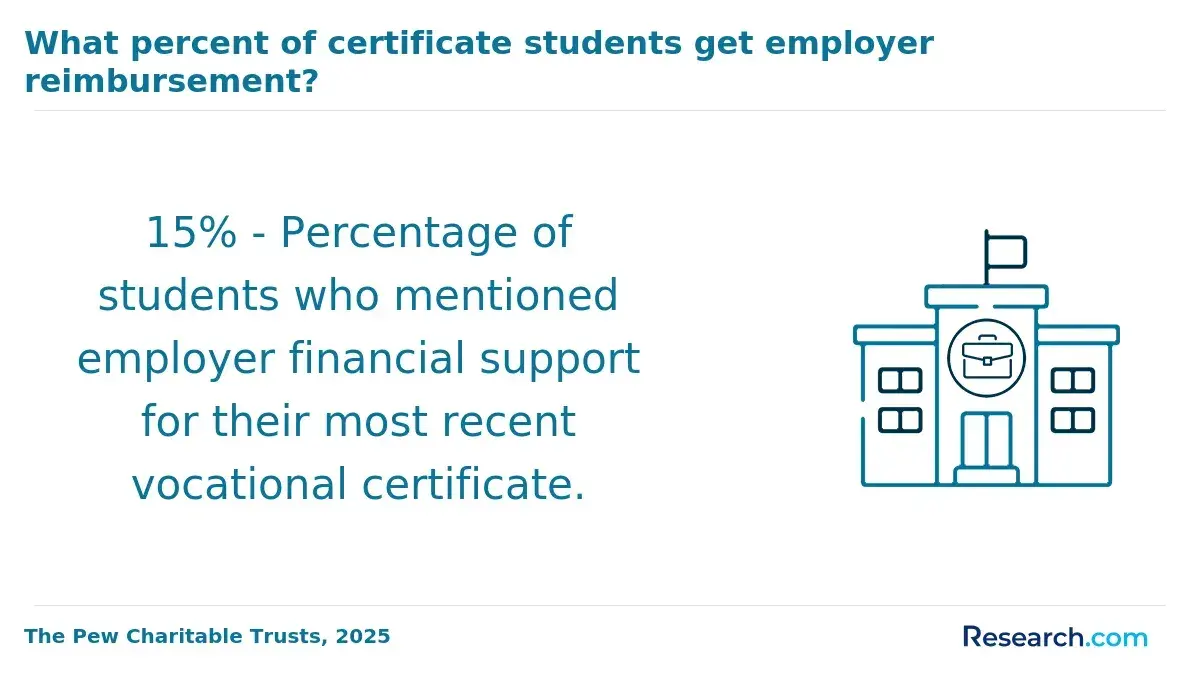
Employer Tuition Reimbursement: This is one of the most significant avenues to reduce net costs. Under IRS rules, up to $5,250 annually in employer-sponsored tuition assistance is excluded from taxable income. In public policy sectors with strong hiring demand, negotiating tuition benefits as part of employment contracts can substantially lower educational expenses.
Because financial aid packages differ widely, contacting program financial aid offices to obtain personalized net cost estimates is indispensable. Comparing programs based on net costs rather than sticker prices yields a more realistic foundation for cost-conscious decisions. Applicants weighing offers may also benefit from exploring quick master's degrees online as a way to expedite return on investment while balancing tuition outlays.
How Does the Cost per Credit for Online Public Policy Master's Programs Differ by Delivery Format-Synchronous, Asynchronous, or Hybrid?
Cost per credit in online public policy master's programs varies notably by delivery format, but these differences reflect institutional structures and student realities rather than simple price tiers.
Synchronous programs, for example, often carry higher per-credit tuition due to the substantial upfront investment in live-session technology, faculty scheduling, and real-time interaction infrastructure. This expense aims to provide a more immediate learning environment but can raise operational costs per student relative to asynchronous offerings.
Scalability: Fully asynchronous programs typically benefit from operational scalability, allowing institutions to serve larger cohorts without proportional faculty time increases per enrollee. This efficiency sometimes translates to more competitive tuition rates per credit, although some programs maintain premium pricing based on reputation or curriculum complexity despite asynchronous delivery.
Indirect Costs: Hybrid formats, combining online and occasional in-person sessions, may present comparable per-credit tuition to asynchronous options yet impose extra financial burdens through required campus visits. Travel, accommodation, and childcare for these visits raise the total cost of attendance, a critical factor often overlooked in straightforward tuition comparisons.
Time-to-Degree: Rigid scheduling in synchronous formats can limit flexibility for working adults, potentially extending time-to-degree and inflating total educational cost beyond sticker tuition. Asynchronous formats empower learners to adjust pacing according to work and personal commitments, often producing more cost-efficient progression.
Decision-Making: Beyond tuition, evaluating delivery format fit with one's work schedule, family demands, and learning preferences often yields stronger financial and professional outcomes than selecting programs solely on cost per credit. In this context, the total financial commitment must incorporate hidden expenses and time-related costs to avoid underestimating program investment.
For those exploring career pivots-including into public policy roles with growing workforce demand-understanding how cost per credit for online public policy programs by delivery format intersects with practical, long-term affordability is essential. This nuanced approach complements other important factors such as accreditation, financial aid, and employer recognition, which collectively shape the value of a graduate degree.
For instance, identifying the appropriate program type can be as crucial as grasping the nuances among types of paralegals, where alignment of training method with career context directly affects employability and total cost of education.
What Is the Minimum GPA Requirement for Public Policy Master's Program Admission, and How Does Selectivity Relate to Per-Credit Cost?
Minimum GPA requirements for online public policy master's programs generally hover around 3.0, but wide variation exists, with some institutions accepting GPAs as low as 2.75 and others setting a more exclusive bar at 3.5. This range reflects differing admissions philosophies-from inclusive approaches aiming to broaden access to highly selective schools that prioritize top-tier applicants and often maintain smaller cohort sizes.
However, the minimum GPA is a threshold, not an admission guarantee. Competitive programs frequently enroll students whose actual GPAs surpass this floor by a significant margin, underscoring the importance of assessing one's profile realistically against applicant pools rather than fixed cutoffs.
The relationship between selectivity, often linked to GPA requirements, and per-credit tuition is nuanced. While it is commonly assumed that more selective public policy programs command higher tuition rates, this is not uniformly true.
Several moderately selective schools with mid-range GPA admissions charge tuition comparable to or higher than some elite programs. Factors such as public versus private status, institutional overhead, residency rules, and ancillary fees can outweigh selectivity's influence on cost.
For example, a working professional with a 2.9 GPA might find stronger admission prospects-and equivalent per-credit tuition-at a moderately selective university rather than a top-tier institution with a 3.5 GPA cut-off and rigid applicant competition.
Strategically, applicants near minimum GPA thresholds benefit from targeting programs where their credentials align clearly with admission profiles, facilitating accurate financial and career planning.
Ignoring this balance risks overinvesting in high-cost programs with low admission probability, which can delay workforce entry and reduce overall return on tuition investment-critical considerations given that median public policy roles in 2024 offer starting salaries ranging broadly but generally favor graduates from programs with demonstrable employer recognition and professional accreditation.
Minimum GPA Range: Most programs require around 3.0; some as low as 2.75 or as high as 3.5.
Selectivity and Cost: Higher GPA thresholds often indicate selectivity but do not always align with higher per-credit tuition.
Admission Realities: Meeting minimum GPA is necessary but not sufficient; admitted cohorts typically exceed these minima.
Cost-Competitiveness Tradeoff: Moderate selectivity programs may offer better admission chances at similar or lower tuition.
Application Strategy: Prioritize programs where academic credentials ensure competitive admission to support realistic budgeting and timely career transition.
What Graduates Say About the Cost per Credit for Online Public Policy Master's Programs
- Westin: "Balancing a full-time job with the demanding coursework was a major constraint, but I chose this online public policy master's program because of its flexible schedule and strong emphasis on real-world projects. While I didn't pursue licensure, the portfolio I built during my internship ended up being my calling card when applying for policy analyst roles. It was clear that employers valued my hands-on experience over formal certifications, even though salary growth has been gradual without a license."
- Peter: "After realizing that relocating for grad school wasn't feasible financially or time-wise, I opted for an online public policy program with a focus on remote learning. The decision paid off with an internship I secured near my hometown, which was crucial since many positions favored candidates with local or practical experience. Despite the workload being intense, the program prepared me to pivot toward grant writing, though I found some roles still prefer candidates with a background in administration or licensure."
- Andrew: "I was initially hesitant about an online public policy master's, worried employers might regard it as less credible compared to traditional programs. However, the chance to continue working while studying was essential given my family commitments. Graduating enabled me to move into a nonprofit role emphasizing advocacy, but I quickly learned that to climb higher within government agencies, additional certifications or licensure were often expected-highlighting that career advancement can be limited without those credentials."
Other Things You Should Know About Public Policy Degrees
Hidden costs often include technology fees, software subscriptions for data analysis or policy simulation, proctored exam expenses, and costs linked to required books or case study materials.
Students should also factor in time costs from asynchronous schedules, which might extend program length and trigger additional tuition charges. These expenses, though frequently overlooked, can add several thousand dollars beyond sticker tuition and potentially delay graduation if students underestimate work-life balance demands.
Per-credit costs provide a baseline for comparing programs but must be integrated with total credit requirements, mandatory fees, and the likelihood of needing additional elective courses to meet career goals.
Priority should be given to programs offering transparent all-in tuition estimates and those aligned with desired career pathways, such as government agencies or nonprofits, where graduate employment outcomes are documented. Students should also consider support resources and alumni networks, as these elements indirectly affect long-term return on investment despite not influencing per-credit rates.
For-profit online public policy programs often advertise competitive per-credit tuition but may impose higher hidden fees and have less rigorous admissions standards, which can impact cohort quality and networking opportunities.
Employers and licensure bodies may view these degrees less favorably, affecting employability and salary growth. Where budget allows, nonprofit programs generally offer better academic oversight, professional alignment, and stronger reputational value that can justify somewhat higher costs and reduce risk over time.
References
- Public vs. Private Universities in Germany: A Comparison https://www.expatrio.com/about-germany/public-vs-private-universities-germany
- How to Pay for a Master's Degree | SNHU https://www.snhu.edu/about-us/newsroom/education/how-to-pay-for-a-masters-degree
- A Comparison of Cognitive and Social Presence in Online Graduate Courses: Asynchronous vs. Synchronous Modalities | Online Learning https://olj.onlinelearningconsortium.org/index.php/olj/article/view/3046
- Best 73 Online MPA Programs for 2024-2025 Academic Year https://www.mastersofpublicadministration.org/top-online-mpa-programs
- Pros and Cons of Synchronous, Asynchronous, and Hybrid Learning | Class http://www.class.com/blog/the-benefits-and-drawbacks-of-synchronous-asynchronous-and-hybrid-online-learning/
- MPP Admissions https://spp.ucalgary.ca/graduate-programs/master-public-policy/admissions
- What Are the Benefits of a Public Policy Degree? https://www.ivywise.com/ivywise-knowledgebase/what-are-the-benefits-of-a-public-policy-degree/
- Average In-State vs. Out-of-State Tuition [2025]: Cost Comparison https://educationdata.org/average-in-state-vs-out-of-state-tuition
- Course Delivery Formats 101: Synchronous, Asynchronous, and Blended/Hybrid Learning Explained https://www.iacet.org/events/iacet-blog/blog-articles/course-delivery-formats-101-synchronous-asynchronous-and-blended-hybrid-learning-explained/