2027 Comparing Online BS in Business Administration Options for Students Returning After Several Changes of Major
Audited and Verified:
Our Editorial and Data Verification Process
Research.com uses government datasets, official education statistics and primary institutional information to support its career and degree guides. Our review process checks factual accuracy, occupational definitions, source dates and the requirements associated with the credentials discussed.
How This Article Was Fact-Checked
Our editorial team verifies salary estimates, employment projections, education requirements and program information against original data providers and official organizations. Salary figures are checked against the relevant occupational definitions and reporting periods. Information about licensure, accreditation and required in-person training is reviewed separately.
Fact-checked and verified on:

Co-Founder and Chief Data Scientist
Changing majors several times can leave you with plenty of college credit but no clear route to a bachelor's degree. An online BS in Business Administration may offer a broad destination for that coursework, but the best option is not necessarily the school that accepts the most credits. It is the one that applies them to graduation requirements while offering a workable schedule and reasonable remaining cost. This guide helps returning students compare those factors, identify likely delays, and request the evidence needed before enrolling.
Key Things You Should Know
- Compare credits applied to the degree, not just credits accepted: general electives may leave business core, prerequisite, and residency requirements unfinished.
- Request a program-specific degree audit and a term-by-term course plan before relying on an advertised completion timeline.
- Use career figures cautiously: the U.S. Bureau of Labor Statistics reports a $75,940 median annual wage for human resources specialists in May 2025, not an expected starting salary for business graduates.
What Is an Online Bachelor's Degree in Business Administration?
An online BS in Business Administration is an undergraduate degree combining business subjects with general education and electives. "Online" describes how instruction is delivered; it does not mean every course is self-paced. For someone whose previous majors spanned several subjects, the degree's broad curriculum may create more places to apply prior coursework than a narrowly specialized major. That possibility must be confirmed in an official evaluation.
Do not assume a BS, BBA, BA in Business, or BS in Management has the same requirements. One school may require more quantitative coursework; another may reserve substantial credits for its business core. If your strongest completed courses and intended career are in leadership rather than general business, compare the actual remaining requirements with three-year organizational leadership bachelor's options. A faster advertised pathway only matters if your credits apply and required courses are available when you need them.
Is an Online Business Administration Degree Accredited and Recognized?
An online degree can be recognized like a campus degree when it is awarded by an appropriately accredited institution. Check the institution's current accreditation status and whether it covers the school awarding the degree. Separately, a business school may hold AACSB, ACBSP, or IACBE accreditation; verify the accreditor's stated scope rather than assuming every business program is covered.
Accreditation does not establish that your old courses will meet the new school's requirements, nor does it prove employment outcomes. When reviewing economical college choices for business administration majors, check accreditation alongside the exact degree name, transfer policy, and written degree audit. Ask the school whether the online and campus versions lead to the same credential and follow the same graduation rules.
How Do Online and Campus-Based Business Degrees Compare?
The central difference for a returning student is often not academic recognition but whether the format lets them complete the remaining courses consistently. The comparison below highlights obligations that may be easy to miss when a program advertises flexibility.
| Feature | Online option | Campus-based option |
| Class attendance | May be asynchronous or require live sessions | Typically requires travel for scheduled meetings |
| Assignments | May include timed exams, group meetings, and presentations | May include comparable work with in-person collaboration |
| Course access | May allow remote enrollment, but required courses may run infrequently | May offer more sections locally, depending on the school |
| Practical work | Internships or projects may still require approved sites and supervision | Local placement may be easier, but is not assured |
Ask for sample syllabi for courses you still need, including exam windows and group-work expectations. If online bachelor's programs with short sessions appeal to you, check whether compressed deadlines fit your work and other commitments. Shorter sessions do not necessarily mean fewer study hours or a lower total price.
Business administration programs commonly cover accounting, economics, finance, marketing, management, operations, statistics, and business communication. Schools differ in prerequisites, course depth, electives, and whether a concentration is formally recorded. Your previous majors may help with general education or electives without replacing accounting or other required business courses.
Compare the remaining course sequence, not just the catalog's subject list. A statistics prerequisite could delay an analytics elective; an infrequently offered capstone could delay graduation after everything else is complete. If you want project-focused work, compare business electives with a separate project management pathway and its project management tuition fees and financial aid. An elective is not a separately awarded credential, and a project management course alone does not establish professional certification eligibility.
Returning applicants generally need transcripts from prior colleges, but institutional admission and admission to the business major can be separate decisions. A school may also set GPA standards, require particular preparatory courses, or apply readmission rules if you attended before. Previous changes of major do not, by themselves, establish eligibility or ineligibility.
Submit transcripts from every institution attended and ask which requirements apply to your intended entry term. If prior work is concentrated in logistics or operations, compare eligibility for business administration with a specialized supply chain program; its admission rules, remaining courses, and supply chain degree cost and duration comparisons may point to a better fit. Request separate answers about admission and credit applicability: acceptance into a school is not approval of a graduation plan.
Completion time depends on applied credits, required prerequisites, enrollment pace, course sequencing, and the school's residency requirement - not simply the number of credits on your transcripts. For a student who changed majors repeatedly, a few missing business courses offered only in certain terms may matter more than a large bank of unused electives.
Request a term-by-term plan that names each outstanding course and its expected offering term. Then ask what happens if you study part time, take a leave, or cannot enter a full class. Compare that plan with shorter pathways to an online business degree, but do not treat an accelerated calendar as proof that your particular degree will finish sooner.
Calculate cost from the courses you must still complete. A low per-credit tuition rate can be less economical if it comes with more required credits, repeated coursework, or additional terms. Include mandatory fees, materials, technology and proctoring charges, and any travel for required activities. Compare when payments are due as well as the eventual total.
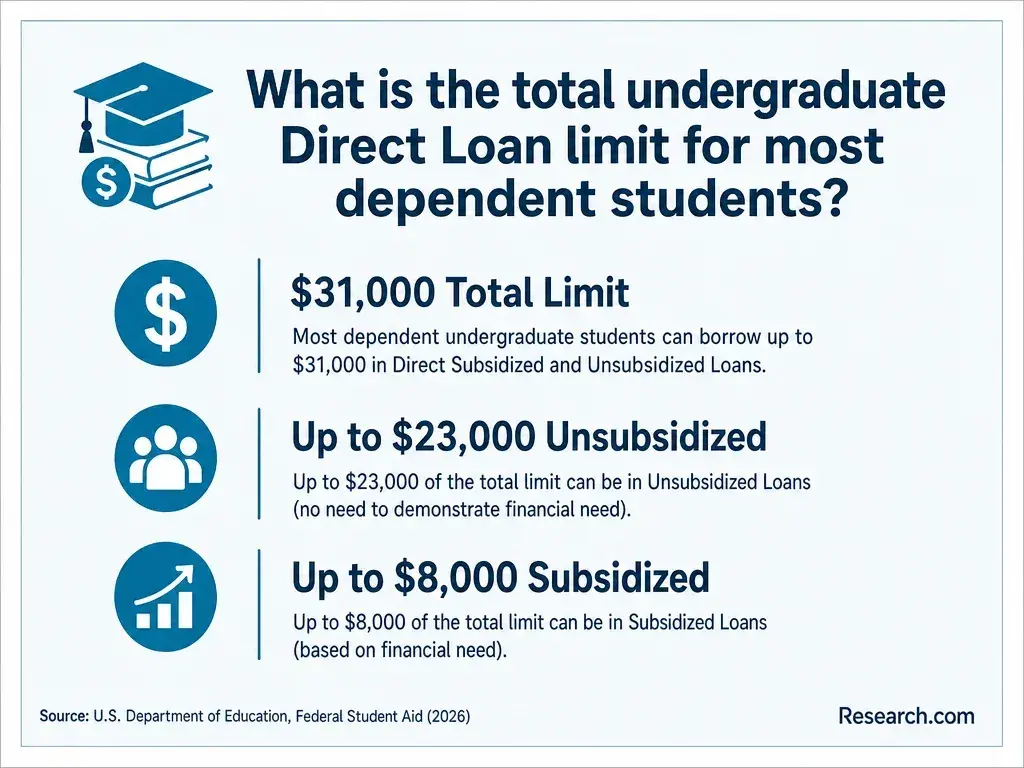
Financial aid and employer benefits can change the amount you pay, but eligibility and timing require confirmation. Ask the financial-aid office how your transfer evaluation, enrollment intensity, and satisfactory academic progress status affect aid; ask an employer about reimbursement limits and grade requirements before counting that benefit. For a general business route, compare cheaper business administration study with FAFSA-based aid.
Yes, but only when the receiving institution both accepts the learning and applies it to requirements you have left. The distinction is especially important after several major changes: an accepted psychology, design, or technical course might satisfy general education, count only as an elective, or not apply to the chosen program. The school has final authority over equivalencies and graduation requirements.
A degree audit should sort previous learning into the categories below. This makes two programs' transfer offers easier to compare than their headline totals of accepted credits.
| Audit category | Why it affects completion |
| General education | May clear broad graduation requirements without advancing the business core |
| Business prerequisites and core | May determine when you can enter upper-level courses |
| Concentration | May require specific approved courses rather than related electives |
| Free electives | May count toward total credits but leave required courses outstanding |
| Residency and upper-level credits | May require additional coursework at the degree-granting school |
Obtain official transcripts, course descriptions, and syllabi for courses whose equivalency is unclear. Ask the transfer office about quarter-credit conversion, course recency, exams, and documented prior learning; ask the business adviser about substitutions and prerequisite waivers. If an evaluation seems inconsistent, request the school's appeal process in writing. Do not enroll based solely on a preliminary transfer estimate.
Once the audit identifies your remaining aid-eligible coursework, use explore affordable colleges for business study as a starting point for comparing schools - not as a substitute for individual cost and credit evaluations.
A business administration degree can support applications for roles such as operations coordinator, administrative specialist, sales support associate, marketing coordinator, or HR assistant. Your prior work, internships, technical skills, and the requirements of a specific vacancy matter as much as the degree title. Someone with customer-service experience might pursue client operations; someone with inventory experience might build toward procurement or supply chain work.
For each target role, compare job postings with evidence you can show: spreadsheets, process documentation, customer communication, supervised projects, or relevant employment. If project coordination is the goal, compare general business preparation with the added focus and cost of a project management degree; project management tuition fees and financial aid are part of that decision. Neither route automatically qualifies a new graduate to manage staff, lead major projects, or hold a regulated credential.
If you are considering a project-focused alternative, evaluate its separate project management undergraduate scholarship comparisons rather than assuming an award or aid package carries across programs.
What Salaries and Job Outlook Can Business Graduates Expect?
There is no single salary or growth rate for graduates of an online BS in Business Administration. Outcomes depend on occupation, location, industry, experience, and responsibilities. The U.S. Bureau of Labor Statistics reports a $75,940 median annual wage for human resources specialists in May 2025. That figure covers workers across the occupation; it is not a new graduate's expected pay.
BLS projects 6% employment growth for human resources specialists from 2025 to 2035. Use such occupation-specific projections to assess a target field, then check local openings and their experience requirements. When weighing tuition against potential earnings, compare your likely entry route and borrowing with your current work situation - not an occupation-wide median or an assumed promotion.
Other Things You Should Know About Business Administration
Not necessarily. Employers are more likely to focus on the qualifications and experience relevant to the role. Be ready to explain your completed degree and connect useful skills from earlier study to the work you want to do.
Follow the school's application instructions and report your academic history accurately. If an essay invites context, briefly explain your current goal and preparation rather than defending each past choice.
Often, but a change may alter required courses or delay graduation. Ask for an updated degree audit before making the change, and confirm whether the concentration will appear on your academic record.
Ask about second-degree rules before applying. A second bachelor's may require substantial new coursework; for some goals, targeted business courses, a certificate, or relevant experience may be a more direct option.
- Answers to Questions Transfer Students Ask | pa.gov https://collegetransfer.pa.gov/Student/Common-Questions
- Cost of Attendance (Budget) | 2025-2026 Federal Student Aid Handbook https://fsapartners.ed.gov/knowledge-center/fsa-handbook/2025-2026/vol3/ch2-cost-attendance-budget
- Transfer Credit Policy and Options | Concordia University Wisconsin Academic Catalog https://catalog.cuw.edu/undergraduate/university/non-traditional-approaches-to-earning-credit/
- Transfer Advising | occc.edu https://www.occc.edu/help-with-classes/advising/transfers.html
- Transfer Policy - Pittsburgh, PA | Point Park University https://www.pointpark.edu/admissions/graduateprograms/gradtransfercredits/transferpolicy
- What's the Difference Between Asynchronous and Synchronous Learning? | Ohio State Online https://online.osu.edu/content-hub/blogs/whats-the-difference-between-asynchronous-and-synchronous-learning/
- Bachelor of Science in Business Administration Online | SDSU Global Campus https://globalcampus.sdsu.edu/program/business/bachelor-science-business-administration-online-degree-completion-program/
- How Many Credits Do You Need to Graduate College? | snhu.edu https://www.snhu.edu/about-us/newsroom/education/how-many-credits-to-graduate-college
- Online Business Degree | AACSB Accredited - Online Programs | Adelphi University https://onlineprograms.adelphi.edu/programs/bs-bachelor-business/
- Business Administration, BSBA - Online - Academics https://academics.charlotte.edu/program/business-administration-b-s-b-a-online/