2027 Choosing an Online Data Science Master's for a Career in Hospital Operations

Co-Founder and Chief Data Scientist
An online data science master's can prepare you to analyze hospital staffing, patient flow, capacity, and other operational problems - but a technically strong degree is not automatically a good hospital-operations degree.
For healthcare employees and career changers, the decision is whether a program offers the quantitative depth, healthcare context, applied projects, and schedule needed for the roles they want. This guide shows what to compare before committing to a program.
Key Things You Should Know
- Prioritize statistics, optimization, data engineering, and projects involving operational decisions - not healthcare branding alone.
- Hospital roles range from reporting and process improvement to predictive modeling; choose curriculum depth based on the work you want to do.
- The U.S. Bureau of Labor Statistics projects 35% growth in data scientist employment from 2025 to 2035, but that nationwide figure does not predict openings at hospitals or outcomes for any master's program.
What Is Data Science's Role in Hospital Operations?
Hospital operations teams use data to understand and improve how care is delivered. Questions include when emergency department arrivals will strain capacity, where discharge delays occur, how operating-room schedules affect staffing, and whether a process change reduces waiting without worsening another outcome.
Relevant data may come from electronic health records, scheduling systems, staffing records, bed-management tools, and financial systems. Turning those sources into a usable analysis often takes more work than building a model: definitions must be consistent, timestamps reliable, and results understandable to clinical and administrative staff.
Look for a program that teaches students to connect analysis to an operational choice. A forecast is more useful when it specifies what a hospital could change, who would act, and how the team would check for unintended effects. Patient information also requires appropriate access controls and handling under applicable privacy and security rules; enrollment in a course does not grant access to hospital records.
Why Choose an Online Master's in Data Science for Hospital Operations?
An online master's may suit someone who wants to keep working while gaining deeper skills in statistical modeling, programming, and large-scale data analysis. Continuing in a hospital job can also provide valuable context: students can see why a mathematically appealing recommendation might be impractical on a ward or in a scheduling office.
The trade-off is access. An online program may not provide hospital datasets, clinical collaborators, or a healthcare-specific capstone. Ask whether remote students can join applied projects and receive feedback from people familiar with healthcare workflows. If your goal is primarily dashboards, reporting, or business decision support rather than advanced modeling, master's degree programs in data analytics may also be worth comparing.
Choose a data science master's when the roles you want call for substantial modeling and technical implementation. A broader analytics program may be the better fit when your main gap is translating existing hospital data into operational reports and decisions.
What Careers Can a Data Science Master's Lead to in Hospitals?
Job titles differ across health systems, so compare responsibilities rather than titles alone. The table distinguishes common directions; it does not imply that every employer requires a master's for these roles.
| Role direction | Typical operational work | Preparation to prioritize |
| Operations or clinical data analyst | Defines measures, investigates bottlenecks, and builds reports for service leaders | SQL, data quality, visualization, and stakeholder communication |
| Hospital operations data scientist | Develops and evaluates forecasts or models for demand, capacity, or resource use | Statistics, machine learning, validation, and implementation |
| Decision scientist or operations research specialist | Models scheduling, queues, capacity, and trade-offs between competing constraints | Optimization, simulation, and operational decision-making |
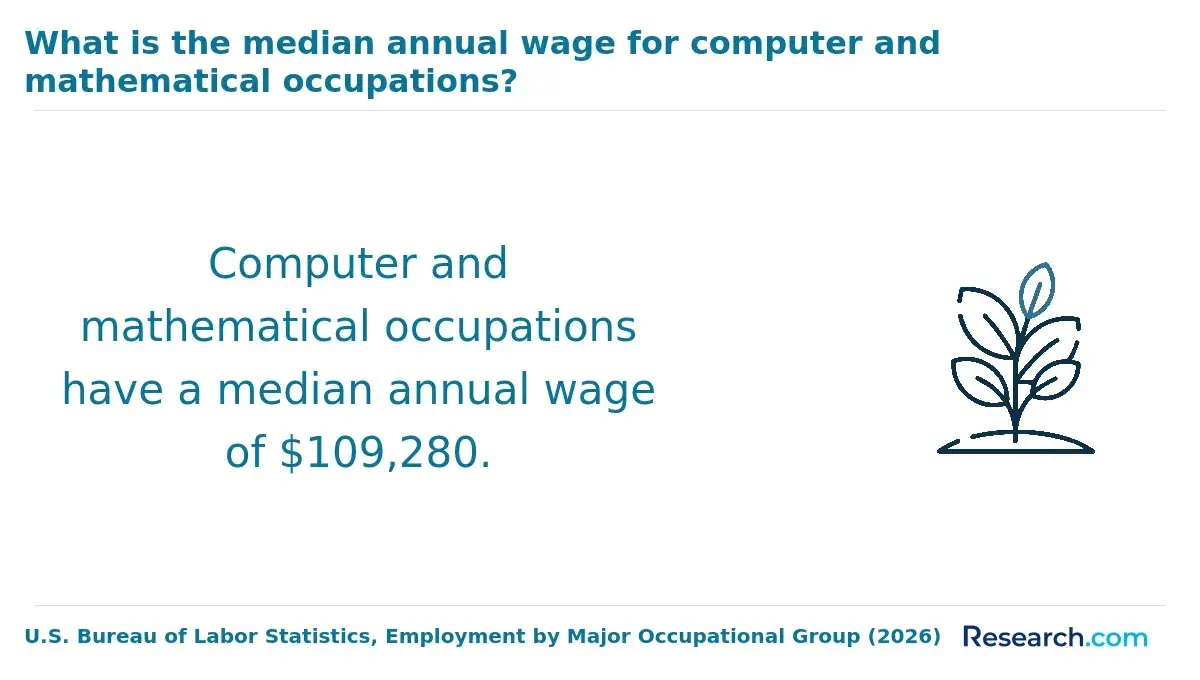
The Bureau of Labor Statistics reports a May 2025 median annual wage of $120,230 for data scientists across U.S. industries. That is career context, not a hospital-specific salary or an expected wage after graduation; pay and access to these roles depend on experience, location, employer, and the work performed. A current hospital analyst may be able to move toward more technical projects without a new degree, while someone seeking modeling-intensive roles may benefit more from graduate study.
Which Courses Prepare Students for Hospital Operations Analytics?
Course titles are a starting point, not proof of depth. Inspect syllabi and project descriptions to see whether students apply methods to messy data and evaluate decisions under real constraints.
- Statistics and causal reasoning: distinguish an association from evidence that a staffing or discharge intervention worked; account for differences in patient populations and service lines.
- Forecasting and machine learning: predict demand or delays, check performance on future periods, and examine where errors are costly.
- Optimization and simulation: test bed allocation, scheduling, or queueing choices against staffing and capacity limits.
- Data engineering and governance: combine source systems, document definitions, manage access, and build reproducible pipelines.
- Applied communication: present uncertainty, operational trade-offs, and limitations to people who will use the results.
A strong project might forecast arrivals and then test whether a proposed staffing response improves service without shifting the burden elsewhere. If a program emphasizes model building but gives little attention to preparing data, compare it with artificial intelligence master's options covering data pipelines. For hospital work, reliable inputs and usable outputs matter as much as model accuracy.
What Are the Admission Requirements for an Online Data Science Master's?
Requirements vary by institution. Programs may ask for a bachelor's degree and evidence of preparation in programming, calculus, linear algebra, or statistics; others offer ways to address gaps. Relevant hospital experience can strengthen an application, but it should not be assumed to replace a stated academic prerequisite.
Before applying, match your transcript and work samples against each program's published requirements. If a subject is missing, ask admissions whether a specific course can satisfy the requirement or would merely help you prepare. Guidance on bridging skill gaps before graduate AI study can help frame that conversation, but a bridge course counts toward admission only when the data science program says it does.
Applicants already working in healthcare should document analytical work precisely: the question addressed, tools used, data limitations, and decision supported. Applicants with a technical background but no hospital experience should show how they plan to learn clinical workflows and operational constraints.
How Long Does an Online Data Science Master's Take and Cost?
There is no reliable single duration or price for online data science master's programs. Credit requirements, course loads, term schedules, residency rules, and tuition policies differ. A short advertised completion time may assume full-time enrollment or a fixed course sequence that does not fit a hospital employee's shifts.
To compare programs fairly, calculate the full published tuition for the credits you must take, then add mandatory fees and any required travel, software, or materials. Confirm whether tuition changes with residency or enrollment pace, whether courses run when you need them, and how long you may take to finish. Employer tuition assistance can change the personal cost, but its eligibility and repayment conditions need checking before enrollment.
If speed is a priority, short online master's routes in data science provide another comparison point. Do not choose by the shortest advertised timeline alone: make sure the schedule still leaves room for the quantitative courses and applied hospital-operations work you need.
How Do Online and Campus Data Science Master's Programs Compare?
Delivery mode matters most when it changes access to instruction, collaborators, or projects - not because one mode is inherently more rigorous. The comparison below identifies what to verify with individual programs.
| Consideration | Online program | Campus program |
| Schedule | May allow study alongside hospital employment; live sessions and deadlines can still be fixed | May offer more in-person contact but require a commute or work-schedule change |
| Applied work | Access to datasets, hospital partners, and project supervision must be confirmed | Local collaborations may be easier to reach, but are not guaranteed |
| Peer interaction | Depends on group projects, advising, and the program's remote community | In-person interaction may be easier to arrange, depending on cohort and schedule |
An online option is more suitable when it lets you retain a relevant job and still complete substantive projects. Campus study may be preferable if a particular program offers an accessible hospital partnership or supervised project unavailable to its online students. Ask whether the curriculum and degree awarded are the same across formats rather than assuming they are.
Is Accreditation Required for Hospital Operations Data Science Careers?
A hospital data scientist generally does not need a specialized data science degree accreditation to perform the role. Institutional accreditation is still an important program check because it speaks to recognized institutional oversight and can affect matters such as federal student-aid eligibility. Employer hiring criteria are separate: a hospital may care more about relevant skills and experience than a particular program label.
Verify the institution's current accreditation through the accreditor or an official government listing, and check that the school is authorized to enroll students where you live. Do not mistake an attractive program ranking, a healthcare-themed concentration, or a university's reputation for verification of the specific degree's curriculum and student access.
Do Hospital Data Scientists Need Licenses or Professional Certifications?
Hospital operations data science is not generally a licensed clinical profession. An analytics employee who is not practicing medicine or nursing should not assume a clinical license is required. Conversely, a data science degree does not authorize someone to make clinical decisions reserved for licensed professionals.
Certifications in analytics, cloud tools, or healthcare information systems may help demonstrate a particular skill, but requirements vary by employer and position. Read several postings for your target role before paying for a certification. For work involving patient data, employer-approved training and access procedures matter more immediately than collecting unrelated credentials.
How Can You Choose a Reputable Online Data Science Master's Program?
Build a shortlist around the hospital role you want, then request evidence that each program can help you prepare for its actual work. These checks expose more than a ranking or a list of course titles.
- Map the curriculum to the role: identify required courses in statistics, programming, data management, and - if relevant - optimization; check whether healthcare electives are offered to online students.
- Inspect applied-work access: ask for examples of recent online projects and whether students can work with healthcare partners or approved public data.
- Test operational fit: confirm live-attendance rules, group-work expectations, course availability, completion limits, and support for working students.
- Compare complete costs: use current official tuition and fee schedules for the same planned enrollment pace, rather than comparing advertised starting prices.
- Check outcomes carefully: ask what career-service access online students receive and whether any reported employment results separate graduate students from other populations.
Networking may matter if you are changing industries. When evaluating graduate AI programs with active alumni communities, ask whether remote students can actually reach alumni working in hospital analytics. Choose the program that best closes your specific skill and experience gaps - not the one with the most healthcare language in its marketing.
Other Things You Should Know About Data Science
Only with your employer's authorization and the required privacy, security, and academic approvals. Removing names yourself does not automatically make a dataset safe to share with classmates, instructors, or a school platform.
Yes, if the project states what the data can and cannot represent. Public data can demonstrate forecasting, simulation, or communication skills, but it may not capture the internal workflow details needed for a deployable hospital recommendation.
Not necessarily. Technical applicants can contribute, but they should learn how hospital workflows and constraints affect the meaning of a metric. Clinical or administrative experience is valuable when paired with the analytical skills the target role requires.
No. A model can estimate demand or compare scenarios, while managers remain responsible for interpreting its limits alongside patient needs, staffing rules, and conditions the data may not capture.
References
- Summary of the HIPAA Security Rule | hhs.gov https://www.hhs.gov/hipaa/for-professionals/security/laws-regulations/index.html
- Essential Skill and Knowledge Required for Health Data Professionals: A Content Analysis of Job Advertisements | nih.gov https://pmc.ncbi.nlm.nih.gov/articles/PMC11605378/
- Fast Healthcare Interoperability Resources (FHIR) | nih.gov https://www.nlm.nih.gov/oet/ed/healthdatastandards/03-600.html
- Cost of Attendance (Budget) | 2025-2026 Federal Student Aid Handbook https://fsapartners.ed.gov/knowledge-center/fsa-handbook/2025-2026/vol3/ch2-cost-attendance-budget
- Program Prerequisites | Dept of Math, Stat, & Comp Sci | University of Illinois Chicago https://mscs.uic.edu/graduate/admissions-and-financial-aid/program-requirements-and-deadlines/
- Master of Health Administration (MHA) Capstone Projects | kgi.edu https://www.kgi.edu/degrees-and-programs/healthcare/master-of-health-administration/capstone-projects.html
- 12 Data Science Skills (+10 Hard-Won Career Lessons) | Syracuse University https://ischool.syracuse.edu/data-science-skills/
- Online Master of Data Science Admission Requirements at Rice https://csweb.rice.edu/academics/graduate-programs/online-mds/admissions
- What's the Difference Between Asynchronous and Synchronous Learning? | Ohio State Online https://online.osu.edu/content-hub/blogs/whats-the-difference-between-asynchronous-and-synchronous-learning/
- 11 Health Informatics Careers for Master's Graduates to Consider | New England College https://www.nec.edu/news/health-informatics-careers