2027 Cheapest Online Speech Pathology Bachelor's Degrees That Pay Well: Tuition, Duration, and Earnings

Co-Founder and Chief Data Scientist

Reviewed by Rhea Paul, PhD
SLP Education & Research Expert
Choosing a cheap online speech pathology bachelor’s degree is not just a tuition decision. The larger question is whether the program will help you qualify for the next step: graduate study, assistant-level roles, school or healthcare support positions, and eventually the supervised clinical preparation required for many speech-language pathology careers.
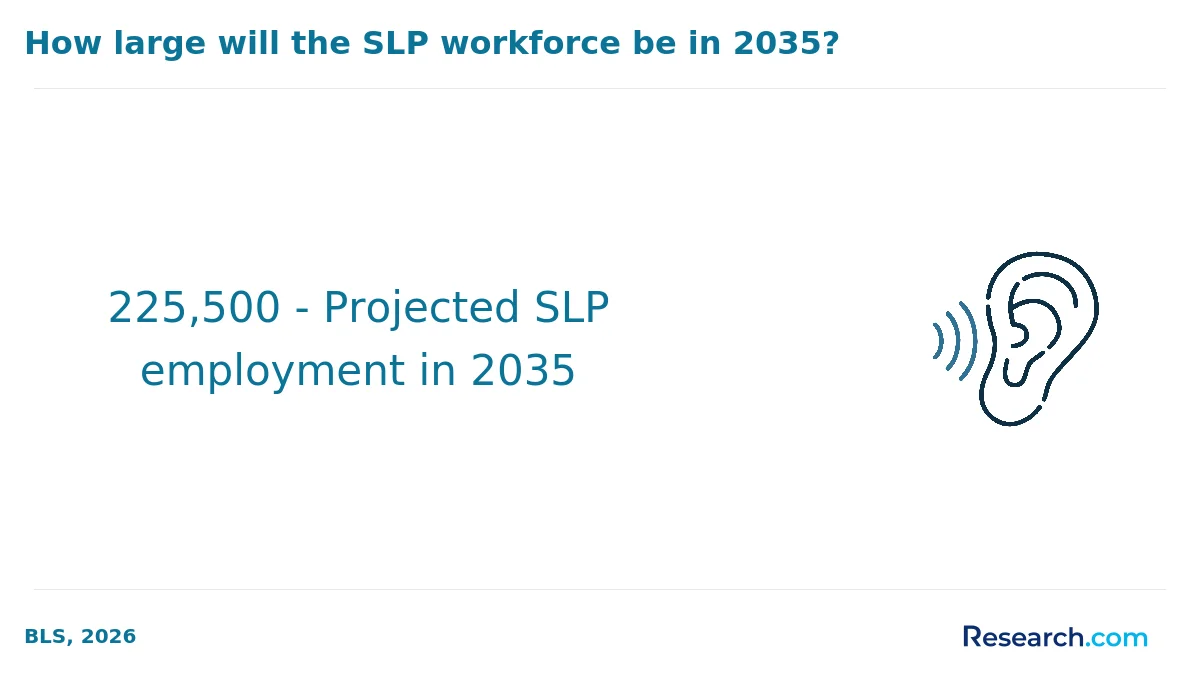
Cost matters because average student debt is rising above $30,000 nationally. Career fit matters because demand for speech pathologists is projected to grow 17% through 2035. A low-priced degree can be a strong investment, but only if it is accredited, transfer-friendly, accepted by graduate schools, and structured for students who need online flexibility.
This guide compares affordable accredited online bachelor’s options in speech pathology, communication sciences and disorders, and related fields. It explains tuition differences, completion timelines, transfer credit policies, admissions requirements, financial aid options, accreditation checks, and realistic earning potential after graduation.
Key Benefits of the Cheapest Online Speech Pathology Bachelor's Degree That Pays Well
- Affordable online speech pathology bachelor's programs reduce student debt, with average tuition between $8,000 and $15,000 per year, making quality education accessible for many.
- Flexible schedules and accelerated courses allow working professionals to gain essential skills faster while balancing career and family commitments.
- Graduates earn median salaries above $75,000 annually, reflecting strong return on investment and robust employment growth driven by healthcare demand.
What Are the Most Affordable Accredited Online Speech Pathology Bachelor's Degree Programs Available Today?
The most affordable online speech pathology bachelor’s programs are usually housed in public universities and are often titled communication sciences and disorders, communication disorders, or speech and hearing sciences. For most bachelor’s students, the key accreditation issue is institutional accreditation, because it affects federal financial aid eligibility, credit transfer, and graduate school recognition. Specialized review by the Council on Academic Accreditation in Audiology and Speech-Language Pathology (CAA) is especially important when students later evaluate graduate-level pathways.
Below are affordable accredited online options named for their tuition levels, flexibility, and preparation for future study or related employment.
- University of North Dakota: UND offers a regionally accredited Bachelor of Science in Communication Sciences and Disorders with in-state tuition of about $452 per credit hour. The program is useful for students who want flexible transfer credit policies, structured advising, and a foundation for graduate-level clinical preparation.
- Ball State University: Ball State offers an online Bachelor of Science in Communication Disorders for roughly $288 per credit hour in-state. Its value comes from a lower listed in-state rate, evidence-based coursework, online student resources, and financial aid availability.
- West Virginia University: WVU’s fully online Bachelor of Science in Communication Disorders costs approximately $383 per credit hour for in-state students. The program is a practical option for working adults who need advising support and flexible scheduling.
- Southeast Missouri State University: Southeast Missouri State University offers an online Bachelor of Science in Communication Disorders at around $408 per credit hour in-state. Students considering this option should review how its curriculum supports graduate prerequisites and clinical exam preparation.
- University of Central Arkansas: UCA offers a Bachelor of Science in Communication Disorders at roughly $287 per credit hour in-state. Its lower listed tuition and faculty guidance can make it a strong value for students who qualify for resident pricing.
The best low-cost program is not always the one with the lowest per-credit price. Students should compare total required credits, online fees, transfer credit limits, graduation timelines, residency rules, and whether the curriculum satisfies prerequisites for graduate study. If your long-term plan includes becoming a licensed speech-language pathologist, compare bachelor’s options alongside future speech language pathology programs online so you understand the full education pathway before enrolling.
Students who are also comparing broader graduate pathways may find it helpful to review affordable and flexible master’s program options after identifying the right bachelor’s foundation.
How Does Tuition Cost for Online Speech Pathology Bachelor's Programs Compare Across Public and Private Universities?
Public universities often have the lowest sticker price for online speech pathology bachelor’s programs, especially for in-state students. Private nonprofit universities can cost more per credit, but they may become competitive when they offer flat-rate tuition, generous scholarships, accelerated formats, or the same tuition for all online learners regardless of location.
- Per-credit tuition: Public universities generally charge between $250 and $400 per credit because state funding helps subsidize costs. Private nonprofit schools often range from $400 to $700 per credit because they rely more heavily on tuition revenue.
- Total program cost: A lower per-credit rate does not automatically mean the cheapest degree. Students should calculate the full cost based on required credits, online course fees, technology fees, books, and the number of terms needed to graduate.
- Residency rules: Public in-state tuition is often less than half the out-of-state rate. That makes resident pricing a major advantage. Private universities typically charge uniform tuition regardless of residency, which can help out-of-state students who would otherwise pay high nonresident rates at public schools.
- Program format: Private programs may offer flexible or self-paced schedules that reduce indirect costs, such as delayed graduation or lost work hours. Public programs may follow more traditional semester calendars, which can be easier to plan around but less flexible.
- Financial aid and scholarships: Both sectors may offer aid. Private institutions sometimes provide targeted scholarships for speech pathology or communication disorders students, while public universities may connect residents with state grants.
To compare public and private options accurately, build a side-by-side cost estimate. Include tuition, fees, expected transfer credits, scholarship offers, commute-free savings, and the cost of taking longer to finish. A private program with higher tuition can occasionally cost less overall if it accepts more transfer credits or allows faster completion.
Students researching affordability across graduate and professional fields can also examine how costs are structured in programs such as the most affordable online doctorate in organizational leadership.
What Is the Typical Duration of an Online Speech Pathology Bachelor's Degree, and How Can Students Graduate Faster?
Most online speech pathology bachelor’s degrees follow a 120-credit curriculum and take four years for full-time students. Part-time learners often need longer, especially if they take one or two courses per term while working or caring for family. Students with prior college credit, military credit, CLEP results, or approved professional learning may finish faster.
- Standard full-time pace: A student who completes about 30 credits per academic year usually finishes in four years. This is the traditional route for first-time undergraduates.
- Accelerated terms: Some universities, such as the University of Cincinnati, use eight-week sessions. This structure lets students focus on fewer courses at once while still completing multiple sessions each year. In some cases, it can shorten completion to roughly 2.5 to 3 years.
- Year-round enrollment: Programs that offer summer and winter coursework allow students to earn credits across three or four terms annually instead of waiting for fall and spring only.
- Transfer credits: The fastest path is often transferring completed general education or prerequisite coursework from an accredited community college or four-year institution.
- Competency-based education: Models used by institutions such as Western Governors University allow students to advance by demonstrating mastery rather than waiting for a fixed semester schedule. For students with strong prior knowledge, this can reduce time-to-degree below three years.
Graduating faster can lower the total cost of attendance by reducing repeat fees, extra semesters, and time away from higher earnings. However, acceleration works best for students with consistent study time, strong organization, and few scheduling conflicts. Speech pathology coursework builds on anatomy, language development, acoustics, and communication science, so rushing without mastering prerequisites can create problems later in graduate school.
One career-changing student described online study as manageable but demanding. He said the hardest part was replacing the structure of a physical classroom with his own weekly routine. “It was tough managing deadlines without a physical classroom structure,” he explained. Competency-based assessments helped him move faster, but the program still required discipline, steady reading, and comfort with independent learning. “Overall, the program’s design made it achievable to finish sooner than I expected, which was a big relief,” he said.
Which Online Speech Pathology Bachelor's Programs Offer the Best Earning Potential After Graduation?
The online speech pathology bachelor’s programs with the best earning potential are usually those that prepare students well for graduate school, assistant-level roles, healthcare support positions, educational support work, or rehabilitation-related employment. A bachelor’s degree alone does not usually qualify graduates for independent clinical speech-language pathologist roles; most clinical roles require a master’s degree, according to the Bureau of Labor Statistics Occupational Outlook Handbook.
- Healthcare and rehabilitation focus: Graduates who pursue support roles in hospitals, outpatient clinics, or rehabilitation settings may see median salaries between $45,000 and $60,000, depending on job title, location, and employer requirements.
- Educational support roles: Students who focus on school-based communication services may qualify for assistant or support positions that typically earn between $40,000 and $55,000, with pay shaped by district funding and state rules.
- Graduate-school preparation: Programs with strong advising, prerequisite alignment, and faculty support can improve a student’s chances of moving into a master’s degree, which is often necessary for higher-paying licensed practice.
- Accreditation and recognition: Programs connected to accredited institutions and aligned with standards recognized by bodies such as the Council on Academic Accreditation generally carry stronger academic credibility than unaccredited alternatives.
- Career services and applied experience: Institutions with internship support, career advising, and employer connections can enhance graduates’ salary prospects by up to 15% compared with national averages.
Students should evaluate earning potential by asking two questions: What jobs can I realistically qualify for immediately after the bachelor’s degree, and how well does this program position me for graduate education? The strongest value usually comes from a low-cost program that keeps debt manageable while preserving access to the advanced credentials needed for long-term income growth.
For a broader comparison of how affordability and career advancement intersect in other fields, students may review options such as a low-cost online master’s degree in data science.
What Financial Aid and Scholarship Opportunities Are Available for Online Speech Pathology Bachelor's Students?
Online speech pathology bachelor’s students may qualify for federal, state, institutional, and professional aid. The most important first step is completing the Free Application for Federal Student Aid (FAFSA). FAFSA determines eligibility for federal Pell Grants, subsidized loans, and other need-based aid. Pell Grants provide non-repayable aid, averaging about $4,900 annually according to the College Board’s 2023 data.
Students should prioritize aid that does not need to be repaid before borrowing. That includes grants, institutional scholarships, department awards, state healthcare workforce grants, and scholarships from professional organizations such as the American Speech-Language-Hearing Association (ASHA). Loans can fill remaining gaps, but federal subsidized loans usually offer better borrower protections than private loans.
- Federal Pell Grants: Need-based grants that do not require repayment and can cover a meaningful portion of tuition for qualifying students.
- Institutional scholarships: Colleges may offer merit-based, need-based, transfer student, adult learner, or program-specific scholarships for communication sciences and disorders students.
- State-based grants: Some states provide aid to residents pursuing healthcare-related or education-related degrees, including speech pathology pathways.
- Professional association scholarships: Organizations such as ASHA may offer awards for students preparing for speech-language pathology or audiology careers.
- Subsidized loan options: Federal subsidized loans can help cover remaining costs after grants and scholarships, with lower interest and more flexible repayment terms than many private alternatives.
A practical aid strategy starts early. Students should list every deadline, request recommendation letters in advance, and keep a folder with transcripts, essays, FAFSA records, and proof of enrollment. They should also ask the program whether online students qualify for the same scholarships as campus students.
One online graduate described affordability as a matter of organization as much as eligibility. She said early FAFSA submission reduced stress and gave her more time to pursue targeted scholarships. Professional group awards were especially helpful, and she described staying organized as “key to making the program affordable and manageable.” She added that “support from specialized scholarships really made a difference in sustaining my focus and completing my degree.”
How Many Transfer Credits Can Online Speech Pathology Bachelor's Programs Accept, and From Which Institutions?
Transfer credit policies can significantly reduce the cost and length of an online speech pathology bachelor’s degree. Many programs accept coursework from accredited community colleges, four-year colleges, and universities. Some also evaluate CLEP exams, military training, and other approved learning experiences.
Eastern Kentucky University permits up to 90 transfer credits, which can represent nearly three years of coursework, including CLEP and military credits. The University of Central Florida allows up to 60 transfer credits and recognizes CLEP exams as well as credits from the DANTES Military Evaluation program. These policies can help students avoid repeating general education courses and move more quickly into major requirements.
Before applying, students should request an unofficial transfer review or degree audit. A generous transfer policy is only useful if the credits apply to the degree plan. Credits may transfer as electives but not satisfy major, prerequisite, or upper-division requirements.
- Transfer credit limits: Most online Speech Pathology programs accept between 60 and 90 transfer credits, which can reduce both tuition and time in school.
- Eligible institutions: Programs usually prefer credits from regionally accredited institutions, though some may review nationally accredited coursework case by case.
- CLEP and military credits: Many degrees recognize CLEP tests and military training, creating flexible options for adult learners, veterans, and students with prior knowledge.
- Financial impact: Students who efficiently transfer credits may shorten their studies by up to 40%, reducing tuition and allowing earlier entry into the workforce.
- Credit evaluation: Students should submit all transcripts, test scores, military records, and course descriptions before committing to a program.
The strongest transfer strategy is to confirm three things in writing: how many credits will be accepted, which requirements those credits satisfy, and how many credits must still be completed at the degree-granting university.
What Accreditation Should an Online Speech Pathology Bachelor's Program Have to Ensure Quality and Employer Recognition?
An online speech pathology bachelor’s program should be offered by an institution with recognized accreditation. Regional accreditation is generally the most widely accepted form for transfer credit, graduate admission, employer recognition, and federal financial aid eligibility. National accreditation may be legitimate in some sectors, but it can create transfer and graduate-school limitations in this field.
Major regional accrediting bodies include the Higher Learning Commission (HLC), the Southern Association of Colleges and Schools Commission on Colleges (SACSCOC), and the New England Commission of Higher Education (NECHE). Students should verify the institution first, then examine whether the program’s curriculum aligns with graduate prerequisites in communication sciences and disorders.
Programmatic accreditation from the Council on Academic Accreditation in Audiology and Speech-Language Pathology (CAA) is an important marker in the speech-language pathology field, especially at the graduate level. Because most licensed clinical practice requires graduate education, bachelor’s students should ask whether the undergraduate curriculum prepares them for CAA-accredited graduate programs.
Unaccredited or poorly recognized schools can create serious problems. Credits may not transfer, graduate schools may reject prerequisite coursework, employers may question the degree, and students may lose access to federal financial aid. Recent research indicates that nearly 70% of employers show a preference for candidates with degrees from regionally accredited institutions.
- Regional vs. national accreditation: Regional accreditation typically receives stronger recognition from employers and academic programs than national accreditation.
- Key accrediting bodies: Look for institutional accreditation from agencies such as HLC, SACSCOC, or NECHE, depending on the school’s region.
- CAA relevance: CAA accreditation is especially important when evaluating graduate programs in audiology and speech-language pathology.
- Transferability concerns: Credits from nationally accredited or unaccredited schools may not transfer easily, which can increase cost and delay graduation.
- Verification step: Students should check the U.S. Department of Education’s accreditation database before enrolling or paying deposits.
What Are the Admission Requirements for the Cheapest Online Speech Pathology Bachelor's Programs?
The cheapest online speech pathology bachelor’s programs usually require a high school diploma or GED for first-year applicants. Transfer applicants must submit transcripts from every college attended. Many affordable programs set a minimum GPA between 2.5 and 3.0, although some use flexible or conditional admission for adult learners, returning students, or applicants with strong recent coursework.
Standardized test requirements have become less common. Many programs no longer require ACT or SAT scores, especially for online or transfer applicants. However, students may still need prerequisite or early coursework in biology, psychology, statistics, communication, anatomy, or language development.
- Minimum academic criteria: Most affordable online speech pathology programs require a high school diploma or GED and may expect a minimum GPA between 2.5 and 3.0.
- Test scores: Many institutions waive standardized tests, but students should confirm whether ACT or SAT scores are required for scholarships or first-year admission.
- Prerequisite coursework: Students may need science, psychology, communication, or general education courses before entering upper-division major coursework.
- Admission timing: Open-admission and rolling admission policies can help working adults start sooner, while selective programs may require earlier planning.
- Application strengthening: Applicants below the minimum GPA can improve their file with recent college coursework, relevant work or volunteer experience, and a focused personal statement.
Open-admission programs are easier to enter, but students should still evaluate outcomes, advising, accreditation, and transfer rules. Selective programs can be harder to access, yet they may provide stronger academic support, smaller classes, and clearer pathways to graduate school.
Students comparing affordability across fields can also review how admissions and cost structures differ in programs such as the most affordable AACSB online MBA options with no GMAT.
What Concentrations or Specializations Are Available Within Affordable Online Speech Pathology Bachelor's Degree Programs?
Affordable online speech pathology bachelor’s programs may offer concentrations or elective clusters that help students explore specific populations, settings, or communication needs. These tracks rarely replace graduate-level clinical training, but they can help students choose internships, prepare for master’s applications, and clarify career direction.
- Child Language Development: This track focuses on pediatric communication, language acquisition, and developmental disorders. It can prepare students for early intervention and school-related pathways. According to BLS data, demand in this area remains strong, with median salaries typically ranging from $60,000 to $75,000 annually. Some states may require additional certification in early childhood education.
- Adult Neurogenic Communication Disorders: This specialization covers communication impairments related to neurological events such as stroke. Graduates often pursue hospital or rehabilitation settings, where salaries may fall between $70,000 and $80,000. Licensure through the American Speech-Language-Hearing Association (ASHA) is commonly necessary for practice.
- Augmentative and Alternative Communication (AAC): AAC coursework introduces students to communication devices and supports for individuals with severe speech challenges. Median salaries hover near $65,000, and AAC-specific certification is frequently expected.
- School-Based Speech Therapy: This concentration emphasizes speech and language support for students in educational settings. Consistent demand and median pay between $60,000 and $70,000 characterize the field, with licensure as a school speech-language pathologist typically required.
- Clinical Research and Administration: This less common focus introduces students to program management, data collection, and research support. Salaries vary widely, and many positions require advanced certifications or graduate degrees.
Students should choose a concentration based on both interest and credential requirements. For example, a student drawn to school settings should review state education requirements, while a student interested in hospitals should plan for graduate study and clinical licensing. The best concentration is the one that supports your next required credential, not just the one with the most appealing title.
For broader planning across affordable STEM and health-adjacent fields, students may compare long-term costs and outcomes with resources such as the cheapest data science master’s in the USA rankings.
Can Students Earn College Credit Through CLEP, DSST, or Prior Learning Assessments in Online Speech Pathology Bachelor's Programs?
Yes. Many online speech pathology bachelor’s programs allow students to earn or transfer credit through CLEP, DSST, and Prior Learning Assessment (PLA), especially for general education or elective requirements. These options can reduce tuition and shorten the time to graduation, but they usually do not replace upper-division speech pathology major courses.
Some affordable programs allow up to 30 credits through exams, military training, professional certifications, or documented workplace learning. Schools that follow American Council on Education (ACE) credit recommendations may be more likely to evaluate military and professional training in a standardized way.
- Credit-earning exams: CLEP and DSST can help students earn credit for introductory subjects, especially general education courses.
- PLA credit limits: Affordable online programs may accept up to 30 PLA credits, which can reduce both degree length and cost.
- ACE recommendations: ACE evaluates military and workplace training so schools can translate approved experiences into possible college credit.
- Documentation required: Students should gather official exam scores, military transcripts, certificates, licenses, training records, and portfolios before requesting evaluation.
- Institutional variability: Each school sets its own rules, so students should confirm maximum credits, eligible subjects, fees, and deadlines before enrolling.
The main caution is fit. A CLEP or DSST credit may satisfy a general education requirement but not a communication disorders prerequisite. Students should ask the registrar or program advisor to identify exactly where each credit will apply in the degree plan.
What Is the Return on Investment (ROI) of Earning a Cheap Online Speech Pathology Bachelor's Degree?
The ROI of a cheap online speech pathology bachelor’s degree depends on total cost, time to completion, transfer credits, financial aid, and the student’s next career step. In higher education, ROI compares the total cost of earning the degree with expected earnings over time. It is calculated by dividing projected lifetime income by total tuition and fees.
Data from the Georgetown University Center on Education and the Workforce and Payscale reveals speech pathology graduates often surpass the average bachelor’s degree ROI, due to solid median salaries exceeding $70,000 annually. However, students should interpret that figure carefully because the highest-paying speech-language pathology roles generally require graduate education, supervised clinical experience, and licensure or certification.
- Calculation method: ROI is determined by dividing lifetime expected earnings in speech pathology careers by total degree expenses, including tuition and fees.
- Benchmark data: Georgetown and Payscale data indicate that speech pathology graduates can achieve ROI figures higher than average bachelor’s degree holders.
- Cost benefits: Low-cost online tuition, transfer credits, and flexible pacing can improve ROI by reducing the amount a student must borrow.
- 10-year outlook: Over a 10-year span, affordable programs frequently deliver returns above the typical 30-40% benchmark for bachelor’s degrees.
- 20-year outlook: Over 20 years, experience, certifications, graduate study, and advancement can raise earnings and strengthen overall ROI.
- Program quality: Accreditation status and transfer credit policies affect value because they influence graduate school access, employer recognition, and time-to-degree.
A cheap program with weak recognition can produce poor ROI if credits do not transfer or graduates cannot qualify for the next credential. A moderately priced accredited program may be the better investment if it reduces delays, supports graduate admission, and keeps career options open.
What Graduates Say About Earning the Cheapest Online Speech Pathology Bachelor's Degree That Pays Well
- : "I chose the online speech pathology bachelor’s degree because I needed flexibility while working full-time. The affordable tuition helped me avoid taking on massive debt, and the coursework gave me a stronger foundation for supporting clients with communication needs. Since graduating, I feel more confident about my career path and next professional steps. — Dana"
- : "The online format gave me a workable balance of rigorous academics and practical application at a reasonable cost. I could study on my own schedule while still engaging deeply with the material. That structure helped me apply what I learned in my clinic and improved both my job satisfaction and my ability to support patients. — Alexis"
- : "For me, enrolling in an online speech pathology bachelor’s program was a strategic choice. I needed to broaden my expertise while managing family responsibilities, and the cost made the degree accessible. Completing the program opened new career opportunities and gave me more confidence in my professional direction. — Barry"
Other Things You Should Know About Speech Pathology Degrees
In 2027, online speech pathology bachelor's programs typically offer competitive tuition rates, with costs ranging from $200 to $500 per credit hour. This is generally lower than the national average for similar health-related degrees, making these programs a cost-effective option for students seeking affordability without sacrificing education quality.
Some affordable online speech pathology bachelor's programs waive out-of-state tuition fees, offering a flat rate regardless of residency. These programs aim to increase accessibility and may be offered by public universities with a mission to serve a national student body. Prospective students should verify tuition policies directly with schools to confirm this benefit.
References
- U.S. Bureau of Labor Statistics - Speech-Language Pathologists https://www.bls.gov/ooh/healthcare/speech-language-pathologists.htm
- ASHA EdFind - Accredited Speech-Language Pathology Programs https://find.asha.org/ed/
- O*NET OnLine - Speech-Language Pathologists https://www.onetonline.org/link/summary/29-1127.00
- Auburn University, Montgomery - Master of Science in Speech-Language Pathology https://www.aum.edu/degree/ms-speech-language-pathology/
- New England Institute of Technology - Master of Science in Speech Language Pathology https://www.neit.edu/academics/graduate-degrees/speech-language-pathology-ms
- Pennsylvania Western University - Master of Science in Speech-Language Pathology https://online.pennwest.edu/programs/speech-language-pathology-grad/index.php
- Maryville University - Master of Science in Speech-Language Pathology https://www.maryville.edu/masters/speech-language-pathology/
- West Virginia University - Speech-Language Pathology, M.S. - Online https://medicine.hsc.wvu.edu/communications-sciences-and-disorders/speech-language-pathology-ms/future-students/curriculum/online-slp-program/