
2027 Cheapest Online Law Enforcement Associate Degree Programs That Pay Well: Tuition, Duration, and Career Outcomes

Co-Founder and Chief Data Scientist
Choosing the cheapest online law enforcement associate degree is not just about finding the lowest tuition; it is about whether the program can lead to realistic jobs, transfer credits, and long-term advancement. The U. S. Bureau of Labor Statistics reported a May 2024 median wage of $76,290 for police and sheriff's patrol officers, but entry requirements vary by state and agency. This guide helps prospective students compare costs, timelines, degree types, financial aid, and career outcomes so they can choose an affordable program that fits their goals.
Key Things You Should Know
- The lowest-cost online law enforcement associate degrees are usually public community college programs, especially resident-rate AA, AS, or AAS options that can cost under $125 per credit before fees.
- Salary outcomes depend more on job title, location, academy requirements, experience, and employer than on tuition alone; BLS May 2024 data places police and sheriff's patrol officers at a $76,290 median wage.
- The best ROI often comes from a low-cost, accredited program with transferable credits, short completion time, and clear alignment with a target role such as patrol officer, corrections officer, private investigator, or security supervisor.
Which Are the Cheapest Online Law Enforcement Associate Degree Programs That Lead to Well-Paying Careers?
The cheapest online law enforcement associate degree programs are typically offered by public community colleges and technical colleges rather than private online universities. Students should look for programs labeled criminal justice, law enforcement, criminal justice technology, police science, or public safety, because schools often use different names for similar career pathways.
The table below summarizes the kinds of low-cost online programs that commonly provide the best starting point. Tuition changes frequently, so students should verify current rates, residency rules, online course fees, and whether any required academy or lab components must be completed in person.
| Affordable program category | Common degree type | Typical low-cost tuition pattern | Best fit | Career value to check |
| Resident-rate community college criminal justice program | AA or AS | Often lowest for in-state or in-district students | Students planning to transfer to a bachelor's degree | Transfer agreements with public universities |
| Technical college law enforcement or criminal justice technology program | AAS | Usually affordable, but fees and equipment costs may apply | Students seeking faster workforce preparation | Alignment with local police, corrections, or public safety employers |
| Online public college criminal justice associate degree | AA, AS, or AAS | May offer one online rate for all students or separate resident and nonresident rates | Working adults who need distance learning | Whether core courses are fully online and transferable |
| Statewide community college system program | AA or AAS | Can be very inexpensive when state tuition is capped | Students who qualify for resident tuition | Local hiring relationships and bachelor's transfer pathways |
| Career-focused public safety associate degree | AAS | Affordable tuition, but may include practicum, background check, or testing fees | Students who want applied law enforcement coursework | Whether the program satisfies employer preferences but not academy licensure by itself |
A cheap program is most valuable when it matches the student's intended path. An AA or AS is usually better for transfer, while an AAS is usually better for immediate workforce preparation. However, an AAS may transfer less smoothly unless the school has a formal articulation agreement.
Students comparing programs should pay close attention to the distinction between "criminal justice" and "law enforcement." Criminal justice programs often cover policing, courts, corrections, ethics, criminology, and investigation, while law enforcement tracks may focus more closely on patrol operations, constitutional law, report writing, traffic enforcement, community policing, and agency procedures.
When researching schools, use a short evaluation checklist before applying. This helps prevent choosing a program that looks inexpensive but has weak transfer value or limited career relevance.
- Confirm the program is offered online or mostly online, and ask whether any academy, internship, practicum, testing, or orientation requirement is in person.
- Calculate tuition using required credits, not just the advertised per-credit rate.
- Ask whether online students pay extra technology, distance education, proctoring, graduation, or course-specific fees.
- Check whether credits transfer into a bachelor's program in criminal justice, public safety, homeland security, emergency management, or a related field.
- Compare the curriculum with job postings from local police departments, sheriff's offices, corrections agencies, and private security employers.
Students who are open to adjacent investigative careers may also compare law enforcement programs with the cheapest online forensic science degree, especially if they are interested in evidence handling, crime scene support, or laboratory-focused pathways that may require more science coursework.
How Much Does an Online Law Enforcement Associate Degree Cost?
An online law enforcement associate degree usually requires about 60 to 67 credits. The most affordable options often come from public two-year colleges, where resident tuition can be far lower than national online tuition. College Board's 2024 pricing data placed average published tuition and fees for public two-year in-district students at about $4,050 for one academic year, which shows why community colleges remain the strongest affordability benchmark.
The table below shows the main cost components students should include when comparing programs. This is important because the cheapest advertised tuition rate may not be the cheapest total cost once online fees, books, and required services are added.
| Cost factor | What it means | Why it matters for ROI |
| Tuition per credit | The base instructional charge multiplied by required credits | This is the largest cost driver and should be compared across resident, nonresident, and online rates |
| Mandatory fees | Technology, student services, online learning, course, proctoring, and graduation fees | Fees can narrow the difference between two programs that appear very different on tuition |
| Books and digital materials | Textbooks, access codes, legal databases, or course platforms | Open educational resources can reduce recurring costs |
| Criminal justice course expenses | Background checks, drug screenings, uniforms, testing, or simulation materials when required | Career-focused programs may have expenses not found in transfer-oriented programs |
| Residency rules | Whether the school charges in-district, in-state, out-of-state, or online flat-rate tuition | A low resident rate may not apply to online students outside the state |
| Transfer-credit acceptance | Credits awarded for previous college, military, academy, or professional training | Accepted transfer credits can reduce both cost and completion time |
A practical cost estimate starts with a simple formula: required credits multiplied by tuition per credit, plus mandatory fees and estimated materials. For example, a 60-credit program at $110 per credit has $6,600 in base tuition before fees. A 65-credit program at $76 per credit has $4,940 in base tuition before fees, but it may still cost more if it has substantial course or technology fees.
Students should avoid assuming that online automatically means cheaper. Online programs may reduce commuting, parking, housing, and schedule-related costs, but some schools charge distance learning fees. Campus-based community college programs can sometimes be less expensive for local students if the online program charges a higher flat rate.
Cost should also be compared with the student's broader academic plan. If the associate degree is meant to transfer into an online criminal justice degree, the lowest-cost associate program is not always the best choice unless its credits apply cleanly toward the bachelor's curriculum.
How Long Does It Take to Complete an Online Law Enforcement Associate Degree?
Most online law enforcement associate degrees take two years of full-time study. Part-time students commonly need three to four years, depending on course load, transfer credits, work schedule, and whether the school offers courses every term.
The table below compares common completion patterns. The key point is that time affects ROI because a longer program can increase fees, delay earnings, and reduce the benefit of choosing a low tuition rate.
| Enrollment pace | Typical course load | Estimated completion time | Best for | ROI consideration |
| Full-time traditional | About 15 credits per semester | About 2 years | Students who can prioritize school | Faster entry into work or transfer, but less flexibility for full-time employment |
| Part-time | About 6 to 9 credits per semester | About 3 to 4 years | Working adults, parents, and military students | Lower term-by-term cost, but longer time before degree completion |
| Accelerated online | Shorter sessions with year-round enrollment | Potentially under 2 years with heavy course loads | Students with strong time management and transfer credits | Can improve ROI if the student can complete courses successfully without withdrawing |
| Transfer-heavy completion | Varies based on accepted credits | Sometimes 1 year or less after credit evaluation | Students with prior college, military, academy, or professional training | Often the strongest value when credits are accepted at no or low cost |
The fastest path is not always the best financial path. Accelerated courses can be valuable for disciplined students, but they can also increase withdrawal risk if the student is balancing shift work, family obligations, or unpredictable public safety schedules.
Before choosing a timeline, students should ask schools specific scheduling questions. These questions reveal whether the advertised duration is realistic for online learners.
- Are all required courses offered online every semester, or only once per year?
- Can general education courses be completed during summer terms?
- Does the program accept CLEP, DSST, military training, police academy credit, or prior college credits?
- Are there prerequisites that could delay enrollment in law enforcement courses?
- What is the average completion time for online students in this specific associate program?
Students aiming for sworn law enforcement roles should also separate degree time from academy time. Many police officer positions require a hiring process and academy training that are controlled by the agency or state, not by the associate degree program.
An online law enforcement associate degree can support entry into several public safety and justice-related roles, but it does not qualify students for every high-paying position by itself. Some jobs require police academy completion, state certification, prior experience, a bachelor's degree, or agency sponsorship.
The table below uses U.S. Bureau of Labor Statistics May 2024 wage data where available. Median wage is not entry-level wage, so students should use it as a career comparison point rather than a promise of earnings immediately after graduation.
| Career path | How the associate degree may help | May 2024 median annual wage | Important limitation |
| Detectives and criminal investigators | Provides criminal law, investigation, report writing, and policing foundations | $95,930 | These roles usually require prior law enforcement experience and promotion |
| Police and sheriff's patrol officers | Can strengthen applications and prepare students for academy expectations | $76,290 | State certification, academy training, background checks, and physical standards commonly apply |
| Probation officers and correctional treatment specialists | Builds knowledge of courts, corrections, offender supervision, and case documentation | $64,520 | Many agencies prefer or require a bachelor's degree for probation roles |
| Correctional officers and jailers | Supports understanding of corrections, ethics, communication, and institutional security | $55,710 | Employer training and state requirements vary, and some regions have declining employment demand |
| Private detectives and investigators | Helps with evidence basics, interviewing, legal boundaries, and investigative writing | $52,120 | Licensing rules vary by state, and experience is often important |
| Security supervisors or protective services workers | May support advancement beyond entry-level guard roles | Varies by role and industry | Higher pay often depends on experience, armed certification, management duties, or specialized settings |
The highest salaries connected to law enforcement associate degrees usually come later, after academy completion, agency employment, overtime eligibility, promotion, or specialization. A student who wants federal law enforcement, probation, forensic analysis, intelligence analysis, or management should check whether a bachelor's degree is expected.
Students should also look at local wage data before enrolling. Police, corrections, and public safety pay varies widely by state, municipality, union contract, cost of living, and overtime policies. A degree with strong ROI in one region may be less compelling in another if starting wages are low or hiring is limited.
The best return on investment usually comes from the program that keeps net cost low while preserving career and transfer options. A program with the lowest tuition can have weak ROI if credits do not transfer, required courses are not available online, or the curriculum does not match the student's target occupation.
The table below compares common ROI profiles. It shows why students should evaluate cost, duration, and outcome together instead of ranking programs by tuition only.
| Program choice | Likely upfront cost | Career-readiness value | Transfer value | Best ROI scenario |
| Low-cost AA or AS in criminal justice | Low at public community colleges | Moderate for entry-level justice roles | Usually strong when aligned with a state university pathway | Student wants an affordable path to a bachelor's degree |
| Low-cost AAS in law enforcement or criminal justice technology | Low to moderate | Often strong for applied public safety preparation | Varies; may transfer less smoothly | Student wants workforce preparation and has checked transfer limits |
| Higher-cost national online associate degree | Moderate to high | Depends on curriculum and support services | Can be useful if regionally accredited and transfer-friendly | Student needs flexible scheduling unavailable locally |
| Associate degree with academy credit or prior learning credit | Potentially very low after credits are applied | Strong for experienced public safety workers | Varies by receiving university | Student can reduce required credits substantially |
| No associate degree; direct academy or employer training | May be lower initially | Strong only when employer sponsors training | Limited academic transfer value | Student already qualifies for a target agency that does not require college |
A simple ROI screen is to compare total net program cost with realistic first-step roles. If a student expects to start in corrections, security, dispatch, or non-sworn public safety work, the degree should be inexpensive enough that repayment does not depend on immediately reaching patrol officer or investigator wages.
Students can use this practical process to estimate value before applying. It is not a guarantee, but it gives a clearer picture than rankings or marketing claims.
- Identify the exact job title you want within two years of graduation.
- Check local job postings for education, academy, certification, age, citizenship, driver's license, background, and physical requirements.
- Estimate total program cost using tuition, fees, books, technology, and lost income if you reduce work hours.
- Compare that cost with realistic entry-level wages in your city or state, not only national median wages.
- Ask whether credits transfer into a bachelor's degree if advancement or federal roles are part of your long-term plan.
Students who want broader justice-sector flexibility should compare law enforcement associate degrees with an online criminal justice degree, especially if their long-term goal involves administration, probation, investigations, homeland security, or graduate study.
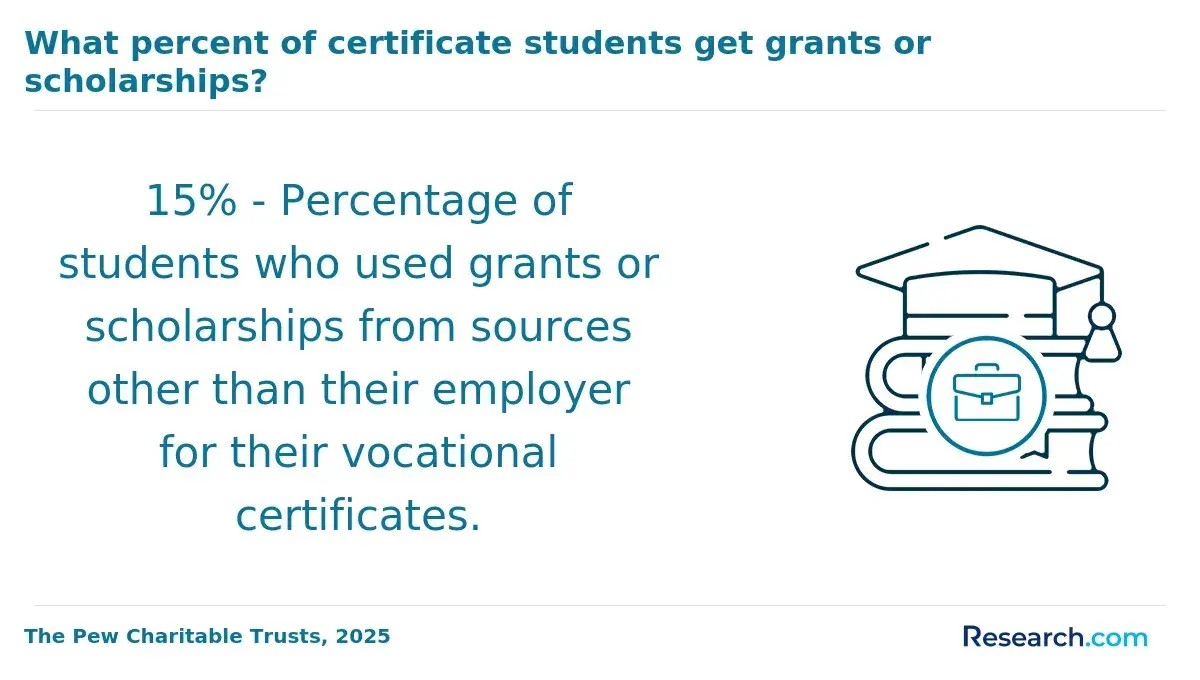
Financial aid can turn an already affordable law enforcement associate degree into a much lower-cost credential. The maximum Federal Pell Grant for the 2025-2026 award year is $7,395, which can cover a large share of tuition at many public two-year colleges for eligible students.
Students should start with aid that does not need to be repaid. Loans can be useful when necessary, but borrowing for an associate degree should be limited because many entry-level public safety roles have modest starting wages compared with later-career earnings.
The most common cost-reduction options include several federal, state, institutional, and employer-based sources. Students should compare them before choosing a school because aid rules can differ by enrollment status and program type.
- Federal Pell Grants for eligible undergraduate students who have not already earned a bachelor's degree.
- State grants or promise programs that reduce community college tuition for residents.
- Institutional scholarships for criminal justice, public safety, first-generation, adult learner, or academic merit students.
- Employer tuition assistance for security officers, corrections employees, dispatchers, military personnel, veterans, and public agency workers.
- Military education benefits, veteran benefits, and credit for military training when accepted by the college.
- Workforce development funding for students preparing for high-need public service or public safety roles in some regions.
Students should also complete the FAFSA even if they think they may not qualify for grants. Some colleges use FAFSA information to award campus-based aid, emergency grants, work-study, or state funding.
A common mistake is borrowing the full cost of attendance when tuition is already low. The published cost of attendance may include living expenses, transportation, and personal costs, but students who are studying online while living at home may not need to borrow that full amount.
Accreditation affects whether an online law enforcement associate degree is recognized by employers, eligible for federal financial aid, and transferable to other colleges. Students should first verify institutional accreditation through the school's accreditor and the U.S. Department of Education's recognized accreditation database.
Program quality also matters because law enforcement work requires judgment, ethics, communication, legal awareness, and documentation skills. A low-cost program that lacks qualified faculty, current curriculum, transfer pathways, or student support may provide weaker value than a slightly more expensive program with stronger outcomes.
The table below highlights quality indicators students should review. These factors help distinguish genuinely affordable programs from programs that are simply inexpensive.
| Quality factor | What to verify | Why it affects value |
| Institutional accreditation | The college is accredited by a recognized institutional accreditor | Supports financial aid eligibility and credit transfer |
| Transfer agreements | Formal pathways to bachelor's programs at public or private colleges | Prevents loss of credits when continuing education |
| Curriculum relevance | Courses include criminal law, ethics, policing, corrections, courts, communication, and report writing | Improves preparation for entry-level justice and public safety roles |
| Faculty background | Instructors have academic credentials and relevant justice-sector experience | Connects theory with real workplace expectations |
| Student support | Online advising, tutoring, library access, career services, and technical support | Can improve persistence and completion |
| Career transparency | The school can explain realistic job paths and limitations of the degree | Reduces the risk of inflated expectations |
Students should be cautious if a school implies that an associate degree alone guarantees employment as a police officer, detective, federal agent, or probation officer. Hiring standards are controlled by agencies, states, and employers, and they may include academy training, psychological screening, background investigation, physical testing, drug screening, citizenship requirements, or a bachelor's degree.
Another red flag is unclear transfer policy. If the student may pursue a bachelor's degree later, the school should be able to identify exactly which courses transfer, which count as electives only, and whether the associate degree satisfies lower-division requirements.
Flexible and accelerated online law enforcement associate degrees are best for students who need to balance school with work, military service, family responsibilities, or rotating shifts. Flexibility can improve completion odds, but only if the program's structure fits the student's schedule and learning style.
The strongest flexible programs usually combine online coursework, multiple start dates, generous transfer-credit policies, and advising for adult learners. However, students should check whether any skills-based, internship, academy, or testing requirement is tied to a physical location.
The table below compares features that can shorten or simplify completion. These features are especially important for working adults who cannot attend daytime classes on a traditional schedule.
| Flexibility feature | How it helps | What to ask before enrolling |
| Asynchronous online courses | Students can complete weekly work without logging in at a fixed class time | Are exams proctored live, online, or on campus? |
| Eight-week or accelerated terms | Students can focus on fewer courses at a time and still progress year-round | How many courses should working students take at once? |
| Multiple start dates | Students do not have to wait a full semester to begin | Are law enforcement core courses available every start date? |
| Transfer and prior learning credit | Prior college, military, academy, or professional learning may reduce required credits | What documentation is required, and is there a fee for evaluation? |
| Stackable certificates | Students can earn a shorter credential on the way to the associate degree | Do certificate credits apply fully to the degree? |
Students should be realistic about workload. A three-credit online course often requires substantial weekly reading, writing, discussion, and exam preparation. Criminal justice courses may also require case analysis, legal research, scenario writing, or detailed reports.
Accelerated completion tends to work best for students who already have college credits, strong writing skills, reliable internet access, and predictable weekly study time. Students new to college may get better value from a steady full-time or part-time schedule that reduces the risk of failed courses and repeated tuition.
An online law enforcement associate degree can support advancement, but its value depends on the role. For some students, it is an entry credential; for others, it is a stepping stone toward a bachelor's degree, supervisory work, specialized investigation, probation, emergency management, or graduate study later.
Students should choose the degree type based on long-term plans. AA and AS degrees usually emphasize general education and transfer, while AAS degrees usually emphasize applied workforce skills. The difference can determine how many credits count toward a bachelor's degree.
The table below explains how each associate degree type generally fits law enforcement and criminal justice goals. Policies vary by institution, so students should confirm transfer details in writing.
| Degree type | Primary purpose | Best for | Potential drawback |
| Associate of Arts | Broad liberal arts and transfer preparation | Students planning a bachelor's in criminal justice, sociology, public administration, or related fields | May include fewer applied law enforcement courses |
| Associate of Science | Transfer preparation with analytical or social science emphasis | Students considering criminal justice, forensic studies, cybersecurity, or data-oriented public safety pathways | Transfer fit depends on the receiving major |
| Associate of Applied Science | Career and technical preparation | Students seeking applied public safety, corrections, policing, or security preparation | Some technical credits may not transfer as major requirements |
An associate degree can also help current public safety workers qualify for promotion points, meet employer education preferences, or build writing and legal knowledge. Still, promotion policies vary widely, and students should not enroll without checking their agency's rules.
Students interested in legal support roles outside sworn law enforcement may compare this pathway with the cheapest paralegal certificate online, especially if they prefer case preparation, legal research, compliance, or court-related work over patrol or corrections.
For bachelor's transfer, students should request a degree audit before enrolling. The best audit shows which associate courses will satisfy general education, major, elective, and residency requirements at the target bachelor's institution.
How Should Students Choose the Cheapest Online Law Enforcement Associate Degree for Their Career Goals?
Students should choose the cheapest online law enforcement associate degree by matching the program to a specific career goal, not by tuition alone. The right program is affordable, accredited, completable on the student's schedule, and aligned with local hiring or transfer requirements.
A good decision process starts with the intended outcome. A student who wants to become a police officer may need academy eligibility and local agency hiring requirements more than a specialized online curriculum. A student who wants federal, probation, forensic, or administrative roles may need a transfer-ready degree that leads to a bachelor's program.
Use the following steps to compare programs in a practical order. This approach helps students avoid common mistakes that can make a cheap degree more expensive over time.
- Define the target role, such as patrol officer, corrections officer, dispatcher, probation support worker, investigator assistant, private security supervisor, or bachelor's transfer student.
- Check job postings and state agency rules to identify required education, academy training, certification, age, background, physical, and licensing standards.
- Verify institutional accreditation and ask whether the program is eligible for federal financial aid.
- Calculate total program cost using required credits, tuition, fees, books, technology, and any in-person requirements.
- Compare online availability course by course, not just the program's marketing page.
- Ask for a transfer-credit evaluation if you have prior college, military, academy, or professional training.
- Request written information about transfer pathways into bachelor's programs if advancement is part of your plan.
- Compare local entry-level wages with total net cost after grants and scholarships.
- Choose the program that offers the best balance of cost, completion time, transferability, and career relevance.
Students should avoid choosing a program based only on a "cheapest" ranking. Red flags include unclear accreditation, vague online availability, unusually high fees, weak advising, no transfer map, exaggerated salary claims, and claims that the degree automatically qualifies graduates for sworn law enforcement jobs.
Some students may be better served by a different pathway. Those interested in workplace safety, regulatory compliance, emergency preparedness, or environmental risk roles can compare public safety options with the best online environmental health and safety programs, which may align better with non-policing safety careers.
The strongest choice is usually the program that keeps debt low while protecting future options. For many students, that means a regionally accredited public community college associate degree with clear transfer agreements, realistic career preparation, and scheduling flexibility that supports completion.
Other Things You Should Know About Law Enforcement
Yes, if it comes from an accredited institution and the curriculum matches the employer's needs. Employers generally care more about accreditation, relevant coursework, communication skills, background eligibility, and required academy or certification completion than whether classes were online.
Possibly, but the degree alone is not enough in most cases. Police agencies usually require a hiring process, background investigation, physical testing, psychological screening, and academy training. Education requirements vary by state and department.
No. Law enforcement is one part of the criminal justice system. Criminal justice programs may also cover courts, corrections, criminology, ethics, juvenile justice, and legal systems, while law enforcement tracks focus more directly on policing and public safety operations.
It depends on the agency and your goals. If local departments hire without college, direct academy or employer-sponsored training may be faster. If you want stronger applications, transfer options, or long-term advancement, an affordable associate degree can be useful.
- Criminal Justice Salary Guide | All Criminal Justice Schools https://www.allcriminaljusticeschools.com/criminal-justice/criminal-justice-salaries/
- Best Online Associate Degree In Criminal Justice https://www.criminaljusticedegreeschools.com/rankings/best-online-associates/
- 2026 Best Online Law Enforcement Degrees https://www.onlineu.com/degrees/law-enforcement
- Find Top Online Bachelor's In Criminal Justice Programs https://www.accreditedschoolsonline.org/criminal-justice/bachelors/
- Associate Degree - Criminal Justice - Online | Monroe University https://www.monroeu.edu/academics/undergraduate-programs/school-criminal-justice/online-associate-degree-criminal-justice
- Criminal Justice (Online) https://www.lmc.edu/online-programs/criminal-justice/index.htm
- Salary and Benefits https://www.joinlapd.com/salary-and-benefits
- Is Getting an Associate’s Degree in Criminal Justice Worth it in 2025? https://www.neit.edu/blog/is-getting-an-associates-degree-in-criminal-justice-worth-it
- Online Associate in Criminal Justice | AcademicEarth.org https://academicearth.org/associate-in-criminal-justice/
- Starting Salaries: Information for Prospective Law School Applicants https://www.nalp.org/startingsalaries_prospective_students


