2027 Cheapest Online Bookkeeping Associate Degree Programs That Pay Well: Tuition, Duration, and Career Outcomes

Co-Founder and Chief Data Scientist
Choosing the cheapest online bookkeeping associate degree is really a cost-to-career decision: low tuition matters only if the program helps you qualify for realistic jobs, transfer credits, or advance later. The U. S. Bureau of Labor Statistics reported a May 2024 median wage of $49,210 for bookkeeping, accounting, and auditing clerks, making affordability especially important for students trying to avoid debt. This guide is for career changers, working adults, and first-time college students comparing tuition, completion time, financial aid, accreditation, and salary paths before enrolling.
Key Things You Should Know
- The cheapest online bookkeeping pathways are usually public community college accounting or accounting-and-finance associate degrees, with some in-state tuition rates near $76 per credit before fees.
- Bookkeeping, accounting, and auditing clerks had a May 2024 median wage of $49,210, while payroll and timekeeping clerks had higher median pay at about $53,400.
- The best ROI often comes from a low-cost accredited program that accepts transfer credits, prepares students for accounting software and payroll tasks, and can transfer into a bachelor's degree.
Which Are the Cheapest Online Bookkeeping Associate Degree Programs That Lead to Well-Paying Careers?
Bookkeeping-specific associate degrees are less common than online associate degrees in accounting, accounting technology, or accounting and finance. For most students, the practical target is an affordable online accounting associate program with courses in bookkeeping, payroll, spreadsheets, tax basics, business law, and accounting software; students who later want a broader pathway can compare it with an online accounting degree.
The table below highlights low-cost U.S. programs or program types that can prepare students for bookkeeping-related jobs. Tuition can change, and online availability may depend on course rotation, residency, and program updates, so students should confirm total cost with the school before applying.
| School or Program Type | Credential | Published Tuition Basis to Check | Estimated Tuition Before Fees | Best Fit |
| North Carolina community colleges such as Wake Tech, Fayetteville Tech, or Vance-Granville | AAS in Accounting and Finance or similar | State resident tuition commonly listed at $76 per credit | About $4,900 to $5,200 for a 65- to 68-credit program before fees | North Carolina residents seeking very low tuition and career-focused accounting courses |
| Georgia technical colleges offering online accounting associate options | Accounting AAS or accounting technology associate degree | Technical College System of Georgia tuition commonly listed near $107 per credit | About $6,800 for a 64-credit program before fees | Georgia residents seeking applied bookkeeping, payroll, and small-business accounting preparation |
| Local public community college with fully online accounting courses | AA, AS, or AAS in Accounting | In-district or in-state tuition set by the college or state system | Often lower than national private online tuition, but varies widely | Students who can use residency pricing and want transfer or local employer recognition |
| Northcentral Technical College and similar public technical colleges | Online accounting associate degree | Resident and nonresident tuition plus technical college fees | Typically higher than the lowest in-state community college rates but often below many private online options | Students who want structured technical training with online delivery |
| National online universities with associate accounting programs | AS or AAS in Accounting | Flat online tuition per credit | Often higher than public community colleges, sometimes around the high four figures to low five figures per year depending on pace | Students who need broad online access, frequent start dates, or generous transfer-credit policies |
The cheapest option is usually not a national online university; it is often a public community college in the student's state. However, a slightly higher-priced program may be worth considering if it offers stronger transfer agreements, more predictable online course availability, or better support for adult learners.
When comparing programs, look beyond the advertised tuition rate. The most career-relevant low-cost programs usually include the following features:
- Core accounting sequence covering financial accounting, managerial accounting, payroll, tax, and computerized accounting
- Hands-on work with spreadsheets and commonly used bookkeeping or accounting software
- Career services, internship options, or local employer connections for accounting clerk and payroll roles
- Clear transfer pathways to a bachelor's degree in accounting, business administration, finance, or management
- Regional institutional accreditation and, where relevant, business-program accreditation or state system approval
How Much Does an Online Bookkeeping Associate Degree Cost?
An online bookkeeping associate degree typically costs less at a public community college than at a private online institution. The College Board's 2024 Trends in College Pricing report listed average published tuition and fees for public two-year in-district students at about $4,050 for an academic year, which helps explain why local community colleges often beat national online providers on sticker price.
The table below shows the main cost categories students should include when estimating the real price of a two-year bookkeeping or accounting associate degree. This matters because a program with low tuition can still become expensive if it charges high online, technology, textbook, or graduation fees.
| Cost Category | What to Check | Why It Matters |
| Tuition per credit | Resident, nonresident, online, and out-of-district rates | This is the largest advertised cost, but it may not include mandatory fees |
| Required credits | Total credits needed for graduation, usually around 60 to 68 semester credits | A lower per-credit rate can be offset by a longer credit requirement |
| Online and technology fees | Per-course, per-credit, or semester-based online charges | These can add meaningful cost for fully online students |
| Books and software | Accounting texts, access codes, spreadsheet tools, and accounting software subscriptions | Bookkeeping programs often require digital platforms or accounting applications |
| Placement, testing, and graduation fees | Assessment, transcript, background check, or graduation costs | Small fees can add up across multiple terms |
| Lost work time | Reduced hours, childcare, or scheduling costs | Part-time study may protect income, while full-time study may speed completion |
To calculate total tuition, multiply the required credits by the tuition rate that applies to your residency status, then add mandatory fees. For example, a 65-credit program at $76 per credit would have $4,940 in tuition before fees, while the same credit load at $330 per credit would cost $21,450 before fees.
Common mistake to avoid: do not compare schools using only the per-credit rate. Ask each admissions or billing office for a full program cost estimate based on your residency, transfer credits, expected pace, and online status.
How Long Does It Take to Complete an Online Bookkeeping Associate Degree?
Most online bookkeeping or accounting associate degrees require about 60 to 68 semester credits. Full-time students often finish in about two academic years, while part-time working adults may need three years or longer depending on course load, transfer credits, and whether summer courses are available.
The table below compares common completion paths. Time matters for ROI because a cheaper program that takes much longer may delay earnings, while an accelerated option can reduce opportunity cost if the student can manage the workload.
| Enrollment Path | Typical Course Load | Common Completion Time | Best For |
| Full-time standard path | 12 to 15 credits per term | About 2 years | Students who can study consistently and want to enter the workforce sooner |
| Part-time path | 6 to 9 credits per term | About 3 to 4 years | Working adults, parents, and students balancing school with income needs |
| Accelerated path with summer courses | Year-round enrollment | Potentially less than 2 years | Students with strong time management and fewer outside obligations |
| Transfer-credit path | Varies based on accepted credits | Shorter if prior credits apply | Students with previous college coursework, dual enrollment, military credit, or exam credit |
Students should ask whether accounting courses are offered every term or only once per year. In sequential programs, missing one prerequisite can delay graduation even if general education courses are available online.
Before choosing the fastest option, compare the academic and financial trade-offs. A full-time schedule may produce faster job entry, but a part-time schedule may be better if it helps you avoid borrowing, keep employer benefits, or pay tuition out of pocket.
An associate degree can prepare students for entry-level bookkeeping, accounting support, payroll, billing, and administrative finance roles. Higher-paying accounting positions may require experience, advanced software skills, industry knowledge, certification, or a bachelor's degree; students who want a shorter credential first can also compare a bookkeeping certification with an associate degree.
The table below uses May 2024 U.S. Bureau of Labor Statistics wage data where national occupational categories are available. Local wages vary, so students should compare these medians with job postings in their own state or metro area.
| Career Path | Typical Associate-Degree Relevance | May 2024 Median Wage | What Can Raise Earning Potential |
| Payroll and timekeeping clerk | Associate coursework in payroll, accounting, and business software can be relevant | About $53,400 | Payroll systems experience, compliance knowledge, HRIS tools, and multi-state payroll exposure |
| Bookkeeping, accounting, and auditing clerk | One of the most direct career matches for bookkeeping and accounting associate degrees | $49,210 | QuickBooks, Excel, reconciliation, accounts payable, accounts receivable, and industry specialization |
| Tax preparer | Tax coursework may help, but seasonal work and additional training are common | About $49,000 | IRS tax-preparation knowledge, client service skills, and experience with tax software |
| Billing and posting clerk | Accounting, healthcare billing, or business-office coursework can be relevant | Often in the mid-$40,000 range nationally | Medical billing systems, revenue-cycle experience, and accuracy with data entry |
| Accountant or auditor | An associate degree can be a stepping stone, but a bachelor's degree is commonly expected | About $81,680 | Bachelor's degree, CPA eligibility where applicable, audit experience, and advanced accounting skills |
Students should be careful not to confuse median wages with starting pay. Entry-level bookkeeping jobs may pay below the national median, especially in lower-cost regions or small organizations, while experienced payroll or accounting specialists in higher-wage markets may earn more.
Automation is also changing the field. Routine data entry is increasingly handled by accounting software, bank feeds, and AI-assisted tools, so students should prioritize programs that teach reconciliation, error detection, reporting, payroll rules, spreadsheet analysis, and communication with managers or clients.
The best ROI is usually not the program with the lowest tuition alone. It is the program that combines low total cost, reasonable completion time, credible accreditation, job-relevant skills, and transfer value if the student later pursues a bachelor's degree.
The table below shows how different student situations can change ROI. Use it as a decision lens rather than a ranking, because wages, aid, transfer credits, and work schedules vary by student.
| Student Situation | Likely Best-Value Option | Why It May Offer Strong ROI | Risk to Watch |
| In-state student with access to a public community college | Online AAS, AS, or AA in accounting from a local public college | Low tuition and possible local employer recognition | Some courses may not be fully online every term |
| Working adult with prior college credits | Program with generous transfer-credit evaluation | Fewer credits to complete can reduce both tuition and time | Old accounting or business credits may not apply to current program requirements |
| Student planning a bachelor's degree | Transfer-oriented AA or AS in accounting or business | Credits may apply toward upper-division accounting or business coursework | AAS credits may transfer less smoothly to some universities |
| Student seeking fast employment | Career-focused AAS with payroll, spreadsheets, and accounting software | Applied coursework can align closely with clerk and payroll roles | May provide fewer general education credits for bachelor's transfer |
| Student outside a low-cost public system | Accredited national online option with strong transfer policy | Predictable online access may help completion | Higher tuition can weaken ROI if earnings goals are modest |
A basic ROI check is simple: compare total out-of-pocket program cost with realistic first-job wages in your area. If a program costs $5,000 before fees and local entry-level bookkeeping roles are available, the financial risk is very different from a program that costs $20,000 or more before fees for the same job target.
Students should avoid programs that are cheap but poorly aligned with their goals. Red flags include unclear accreditation, few accounting-specific courses, no transfer pathway, no published tuition details, limited student support, and marketing that implies high-paying outcomes without evidence.
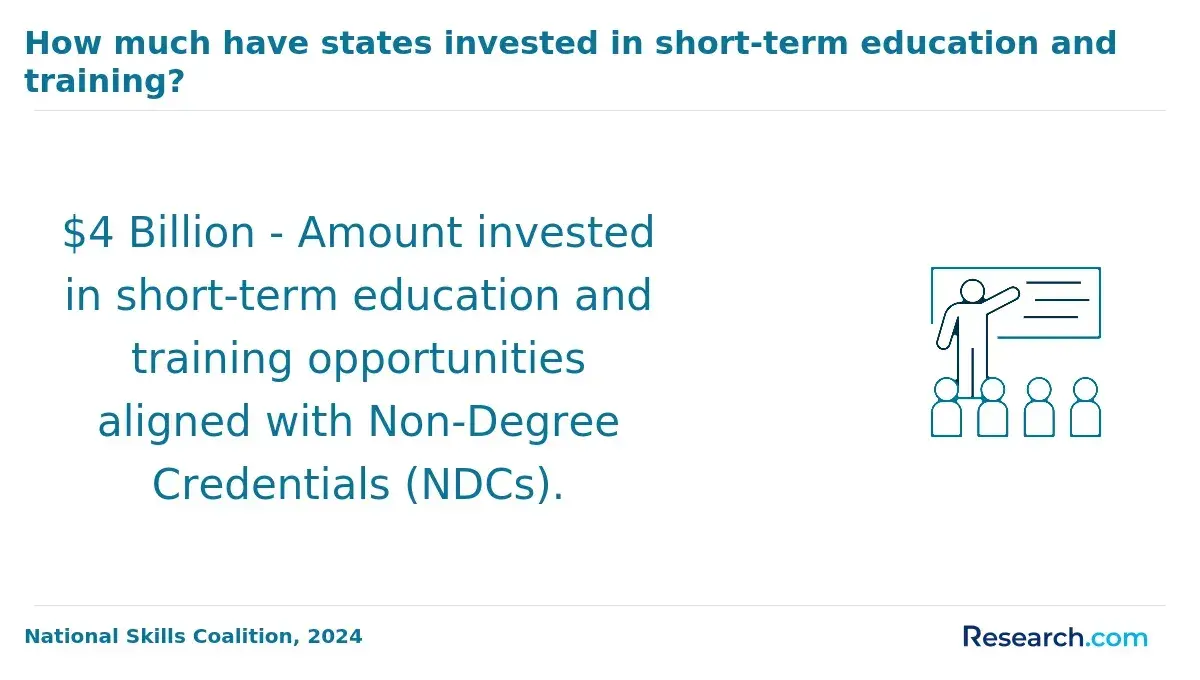
Financial aid can make a low-cost online associate degree even cheaper, especially at public community colleges. For the 2025-26 award year, the maximum federal Pell Grant remains $7,395, which can cover a large share of tuition at many community colleges for eligible students.
Students should compare aid before assuming they must borrow. The most useful funding sources for bookkeeping and accounting associate students often include the following:
- Federal Pell Grants for eligible undergraduate students who have not already earned a bachelor's degree
- State grants or promise programs that reduce community college tuition for residents
- Institutional scholarships from the college, foundation, or business department
- Employer tuition assistance or reimbursement for employees in administrative, finance, retail, healthcare, or office roles
- Work-study positions that may provide paid campus or remote administrative experience
- Military, veteran, or workforce-development benefits for eligible students
To avoid overborrowing, complete the FAFSA, request a full financial aid offer, and compare net cost rather than sticker price. Net cost means tuition and required expenses after grants and scholarships but before loans.
Ask the school whether aid covers online fees, summer courses, software, and required access codes. A program may look affordable during fall and spring terms but become more expensive if summer acceleration is not covered by the same aid package.
Accreditation is one of the biggest safeguards in choosing a cheap online bookkeeping associate degree. Regional or institutional accreditation affects federal financial aid eligibility, credit transfer, employer confidence, and the student's ability to continue into a bachelor's program.
The table below explains the quality signals that matter most when comparing affordable online programs. These factors help distinguish a genuinely low-cost program from one that may create transfer or employment problems later.
| Quality Factor | What to Verify | Why It Affects Value |
| Institutional accreditation | The college is accredited by a recognized U.S. accreditor | Supports financial aid eligibility and transfer credibility |
| Program curriculum | Courses include accounting, payroll, tax, spreadsheets, and computerized accounting | Ensures the degree teaches skills used in bookkeeping jobs |
| Transfer agreements | Articulation pathways with four-year colleges | Protects long-term value if the student later pursues a bachelor's degree |
| Faculty and support | Online tutoring, accounting lab support, advising, and instructor access | Improves the chance of completing quantitative coursework |
| Career preparation | Resume help, internship options, job boards, or employer partnerships | Connects coursework with entry-level job search needs |
| Transparent outcomes | Graduation, transfer, licensure, or employment information when available | Helps students assess whether marketing claims are supported |
Students should be cautious with programs that do not clearly identify accreditation status or that use vague claims about career outcomes. Also remember that quality is not determined by whether a school is public, private, nonprofit, or for-profit; the better question is whether the program is accredited, affordable for you, transferable, and aligned with your career goal.
Flexible online bookkeeping programs usually offer asynchronous courses, multiple start dates, summer enrollment, part-time pacing, and transfer-credit options. These features can be especially valuable for working adults who need to keep earning while studying.
The table below summarizes flexibility features that can shorten completion time or make a program easier to manage. A flexible program is not always cheaper per credit, but it may reduce missed work, commuting, and delayed graduation.
| Flexibility Feature | How It Helps | Question to Ask Before Enrolling |
| Asynchronous online courses | Students can complete coursework around work or family schedules | Are exams proctored live, and are there required login times? |
| Multiple start dates | Students do not have to wait a full semester to begin | Do accounting courses start every term or only general education courses? |
| Summer terms | Year-round enrollment can speed completion | Are required accounting courses offered in summer? |
| Transfer-credit acceptance | Prior coursework can reduce credits, cost, and time | How many credits can transfer, and which major courses must be taken at the school? |
| Credit for prior learning | Military, workplace, or exam-based learning may count in some programs | What documentation is required, and are fees charged for evaluation? |
| Stackable certificates | Students may earn a bookkeeping or accounting certificate on the way to the associate degree | Will certificate credits apply directly to the associate degree? |
Accelerated study works best for students with strong math readiness, reliable technology, and protected study time. If you struggle with quantitative courses or are returning to school after a long break, a slower pace may produce a better financial outcome by reducing the risk of failed or repeated courses.
Yes, but the pathway depends on the degree type. An AA or AS in accounting or business is often designed for transfer, while an AAS is usually more career-focused; students interested in management-heavy roles may later compare accounting pathways with a project management degree if they want to move into operations, office management, or process improvement.
Students should understand how the three common associate degree types differ before enrolling. The table below explains how each option may support employment and long-term education goals.
| Degree Type | Primary Purpose | Bookkeeping Career Value | Bachelor's Transfer Value |
| Associate of Applied Science | Direct workforce preparation | Often strong for bookkeeping, payroll, and accounting clerk roles | May transfer selectively, especially for technical credits |
| Associate of Science | Transfer plus quantitative business preparation | Useful for entry-level accounting support and future accounting study | Often stronger for accounting, finance, or business bachelor's pathways |
| Associate of Arts | Broad transfer-focused general education | May need enough accounting electives to be job-ready | Often useful for business administration transfer pathways |
An associate degree can support advancement from entry-level bookkeeping into senior bookkeeper, payroll specialist, accounts payable specialist, accounts receivable specialist, office manager, or accounting assistant roles. However, roles such as accountant, auditor, financial analyst, or CPA-track positions usually require a bachelor's degree or additional education.
Before enrolling, ask the college for a degree map showing which credits transfer to partner universities. If your long-term goal is a bachelor's degree, a slightly more expensive associate program with a guaranteed transfer agreement may offer better value than the lowest-tuition option with weak transferability.
How Should Students Choose the Cheapest Online Bookkeeping Associate Degree for Their Career Goals?
The right program should match your target job, budget, schedule, and future education plans. A student seeking fast bookkeeping employment may prioritize an AAS with accounting software, while a student aiming for management, analytics, or a bachelor's degree may need a more transferable business or accounting pathway; some may later explore a project management degree online if they move into team coordination or operations roles.
Use the following steps to compare programs in a practical order. This sequence helps you avoid choosing a school based only on marketing or the lowest advertised tuition.
- Identify your target job first, such as bookkeeper, payroll clerk, accounting assistant, billing specialist, or transfer student.
- Check local job postings to see which employers ask for an associate degree, software skills, experience, or certification.
- Confirm institutional accreditation and federal financial aid eligibility before comparing prices.
- Calculate total program cost using required credits, tuition, online fees, books, software, and graduation fees.
- Ask how many transfer credits the school will accept and whether prior coursework applies to accounting requirements.
- Compare the course list with job skills, including Excel, QuickBooks or similar software, payroll, tax basics, reconciliations, and reporting.
- Review online scheduling, course rotation, tutoring, advising, and whether required courses are available when you need them.
- Ask for transfer agreements if you may pursue a bachelor's degree later.
- Compare net cost after grants, scholarships, employer aid, and any required loans.
- Choose the lowest-cost accredited program that still supports your employment, transfer, and completion goals.
Some students should not choose an associate degree based primarily on low cost. If your goal is CPA eligibility, corporate accounting, auditing, financial analysis, or public accounting, a bachelor's pathway may be more appropriate from the start, even if you begin at a community college to save money.
Online programs can provide excellent financial value when they eliminate commuting and allow students to keep working. Campus-based programs may be better if you need in-person tutoring, local internships, or structured class time, so compare the full experience rather than assuming online is always cheaper or better.
Other Things You Should Know About Bookkeeping
Most bookkeeping jobs do not require a state license. Employers usually focus on accuracy, accounting software skills, payroll or tax familiarity, experience, and trustworthiness, though some roles may prefer certification.
Bookkeeping uses basic arithmetic more than advanced math, but it requires precision, organization, and comfort with spreadsheets. Students who dislike detailed work, deadlines, or error-checking may find it challenging.
Yes, many bookkeeping tasks can be done remotely using cloud accounting software, document-sharing tools, and online banking feeds. Remote roles may still require experience, strong communication, and knowledge of data security practices.
Students should build skills in Excel or Google Sheets and become familiar with small-business accounting platforms such as QuickBooks or similar systems. Payroll, invoicing, and expense-tracking tools can also improve job readiness.
- Accounting Career Path: A Guide to Accounting Careers - Intuit https://www.intuit.com/blog/life-at-intuit/intuit-experts/accounting-careers/
- What Can I Do with an Associate's in Accounting? - Great Business Schools https://www.greatbusinessschools.org/degrees/accounting-associates-degrees/
- Best Online Associates in Accounting 2025 | Accounting.com https://www.accounting.com/degrees/accounting/associate/best-online-programs/
- Online Bookkeeping Certificate Program | Self-Paced Course - USCI https://www.uscareerinstitute.edu/online-bookkeeping-specialist-school
- How long does it take to qualify as a Bookkeeper? https://www.icb.org.za/how-long-to-qualify-as-a-bookkeeper/
- About Online Accounting Degrees https://www.bestonlineaccountingdegree.org/
- Bookkeeping Training vs. Accounting Degrees: Key Differences and Career Insights - Universal Accounting School https://universalaccountingschool.com/bookkeeping-training-vs-accounting-degrees-key-differences-and-career-insights/
- CourseCareers https://coursecareers.com/blog-posts/accounting-degree-vs-bookkeeping-certificate-vs-practical-online-training
- Bookkeeping | Assiniboine College https://assiniboine.net/programs/bookkeeping
- What can you do with an associate degree in accounting? https://www.becker.com/blog/ea/what-can-you-do-with-an-associate-degree-in-accounting