2027 Cheapest Online Addiction Counseling Support Associate Degree Programs That Pay Well: Tuition, Duration, and Career Outcomes

Co-Founder and Chief Data Scientist
Choosing a cheap online addiction counseling support associate degree is really a cost-versus-career decision. Substance use, behavioral disorder, and mental health counselor roles reported a May 2024 median wage of $59,190, according to BLS wage data, but entry requirements vary by state and employer. This guide is for students comparing affordable online associate programs, career changers entering human services, and learners planning to transfer later. You'll learn how tuition, program length, accreditation, licensure limits, and realistic career outcomes affect value.
Key Things You Should Know
- The best-value programs are usually public community colleges charging low per-credit tuition; national public two-year published tuition and fees averaged about $4,050 for 2024-25, before books, technology, and online fees.
- An online addiction counseling support associate degree typically requires 60 to 65 credits and takes about two years full time, but accelerated terms, transfer credits, and prior learning can shorten the timeline.
- Higher-paying counseling careers often require additional certification, supervised hours, a bachelor's degree, or a master's degree; associate graduates most commonly qualify for support roles such as substance use counseling assistant, behavioral health technician, case aide, or peer support worker.
Which Are the Cheapest Online Addiction Counseling Support Associate Degree Programs That Lead to Well-Paying Careers?
The cheapest online addiction counseling support associate degree programs are usually offered by regionally accredited public community colleges with in-state or district tuition. The strongest options combine low tuition with addiction counseling coursework, human services field experience, transfer pathways, and preparation for state-recognized support credentials.
The table below highlights affordable U.S. options to investigate first. Tuition changes frequently, and online availability may vary by state, residency, clinical placement rules, and term schedule, so students should confirm the current catalog, fees, and distance-learning authorization before applying.
| School | Online or low-residency program focus | Degree type | Typical credit range | Why it may offer strong value |
| Coastline College | Human services and addiction-related preparation | AA | About 60 units | California community college tuition can be especially low for state residents, and the AA structure may support transfer into social work, psychology, or counseling-related bachelor's programs. |
| Rio Salado College | Addictions and substance use disorders | AAS | About 60 to 64 credits | Designed for online adult learners, with a workforce-oriented curriculum that can support entry-level behavioral health and substance use roles where permitted. |
| Central Texas College | Chemical dependency counseling or human services pathway | AAS | About 60 credits | Often attractive to working adults and military-affiliated learners because of online course availability, transfer-credit options, and career-focused associate pathways. |
| Sinclair Community College | Addiction services | AAS | About 60 credits | Career-focused addiction services coursework can be useful for students seeking supervised support roles or state credential preparation in Ohio and nearby labor markets. |
| Northcentral Technical College | Substance use disorder counseling | Associate degree | About 60 credits | Offers a direct substance use disorder counseling curriculum with practical preparation for human services and behavioral health settings. |
| Minnesota State Community and Technical College | Alcohol and drug counseling | AAS | About 60 credits | Good fit for students who want a clearly defined addiction counseling pathway and plan to meet state-specific supervised practice or credential requirements. |
Students comparing these programs should not rank them by sticker price alone. A very low-cost program may be less valuable if key addiction counseling courses are not offered online every term, credits do not transfer cleanly, or the curriculum does not align with the credential required in the student's state.
If you are comparing broader counseling pathways beyond addiction support, a guide to the cheapest online counseling degree can help you see how associate, bachelor's, and graduate options differ in cost and career reach.
How Much Does an Online Addiction Counseling Support Associate Degree Cost?
An online addiction counseling support associate degree can cost a few thousand dollars at a public community college for in-state students, while out-of-state, private, or higher-fee online programs can cost substantially more. The most useful comparison is total completion cost, not just advertised tuition per credit.
College Board's 2024 pricing data placed average published tuition and fees at public two-year in-district colleges at about $4,050 for the academic year. That figure matters because many addiction counseling support associate programs are housed at community colleges, where staying in district or in state can make the degree far more affordable.
The table below shows the cost categories students should total before choosing a program. These items are often handled differently by online colleges, so two programs with similar tuition can have different final prices.
| Cost item | Why it matters | What to ask the school |
| Tuition per credit | This is the largest visible cost and is usually multiplied by 60 to 65 credits. | Is the online rate different for in-state, out-of-state, or district students? |
| Mandatory fees | Technology, student services, registration, distance learning, and graduation fees can raise the final bill. | Can you provide a full program cost sheet, not just per-credit tuition? |
| Books and course materials | Counseling, psychology, ethics, and human services texts can add recurring expenses. | Do courses use open educational resources or textbook-inclusive pricing? |
| Fieldwork or practicum costs | Some programs require supervised placements, background checks, immunizations, or liability coverage. | Will I need to complete in-person requirements near my home? |
| Transfer-credit evaluation | Accepted credits reduce both cost and time, but evaluation rules vary. | How many prior college, military, or exam credits can apply to the degree? |
To estimate your likely cost, multiply required credits by the tuition rate that applies to your residency status, then add required fees, books, and fieldwork expenses. A program that appears $1,000 cheaper at first can become more expensive if it requires extra terms, nontransferable credits, or in-person costs you did not budget for.
How Long Does It Take to Complete an Online Addiction Counseling Support Associate Degree?
Most online addiction counseling support associate degrees take about two years of full-time study. Part-time students commonly take three or more years, especially if they work full time, need developmental coursework, or complete practicum requirements around family and job schedules.
The timeline depends less on the word "online" and more on credit load, course sequencing, transfer credits, and whether required addiction counseling courses are offered every term. This is important because longer completion time can reduce ROI by delaying earnings and adding fees.
| Enrollment pace | Common course load | Typical completion pattern | Best fit |
| Full time | About 12 to 15 credits per term | Roughly two academic years | Students who can dedicate substantial weekly time to coursework and want the fastest standard path into the workforce or transfer. |
| Part time | About 6 to 9 credits per term | Often three to four years | Working adults, caregivers, and students who need a lower semester workload. |
| Accelerated terms | Shorter 5-, 7-, or 8-week courses | Potentially faster if courses are available year-round | Self-directed students who can handle compressed reading, writing, and discussion schedules. |
| Transfer-heavy pathway | Varies by accepted credits | Can shorten the degree significantly | Students with prior college credits, military training, or completed general education courses. |
Before enrolling, ask whether addiction counseling courses must be taken in a specific sequence. A cheap program may still take longer than expected if one required course is offered only once per year.
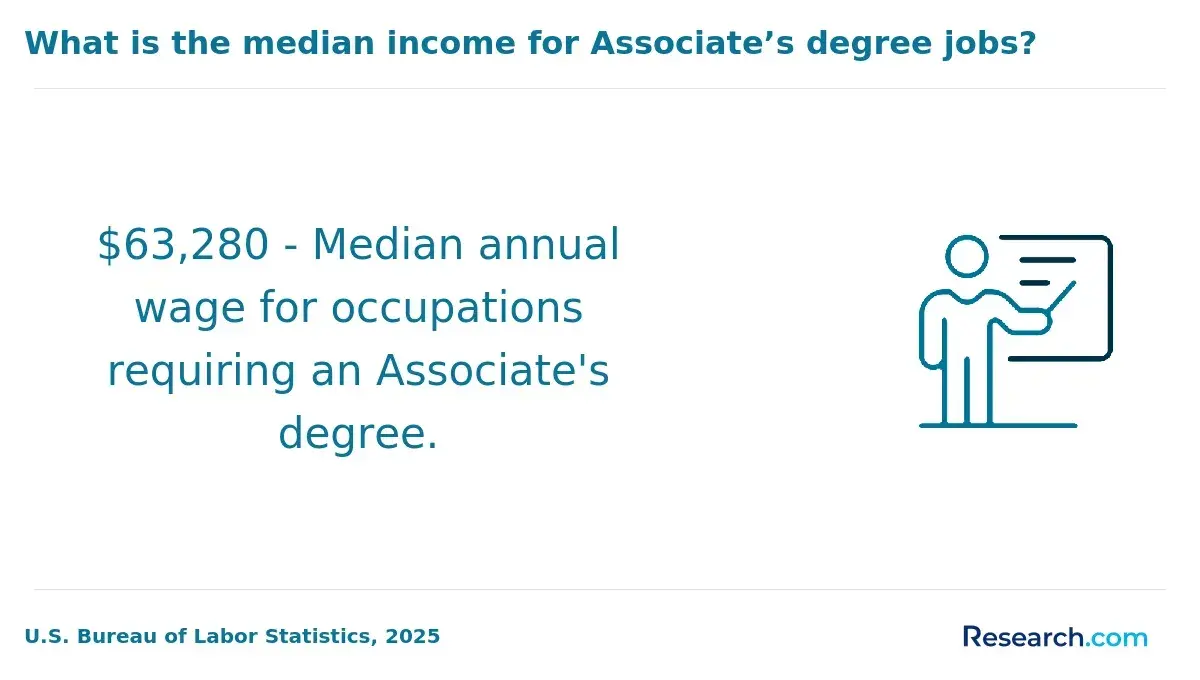
An associate degree in addiction counseling support most often leads to entry-level or paraprofessional roles, not independent clinical counseling. Salaries depend on state credential rules, employer type, local demand, shift schedules, and whether the role involves case management, crisis response, residential care, or administrative support.
The table below uses May 2024 U.S. wage data for related occupations to show where associate-level preparation may fit. Median wages are not entry-level guarantees, but they help students compare the earning ceiling and advancement potential of different pathways.
| Career path | Typical associate-level access | May 2024 median annual wage | Important limitation |
| Substance abuse, behavioral disorder, and mental health counselor | Possible in some states or agencies with additional certification and supervision | $59,190 | Many counseling roles require a bachelor's or master's degree, supervised hours, or state licensure beyond an associate degree. |
| Community health worker | Often possible with associate-level training plus employer or state-specific preparation | $49,900 | Jobs may focus on outreach, education, navigation, and prevention rather than direct counseling. |
| Social and human service assistant | Common entry point for associate graduates | $44,240 | Advancement may require a bachelor's degree in human services, social work, psychology, or counseling. |
| Psychiatric technician | Possible in behavioral health, residential, hospital, or crisis settings depending on state rules | $42,590 | Some states or employers require separate licensing, certification, or in-person clinical training. |
| Peer support specialist | Possible with lived-experience requirements and state-approved training | Varies widely by state and employer | Certification rules often depend on recovery experience, training hours, and supervision rather than the associate degree alone. |
The highest salary path usually comes from stacking the associate degree with state-recognized addiction counseling credentials, supervised experience, and later bachelor's or master's education. Students should compare local job postings before enrolling because some regions hire associate-prepared substance use support workers readily, while others reserve counseling titles for bachelor's- or master's-prepared candidates.
The best ROI comes from a program that is low-cost, completable on time, recognized by employers, aligned with state credential rules, and transferable if you later need a higher degree. The cheapest tuition does not automatically create the best return if the degree does not lead to the role you want.
A practical ROI comparison should weigh tuition against realistic first-step jobs, not only the highest long-term counseling salaries. The table below shows how different associate degree structures can affect value.
| Degree structure | Best ROI when | Risk to watch | Career-value takeaway |
| AA in human services or addiction studies | You plan to transfer to a bachelor's degree and want lower-cost general education credits. | It may include fewer workforce-specific addiction counseling courses than an AAS. | Strong long-term value if transfer agreements are clear and credits apply to the major. |
| AS in behavioral science or human services | You want transfer flexibility with more social science or research-oriented coursework. | Program naming may not match state addiction credential requirements. | Good option for students planning graduate education later. |
| AAS in addiction counseling or substance use disorder counseling | You want job-focused training and may seek support roles soon after graduation. | AAS credits may not transfer as smoothly into every bachelor's program. | Can provide strong short-term workforce value if aligned with local credential rules. |
| Embedded certificate-to-associate pathway | You want to earn a short credential first, work, then complete the associate degree. | Certificate credits must apply directly to the associate degree to avoid wasted credits. | Useful for working adults who want staged progress and lower upfront risk. |
For students who eventually want licensed counseling roles, ROI should include the cost of future education. If your target job requires graduate preparation, comparing associate options now with future bachelor's and master's pathways can prevent expensive detours; some students eventually explore online masters programs for counseling after completing transfer-oriented undergraduate study.
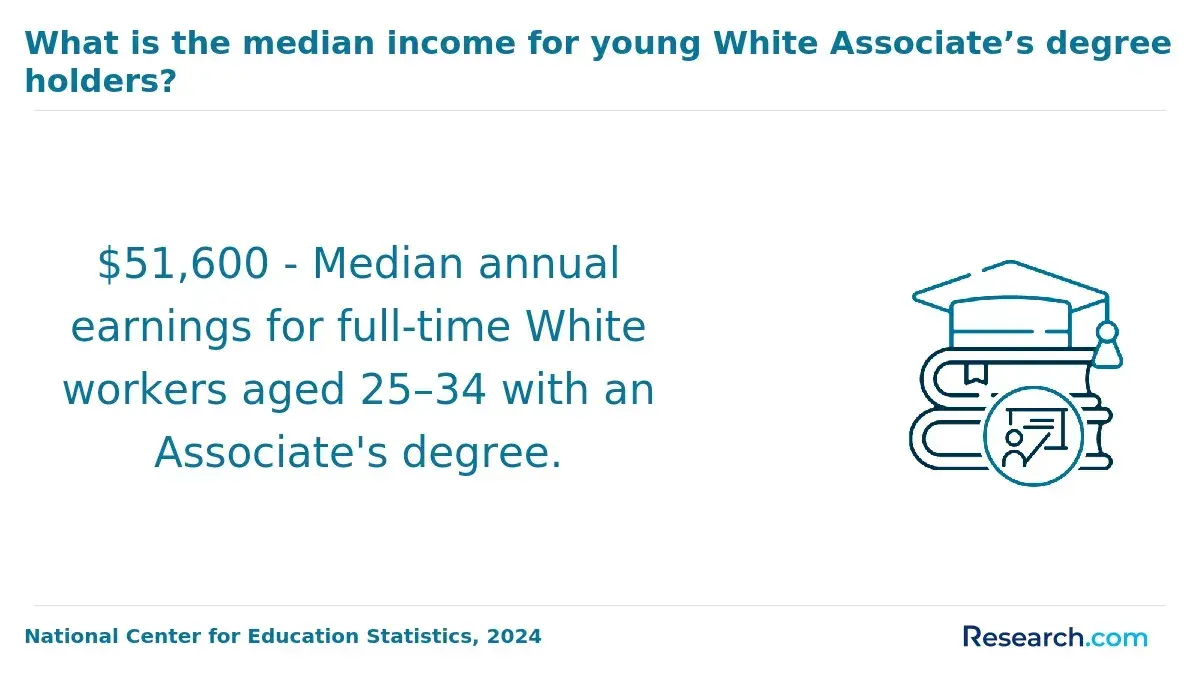
Financial aid can make a low-cost online associate degree significantly cheaper, especially at public community colleges. The federal Pell Grant maximum for 2025-26 is $7,395, which means eligible students at lower-cost two-year colleges may cover a large share of tuition and fees without borrowing.
Students should look beyond federal loans and ask each school which aid sources can be applied to online associate programs. The most useful options usually include grants, scholarships, tuition waivers, and employer support.
- Federal Pell Grants and state need-based grants can reduce out-of-pocket cost for eligible students who complete the FAFSA.
- Community college foundation scholarships may support human services, behavioral health, first-generation, adult learner, or local workforce students.
- Workforce development funds may be available when addiction counseling support roles are considered shortage-area or public-service occupations in the student's region.
- Employer tuition assistance may help students already working in residential treatment, behavioral health, social services, corrections, hospitals, or nonprofit agencies.
- Military, veteran, and dependent education benefits may apply if the institution is approved for those programs.
Borrow only after calculating the full degree cost and likely entry-level wage in your area. Even a modest loan can feel burdensome if the first job after graduation is part time, grant-funded, or lower-paid than the national median.
Accreditation is one of the clearest lines between a genuinely affordable program and a risky cheap option. Students should prioritize institutions accredited by an agency recognized by the U.S. Department of Education, because accreditation affects federal financial aid, credit transfer, employer acceptance, and admission to bachelor's programs.
Program quality also matters because addiction counseling support work involves ethics, confidentiality, crisis awareness, cultural responsiveness, documentation, referral skills, and boundaries. A low-cost program should still teach the practical and legal responsibilities of working with people affected by substance use disorders.
Use the following checks before enrolling, especially if a program advertises unusually low tuition or fast completion.
- Verify institutional accreditation through official federal or school accreditation records, not only marketing language on a landing page.
- Ask whether the curriculum aligns with your state's addiction counseling, substance use disorder technician, peer support, or human services credential requirements.
- Confirm whether fieldwork, practicum, or supervised experience can be completed in your state and whether the school helps identify approved sites.
- Review transfer agreements with public universities if you may pursue a bachelor's degree later.
- Check whether the program publishes completion, transfer, licensure, certification, or job-placement information for the specific degree, not just the college overall.
Common red flags include unclear accreditation, vague career promises, pressure to enroll quickly, hidden online fees, nontransferable credits, and claims that an associate degree alone qualifies graduates for independent counseling in every state. If you are still exploring lower-barrier counseling pathways, comparing easiest counseling degree programs can help you understand admissions flexibility without overlooking quality safeguards.
The most flexible online addiction counseling support associate programs are built for working adults. They commonly offer asynchronous courses, multiple start dates, summer enrollment, embedded certificates, transfer-credit review, and part-time scheduling.
Acceleration is valuable only when it does not weaken learning or create scheduling bottlenecks. Addiction counseling support students need time to build interviewing, documentation, ethics, referral, and crisis-response judgment, so the fastest option is not always the strongest option.
Look for these flexibility features when comparing programs:
- Asynchronous online courses that allow weekly deadlines instead of required live class meetings.
- Short terms, such as 7- or 8-week sessions, with enough course availability to avoid waiting for required classes.
- Year-round enrollment so students can use summer terms to finish faster.
- Credit for prior college coursework, military training, professional certifications, or approved prior learning.
- Local practicum placement options for students who cannot travel to campus.
- Stackable certificates that let students earn a shorter credential on the way to the associate degree.
Students who plan to continue beyond the associate level should also think ahead about future pacing. For example, learners who later pursue graduate counseling preparation may compare accelerated mental health counseling programs online, but those programs typically require a completed bachelor's degree first.
Yes, an online addiction counseling support associate degree can support advancement, but the path depends on whether the degree is transfer-oriented or workforce-oriented. AA and AS degrees are usually better for students planning a bachelor's degree, while AAS degrees often emphasize immediate job skills and may require more careful transfer planning.
For career advancement, the associate degree may help students move from entry-level service roles into case aide, behavioral health technician, residential support, recovery support, or intake-related positions. However, independent counseling, clinical diagnosis, psychotherapy, and many supervisory roles usually require higher education and state licensure.
Students planning to transfer should take these steps before choosing the cheapest option:
- Identify the bachelor's major you may pursue, such as psychology, social work, human services, behavioral health, or counseling-related studies.
- Ask whether the associate degree has an articulation agreement with public universities in your state.
- Confirm which credits apply to major requirements, not just general electives.
- Choose general education courses that satisfy both the associate degree and the intended bachelor's program.
- Ask whether fieldwork or addiction counseling courses will count toward future credential requirements.
An associate degree is a good stepping stone when it lowers the cost of the first two years, builds practical experience, and transfers efficiently. It may be a weaker choice if your target occupation clearly requires a bachelor's or master's degree and the associate program's credits do not apply toward that next credential.
How Should Students Choose the Cheapest Online Addiction Counseling Support Associate Degree for Their Career Goals?
The right program is the one that matches your target job, state requirements, budget, timeline, and transfer plan. A cheap online addiction counseling support associate degree is worth considering when it leads to recognized credits, realistic local employment options, and a clear next step after graduation.
Use this decision process to compare programs in a practical way:
- Define your target role first, such as peer support specialist, behavioral health technician, substance use counseling assistant, case aide, or future licensed counselor.
- Check your state's credential rules for addiction counseling support roles before assuming the associate degree is sufficient.
- Calculate total cost by adding tuition, fees, books, technology costs, background checks, fieldwork expenses, and graduation fees.
- Compare local wages using job postings and state labor data, because national medians may not reflect entry-level pay in your area.
- Verify accreditation and transfer agreements before prioritizing tuition discounts.
- Ask whether online courses, practicum placements, and required electives are available often enough to graduate on time.
- Choose AA or AS programs if transfer is the priority, and choose AAS programs if immediate workforce preparation is the priority.
- Avoid programs that promise high salaries without explaining licensure, supervised experience, or additional degree requirements.
The most common mistake is choosing the lowest advertised tuition without checking total cost and career fit. A slightly more expensive program can be the better investment if it has stronger transfer pathways, better state credential alignment, more reliable online scheduling, or fieldwork support near your home.
Other Things You Should Know About Addiction Counseling Support
It can be. Students should expect exposure to relapse, trauma, crisis situations, grief, and complex family or social issues. Good programs teach boundaries, ethics, documentation, referral procedures, and self-care because support workers need both compassion and professional limits.
Many programs require a background check, especially if students complete fieldwork in treatment centers, hospitals, shelters, correctional settings, or youth-serving agencies. A past record does not always prevent enrollment, but it may affect placement options, certification, or employment depending on state and employer rules.
Many students do, but workload matters. A full-time course schedule can require substantial weekly reading, writing, discussion, and project time. Working adults may prefer part-time enrollment unless they have flexible hours or strong support at home.
Most students need a reliable computer, high-speed internet, webcam, microphone, word processing software, and access to the school's learning platform. Some courses may use recorded role-play assignments, virtual simulations, or proctored exams.
- Top Online Addiction Counselor Degree and Certificate Options https://www.addiction-counselors.com/online-degrees/
- Christian Associate's in Addiction Counseling | Substance Abuse Treatment Degree Program Online - City Vision University https://www.cityvision.edu/lp/christian-addiction-counseling-associates-degree-program-online/
- 2025 Most Affordable Online Master's in Substance Abuse Counseling Degrees https://www.onlineu.com/most-affordable-colleges/substance-abuse-counseling-masters-degrees
- Addiction Counseling Online Degree Schools - Addiction Counselor Degree Programs https://beal.edu/programs/addiction-counseling/
- How Much Can You Make as an Addiction Counselor? https://www.hazeldenbettyford.org/graduate-school-addiction-studies/drug-alcohol-counselor-salary
- Degrees for Mental Health and Addiction Professionals https://www.drugrehab.com/guides/addiction-professional-degrees-careers/
- Arizona Substance Abuse Certification https://centerforaddictionstudies.com/certification-requirements/us-substance-abuse-certification/arizona/
- How to Become a Substance Abuse Counselor | 2026 https://www.publichealthonline.org/addiction/
- Human Services - Addiction Counseling and Treatment A.A.S. - Career Degree https://www.clcillinois.edu/programs/bssdv/human-services/addiction-counseling-and-treatment-aas-career-degree
- Certified Alcohol and Substance Abuse Counselor (CASAC) https://www.monroeu.edu/academics/undergraduate-programs/school-criminal-justice/certified-alcohol-and-substance-abuse