2027 Cheapest Accredited Online Women's Health Nurse Practitioner Degree Programs: Tuition, Fees, and Financial Aid

Co-Founder and Chief Data Scientist
Choosing an affordable online Women's Health Nurse Practitioner program is harder than comparing per-credit tuition. Mandatory fees, clinical placement costs, state authorization, and financial aid can change the real price. The Bureau of Labor Statistics lists the May 2024 median pay for nurse practitioners at $126,260, making cost control especially important for RNs planning an advanced-practice return.
This guide is for nurses comparing accredited online WHNP options and explains how to judge tuition, total cost, net price, accreditation, and funding before committing.
Key Things You Should Know
- The lowest advertised tuition is not always the cheapest total program: public universities with lower per-credit rates may add online, technology, clinical, background-check, and graduation fees that affect the final bill.
- Lower-cost accredited online WHNP options commonly appear at public universities such as Texas Woman's University, University of Missouri-Kansas City, University of South Alabama, University of Cincinnati, and Kent State University, but the best value depends on residency, transfer credits, clinical placement support, and aid.
- Graduate nursing students may use FAFSA-based aid if the institution and program are eligible; for 2024-2025 federal loans, Direct Unsubsidized Loans carried an 8.08% fixed interest rate and Grad PLUS Loans carried a 9.08% fixed interest rate, so grants, scholarships, and employer tuition benefits can materially reduce net price.
What Are the Cheapest Accredited Online Women's Health Nurse Practitioner Degree Programs?
The cheapest accredited online Women's Health Nurse Practitioner degree programs are usually MSN, BSN-to-DNP, or post-master's certificate pathways offered by regionally accredited universities with CCNE or ACEN nursing accreditation. For working RNs comparing broader affordability in nursing education, it can also help to review how costs are structured across cheapest accelerated nursing programs, because the same tuition-versus-fee problem appears at the graduate level.
The table below highlights affordable online or mostly online WHNP pathways that are commonly more cost-conscious than high-price private options. Published tuition can change by term, and some schools price by residency, course level, or online campus, so students should confirm the current catalog, fee schedule, and clinical requirements before applying.
| School | Online WHNP Pathway | Accreditation to Verify | Typical Cost Advantage | Cost Watchouts |
| Texas Woman's University | MSN or post-master's WHNP option with online coursework and clinical requirements | Regional institutional accreditation and CCNE nursing accreditation | Public university pricing can be especially competitive for Texas residents | Nonresident tuition, clinical requirements, and university fees can narrow the savings |
| University of Missouri-Kansas City | Online MSN or graduate certificate WHNP pathway | Regional institutional accreditation and CCNE nursing accreditation | Public online pricing may compare favorably with private universities | Confirm distance fees, campus visit expectations, and specialty course sequencing |
| University of South Alabama | Online MSN WHNP or post-graduate certificate pathway | Regional institutional accreditation and CCNE nursing accreditation | Large public nursing school with multiple NP tracks and online delivery | Course fees, clinical document tracking, and travel for required experiences may apply |
| University of Cincinnati | Online MSN WHNP and certificate options | Regional institutional accreditation and CCNE nursing accreditation | Established online WHNP pathway with transparent credit-based pricing | Total cost depends on credit load, residency classification, and university fees |
| Kent State University | Online MSN WHNP concentration | Regional institutional accreditation and CCNE nursing accreditation | Public university option that may be cheaper than many private MSN programs | Students should verify practicum placement expectations and any distance-learning fees |
| Frontier Nursing University | MSN, post-graduate certificate, or DNP-oriented women's health care pathway | Regional institutional accreditation and ACEN nursing accreditation | Mission-driven graduate nursing school with distance education experience | Credit count, required intensives, and travel can raise total attendance cost |
When comparing these programs, separate the posted tuition rate from the estimated total program cost. A program with a higher per-credit rate may become a better value if it accepts more transfer credits, offers stronger scholarships, provides clinical placement help, or reduces time away from work.
How Were the Cheapest Online Women's Health Nurse Practitioner Degree Programs Ranked?
Affordable WHNP programs should be ranked by what students are likely to pay for a complete, eligible, accredited pathway, not by the smallest number displayed on a tuition page. A transparent ranking should prioritize the total academic cost required to finish the credential and qualify for certification preparation.
A practical ranking method should weigh the following cost and quality factors together, because each one can change the real value of a low-tuition program:
- Confirm institutional accreditation from an agency recognized by the U.S. Department of Education or the Council for Higher Education Accreditation.
- Confirm programmatic nursing accreditation, usually CCNE or ACEN, for the specific nursing program or school of nursing.
- Calculate tuition by multiplying required credits by the correct per-credit rate for the student's residency and online status.
- Add mandatory university, online learning, clinical, technology, testing, background-check, and graduation fees.
- Review whether the program is eligible for FAFSA-based federal aid and whether the school participates in Title IV federal student aid.
- Compare clinical placement support, certification preparation, student services, and state authorization before treating the lowest price as the best value.
This approach avoids a common mistake: ranking a program first because it has the lowest per-credit tuition while ignoring a higher credit requirement or recurring semester fees. For WHNP students, the total number of required credits and the cost of clinical compliance can matter as much as the tuition rate itself.
How Can You Verify the Accreditation of an Online Women's Health Nurse Practitioner Degree Program?
Accreditation matters because it affects academic quality, federal aid eligibility, certification preparation, employer recognition, and sometimes state licensure. For an online Women's Health Nurse Practitioner program, students should check both the university's institutional accreditation and the nursing program's specialized accreditation.
Use this verification process before applying or paying a deposit. It is especially important for online students because state authorization and clinical placement rules can vary by where the student lives.
- Search the U.S. Department of Education's Database of Accredited Postsecondary Institutions and Programs for the university's institutional accreditation.
- Check the CCNE or ACEN directory to confirm that the nursing program, school, or degree level is currently accredited.
- Ask the admissions office whether the WHNP pathway prepares students for national women's health nurse practitioner certification.
- Confirm that the school is authorized to enroll students in your state and can support clinical experiences where you live.
- Ask whether any accreditation status is probationary, pending, newly granted, or scheduled for review during your enrollment.
Accreditation is not the same as state licensure approval. Even if a program is accredited, students should still contact their state board of nursing to verify that the degree, clinical hours, and certification pathway meet local advanced-practice requirements.
How Much Does an Accredited Online Women's Health Nurse Practitioner Degree Really Cost?
The real cost of an accredited online WHNP degree includes tuition, mandatory fees, books and supplies, clinical compliance expenses, travel, exam preparation, certification fees, and the opportunity cost of reduced work hours. Tuition is the academic price of courses; mandatory fees are required charges; total program cost is the full amount needed to finish; financial aid is funding that helps pay; and net price is what remains after grants, scholarships, employer support, and other aid that does not need to be repaid.
The table below shows the main cost categories students should request from every school. This is more useful than comparing tuition alone because two programs with similar tuition can have very different out-of-pocket costs.
| Cost Category | What It Usually Includes | Why It Changes Affordability |
| Tuition | Per-credit or flat-rate academic charge for required coursework | The largest direct cost, but not the only cost |
| Mandatory university fees | Technology, online learning, student services, library, health, graduation, or course fees | Can add recurring costs every term or every credit |
| Clinical compliance | Background checks, drug screening, immunization tracking, malpractice coverage, and documentation systems | Often required before practicum courses begin |
| Travel and intensives | Campus visits, skills intensives, lodging, transportation, and meals | Can erase savings from a lower online tuition rate |
| Books and supplies | Digital materials, clinical references, software, equipment, and exam preparation tools | Varies by course and may not be included in tuition estimates |
| Certification and licensure | National certification exam, state APRN application, transcripts, and background review | Usually arrives near graduation when students may already be financially stretched |
A careful estimate should also include time. A part-time pathway may cost less per term but more overall if fees repeat every semester, while a full-time pathway may reduce terms but require fewer paid work hours.
Which Tuition Models Make Online Women's Health Nurse Practitioner Degree Programs More Affordable?
Tuition models can make an online WHNP program more or less affordable depending on how quickly the student progresses, how many credits are required, and whether the school charges different rates by residency. Students who prefer flexible pacing may also want to compare general online learning formats such as self paced college courses, although most WHNP programs still require fixed clinical sequences and supervised practicum hours.
The table below compares common tuition models used in graduate nursing programs. The best model depends on a student's schedule, transfer credit eligibility, and ability to complete clinical requirements on time.
| Tuition Model | How It Works | When It May Save Money | Main Risk |
| Per-credit tuition | Students pay for each enrolled credit | Useful for part-time students and those transferring credits | Higher credit requirements can make the total cost larger than expected |
| Flat-rate term tuition | Students pay one rate for a credit range in a term | Can help full-time students who can safely take heavier course loads | Dropping or failing courses reduces the value of the flat rate |
| Resident and nonresident tuition | Public universities charge different rates by state residency | Can be very affordable for in-state students | Out-of-state students may pay much more unless an online rate applies |
| Online program tuition | Online students pay a separate distance or e-campus rate | Can remove the resident versus nonresident gap | Online fees may be added on top of the rate |
| Cohort tuition | Students move through a fixed sequence with a projected total cost | Helps with budgeting and planning | Less flexible if work, family, or clinical placement delays occur |
The most affordable model is usually the one that fits the student's pace without forcing course withdrawals, extra terms, or unpaid clinical delays. Before enrolling, ask whether the tuition rate is locked for the cohort or can increase before graduation.
What Fees and Hidden Costs Should Online Women's Health Nurse Practitioner Degree Students Expect?
Hidden costs are not always intentionally hidden; they are often scattered across the bursar's office, nursing handbook, clinical placement documents, and certification pages. Students comparing online health programs such as ultrasound tech school online will recognize a similar pattern: online coursework may be remote, but clinical training and compliance still create real costs.
Before choosing a WHNP program, ask for a complete fee sheet and clinical cost estimate. The following expenses are common enough that students should budget for them early:
- Online learning, technology, proctoring, simulation, or distance education fees charged by term, course, or credit.
- Clinical onboarding costs such as background checks, drug testing, immunization tracking, CPR renewal, malpractice insurance, and health documentation platforms.
- Travel costs for campus intensives, objective structured clinical examinations, orientation, skills labs, or required specialty experiences.
- Clinical placement costs if the school expects students to find preceptors or use third-party placement support.
- Certification preparation, national exam fees, state APRN application fees, official transcripts, and licensing documentation near graduation.
A red flag is a school that quotes only tuition and cannot explain non-tuition costs. A stronger program should be able to provide a sample cost of attendance, a list of recurring fees, and a clear explanation of who is responsible for securing clinical sites.
How Does FAFSA and Federal Financial Aid Work for Online Women's Health Nurse Practitioner Degree Programs?
FAFSA is the gateway to most federal student aid, including Direct Unsubsidized Loans and Grad PLUS Loans for eligible graduate students. Online students are generally considered for federal aid under the same broad rules as campus students when they attend an eligible institution, enroll in an eligible program, and meet federal requirements.
For 2024-2025, the U.S. Department of Education set fixed interest rates of 8.08% for graduate Direct Unsubsidized Loans and 9.08% for Grad PLUS Loans. That matters because borrowed aid reduces the amount due now but can substantially increase the long-term cost of the degree if students rely heavily on loans.
Students should complete these steps before assuming a WHNP program is affordable with aid:
- Confirm that the school participates in Title IV federal student aid programs.
- Submit the FAFSA for the correct academic year and list each school under consideration.
- Review the school's cost of attendance, not just tuition, because aid packages are built around the official budget.
- Compare grants, scholarships, employer tuition benefits, and loans separately so repayable debt is not mistaken for free aid.
- Ask whether enrollment intensity, part-time status, certificate status, or prerequisite courses affect aid eligibility.
Federal aid eligibility can differ for MSN, DNP, and post-master's certificate students. Some certificate pathways may be aid-eligible while others may not, so students should get confirmation from the financial aid office in writing.
Which Scholarships, Grants, and Tuition Benefits Can Help Pay for an Online Women's Health Nurse Practitioner Degree?
Scholarships, grants, and employer tuition benefits can lower the net price of an online WHNP program more effectively than simply choosing a lower tuition rate. For nurses still evaluating healthcare pathways before graduate school, entry-level options such as a medical assistant degree online 6 weeks program are a very different type of credential, but they illustrate why students should match funding strategy to the exact credential and career level.
WHNP students should search for funding from several sources because awards may be small individually but meaningful together. The most useful categories include:
- School-based graduate nursing scholarships that may be awarded by merit, need, specialty, leadership, rural service, or diversity goals.
- State nursing workforce grants or loan repayment programs tied to shortage areas, public service, or in-state employment commitments.
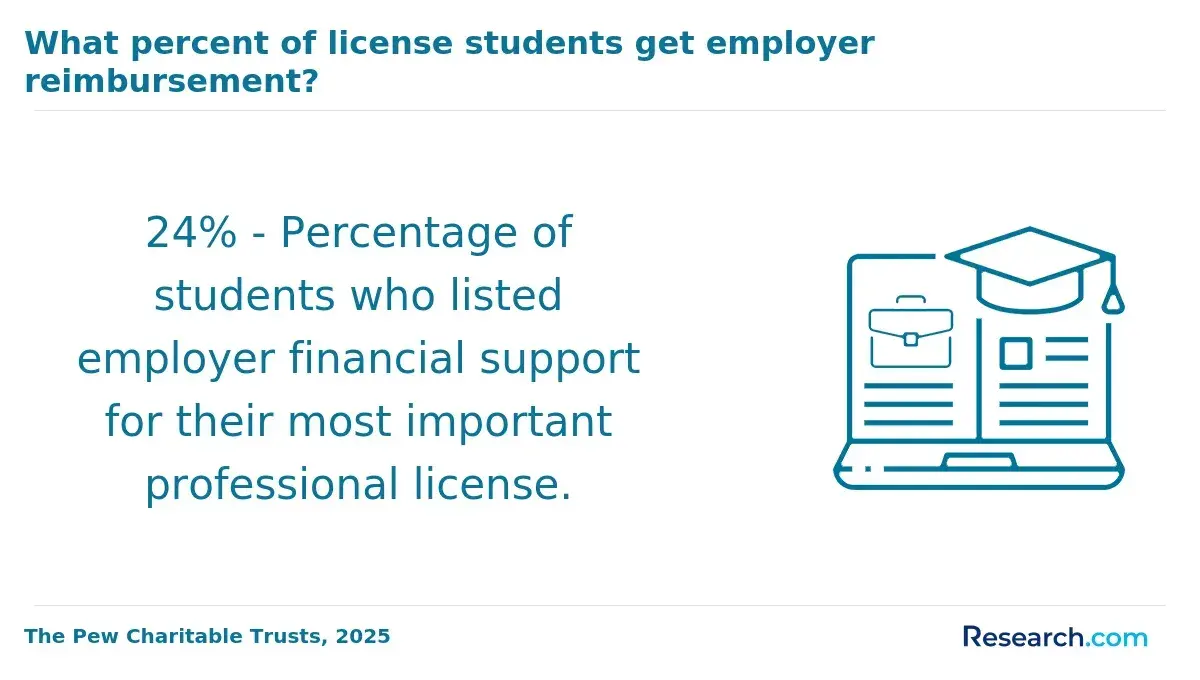
- Employer tuition reimbursement, tuition advancement, professional development funds, or clinical ladder benefits for RNs.
- Professional association scholarships for nurses pursuing women's health, reproductive health, maternal health, or advanced-practice roles.
- Military, veteran, public service, or community health funding programs for eligible students.
Scholarships and grants usually do not need to be repaid if students meet the terms, while loans must be repaid with interest. Before counting on an award, ask whether it is renewable, whether it requires full-time enrollment, and whether dropping a course can trigger repayment.
Can Transfer Credits, Prior Learning, and Competency-Based Study Lower the Cost of an Online Women's Health Nurse Practitioner Degree?
Transfer credits and prior graduate coursework can reduce the cost of a WHNP program, but the rules are strict because advanced-practice nursing programs must document specific didactic and clinical preparation. Nurses comparing post-master's options in other specialties, such as shortest online PMHNP certificate programs, should use the same caution: shorter does not always mean cheaper if the school requires additional bridge courses or clinical hours.
Students with prior MSN, DNP, or graduate nursing credits should request a formal transfer evaluation before enrolling. The following questions can reveal whether transfer credit will actually lower the bill:
- How many graduate credits can be transferred into the WHNP pathway?
- Are advanced pathophysiology, pharmacology, and health assessment courses accepted if they were completed several years ago?
- Does the program require a minimum number of credits to be completed in residence at the university?
- Can prior clinical hours count, or must all WHNP specialty hours be completed through the new program?
- Will transferring credits reduce tuition only, or will semester-based fees remain the same?
Competency-based tuition is less common in WHNP education than in some undergraduate online programs because clinical hours, certification standards, and faculty-supervised assessment are tightly regulated. If a school advertises accelerated or competency-style pacing, verify that the format still meets certification and state board expectations.
How Should Students Compare the Net Price, Quality, and Return on Investment of Online Women's Health Nurse Practitioner Degree Programs?
The best-value online WHNP program is the one that balances low net price, recognized accreditation, completion feasibility, clinical support, certification preparation, and career fit. The Bureau of Labor Statistics projects nurse practitioner employment to remain a high-growth field in its 2024-2034 outlook, but that labor-market strength should not be treated as a reason to overborrow.
Use the table below to compare price against value. A program can be inexpensive but risky if it lacks support, and a more expensive program may be reasonable if it improves completion likelihood or reduces unpaid delays.
| Comparison Factor | Lower-Cost Signal | Higher-Value Signal |
| Net price | Tuition and fees are low after scholarships and employer aid | The school provides a clear aid offer and realistic cost of attendance |
| Accreditation | Institution and nursing program are properly accredited | Status is current, transparent, and aligned with certification preparation |
| Clinical support | Students can complete practicums near home | The program gives structured placement guidance and clear site approval timelines |
| Program length | Fewer credits are required because prior coursework applies | The timeline is realistic for work, family, and clinical availability |
| Career alignment | The degree meets the student's women's health practice goal | Curriculum, faculty expertise, and clinical experiences match desired patient populations |
| Debt risk | Borrowing is limited after gift aid and payment plans | Projected monthly repayment is reasonable compared with expected career path and local wages |
A simple decision rule works well: choose the lowest net price among programs that are accredited, state-authorized, clinically feasible, and aligned with your certification goal. If two programs are close in price, prioritize the one with stronger clinical placement transparency, better advising, and clearer completion requirements.
Students comparing timelines across healthcare education should avoid assuming that every fast online credential leads to the same outcome. A WHNP degree is a graduate APRN pathway, while shorter allied health or nursing-entry programs serve different goals and cost structures.
Other Things You Should Know About Women's Health Nurse Practitioner
Yes, an online WHNP degree can be respected when it comes from a properly accredited university and nursing program. Employers usually focus on accreditation, certification eligibility, clinical preparation, licensure, and relevant RN experience rather than whether lectures were online.
It depends on the school. Some programs provide active placement support, while others expect students to identify potential sites and preceptors for approval. This is one of the most important questions to ask because clinical delays can increase both time and cost.
It can be cheaper if the student already has an MSN and the school accepts prior graduate coursework. However, the total cost depends on required specialty credits, clinical hours, fees, and whether the certificate is eligible for financial aid.
Many students work while enrolled, especially in part-time programs. However, clinical practicum hours, exams, and intensives can make full-time work difficult during certain terms, so students should review the clinical schedule before choosing a pace.
References
- FAQ: Are there any online RN to MSN WHNP programs? https://www.onlinefnpprograms.com/faqs/online-rn-to-msn-whnp-programs/
- Online WHNP Program | MSN Women's Health Nurse Practitioner | Carlow https://online.carlow.edu/programs/msn-womens-health-nurse-practitioner/
- Women's Health Nurse Practitioner (NP) Programs - Nurse Practitioner Degrees https://npdegrees.org/degrees/np-masters-degrees/womens-health-np-programs/
- Scholarships & Financial Aid https://www.aacnnursing.org/students/scholarships-financial-aid
- 2025 Most Affordable Online Nurse Practitioner Programs https://www.onlineu.com/most-affordable-colleges/nurse-practitioner-masters-degrees
- American Association of Nurse Practitioners (AANP) Scholarships https://www.aanp.org/education/professional-funding-support/scholarships
- Apply to the Nurse Corps Scholarship Program https://bhw.hrsa.gov/programs/nurse-corps/scholarship/apply
- Online RN to MSN Women's Health Nurse Practitioner Programs https://www.rntomsn.org/programs/nurse-practitioner/womens-health/
- Online Women's Health Nurse Practitioner (WHNP) Programs https://nursinglicensemap.com/nursing-degrees/online-nurse-practitioner-programs/whnp/
- Top Online WHNP Programs 2026: Comprehensive Rankings https://www.npschools.com/rankings/all-online-whnp-programs