2027 Cheapest Accredited Online Reading & Literacy Degree Programs That Accept FAFSA

Co-Founder and Chief Data Scientist
Choosing an online reading and literacy degree is really a cost-and-credential decision: the program must be accredited, affordable, and useful for teaching, intervention, or literacy leadership goals. The stakes are higher because federal data for 2024-25 keeps the maximum Pell Grant at $7,395, while many graduate literacy programs do not qualify for Pell at all. This guide helps teachers, career changers, and education majors compare FAFSA-eligible options, estimate real out-of-pocket cost, avoid accreditation mistakes, and decide whether the cheapest program is also the best long-term value.
Key Things You Should Know
- Most online reading and literacy degrees that lead to specialist, endorsement, or leadership roles are master's programs, so FAFSA usually means federal loans, TEACH Grants, school scholarships, or employer aid rather than Pell Grants.
- Low-cost accredited online reading and literacy master's programs commonly fall near the $9,000 to $15,000 tuition range before fees and aid, but the lowest published tuition is not always the lowest net price.
- The strongest value comes from combining institutional accreditation, Title IV participation, state-aligned reading specialist requirements, transfer credit acceptance, and manageable borrowing relative to educator salary expectations.
Which Are the Cheapest Accredited Online Reading & Literacy Degree Programs That Accept FAFSA?
The cheapest accredited online reading and literacy degree programs that accept FAFSA are usually offered by public universities and some nonprofit or accredited private institutions with federal student aid participation. "Accept FAFSA" means the institution participates in Title IV federal student aid, but students still need to confirm that the specific online degree, enrollment status, and course load qualify for aid.
The table below highlights affordable online reading and literacy degrees that are commonly positioned as low-tuition options for educators. Tuition can change by term, residency, fees, and course sequence, so use these figures as a comparison starting point and verify the current total cost directly with each school's financial aid office.
| School | Online reading or literacy degree | Typical credits | Estimated tuition before aid | Accreditation and FAFSA relevance | Best fit |
| University of West Georgia | M.Ed. in Reading Instruction | About 30 | Often near the low $9,000s before fees | Institutionally accredited public university; students should confirm the online graduate program's aid eligibility | Georgia and regional teachers seeking a low-cost reading-focused master's |
| Arkansas State University | M.S.E. in Reading | About 30 | Often around $10,500 before fees | Institutionally accredited public university with federal aid participation | Licensed teachers seeking an online reading degree with a structured format |
| Fort Hays State University | M.S.E. in Reading Specialist | About 36 | Often around $11,500 before fees | Institutionally accredited public university with federal aid participation | Students who want a public-university option with a long-running virtual college model |
| Eastern New Mexico University | M.Ed. with reading or literacy-related emphasis options | Often 30 to 36 | Commonly in the lower-cost public university range | Institutionally accredited public university; aid depends on degree plan and enrollment status | Cost-sensitive students comparing public online graduate education programs |
| University of the Cumberlands | Master's-level literacy or teacher education pathways with reading-related coursework | Varies by plan | Often in the low-to-mid $10,000s before fees | Institutionally accredited private nonprofit university with federal aid participation | Teachers who want a private nonprofit option with competitive online graduate tuition |
| Emporia State University | Reading specialist or curriculum-related graduate literacy pathways | Varies by plan | Often in the affordable public graduate range | Institutionally accredited public university; students should verify current endorsement alignment | Educators comparing literacy credentials tied to state requirements |
| University of Louisiana Monroe | M.Ed. in Reading or reading-related education pathway | Often about 30 to 36 | Typically higher than the lowest-cost public options but still competitive | Institutionally accredited public university with federal aid participation | Students who value a public institution and can use aid or employer assistance |
A reading and literacy degree may prepare educators for roles such as reading specialist, literacy coach, curriculum specialist, intervention teacher, or classroom teacher with advanced literacy training. However, state endorsement rules vary, so the cheapest program is only a good choice if it matches your state's credential requirements and your professional goal.
How Does FAFSA Eligibility Work for Online Reading & Literacy Degree Programs?
FAFSA eligibility starts with the school, not the marketing page. A college must be institutionally accredited by an agency recognized by the U.S. Department of Education and approved to participate in federal student aid programs. Then the specific program and your enrollment level must meet aid rules.
For online reading and literacy programs, the biggest distinction is degree versus nondegree enrollment. A master's degree is more likely to be Title IV eligible than a short endorsement-only sequence, although some licensure programs can qualify under specific conditions.
Before applying, students should verify the following items because each one can affect whether aid actually disburses:
- Confirm the school has a federal school code and participates in Title IV student aid programs.
- Ask whether the specific online reading or literacy degree is eligible for federal student aid, not just whether the university accepts FAFSA.
- Check the minimum credit load required for aid because half-time enrollment is often the threshold for federal loans.
- Ask whether endorsement, licensure, practicum, or fieldwork courses are included in the aid-eligible program of study.
- Confirm satisfactory academic progress rules, since losing eligibility can interrupt aid even if the school remains FAFSA-eligible.
A common mistake is assuming FAFSA acceptance means the federal government will cover the full program. FAFSA is an application and eligibility gateway; it does not guarantee grants, scholarships, or enough aid to pay the complete cost.
How Much Does an Online Reading & Literacy Degree Cost After Financial Aid?
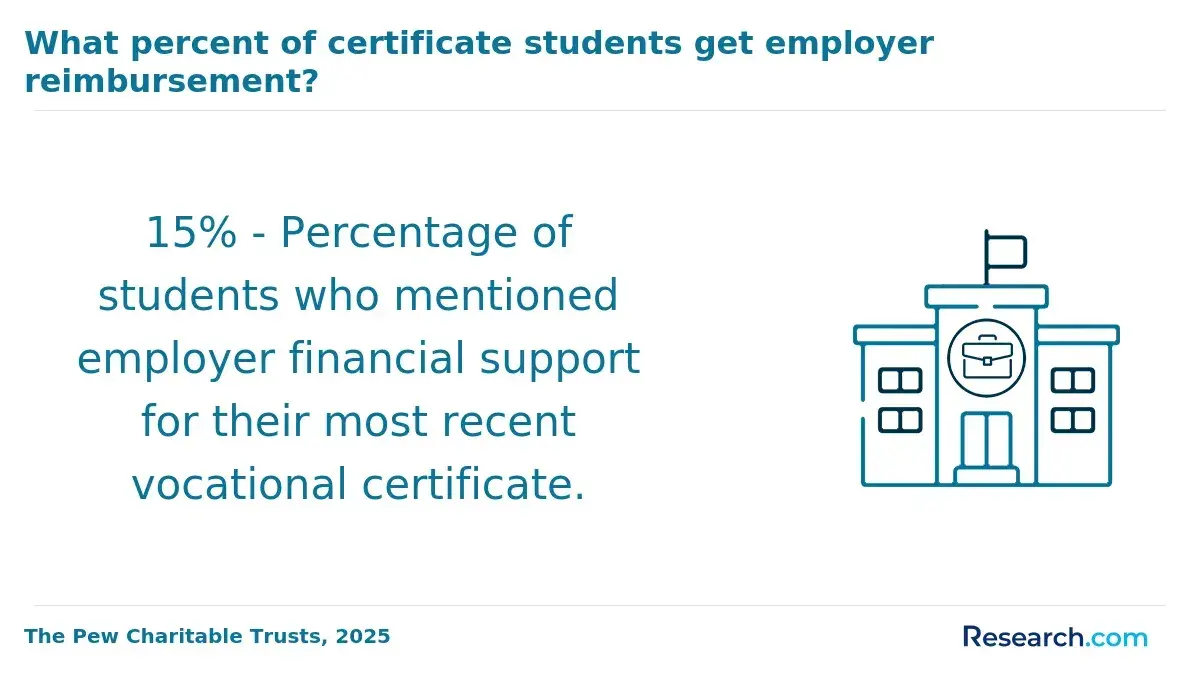
The cost after financial aid depends on degree level, dependency status, income, enrollment intensity, grants, scholarships, employer benefits, and whether the student is undergraduate or graduate. Many reading and literacy students are licensed teachers pursuing graduate credentials, which means they often rely more on federal Direct Unsubsidized Loans, TEACH Grants, employer tuition benefits, or school scholarships than on Pell Grants.
The table below shows how different aid situations can change the real cost of an online reading and literacy program. It is designed to help students compare net price rather than stopping at the advertised tuition number.
| Student situation | How aid may apply | What it means for net cost | Key caution |
| Undergraduate student completing a literacy-related bachelor's path | May qualify for Pell Grant, state grants, subsidized loans, unsubsidized loans, and scholarships | Grant aid can substantially reduce out-of-pocket cost if the student has financial need | Pell eligibility is not automatic and depends on FAFSA results and enrollment status |
| Teacher pursuing an online master's in reading or literacy | Usually eligible for federal Direct Unsubsidized Loans if the program qualifies | Loans can cover tuition but increase total repayment cost if borrowing is high | Graduate students generally do not receive Pell Grants |
| Teacher in a high-need school or shortage area | May consider TEACH Grant eligibility if the school and program participate | Can reduce borrowing if the student completes the required service obligation | If service terms are not met, the grant can convert to a loan |
| Working educator with employer assistance | District reimbursement or tuition assistance may pay part of the bill | Can make a slightly higher-tuition program cheaper in net cost | Benefits may require continued employment, minimum grades, or preapproval |
| Student transferring graduate credits | Accepted transfer credits reduce the number of credits billed | Each accepted course can lower tuition and shorten time to completion | Some schools cap graduate transfer credits or reject older coursework |
For a realistic estimate, add tuition, mandatory fees, textbooks or digital materials, background checks, assessment fees, licensure fees, and any residency or practicum travel. Then subtract grants, scholarships, tuition reimbursement, and credits accepted in transfer before deciding how much to borrow.
Which Affordable Online Reading & Literacy Degree Programs Offer the Best Value?
The best value is not always the school with the lowest tuition per credit. A stronger value may come from a program that costs slightly more but accepts more transfer credits, aligns with your state's reading specialist endorsement, offers strong advising, or reduces the time you spend away from paid work.
Students comparing literacy programs can use the same net-cost mindset used when evaluating affordable online colleges: start with published tuition, but make the final decision based on total cost, credential fit, and completion likelihood.
The table below compares value factors that matter most when choosing among affordable online reading and literacy degrees.
| Value factor | Why it matters | When a higher-cost program may be worth it |
| State credential alignment | A program that does not meet your state's reading specialist or endorsement rules may require extra coursework later | When the program is clearly approved or mapped to your state requirements |
| Transfer credit acceptance | Accepted credits reduce tuition and shorten completion time | When the higher sticker price is offset by more accepted prior graduate coursework |
| Fieldwork flexibility | Teachers often need practicum hours that fit their current school schedule | When flexible placement avoids lost wages or delayed graduation |
| Course sequence and start dates | Frequent start dates can reduce waiting time between courses | When faster progression helps you qualify sooner for a district salary lane or role change |
| Advising and licensure support | Reading credentials can involve state-specific paperwork and testing | When dedicated advising reduces the risk of taking the wrong courses |
A practical rule is to compare three numbers: total program cost before aid, estimated net cost after aid, and likely debt at graduation. If a cheaper program increases your risk of delayed completion or does not support your credential goal, the lowest tuition may be a poor value.
Are the Cheapest Online Reading & Literacy Degree Programs Properly Accredited?
The cheapest online reading and literacy programs can be legitimate, but affordability should never replace accreditation verification. For FAFSA purposes, institutional accreditation is essential because federal student aid is tied to recognized institutional accreditation and Title IV participation.
Students should also look beyond institutional accreditation. In education, program quality and credential portability may depend on state approval, educator preparation standards, or alignment with reading specialist endorsement requirements. CAEP recognition or state education department approval can be helpful, but the exact requirement depends on the state and the role.
Use this verification sequence before committing to any low-cost program:
- Search the school in the U.S. Department of Education's recognized accreditation database or ask the school for its institutional accreditor.
- Confirm that the institution participates in federal student aid and has an active federal school code.
- Ask the program director whether the online reading or literacy degree is the same credential as the campus version, if a campus version exists.
- Contact your state education agency to confirm whether the degree meets reading specialist, literacy coach, or endorsement requirements.
- Request written confirmation of any practicum, testing, fieldwork, or licensure requirements before enrolling.
Red flags include vague accreditation language, pressure to enroll before aid is packaged, no clear total cost, unclear licensure outcomes, or a program described as "reading specialist" without state-aligned documentation. A legitimate low-cost program should be able to explain accreditation, aid eligibility, and credential outcomes plainly.
What FAFSA Grants and Federal Aid Can Pay for an Online Reading & Literacy Degree?
FAFSA can connect eligible students to several types of federal aid, but the mix depends heavily on degree level. The 2024-25 maximum Pell Grant is $7,395, which is most relevant to undergraduate students; graduate students in reading and literacy usually need to plan around loans, TEACH Grants, scholarships, and employer support.
The main aid options to ask about are:
- Federal Pell Grant: Available to eligible undergraduate students with financial need, but generally not available for graduate reading and literacy master's programs.
- Federal Direct Subsidized Loan: Available to eligible undergraduate students with financial need; the government pays interest during certain periods.
- Federal Direct Unsubsidized Loan: Available to eligible undergraduate and graduate students, but interest accrues according to federal loan rules.
- TEACH Grant: May help students preparing for high-need teaching fields if the school and program participate and the student completes the required service obligation.
- Federal Work-Study: May be available at participating schools, although online graduate students should ask whether remote or relevant placements exist.
- Institutional scholarships: School-funded awards can be more valuable than advertised tuition discounts if they reduce borrowing.
- State grants or teacher shortage funds: Some states offer support for educators pursuing shortage-area credentials, including literacy-related roles.
The most important financial aid question is not "Do you accept FAFSA?" but "What aid have students in this exact online reading and literacy program typically been able to use?" Financial aid offices cannot guarantee your package before processing your FAFSA, but they can clarify which aid categories are possible.
How Do Transfer Credits Lower the Cost of an Online Reading & Literacy Degree?
Transfer credits can lower the cost of an online reading and literacy degree by reducing the number of credits you must complete at the new school. This matters most when students have prior graduate coursework in education, curriculum, special education, English language learning, assessment, or literacy instruction.
If your path begins with lower-division coursework, resources that discuss institutions such as barbados community college can also help you think about how early college credits may support a longer education plan, although graduate literacy programs usually evaluate transfer credits separately from associate-level work.
Because transfer rules vary widely, students should ask for a formal transfer evaluation before enrolling. The most useful questions are:
- How many graduate credits can be transferred into the reading or literacy degree?
- Do transferred courses need to match specific literacy, assessment, or research requirements?
- Is there a time limit on older graduate coursework?
- Will transfer credits reduce tuition, shorten the course sequence, or both?
- Are endorsement or licensure courses excluded from transfer because they must be completed in residence?
A higher-priced program that accepts 9 transfer credits may cost less than a lower-priced program that accepts none. The safest comparison is total remaining credits multiplied by tuition per credit, plus required fees.
Which Students Benefit Most From a Low-Cost Online Reading & Literacy Degree With FAFSA?
A low-cost FAFSA-eligible online reading and literacy degree is most useful for students who already know the credential they need and can complete the program without excessive borrowing. It is especially relevant for licensed teachers seeking literacy specialization, educators pursuing salary-lane advancement, and professionals moving toward intervention or curriculum roles.
Students comparing people-centered education paths may also look at adjacent programs such as a human services degree online, but reading and literacy degrees are usually the better fit when the goal is classroom literacy instruction, reading intervention, or school-based literacy leadership.
The students who benefit most usually share these conditions:
- They already hold or are pursuing teacher licensure and need literacy-specific graduate preparation.
- They can use employer tuition reimbursement, state educator grants, or scholarships to reduce borrowing.
- They have a clear state credential target, such as reading specialist, literacy coach, or reading endorsement.
- They need an online format because they are working full time or live far from campus.
- They can complete fieldwork or practicum requirements in a local school setting.
Students should be cautious if they are choosing a program only because it is cheap, are unsure whether they want to teach, or need a license in a state the program does not serve well. In those cases, a lower tuition bill can still become expensive if it leads to extra coursework later.
How Does the Cost of an Online Reading & Literacy Degree Affect Career ROI?
Career ROI depends on total cost, debt, time to completion, current salary, potential salary-lane movement, and access to reading-focused roles. The U.S. Bureau of Labor Statistics reported a 2024 median pay of $74,720 for instructional coordinators, a category that can include curriculum and instructional leadership work, but reading specialist pay varies by state, district, contract, and licensure rules.
Readers comparing education-related graduate investments may notice that fields differ sharply in cost and licensure requirements; for example, online SLP masters programs usually involve clinical accreditation and supervised practice requirements that are different from reading and literacy degrees.
For teachers, ROI may come from several sources rather than a single job title. A reading and literacy degree can support movement into intervention roles, curriculum work, literacy coaching, department leadership, or salary schedule advancement where districts reward graduate credits. None of those outcomes is automatic, so students should verify local pay policies before enrolling.
To evaluate ROI, compare your likely borrowing with realistic career benefits:
- Ask your district whether the degree qualifies for a salary lane, stipend, endorsement, or promotion pathway.
- Estimate total borrowing after grants, scholarships, reimbursement, and transfer credits.
- Check whether the degree meets state requirements for the role you want.
- Consider opportunity cost, including time spent in courses, practicum requirements, and any unpaid fieldwork.
- Choose the lowest-cost program only if it also supports your credential and career objective.
A more expensive program can be rational if it shortens completion time, has better state alignment, or prevents retaking courses. But if two accredited FAFSA-eligible programs lead to the same credential and one has a much lower net cost, the cheaper option may produce stronger ROI.
How Should Students Choose the Cheapest FAFSA-Eligible Online Reading & Literacy Degree?
Students should choose the cheapest FAFSA-eligible online reading and literacy degree by comparing net cost, accreditation, credential fit, and completion risk together. The process is similar to evaluating any cost-sensitive graduate program, including an online MBA under 30k: the best advertised price matters less than the total amount you will pay for a credential that actually serves your goal.
Use this decision process before enrolling:
- Define your goal -- classroom skill-building, reading endorsement, reading specialist licensure, literacy coaching, curriculum work, or salary advancement.
- Shortlist only institutionally accredited schools that participate in federal student aid.
- Ask each school whether the specific online reading or literacy degree is FAFSA-eligible.
- Request a written total cost estimate that includes tuition, fees, books, assessments, fieldwork costs, and graduation fees.
- Submit transcripts early and get a formal transfer credit review.
- Compare your estimated net price after grants, scholarships, employer aid, and transfer credits.
- Verify state licensure or endorsement alignment with your state education agency.
- Estimate debt at graduation and compare it with realistic salary or advancement opportunities.
- Choose the program that offers the lowest acceptable risk, not just the lowest tuition.
Before committing, ask admissions and financial aid offices direct questions: "Is this exact program Title IV eligible?", "What is the total tuition and fee cost if I finish on time?", "How many credits can I transfer?", "Does this meet my state's reading credential requirements?", and "What happens to my aid if I take only one course in a term?" Clear answers are a good sign; vague answers are a reason to pause.
Other Things You Should Know About Reading & Literacy
Sometimes, but not always. FAFSA is more straightforward for degree programs than for standalone endorsement or certificate programs. Ask the school whether the endorsement is part of a Title IV-eligible program of study.
They usually do not require traditional student teaching if they are designed for licensed teachers, but many include practicum, fieldwork, case studies, tutoring, or assessment projects in a school setting. Requirements vary by state and program.
It depends on your goal. A reading and literacy master's is more focused on literacy assessment, intervention, and reading instruction, while curriculum and instruction may be broader. For reading specialist roles, the specialized degree may align better with credential requirements.
Many programs are designed for working teachers and offer asynchronous courses or short terms. Still, you should check weekly workload, practicum expectations, and course sequencing before assuming the program will fit your school-year schedule.
References
- Do Online Colleges Accept FAFSA? | Ascent Funding https://www.ascentfunding.com/blog/do-online-colleges-accept-fafsa/
- Affordable Accredited Online Schools: 5 Great Criteria to Consider - Prereqcourses https://www.prereqcourses.com/affordable-accredited-online-schools/
- Financial Aid For Online Colleges https://www.affordablecollegesonline.org/financial-aid/financial-aid-for-online-colleges/
- Reading & Literacy Instruction (MSEd or EdS) Master's Degree Online https://www.baypath.edu/academics/graduate-programs/reading-literacy-instruction-msed-eds/
- Types of Financial Aid for Online Colleges https://www.umassglobal.edu/blog-news/types-financial-aid-online-colleges
- Jackson State's online reading education program among ... https://www.jsumsnews.com/jackson-states-online-reading-education-program-among-countrys-most-affordable/
- Can You Get Financial Aid for Online College? Finding Out https://beal.edu/can-you-get-financial-aid-for-online-college/
- The 4 Best Online Colleges that Accept FAFSA https://joinjuno.com/financial-literacy/financial-aid/online-colleges-accept-fafsa
- Federal Grants: Explore Your Online Education Aid Options https://www.oedb.org/federal-grant/
- Inside Online Master’s Programs in Reading Literacy https://www.onlinemastersdegrees.org/best-programs/education/reading-literacy/