2027 Cheapest Accredited Online Political Psychology Degree Programs That Accept FAFSA

Co-Founder and Chief Data Scientist
Finding an online political psychology degree is tricky because many schools offer it as a psychology, political science, public policy, or social science pathway rather than a standalone major. Cost matters: College Board reported average published tuition and fees of $11,610 for in-state public four-year students and $43,350 at private nonprofit colleges for 2024-25. This guide helps budget-conscious students compare accredited, FAFSA-eligible online options, estimate real net cost, avoid aid mistakes, and decide whether the cheapest program is also the best fit for career or graduate-school goals.
Key Things You Should Know
- Standalone online political psychology degrees are uncommon, so the lowest-cost FAFSA-eligible choices are usually accredited online psychology, political science, or interdisciplinary social science programs with electives in public opinion, political behavior, social psychology, statistics, and research methods.
- The maximum Federal Pell Grant is $7,395 for the 2024-25 and 2025-26 award years, but FAFSA eligibility does not mean every student receives that amount or that all tuition, fees, books, and living costs will be covered.
- For ROI, net price and borrowing matter more than advertised tuition; BLS May 2024 wage data shows political scientists had median pay of $139,380, but many political psychology-adjacent careers require graduate study or begin in lower-paid research, campaign, nonprofit, polling, or communications roles.
Which Are the Cheapest Accredited Online Political Psychology Degree Programs That Accept FAFSA?
The table below highlights affordable online degree pathways from accredited institutions that participate in federal student aid. Tuition changes frequently, and aid depends on each student's FAFSA results, residency, enrollment level, and transfer credits, so use these figures as a comparison starting point rather than a final bill.
| School and online pathway | Political psychology fit | Accreditation and FAFSA status | Published online tuition indicator | Best-fit student |
| Fort Hays State University, online BA or BS in Political Science | Strong political behavior, public policy, government, and research foundation; students can add psychology electives where available | Institutionally accredited by HLC; participates in federal student aid | $257.33 per undergraduate credit in the 2025-26 online tuition schedule | Students seeking a low flat-rate public university option, especially nonresidents avoiding high out-of-state tuition |
| Florida International University Online, BA in Political Science or BA in Psychology | Good pairing for students interested in voting behavior, public opinion, identity, persuasion, and social science research | Institutionally accredited by SACSCOC; participates in federal student aid | $235.57 per credit for Florida residents and $648.87 for nonresidents in published undergraduate tuition | Florida residents and transfer students who want a large public research university online |
| University of Central Florida Online, BA in Political Science or BS in Psychology | Useful for students comparing political institutions with behavioral science, statistics, and applied research | Institutionally accredited by SACSCOC; participates in federal student aid | Lower in-state public tuition for Florida residents; nonresident tuition is substantially higher | Florida residents who can use in-state tuition and want broad online student support |
| University of Florida Online, BA in Psychology | Best for students who want the psychology side first, then add political science, public affairs, statistics, or communications electives | Institutionally accredited by SACSCOC; participates in federal student aid | Published UF Online tuition is especially low for Florida residents and higher for nonresidents | Florida residents focused on social psychology, cognition, data, and graduate-school preparation |
| Oregon State University Ecampus, BA or BS in Psychology or Political Science | Flexible quarter-based online programs with social science, behavior, policy, and research options | Institutionally accredited by NWCCU; participates in federal student aid | $375 per undergraduate credit in the 2024-25 Ecampus tuition schedule | Students who want a nationally known public online program with consistent online pricing |
| CSU Global, online BS in Psychology | Good for working adults who want psychology, organizational behavior, research, and applied social science coursework | Institutionally accredited by HLC; participates in federal student aid | $375 per undergraduate credit in published tuition | Adult learners who value asynchronous coursework, transfer-friendly policies, and predictable pricing |
| American Public University System, online BA in Political Science | Good for students interested in government, campaigns, public policy, international relations, and political institutions | Institutionally accredited by HLC; participates in federal student aid | $350 per undergraduate credit in published standard tuition | Students seeking a fully online political science route with relatively low national tuition |
For the lowest national price, start with flat-rate online public universities and programs that do not charge steep nonresident tuition. For the lowest personal price, compare net price after grants, institutional scholarships, transfer credits, military benefits, employer assistance, and required fees.
A bachelor's degree is usually the main entry point for this field. A master's degree can make sense for students targeting policy research, polling, data analysis, political consulting, or doctoral study, but the cheapest undergraduate program is often the safer first investment if the student is still exploring the field.
How Does FAFSA Eligibility Work for Online Political Psychology Degree Programs?
FAFSA eligibility works at two levels: the institution must participate in federal student aid, and the student must meet federal and school-level eligibility rules. A program being online does not automatically disqualify it, but the school, credential level, enrollment status, satisfactory academic progress, and course applicability all matter.
Students should confirm four things before assuming aid will apply. These checks are especially important for political psychology because the most affordable route may be a customized pathway inside a broader psychology or political science major.
- Confirm the school has a valid federal school code and participates in Title IV federal student aid programs.
- Verify that the specific online degree, not just the campus institution, is eligible for federal aid.
- Ask whether all courses in the political psychology pathway count toward the declared degree plan, because aid may not cover unrelated electives.
- Review enrollment rules, since dropping below half time can reduce access to federal loans and may change grant amounts.
Students comparing speed and cost should also be realistic about workload. Some fast online degrees can shorten time to completion, but federal aid is tied to academic calendars, credit load, and satisfactory progress rather than the student's preferred pace alone.
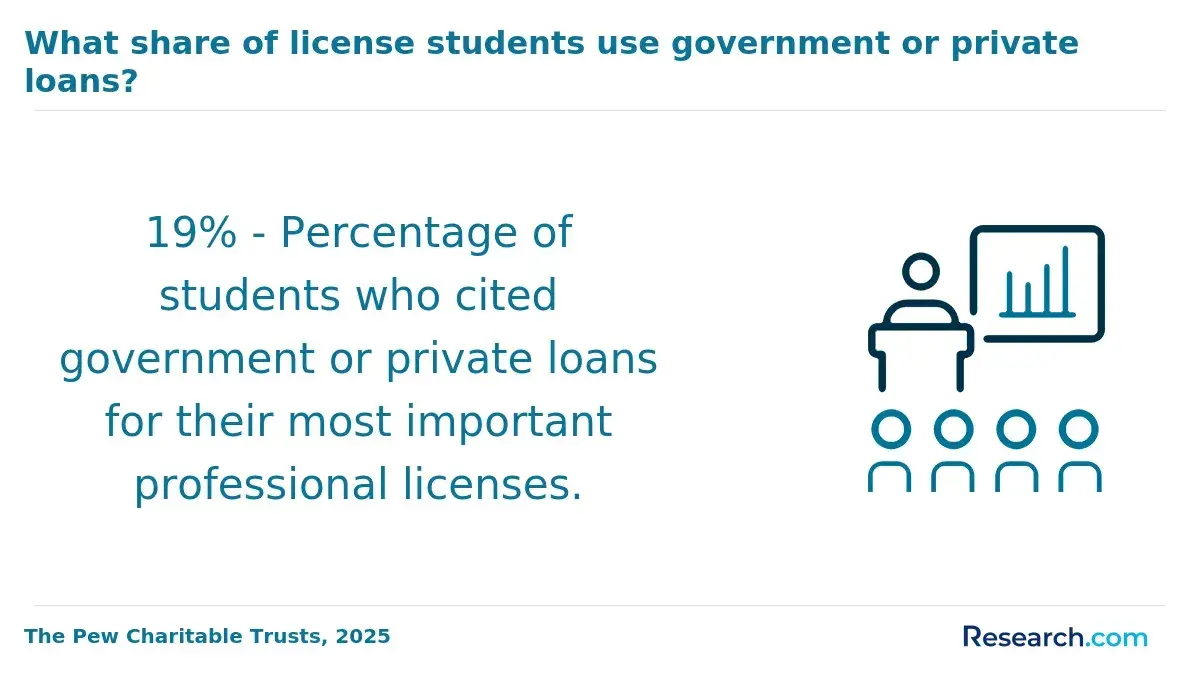
A common mistake is assuming "accepts FAFSA" means "affordable for me." FAFSA determines access to federal aid and helps schools calculate need-based aid, but it does not guarantee a Pell Grant, institutional scholarship, work-study placement, or enough aid to cover the full cost of attendance.
How Much Does an Online Political Psychology Degree Cost After Financial Aid?
The real cost of an online political psychology degree is the net amount left after grants and scholarships, plus any borrowing, fees, books, technology costs, and lost income from reducing work hours. The maximum Pell Grant is $7,395 for the 2024-25 and 2025-26 award years, which can significantly reduce tuition at lower-cost public online programs but may cover only a fraction of the bill at higher-priced schools.
The table below shows how aid can change the practical cost of a full-time undergraduate year. It uses published tuition indicators from affordable online options and excludes fees, books, housing, and personal expenses because those vary by school and student.
| Example annual tuition scenario | Approximate tuition before aid | If a student qualifies for the maximum $7,395 Pell Grant | What the comparison means |
| 30 credits at $257.33 per credit | $7,719.90 | $324.90 remaining before fees and other costs | A low flat-rate program can be close to tuition-covered for high-need students, but fees and living costs still matter |
| 30 credits at $350 per credit | $10,500 | $3,105 remaining before fees and other costs | Still relatively affordable, but the student may need scholarships, work income, savings, or loans |
| 30 credits at $375 per credit | $11,250 | $3,855 remaining before fees and other costs | A moderate online tuition rate can be manageable if transfer credits and grants reduce total credits paid |
| 30 credits at $648.87 per credit | $19,466.10 | $12,071.10 remaining before fees and other costs | Higher nonresident tuition can erase much of the benefit of federal grants |
Federal loans can fill gaps, but they should not be treated like discounts. For dependent undergraduates, annual Direct Loan limits begin at $5,500 for first-year students and rise in later years, which means a student at a higher-cost program may still face out-of-pocket costs or parent borrowing even after using federal loans.
The best affordability calculation is total degree cost, not one year of tuition. A student entering with 60 accepted transfer credits at a $350-per-credit program avoids paying for $21,000 in remaining duplicate coursework, while a student with no transfer credit must evaluate the full 120-credit price plus fees.
Which Affordable Online Political Psychology Degree Programs Offer the Best Value?
The best value is not always the absolute cheapest tuition. A program with stronger transfer policies, better advising, more relevant electives, stronger research training, and lower borrowing can produce better value than a lower-priced program that forces the student to retake credits or lacks the courses needed for career goals.
The comparison below shows how different types of affordable programs can serve different student priorities. Use it to match the program model to your goal rather than choosing by tuition alone.
| Program value factor | Lower-cost option may be best when | A higher-cost option may be worth considering when |
| Major structure | You can build a political psychology focus through approved psychology, political science, statistics, and research electives | The school offers unusually strong research labs, public policy projects, polling coursework, or faculty expertise aligned with your goals |
| Transfer credit | The school accepts most prior credits and applies them directly to the major or general education requirements | The more expensive school accepts substantially more credits, reducing total credits paid |
| Online format | Asynchronous courses let you keep working and reduce income loss | Live seminars, internships, or research supervision provide networking value you need for graduate school |
| Career preparation | The curriculum includes statistics, research methods, writing, political behavior, and data interpretation | The school offers stronger career services, internship placement, or applied research opportunities |
| Graduate-school preparation | You need an affordable bachelor's degree before applying to a more specialized master's or PhD program | You need faculty mentoring, thesis options, or advanced methods coursework to become competitive |
Students who want the psychology side of the field should compare course sequencing carefully. An accelerated psychology degree online may help motivated learners finish faster, but only if the program still includes rigorous statistics, research methods, and electives related to group behavior, persuasion, identity, and decision-making.
For most students, the strongest value program has five traits: institutional accreditation, federal aid participation, low net price, transfer flexibility, and enough methodological training to support either immediate employment or graduate study.
Are the Cheapest Online Political Psychology Degree Programs Properly Accredited?
Accreditation is the first quality filter. For federal financial aid, the institution must be accredited by an agency recognized by the U.S. Department of Education, and the school must be eligible to participate in Title IV aid programs.
Political psychology does not have a common standalone programmatic accreditor at the bachelor's level. That means students should focus on institutional accreditation, curriculum relevance, faculty qualifications, graduate-school acceptance, and whether the degree title will be understood by employers.
Before enrolling, verify accreditation and aid status directly. These steps reduce the risk of choosing a low-cost program that later creates transfer, graduate-admission, or employer-recognition problems.
- Search the school in the U.S. Department of Education's Database of Accredited Postsecondary Institutions and Programs.
- Confirm the accreditor listed for the institution matches what the school claims on its website.
- Ask the financial aid office whether the specific online degree is Title IV eligible.
- Ask admissions how the degree appears on the transcript and diploma, especially if the political psychology focus is built through electives or a concentration.
- For psychology licensure goals, confirm state requirements separately because a bachelor's degree in psychology or political psychology does not qualify someone to become a licensed psychologist.
Red flags include vague claims such as "internationally accredited" without recognized U.S. institutional accreditation, pressure to enroll before receiving a financial aid package, unclear tuition fees, and promises that the degree will lead directly to a licensed psychology career.
What FAFSA Grants and Federal Aid Can Pay for an Online Political Psychology Degree?
Federal aid can make an accredited online political psychology pathway substantially more affordable, but each aid type works differently. Grants and scholarships reduce cost directly, while loans postpone payment and create repayment obligations after enrollment ends or drops below required levels.
The main federal aid options for eligible online undergraduates include the following. Award amounts and availability depend on federal rules, school funding, enrollment intensity, dependency status, and financial need.
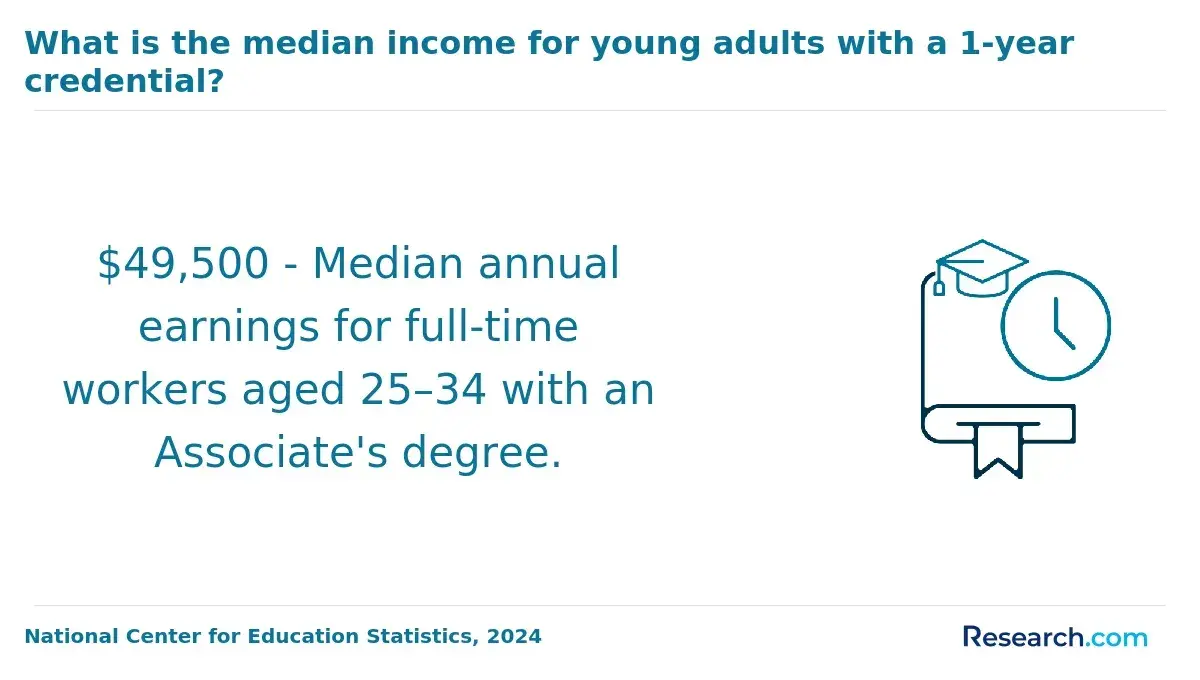
- Federal Pell Grant: Up to $7,395 for eligible students in the 2024-25 and 2025-26 award years.
- Federal Supplemental Educational Opportunity Grant: Campus-based need aid that may range from $100 to $4,000 annually at participating schools with available funds.
- Federal Work-Study: Part-time employment funding for eligible students, but jobs are not guaranteed and remote options vary by school.
- Direct Subsidized Loans: Need-based federal loans for eligible undergraduates, with the government covering interest during qualifying in-school periods.
- Direct Unsubsidized Loans: Federal loans not based on financial need, available to many undergraduate students within annual and aggregate limits.
- Parent PLUS Loans: Federal loans parents of dependent undergraduates may use after credit review, but these can increase family debt substantially.
Students should also ask about institutional scholarships, state grants, military education benefits, tribal education funding, union benefits, and employer tuition assistance. These can be especially important for online adult learners whose FAFSA results do not produce a large grant package.
The 2024 FAFSA redesign simplified some federal calculations but also caused processing delays for many applicants. The practical lesson is to file early, monitor school portals, respond quickly to verification requests, and avoid committing to a program until the financial aid award is clear.
How Do Transfer Credits Lower the Cost of an Online Political Psychology Degree?
Transfer credits can be the single biggest cost reducer for an online political psychology degree. Because most bachelor's programs require about 120 semester credits, students who transfer an associate degree or prior college coursework may cut both tuition and time to graduation.
Here is how to evaluate transfer savings before choosing a program. The goal is not just to receive a large transfer-credit number, but to make sure those credits actually reduce the courses you still must pay for.
- Request an unofficial transfer review before applying if the school offers one.
- Ask how many credits apply to general education, major requirements, electives, and upper-division requirements.
- Confirm the minimum number of credits that must be completed at the new institution.
- Check whether older psychology, statistics, or political science courses expire or require departmental review.
- Compare total remaining credits across schools, not just per-credit tuition.
For example, if a student transfers 60 credits into a program charging $257.33 per credit, the avoided tuition value is $15,439.80 before fees. If another school charges more per credit but accepts 75 credits instead of 45, it may still be the cheaper path to completion.
Short courses can also help with prerequisites or career skills, but they must be used carefully. Nondegree 6 week online courses with certificates may strengthen skills in data, writing, or communications, but students should confirm in advance whether credits transfer into the degree and whether federal aid applies.
Which Students Benefit Most From a Low-Cost Online Political Psychology Degree With FAFSA?
A low-cost FAFSA-eligible online political psychology pathway is most useful for students who need flexibility, want to minimize debt, and can connect the degree to a clear academic or career plan. It is especially practical for working adults, transfer students, military-affiliated students, caregivers, and students planning to attend graduate school later.
This degree path tends to fit students interested in questions such as why people vote, how identity shapes political attitudes, how misinformation spreads, how groups make decisions, and how campaigns persuade audiences. It can support entry-level paths in research assistance, campaign operations, nonprofit advocacy, public affairs, communications, polling support, community outreach, and policy-adjacent roles.
Students should be cautious about choosing this route based only on low cost if they need a direct licensure pathway, a highly specialized clinical psychology career, or guaranteed access to political research internships. Online affordability is valuable, but some goals require supervised research, field placements, strong faculty mentorship, or graduate study.
Students comparing policy, technology, and behavior careers may also look at adjacent fields. For example, a cyber security degree may provide a more technical route into election security, misinformation defense, risk analysis, or public-sector technology roles, while political psychology is stronger for behavior, persuasion, opinion, and social research.
How Does the Cost of an Online Political Psychology Degree Affect Career ROI?
Career ROI depends on how much the student pays, how much they borrow, and whether the curriculum builds marketable skills. Political psychology is interdisciplinary, so the strongest ROI often comes from pairing behavioral theory with statistics, survey design, data analysis, writing, and policy communication.
BLS May 2024 data lists median pay for political scientists at $139,380, but that figure should be interpreted carefully because many political scientist roles require a master's degree or PhD. Bachelor's graduates are more likely to start in support roles such as research assistant, campaign staffer, public affairs associate, nonprofit coordinator, communications analyst, or polling operations assistant.
The table below connects common political psychology-adjacent career directions with education and ROI considerations. It is not a salary promise; it is a way to compare whether the degree's cost matches the credentials commonly expected in each path.
| Career direction | Typical education signal | ROI consideration | Skills that improve value |
| Political or policy research | Bachelor's for assistant roles; graduate degree often preferred for analyst or scientist roles | Low undergraduate debt is helpful if graduate school is likely | Statistics, survey research, writing, public policy, quantitative methods |
| Campaigns and public opinion | Bachelor's plus internships, campaign experience, or polling exposure | Experience and portfolio can matter as much as school prestige for early roles | Voter data, persuasion, message testing, demographic analysis, communication |
| Nonprofit advocacy and civic engagement | Bachelor's often acceptable for coordinator and outreach roles | Lower tuition can reduce pressure to choose only high-paying jobs immediately | Community research, grant writing, policy briefs, stakeholder communication |
| Market, survey, or social research | Bachelor's may qualify for entry roles; advanced methods improve mobility | Programs with strong statistics and data tools may justify a modestly higher net price | Survey design, Excel, R or Python, data visualization, ethics |
| Graduate psychology or political science study | Strong GPA, research methods, faculty recommendations, and sometimes thesis work | Keeping bachelor's debt low preserves flexibility for master's or doctoral costs | Research experience, academic writing, experimental design, theory |
AI and automation are changing this field by making data collection, sentiment analysis, and audience segmentation faster. Students who choose a low-cost program should still look for coursework in data ethics, statistics, computational methods, and media analysis; those skills can make the degree more adaptable than a theory-only curriculum.
Students interested in persuasion, platforms, campaigns, and public communication may also compare political psychology with social media degrees. The better ROI choice depends on whether the student wants to analyze political behavior broadly or build a career in digital strategy and audience engagement.
How Should Students Choose the Cheapest FAFSA-Eligible Online Political Psychology Degree?
Choosing the cheapest FAFSA-eligible online political psychology degree requires more than sorting by tuition. The right program should be accredited, affordable after aid, flexible enough to accept transfer credits, and academically aligned with the student's career or graduate-school plan.
Use this sequence before enrolling. It keeps the decision focused on net value rather than marketing claims.
- Define the target outcome first: graduate school, research, campaigns, public policy, nonprofit work, communications, or data analysis.
- Search broadly for psychology, political science, social science, public policy, or interdisciplinary programs that allow a political psychology focus.
- Confirm institutional accreditation and Title IV federal aid participation.
- Ask for a written total cost estimate including tuition, fees, books, technology charges, and expected remaining credits.
- Submit the FAFSA and compare official aid offers from multiple schools before committing.
- Request a transfer-credit evaluation and calculate total remaining credits at each school.
- Review course availability for statistics, research methods, social psychology, political behavior, public opinion, policy analysis, and data tools.
- Ask about online advising, internship support, faculty access, research opportunities, and career services for remote students.
- Estimate likely borrowing for the full degree, not just the first term.
- Choose the lowest net-cost program that still supports the academic quality and career preparation you need.
Important questions to ask admissions and financial aid offices include whether the online program is aid-eligible, whether tuition differs by residency, how many credits must be completed at the school, whether scholarships are renewable, and whether online students can access the same academic and career support as campus students.
Avoid these common mistakes: choosing by advertised tuition only, ignoring fees, assuming FAFSA equals free tuition, failing to verify accreditation, borrowing the full amount offered without a repayment plan, and selecting a program that lacks the research or data coursework needed for political psychology careers.
Other Things You Should Know About Political Psychology
Yes, but usually in entry-level or adjacent roles such as research assistant, campaign staffer, outreach coordinator, communications assistant, or public affairs associate. More advanced political psychology research roles often require graduate training.
Policies vary by institution, but many accredited universities do not label the diploma as online. Ask the registrar how the degree, major, concentration, and campus format appear on the transcript and diploma.
For most undergraduates, it is often more practical as a concentration or elective focus within psychology, political science, or social science. This gives the degree a recognizable title while still allowing specialized coursework.
Usually not for most bachelor's pathways, but statistics and research methods are commonly required and are more directly relevant. Students planning graduate study should take quantitative coursework seriously.
References
- Cost of College by Country [2025]: Average Tuition Fees https://educationdata.org/average-cost-of-college-by-country
- Does FAFSA Cover Grad School & Masters? | Ascent Funding https://www.ascentfunding.com/blog/does-fafsa-cover-graduate-school-programs/
- Apply to a Master’s Program at CEU https://www.ceu.edu/admissions/master
- How to Apply to Stony Brook University's Political Science MA's | Department of Political Science https://www.aldacenter.org/commcms/polisci/graduate/ma-political-psychology/pspma_admissions.php
- Financial Aid for Psychology Students https://www.onlinepsychologydegrees.com/financial-aid/
- Financial Aid For Psychology Students | Psychology.org https://www.psychology.org/resources/financial-aid/
- International Society of Political Psychology - ISPP https://ispp.org/
- The 4 Best Online Colleges that Accept FAFSA https://joinjuno.com/financial-literacy/financial-aid/online-colleges-accept-fafsa
- 2025 Most Affordable Online Master's Programs https://www.onlineu.com/most-affordable-colleges/masters-degrees