2027 Cheapest Accredited Online Criminology Degree Programs That Accept FAFSA

Co-Founder and Chief Data Scientist
Choosing an online criminology degree is really a cost-and-credibility decision: you need a program that is affordable, accredited, and eligible for federal student aid. This matters because the maximum Federal Pell Grant is $7,395 for the 2025-2026 award year, which can materially reduce out-of-pocket tuition for eligible students. This guide is for working adults, transfer students, first-time undergraduates, and career changers who want a lower-cost path into criminal justice, public safety, corrections, investigations, or related fields without choosing a program that creates unnecessary debt.
Key Things You Should Know
- The cheapest FAFSA-eligible online criminology options are often public universities, but the best deal depends on residency, transfer credits, fees, and grant eligibility rather than advertised tuition alone.
- A maximum Pell Grant of $7,395 for the 2025-2026 award year can offset a meaningful share of annual tuition, but FAFSA completion does not guarantee grants, scholarships, or full funding.
- For ROI, compare total borrowing with realistic career paths: BLS May 2024 data reports a median wage of $95,530 for detectives and criminal investigators and $64,520 for probation officers and correctional treatment specialists.
Which Are the Cheapest Accredited Online Criminology Degree Programs That Accept FAFSA?
The cheapest accredited online criminology degree programs that accept FAFSA are usually offered by regionally accredited public universities that participate in Title IV federal student aid. Because schools use different names, this list includes online programs explicitly titled criminology as well as closely related criminal justice programs with criminology coursework.
The table below compares lower-cost online bachelor's options using published tuition rates available from current institutional tuition pages and catalogs. Tuition can change, and fees, books, residency rules, and transfer status can materially affect the final cost, so students should confirm all figures with the school before enrolling.
| School | Online degree | Institutional accreditation | Federal aid participation | Published tuition snapshot | Why it may be affordable |
| University of Florida Online | BA in Criminology & Law | SACSCOC | FAFSA-eligible institution | About $129.18 per credit for Florida residents; about $552.62 for nonresidents | Very low resident tuition at a major public university; strongest value for Florida residents and high-aid students |
| Florida State University | Online BS in Criminology | SACSCOC | FAFSA-eligible institution | About $180.49 per credit for Florida residents; about $686.04 for nonresidents | Low in-state tuition and a focused criminology curriculum; often best for transfer students completing upper-division credits |
| Fort Hays State University | Online BS or BA in Criminal Justice | Higher Learning Commission | FAFSA-eligible institution | About $257.33 per credit for online undergraduate tuition | Flat online pricing can be attractive for out-of-state students who do not qualify for low in-state tuition elsewhere |
| Arkansas State University | Online BA in Criminology | Higher Learning Commission | FAFSA-eligible institution | About $292 per credit for online undergraduate tuition | Clear criminology degree title, fully online structure, and moderate per-credit pricing |
| Missouri State University | Online BS in Criminology and Criminal Justice | Higher Learning Commission | FAFSA-eligible institution | Online undergraduate tuition commonly published near the low-$300-per-credit range, depending on residency and fees | Good fit for students who want a public-university program with both criminology theory and justice-system coursework |
| Indiana State University | Online BS in Criminology and Criminal Justice | Higher Learning Commission | FAFSA-eligible institution | Published online undergraduate tuition is typically higher than the lowest-cost public options but still competitive | May be valuable for transfer students, Indiana residents, or students prioritizing flexibility and program fit |
| Eastern Kentucky University | Online BS in Criminal Justice | SACSCOC | FAFSA-eligible institution | About $434 per credit for many online undergraduate programs | Not always the cheapest by sticker price, but may provide value through online support, accelerated terms, and transfer pathways |
The lowest sticker price is not always the lowest net price. A Florida resident with strong grant eligibility may find UF Online or FSU far cheaper than most national online programs, while an out-of-state student with no residency advantage may find flat-rate online tuition at a school like Fort Hays State more predictable.
How Does FAFSA Eligibility Work for Online Criminology Degree Programs?
FAFSA eligibility means the institution participates in federal student aid programs and the student may be considered for federal grants, federal loans, and work-study where available. It does not mean every online criminology program at that school has identical aid rules, and it does not mean every student will receive free aid.
Students should verify eligibility before applying because some online formats, certificate tracks, non-degree enrollment statuses, or short-term programs may not qualify the same way as a regular bachelor's degree. Use this sequence before committing to a school:
- Confirm the school is institutionally accredited by an accreditor recognized by the U.S. Department of Education.
- Check that the school has a valid federal school code and participates in Title IV federal student aid.
- Ask whether the specific online criminology or criminal justice degree is aid-eligible for degree-seeking students.
- Confirm minimum enrollment requirements, because half-time status is often important for federal loans and some aid packaging.
- Ask whether online students pay different tuition, program fees, proctoring fees, or distance-learning fees.
- Request a written financial aid estimate that separates grants, scholarships, loans, and out-of-pocket costs.
Most bachelor's programs require a high school diploma or equivalent, transcripts, and sometimes minimum GPA requirements for transfer admission. Completion time is usually about four years for first-time students, but transfer students with an associate degree may finish in about two years if credits apply cleanly.
How Much Does an Online Criminology Degree Cost After Financial Aid?
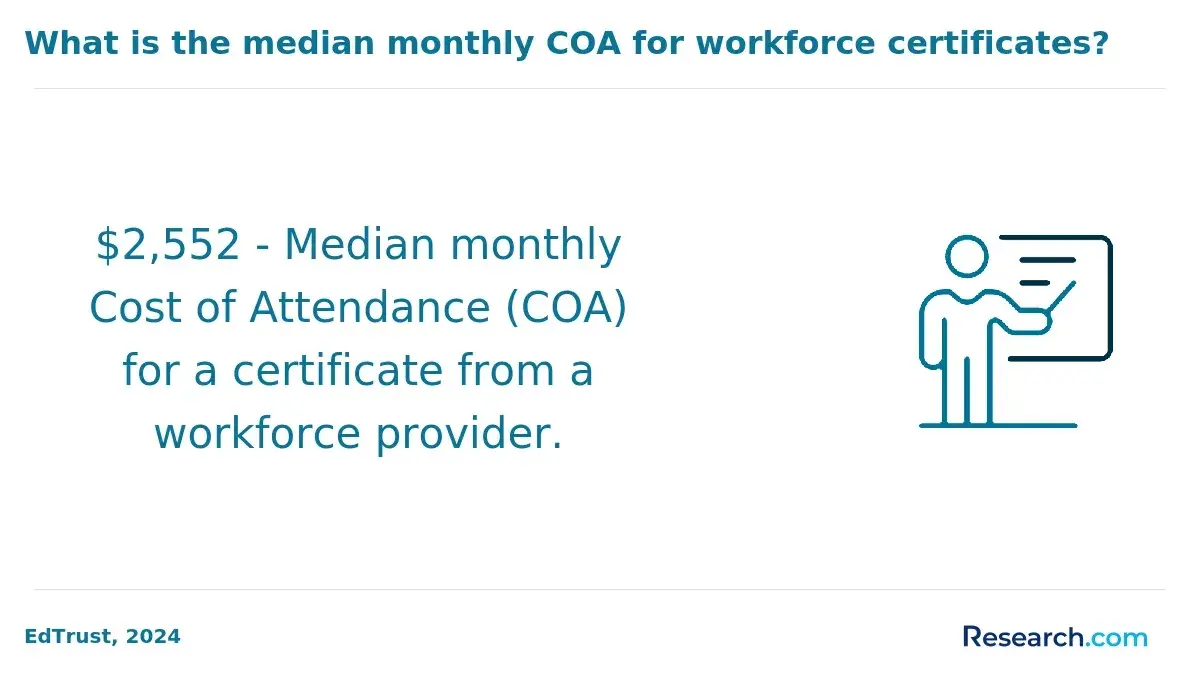
The cost of an online criminology degree after financial aid depends on tuition, fees, transfer credits, enrollment intensity, state residency, grants, scholarships, and borrowing. A useful rule is to compare net price, not just tuition: net price is the estimated cost after grants and scholarships, while loans still have to be repaid.
The table below uses simple tuition-only examples to show how FAFSA-related grants can change affordability. These are not aid promises; they illustrate why students should request a school-specific aid package before deciding.
| Cost scenario | What it means | How to interpret it |
| Low in-state tuition plus Pell eligibility | A student attending a low-cost public online program may be able to offset a large share of annual tuition if eligible for the maximum Pell Grant of $7,395. | This can make a public online program substantially cheaper than its sticker price, but eligibility depends on the FAFSA formula and enrollment status. |
| Flat-rate online tuition with partial grant aid | A student paying around $250 to $300 per credit may still reduce out-of-pocket cost with Pell, state aid, or institutional scholarships. | This is often attractive for out-of-state students who cannot access low resident tuition. |
| Higher tuition with strong transfer credits | A program with a higher per-credit rate can still cost less overall if it accepts more previously earned credits. | Total credits remaining may matter more than per-credit tuition. |
| Low tuition but mostly loan-based aid | A school may be FAFSA-eligible, but the aid package may rely heavily on federal loans. | This lowers the upfront bill but increases long-term repayment obligations. |
Common costs to ask about include application fees, distance-learning fees, course materials, background-check costs for internships, graduation fees, transcript fees, and technology requirements. A program advertised as cheap can become less affordable if these costs are high or if credits do not transfer.
Which Affordable Online Criminology Degree Programs Offer the Best Value?
The best value among affordable online criminology programs is the program that offers the lowest realistic total cost for your situation while still meeting your academic and career goals. That means looking at tuition, aid, transfer credit acceptance, scheduling flexibility, student support, and whether the curriculum fits your intended path.
The comparison below helps clarify when a cheaper program is genuinely better and when a slightly more expensive option may produce better practical value.
| Value factor | Best-fit student | Why it matters |
| Lowest resident tuition | Students who qualify for in-state rates at public universities | Resident tuition can make a strong public university the cheapest route before and after aid. |
| Flat online tuition | Out-of-state students comparing national online options | A predictable per-credit rate can beat nonresident tuition at some public universities. |
| Generous transfer policy | Community college graduates and returning adults | Accepted credits reduce the number of credits you must pay for. |
| Career-aligned curriculum | Students targeting policing, probation, investigations, intelligence analysis, or corrections | A relevant curriculum can make internships, electives, and applied projects more useful. |
| Strong online advising | Working adults and part-time students | Better advising can prevent wasted credits and delayed graduation. |
A low-cost criminology degree is usually a strong value for students pursuing public-sector or justice-system roles where a bachelor's degree is expected but the employer does not require a prestige-branded institution. Students still comparing fields by long-term earnings may also want to review what degree makes the most money, since criminology is often chosen for mission fit and public-service alignment rather than maximum salary potential.
Are the Cheapest Online Criminology Degree Programs Properly Accredited?
The cheapest online criminology degree programs can be properly accredited, but students should never assume accreditation based on price, advertising, or the word "online." The most important credential is institutional accreditation from an agency recognized by the U.S. Department of Education or the Council for Higher Education Accreditation.
For criminology and criminal justice bachelor's programs, specialized programmatic accreditation is less common and usually not the main requirement for employment. Institutional accreditation is the key factor for federal aid eligibility, credit transfer, graduate school recognition, and employer acceptance.
Before enrolling, check for these accreditation and legitimacy signals:
- The institution lists a recognized institutional accreditor such as SACSCOC or the Higher Learning Commission.
- The school appears in the U.S. Department of Education's accreditation and federal aid databases.
- The online degree name on the school website matches the degree that appears in the catalog.
- The school clearly states whether online students are degree-seeking students eligible for federal aid.
- The admissions office can explain credit-transfer rules, graduation requirements, and total credits needed in writing.
Red flags include vague accreditation language, pressure to enroll immediately, unclear tuition pages, promises of guaranteed employment, or an aid package that does not separate grants from loans. If a school cannot provide written answers about accreditation and federal aid participation, choose another option.
What FAFSA Grants and Federal Aid Can Pay for an Online Criminology Degree?
FAFSA opens the door to federal aid, but the type and amount of aid depends on the student's financial profile, enrollment level, dependency status, school cost of attendance, and satisfactory academic progress. The most valuable aid is usually gift aid because it does not have to be repaid.
Here are the main federal aid categories that may help pay for an eligible online criminology degree:
- Federal Pell Grant: Need-based grant aid for eligible undergraduates, with a maximum award of $7,395 for the 2025-2026 award year.
- Federal Supplemental Educational Opportunity Grant: Campus-based grant aid for students with exceptional financial need, available only at participating schools with limited funding.
- Direct Subsidized Loans: Federal loans for eligible undergraduates with financial need; the government pays interest during certain in-school and deferment periods.
- Direct Unsubsidized Loans: Federal loans that do not require financial need, but interest begins accruing after disbursement.
- Federal Work-Study: Part-time work funding offered by participating schools, though availability for fully online students varies.
- Parent PLUS Loans: Federal loans parents may use for dependent undergraduate students, subject to credit requirements and repayment responsibility.
For dependent undergraduates, federal Direct Loan annual limits commonly start at $5,500 for first-year students and rise in later years; independent students may qualify for higher annual limits, up to $12,500 in some undergraduate years. Because loans can make a cheap program expensive over time, students should prioritize grants, scholarships, employer tuition assistance, and transfer credits before borrowing.
How Do Transfer Credits Lower the Cost of an Online Criminology Degree?
Transfer credits can be the biggest cost reducer in an online criminology degree because most bachelor's programs require around 120 credits. If a school accepts 60 credits from a community college, the student may only need to pay university tuition for the remaining half of the degree.
The table below shows why transfer acceptance can matter more than a small difference in per-credit tuition. The savings are based on credits not repeated at the new institution, not on guaranteed aid outcomes.
| Transfer situation | Credits still needed | Cost impact | Decision point |
| No usable transfer credits | About 120 credits | Student pays for the full bachelor's degree at the chosen institution. | Per-credit tuition is especially important. |
| Associate degree accepted cleanly | About 60 credits | Student may cut university tuition exposure roughly in half. | Confirm whether general education and major prerequisites are satisfied. |
| Many electives transfer but major credits do not | Often 60 to 90 credits | Student saves some money but may still need many criminology core courses. | Ask for a degree audit before enrolling. |
| Credits are old, technical, or from unaccredited sources | Varies widely | Some credits may be denied, increasing total cost. | Do not rely on informal admissions estimates. |
The practical step is to request an official transfer evaluation before paying a deposit. The same cost logic applies later if you compare accelerated graduate pathways, including 1 year PhD programs online no dissertation: the fastest option is not always the cheapest unless the credits, requirements, and total cost are clear.
Which Students Benefit Most From a Low-Cost Online Criminology Degree With FAFSA?
A low-cost online criminology degree with FAFSA is often best for students who need flexibility and want to limit debt while preparing for justice-system, public safety, legal support, corrections, probation, or investigative support roles. It is especially practical for students who already have credits, work full time, or live far from a campus.
These students tend to benefit most from a cheaper accredited online option:
- Community college transfers: They can combine low-cost lower-division credits with an accredited online bachelor's completion path.
- Working adults: Online courses can make it easier to keep earning income while studying.
- Public-service career seekers: Many roles value a recognized bachelor's degree, relevant coursework, clean background checks, communication skills, and field experience.
- Students with grant eligibility: Pell Grants and state aid can reduce the real price of already-low tuition.
- Rural students: Online delivery can reduce relocation, commuting, and housing costs.
Students should avoid choosing primarily by low price if they need a highly specialized pathway, extensive internship placement, a local police academy connection, or a state-specific licensure route. If you are still deciding between public-service fields and service-industry management, comparing an online hospitality management course can help you test whether your career interests are truly aligned with criminology before committing to a full degree.
How Does the Cost of an Online Criminology Degree Affect Career ROI?
The cost of an online criminology degree affects ROI because many related careers are stable but not always high-paying enough to justify heavy borrowing. A lower-cost accredited program can improve ROI by reducing debt, especially for students entering public-sector roles with structured pay scales.
The table below gives salary context from BLS May 2024 occupational wage data. These figures describe occupations, not guaranteed outcomes for degree holders, and many roles require academy training, background checks, experience, state requirements, or agency-specific hiring steps.
| Career direction | Relevant occupation example | Median wage context | ROI takeaway |
| Investigations | Detectives and criminal investigators | BLS May 2024 median wage: $95,530 | Potentially stronger ROI, but roles often require prior law enforcement experience or competitive hiring. |
| Community supervision | Probation officers and correctional treatment specialists | BLS May 2024 median wage: $64,520 | Debt control matters because salaries are often tied to public agency budgets. |
| Law enforcement | Police and sheriff's patrol officers | BLS May 2024 median wage data places many policing roles in the middle-income range, with variation by state and agency. | A degree may support hiring or promotion, but academy requirements and local pay scales are critical. |
| Corrections and case support | Correctional officers, case aides, victim services, or justice-program staff | Pay varies widely by role, employer, and location. | Lower tuition and minimal borrowing are especially important for entry-level pathways. |
A more expensive program may be worth considering if it offers a strong internship network, better transfer acceptance, specialized electives, military or employer tuition discounts, or a faster route to completion. Students drawn to victim advocacy, crisis response, or counseling-adjacent work should also understand that clinical roles typically require additional education, and a mental health degree online may be more appropriate for licensed counseling goals.
How Should Students Choose the Cheapest FAFSA-Eligible Online Criminology Degree?
To choose the cheapest FAFSA-eligible online criminology degree, compare the full cost to complete the degree, not just the tuition rate on the website. The best choice is the accredited program that gives you the lowest realistic net price while preserving transferability, career relevance, and graduation momentum.
Use this decision checklist before applying or accepting an aid package:
- Verify institutional accreditation through recognized accreditation databases, not only the school's marketing page.
- Confirm the specific online criminology or criminal justice degree is eligible for federal student aid.
- Ask for the total estimated cost of attendance, including fees, books, technology, and required course materials.
- Submit all prior transcripts and request an official transfer-credit evaluation before enrolling.
- Compare net price after grants and scholarships, then separate optional loans from free aid.
- Check whether scholarships require full-time enrollment, GPA renewal, residency, or annual FAFSA completion.
- Review curriculum fit, including research methods, criminological theory, policing, corrections, courts, ethics, data analysis, and electives.
- Ask about internships, career services, online advising, and whether field placements are required or optional.
- Estimate likely borrowing at graduation and compare it with realistic salary ranges in your target roles.
- Choose the school that offers the best combination of low net cost, credible accreditation, transfer efficiency, and career alignment.
If you expect to move into agency management, public administration, training, or executive leadership later, keep graduate study in mind when choosing your bachelor's program. For example, students planning long-term leadership roles may eventually compare options such as a PhD in leadership online, where undergraduate accreditation and transcript quality can affect future admission options.
Other Things You Should Know About Criminology
Many programs can be completed fully online, but some may offer or require internships, field experiences, proctored exams, or local placements. Always ask whether any campus visits or site-based requirements apply.
Criminology focuses more on why crime happens, crime patterns, theory, research, and prevention. Criminal justice focuses more on systems such as policing, courts, corrections, investigations, and public safety operations.
The degree itself may not require one, but internships, law enforcement pathways, corrections roles, security work, and some agency placements may require background checks, drug screening, or fitness standards.
It can be a valid undergraduate major for law school preparation if you complete a bachelor's degree from an accredited institution and build strong grades, writing skills, analytical skills, and LSAT preparation. Law schools usually do not require a specific undergraduate major.
References
- Financial Aid Tips for Criminal Justice Students https://www.criminaljusticeprograms.com/financial-aid/
- 2025 Most Affordable Online Criminal Justice Degrees https://www.onlineu.com/most-affordable-colleges/criminal-justice-degrees
- Financial Aid Resources | All Criminal Justice Schools https://www.allcriminaljusticeschools.com/financial-aid/
- Most Affordable Online Criminal Justice Degrees https://www.affordablecollegesonline.org/degrees/criminal-justice-programs/
- FAFSA Eligibility: Requirements & Income Limits | Ascent Funding https://www.ascentfunding.com/blog/fafsa-eligibility/
- Criminology Degree | Programs & Career Options https://www.learnhowtobecome.org/best-online-bachelors-in-criminology-degree-programs/
- The 4 Best Online Colleges that Accept FAFSA https://joinjuno.com/financial-literacy/financial-aid/online-colleges-accept-fafsa
- Federal Grants: Explore Your Online Education Aid Options https://www.oedb.org/federal-grant/
- Types of Financial Aid for Online Colleges https://www.umassglobal.edu/blog-news/types-financial-aid-online-colleges
- Best Online Associate Degrees in Criminal Justice: A Comprehensive US Guide https://lakewood.edu/best-online-associate-degrees-in-criminal-justice-a-comprehensive-us-guide/