
2027 Are Online Homeland Security Doctorate Degrees Respected by Employers? Hiring Trends and Career Outcomes

Co-Founder and Chief Data Scientist
Choosing an online homeland security doctorate is a high-stakes career decision because the credential is most valuable in leadership, policy, intelligence, emergency management, cybersecurity, and higher education roles. The U. S. Bureau of Labor Statistics reports a May 2024 median salary of $86,130 for emergency management directors, but doctoral ROI depends heavily on role, employer, accreditation, experience, and cost.
This guide explains when employers respect online doctorates, how hiring trends affect outcomes, and how to decide whether the degree is a smart investment for your goals.
Key Things You Should Know
- Employers usually care more about institutional accreditation, professional experience, research relevance, leadership record, and school reputation than whether a homeland security doctorate was completed online.
- The strongest financial returns are typically in senior emergency management, security leadership, federal contracting, cybersecurity policy, risk management, academia, and consulting, not entry-level homeland security jobs.
- ROI is highly cost-sensitive: a lower-cost accredited program can outperform a high-priced program if both lead to similar promotions, while a doctorate may not beat a master's degree or certification for every career path.
What Is the True ROI of an Online Homeland Security Doctorate?
The true return on investment of an online homeland security doctorate is not just salary gain. It is the combined value of career advancement, employer recognition, leadership access, research credibility, professional network growth, and personal opportunity cost compared with tuition, fees, time, and lost flexibility.
For many employers, an online doctorate is respected when it comes from a properly accredited institution and is connected to a candidate's professional record. In homeland security, hiring decisions are often competency-based: agencies, universities, contractors, and corporations look for evidence that the applicant can lead complex security programs, manage risk, interpret policy, oversee emergency operations, or conduct applied research. The doctorate strengthens the profile, but it rarely replaces experience.
ROI is usually strongest when the degree supports a specific career move. Examples include moving from practitioner to executive leadership, qualifying for college teaching, gaining credibility as a consultant, or competing for senior policy and strategy roles. It is weaker when the student expects the degree alone to open doors without relevant experience, security clearance eligibility, technical skills, or a clear target occupation.
The table below summarizes the main factors that shape employer respect and financial value. Use it to distinguish signals that employers can verify from marketing claims that may not affect hiring outcomes.
| ROI factor | Why it matters to employers | How it affects value |
| Institutional accreditation | Confirms the school meets recognized academic quality standards | Essential for employer recognition, financial aid eligibility, and transferability |
| Degree type | PhD, DSc, DHA, EdD, and professional doctorates signal different research or practice orientations | Best value comes from matching the degree type to the role you want |
| Professional experience | Homeland security employers often prioritize operational credibility | Experienced professionals usually gain more ROI than career changers with limited exposure |
| Research or dissertation topic | Shows expertise in a defined problem such as cyber resilience, terrorism studies, critical infrastructure, or emergency preparedness | Can strengthen applications for policy, consulting, academic, and executive roles |
| Employer network | Connections with agencies, contractors, faculty, alumni, and professional associations can influence opportunities | Improves career mobility beyond the credential itself |
| Total cost | Debt reduces the net benefit of any salary increase | Lower-cost accredited programs often produce better ROI when employer recognition is similar |
The key question is not simply, "Is an online doctorate respected?" A better question is, "Will this specific accredited program help me become more competitive for the specific employers and roles I want?"
How Much Does an Online Homeland Security Doctorate Increase Earning Potential?
An online homeland security doctorate can increase earning potential, but the increase is usually indirect. The degree may help a professional qualify for senior leadership, academic, consulting, research, or specialized policy roles where compensation is higher. It does not automatically raise pay in jobs with fixed civil service grades, union scales, or experience-based promotion systems.
The U.S. Bureau of Labor Statistics reported a May 2024 median annual wage of $124,910 for information security analysts, a field that increasingly overlaps with homeland security through cyber defense, critical infrastructure protection, and risk governance. That figure does not mean a homeland security doctorate leads directly to that salary, but it shows why professionals who combine homeland security expertise with cyber risk, intelligence, and policy skills may find stronger compensation opportunities.
Salary impact depends on whether the doctorate changes the kind of work you can credibly pursue. A public safety manager who remains in the same role may see little immediate pay movement. A professional who uses doctoral research to move into cyber policy leadership, emergency management consulting, federal contracting, or college teaching may see more meaningful long-term value.
Homeland security also overlaps with criminal justice, emergency management, cybersecurity, public administration, environmental safety, intelligence studies, and national security policy. If your interest is broader than homeland security, comparing the career outcomes of an online criminal justice degree can help you understand whether a doctoral path is necessary or whether a related master's-level pathway may be more efficient.
When evaluating earning potential, look at the salary range for your target role rather than the degree title alone. Doctoral holders may compete for higher-level jobs, but employers still weigh management scope, budget responsibility, clearance eligibility, technical skill, publication record, and prior performance.
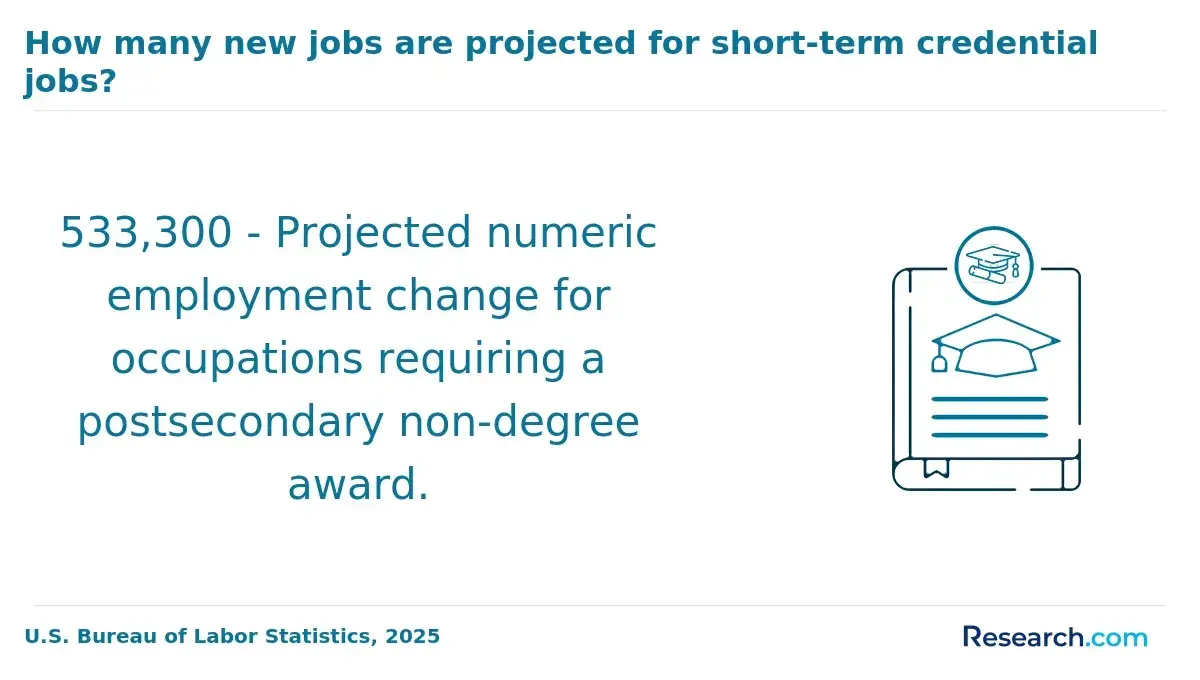
Which Careers Provide the Best Financial Return With an Online Homeland Security Doctorate?
The best financial return usually comes from roles where advanced expertise changes the level of responsibility a professional can pursue. Homeland security doctorates tend to be most valuable in positions involving strategic leadership, policy design, risk analysis, research, teaching, crisis management, or cross-agency coordination.
The table below compares career paths where a doctorate may provide meaningful value. The salary figures represent related U.S. labor market categories and should be used as context, not as guaranteed outcomes for doctoral graduates.
| Career path | Doctorate value | Typical employer expectations | Salary context |
| Emergency management director | Strong for senior leadership, policy, and regional coordination roles | Extensive emergency operations, planning, public safety, or military experience | BLS May 2024 median: $86,130 |
| Cybersecurity policy or critical infrastructure leader | Strong when paired with cyber, risk, compliance, or infrastructure expertise | Technical literacy, governance experience, incident response knowledge, and leadership | BLS May 2024 median for information security analysts: $124,910 |
| Postsecondary criminal justice, homeland security, or emergency management faculty | Often important for tenure-track or full-time faculty roles | Doctoral credential, research ability, teaching experience, and publications | BLS May 2024 median for postsecondary teachers: $83,980 |
| Federal contractor or security risk consultant | Useful for credibility with clients and complex advisory work | Subject matter expertise, project leadership, contract experience, and measurable results | Compensation varies widely by contract, clearance, specialization, and employer |
| Intelligence, counterterrorism, or threat analysis leadership | Moderate to strong for research-heavy or policy leadership roles | Analytic writing, regional expertise, intelligence tradecraft, and often prior government experience | Pay often depends on agency grade, contractor level, clearance, and location |
Some popular homeland security-adjacent roles are highly competitive and experience-driven. For example, people researching investigative careers often look at FBI profiler salary information, but a doctorate alone is not a substitute for investigative experience, federal hiring eligibility, and specialized training.
The best financial-return careers usually share several traits: the role rewards expert judgment, the employer values advanced writing and research, and the professional can connect the doctorate to measurable outcomes such as improved preparedness, stronger security posture, better training programs, or more effective policy implementation.
How Does an Online Homeland Security Doctorate Affect Career Advancement?
An online homeland security doctorate can help with advancement by signaling advanced expertise, persistence, research ability, and readiness for complex leadership work. It is most useful after a professional has already built a foundation in public safety, military service, law enforcement, emergency management, cybersecurity, intelligence, public administration, or security operations.
Employers may value the doctorate differently by sector. A university may treat it as a minimum or preferred credential for faculty roles. A government agency may value it for policy, analysis, or leadership credibility but still promote based on grade requirements and experience. A private security or critical infrastructure employer may care most about whether the degree improves strategic risk management.
The table below shows how employer recognition can vary across industries. This matters because the same online doctorate can be highly valuable in one setting and only marginally helpful in another.
| Employer setting | How the doctorate is usually viewed | What matters more than delivery format |
| Federal, state, or local government | Respected when accredited, relevant, and paired with experience | Grade requirements, veterans' preference where applicable, leadership record, clearance eligibility, and specialized experience |
| Higher education | Often important for full-time faculty, research, and program leadership roles | Research agenda, teaching record, publications, dissertation quality, and institutional accreditation |
| Federal contracting | Useful for senior advisory, program management, and subject matter expert roles | Contract requirements, clearance, client credibility, technical expertise, and past performance |
| Corporate security and resilience | Valuable when connected to enterprise risk, continuity, cyber, or crisis management | Business impact, risk reduction, executive communication, and industry-specific knowledge |
| Law enforcement and public safety agencies | Helpful for command, training, policy, or administrative advancement | Rank, service record, leadership experience, certifications, and local promotion rules |
To use the degree effectively for advancement, professionals should translate doctoral work into employer language. A dissertation on disaster resilience should become evidence of planning, risk modeling, interagency coordination, and policy implementation. A capstone on cyberterrorism should become evidence of cyber governance, threat analysis, and executive communication.
Common mistakes include assuming the doctorate will override weak experience, choosing a dissertation topic unrelated to target roles, and listing the degree without explaining practical outcomes. Employers respect credentials more when candidates can show how doctoral work solved or clarified real security problems.
How Does the Cost of an Online Homeland Security Doctorate Affect Its Overall Value?
Cost can determine whether an online homeland security doctorate is a smart investment. Two accredited programs may carry very different tuition totals while producing similar employer recognition, especially if the target employer mainly verifies accreditation and relevance rather than institutional prestige.
In its 2024 higher education pricing data, the College Board reported that published tuition and fees for graduate study vary widely by institution type and program structure. For doctoral students, that variation matters because homeland security programs may charge by credit, dissertation term, residency, technology fee, or continuation status, and longer completion time can increase the final cost.
Students should compare total program cost, not just per-credit tuition. The most expensive option is not always the most respected, and the cheapest option is not always the best value if it lacks career support, qualified faculty, research alignment, or credible outcomes data.
Use the following cost checks before enrolling. These steps help prevent a program from looking affordable at first but becoming expensive once fees, dissertation extensions, or repeated courses are included.
- Confirm the total number of required credits, dissertation or capstone fees, technology fees, residency costs, and continuation fees.
- Ask whether tuition is locked, cohort-based, or subject to annual increases.
- Compare employer tuition assistance, military benefits, federal aid eligibility, scholarships, and assistantship options.
- Calculate the monthly loan payment under realistic repayment terms before assuming a promotion will cover it.
- Ask the program for recent graduate outcomes tied to your target role, not broad promotional claims.
Students comparing homeland security and justice-related programs may also benefit from reviewing how criminal justice degree price structures work, because tuition, fees, transfer policies, and online delivery charges often follow similar patterns across related public safety fields.
A strong ROI program is usually accredited, appropriately priced, transparent about completion expectations, and aligned with a professional goal that realistically rewards doctoral training.
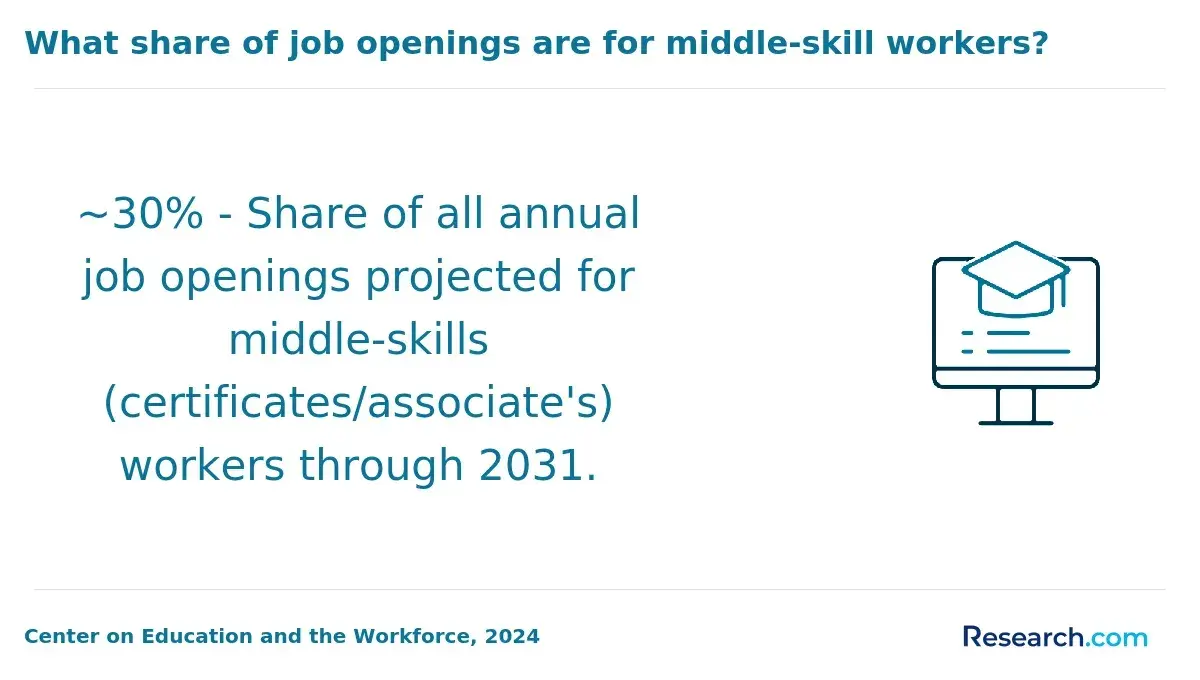
How Does the Time Commitment of an Online Homeland Security Doctorate Affect Its ROI?
Time commitment affects ROI because doctoral study competes with work, family, overtime, deployment, promotions, consulting, certifications, and other career-building activities. Online delivery can reduce commuting and relocation costs, but it does not make doctoral work easy or short.
Many online homeland security doctorates are designed for working professionals and may take several years to complete, depending on transfer credits, dissertation progress, course load, research approvals, and whether the student studies part time or full time. The longer the program takes, the more important it becomes to manage opportunity cost.
A 2024 National Center for Education Statistics trend that continues to shape graduate education is the large share of graduate students who enroll part time or balance study with employment. For homeland security students, that means flexibility can be a major benefit, but slow progress can reduce ROI if the degree is needed for a near-term promotion or career transition.
Before choosing a program, evaluate whether the schedule matches your career timeline. A professional seeking a faculty role may accept a longer research-heavy path. A public safety executive seeking promotion may prefer an applied doctorate with structured milestones and strong advising.
Time-related red flags include vague dissertation timelines, limited advisor availability, unclear transfer credit rules, and programs that advertise speed without explaining workload. A faster program is not automatically better if it weakens research quality or employer credibility, but a poorly supported program can extend costs and delay benefits.
Does an Online Homeland Security Doctorate Have the Same Career Value as a Campus-Based Degree?
An online homeland security doctorate can have the same career value as a campus-based degree when the institution is accredited, the curriculum is rigorous, the faculty are credible, and the student can demonstrate relevant experience and outcomes. Employers generally do not evaluate all online degrees the same way; they evaluate the school, the program, the candidate, and the job fit.
In many cases, the transcript or diploma may not emphasize delivery format, but students should not rely on that alone. If an employer asks about the program, the strongest answer is not "it was online." The strongest answer explains why the program was accredited, how it fit a working professional schedule, what research was completed, and how the learning applies to the employer's mission.
The table below compares online and campus-based doctorate value across employer-facing factors. It can help readers decide whether format or program quality should carry more weight in their selection.
| Factor | Online doctorate | Campus-based doctorate | Employer takeaway |
| Accreditation | Can be fully respected if institutionally accredited | Can be fully respected if institutionally accredited | Accreditation matters more than delivery format |
| Flexibility | Often better for working professionals, military personnel, and public safety leaders | May require relocation or fixed scheduling | Online study can preserve income and experience while enrolled |
| Networking | Depends on cohort design, residencies, faculty access, and alumni engagement | May offer more informal in-person networking | Students should verify actual networking opportunities in either format |
| Research support | Can be strong, but advisor access must be confirmed | Can be strong, especially where research centers are active | Dissertation support is a major quality signal |
| Employer perception | Generally positive when the school is credible and the candidate is experienced | Generally positive when the school is credible and the candidate is experienced | Prestige, fit, and outcomes often matter more than classroom location |
The best online programs are not simply digitized courses. They provide faculty mentoring, applied research, peer interaction, writing support, and opportunities to connect coursework to professional homeland security problems.
How Does an Online Homeland Security Doctorate Compare With Other Career Advancement Options?
An online homeland security doctorate is not the only path to advancement. In some careers, a master's degree, graduate certificate, professional certification, security clearance, technical credential, or specialized experience may produce a faster or better return.
The right alternative depends on the target role. A professional pursuing academic teaching or senior research may need a doctorate. A practitioner pursuing emergency management leadership may benefit from a master's degree plus FEMA training, project management, and command experience. A cyber-focused professional may see stronger returns from cybersecurity certifications and governance experience before pursuing a doctorate.
The table below compares common advancement options. It is designed to help readers avoid choosing a doctorate when a shorter credential may better match employer requirements.
| Option | Best fit | Limitations | When it may outperform a doctorate |
| Online homeland security doctorate | Senior leadership, academia, consulting, policy, research, and executive credibility | High time commitment and cost | When the target role explicitly rewards doctoral-level expertise |
| Master's in homeland security, emergency management, or public administration | Mid-career advancement and management preparation | May not qualify for some faculty or senior research roles | When promotion rules require graduate education but not a doctorate |
| Graduate certificate | Focused skill building in cyber, intelligence, emergency management, or risk | Less comprehensive than a degree | When the employer values a narrow specialization quickly |
| Professional certification | Operational credibility and specialized practice | May not carry academic weight | When the role requires demonstrable professional competence |
| Security clearance or specialized experience | Federal, defense, intelligence, and contracting roles | Not controlled entirely by the applicant | When clearance is a job requirement and degree level is secondary |
Homeland security is also connected to environmental risk, workplace safety, hazardous materials planning, and emergency preparedness. Students considering broader risk and resilience careers may want to compare related options such as the best online environmental health and safety programs before committing to a doctorate.
A common mistake is treating "more education" as automatically better. The smarter approach is to identify the exact hiring requirement for your desired role, then choose the least expensive credible path that meets or exceeds that requirement.
Which Professionals Benefit Most From an Online Homeland Security Doctorate?
The professionals who benefit most are usually mid-career or senior practitioners who already have relevant experience and need doctoral-level credibility for a defined next step. The degree is less likely to provide strong ROI for someone seeking entry-level work or for someone who has not yet identified a target field.
An online homeland security doctorate is often a strong fit for professionals in the following situations. These groups can usually connect doctoral coursework and research directly to employer needs.
- Emergency management, public safety, or law enforcement leaders who want to move into executive, policy, training, or regional coordination roles.
- Military or veteran professionals transitioning into homeland security strategy, federal contracting, emergency preparedness, or critical infrastructure protection.
- Cybersecurity, intelligence, or risk professionals who want to specialize in national security policy, cyber resilience, terrorism risk, or infrastructure defense.
- College instructors or administrators who need a doctorate for full-time faculty, program director, curriculum leadership, or applied research roles.
- Consultants and contractors who need stronger subject matter credibility for government, corporate, or nonprofit clients.
The degree may be a poor fit for students who want a quick credential, lack relevant experience, cannot manage a multiyear research project, or are pursuing jobs that only require a bachelor's or master's degree. It may also be unnecessary for roles where certifications, clearance, technical skills, or command experience matter more than doctoral study.
Admissions requirements vary, but many programs expect a master's degree, professional experience, graduate transcripts, letters of recommendation, a statement of purpose, writing samples, and sometimes an interview. Transfer credits may reduce course requirements, but dissertation or capstone requirements usually remain because they are central to doctoral-level work.
How Can Students Decide Whether an Online Homeland Security Doctorate Is Worth It?
Students can decide whether an online homeland security doctorate is worth it by working backward from their target employers. The most reliable decision process compares job requirements, employer recognition, program credibility, cost, time, and alternative credentials before enrollment.
Use the following steps to evaluate whether a specific program is likely to be respected and useful. This sequence helps separate real career value from advertising language.
- Identify three to five target roles and collect actual job postings from government agencies, contractors, universities, corporations, or nonprofits.
- Note whether the postings require, prefer, or merely accept a doctorate, and whether they specify homeland security, emergency management, public administration, criminal justice, cybersecurity, or another field.
- Verify institutional accreditation through recognized U.S. accreditation resources and confirm the school is eligible for federal student aid if you plan to use loans or aid.
- Ask the program whether graduates have moved into roles similar to your target jobs, and request outcome information that goes beyond testimonials.
- Review faculty expertise, dissertation topics, research centers, alumni networks, employer partnerships, residency requirements, and career services.
- Compare the doctorate with a master's degree, certificate, certification, clearance-dependent role, or employer-sponsored training path.
- Calculate total cost and time to completion under realistic assumptions, including dissertation delays and part-time enrollment.
- Plan how you will present the doctorate on your résumé, LinkedIn profile, interviews, and performance reviews using practical achievements rather than the delivery format.
When speaking with admissions teams, ask direct questions: How many students finish the dissertation? What is the typical time to completion? Are faculty active in homeland security research or practice? Do students work with agencies, contractors, or industry partners? Are there alumni in senior roles? What support exists for publishing, conference presentations, or applied projects?
Red flags include unclear accreditation, vague career claims, pressure to enroll quickly, no transparent tuition information, limited faculty visibility, weak dissertation support, and testimonials used in place of broader outcomes. Employer respect is earned through credible education and demonstrated competence, not through the word "doctorate" alone.
The bottom line: an online homeland security doctorate is respected by many employers when it is accredited, rigorous, relevant, and paired with substantial professional experience. It is worth it when it advances a defined career goal more effectively than lower-cost alternatives.
Other Things You Should Know About Homeland Security
No. Homeland security is broader and may include terrorism prevention, intelligence, border and transportation security, cybersecurity, critical infrastructure protection, and national preparedness. Emergency management focuses more directly on mitigation, preparedness, response, and recovery from disasters and crises.
Usually no. A security clearance is not typically required to enroll in an academic program. However, some federal, defense, intelligence, or contractor jobs may require clearance, and a degree does not guarantee eligibility.
Yes, especially for roles in homeland security, emergency management, criminal justice, public administration, or security studies programs. Full-time faculty positions may also require teaching experience, research output, publications, and a strong dissertation topic.
Usually, list the institution, degree name, field, and dissertation or research focus. If asked about format, explain that the program was accredited, rigorous, and designed for working professionals, then connect your research and coursework to the employer's needs.
References
- 10 Most Affordable Online PhD In Homeland Security | Grad School Hub https://www.gradschoolhub.com/affordable/online/doctorate/homeland-security/
- Online Doctorate Degree in Homeland Security https://www.criminaljustice.com/online-degrees/doctorate-in-homeland-security/
- Homeland Security Requirements (Degrees, Jobs & Salary) https://www.allcriminaljusticeschools.com/federal-law-enforcement/homeland-security/
- Earn a Doctorate Degree in Homeland Security https://www.criminaljusticeprograms.com/specialty/doctorate-in-homeland-security/
- What Global Employers Really Think About Online Degrees https://edutech.global/global-employer-view-on-online-degrees/
- Homeland Security Degree Online | Find Top Programs & Information https://www.firescience.org/homeland-security-degree-programs-online/
- Top Online Master’s Degree Programs in Homeland Security for 2025 https://www.onlinemastersdegrees.org/best-programs/homeland-security/
- Earning an Online Doctorate in Homeland Security https://www.gograd.org/online-phd-programs/best-homeland-security-degrees/


