Careers after an online MBA in Healthcare Management for international applicants

Co-Founder and Chief Data Scientist
An online MBA in healthcare management can strengthen your case for a management role, but it does not erase differences between healthcare systems - or grant permission to work in the United States. For international applicants, the career decision depends on prior experience, the jobs you want, and where you plan to work. This guide maps realistic career paths, puts U.S. pay and hiring data in context, and explains how to assess a program's curriculum, recognition, cost, and career support before enrolling.
Key Things You Should Know
- The strongest paths usually build on existing healthcare, operations, finance, technology, or management experience; an MBA alone rarely qualifies someone for senior healthcare leadership.
- The U.S. median annual wage for management occupations was $126,520 in May 2025, according to the Bureau of Labor Statistics (BLS), but that is not a healthcare MBA graduate salary.
- Enrollment in a U.S. online MBA does not itself provide a U.S. visa or employment authorization; confirm both career access and study eligibility before paying a deposit.
What careers can you pursue after an online MBA in healthcare management?
A healthcare management MBA prepares students to make business decisions in healthcare organizations, not to practice medicine. The most credible next role depends on what you already know how to do. The table distinguishes plausible pathways from the experience employers may still expect.
| Career path | Typical responsibilities | Most relevant prior experience or gap |
| Healthcare operations manager | Improve staffing processes, patient flow, service quality, and departmental budgets. | Operations or clinical-service experience; U.S. roles may require familiarity with local delivery and payment systems. |
| Practice or clinic manager | Oversee scheduling, revenue processes, vendors, and nonclinical staff. | Clinic administration and people management; employer expectations vary by organization. |
| Healthcare finance or revenue-cycle manager | Manage financial performance, billing operations, or reimbursement processes. | Finance or billing experience; U.S. reimbursement knowledge matters for U.S. roles. |
| Health technology implementation manager | Coordinate software adoption, workflows, vendors, and clinical stakeholders. | Project or technology experience plus an understanding of healthcare workflows and data privacy. |
| Healthcare consultant | Analyze operational problems and advise providers, payers, or other clients. | Demonstrable analytical work and sector expertise; an MBA alone is not a consulting placement credential. |
An experienced hospital administrator may use the MBA to compete for broader operational responsibility. A finance professional moving into healthcare has transferable budgeting skills but must learn how healthcare organizations deliver and fund care. Someone with neither healthcare nor management experience may have a more realistic first step in an analyst, coordinator, or project role.
Clinicians seeking both advanced nursing education and business training can compare graduate business choices: online MSN and MBA dual-degree programs. That route serves a different purpose from an MBA alone and should be evaluated against the clinical credentials required for the intended role.
How much can healthcare management graduates earn in the United States?
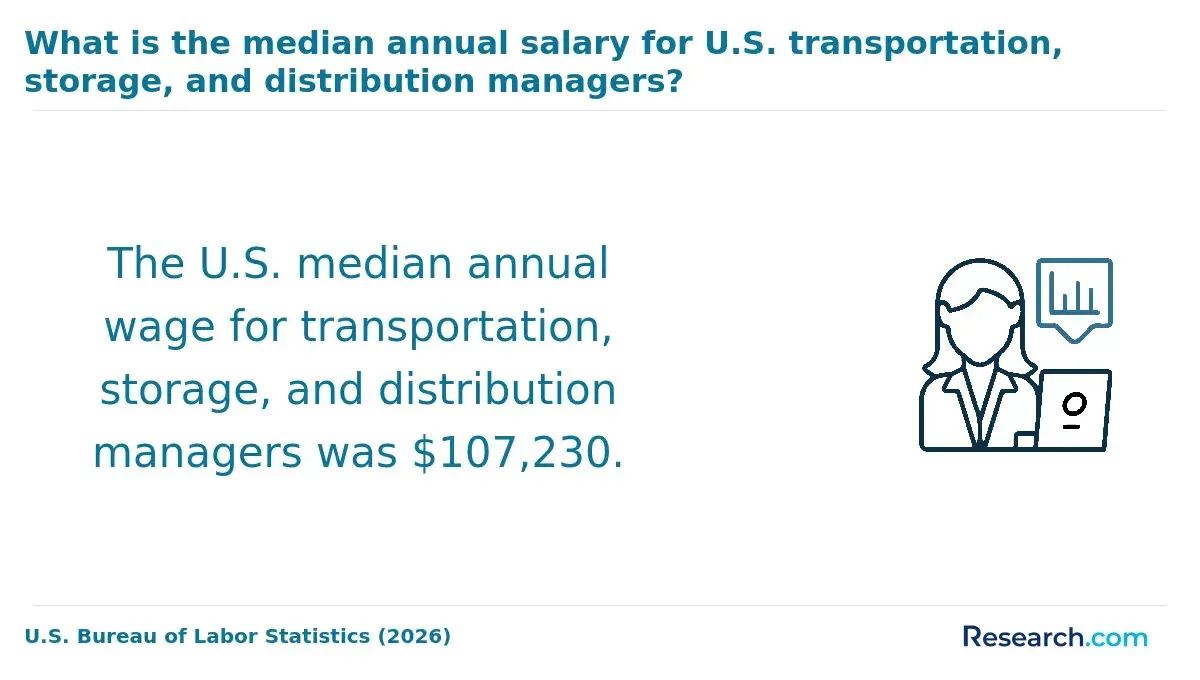
The BLS reports a $126,520 median annual wage for U.S. management occupations in May 2025. This broad group includes managers across industries and levels. It is not the median pay for healthcare management MBA graduates, international graduates, or any one of the roles above.
For a useful personal estimate, compare U.S. job postings for your target title, location, and experience level rather than using a management-wide figure as your expected salary. Also account for whether you can legally work in that location. If you intend to remain outside the United States, a U.S. occupational wage is not an appropriate forecast of your local pay or the degree's financial return.
What is the job outlook for healthcare management careers?
BLS projects about 1.1 million openings per year, on average, across U.S. management occupations from 2025 to 2035, reflecting both growth and replacement needs. That figure describes all management occupations - not vacancies reserved for healthcare managers or MBA holders.
Healthcare employers need people who can manage budgets, services, teams, and change, but opportunities differ sharply by role and market. A hospital operations position may depend on knowledge of U.S. care delivery, while a technology vendor may place greater weight on implementation experience. International applicants should assess demand for the specific job they can credibly pursue, not infer their prospects from broad management growth.
An MBA combines a general management core - often accounting, finance, strategy, operations, analytics, and leadership - with healthcare-focused study. Depending on the school, that focus might be a formal concentration, a set of electives, or a broader program theme. Those are not necessarily equivalent: check the required courses and what the degree transcript will show.
Relevant coursework may examine healthcare finance, quality improvement, organizational strategy, policy, and health information systems. Its value is managerial: learning to weigh costs, service outcomes, operational constraints, and stakeholder needs. It does not replace clinical training or provide the technical depth of every specialized healthcare degree.
Applicants without a business bachelor's degree need not assume they are ineligible; schools set their own prerequisites. They may, however, benefit from checking their readiness for accounting and quantitative work. a guide to online MBA programs for nonbusiness majors can help frame that comparison.
Online delivery does not determine whether an MBA is recognized. Confirm that the university has recognized U.S. institutional accreditation, then separately check whether its business school or program holds specialized business accreditation, such as AACSB, ACBSP, or IACBE. Institutional and business accreditation answer different questions; neither proves that a particular concentration is available online.
Recognition abroad is a separate issue. Employers, credential evaluators, professional bodies, and government agencies in your intended country of employment may apply different rules. Before enrolling, ask the school how the degree and concentration appear on official records, and check the requirements of any authority that must recognize the qualification. No accreditation status substitutes for a professional license where one is required.
Requirements vary by school. Common application materials include a recognized bachelor's degree, academic transcripts, a résumé, recommendations or essays, and evidence of English proficiency when applicable. Some programs request a GMAT or GRE score; others waive testing or do not require it. Professional-experience expectations and minimum academic standards also vary.
International applicants should confirm whether the university accepts their prior degree, requires a course-by-course credential evaluation, or requests certified translations. They should also ask whether residents of their country can enroll, whether live classes fall in workable time zones, and how tuition must be paid. If testing is a concern, MBA options by total cost gmat required offers a starting point, but verify each school's current test policy directly.
Admission to a U.S. online program is distinct from immigration status. Studying remotely from abroad does not itself authorize entry or employment in the United States. If moving to the U.S. is part of your plan, discuss the specific program and study format with the university's international student office and a qualified immigration adviser before relying on any visa or post-study work pathway.
Completion time depends on required credits, course sequencing, and whether the school permits part-time or accelerated study. Total cost depends on more than advertised tuition: compare mandatory fees, materials, possible travel, currency-conversion charges, and financing costs. Ask whether international online students pay a different rate or can use institutional aid; do not assume access to U.S. federal student aid.
Schools may quote prices per credit, course, term, or entire program, so advertised amounts are not automatically comparable. If affordability is a priority, lower-cost graduate business programs online MBA programs under $30,000 can be a screening resource. Confirm the full price of the specific healthcare pathway and any residency expenses before judging its value.
The practical cost test is whether the program advances a plausible next role enough to justify its total expense and study time. Employer reimbursement, a less expensive general MBA, targeted healthcare courses, or gaining experience first may be better options.
An online MBA can let you keep your job and study from your home country. That advantage matters if your goal is promotion with your current employer or within your existing market. Check for live-session times, group work, examinations, and required visits before assuming the schedule is fully flexible.
A campus-based MBA may provide more in-person recruiting and networking, but those advantages depend on the school, employers, and your eligibility to work where you study. Online students should ask specifically whether they can access career coaching, alumni events, employer introductions, and projects from abroad. Neither format guarantees a U.S. job; choose based on the opportunities you can actually use.
Many business and operations roles in healthcare do not require a universal U.S. healthcare management license. Requirements depend on the job and state, however. Nursing home administrator positions, for example, are subject to state licensing, while physicians, nurses, and other clinicians need the applicable professional authorization to practice. An MBA does not confer those licenses.
Employers may value role-specific certifications in areas such as project management, quality, or healthcare finance, but a certification is not interchangeable with an MBA or a state license. Read job postings for the exact role and state you want, then confirm regulated requirements with the relevant licensing board before committing to a degree as your route into that occupation.
How can international students choose a reputable online MBA program?
Start with the job you could realistically pursue after graduation, then compare programs against that outcome. The following checks help separate an attractive program description from a workable career plan.
- Verify institutional accreditation, any claimed business accreditation, and whether healthcare management is an online concentration, a set of electives, or simply part of the marketing description.
- Compare required healthcare courses and applied projects with the knowledge gaps in your target role and country.
- Ask whether your country of residence is eligible, when live sessions occur, and whether any travel is compulsory.
- Request the complete cost for international online students and confirm payment, scholarship, and employer-sponsorship options.
- Ask career services which resources international online students can actually use and whether the school publishes outcomes for comparable students.
- Confirm degree-recognition requirements and, if you hope to work in the U.S., evaluate employment authorization separately from admission.
Career stage should shape the decision as much as rankings do. Experienced professionals may value a flexible MBA for advancement, while others may need practical healthcare experience first. Applicants weighing a later-career investment can also compare schools for online MBA programs after 50; the relevant test remains whether the program supports a specific, achievable next step.
Other Things You Should Know About MBA
Possibly, if the employer hires in your location and the arrangement complies with applicable employment, tax, and data-access rules. A U.S. MBA does not itself establish that eligibility.
They may, particularly when you can document budgets, teams, projects, and results. Explain which skills transfer and where you would need to learn U.S.-specific systems.
Ask the program. Project rules vary, and you may need employer permission, appropriate data protections, and faculty approval.
Use clear English descriptions of your roles, organization types, scope of responsibility, and measurable work. Identify licenses accurately rather than implying that an overseas credential authorizes U.S. clinical practice.
- Immigration Options and Professional Requirements for Foreign Health Care Workers | Congress.gov | Library of Congress https://www.congress.gov/crs-product/R47528
- The imperative of professionalising healthcare management | nih.gov https://pmc.ncbi.nlm.nih.gov/articles/PMC11401068/
- Recognition of Foreign Qualifications | ed.gov http://www.ed.gov/about/initiatives/international-affairs/recognition-of-foreign-qualifications
- Are Online MBAs Taken Seriously? What Employers Really Think | sbs.edu https://www.sbs.edu/blog/are-online-mbas-taken-seriously-what-employers-think/
- MBA Accreditation: What It Is and Why It's Important | KU Business https://onlinemba.ku.edu/experience-ku/mba-blog/mba-accreditation-what-it-is-why-its-important
- Healthcare Management: Job Description and Requirements | Ultimate Medical Academy https://www.ultimatemedical.edu/blog/healthcare-management-job-description-and-requirements/
- Healthcare administration jobs: Your complete career guide | USC Price https://priceschool.usc.edu/price-blog/healthcare-administration-jobs-your-complete-career-guide/
- What Kinds of Companies Need Healthcare Consultants? | George Washington University https://healthcaremba.gwu.edu/blog/what-kinds-of-companies-need-healthcare-consultants
- Building Real-World Expertise: Full-Time MBA Students Share Their Summer Internship Experiences | Michigan Ross https://michiganross.umich.edu/news/building-real-world-expertise-full-time-mba-students-share-their-summer-internship-experiences