2027 Can You Get Into an Online Sociology Doctorate Program with a Low GPA? Admission Chances and Alternatives

Co-Founder and Chief Data Scientist
A low GPA does not always end a doctoral plan, but it changes how you should apply. Online sociology doctorate options are limited and often selective, so applicants need to prove research readiness in other ways. The stakes are real: the U. S. Bureau of Labor Statistics reported a May 2024 median wage of $101,770 for sociologists, showing why advanced training can matter for research-focused careers. This guide explains GPA expectations, flexible pathways, application strategies, funding limits, and alternatives so you can decide whether to apply now or strengthen your profile first.
Key Things You Should Know
- A GPA below 3.0 is often considered low for doctoral admission, but some online or hybrid social science programs review applicants holistically when they show strong writing, research experience, graduate-level coursework, or professional relevance.
- Federal Student Aid rules allow eligible graduate students to borrow up to $20,500 per academic year in Direct Unsubsidized Loans for 2024-25, but scholarships and assistantships may still use GPA-based criteria.
- Online sociology doctorates are relatively uncommon, so applicants with lower GPAs should also compare related doctoral routes such as social science, public policy, human services, social work, or interdisciplinary research programs.
Can You Get Into an Online Sociology Doctorate Program With a Low GPA?
Yes, you can sometimes get into an online sociology doctorate program with a low GPA, but admission is not automatic and depends heavily on the program's minimum requirements. In graduate admissions, "low GPA" usually means below 3.0 on a 4.0 scale, while a GPA below 2.75 may require a much stronger explanation, recent academic evidence, or a conditional pathway.
The key distinction is between a stated minimum GPA and the GPA that is competitive in practice. A school may list 3.0 as a preferred or required threshold, but a department may still admit a lower-GPA applicant if the application shows a clear fit with faculty expertise, strong research potential, and evidence that the earlier academic record does not reflect current ability.
This table summarizes how GPA ranges are commonly interpreted in doctoral-level admissions. It is not a universal rule, but it can help you estimate whether you should apply directly, apply broadly, or complete additional preparation first.
| Applicant GPA profile | How programs may interpret it | Admission outlook |
| 3.5 or higher | Strong academic signal for doctoral-level reading, writing, and methods coursework | Competitive if research fit and writing sample are also strong |
| 3.0 to 3.49 | Meets many common graduate minimums but still needs a focused application | Reasonable for holistic programs and some research-oriented programs |
| 2.75 to 2.99 | Often below preferred doctoral expectations but may be explainable | Possible where conditional admission, graduate coursework, or professional experience is valued |
| Below 2.75 | Raises serious academic-readiness concerns unless there is strong recent evidence | Usually better to strengthen the record before applying to highly selective programs |
A low undergraduate GPA matters less when an applicant has completed a strong master's degree, published or presented research, worked in applied research, or earned high grades in statistics and research methods. It matters more when the low GPA is recent, unexplained, or tied to courses that predict doctoral performance, such as theory, methods, statistics, writing-intensive seminars, or capstone research.
The most common mistake is assuming that "online" means easier admission. Online doctoral programs may be designed for working adults, but the dissertation, research methods sequence, and faculty review process can still be demanding. A better approach is to treat each online sociology doctorate as a research fit decision rather than as a convenience-based enrollment choice.
What Admissions Factors Matter Most Beyond GPA for Online Sociology Doctorate Programs?
Beyond GPA, online sociology doctorate programs usually look for evidence that you can handle independent research, advanced theory, data analysis, and long-term scholarly writing. For a lower-GPA applicant, these factors can either reduce the admissions concern or confirm it, depending on how well they are documented.
The table below shows the major non-GPA factors admissions committees may weigh. Use it to identify which parts of your application need the most attention before you apply.
| Admissions factor | Why it matters for sociology doctoral study | What makes it persuasive |
| Research fit | Doctoral study depends on faculty expertise, methods alignment, and dissertation feasibility | A clear match between your research question and the program's faculty or concentration areas |
| Writing sample | Sociology doctorates require literature reviews, theory analysis, and original research writing | A polished paper using scholarly sources, sociological framing, and clear argumentation |
| Research methods preparation | Quantitative, qualitative, and mixed-methods training are central to doctoral success | Strong grades or recent coursework in statistics, methods, evaluation, or data analysis |
| Professional experience | Applied work can show maturity, leadership, and access to real research problems | Experience in policy, nonprofit evaluation, community research, higher education, or social services |
| Recommendation letters | Letters help committees judge readiness beyond the transcript | Specific examples of analytical skill, resilience, research ability, and graduate-level performance |
| Statement of purpose | The statement explains why the doctorate is necessary for your goals | A focused plan that connects past experience, research interests, and program resources |
Applicants often overestimate the value of a personal statement that is emotionally compelling but academically vague. A strong statement should acknowledge the GPA issue only if needed, then quickly move to evidence: recent grades, research output, professional accomplishments, methodological skills, and a realistic doctoral agenda.
If GRE scores are optional, submit them only when they improve the picture. A strong quantitative or analytical writing score may help offset a weak transcript, especially if your low grades were in unrelated undergraduate courses. A weak optional score can create a second concern, so it is better withheld unless the program explicitly advises otherwise.
For lower-GPA applicants, the most effective application materials usually do the following:
- Explain academic weakness briefly without making excuses or blaming instructors, institutions, or life circumstances in a way that sounds unresolved.
- Show recent evidence of readiness, such as graduate coursework, research methods training, professional research reports, or a strong thesis.
- Connect the doctorate to a specific research or leadership goal rather than presenting it as a general credential upgrade.
- Use recommendation letters from people who can compare your current ability with graduate-level expectations.
Which Online Sociology Doctorate Programs Offer Flexible Admission Pathways?
Online sociology doctorate programs with flexible admission pathways usually fall into a few categories: fully online interdisciplinary social science doctorates, low-residency sociology-related PhD programs, professional doctorates with social research components, and programs that allow conditional admission. Pure online PhD programs in sociology are less common than online master's programs, so flexibility may come from a related field rather than a program labeled only "sociology."
This comparison can help you decide which type of program is most realistic if your GPA is below the usual doctoral benchmark.
| Program pathway | Typical fit | Low-GPA flexibility | Important caution |
| Online or low-residency PhD in sociology or social science | Students pursuing research, teaching, policy analysis, or dissertation-driven careers | May be flexible if research fit, writing, and faculty match are strong | Admissions may be more selective because faculty supervision capacity is limited |
| Doctor of Social Science or interdisciplinary doctorate | Professionals studying social systems, inequality, organizations, or community change | Often values applied experience alongside academic record | May not carry the same disciplinary recognition as a traditional sociology PhD |
| Public policy, human services, or leadership doctorate | Applicants focused on applied social problems, program evaluation, or organizational leadership | May weigh professional experience heavily | Research agenda must still fit the degree title and curriculum |
| Master's-first pathway | Applicants with low undergraduate GPA or limited sociology background | Allows a new graduate GPA to demonstrate readiness | Adds time and cost before doctoral admission |
| Graduate certificate or nondegree coursework | Applicants missing recent academic proof in methods, statistics, or theory | Can show targeted improvement without committing to a full degree | Credits may not transfer into a future doctorate |
Students whose goals are more practice-oriented than research-oriented should compare adjacent graduate routes before committing to a sociology doctorate. For example, applicants interested in clinical, community, or social service leadership may find that the best online MSW programs align better with licensure-oriented or direct-service career goals than a sociology research doctorate.
When evaluating flexible programs, ask admissions offices direct questions rather than relying only on catalog language. Some programs list a minimum GPA but still allow petition review; others enforce the cutoff strictly through the graduate school before the department ever sees the application.
Useful questions to ask include:
- Is the listed GPA a hard minimum, a preferred minimum, or a guideline for regular admission?
- Do you calculate GPA from all undergraduate credits, the last 60 credits, prior graduate coursework, or a completed master's degree?
- Is conditional or probationary admission available for applicants below the minimum GPA?
- Would recent graduate courses in statistics, methods, or sociological theory strengthen my file?
- Are online doctoral students eligible for the same scholarships, assistantships, or research opportunities as campus students?
How Can Applicants Strengthen an Online Sociology Doctorate Application With a Low GPA?
A lower GPA application needs a deliberate strategy. The goal is not to hide the GPA; it is to make the admissions committee confident that your current academic ability, research maturity, and professional direction are stronger than the transcript suggests.
Before applying, build an application package that directly answers the committee's biggest concern: whether you can complete advanced coursework and a dissertation. The following steps are practical and usually more effective than sending a generic application to many schools.
- Identify the GPA problem precisely by separating cumulative GPA, major GPA, last 60-credit GPA, and any graduate GPA.
- Choose programs where your research interests match faculty expertise instead of applying only based on format or tuition.
- Prepare a writing sample that shows sociological analysis, not just personal interest in social issues.
- Use the statement of purpose to connect your experience to a specific research question, population, method, or policy problem.
- Request letters from recommenders who can speak to current readiness, especially professors, research supervisors, or graduate instructors.
- Consider optional test scores only if they provide clear evidence of analytical, quantitative, or writing strength.
- Write a short GPA addendum if there is a legitimate context, but keep it factual and focused on improvement.
A good GPA addendum is brief. It can mention a documented health issue, caregiving period, military deployment, financial disruption, first-generation adjustment, or major improvement after an early weak period. It should not become the emotional center of the application. Admissions readers need to see that the issue is resolved or managed and that later evidence supports doctoral readiness.
Common red flags include submitting a vague statement, ignoring the GPA entirely when it falls below the stated requirement, applying to programs with no faculty match, or relying only on years of work experience. Professional experience matters, but doctoral programs still need proof that you can read research critically, design studies ethically, analyze data, and write at a scholarly level.
If you have time before the deadline, prioritize improvements that create verifiable evidence. A completed statistics course with an A, a supervisor letter describing evaluation work, or a polished research paper usually carries more weight than broad claims about motivation.
Should Students Complete Additional Coursework Before Applying to an Online Sociology Doctorate?
Additional coursework can be one of the strongest ways to offset a low GPA, especially if your low grades are old, unrelated to sociology, or concentrated in early undergraduate semesters. However, coursework is most useful when it is recent, rigorous, graded, and relevant to doctoral expectations.
Applicants should consider additional coursework when they lack recent academic evidence or when their transcript is weak in methods, theory, statistics, or writing-intensive social science courses. If your undergraduate record lacks core preparation, reviewing curricula in the best online bachelors in sociology programs can help you identify foundational topics that doctoral admissions committees may expect you to understand.
This table compares common pre-doctoral academic options. It can help you decide whether to take one course, earn a certificate, complete a master's degree, or apply directly.
| Preparation option | Best for | How it can help | Main drawback |
| Single graduate course | Applicants who need targeted proof in one weak area | Shows recent readiness in methods, statistics, theory, or research writing | Limited impact if the rest of the application is weak |
| Graduate certificate | Applicants who need several courses but not a full degree | Creates a compact record of graduate-level performance | May not transfer into a doctorate and may not qualify for all aid |
| Master's degree | Applicants with low undergraduate GPA or limited research background | Provides a new graduate GPA, thesis option, faculty references, and research training | Requires more time, tuition, and opportunity cost |
| Noncredit training | Applicants needing software or methods exposure | Can improve skills in statistics software, qualitative coding, or data visualization | Usually carries less admissions weight than graded coursework |
Cost should be part of the decision. The 2024 NCES Digest reports that average graduate tuition and required fees for 2022-23 were above $12,000 at public institutions and above $29,000 at private nonprofit institutions. That does not mean every certificate or master's program will cost that much, but it shows why applicants should avoid taking extra coursework without a clear admissions purpose.
Additional coursework makes the most sense when it produces one of the following outcomes:
- A new graded record that is significantly stronger than the old GPA.
- Preparation in research methods, statistics, sociological theory, or academic writing.
- A faculty relationship that can lead to a detailed recommendation letter.
- A revised writing sample, research proposal, or thesis that fits your doctoral interests.
It may not make sense to delay if your GPA is only slightly below the preferred threshold, you already have strong graduate grades, or an admissions counselor confirms that your professional and research record is competitive. In that case, a carefully targeted application may be better than spending another year on extra classes.
How Do Conditional Admission and Probationary Admission Work in Online Sociology Doctorate Programs?
Conditional admission and probationary admission are two ways some graduate schools allow lower-GPA applicants to begin a program while proving academic readiness. These policies vary widely, and not every online sociology doctorate offers them.
Conditional admission usually means you are admitted only after meeting specified conditions, such as completing prerequisite courses, submitting final transcripts, earning a minimum grade in initial coursework, or providing additional documentation. Probationary admission usually means you start the program under closer academic monitoring and must earn a required GPA during the first term or first set of credits.
The difference matters because each status affects risk, timing, and confidence. This table explains how these pathways commonly compare.
| Admission status | What it usually means | Common requirement | Risk for the student |
| Regular admission | You meet the program's standard requirements | Maintain normal graduate academic standing | Lowest admissions-related risk |
| Conditional admission | You must satisfy one or more conditions before or shortly after enrollment | Complete prerequisite or initial coursework with required grades | You may lose admission if conditions are not met |
| Probationary admission | You are allowed to start despite an academic concern | Earn a minimum GPA during the first term or credit block | Poor early performance can lead to dismissal |
| Nondegree or provisional study | You take courses before formal degree admission | Perform well and reapply or petition for admission | Credits may not count toward the doctorate |
If you are offered conditional or probationary admission, read the terms carefully before enrolling. Ask whether you will be eligible for financial aid, whether credits count toward the degree, what GPA you must earn, and what happens if you fall short by a small margin.
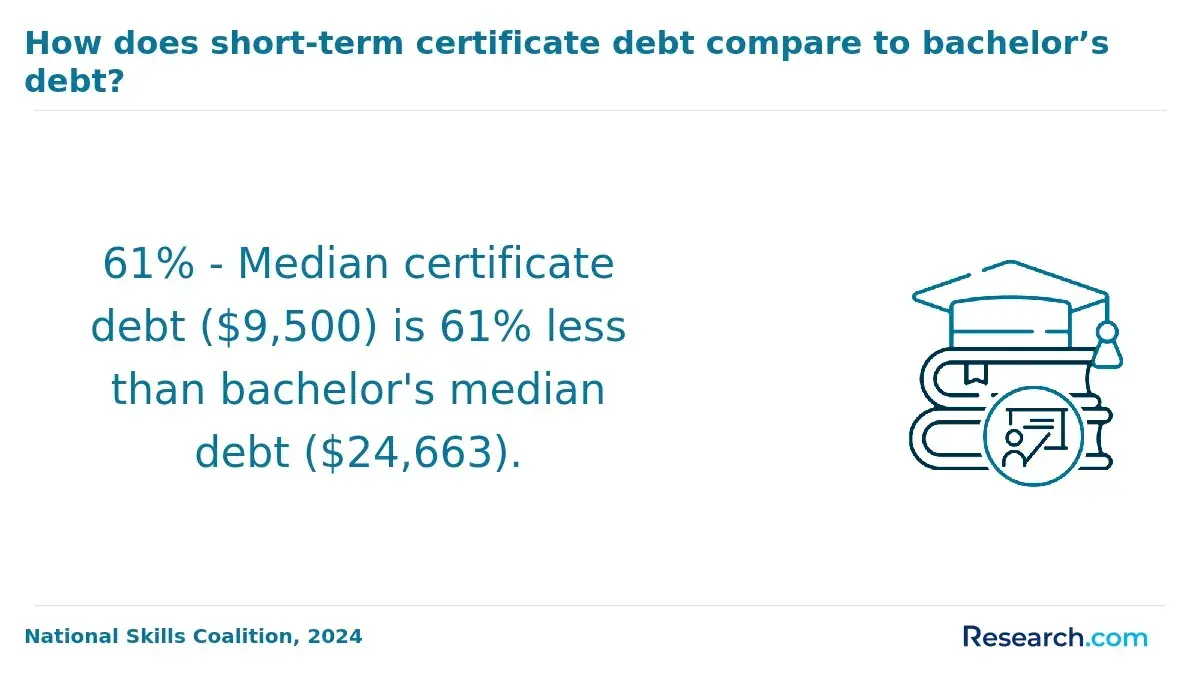
Students sometimes accept probationary admission because it feels like a second chance, but it is not always the best financial decision. If the program requires expensive first-term tuition and offers little support, it may be safer to complete lower-cost graduate coursework elsewhere before reapplying.
Before accepting a conditional or probationary offer, confirm these details in writing:
- The exact GPA or grade threshold required to continue.
- The number of credits or courses covered by the condition.
- Whether financial aid, scholarships, or employer tuition benefits apply during the conditional period.
- Whether the condition appears on your transcript.
- Whether you can appeal, pause, or retake coursework if unexpected circumstances arise.
Does a Low GPA Affect Financial Aid or Scholarship Opportunities in Online Sociology Doctorate Programs?
A low GPA can affect some financial aid and scholarship opportunities, but it does not automatically eliminate federal graduate aid eligibility. The bigger issue is that merit scholarships, assistantships, tuition discounts, and institutional awards may be more competitive and may use GPA as one screening factor.
For 2024-25, Federal Student Aid allows eligible graduate and professional students to borrow up to $20,500 per academic year through Direct Unsubsidized Loans. That figure matters because many online doctoral students are working adults who may not receive full institutional funding. Borrowing can fill a gap, but it also increases the importance of comparing total program cost, completion time, and likely career value.
Federal aid eligibility also depends on satisfactory academic progress once you enroll. A low incoming GPA is one issue; failing to maintain the graduate GPA required by the school is another. Doctoral students should ask how the program defines satisfactory academic progress, how many credits can be attempted, and what happens during dissertation enrollment if progress slows.
Scholarship competitiveness can be different from admission competitiveness. A program may admit a lower-GPA applicant because of strong professional experience but reserve limited scholarships for applicants with stronger academic records, research publications, or faculty-funded project fit.
To reduce financial risk, lower-GPA applicants should take these steps before committing:
- Request a full cost estimate that includes tuition, fees, residency travel, dissertation credits, technology fees, and continuation fees.
- Ask whether online doctoral students are eligible for assistantships, fellowships, research stipends, or tuition waivers.
- Confirm whether conditional or probationary admission changes aid eligibility.
- Compare part-time and full-time cost structures, especially if tuition is charged per credit.
- Avoid assuming future salary gains will offset high debt without a realistic career plan.
The main mistake is treating admission as the finish line. If your GPA limits scholarship access, a less expensive program, a master's-first route with employer tuition assistance, or delayed application after stronger coursework may create a better financial outcome.
Does a Low GPA Affect Career Outcomes After Completing an Online Sociology Doctorate?
A low GPA usually matters most before and during admission, not after you complete the doctorate. Once you hold the credential, employers, colleges, agencies, and research organizations are more likely to evaluate your dissertation topic, research skills, publications, teaching experience, applied projects, and professional network.
That said, a low GPA can have indirect effects if it limits admission to strong-fit programs, reduces funding, delays completion, or leads you into a degree that does not match your career target. Career outcomes depend more on the match between the doctorate and your intended role than on the old undergraduate GPA.
For research-focused sociology roles, the BLS reported a May 2024 median wage of $101,770 for sociologists. This figure is useful as a labor-market reference, but it should not be read as a personal earnings promise because salaries vary by employer type, research specialty, geography, experience, and whether the role is academic, government, nonprofit, or private-sector.
Students should also distinguish sociology doctorates from adjacent professional doctorates. If your goal is social work administration, practice leadership, or systems-level intervention rather than sociological research, DSW programs may be a more direct fit than a sociology doctorate.
This table shows how career direction should influence the degree decision.
| Career goal | Most relevant doctoral preparation | What employers may value most |
| Academic sociology teaching or research | PhD in sociology or closely related social science doctorate | Dissertation quality, publications, teaching record, methods expertise |
| Policy research or evaluation | Sociology, public policy, social science, or evaluation-focused doctorate | Data analysis, report writing, methods, policy domain knowledge |
| Nonprofit or community leadership | Applied social science, human services, public administration, or social work doctorate | Leadership outcomes, program evaluation, grant experience, stakeholder work |
| Social work leadership | DSW or PhD in social work, depending on practice or research focus | Licensure context, practice leadership, research translation, organizational impact |
For career planning, the better question is not "Will my old GPA follow me forever?" but "Will this doctorate help me build the portfolio my target employers or institutions expect?" If the program does not provide research mentoring, teaching opportunities, applied projects, or a credible dissertation structure, the format may be convenient but the career value may be limited.
Which Students Are Most Likely to Succeed in an Online Sociology Doctorate Despite a Low GPA?
Students with low GPAs can succeed in online sociology doctorate programs when their current habits, support systems, and academic preparation match doctoral demands. Online delivery adds flexibility, but it also requires self-direction because students must manage reading, research design, data analysis, faculty communication, and dissertation milestones with less day-to-day structure.
The strongest lower-GPA applicants usually share a pattern: their weak grades are explainable, their recent performance is stronger, and their doctoral goals are specific. They also understand that doctoral study is not just advanced coursework; it is a long research apprenticeship.
Applicants are most likely to succeed when they have these characteristics:
- Recent evidence of strong academic performance, especially in graduate-level or methods-heavy courses.
- A realistic research question that fits faculty expertise and available program resources.
- Consistent weekly time for reading, writing, data analysis, and advisor communication.
- Professional experience connected to social research, policy, education, community work, justice, health, inequality, or organizations.
- Comfort with feedback, revision, independent problem-solving, and long-term projects.
- Financial planning that does not rely on finishing faster than the program's normal timeline.
Students may struggle if they choose a doctorate mainly for status, avoid quantitative or qualitative methods, underestimate dissertation work, or enroll without checking whether faculty can supervise their topic. These risks are greater for online students because it is easier to become isolated if the program lacks advising structure, cohort interaction, and milestone accountability.
A useful self-check is to review your last demanding academic or professional project. If you can point to sustained research, complex writing, independent deadlines, and successful revision, you may have evidence that your current ability is stronger than your older GPA. If not, building that evidence before applying may be the wiser move.
How Should Students Decide Whether to Apply to an Online Sociology Doctorate With a Low GPA?
Deciding whether to apply with a low GPA comes down to probability, cost, timing, and career fit. Applying now may make sense if your GPA is only slightly below the preferred threshold and the rest of your profile is strong. Waiting may be better if your GPA is far below the minimum, you lack research preparation, or you would need to borrow heavily for a program with uncertain fit.
Use the following decision process to choose your next step. It is designed to prevent the two most common errors: giving up too soon and applying too broadly without strategy.
- List your cumulative GPA, major GPA, last 60-credit GPA, and graduate GPA, if any.
- Separate programs into hard-minimum, preferred-minimum, and holistic-review categories.
- Contact admissions before applying if your GPA is below the posted requirement.
- Compare your research interests with faculty expertise and dissertation support.
- Estimate total cost, likely funding, and debt before submitting deposits.
- Decide whether one semester of targeted coursework would materially improve your file.
- Apply only when your statement, writing sample, letters, and research fit directly address academic readiness.
If you are not yet ready for doctoral study or need a shorter applied pathway before graduate school, an accelerated human services degree online may be worth comparing, especially for students still completing foundational credentials or shifting toward social service careers.
The table below summarizes when each path is most sensible for a lower-GPA applicant.
| Your situation | Best next move | Why it may fit |
| GPA is near 3.0 and you have strong research experience | Apply selectively to holistic programs | Your non-GPA evidence may be strong enough to justify review |
| GPA is below 2.75 with little recent coursework | Complete graduate coursework or a certificate first | You need current academic proof before doctoral review |
| You have a strong master's GPA | Emphasize graduate performance and research fit | Recent graduate success can outweigh older undergraduate weakness |
| Your goal is licensure or direct social service practice | Consider MSW, DSW, or related professional routes | A sociology doctorate may not be the most direct credential |
| You need maximum flexibility and lower risk | Compare part-time, low-residency, and master's-first pathways | You can reduce academic and financial pressure while building evidence |
The best decision is the one that protects both your goals and your finances. A low GPA does not automatically close the door, but it does require a more evidence-based application strategy. If a program cannot clearly explain how it evaluates lower-GPA applicants, supports online doctoral students, and funds dissertation progress, keep comparing options before you commit.
Other Things You Should Know About Sociology
Possibly, but it depends on the institution, the doctorate type, your dissertation, publications, teaching record, and the program's academic reputation. Tenure-track roles often prefer a research-focused PhD, while community colleges or adjunct roles may have different requirements.
Yes. At minimum, the institution should hold recognized institutional accreditation. Program-specific accreditation is less common in sociology than in licensure fields, so students should also evaluate faculty qualifications, dissertation support, research expectations, and employer recognition.
Many doctoral programs take about 3 to 7 years depending on transfer credits, enrollment pace, dissertation progress, and whether the student already has a relevant master's degree. Online format can improve scheduling flexibility, but it does not remove dissertation requirements.
Some do and some do not. Low-residency programs may require orientations, research seminars, dissertation defenses, or intensive sessions on campus. Always confirm residency requirements, travel costs, and whether virtual dissertation defenses are allowed before applying.
References
- What PhD Programs Look for in Applicants: What Actually Matters | Ya'el Courtney — Ya'el Courtney https://www.yaelcourtney.com/resources-and-guides/what-phd-programs-look-for-in-applicants-what-actually-matters
- Sociology PHD, or MA in Policy and low GPA https://talk.collegeconfidential.com/t/sociology-phd-or-ma-in-policy-and-low-gpa/669528
- 50 Easiest Grad Schools to Get into by Acceptance Rate https://www.onlinemastersdegrees.org/features/grad-schools-acceptance-rates/