2027 Can a BS in Business Administration Prepare You for a Staff Accountant Role? Skills and Entry Requirements
Audited and Verified:
Our Editorial and Data Verification Process
Research.com uses government datasets, official education statistics and primary institutional information to support its career and degree guides. Our review process checks factual accuracy, occupational definitions, source dates and the requirements associated with the credentials discussed.
How This Article Was Fact-Checked
Our editorial team verifies salary estimates, employment projections, education requirements and program information against original data providers and official organizations. Salary figures are checked against the relevant occupational definitions and reporting periods. Information about licensure, accreditation and required in-person training is reviewed separately.
Fact-checked and verified on:

Co-Founder and Chief Data Scientist
A BS in Business Administration may get your résumé considered for a staff accountant opening, but the degree title alone will not show that you can maintain a ledger or prepare a reliable reconciliation. For students choosing courses and early-career employees considering a move into accounting, the distinction matters before committing time and tuition.
This guide explains what staff accountants do, which coursework and experience employers may expect, when an accounting degree is the stronger choice, and how to test whether a business administration program will close your specific skill gaps.
Key Things You Should Know
- Yes, conditionally: A BS in Business Administration can support a staff accountant application when it includes substantial accounting coursework and you can demonstrate relevant work; employers may still prefer an accounting major.
- Check the work, not just the title: General ledger entries, account reconciliations, financial statements, spreadsheets, and accounting software are more directly relevant than a broad management curriculum.
- Keep salary figures in context: The U.S. Bureau of Labor Statistics reports a May 2025 median annual wage of $83,680 for accountants and auditors and projects 5% employment growth from 2025 to 2035; neither figure describes starting pay for staff accountants specifically.
Can a BS in Business Administration Qualify You for a Staff Accountant Role?
Yes, for some openings. A staff accountant typically helps record transactions, reconcile accounts, support month-end close, prepare financial reports, and investigate discrepancies. The role generally does not require a particular degree title by law. An employer, however, can require an accounting degree, specify accounting credits, or favor applicants who have already performed close-related work.
The decisive question is whether your transcript and experience match the posting. A business administration graduate with intermediate accounting, tax or audit electives, and a supervised accounting internship may be better prepared than one whose coursework stops at introductory financial accounting. Conversely, an accounting major usually offers a more direct route to the technical courses employers request.
Do not confuse an accounting-focused business degree with preparation for an unrelated business function. If your interests are primarily in people operations, understanding human resources degree levels is more useful than selecting accounting electives simply because a staff accountant position appears accessible.
What Skills Do Staff Accountants Need to Succeed?
Staff accountants must connect individual transactions to accurate account balances and explain exceptions before reports are used. The most useful entry-level evidence is a work sample or supervised task showing that you can follow a process, find an error, document a correction, and protect confidential financial information.
For a typical general-ledger role, concentrate on these connected skills:
- Accounting mechanics: Apply debits and credits, accruals, adjusting entries, and basic financial statement relationships.
- Reconciliation and close: Compare ledger balances with supporting records, investigate differences, and retain a clear audit trail.
- Spreadsheet and systems work: Use formulas, lookups, pivot tables, and an employer's accounting system without assuming software proficiency substitutes for accounting judgment.
- Communication and controls: Explain discrepancies, meet deadlines, separate duties where required, and escalate unsupported entries rather than guessing.
If you prefer coordinating schedules, budgets, and deliverables to preparing financial records, explore economical project management degree programs as a different career route—not as a substitute for staff accounting preparation.
What Education and Experience Do Employers Require for Staff Accountants?
Requirements vary by employer and by the meaning of "staff accountant" in its organization. Some entry-level postings accept a bachelor's degree in accounting, finance, business, or a related field; others explicitly require accounting. A posting may also request experience with reconciliations, accounts payable or receivable, enterprise software, or a particular industry's reporting practices. Treat "preferred" and "required" qualifications differently.
Compare several local postings before choosing a program. Mark the accounting courses, software, and experience that recur, then ask an academic adviser whether the degree plan can accommodate them. If you already work in billing, payroll support, or bookkeeping, document the transactions and controls you actually handle; a job title alone will not establish general-ledger readiness. An internship or accounting assistant role can supply closer evidence than another broad business elective.
For someone transferring from an HR-oriented academic path, HR bachelor's completion with transferred coursework illustrates a different completion goal. Credits accepted toward that degree should not be assumed to meet accounting course requirements at another school.
Course titles are less informative than their prerequisites, topics, and assignments. The comparison below shows where common business courses help and where a student may need deeper accounting study:
| Course area | Contribution to staff accounting | Limitation to check |
| Financial accounting | Introduces entries, statements, and the accounting cycle | Often introductory rather than sufficient for complex close work |
| Intermediate accounting | Develops deeper financial reporting and measurement knowledge | May require prerequisites or be unavailable to non-accounting majors |
| Managerial accounting and finance | Builds cost, budget, and business-context awareness | Does not replace financial reporting coursework |
| Accounting information systems or analytics | Connects controls, data, and transaction workflows | Software taught may differ from the employer's system |
| Business law, tax, or audit electives | Adds context for documentation and compliance | Depth and availability vary by program |
Ask whether accounting electives count toward your BS, whether intermediate courses are restricted to accounting majors, and whether prerequisites extend graduation. If you are transferring an associate degree, project management bachelor's routes for associate degree graduates may be worth comparing only if that function—not accounting—is your target. Transfer acceptance in one major does not establish that accounting prerequisites are satisfied.
Neither is universally required for a staff accountant job. Many employers nevertheless prefer an accounting degree because its required sequence usually covers more financial reporting, audit, and tax than a general business degree. If you are choosing a first bachelor's primarily to enter accounting, compare an accounting major with a BS in Business Administration that has a formal accounting concentration; verify the courses rather than relying on the concentration name.
A Certified Public Accountant (CPA) license is a separate state-issued credential, not an automatic benefit of either degree. State boards set education, examination, experience, and other licensing conditions. If public accounting or eventual CPA licensure is your goal, check the board's current course rules and have prospective schools explain how each degree plan fits them before enrolling. A business degree with accounting electives may leave additional requirements to complete.
Choose a different specialized degree only when it serves a different goal. For example, accelerated undergraduate supply chain programs align more closely with logistics work than with financial statement preparation.
Either format can prepare you if it provides the accounting sequence, instructor feedback, relevant software practice, and access to experience-building opportunities. Online delivery may help an employee keep working, but scheduled meetings, proctored exams, group assignments, and fixed deadlines can still limit flexibility. Campus study may make in-person recruiting and peer support easier, though commuting can reduce time available for work.
Before choosing, ask for a sample term schedule and confirm how required accounting courses are delivered, how often they run, and whether internships or exams require a particular location. When reviewing online colleges with accelerated business programs, check that a shorter calendar does not crowd out needed accounting electives or practical experience.
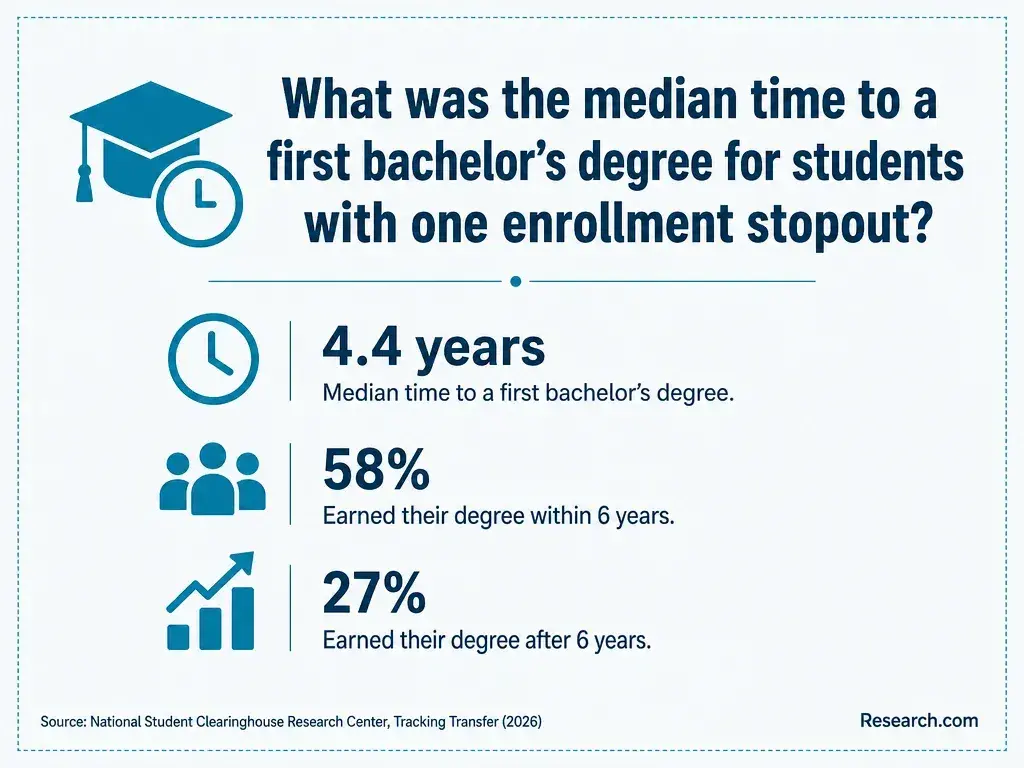
A bachelor's degree commonly takes about four years of full-time undergraduate study, but prior credits, part-time enrollment, prerequisites, and course availability can change the timeline substantially. There is no reliable single price for a BS in Business Administration: tuition policies, fees, books, software, travel, and financial aid differ by school and student. If accounting courses fall outside the standard major, ask whether they add credits or another term.
Request an official degree audit and a term-by-term plan, then compare the estimated cost to finish a business degree with the accounting courses you need against an accounting major. Include any income you would give up to attend classes or an internship. If speed matters, compare accelerated undergraduate programs using remaining required courses and total cost, not advertised completion time alone.
First, confirm that the institution holds recognized institutional accreditation. Then check whether the business school or the specific program has applicable business accreditation, such as AACSB, ACBSP, or IACBE; their scopes differ, and a school-level claim should not be mistaken for coverage of every degree. Accreditation is a quality-checking consideration, not proof that a curriculum meets a particular employer's requirements or a state board's CPA rules.
Verify status with the institution and accreditor, and ask for the current catalog and accounting course sequence. When comparing low-cost business administration degrees with federal aid options, confirm each school's current accreditation, aid eligibility, and total charges for your own study plan rather than assuming the advertised price applies to you.
Staff accounting can lead to senior accountant, general-ledger accountant, financial reporting, cost accounting, or accounting supervisor opportunities. These are possible directions, not automatic promotions: each may require deeper technical knowledge, industry experience, or responsibility for reviewing others' work. A staff accountant interested in audit or tax should check whether those jobs call for different experience or CPA progress.
Your first role can help identify the next skill to build. Someone who enjoys close and reporting may pursue more complex reconciliations; someone drawn to budgets and cross-functional work may consider finance or project coordination. Before paying for another degree, compare employer training and targeted courses with its full cost. If project coordination becomes the goal, project management program fees explained offers a way to examine that separate education decision.
What Salary and Job Outlook Can Staff Accountants Expect?
The U.S. Bureau of Labor Statistics groups this work within accountants and auditors, for which the May 2025 median annual wage was $83,680. That occupation-wide median includes experienced workers and different accounting specialties; it is not a staff accountant starting salary or a return promised by a business administration degree.
BLS projects 5% growth in accountant and auditor employment from 2025 to 2035. Use that outlook as national context, then compare actual entry-level postings in your location for pay, required courses, and experience. If you are weighing online business bachelor's degrees with shorter timelines, a quicker finish has value only if the program still builds the accounting qualifications those postings request.
Other Things You Should Know About Business Administration
It can, especially if the assignment includes documented reconciliations, journal entries, or close support. Ask what work you will perform and whether a supervisor can verify it; a temporary title alone is not evidence of those skills.
Not necessarily. Many staff accountants focus on an organization's ledger and reporting. Tax preparation may belong to a separate team or firm, so check the job description before choosing tax electives for that reason.
Yes, if you are permitted to share it. Label a simulation as classwork, explain your methods, and remove any confidential company or personal information. Do not present hypothetical results as workplace accomplishments.
Ask which accounts the role owns, what the close schedule involves, which systems the team uses, and how new hires receive review and training. The answers help you judge whether the position fits your current skills and development goals.
- Employability of accounting graduates: analysis of skills sets | nih.gov https://pmc.ncbi.nlm.nih.gov/articles/PMC9293638/
- Education Requirements | texas.gov https://www.tsbpa.texas.gov/applicants/education/
- CPA Licensure Experience Requirements | ca.gov https://www.dca.ca.gov/cba/applicants/experience-requirements.shtml
- Is Accounting a Good Career? Salary, Job Growth & Degree Options | Edison State Community College https://www.edisonohio.edu/blog/is-accounting-a-good-career-salary-job-growth-and-degree-options
- BBA vs. BS in Accounting: What's the Difference? - EOU Online https://online.eou.edu/resources/article/bba-vs-bs-accounting/
- Bachelor's Degree in Business: Administration or Accounting? | Bay Path University https://www.baypath.edu/news/bay-path-university-blogs/post/bachelor-s-degree-in-business-administration-or-accounting/
- CPA Exam Requirements | psu.edu https://harrisburg.psu.edu/business-administration/accounting-bs/cpa-exam-requirements
- Accounting Career Path: Staff Accountant to Partner | YSU https://online.ysu.edu/degrees/undergraduate/bsba/accounting/career-path/
- 5 Entry-Level Finance and Accounting Jobs to Start Your Career | Robert Half https://www.roberthalf.com/us/en/insights/career-development/entry-level-finance-and-accounting-jobs
- Staff Accountant Job Description, Skills and Responsibilities | LHH https://www.lhh.com/en-us/insights/job-descriptions/staff-accountant