2027 Camp Nurse Workday: Patient Mix, Responsibilities, and Teamwork
Audited and Verified:
Our Editorial and Data Verification Process
Research.com uses government datasets, official education statistics and primary institutional information to support its career and degree guides. Our review process checks factual accuracy, occupational definitions, source dates and the requirements associated with the credentials discussed.
How This Article Was Fact-Checked
Our editorial team verifies salary estimates, employment projections, education requirements and program information against original data providers and official organizations. Salary figures are checked against the relevant occupational definitions and reporting periods. Information about licensure, accreditation and required in-person training is reviewed separately.
Fact-checked and verified on:

Co-Founder and Chief Data Scientist
Camp nursing combines familiar RN work—assessment, medication administration, documentation, and escalation—with a less familiar workplace: a temporary community where care may be far from a clinic or emergency department. For nursing students and RNs considering a seasonal role, the deciding factors are often the patient mix, available backup, and time on call—not the camp setting alone.
This guide walks through a typical day, explains how the care team functions, and shows how to evaluate the preparation, schedule, and compensation behind a camp nurse offer.
Key Things You Should Know
- A camp nurse may manage scheduled medications and routine visits while remaining available for urgent problems; at an overnight camp, the coverage plan must account for all 24 hours.
- Patients can include campers and staff, with needs ranging from minor injuries to chronic-condition support and emergencies; staffing and off-site access matter as much as the daily visit count.
- RN camp jobs generally require an active license accepted where the camp operates, not a particular nursing degree; compare total seasonal compensation with actual duty and on-call hours.
What does a camp nurse do during a typical workday?
A camp nurse runs or supports the health center and helps keep planned activities safe. The day varies sharply between a day camp, where families may handle much of the care outside program hours, and an overnight camp, where health needs can arise after lights-out. Some camps employ several nurses; others rely on one nurse during a shift with an off-site clinician available by arrangement.
This example shows the sequence of work, not a standard staffing schedule or a set of standing orders:
| Part of the day | Typical nursing work | What can interrupt it |
| Opening or morning | Review handoff, planned medication times, health alerts, and supplies. | A camper wakes with symptoms or a staff member reports an overnight concern. |
| Activity hours | Assess visits, provide care within scope and camp policy, document, and communicate follow-up needs. | An injury, possible allergic reaction, or illness cluster requires immediate prioritization. |
| Meals and evening | Manage scheduled care, check on earlier visits, and prepare a handoff or overnight plan. | A late return from an activity or an after-hours call changes the workload. |
Medication reconciliation, parent or guardian communication, and recordkeeping may consume more time than treating scrapes. Nurses considering BSN completion programs using workplace-based projects might find camp workflows useful subjects for approved academic work, but a workplace project is not a substitute for camp orientation or employer-validated competence.
Before accepting a job, ask for the actual shift, overnight-call expectations, nurse-to-camper staffing plan, documentation system, and who assumes responsibility when the assigned nurse is off duty.
What types of patients and health conditions do camp nurses commonly treat?
The patient mix depends on the camp. A general recreation camp may see mostly otherwise healthy children with minor injuries, gastrointestinal or respiratory symptoms, headaches, and concerns related to heat or activity. It may also support campers with asthma, diabetes, food allergies, epilepsy, disabilities, or prescribed daily medications. Staff may need care too, but whether the nurse treats employees—and under what protocols—should be explicit.
A camp serving children with complex medical needs can be a very different job: more scheduled treatments, individualized plans, equipment, and coordination with families or specialists. Ask whether health information is reviewed before arrival, what care the camp can safely support, and whether the nurse will receive condition-specific training and adequate backup.
Emotional distress, homesickness, and behavioral concerns also appear in the health center. The nurse can assess immediate safety, offer support within scope, and involve designated mental health or medical professionals rather than treating every concern as a physical illness. An RN interested in a separate psychiatric advanced practice career can explore accelerated PMHNP master's admissions and requirements; that additional pathway is not a requirement for ordinary camp nursing.
How do camp nurses work with counselors, physicians, and emergency teams?
Counselors usually notice problems first: a camper misses an activity, reports symptoms, or has an injury. They relay observations and follow the camp's reporting and emergency procedures; they do not independently diagnose or make nursing decisions. The nurse assesses, documents, determines what needs escalation under applicable protocols, and communicates the information necessary for safe supervision without sharing unnecessary private details.
A camp may arrange physician or other authorized prescriber coverage for consultation and orders. Before the season starts, the nurse should know how to reach that clinician, what the standing orders actually authorize, and what to do if the clinician is unavailable. In an emergency, the nurse coordinates with emergency medical services and provides a clear handoff, while camp leaders address transport logistics and family notification under the camp's plan. Distance, cell coverage, and ambulance response time can change how workable that plan is.
Prescriber collaboration does not turn an RN position into an advanced-practice position. A nurse considering that separate career can compare family NP programs organized by duration but should not assume a short program or prior camp experience replaces required NP education, supervised clinical preparation, certification, or state authorization.
For an RN camp nurse position, the essential educational route is a prelicensure nursing program that makes the graduate eligible to seek RN licensure, followed by meeting the relevant board's examination and licensing requirements. An associate degree in nursing and a prelicensure BSN can both lead toward RN licensure; a BSN is not universally required for camp work. Individual employers may prefer a BSN or prior pediatric, school, community, or emergency nursing experience.
New graduates should read postings carefully. Being licensed is different from being ready to serve as a camp's only nurse, particularly when urgent assessment, medication systems, and after-hours decisions fall to one person. A role with another experienced nurse, clear protocols, and supervised orientation may be a more realistic entry point.
An already-licensed RN generally does not need another degree solely to work at camp. An RN weighing longer-term graduate options can examine ADN-to-MSN bridge curriculum options but should choose a bridge for a defined later role, not because an MSN is presumed necessary for this one.
Employers hiring for an RN camp nurse role typically require a current RN license or valid practice authority in the state where the camp operates. A license or multistate privilege must actually cover that location and role; the hiring camp and applicable board of nursing can clarify jurisdiction-specific questions. Graduation, passing the NCLEX-RN, and receiving an active license are separate steps.
CPR or basic life support training is commonly requested, while first aid, pediatric emergency, or other training depends on the camp and patient population. Check the exact course, issuing organization, renewal date, and whether the employer requires skills demonstration. A specialty certificate does not expand RN scope or replace orientation to the camp's medications, equipment, and emergency procedures.
An NP credential is likewise not a shortcut to RN camp eligibility or a universal job requirement. For an experienced APRN contemplating a different population focus, an online FNP certificate program length guide concerns a separate, formally reviewed pathway; any resulting certification and practice authority depend on the program, certifier, and state.
Prelicensure nursing education can combine online coursework with in-person labs, simulation, and supervised clinical placements. A campus-based program may deliver more instruction face to face, but neither format eliminates the need to demonstrate patient-care skills. Camp nurses especially benefit from practice communicating assessments, administering medications safely, and recognizing when a situation exceeds available resources.
When comparing programs, check state board approval for initial licensure, the program's applicable accreditation, clinical-placement arrangements, required attendance, and graduate eligibility in the state where you plan to seek a license. For a licensed RN, an online RN-to-BSN program may support broader study without providing initial licensure again.
Later academic formats serve different goals. For example, post-master's DNP programs without traditional clinical rotations may appeal to nurses pursuing certain advanced academic or practice-improvement goals, but they are not prelicensure camp nurse preparation and should not be mistaken for a new APRN population-focus pathway.
Health assessment, pharmacology, pediatric nursing, community health, mental health, and emergency-response concepts all transfer to camp work. The connection is practical: the nurse must notice changes, account for a child's developmental stage, administer and document medications safely, and explain follow-up to counselors and families. Supervised pediatric, school-health, ambulatory, or community experiences can provide useful exposure, although no particular rotation guarantees independent readiness.
A student considering this career should ask prospective programs where pediatric and community care appear in the curriculum and how medication safety, clinical judgment, and escalation are evaluated. If competitive admissions are the obstacle, nursing admission options beyond highly selective programs can broaden a school search; admission accessibility should still be weighed against licensure eligibility, clinical quality, cost, and outcomes.
After hiring, camp-specific preparation remains essential: review the health-center workflow, medication policies, individual care plans, privacy practices, and emergency drills with the employer before taking independent coverage.
An associate-degree RN route is commonly designed around two years of nursing study, while a traditional BSN is commonly structured around four academic years. Prerequisites, admission waits, part-time enrollment, and course sequencing can extend either path. An existing bachelor's degree may make an accelerated prelicensure option possible, but its pace and required on-site work need close review.
There is no single reliable camp-nurse tuition figure: schools charge differently, and a licensed RN may need no additional degree at all. Compare each program's published total charges and add books, equipment, immunizations, background checks, travel to clinical sites, exam and licensure expenses, and earnings forgone while studying. Ask for a term-by-term estimate rather than relying on an advertised per-credit price.
If graduate study serves a separate career goal, affordable nursing master's study for BSN graduates can help frame a comparison. It should not be counted as a required investment or assumed payback for seasonal camp work.
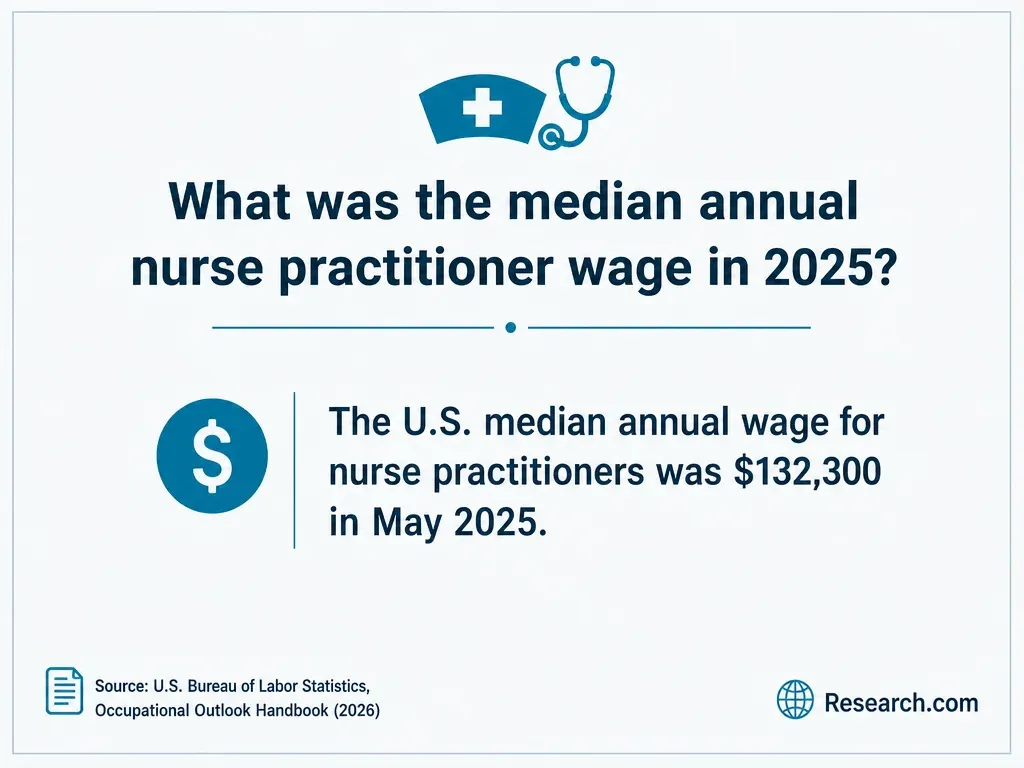
Camp nursing pay is difficult to compare with a standard RN salary because jobs may last only a session or season and may include housing, meals, or substantial on-call time. The U.S. Bureau of Labor Statistics reports wages for the broader registered nurses occupation, not a separate camp nurse wage series. An occupation-wide annual median is therefore a benchmark for the RN labor market, not a prediction of seasonal camp earnings or the value of an ADN or BSN.
For a meaningful comparison, request the cash rate, contract dates, expected scheduled hours, on-call coverage, overtime treatment, and the stated value and conditions of any housing or meals. Convert the offer to an estimated effective hourly cash rate using realistic duty hours, then compare it with local RN openings. A high weekly amount can look different when overnight availability is required; a lower cash offer may still fit someone seeking a defined seasonal experience, provided the coverage plan is safe.
Graduate study does not automatically improve a camp offer. An RN considering a distinct advanced-practice job may try exploring less expensive nurse practitioner study but should compare that investment with earnings in the intended NP role rather than with an RN camp contract.
What career outlook and advancement options are available to camp nurses?
Camp nursing is a small, seasonal niche within the much broader RN workforce. National RN employment projections can describe demand for registered nurses overall, but they cannot establish how many camp positions will open in a particular summer or region. Local hiring depends on camp enrollment, budgets, season length, staffing models, and the availability of qualified applicants.
Experience can lead to returning as a senior or lead camp nurse, helping design health-center procedures, or moving into school, community, ambulatory, or pediatric nursing. These transitions depend on the receiving employer's requirements and the nurse's demonstrated experience; camp work alone does not confer management authority or a new specialty credential. For leadership or doctoral goals beyond the camp role, DNP programs with accessible admission requirements are one possible subject to investigate, not a default next step.
Before committing to a season, request a written job description and speak with the health director or current nurse about orientation, backup, emergency transport, time off, and the busiest recurring tasks. Those answers will reveal more about professional fit than the camp's setting or advertised title alone.
Other Things You Should Know About Nursing
Some overnight camps include them; day camps generally operate differently. Confirm what is provided, whether housing is shared, and what happens to those benefits on days off or if the contract ends early.
That is an employer policy, not a standard nursing benefit. Ask about age limits, enrollment fees, supervision during your shifts, and what happens if your child needs you while you are working.
The camp should specify its record custodian, retention procedures, and approved systems. Nurses should document through those systems and follow applicable privacy and employer policies rather than keeping personal copies.
The camp needs a coverage plan that does not depend on an ill nurse continuing to work. Ask who provides replacement coverage and how medication administration and urgent assessments continue during an absence.
- Medication Dispensing Errors and Prevention - NCBI - NIH https://www.ncbi.nlm.nih.gov/books/NBK519065/
- Youth Camp Guidance, Clarifications, and FAQs | Texas DSHS https://www.dshs.texas.gov/youth-camp-program/youth-camp-guidance-clarifications-faqs
- Medical Record Keeping in the Summer Camp Setting - PMC https://pmc.ncbi.nlm.nih.gov/articles/PMC5228149/
- Medication Administration Errors | PSNet https://psnet.ahrq.gov/primer/medication-administration-errors
- Your Camp Health Services Essential Tips for Success | clemson.edu https://open.clemson.edu/cgi/viewcontent.cgi
- Camp nursing: A unique opportunity for nurses | sciedupress.com https://www.sciedupress.com/journal/index.php/cns/article/download/25234/15847
- Choosing a Summer Camp and Preparing Your Child: AAP Safety Tips - HealthyChildren.org https://www.healthychildren.org/English/safety-prevention/at-play/Pages/Choosing-a-Summer-Camp-and-Preparing-Your-Child.aspx
- Recommendations to Reduce Medication Errors in Non-Health Care Settings | NCC MERP https://www.nccmerp.org/recommendations-reduce-medication-errors-non-health-care-settings
- Health Issues at Summer Camp: Risks & Prevention | Medrite Urgent Cares https://medriteurgentcare.com/common-health-issues-summer-camp/
- How to Become a Camp Nurse | RegisteredNursing.org https://www.registerednursing.org/specialty/camp-nurse/