
2027 Business Development Degree vs Bootcamp vs Certificate: Which Path Leads to Better Career Outcomes?

Co-Founder and Chief Data Scientist
The real question is not whether a business development degree, bootcamp, or certificate is “best.” The better question is which pathway fits your target employers, budget, timeline, prior experience, and tolerance for risk. A degree usually offers the strongest long-term signal, broader business training, and deeper alumni access. A bootcamp can move faster and focus on job-ready skills. A certificate is often the most flexible way to build or verify a specific capability while continuing to work.
This guide compares the three options across cost, completion time, salary expectations, employer recognition, admissions barriers, curriculum depth, job placement, networking, geography, and return on investment. It is written for recent high school graduates, college students, career changers, working adults, and professionals deciding whether to invest in a full degree or choose a shorter business development credential.
Key Things to Know About Which Path Leads to Better Career Outcomes: Business Development Degree, Bootcamp, or Certificate
- Degree holders typically earn 20-30% higher salaries than certificate or bootcamp graduates-employers often prioritize degrees for senior roles due to perceived depth and long-term potential.
- Bootcamps offer faster job placement-averaging 80% employment within six months-but may limit networking opportunities compared to traditional degree programs.
- Certificates provide strong return on investment for working professionals seeking skill-specific roles, though long-term career growth is generally slower without broader credentials.
How Does Business Development Degree Compare to Bootcamps and Certificates in Total Program Cost and Time to Completion?
A business development degree is usually the longest and most expensive option, but it also provides the broadest academic foundation and the most durable credential. Bootcamps cost less and can be completed much faster, but they require intense short-term effort and may carry less weight with traditional employers. Certificates are typically the most flexible and least expensive, but their career value depends heavily on the provider, the skills covered, and the learner’s existing experience.
A traditional business development degree generally refers to an associate or bachelor’s program in business development, business administration, marketing, entrepreneurship, sales, management, or a closely related field. Full-time associate programs commonly take two years, while bachelor’s programs commonly take four years. Part-time enrollment can extend the timeline.
According to the National Center for Education Statistics (NCES), bachelor's degrees in related fields often cost between $40,000 and over $100,000, while associate degrees range from $10,000 to $25,000. That price can include more than coursework: students often gain access to advising, career services, internships, student organizations, campus recruiting, and alumni networks.
Bootcamps are shorter and more concentrated. Many business development, sales, marketing, customer success, revenue operations, or go-to-market bootcamps are completed within 8 to 26 weeks. Platforms like SwitchUp and Course Report show that business development or related sales and marketing bootcamps cost approximately $5,000 to $15,000. The trade-off is intensity: learners may need to complete projects, live sessions, outreach exercises, CRM practice, and interview preparation on a compressed schedule.
Professional certificates are usually the lowest-cost route. Certificates offered through online platforms like Coursera or Google, and industry associations, vary widely in length and format. Some are self-paced and can be completed in weeks; others follow instructor-led schedules over several months. They usually cost under $3,000 and are best suited for targeted skill building rather than broad career preparation.
- Degrees: Highest total cost, usually $10,000 to $100,000+; strongest fit for learners who want a recognized credential, a broad business foundation, and access to campus or alumni resources.
- Bootcamps: Typically $5,000 to $15,000; best for learners who want a faster, skills-focused transition and can handle an intensive schedule.
- Certificates: Generally less than $3,000; best for working adults, career explorers, and professionals who need a specific skill signal rather than a full academic credential.
- Time commitment: Degrees usually take two to four years full-time; bootcamps typically take two to six months; certificates may take weeks to a few months.
- Scheduling flexibility: Certificates are usually the easiest to fit around work and family obligations; degree programs and bootcamps vary by provider and format.
Cost and speed should not be the only deciding factors. A lower-cost pathway can still be a poor investment if employers in your target market do not value it. A higher-cost degree can be worthwhile if it leads to stronger internships, better first jobs, or faster promotion. Students comparing lower-cost business options may also want to review an affordable online business degree before assuming a bootcamp or certificate is the only budget-friendly route.
For readers comparing salary-driven academic options more broadly, Research.com’s guide to the highest paying online degrees can provide additional context on degree pathways with strong earnings potential.
What Career Outcomes Can Business Development Degree Graduates Expect Compared to Bootcamp and Certificate Completers?
Business development degree graduates generally have the strongest career outcomes at the start of the hiring process because many employers still use degrees as a screening tool. They are more likely to qualify for corporate trainee programs, analyst roles, associate business development positions, and structured leadership pipelines. Bootcamp graduates can compete well for practical, revenue-focused roles when they can show strong projects, outreach results, CRM experience, and interview readiness. Certificate completers usually benefit most when the certificate adds a specific skill to prior work experience.
Data from the Bureau of Labor Statistics (BLS) and the NACE Early Career Salary Survey indicate that degree completers often begin with stronger salary and placement outcomes than bootcamp or certificate completers. However, the gap is not uniform. Prior sales experience, industry knowledge, location, communication skill, and target employer type can outweigh the credential in individual hiring decisions.
- Employment Rate: Degree graduates report employment rates within six months ranging from 75% to 85%, while bootcamp completers often claim rates from 65% to 80%, and certificate holders see more variability, frequently between 60% and 75%.
- Median Starting Salary: Degree holders generally start around $55,000 to $65,000, whereas bootcamp outcomes vary—typically $45,000 to $55,000—with certificates often starting lower, near $40,000 to $50,000 depending on industry focus.
- Job Title Level: Degree graduates tend to enter at associate or junior business development manager roles, while bootcamp completers may begin in more entry-level sales or support roles, and certificate holders often find positions in specialized or assistant functions.
The most important caution is data quality. Degree outcomes are often reported through institutional career services or government-linked datasets, while bootcamp outcomes may be self-reported. Some bootcamps use more transparent reporting practices, but applicants should still ask how “employment” is defined, whether salaries are verified, and whether part-time, contract, unrelated, or temporary roles are counted.
Bootcamp and certificate completers can improve outcomes by building evidence employers can evaluate quickly: a prospecting portfolio, CRM screenshots or simulations, sales funnel analysis, customer research memos, pitch decks, email sequences, and measurable project results. Degree graduates should not rely on the credential alone; internships, student consulting projects, sales competitions, and alumni referrals can make the degree far more valuable.
For comparison, credential value also matters in fields where accreditation and program recognition are central; Research.com’s resource on CACREP schools shows how formal recognition can influence educational decisions in another professional context.
Which Business Development Pathway - Degree, Bootcamp, or Certificate - Offers the Highest Starting Salary for Graduates?
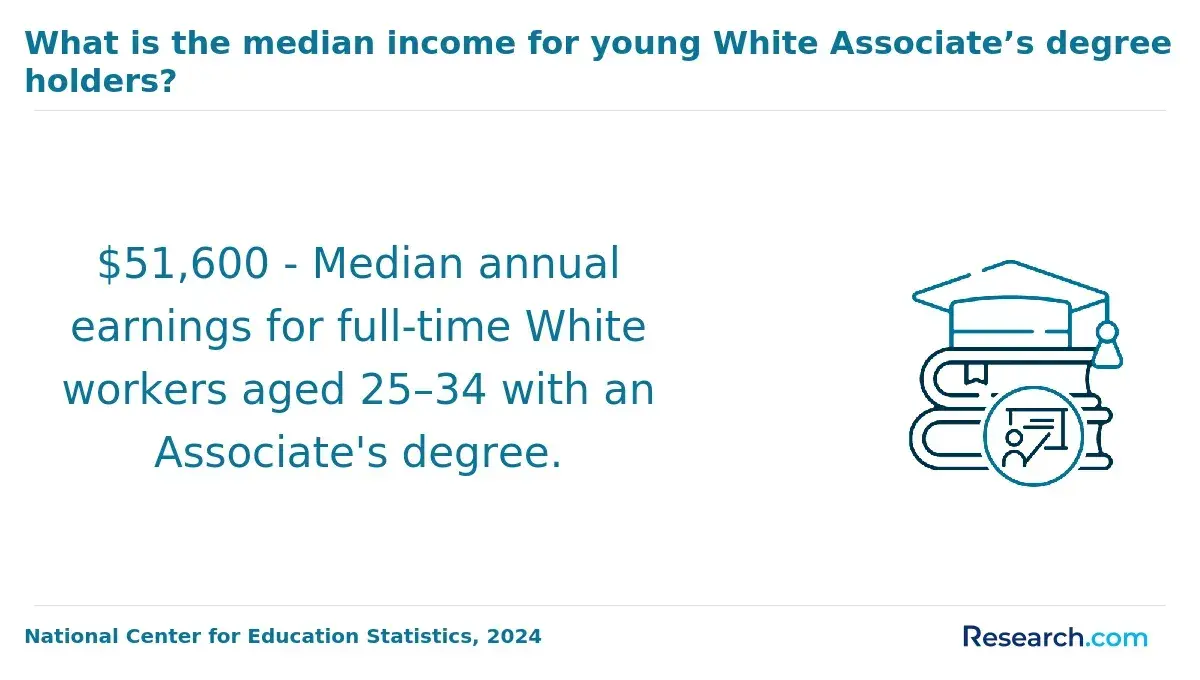
A bachelor’s degree in business development or a related field typically offers the highest starting salary range, especially for candidates applying to larger companies, corporate development teams, financial services firms, technology companies, consulting-adjacent roles, and formal rotational programs. Bootcamps can lead to competitive entry-level pay in startups and sales-driven organizations, but outcomes depend more on demonstrated skill and prior experience. Certificates usually have the most modest direct salary effect unless they are paired with relevant work history.
Starting salaries for graduates entering business development vary by educational background, based on data from the Bureau of Labor Statistics, NACE, LinkedIn Salary Insights, and Glassdoor. Those with a bachelor's degree in business development or related fields typically command entry-level pay between $55,000 and $75,000. Bootcamp graduates usually see starting salaries in the $45,000 to $60,000 range. Certificate holders' pay often overlaps with bootcamp completers but may be slightly lower because certificates commonly supplement a résumé rather than replace a broader credential.
- Employer Type: Large enterprises often pay more and are more likely to favor degree credentials. Startups may value practical ability, speed, outreach skill, and revenue impact more than formal education.
- Industry Sector: Technology and finance tend to offer better entry-level compensation than retail or nonprofit roles, regardless of credential type.
- Job Title Specificity: Roles with defined revenue responsibility, sales strategy, partnerships, or market expansion duties often pay more than general assistant or coordinator positions.
- Geographic Market: Major cities such as New York and San Francisco can push salaries higher, but competition is also stronger and employers may apply stricter screening standards.
Salary comparisons should be interpreted carefully. A bootcamp graduate with prior sales experience, a strong network, and a clear portfolio may outearn a degree graduate with no internships or practical experience. Conversely, a degree graduate entering a structured corporate program may see faster salary growth even if the first job is not dramatically higher paid.
Over time, degree holders often have an advantage for promotions into senior, strategic, or management roles because employers may tie advancement criteria to formal education. Bootcamp and certificate completers can offset this by building a record of measurable business outcomes, such as qualified pipeline generated, partnership revenue influenced, conversion improvements, territory growth, or customer acquisition performance.
One business development degree graduate described the experience this way: “I faced moments of doubt balancing studies and practical applications, but the depth of knowledge and connections made clearly opened doors.” That perspective highlights a common trade-off: the degree takes longer and costs more, but it can provide a more structured launchpad into employers that value formal preparation.
How Do Employers Actually Evaluate Business Development Credentials: Does a Degree Still Outrank a Bootcamp or Certificate?
In many hiring situations, a degree still outranks a bootcamp or certificate at the initial screening stage. This is especially true in large enterprises, government agencies, consulting firms, and regulated sectors such as finance and healthcare. These employers often use bachelor’s degrees as a proxy for communication ability, analytical preparation, persistence, and baseline business knowledge.
That does not mean bootcamps and certificates lack value. Startups, agencies, technology-adjacent employers, and sales-led organizations may be more willing to evaluate candidates based on skills, prior results, and job simulations. In these settings, a candidate who can show prospecting ability, market research, CRM fluency, account planning, persuasive writing, and a clear understanding of the buyer journey may compete effectively without a traditional degree.
Employers commonly evaluate business development candidates through several signals:
- Credential signal: A degree can satisfy HR filters and reassure employers that the candidate has broad business exposure.
- Proof of skill: Bootcamp projects, certificates, case studies, portfolios, and role-play performance can show job readiness.
- Relevant experience: Prior sales, customer service, marketing, account management, recruiting, fundraising, or entrepreneurship experience can materially improve outcomes.
- Communication quality: Business development is relationship-driven, so writing, listening, presentation, and follow-up discipline often matter as much as the credential.
- Network access: Referrals and alumni connections can move a candidate past automated filters and into serious consideration.
Some major tech firms and government bodies have reduced degree mandates and increased skills-based hiring. Even so, hiring practices have not become fully credential-neutral. Degree holders may still receive an advantage during résumé screening, while alternative-credential candidates may need stronger portfolios, referrals, or industry experience to reach the interview stage.
Applicants should study actual hiring patterns, not just job descriptions. Look at LinkedIn profiles of people recently hired into target roles, note their education and prior experience, and identify whether the company consistently hires bootcamp or certificate graduates. For another example of how specialized education can align with industry-specific business opportunities, Research.com’s guide to a game design degree shows how targeted credentials can support entry into creative and technical markets.
What Are the Admission Requirements and Academic Barriers for Business Development Degree Programs Versus Bootcamps and Certificates?
Business development degree programs usually have the highest admissions barriers. Bootcamps and certificates are generally easier to enter, but easier access does not automatically mean easier completion or better career outcomes. The right choice depends on whether the admissions process itself is a useful signal for your goals or an unnecessary barrier that slows your transition.
Accredited degree programs may require applicants to show academic readiness through several measures:
- GPA Minimums: Degree programs usually set a minimum GPA—often around 3.0 or higher—to evaluate prior academic performance.
- Prerequisite Coursework: Applicants may need foundational coursework in economics, statistics, accounting, mathematics, writing, or basic business principles.
- Standardized Tests: Some programs may request SAT, ACT, or GRE scores, depending on the level and institution.
- Letters of Recommendation: Recommendations can help programs assess maturity, professionalism, leadership potential, and persistence.
- Application Timelines: Degree programs often use fixed application windows, which require planning months before enrollment.
Bootcamps and certificate programs usually lower these barriers. Many use open enrollment, short applications, placement questionnaires, basic interviews, or readiness assessments. This accessibility can be especially valuable for career changers, working adults, first-generation learners, parents, and students whose earlier academic records do not reflect their current ability.
The trade-off is that open access places more responsibility on the learner. A selective degree program has already screened for academic preparation. A bootcamp or certificate may admit many students, but not all will have the same discipline, communication ability, sales aptitude, or job-market readiness. Before enrolling, ask whether the program offers career coaching, employer introductions, portfolio review, interview practice, and transparent graduate outcomes.
One professional who completed a business development bootcamp described the appeal and uncertainty of a lower-barrier pathway: “Without a traditional academic record, I was worried about meeting barriers like tests or recommendations. The bootcamp's open enrollment made it possible to start quickly, but I was still anxious about whether employers would take it seriously. Fortunately, the hands-on projects and the instructors' expertise gave me confidence and real skills, which helped me land my first role. It wasn't easy balancing work and study, but the flexibility allowed me to persist.”
How Does Curriculum Depth Differ Between a Business Development Degree, a Bootcamp, and a Certificate Program?
The biggest curriculum difference is depth versus speed. A degree builds broad business judgment over time. A bootcamp concentrates on immediate job tasks. A certificate usually targets one skill area, tool, or professional competency.
Business development degree curriculum
Degree programs offer the widest curriculum. Students commonly study marketing, sales strategy, negotiation, finance, management, economics, organizational behavior, analytics, business communication, entrepreneurship, and market research. General education courses may also strengthen writing, quantitative reasoning, ethics, and critical thinking.
This breadth matters because business development is not only “selling.” It can include market expansion, strategic partnerships, lead generation, competitive analysis, revenue forecasting, customer segmentation, pricing conversations, and cross-functional coordination. A degree gives students more time to connect these areas and understand how business decisions affect revenue, operations, and long-term growth.
Business development bootcamp curriculum
Bootcamps focus on applied, job-ready practice. Participants may work on customer acquisition tactics, CRM tools, outbound prospecting, sales funnel management, account research, cold email writing, discovery calls, pitch practice, and data-informed decision-making. The best bootcamps include realistic projects, instructor feedback, interview preparation, and portfolio development.
The limitation is that bootcamps rarely provide the same theoretical, analytical, or strategic depth as a degree. They are designed to help learners become employable faster, not to replace several years of business education.
Certificate curriculum
Certificate programs vary the most. Some introduce beginners to sales, marketing, customer relationship management, data analytics, or business communication. Others focus on a specific platform, methodology, or advanced business skill. Entry-level certificates can help learners explore the field or strengthen a résumé. Advanced certificates may be more valuable for professionals who already have relevant experience and need evidence of specialization.
When reviewing any curriculum, look for practical evidence of quality: graded projects, feedback from qualified instructors, real tools used by employers, employer advisory input, capstones, career support, and clear learning outcomes. A short program with strong applied work may be more useful than a longer program filled with generic content.
Which Business Development Path Produces the Fastest Return on Investment: Degree, Bootcamp, or Certificate?
Certificates and bootcamps usually produce the fastest short-term return on investment because they cost less and take less time. Degrees often have the strongest long-term return when they lead to higher starting salaries, broader employer access, stronger networks, and faster promotion into management or strategy roles. The best ROI depends less on the credential alone and more on the learner’s starting point.
To compare ROI, include more than tuition. A realistic calculation should consider tuition, fees, books or software, financing costs, living expenses, transportation, time away from work, and the salary increase that may result from the credential. Opportunity cost is especially important: a two- or four-year degree can require substantial time, while bootcamps and certificates may allow faster reentry into the workforce.
- Recent High School Graduate: Without prior income to forgo, degree programs incur high direct costs but no opportunity cost from lost wages. This scenario typically yields strong long-term ROI, as degrees often earn higher salary premiums and employer recognition; bootcamps and certificates offer quicker workforce entry yet with smaller cumulative salary increases, generating faster but lower ROI.
- Mid-Career Professional: Leaving a $50,000 annual salary to pursue education imposes substantial opportunity costs for degree pathways due to their length, often delaying a positive ROI beyond five years. Bootcamps and certificates reduce training time and income loss, accelerating ROI, but may result in modest salary growth and limited employer credential preferences.
- Part-Time Learner: Maintaining employment while studying lowers opportunity costs appreciably across all credentials. This approach leads to steady ROI, with bootcamps and certificates completing fastest, yet degrees usually bring greater long-term salary gains, stronger employer recognition, and access to advanced specializations.
For a fast ROI, a bootcamp or certificate can make sense when the learner already has transferable experience, a clear target role, and enough time to build a job-ready portfolio. For long-term ROI, a degree may be stronger when the learner wants access to larger employers, leadership tracks, internships, and a recognized credential that remains valuable across industries.
The highest-risk choice is enrolling without a plan. Before paying for any program, identify the jobs you want, review required credentials, compare graduate outcomes, estimate total cost, and speak with alumni. ROI is strongest when the program matches both the learner’s current position and the hiring expectations of the target market.
How Do Business Development Bootcamps and Certificate Programs Compare to Degree Programs on Job Placement Rates?
Job placement rates are difficult to compare because degree programs, bootcamps, and certificate providers often define and report outcomes differently. A degree program may track full-time employment related to the major. A bootcamp may count a wider range of jobs. A certificate provider may publish limited or no placement data. For that reason, the headline placement percentage is less useful than the details behind it.
Degree programs typically rely on institutional databases like the Integrated Postsecondary Education Data System (IPEDS), graduate surveys, or career services reports. These sources can be more formal, but they may lag behind current labor-market changes and may not always capture every graduate’s outcome.
Bootcamps often publish self-reported placement statistics. Some programs follow independently audited CIRR standards, which can improve transparency. Others use broad definitions of placement that may include part-time work, contract work, gig work, internships, or roles that are only loosely related to business development. This can make bootcamp outcomes appear stronger than they are if the reader does not inspect the methodology.
Certificate programs have the widest variation. A certificate from a recognized industry provider may help a learner earn interviews, but many certificate programs do not provide the same career coaching, employer pipelines, or placement reporting that degree programs and stronger bootcamps offer.
- Reporting Sources: Degree programs use IPEDS and career center data; bootcamps rely on CIRR audits or self-reports; certificate programs' data transparency varies widely.
- Definition of Placement: Bootcamps may count a broad range of employment types including gig or entry-level roles, while degrees emphasize relevant, often full-time business development employment.
- Career Services Impact: Employer partnerships, résumé coaching, mock interviews, alumni referrals, and job-search accountability can materially improve placement outcomes.
- Evaluating Claims: Ask for placement data by role type, salary range, employment status, time-to-placement, graduation cohort, and whether salaries are verified.
- Industry Benchmarks: Compare each program’s outcomes with similar programs, similar regions, and similar employer markets before drawing conclusions.
A strong placement rate should be specific, recent, and transparent. If a provider cannot explain who is counted, which jobs qualify, and how salary data is verified, treat the number cautiously. Students comparing online programs in other career fields may see similar variation in outcomes and career support, as shown in Research.com’s guide to sports degrees online.
What Role Does Networking and Alumni Access Play in Business Development Degree Programs Versus Bootcamps and Certificates?
Networking can be especially important in business development because the field depends on trust, referrals, relationships, and access to decision-makers. A credential may get a résumé noticed, but a strong network can help a candidate learn about openings, secure referrals, prepare for interviews, and understand how business development roles differ by company.
Degree programs usually offer the most established networking infrastructure. Students may gain access to alumni associations, career fairs, faculty connections, internships, student business organizations, employer panels, Greek or professional organizations, and on-campus recruiting. The value of this network depends on institutional reputation, location, alumni engagement, and the strength of the business school or department.
- Degree Programs: Best for learners who want broad and long-lasting networks. Alumni associations, faculty relationships, employer partnerships, and campus recruiting can support both first jobs and later career moves.
- Bootcamps: Often provide smaller but more focused networks. Cohorts may be tightly connected, and strong bootcamps can build practical employer pipelines in specific markets or industries.
- Certificate Programs: Networking is usually less formal. Providers like Google Career Certificates and Salesforce Trailhead may connect learners through online communities, platform ecosystems, or industry groups, but the learner often has to be more proactive.
Bootcamp networks can be valuable when they are active, employer-connected, and concentrated in the learner’s target market. Certificate networks can help when the credential is tied to a widely used platform or professional community. However, neither automatically replaces the scale of a strong university alumni base.
Before enrolling, ask specific networking questions: How many alumni work in business development? Which employers recruit from the program? Are alumni willing to mentor current students? Does the program host career events? Are referrals common? Are there local chapters or online communities? For a broader example of how degree-based networks can support specialized career paths, Research.com’s guide to the best art therapy programs illustrates how program structure and professional access can shape outcomes.
How Does Geographic Location Affect Which Business Development Pathway - Degree, Bootcamp, or Certificate - Leads to Better Outcomes?
Location can change the value of each pathway. In large metropolitan markets with many startups, technology firms, agencies, and sales organizations, bootcamp graduates may find more employers willing to evaluate practical skills and portfolios. In regional markets where employers rely heavily on established universities and local alumni networks, degree graduates may have an advantage. In smaller or rural markets, credential recognition and employer density can be more limited, making remote work or relocation more important.
Metropolitan areas like San Francisco, New York, and Chicago often have concentrated employer networks and a higher volume of business development openings. Bootcamps located in these markets may benefit from local hiring relationships, employer events, and alumni referrals. However, these markets are also competitive, and candidates may face higher expectations for experience, communication skill, and performance metrics.
Mid-sized regional markets may place greater trust in traditional colleges and universities. Local employers often know nearby institutions, attend their career fairs, and hire through alumni relationships. A bootcamp graduate in these markets may still succeed, but may need stronger networking, a clearer portfolio, or prior professional experience to overcome weaker local recognition.
In smaller or rural markets, the number of business development roles may be lower. Degree holders may benefit from broader employer recognition, while bootcamp and certificate holders may need to target remote roles, regional employers, or relocation opportunities. Remote work—now offered by 61% of employers in business development—has expanded access to jobs beyond a learner’s local market, but it has also increased competition because candidates can apply from more locations.
Prospective students should research the market before choosing a pathway. Review local job postings, identify common credential requirements, look at recent hires, and ask whether the program has employer relationships in the region where you want to work. A pathway that performs well in one city may not produce the same outcome elsewhere.
What Do Business Development Industry Professionals and Hiring Managers Actually Prefer When Reviewing Resumes?
Hiring managers usually prefer the candidate who reduces hiring risk. In traditional organizations, that often means a bachelor’s degree plus relevant internships or experience. In startups and skills-first companies, it may mean a strong portfolio, clear communication, proof of outreach ability, and measurable results. The credential matters, but it is only one part of the résumé story.
Large corporations and government bodies frequently maintain strict degree requirements, often a bachelor’s degree, and use them as initial screening filters. This remains true even though many firms have removed explicit degree requirements from job postings after 2020. In practice, hiring teams may still favor degree holders when comparing otherwise similar candidates.
Startups, agencies, and skills-first employers tend to evaluate business development candidates more directly. They may look for evidence that a candidate can research accounts, write persuasive messages, qualify prospects, use a CRM, run discovery conversations, understand customer pain points, and handle rejection professionally. In these environments, a bootcamp or certificate can help if it produces visible, job-relevant work.
Bootcamps and certificates often work best as accelerators or supplements. For a degree holder, they can show current technical or sales skills. For a career changer, they can provide structure and proof of commitment. For someone already working in sales, marketing, support, or customer success, they can help translate experience into business development language.
Applicants should not rely only on job descriptions. A practical approach is to review LinkedIn profiles of recent hires, conduct informational interviews, and ask recruiters what backgrounds actually receive interviews. Candidates should also tailor résumés around outcomes, not just credentials. Strong résumé bullets should quantify pipeline generated, accounts researched, outreach campaigns completed, partnerships supported, revenue influenced, conversion rates improved, or customer segments analyzed.
The main takeaway: degrees still dominate in many established hiring systems, but alternative credentials can compete when paired with evidence of skill, strong networking, and a clear match to employer needs.
What Graduates Say About Which Path Leads to Better Career Outcomes: Business Development Degree, Bootcamp, or Certificate
- : "Choosing the business development degree was transformative for my career path. While the initial investment was higher than a bootcamp or certificate, the long-term salary growth more than justified it. Employers definitely favored the credential when I applied, which made job placement smoother and faster than I expected. For anyone looking to deeply understand the field with a strong network ready at graduation, this route offers clear advantages. — Kayden"
- : "The bootcamp offered the best value for my profile as a career switcher. I landed a job quickly, partly because employers appreciated the hands-on focus and rapid learning. The ROI felt immediate compared to a degree, and the practical network I built was useful for entry-level roles. If you want a fast, immersive entry into business development without years of study, the bootcamp can fit that goal well. — Cannon"
- : "The business development certificate was ideal for someone balancing work and education. It gave me a credential to strengthen my résumé while helping me build skills incrementally. Although the salary increase was modest compared to degree graduates, the certificate's growing recognition by employers and decent job placement rates made it worthwhile for long-term growth. This path suits people who prefer flexible learning and want to build expertise while staying employed. — Nolan"
Other Things You Should Know About Business Development Degrees
Degree holders in business development typically experience stronger long-term career growth due to the comprehensive education and networking opportunities their programs offer. Bootcamps and certificates provide faster entry into the field but may not equip learners with the deep strategic knowledge valued for higher-level roles. Over time, employers often prefer degree holders for leadership positions, though relevant experience can offset this gap for bootcamp or certificate graduates.
Recent high school graduates benefit most from pursuing a business development degree because it provides foundational knowledge and a broad skill set applicable across industries. Career changers often find bootcamps and certificates more suited to their needs, as these options offer focused training in specialized skills and quicker completion times-enabling faster reentry into the workforce with minimal disruption.
References
- What Employers Look For On A Resume: 12 Hiring Managers Share Their Tips https://careerconnectors.org/what-employers-look-for-on-a-resume-12-hiring-managers-share-their-tips/
- Coffee with a Recruiter, feat. Jared Wenzel - Resume Best Practices - Blue Signal Search https://bluesignal.com/2021/03/02/coffee-with-a-recruiter-feat-jared-wenzel/
- More Employers Are Awarding Credentials. Is A Parallel Higher Education System Emerging? - EdSurge News https://www.edsurge.com/news/2021-03-25-more-employers-are-awarding-credentials-is-a-parallel-higher-education-system-emerging
- Digital Marketing Degree vs Bootcamp vs Certificate https://www.springboard.com/blog/business-and-marketing/marketing-degree-vs-bootcamp/
- Aligning and Embedding Industry Certifications with Bachelor’s Degrees https://workcred.org/Our-Work/Aligning-and-Embedding-Industry-Certifications-with-Bachelor-Degrees
- Alumni Network Value: Long-term Benefits After Program Graduation https://www.founderconnects.com/post/alumni-network-value-long-term-benefits-after-program-graduation
- Coding Bootcamps vs. College | Compare Paths to Tech Careers https://www.computerscience.org/bootcamps/resources/bootcamps-vs-degrees/
- How an MBA Can Build Your Network https://www.princetonreview.com/business-school-advice/why-get-an-mba-network
- Microcredentials vs. Traditional Degrees: What Do Employers Really Value? - Paris School of Management (PSM) https://www.psm-paris.fr/en/microcredentials-vs-traditional-degrees-what-do-employers-really-value/
- How Will an Organization Benefit from Having an Alumni Program? https://enterprisealumni.com/blog/how-will-an-organization-benefit-from-having-an-alumni-program


