2027 Break-Even Costs for Finishing a Business Administration BS While Working
Audited and Verified:
Our Editorial and Data Verification Process
Research.com uses government datasets, official education statistics and primary institutional information to support its career and degree guides. Our review process checks factual accuracy, occupational definitions, source dates and the requirements associated with the credentials discussed.
How This Article Was Fact-Checked
Our editorial team verifies salary estimates, employment projections, education requirements and program information against original data providers and official organizations. Salary figures are checked against the relevant occupational definitions and reporting periods. Information about licensure, accreditation and required in-person training is reviewed separately.
Fact-checked and verified on:

Co-Founder and Chief Data Scientist
Finishing a BS in Business Administration without leaving your job can protect your income, but it does not make the degree free. Remaining courses, employer reimbursement rules, and changes to your work hours determine what you actually spend.
More importantly, the degree breaks even only if it produces financial gains beyond what your current experience could earn without it. This guide helps working adults build a completion-cost estimate, calculate a defensible break-even point, and decide whether the degree - or a narrower alternative - fits their next career move.
Key Things You Should Know
- Price the credits that satisfy your remaining degree requirements, not every credit a school agrees to accept; add fees, financing costs, and any wages you expect to lose.
- Break-even time equals your incremental net cost divided by the annual after-tax financial gain attributable to the degree. If that gain is zero or negative, the degree has no financial break-even point.
- The U.S. Bureau of Labor Statistics reports a May 2025 median wage of $75,940 for human resources specialists, but that occupation-wide figure is not a starting salary or a defensible estimate of your personal degree-related raise.
What does it cost to finish a business administration bachelor's degree while working?
Your relevant cost is the price of finishing from your current position, not the advertised price of a full bachelor's degree. Request a written transfer evaluation and degree audit showing which credits meet general education, business-core, elective, and residency requirements. Accepted credits that apply only as excess electives may not reduce your bill.
The following cost categories separate charges you pay from costs that depend on your job and schedule. Use the school's current tuition schedule and your own records to fill them in.
| Cost component | What to measure | Why it can change |
| Tuition | Remaining required credits or terms multiplied by the applicable rate | Per-credit, per-term, and subscription pricing respond differently to part-time enrollment |
| Required expenses | Mandatory fees, books, software, equipment, proctoring, and travel | Online study can eliminate commuting while adding technology or exam costs |
| Financing | Expected interest and loan fees under a realistic repayment plan | Borrowing and repayment timing affect total cost |
| Work and household effects | Lost wages, reduced overtime, childcare, or other incremental expenses | Required meetings, exams, or campus visits may conflict with paid hours |
| Verified offsets | Grants, scholarships, and employer payments you qualify to receive | Eligibility, grades, caps, and reimbursement dates can limit the benefit |
Compare schools using the same remaining-credit estimate and pacing plan. To reduce tuition spending on an online business administration degree, look beyond the advertised rate: a cheaper credit is not a cheaper completion path if more courses must be repeated. Treat loans as financing rather than discounts, and check whether employer reimbursement arrives only after you have paid the bill.
How do you calculate the break-even point for a business administration degree?
Break-even time is the time after completion needed for degree-related gains to recover the incremental cost of finishing. Start with the career outcome you would reasonably expect without enrolling. A raise you were already likely to receive should not be credited to the degree.
Use this sequence to build a comparison you can revise as offers, benefits, or work hours change:
- Calculate remaining tuition and required expenses, then subtract only grants, scholarships, and employer payments whose eligibility and timing you have confirmed.
- Add incremental lost earnings and household costs. If borrowing, add expected interest and loan fees; do not also count repayment of loan principal as a second tuition expense.
- Estimate the annual after-tax difference between your plausible career path with the degree and your plausible path without it, including recurring benefit changes and job-search or transition costs where relevant.
- Divide the incremental net cost by that annual gain. The result is an approximate number of years after graduation to break even.
For example, keep the calculation in your worksheet as net completion cost ÷ annual after-tax degree-attributable gain until you have credible personal figures for both inputs. A promotion with no confirmed pay change cannot supply the denominator. If gains vary over time, add each year's net gain until the running total covers the cost instead of using a single average.
Also calculate cash-flow feasibility separately: tuition may be due months before an employer reimburses it. If federal aid is part of your plan, FAFSA planning for affordable business administration study is a starting point, but the school's financial-aid office must confirm your eligibility, enrollment requirements, and satisfactory academic progress. A longer completion schedule delays the first year in which a degree-dependent gain could occur.
Is a business administration bachelor's degree worth the investment?
It is more likely to be worth finishing when a specific job posting, internal promotion policy, or documented hiring pattern requires a bachelor's degree and your degree audit shows a manageable path to completion. It is less compelling when the target role mainly requires a particular tool, license, industry background, or demonstrated results that a general business curriculum will not supply.
Run a conservative and an optimistic version of your break-even calculation. In the conservative version, allow for a slower job search, no immediate promotion, and reimbursement that depends on meeting employer conditions.
Ask your manager or recruiter whether completing any accredited bachelor's degree meets the requirement, or whether business coursework itself matters. For someone already doing supervisory work, the degree might remove a credential barrier; for someone entering an unfamiliar field, it may need to be paired with projects or relevant experience.
If your next step is specifically organizational leadership, compare the remaining cost and credit applicability of that pathway rather than assuming another bachelor's degree is faster. Resources on shorter study timelines for leadership bachelor's students can help identify options, but an official audit determines your own timeline. If neither degree changes your likely opportunities enough to recover its cost, employer training or targeted coursework may be the better investment.
Online delivery can reduce commuting and make it easier to keep a job, but it does not automatically mean self-paced study. Check live class times, group-project meetings, exam windows, proctoring, internship rules, and any campus visits before assigning a program a lower opportunity cost.
A campus schedule may work well if evening classes are reliably offered and in-person recruiting or support is valuable to you. An asynchronous online schedule may work better for rotating shifts or caregiving, provided deadlines and required collaborations are manageable. In either format, compare total required hours away from paid work, not just travel time.
Some undergraduate programs with faster pacing compress the calendar without reducing the coursework. An accelerated term can lower the wait for graduation yet increase the risk of missed work, course withdrawal, or an unaffordable tuition bill. Ask for a sample schedule covering the specific upper-level courses you still need.
Requirements vary by institution, but a BS in Business Administration generally combines general education with business subjects such as accounting, economics, finance, marketing, management, operations, business law, statistics, and a capstone. The title BS does not establish a uniform quantitative curriculum, and prior work experience does not automatically replace a required course.
For a working student, the financial question is which requirements remain and in what order they must be taken. An accounting or statistics prerequisite can hold up later finance or analytics work; an upper-level capstone offered infrequently can extend enrollment even after most credits are complete. Ask an adviser to map required courses by term and identify any internship, approved workplace project, or residency requirement that could affect paid hours.
If your objective is project coordination rather than broad business preparation, compare the courses and explore transfer-friendly undergraduate project management schools. A specialized curriculum may fit the work better, but switching majors can also strand business electives or add prerequisites.
Schools commonly request prior college transcripts and evidence that applicants meet their undergraduate admission standards; entry to the business major may have separate rules. Admission, acceptance of transfer credit, and application of that credit toward graduation are different decisions. A returning student should request all three determinations before relying on a cost estimate.
To check prerequisites before applying to business administration programs, compare your transcript with the current catalog's mathematics, accounting, economics, and other stated requirements. Ask whether previous coursework is considered equivalent, whether a course has a recency rule, and whether an unmet prerequisite can be completed after admission. The institution - not an advertised transfer-credit maximum - decides what applies to your degree.
Completion time depends on credits that apply to the degree, required course sequencing, term lengths, and how many courses your work schedule allows. A student with many accepted credits can still face a lengthy path if upper-level business courses, residency credits, or a capstone remain. Conversely, taking fewer courses per term may protect earnings and reduce withdrawal risk even though graduation comes later.
Ask each school for a term-by-term plan showing when every remaining requirement is offered, then test it against your busiest work periods. US rankings for accelerated business bachelor's degrees may help you find programs to investigate; their advertised speed is not a personal completion estimate. Compare the plan's tuition schedule, likely lost wages, and graduation date together: the quickest path is not necessarily the earliest financial break-even.
The degree can support applications for business operations, administrative, sales-support, human resources, marketing, procurement, and project-coordination roles. Your existing responsibilities and evidence of relevant skills determine which are realistic next steps. Someone who already manages schedules and vendors may have a stronger case for an operations role than someone relying on coursework alone.
Read postings for the actual tasks: budgets, spreadsheets, customer research, purchasing systems, or staff support. Build examples from permitted workplace projects or class assignments that show those tasks, without disclosing confidential information. Management positions usually require demonstrated responsibility beyond the degree; regulated accounting and financial-services work can have separate credential rules.
If your experience is already in logistics or purchasing, fast-track online supply chain bachelor's options may offer more directly relevant coursework. Compare their remaining credits and employer recognition with the general business BS before switching.
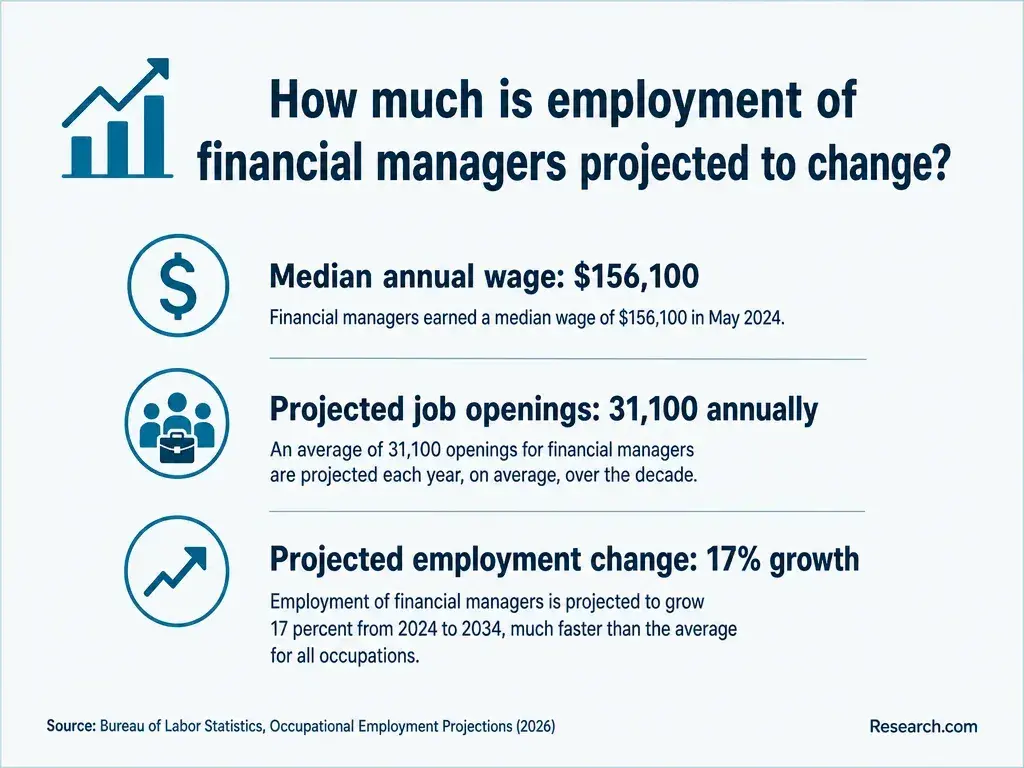
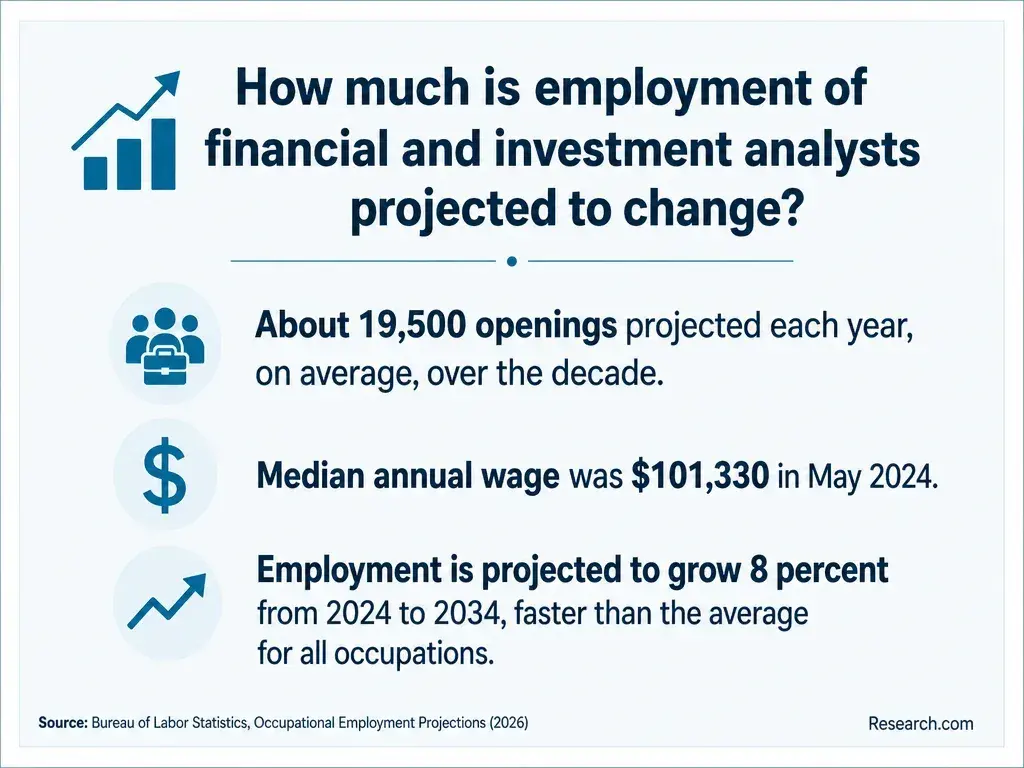
There is no single salary for the degree. The U.S. Bureau of Labor Statistics reports a May 2025 median annual wage of $75,940 for human resources specialists and projects 6% employment growth for that occupation from 2025 to 2035. Those figures describe an occupation across experience levels, not the wages of new business administration graduates or a raise caused by completing the BS.
For your break-even estimate, prioritize a written internal pay band, offers for roles you could plausibly obtain, and local postings with comparable experience requirements. Compare those figures with your expected pay without the degree, then account for taxes and benefits. Do not substitute a manager's occupation-wide median for your first post-degree job.
A specialized path can change both potential roles and education costs. If project management is your target, an accredited online project management tuition guide can help frame the cost comparison; it cannot establish that a different degree will produce a particular salary.
How do you choose an accredited business administration degree program?
First, verify that the institution holds recognized institutional accreditation and that the exact BS program, delivery format, and location you plan to use are offered. Business-school accreditation from AACSB, ACBSP, or IACBE is a separate distinction; check the accreditor's stated scope rather than assuming every program at the institution is covered.
Then request an official degree audit, current tuition and fee schedule, required-course rotation, and written policies for employer reimbursement, leave, and transfer appeals. Ask career services for outcomes relevant to working transfer students, including how graduates were counted; an overall employment claim may not describe your situation. Compare budget-friendly online business schools on the cost to finish your approved plan, not their headline tuition alone.
Before committing, put your chosen program and at least one alternative through the same break-even worksheet. The strongest choice is the one whose verified requirements fit your work schedule and whose plausible career benefit justifies its full incremental cost.
Other Things You Should Know About Business Administration
Tax treatment depends on the applicable tax year, your circumstances, and whether you or your employer paid the expense. Check current IRS guidance or consult a qualified tax professional; do not assume a deduction when calculating break-even cost.
Some employers require repayment if you leave within a specified period. Read the signed benefit policy for service commitments and exceptions before treating the payment as a permanent cost reduction.
Yes, if an offer confirms it and it is attributable to the degree. Count the after-tax amount once, subject to any repayment condition; do not treat it as a recurring annual raise.
Model it as a scenario, not a certainty. Keep a separate conservative calculation without the promotion so you can see whether the degree still fits your finances.
- Tips for paying off student loans more easily | consumerfinance.gov https://www.consumerfinance.gov/paying-for-college/repay-student-debt/student-loan-debt-tips/
- Topic no. 456, Student loan interest deduction | Internal Revenue Service https://www.irs.gov/taxtopics/tc456
- College Cost and Financial Aid Terms Explained | Illinois State Treasurer https://illinoistreasurer.gov/home/individuals/college-savings/key-terms-for-understanding-education-costs/
- Delayed Time-to-Degree and Post-college Earnings - PMC https://pmc.ncbi.nlm.nih.gov/articles/PMC7875953/
- Cost of Attendance (Budget) | 2025-2026 Federal Student Aid Handbook https://fsapartners.ed.gov/knowledge-center/fsa-handbook/2025-2026/vol3/ch2-cost-attendance-budget
- College Employment and Student Performance | Penn Wharton Budget Model https://budgetmodel.wharton.upenn.edu/p/2021-10-04-college-employment-and-student-performance/
- Employer Tuition Reimbursement: How It Works and How to Pay for College | Winston-Salem State University https://ramsonline.wssu.edu/blog/employer-education-benefits/
- Is a Business Administration Degree Worth It? | University of Bridgeport https://www.bridgeport.edu/news/is-a-business-administration-degree-worth-it/
- Residency For Tuition Purposes | fldoe.org https://www.fldoe.org/schools/higher-ed/fl-college-system/student-services/residency-for-tuition-purposes.stml