2027 Best Value Online Educational & Teacher Leadership Master's Degrees: Affordable Accredited Programs with the Highest ROI

Co-Founder and Chief Data Scientist
Choosing an online master's degree that balances affordability, accreditation, and strong career returns is a complex task, especially when programs vary widely in quality and cost. With online enrollment surging, nearly 40% of graduate students took some or all courses online in 2024 according to the National Center for Education Statistics, prospective Educational & Teacher Leadership students face a growing array of options that challenge traditional assumptions about program value.
Understanding which degrees deliver verifiable outcomes without excessive debt or compromised academic rigor is crucial for maximizing long-term career mobility and employer recognition in a competitive job market.
Key Things to Know About the Best Value Online Educational & Teacher Leadership Master's Degrees
- Programs accredited by recognized bodies ensure rigorous curriculum alignment with state standards, although regional accreditation may limit credit transferability, affecting long-term academic mobility for career changers.
- Employers increasingly value demonstrated leadership and data-driven decision-making skills from these degrees, pushing candidates toward programs with applied practicum components to enhance workforce readiness.
- With online master's enrollments for adult learners up 12% since 2025, program affordability directly impacts students' ability to balance work, family, and degree completion timelines.
What Are the Best Value Online Educational & Teacher Leadership Master's Programs in the U.S.?
Best value in an online educational & teacher leadership master's program involves a calculated evaluation of several program aspects where tuition is just one component. The true measure considers accreditation quality, the likelihood of timely graduation, and the measurable increase in earning potential after degree completion.
For instance, a working professional balancing full-time employment and family commitments will weigh a program's asynchronous delivery and robust student support against its cost, recognizing that greater flexibility can offset slightly higher tuition by reducing opportunity costs and risk of attrition. Employer recognition tied to CAEP or equivalent accreditation often determines whether a degree translates into actual job mobility and salary gains.
The following list presents five standout accredited online programs offering fully or mostly asynchronous formats to accommodate diverse student workflows. These options range widely in tuition cost, enabling prospective students-especially those seeking affordable accredited online educational and teacher leadership master's degrees with high ROI-to self-select based on financial constraints and preferred delivery style.
- Institution Name: University of Central Arkansas
- Estimated Total Tuition: $12,000
- Delivery Format: Fully asynchronous
- Differentiator: Strong emphasis on leadership for rural and underserved school districts.
- Institution Name: East Carolina University
- Estimated Total Tuition: $15,400
- Delivery Format: Mostly asynchronous with optional synchronous seminars
- Differentiator: Integrates data-driven decision-making tools tailored for K-12 administrators.
- Institution Name: University of Nebraska-Lincoln
- Estimated Total Tuition: $18,000
- Delivery Format: Primarily asynchronous with scheduled live discussions
- Differentiator: Focus on instructional leadership paired with research-based policy development.
- Institution Name: Loyola University Chicago
- Estimated Total Tuition: $21,700
- Delivery Format: Fully asynchronous
- Differentiator: Combines culturally responsive leadership training with urban education challenges.
- Institution Name: Vanderbilt University
- Estimated Total Tuition: $35,000
- Delivery Format: Hybrid asynchronous and synchronous sessions
- Differentiator: Emphasizes research-based leadership practices with strong national employer networks.
These best value online educational and teacher leadership master's programs in the U.S. balance affordability and program rigor with documented post-degree outcomes, helping first-generation graduate students and career-changers navigate financial investment and career trajectory decisions. Prospective students can further explore specific curriculum designs and financial aid options, mindful that investing in a well-accredited degree often yields higher hiring acceptance and salary enhancements.
For those focused on affordability combined with strong academic credentialing, understanding the dynamics behind program delivery, employer expectations, and salary lift will inform smarter degree-selection choices. Many may also consider complementary credentials or practical experience, aligning their program choice with local district priorities and longitudinal career aims as reflected in workforce hiring patterns.
Those interested can also investigate related fields, such as degrees in AI online, which offer different career pathways but also require a similar consideration of cost versus outcomes balance.
What Accreditations Should an Online Educational & Teacher Leadership Master's Program Have?
Choosing an online educational & teacher leadership master's program without scrutinizing its accreditation risks wasting significant time and money on credentials that might not be recognized by employers or qualify for financial aid. For example, graduates from non-regionally accredited programs often face rejection for credit transfers or professional advancement, limiting long-term career mobility despite the upfront cost.
Accreditation in this field functions on two essential levels. First, regional institutional accreditation-granted by agencies like the Higher Learning Commission (HLC), Southern Association of Colleges and Schools Commission on Colleges (SACSCOC), or Middle States Commission on Higher Education (MSCHE)-ensures baseline academic quality and eligibility for federal financial aid. Without this, students may find their degrees undervalued, and credits non-transferable.
Second, specialized programmatic accreditation evaluates the graduate program's curriculum and training quality within educational & teacher leadership. Bodies such as the Council for the Accreditation of Educator Preparation (CAEP) validate these programs' alignment with professional standards employers expect in teaching and leadership roles.
Where applicable, recognition from related specialized accreditors-such as CACREP for counseling or other education-focused organizations-signals rigorous, relevant preparation that can affect employability in niche fields. Students should beware of programs holding only national or unrecognized accreditations, which often lack transparency and industry credibility.
Checklist for prospective students should include:
- Regional Accreditation: Is the institution accredited by a recognized regional body that guarantees federal aid eligibility and credit transfer?
- Programmatic Accreditation: Does the program hold accreditation from CAEP or an equivalent specialized agency confirming professional standards?
- Red Flags: Are there any warnings about national-only or unrecognized accrediting bodies limiting credential value?
- Verification: Can the school provide official documentation or direct you to authoritative sources verifying their accreditation status?
How Much Does an Online Educational & Teacher Leadership Master's Degree Cost on Average?
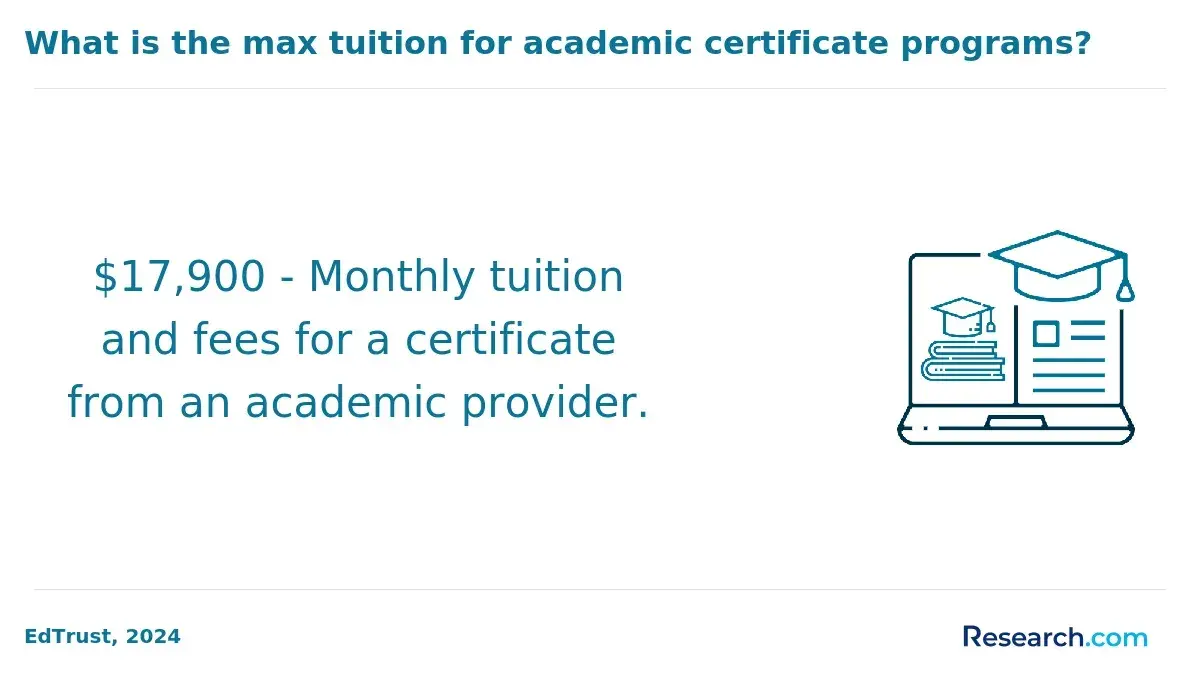
The cost of an online educational & teacher leadership master's degree varies significantly, with total program expenses typically ranging from moderate to high depending on institutional type and residency status. Public universities often charge between lower per-credit-hour rates for in-state students and higher rates for out-of-state enrollees, though many now offer flat tuition rates for online learners regardless of residency to simplify cost structures.
Private nonprofit institutions generally set a uniform tuition rate that tends to be higher than public options, reflecting added value through specialized resources or industry networking opportunities. Real-world budgeting requires accounting for numerous supplementary charges beyond base tuition. These fees can collectively increase the financial burden by a sizeable margin, impacting net return on investment.
- Tuition: Variable by residency for public schools; private nonprofit programs commonly impose a consistent per-credit cost regardless of student location.
- Mandatory Fees: Registration, administrative, and student activity fees often add 5-15% on top of tuition, which students frequently underestimate.
- Technology Fees: Ongoing charges for access to online course platforms and software can constitute a persistent added expense.
- Thesis or Capstone Fees: Programs requiring culminating projects may levy extra costs for faculty supervision or submission processing.
- Proctoring Costs: Some courses mandate online exam proctoring services, which can mean additional single or recurring fees.
- Residency Requirements: Though rare in fully online formats, short-term on-site residencies or intensives may necessitate travel and lodging outlays.
This cost variability underscores why candidates pursuing affordable accredited educational & teacher leadership master's programs in the United States must analyze overall expenses, not just headline tuition. Transparent comparison supports informed choices that align financial capacity with long-term career goals. For further context on related pathways, consult resources on marriage and family therapy programs.
What Is the Return on Investment (ROI) of an Online Educational & Teacher Leadership Master's Degree?
Evaluating the financial return on an online educational & teacher leadership master's degree requires a nuanced look at how post-degree salary gains balance against total program expenses. ROI is commonly calculated as the difference between expected salary increases after graduation and the total cost of the degree, divided by that cost-expressed either as a percentage gain or a payback period in years.
For example, the Bureau of Labor Statistics (BLS) notes that instructional coordinators, a role closely tied to this credential, have a median wage near $67,000 annually, whereas teachers without advanced degrees average around $50,000. PayScale data supports this, often showing a 20-30% salary boost after earning the degree, although exact increases depend on geographic location and job function.
Several key factors shape this ROI:
- Work Experience: Those with prior leadership or instructional roles frequently realize faster promotions and salary increments, enhancing ROI.
- Institution Prestige: Credentials from well-known, accredited universities tend to yield stronger employer recognition and better financial returns.
- Regional Demand: Areas facing shortages in education leadership often offer higher compensation and shorter job searches.
- Specialization: Focusing on niche areas like curriculum development or educational technology can increase employability and earning potential.
Beyond salary, non-monetary returns include broadened career pathways, eligibility for administrative positions, and enhanced job security. These factors, while harder to quantify, significantly influence the overall value of the degree.
One graduate recalled the uncertainty they faced during rolling admissions. Though eager to start, they hesitated after early application submission due to unclear responses about prerequisite waivers and transfer credits. Waiting several weeks for clarity introduced stress and delayed financial aid decisions.
Ultimately, navigating these administrative complexities underscored the importance of preparing documentation early and closely monitoring communications to maximize the program's financial and career benefits.
What Are the Admission Requirements for an Online Educational & Teacher Leadership Master's Program?
Admission into an online educational & teacher leadership master's program demands more than meeting baseline academic criteria; it hinges on demonstrating readiness for roles that influence education systems structurally and pedagogically. While many programs set a minimum undergraduate GPA around 3.0, this threshold often fluctuates, and some institutions weigh professional experience and leadership potential more heavily than grades alone.
Key application elements include:
- Letters of Recommendation: Typically from supervisors or academic mentors who can verify leadership aptitude and professional contributions.
- Statement of Purpose or Personal Essay: A detailed portrayal of career goals, leadership philosophy, and motivations specific to education reform or administration.
- Resume or CV: Updated documentation of teaching background, leadership roles, and any educational initiatives led.
- Prerequisite Coursework: Foundational knowledge in education or leadership is often required; applicants lacking these may need to complete preparatory classes before full admission.
Standardized test requirements are increasingly relaxed, with many programs adopting test-optional policies; GRE or GMAT scores remain relevant mainly for programs emphasizing quantitative methods or STEM-oriented educational leadership tracks. In these cases, demonstrated competency in data analysis or research can be critical for admission.
Applying strategically across a spectrum of reach, match, and safety schools is advisable given wide variability in admissions standards. This approach enhances admission chances while allowing prospective students to evaluate differences in academic rigor, financial investment, and long-term return on their education.
What Is the Minimum GPA Requirement for an Educational & Teacher Leadership Master's Program?
Meeting the minimum GPA requirement for an educational & teacher leadership master's program often reflects crucial tradeoffs between academic readiness and real-world potential. While a minimum undergraduate GPA of 2.75 to 3.0 is commonly required for admission consideration, this baseline primarily ensures adequate academic preparation rather than guaranteeing admission.
Programs frequently distinguish this eligibility floor from a competitive GPA, usually around 3.2 or higher, that better represents the profile of admitted students, affecting admission likelihood and scholarship opportunities. For example, a working professional with a 2.8 GPA but significant leadership experience in education may still gain entry through holistic admissions policies, which weigh factors beyond GPA.
- Minimum GPA Requirement: Most accredited online programs expect an undergraduate GPA between 2.75 and 3.0 as a threshold for admission, functioning as a fundamental indicator of academic competence.
- Competitive GPA: Programs often list a higher competitive GPA, around 3.2 or above, signaling the average GPA of admitted cohorts and the intensity of academic competition.
- GPA Waiver Policies: Applicants below the minimum GPA can sometimes offset this with relevant professional experience, portfolio submissions, or standardized test scores, reflecting a growing trend toward inclusive admissions.
- Conditional or Provisional Admission: Some institutions admit students on a conditional basis, requiring them to complete prerequisite coursework or maintain specific academic standards during early terms.
- Holistic Review: Admissions committees evaluate the whole profile, including recommendations and personal statements, recognizing that a GPA is just one dimension of a candidate's potential.
Choosing programs requires understanding these GPA standards alongside broader admissions criteria to find a balance of academic credibility and practical career outcomes. For those exploring hybrid or online pathways, awareness of average GPA admissions criteria for online educational & teacher leadership master's degrees helps frame realistic expectations.
Moreover, candidates diversifying their skill set might explore interdisciplinary options; for example, growing interest in specialized fields like fintech and blockchain intersects with education technology development, information about accredited programs in these areas is available through resources like blockchain degrees. This illustrates the value of aligning GPA qualifications with evolving labor market demands when shaping educational choices.
What Financial Aid Options Are Available for Online Educational & Teacher Leadership Master's Students?
Securing financial aid for an online educational & teacher leadership master's degree often involves navigating limited federal grant access and balancing multiple funding sources with varied eligibility criteria. Many first-generation students find it surprising that typical federal grants like Pell Grants aren't available for graduate programs, which shifts the emphasis toward loans, scholarships, and employer support.
For working professionals, employer tuition reimbursement can be a practical yet conditional option, as continued employment and performance reviews usually apply. Some programs extend graduate assistantships to online learners, but these are competitive and less common than on-campus roles, making early inquiry essential.
Institutional scholarships and external awards from professional associations often require proactive application and strong academic or professional credentials, so timing and research are critical to optimizing aid.
- Federal Loans: Direct Unsubsidized Loans and Graduate PLUS Loans form the backbone of federally-sourced aid, though accumulating interest during enrollment means total debt can increase sharply before repayment begins.
- Institutional Scholarships and Fellowships: Merit- and need-based awards vary by school; early application and maintaining good academic standing commonly influence eligibility.
- Employer Tuition Reimbursement: Available to many employed students, this support depends on employer policies and typically requires meeting work-related conditions and timelines.
- Graduate Assistantships: Limited availability for online students, often linked to teaching or research contributions, with competitive selection processes.
- External Scholarships: Offered by education-focused organizations, these scholarships demand sustained effort in seeking and applying but can offset substantial costs.
The FAFSA process for graduate students now calculates the Student Aid Index, replacing the Expected Family Contribution metric used for undergraduates. Applying early and exploring state-specific grant programs can protect against diminishing aid pools. Additionally, negotiating financial aid packages-especially when facing competing offers-can yield incremental support.
A graduate who completed an online educational & teacher leadership master's program recalled hesitating before submitting the FAFSA, uncertain how their dual status as a working professional and first-generation student would impact aid. Their late application delayed access to key institutional scholarships, prompting a scramble to secure employer reimbursement documentation and external awards.
The experience underscored the importance of early, informed financial preparation and proactive communication with financial aid offices to avoid costly last-minute compromises during rolling admissions cycles.
How Long Does It Take to Complete an Online Educational & Teacher Leadership Master's Degree?
For many first-generation graduate students juggling jobs and family obligations, these temporal realities matter more than surface-level program titles or speed claims. Considering child psychologist masters programs shows a similar pattern where program length correlates strongly with career entry timing, reinforcing the necessity of matching program pace to personal capacity and career goals.
Prospective students should weigh these factors carefully when assessing the typical duration of accredited online educational & teacher leadership master's programs US offerings.
- Typical Duration: Accredited online educational & teacher leadership master's programs in the US generally require 30 to 45 credit hours, defining most timeframes.
- Credit Hour Requirements: The number of credits taken per semester critically shapes completion speed and must be balanced with work and personal responsibilities.
- Transfer Credits: Recognizing prior graduate coursework can shorten duration, but policies vary greatly, making early verification crucial.
- Scheduling Format: Cohort-based pacing encourages steady progression with clear milestones, whereas self-paced formats offer flexibility at the potential expense of structure.
- Accelerated Options: Some programs claim completion within 12 months; however, employer perceptions often weigh program quality and accreditation more heavily than speed.
- Thesis or Capstone: Completing these scholarly projects usually extends the timeline by one to two semesters depending on faculty support and student pace.
What Specializations or Concentrations Are Available in Online Educational & Teacher Leadership Master's Programs?
Choosing a specialization within online educational and teacher leadership master's programs significantly shapes career trajectories and salary prospects, making it a strategic decision rather than a mere academic preference. Many programs offer either a general track with elective flexibility or require declaring a concentration upfront, reflecting different approaches to professional alignment.
For example, an aspiring school administrator may opt for educational administration to meet explicit job criteria, while someone targeting curriculum design roles might focus on curriculum development to gain targeted expertise. This alignment is critical because employers typically prioritize candidates whose specializations correspond to the distinct challenges of their open roles.
Common concentrations in top online educational and teacher leadership master's programs in the United States include:
- Curriculum Development: Designing and implementing instructional materials and assessment strategies.
- Instructional Leadership: Leading teaching teams and enhancing classroom practices.
- Educational Administration: Managing schools and district-level operations.
- Policy and Advocacy: Navigating education policy, reform, and community engagement.
- Special Education Leadership: Leading programs tailored to students with disabilities.
- Technology in Education: Integrating digital tools to boost learning environments.
- Higher Education Administration: Preparing for leadership roles in colleges and universities.
- Teacher Coaching and Mentoring: Supporting professional growth for educators.
Prospective students should analyze relevant job postings to identify which concentrations are most frequently mentioned, as not all specializations hold equal value in the labor market. Conversations with alumni and program advisors can further clarify which paths best match long-term career objectives.
- Accrediting Bodies: Regional accreditors like the Higher Learning Commission (HLC) and national entities such as the Council for the Accreditation of Educator Preparation (CAEP).
- Program Format: Fully online, often featuring asynchronous coursework for working professionals.
- Admission Requirements: Generally require a valid teaching license and relevant professional experience.
- Career Outcomes: Roles span school administration, curriculum coordination, policy development, and instructional coaching.
For those evaluating programs, checking alignment with recognized accreditation standards and admission prerequisites can ensure that the degree will carry practical weight in the field. Additionally, some students may benefit from exploring associated fields, such as MLIS ALA accredited programs, if interdisciplinary leadership skills are desired.
How Do Online Educational & Teacher Leadership Master's Programs Compare to On-Campus Programs in Quality and Recognition?
Employer surveys, including those by SHRM in recent years, consistently show that most hiring managers do not differentiate between an online and an on-campus educational & teacher leadership master's degree when both come from the same regionally accredited institution. Accreditation functions as the primary equalizer, ensuring that credential value remains consistent across delivery modes, provided the diploma itself does not explicitly identify the degree as "online."
Despite parity in credential recognition, there are practical differences affecting student outcomes and career trajectories. On-campus programs retain advantages in building organic networks through face-to-face interaction with peers, faculty, and recruiters. They often benefit from campus-specific recruitment events and local employer partnerships that may expedite job placement.
Applied disciplines requiring labs or field practicums also favor on-campus settings for direct experiential learning. In response, many online programs have introduced hybrid residencies, virtual career fairs, and strategic employer collaborations to bridge networking and applied learning gaps, reflecting evolving workforce demands. Capitalizing on these innovations can mitigate traditional disadvantages and support flexible learners balancing work and study.
Prospective students should thus prioritize evaluating the reputation and accreditation of the awarding institution and analyze alumni employment outcomes, for instance via LinkedIn profiles, rather than focusing solely on modality. Salary outcomes for graduates can vary widely based on specialization and employer location; understanding these dimensions informs ROI calculations and aligns educational investment with career goals.
- Networking: On-campus programs offer richer, in-person peer and recruiter connections that can lead to organic job leads.
- Recruitment Pipelines: Traditional schools often have established local employer ties and campus recruiting events facilitating smoother job placement.
- Practicum Access: Applied fields requiring labs or field components are typically easier to accommodate on-campus.
- Virtual Innovations: Online programs increasingly use hybrid residencies and virtual career fairs to replicate these benefits.
- Institution Reputation: The standing and accreditation of the institution impact market acceptance more than delivery format.
- Employment Outcomes: Inspecting alumni career trajectories provides critical insight into program ROI beyond modality alone.
What Graduates Say About the Best Value Online Educational & Teacher Leadership Master's Degrees
- Kaysen: "Balancing a full-time job and family commitments made a traditional program impossible for me, so I chose this online educational & teacher leadership master's for its flexible schedule and affordability. While the coursework was demanding, completing it remotely allowed me to apply new leadership strategies directly at work. After graduation, I secured a coordinator role, but I quickly learned that without state licensure, moving beyond district-level management remains challenging."
- Jalen: "As someone pivoting from classroom teaching to administration, my budget was tight, and I needed a program with a strong reputation and a solid ROI. This master's program provided an internship opportunity that doubled as a real-world leadership practicum, which was invaluable on my resume. Though I still face stiff competition for principal positions, the practical skills and portfolio I built here have opened doors that purely licensed candidates sometimes don't get."
- Beau: "I was cautious about taking on more student debt, so I searched for an affordable, accredited program that emphasized leadership in education. The decision to enroll was driven by its quick completion timeline and focus on current workforce needs. Graduating allowed me to move into a remote leadership consultant job, but I've noticed many employers prioritize candidates with advanced certifications or hands-on experience over just the degree itself."
Other Things You Should Know About Educational & Teacher Leadership Degrees
Graduates commonly move into roles such as instructional coordinators, school administrators, and curriculum specialists, but job placement rates vary significantly by program reputation and regional demand. Programs with strong ties to local school districts or offering practicum experiences tend to yield higher placement rates due to established employer networks. Prospective students should prioritize programs that integrate leadership skill development with practical administrative training, as these are more aligned with employer expectations in education management.
Beyond tuition, students often encounter fees for technology, course materials, and graduation; some programs also charge per-credit fees that increase total costs unexpectedly. Additionally, time investment needs consideration-balancing coursework with professional responsibilities can lead to indirect costs, such as unpaid leave or reduced work hours. Prospective students should thoroughly review fee structures and assess personal time constraints to avoid financial strain that can undercut the ROI of their degree.
Choosing a program requires balancing cost, accreditation, curriculum relevance, and support services like career counseling or internship placement. If leadership in K-12 administration is the goal, select programs emphasizing policy, organizational management, and equity in education over purely theoretical coursework. Prioritize schools with demonstrable alumni success in desired job markets, and consider programs with flexible pacing and cohort models to support sustained learning alongside life demands.
References
- How Much Does a Master’s in Educational Leadership Cost? https://www.educationalleadershipdegree.com/frequently-asked-questions/how-much-does-a-masters-in-educational-leadership-cost/
- 18 Scholarships & Grants for Teachers & Education Majors https://www.salemu.edu/blog/how-can-teachers-pay-for-a-masters-degree/
- Master's Degree: How Long Does It Take? https://creditsforteachers.com/masters-degree-how-long-does-it-take-a-complete-guide-for-teachers/
- ROI in Higher Education - FREOPP https://freopp.org/roi-in-higher-education/
- Funding Your Online Master’s Degree: How to Pay Less with Financial Aid https://www.onlinemastersdegrees.org/financial-aid/
- Educational Leadership/Principalship, M.E. https://www.park.edu/academics/explore-programs/educational-leadership-principalship-m-e/
- Where have people done online Master in Education and Leadership. https://internationalschoolsreview.com/v-web/bulletin/bb/viewtopic.php
- 10 Financial Aid Resources for Grad School Applicants | Resilient Educator https://resilienteducator.com/classroom-resources/10-ways-classroom-teachers-can-get-money-for-grad-school/
- Teaching Degree ROI Guide: The Return on Investment You Can Expect with a Degree in Education https://www.educationdegree.com/articles/return-on-investment-guide-to-education-degrees/
- Fully Funded Master's Programs in Education | ProFellow https://www.profellow.com/fellowships/fully-funded-ma-m-ed-in-education/