
2027 Best Professional Masters Degrees With Easy Admission Requirements

Co-Founder and Chief Data Scientist
Want a career-focused master's degree but worry that your GPA, undergraduate major, or lack of test scores will keep you out? "Easy admission" means different things across programs - and an accessible application is only valuable if the degree fits your goal. The stakes can be substantial: the U.S. Bureau of Labor Statistics (BLS) reports a 2024 median annual wage of $117,960 for medical and health services managers, though a master's degree alone does not qualify someone for that role. This guide compares ten degree fields and shows you how to check admission rules without overlooking cost, prerequisites, or career requirements.
Key Things You Should Know
- For applicants without a specialized bachelor's degree, MBA, healthcare administration, and some IT programs are often worth checking first; eligibility still depends on each program's published graduate requirements.
- A test waiver or no published GPA cutoff does not mean open admission. Check prerequisites, experience requirements, and whether conditional admission is available.
- Choose for career fit, not admission alone: counseling, teaching, and advanced nursing paths can require approved coursework, placements, examinations, or state licensure beyond the degree.
Top 10 Best Professional Masters Degrees With Easy Admission Requirements
Business / MBA Programs
A Master of Business Administration (MBA) is a practice-oriented option for applicants from varied undergraduate majors. Programs may emphasize management, finance, or operations; some offer foundation courses for students without business preparation. Look for published policies on professional experience, GMAT or GRE waivers, GPA, and conditional admission - these vary substantially. An MBA can suit someone seeking broader management skills, but admission flexibility is not proof of career advancement. Compare total cost and employer support against the value of gaining experience or a narrower graduate certificate.
Healthcare Administration & Management Programs
A Master of Healthcare Administration (MHA) or healthcare-management MS can admit graduates from several majors, sometimes with foundational coursework. Programs focus on healthcare finance, operations, policy, and quality. Check whether they require relevant work experience, an internship, or a capstone. This path suits applicants interested in organizational work rather than clinical practice. Healthcare leadership jobs generally also require experience; an MHA does not provide a clinical license. Applicants seeking patient-care authority need to investigate the appropriate licensed profession instead.
Information Technology Programs
An IT-focused MS may be accessible to applicants whose bachelor's degree is outside computing, particularly when a program offers bridge or foundation courses. Coursework can cover systems, networks, databases, and project management. Ask whether programming or mathematics must be completed before admission or can be taken after enrollment; the distinction affects time and cost. This path fits technology operations or career-change goals, while applicants seeking intensive software theory should compare computer science programs instead.
Computer Science Programs
A computer science MS often expects programming, algorithms, and mathematics preparation even when it welcomes other undergraduate majors. Some programs provide a bridge sequence, but that can add substantial coursework before the graduate curriculum. Check the exact prerequisites and whether admission to a bridge guarantees progression to the master's program. This degree may fit software or technical-specialization goals; applicants mainly seeking general technology management may find an IT or MBA curriculum more relevant.
Cybersecurity Programs
Cybersecurity master's degrees may sit within IT, computer science, or business schools, so admissions requirements differ. A management-oriented program might consider broader backgrounds, while a technical program may expect networking, programming, or operating-systems knowledge. Compare curricula before choosing the apparently easier application. Security employment can also depend on hands-on experience, employer-specific credentials, or clearance eligibility; the degree does not replace these requirements.
Data Science / Analytics Programs
An MS in data science typically requires more quantitative preparation than a business-analytics degree, although labels alone are unreliable. Check for statistics, calculus, programming, and database prerequisites, plus any portfolio or project requirements. Bridge courses can widen eligibility but increase the price and completion time. Choose based on the work you want to do: statistical modeling and machine learning call for different preparation than reporting, dashboards, and business decisions.
Education / Educational Leadership Programs
A Master of Education (MEd) may serve practicing teachers, career changers, or both, depending on the track. Educational leadership programs commonly target educators with classroom experience, and principal-licensure tracks can have additional eligibility rules. An accessible general MEd is not necessarily a route to initial teacher certification or school administration. Before applying, confirm the program's intended audience, placement requirements, and alignment with the state where you plan to work.
Counseling / Psychology Programs
Some counseling master's programs accept applicants from multiple bachelor's majors, but admission may involve interviews, prerequisite psychology courses, and placement screening. A licensure-oriented counseling degree requires careful review of clinical training and state rules. A psychology MA or MS may instead emphasize research or preparation for further study; it does not automatically lead to psychologist licensure. Do not trade away the credential you need merely to find an easier application.
Nursing Programs
A Master of Science in Nursing (MSN) generally builds on nursing preparation and often requires an active registered nurse license. Direct-entry routes for non-nurses exist but have separate prerequisites and intensive clinical requirements; they are not interchangeable with standard MSN admission. Compare the specific specialty, clinical-placement support, and state authorization before applying. For applicants who are not already nurses, this is usually a more demanding entry path than a nonclinical healthcare administration degree.
Engineering Management Programs
An engineering management MS combines technical project work with leadership and operations. Some programs consider applicants from science, technology, or other quantitative backgrounds, while others require an engineering degree or relevant experience. Review mathematics prerequisites and whether the curriculum assumes prior engineering practice. It can fit an experienced technical professional seeking broader responsibility, but it does not substitute for an engineering license where one is required.
What Are the Easiest Professional Master's Degrees to Get Into?
There is no universally easiest professional master's degree to enter. For a bachelor's graduate without specialized technical or clinical preparation, an MBA, MHA, or suitably designed IT master's program may offer a more direct application route than an MSN or licensure-track counseling degree. That is a starting point for research, not a claim that every program in those fields admits broadly.
This comparison shows which admission barrier to investigate first. Individual graduate-school and program rules - not the field name - determine eligibility.
| Degree field | Potential accessibility advantage | Barrier to check |
| MBA or healthcare administration | May consider multiple undergraduate majors | Experience, GPA, tests, or foundation courses |
| IT or cybersecurity | Some programs offer entry routes for career changers | Technical prerequisites and bridge-course cost |
| Computer science or data science | Some offer formal preparation pathways | Programming and mathematics requirements |
| Counseling, education, or nursing | Some admit applicants from varied backgrounds | Licensure eligibility, prior credentials, and placements |
If your goal is quicker entry to graduate study, compare verified prerequisites and the fast track degrees available to applicants with your exact preparation. An accelerated schedule does not remove admission or clinical requirements.
What Admission Requirements Do Easy-Entry Master's Programs Have?
Most professional master's programs require a completed bachelor's degree and an application with transcripts. Depending on the program, applicants may also need recommendations, a statement of purpose, a résumé, prerequisite courses, an interview, or evidence of professional experience. The GRE or GMAT may be required, optional, or waived; SAT and ACT policies are generally irrelevant to graduate admission.
"Easy-entry" features must be checked at the specific master's program, not inferred from a university's undergraduate admissions policy. No published minimum GPA is not proof that grades are ignored. Conditional admission may allow an applicant to demonstrate readiness through initial coursework, but only when the program explicitly offers it.
Before paying an application fee, take these steps to find out whether a program is realistically accessible to you:
- Compare your transcript, degree, license, and work history with the graduate catalog and program-specific requirements.
- Ask admissions whether missing prerequisites may be completed before enrollment or alongside graduate courses, and whether doing so delays graduation.
- Request the written policy for test waivers, conditional admission, and any minimum grade needed to remain enrolled.
Are Online Professional Master's Degrees Easier to Enter Than Campus Programs?
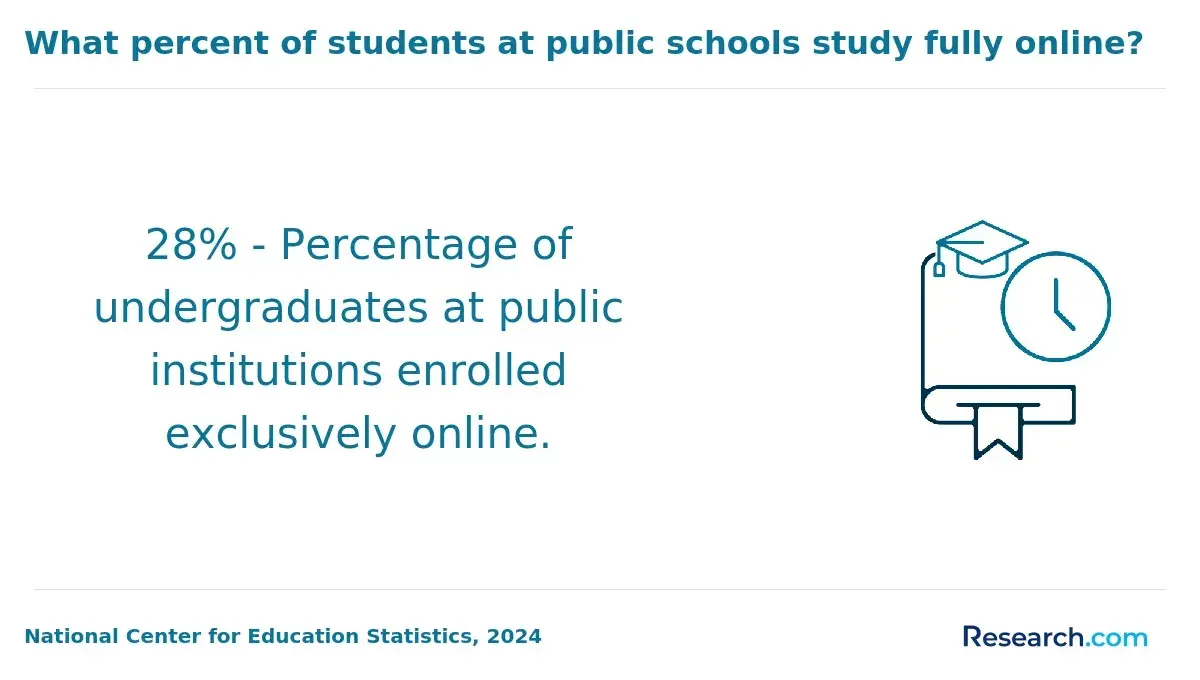
Online delivery does not, by itself, make graduate admission easier. An online and campus version of the same degree may share academic requirements, while separate programs may set different rules. Compare the actual admission pages rather than assuming that format predicts selectivity.
Format matters after admission, too. An online program may still have live meetings, fixed deadlines, proctored assessments, residencies, internships, or local clinical placements. If scheduling is your main concern, compare online college classes at your own pace with the master's program's published course schedule; self-paced undergraduate offerings do not establish that its graduate courses work the same way.
Which Professional Master's Degrees Offer the Best Career Opportunities?
The strongest career opportunity is the one that matches both labor-market demand and your starting qualifications. Healthcare administration can build on clinical or operational experience; IT, cybersecurity, and analytics can support technical specialization; an MBA may broaden management skills. Counseling, nursing, and education can lead toward more clearly defined professional roles, but often have greater entry and licensing requirements.
Ask whether the job you want normally requires a master's, values one alongside experience, or can be reached through a bachelor's degree plus workplace training. Growth in AI-enabled tools also makes curriculum content important: look for opportunities to apply current tools while evaluating their accuracy, security, and professional limitations. A degree title alone says little about those skills.
How Much Do Professional Master's Degrees Cost and How Long Do They Take?
Professional master's programs vary in required credits, enrollment pace, course sequencing, and experiential work. A full-time, nonclinical program may take less time than a part-time licensure program with supervised placements; neither an online format nor short individual courses establishes the time to finish the whole degree. Prerequisites and bridge courses can extend the timeline.
Compare total completion cost: graduate tuition for all required credits, mandatory and program fees, books or software, travel, and any residency or placement expenses. Ask for a program-specific estimate and check scholarships, employer tuition assistance, and federal aid eligibility. A low per-credit rate may not be cheapest if the program requires more credits or added fees. For a broader cost comparison, see what is the cheapest online master's degree program.
If you have previous graduate coursework, request a transfer evaluation before enrolling. Acceptance depends on the school's grade, age, equivalency, and residency-credit rules; accepted credits must also satisfy requirements in your intended degree. Undergraduate preparation generally does not count as transferable master's credit unless a published combined-degree pathway says otherwise.
What Courses Do Professional Master's Degree Programs Include?
Coursework should reflect the occupation, not just an appealing degree name. An MBA might cover accounting, finance, operations, and strategy; an MHA may add healthcare policy and quality; technical degrees may emphasize programming, networks, statistics, or security; and practice-oriented education, counseling, or nursing tracks can require supervised fieldwork.
Review the catalog for core courses, electives, concentration requirements, prerequisites, and a thesis, capstone, portfolio, comprehensive exam, or practicum. A research-focused thesis can make sense for further study, while an applied capstone may better suit a workplace project. Neither is automatically easier. Confirm when required courses are offered so a missed course does not unexpectedly extend enrollment.
Which Accreditation Should Professional Master's Programs Have?
Start with the institution's accreditation by an accreditor recognized by the U.S. Department of Education. Then check whether your intended profession calls for programmatic accreditation or a state-approved pathway. For example, nursing and counseling applicants should verify the standards relevant to their specialty and intended license; business applicants may consider business-school accreditation, but employer needs and total cost still matter.
Do not treat accreditation as a blanket promise that every graduate can receive a license in every state. Confirm the exact campus or online program, specialty, placement arrangements, and state eligibility with the program and the relevant licensing board before committing.
What Salaries Can Graduates Expect From Professional Master's Degrees?
BLS occupational wages help put career possibilities in context, but they are not salaries promised to master's graduates. For example, BLS reports a 2024 median annual wage of $117,960 for medical and health services managers. That figure includes workers with different educational backgrounds and levels of experience; many management positions require substantial experience in addition to, or instead of, a graduate degree.
Use occupational pay as one input in a personal return-on-investment calculation alongside program cost, expected borrowing, time away from work, and your realistic next job - not a senior role you might pursue years later. Ask programs for documented outcomes for graduates in your concentration, while remembering that outcomes do not prove the degree caused a particular salary.
Do Professional Master's Careers Require Licensure or Certification?
Some professional roles require credentials beyond a master's degree. Registered nursing requires state licensure; advanced nursing roles have additional specialty and state requirements. Licensed counseling, teaching, school administration, and certain engineering activities can require approved education, supervised experience, examinations, or an existing professional license. Requirements vary by state and role.
Other occupations, including many business and IT positions, may not require a license. An employer might value a job-specific certification instead of, or alongside, a master's. If you need a narrower skill rather than a graduate credential, consider what certifications can I get online and compare the credential's requirements with actual job postings. Verify any claimed licensure pathway directly with the state board before applying.
Other Things You Should Know About
Possibly. Some programs review applicants holistically or publish conditional-admission options, but policies differ. Check the program's graduate admissions page and ask how it evaluates your transcript.
Yes, some programs do not require these tests or offer waivers. Verify the rule for your specific program and application term; a waiver does not remove other requirements.
Often, especially in some MBA and healthcare administration programs. Technical and licensed fields may require prerequisite courses, a bridge pathway, or an existing professional credential.
No. Admission rules and graduation requirements are separate. Compare the curriculum, required grades, placements, schedule, and total cost before deciding a program is manageable for you.
References
- DAPIP | Homepage - Office of Postsecondary Education (OPE) https://ope.ed.gov/dapip/
- Standardized Tests - NYU Stern - New York University https://www.stern.nyu.edu/programs-admissions/full-time-mba/admissions/standardized-tests
- Tuition & Fees - UF Online - University of Florida https://ufonline.ufl.edu/tuition/tuition-fees/
- Bridge Entry to Speech-Language M.S. | McDaniel College https://www.mcdaniel.edu/admissions-cost/graduate-admissions/ms-speech-language-pathology-admissions/bridge-entry-slp
- University of Maryland Digital Accessibility Interim Guidelines https://accessibility.umd.edu/digital-accessibility-guidelines
- Tuition & Expenses | Student Financial Services https://financialaid.wsu.edu/tuition-and-expenses/
- Full-time MBA Test-Optional FAQs | Georgia Tech Scheller College of Business https://www.scheller.gatech.edu/explore-programs/mba-programs/full-time-mba/admissions/test-optional-info.html
- 2025-2026 Tuition and Fees - Student Account Services | University of Kentucky https://studentaccount.uky.edu/tuition-and-fees/past-tuition-and-fees/2025-2026-tuition-and-fees
- Policy 6-404: Undergraduate Admission | The University of Utah https://regulations.utah.edu/academics/6-404.php
- Ask the Experts: College Admission Requirements | Peterson's https://www.petersons.com/blog/ask-the-experts-college-admission-requirements/


