
2027 Best Online Medical Office Administration Degree Programs at Nonprofit Universities

Co-Founder and Chief Data Scientist
Choosing an online medical office administration degree means weighing affordability against the training employers expect for patient-facing administrative work. The U.S. Bureau of Labor Statistics reports a $44,640 median annual wage for medical secretaries and administrative assistants in 2024, while healthcare organizations continue to need workers who can manage records, scheduling, billing, and privacy requirements.
This guide helps prospective students compare nonprofit programs by degree level, accreditation, total cost, online format, support services, and career fit before applying.
Key Things You Should Know
- Nonprofit status can indicate that a public or private institution reinvests revenue in its educational mission, but it does not by itself confirm program quality, affordability, transferability, or career value.
- For entry-level medical office roles, an associate degree or certificate may be sufficient; a bachelor's degree can better support advancement into healthcare administration, supervision, or future graduate study.
- The BLS reports that medical secretaries and administrative assistants had a 2024 median annual wage of $44,640, but pay varies substantially by location, employer, duties, experience, and credentials.
What Makes an Online Medical Office Administration Degree Program at a Nonprofit University Different?
An online medical office administration degree prepares students to coordinate the nonclinical operations of physician offices, outpatient centers, hospitals, and related healthcare settings. Programs may be labeled medical office administration, medical administrative assisting, healthcare administration, health information management, or medical billing and coding. The curriculum commonly combines office procedures with healthcare vocabulary, electronic health records, insurance processes, scheduling, customer service, and patient privacy.
A nonprofit university may be public or private. Public nonprofit institutions often offer lower tuition for in-state residents, while private nonprofit universities may provide smaller cohorts, mission-driven student support, or more predictable online terms. Neither model is automatically better. Students should compare the actual degree plan, institutional accreditation, net price, academic policies, and outcomes.
The following comparison clarifies how common program levels serve different goals.
| Program type | Typical purpose | Best fit | Important limitation |
| Certificate or diploma | Focused entry-level administrative or billing training | Students seeking a quicker skills-based route | May not transfer broadly into a degree |
| Associate degree | General education plus medical office coursework | New college students and career changers | May offer less management depth than a bachelor's degree |
| Bachelor's degree | Healthcare operations, communication, management, and analytics foundations | Students pursuing advancement or graduate-school options | Usually requires more time and total tuition |
| Master's degree | Healthcare management or administration specialization | Students with a completed bachelor's degree | Usually exceeds the education required for front-office roles |
Medical office administration is generally career-focused rather than licensure-focused. It is distinct from nursing, medical assisting with clinical duties, and professional coding certifications. Students interested in direct patient care should compare requirements carefully; for example, an online ASN program follows a clinical and licensure-oriented pathway that differs substantially from administrative education.
How Can Students Verify Accreditation for an Online Medical Office Administration Degree at a Nonprofit University?
Accreditation is the first legitimacy check for an online degree. Institutional accreditation evaluates the university as a whole and affects federal aid eligibility, credit transfer decisions, and graduate-school admissions. Programmatic accreditation evaluates a particular academic program; it can be valuable when available, but it is not universal for medical office administration degrees.
Students should confirm accreditation directly through the institution and the U.S. Department of Education's Database of Accredited Postsecondary Institutions and Programs. Do not rely solely on an admissions representative, a school logo, or an accreditation claim that does not name a recognized accreditor.
Use these steps to distinguish a legitimate program from one with unclear recognition.
- Find the university's institutional accreditor on its official accreditation page.
- Confirm that the accreditor and institution appear in the federal accreditation database.
- Ask whether the exact online program has specialized approval, endorsement, or certification alignment.
- Request written confirmation of whether credits are likely to transfer to your intended receiving institution.
- Review whether the curriculum prepares students for any optional credential examinations they plan to pursue.
A common mistake is confusing "licensed," "authorized to operate," or "approved for online education" with accreditation. Those terms can describe state authorization rather than academic quality review. Also ask whether the school is authorized to enroll online students who live in your state.
How Rigorous Are Online Medical Office Administration Degree Programs at Nonprofit Universities?
Rigorous online programs require the same learning outcomes expected of campus-based coursework, but they deliver instruction through a learning platform. Students typically complete readings, recorded lectures, graded discussions, applied assignments, examinations, and projects involving medical documents, scheduling workflows, reimbursement concepts, or privacy scenarios. Online study is not necessarily easier; it shifts more responsibility for time management and communication to the student.
Associate programs usually emphasize practical office skills and foundational general education. Bachelor's programs generally add organizational leadership, healthcare finance, quality improvement, policy, and data literacy. A master's degree in healthcare administration is usually more appropriate for learners who already hold a bachelor's degree and want management-level preparation rather than entry-level office training.
This curriculum checklist helps students identify whether a program has enough healthcare-specific content for their goals.
| Curriculum area | Why it matters | What to look for |
| Medical terminology and anatomy | Supports accurate communication and documentation | Applied healthcare vocabulary coursework |
| Revenue cycle and insurance | Connects office work to claims and payment processes | Billing, coding basics, reimbursement, and payer concepts |
| Health information systems | Reflects electronic record workflows | EHR navigation, records management, and data-security instruction |
| HIPAA and ethics | Supports lawful handling of patient information | Privacy, confidentiality, and compliance case studies |
| Professional communication | Prepares students for patient and team interactions | Writing, conflict resolution, customer service, and telephone skills |
Ask whether assignments use simulated software, case studies, a practicum, or an internship. Experiential learning can strengthen a résumé, but it may require local placement, background checks, daytime availability, or additional expenses. Students seeking a fully online experience should verify these requirements before enrollment.
How Much Does an Online Medical Office Administration Degree Cost at a Nonprofit University?
Total cost is more useful than advertised tuition. It includes per-credit tuition, mandatory fees, technology charges, books, software, course materials, transfer-credit evaluation fees, and any practicum-related expenses. Public nonprofit universities often charge different rates for in-state and out-of-state learners, while private nonprofit universities may charge one online rate but vary widely in institutional aid.
For broad context, College Board reported average published tuition and fees of $11,610 for in-state students at public four-year institutions and $43,350 at private nonprofit four-year institutions for the 2024-25 academic year. These are sector-wide figures, not online medical office administration program prices or net-price estimates. They show why applicants should compare aid-adjusted program costs rather than assume one nonprofit category is always cheaper.
The cost factors below are the ones students should place on a side-by-side worksheet.
| Cost factor | Questions to ask | Potential effect on value |
| Required credits | How many credits remain after transfer review? | Often the largest driver of total tuition |
| Tuition rate | Is the online rate fixed, resident-based, or term-based? | Can change the final cost significantly |
| Mandatory fees | Are technology, graduation, or course fees charged? | May not appear in headline tuition |
| Materials and software | Are coding tools, textbooks, or proctoring costs separate? | Raises out-of-pocket spending |
| Transfer credit | Which prior courses, exams, or credentials will be accepted? | Can reduce time and tuition if accepted |
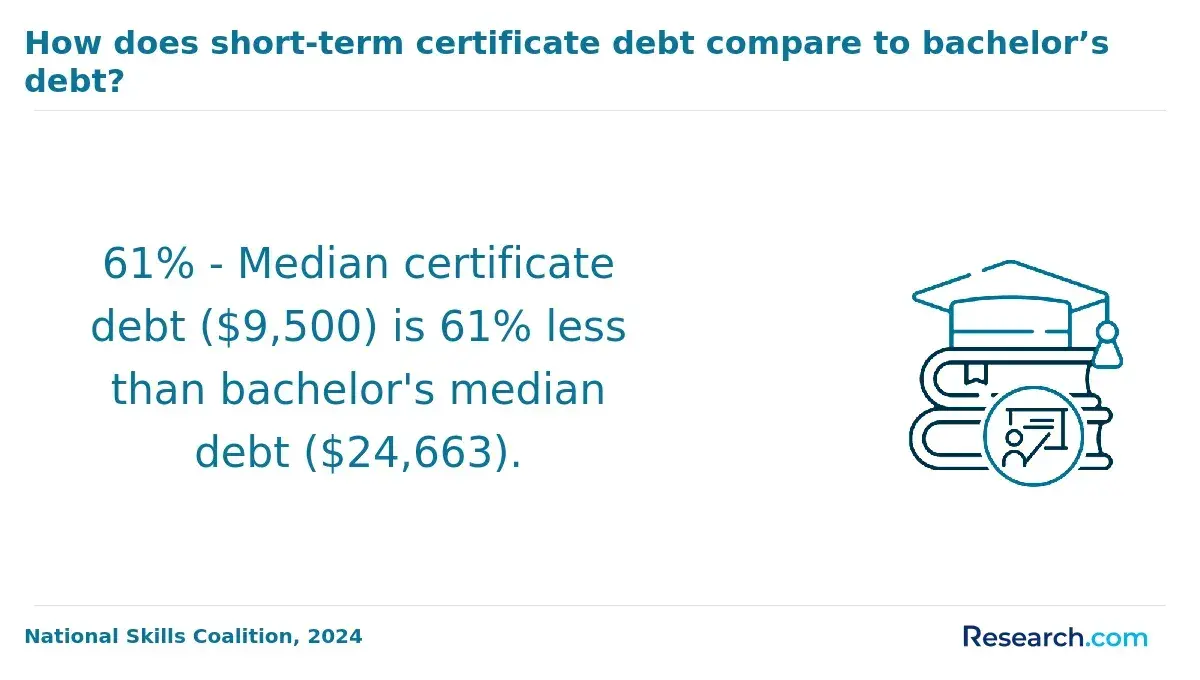
Low tuition is not automatically the strongest return on investment. A higher-priced program can be reasonable if it accepts substantially more credits, provides needed evening scheduling, includes career support, or fits a student's advancement goal. Conversely, avoid paying bachelor's-level tuition for a curriculum that only provides short-term software training.
What Financial Aid Is Available for an Online Medical Office Administration Degree at a Nonprofit University?
Eligible online students at accredited nonprofit institutions may qualify for federal financial aid when they are enrolled in an eligible degree or certificate program. The Free Application for Federal Student Aid is the starting point for federal grants, work-study where available, and Direct Loans. Aid eligibility depends on factors such as enrollment, financial circumstances, satisfactory academic progress, and program eligibility.
Financial aid should be reviewed as a package, not as a single award. Grants and scholarships generally do not require repayment when recipients meet the terms, while loans create a repayment obligation. Employer tuition assistance can be especially relevant for medical receptionists, patient access representatives, or billing staff who are already working in healthcare.
Before accepting aid, compare these funding sources and their conditions.
- Federal Pell Grants may help eligible undergraduate students with financial need.
- Federal Direct Loans may be available to eligible students but should be evaluated against expected borrowing and repayment needs.
- Institutional scholarships may be merit-based, need-based, workforce-focused, or limited to specific terms.
- State grants can depend on residency and enrollment at an approved institution.
- Employer assistance may require continued employment or repayment if the employee leaves early.
Students considering a clinical healthcare pathway instead of administrative work should not assume the same aid or course requirements apply. Comparing options such as RN BSN online programs no clinicals can help licensed nurses assess degree-completion education separately from medical office administration.
Borrow only after confirming the school's net price, expected transfer credits, and likely completion timeline. Ask the financial aid office whether repeating coursework, changing enrollment intensity, or taking nonrequired courses could affect eligibility.
How Flexible Are Online Medical Office Administration Degree Programs at Nonprofit Universities?
Online format does not always mean fully self-paced. Most nonprofit university programs follow academic terms and deadlines, even when lessons are asynchronous. Students may be able to log in at convenient times, but they still need to submit work each week, participate in discussions, complete proctored examinations, and coordinate group assignments.
Asynchronous courses generally fit working adults best because they do not require regular live attendance. Synchronous courses can provide real-time instructor contact and community but may be difficult for students with variable work shifts. Hybrid programs include some campus meetings, while programs with internships or practicums may require local daytime participation.
Compare delivery details before applying because they determine whether a program is realistically manageable alongside employment or caregiving.
| Format | Primary advantage | Primary trade-off |
| Asynchronous online | Greater scheduling control | Requires consistent independent planning |
| Synchronous online | Live access to instructors and peers | Fixed meeting times may conflict with work |
| Accelerated terms | Potentially faster progression | Heavier weekly workload |
| Traditional-length terms | More time to absorb material | Longer route to completion |
| Hybrid or practicum-based | Applied learning and local networking | May require travel or placement availability |
Accelerated study works best for students who can reliably devote substantial hours each week to one or two courses. Part-time enrollment is often the safer option for full-time workers, although it can extend the time before graduation. Ask for a sample weekly course schedule, not just a statement that the program is "flexible."
What Student Support Services Do Nonprofit Universities Provide for Online Medical Office Administration Degree Students?
Strong online support can matter as much as course content, particularly for adult learners returning to school or students new to healthcare terminology. Useful services include online orientation, academic advising, tutoring, library access, writing help, disability accommodations, technical support, financial aid counseling, and career services. Availability can differ between the main campus and an online division, so confirm that support is accessible remotely.
Career support should be practical rather than promotional. Ask whether the university offers résumé review, mock interviews, job-search coaching, employer events, internship assistance, and guidance on optional industry certifications. Programs should be transparent about whether they guarantee placements; most cannot guarantee employment or a practicum site.
Students who want a more specialized revenue-cycle career may also benefit from comparing a best online school for medical billing and coding option. Billing and coding programs can be more focused than a broad medical office administration degree, so they may fit learners whose target job is specifically claims, coding, or reimbursement work.
Before enrolling, contact student services using the same communication channel you expect to use later. A prompt, clear response to questions about transfer evaluations, accessibility, and technical help can reveal whether the online experience is organized around remote learners.
Do Online Medical Office Administration Degree Programs at Nonprofit Universities Prepare Graduates for In-Demand Careers?
These programs can prepare graduates for administrative healthcare roles when the curriculum aligns with local employer needs and the student builds applicable experience. Typical job titles include medical secretary, medical receptionist, patient service representative, medical office coordinator, referral coordinator, patient access representative, scheduler, insurance verification specialist, and billing assistant. Duties vary by employer and may combine front-desk service, records handling, payment processing, and communication with patients and clinical teams.
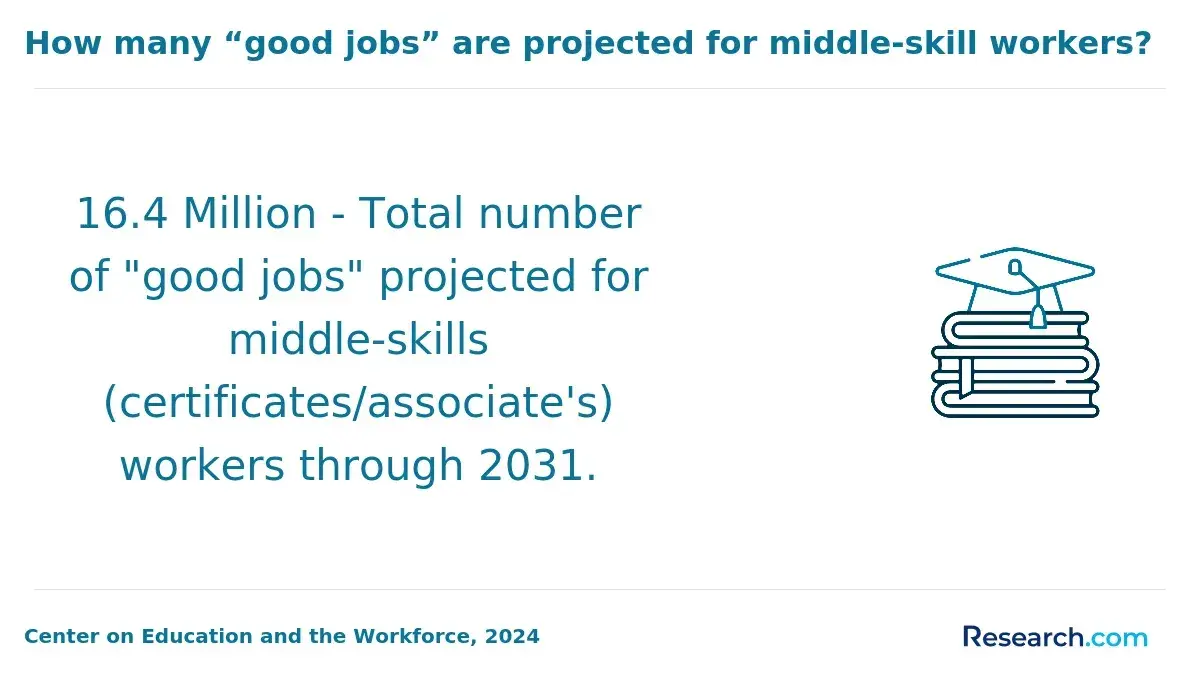
The BLS projects 5% employment growth for medical secretaries and administrative assistants from 2023 to 2033. This is a national occupational projection, not a guarantee of hiring in a particular community. It suggests steady demand, but applicants should still review local postings to identify requested software skills, certifications, and education levels.
Career preparation is strongest when students can show both administrative and healthcare-specific capabilities.
- Professional communication, patient service, and conflict-resolution skills support daily office interactions.
- Electronic health record familiarity and accurate data entry support efficient documentation workflows.
- Knowledge of HIPAA, confidentiality, and compliance supports responsible patient-information handling.
- Scheduling, referral coordination, insurance verification, and billing awareness connect coursework to common office duties.
- Spreadsheet, document-management, and basic reporting skills can support progression into coordinator roles.
Automation and AI-enabled scheduling, documentation, and revenue-cycle tools are changing routine administrative work, but they do not eliminate the need for staff who can resolve exceptions, protect patient privacy, communicate empathetically, and understand office workflows. Choose programs that teach technology use alongside judgment, compliance, and interpersonal skills.
Can an Online Medical Office Administration Degree From a Nonprofit University Prepare Students for Graduate School?
A regionally or institutionally accredited bachelor's degree in medical office administration, healthcare administration, business, or a related field can support applications to many graduate programs. Admission standards vary, but master's programs commonly evaluate prior coursework, cumulative GPA, professional experience, recommendations, and a statement of purpose. An associate degree alone usually does not meet graduate admission requirements.
Students planning for graduate school should select a bachelor's program with transferable general education, upper-level coursework, writing-intensive assignments, statistics or quantitative preparation where appropriate, and faculty support. They should also avoid assuming that a career diploma will automatically convert into bachelor's-level credit.
A healthcare administration master's program may make sense for learners pursuing supervisory, operations, quality, or management paths after gaining relevant experience. For clinicians seeking advanced nursing leadership rather than administrative office work, an affordable DNP program represents a different professional route with nursing-specific admission and practice expectations.
Graduate education is not required for most medical office administration jobs. It is a strategic investment only when it aligns with a defined long-term role, the applicant meets prerequisites, and the expected benefits justify additional tuition and time.
How Should Students Compare the Best Online Medical Office Administration Degree Programs at Nonprofit Universities?
The best online medical office administration program is the one that meets a student's career target, budget, prior-credit situation, and scheduling constraints. A public nonprofit program may be the strongest value for an in-state student with transfer credits. A private nonprofit program may fit better when it offers a compatible calendar, meaningful scholarship aid, stronger online advising, or a curriculum aligned with the learner's intended role.
Build a short list of three to five eligible programs, then use the same decision process for each one.
- Define the target role, such as medical receptionist, billing specialist, office coordinator, or healthcare administrator.
- Choose the lowest degree level that credibly supports that role and your future advancement plan.
- Verify institutional accreditation, state authorization, and any specialized credential alignment.
- Request a written transfer-credit evaluation and a complete estimate of tuition, fees, materials, and completion time.
- Review the curriculum for EHR, insurance, HIPAA, communication, and practical healthcare-office preparation.
- Confirm asynchronous and synchronous expectations, practicum requirements, exam proctoring, and term length.
- Compare remote advising, tutoring, career support, retention information, and graduate outcomes when available.
- Apply only after comparing net cost and program fit rather than relying on nonprofit status or rankings alone.
The comparison below highlights common trade-offs rather than ranking institutions by a single metric.
| Student priority | Potentially stronger program feature | Question to ask |
| Lowest possible cost | In-state public nonprofit tuition and generous transfer policy | What is my estimated net cost through graduation? |
| Fast completion | Accelerated terms and year-round starts | Can I sustain the required weekly workload? |
| Career change into healthcare | Applied curriculum and career coaching | Does the program include realistic healthcare-office projects? |
| Advancement into management | Bachelor's curriculum with leadership and finance coursework | Will this degree meet prerequisites for my next step? |
| Maximum schedule control | Asynchronous courses with limited residency requirements | Are there any required live sessions or local placements? |
Students who ultimately want healthcare leadership may compare a medical office degree with an accelerated healthcare management degree online. The faster master's route is generally appropriate only after a bachelor's degree and should be evaluated separately for admissions requirements, workload, and management-career alignment.
Red flags include unclear accreditation, vague tuition disclosures, pressure to enroll before a transfer review, unsupported salary promises, missing information about online attendance requirements, and a curriculum that does not match the job you want. A well-chosen program should make its requirements, costs, policies, and student resources easy to verify in writing.
Other Things You Should Know About Medical Office Administration
No. Medical office administration focuses on nonclinical operations such as scheduling, records, insurance processes, patient communication, and office coordination. Medical assistants may perform clinical and administrative duties, and their scope of practice, training, and employer expectations can differ by state and workplace.
Certification is not universally required for medical office administration roles. Some employers prefer credentials in medical billing, coding, electronic records, or administrative assisting, depending on the job. Review local job listings before choosing a program or paying for a certification exam.
Many students work while enrolled, especially in asynchronous programs. Success depends on weekly course demands, family responsibilities, and whether the program requires live sessions, internships, or proctored exams. Part-time enrollment may be a more sustainable option for full-time workers.
Include relevant coursework, software exposure, customer-service experience, healthcare volunteer work, administrative experience, privacy training, and any practicum or internship. Describe specific skills such as scheduling, records management, insurance verification, patient communication, and spreadsheet use.
References
- Medical Office Administration https://www.cpcc.edu/programs/medical-office-administration
- Medical Office Administration https://eoc.catalog.eastohio.edu/medical-office-administration/associate-of-applied-business/medical-office-administration
- MEDICAL OFFICE ADMINISTRATION A.A.S. Degree https://www.montgomery.edu/degree/medical-office-administration-a-a-s-degree-diploma-certificate/
- Online Medical Administration Assistant Programs: Top Schools https://www.edumed.org/online-schools/medical-administrative-assistant-programs/
- Medical Office Administration https://carrington.edu/program/medical-office-administration/
- Medical Administrative Assistant (AAS) https://www.uagrantham.edu/online-degrees/medical-administrative-assistant/
- Medical Administrative Assistant Training Program https://jvs.org/programs/medical-administrative-assistant/
- Online Medical Administrative Assistant Programs https://www.ultimatemedical.edu/program/medical-administrative-assistant/
- Can Online Colleges Offer Competitive Career Outcomes? https://www.onlineu.com/magazine/popular-online-schools-career-outcomes
- Search Jobs and Careers in Healthcare with University Health https://careers.universityhealth.com/


