
2027 Best Online Engineering Technology Degree Programs at Nonprofit Universities

Co-Founder and Chief Data Scientist
Choosing an online engineering technology degree requires more than finding a nonprofit university or low tuition rate. Students need a program that supports hands-on technical learning, employer-recognized accreditation, and their target role. The U.S. Bureau of Labor Statistics reported a May 2024 median annual wage of $77,180 for electrical and electronic engineering technologists and technicians, illustrating the potential value of technical preparation.
This guide explains how to compare nonprofit programs, verify quality, estimate costs, and select a degree that fits your schedule and career goals.
Key Things You Should Know
- Nonprofit status can indicate that a school reinvests revenue into education, but it does not confirm program quality; verify institutional accreditation, curriculum, total cost, and applicable ABET accreditation.
- For career-focused bachelor's students, engineering technology is usually more applied than engineering, with laboratory work, systems troubleshooting, manufacturing, electronics, construction, or automation coursework.
- The May 2024 median annual wage for electrical and electronic engineering technologists and technicians was $77,180, but pay varies substantially by specialty, location, experience, employer, and degree level.
What Makes an Online Engineering Technology Degree Program at a Nonprofit University Different?
An engineering technology degree prepares students to apply engineering principles to practical systems, products, processes, and operations. Programs commonly emphasize implementation, testing, troubleshooting, production, quality control, technical documentation, and project coordination. By contrast, traditional engineering programs generally place greater emphasis on advanced theory, calculus, design analysis, and preparation for engineering licensure pathways.
Nonprofit universities include public colleges and universities as well as private nonprofit institutions. Their tax status alone does not make one program better than another. The useful comparison is whether the school is institutionally accredited, transparent about outcomes and costs, equipped to deliver technical courses online, and aligned with the student's professional objective.
Students should first decide which degree level matches their starting point and intended role. The comparison below clarifies the usual purpose of each credential:
| Degree level | Typical purpose | Common student profile | Important consideration |
| Associate degree | Entry-level technician preparation or transfer foundation | New students and career changers | May not meet bachelor's-preferred employer requirements |
| Bachelor's degree | Applied technical, supervisory, and project-based preparation | Students seeking broader advancement options | Check whether labs, internships, or capstones are required |
| Master's degree | Technical specialization, leadership, or systems-focused advancement | Working professionals with a related bachelor's degree | Admissions may require specific math or technical prerequisites |
| Doctoral degree | Research, advanced leadership, or academic work | Experienced professionals with graduate preparation | Usually not necessary for technician or technologist roles |
A bachelor's program is often the most versatile option for students seeking engineering technology roles with greater responsibility. Associate degrees can be efficient entry routes, particularly when they articulate into a bachelor's program. A master's degree can make sense after gaining experience, but it is not automatically the best next step for every technical career.
Online delivery also varies. Some programs are fully asynchronous, while others use scheduled virtual meetings, short campus sessions, local lab arrangements, simulations, or employer-based projects. Students who need physical lab access, substantial faculty supervision, or a professional engineering licensure route may find a hybrid or on-campus program more suitable.
How Can Students Verify Accreditation for an Online Engineering Technology Degree at a Nonprofit University?
Accreditation is one of the most important checks before enrolling. Institutional accreditation evaluates the university as a whole and can affect federal financial aid eligibility, credit transfer, and graduate-school admissions. Programmatic accreditation evaluates a specific academic program against discipline-based standards.
For engineering technology, ABET accreditation can be especially significant. ABET accredits eligible programs through its Engineering Technology Accreditation Commission. Not every worthwhile online program holds ABET accreditation, and availability may differ by concentration or delivery format. However, students who may pursue roles, certifications, employer pathways, or further study that value ABET should confirm the exact program—not merely the university—appears in the accreditor's directory.
Use the following verification sequence before submitting an application. It helps distinguish a recognized degree from marketing language that may be incomplete or outdated.
- Confirm the university's institutional accreditation through the school and the recognized accreditor.
- Locate the exact degree title, concentration, and online or hybrid delivery format in the university catalog.
- Check whether the specific program holds ABET accreditation and whether that status applies to your campus or delivery option.
- Ask admissions whether accreditation is current, whether any review is pending, and whether students in the online pathway receive the same credential.
- Contact the relevant state licensing board if your goal involves regulated engineering work or a future professional engineer pathway.
Do not confuse "designed using ABET standards" with accredited by ABET. Also avoid assuming that institutional accreditation establishes professional eligibility. Licensing rules vary by state, and many professional engineer roles require an accredited engineering degree rather than an engineering technology degree, qualifying experience, examinations, or some combination of these requirements.
How Rigorous Are Online Engineering Technology Degree Programs at Nonprofit Universities?
A credible online engineering technology program should be academically demanding, even when it is flexible. Students typically complete mathematics, applied science, technical writing, programming or data analysis, discipline-specific courses, project management, and a capstone or applied project. Depending on the specialization, coursework may cover electronics, industrial systems, manufacturing, construction, networking, automation, quality assurance, or renewable energy systems.
Rigor should be measured by learning design rather than by whether a course has live meetings. Strong programs require students to solve technical problems, interpret data, use industry-relevant tools, document decisions, collaborate on projects, and demonstrate competencies through assessments. An asynchronous format can work well when deadlines, instructor feedback, lab methods, and academic integrity practices are clear.
Before comparing workload, ask each school how practical learning occurs. The following features indicate whether an online program can support applied technical development.
- Remote-access software, virtual instrumentation, simulations, or mailed lab kits where appropriate
- Local lab, employer-site, internship, practicum, or short-residency requirements when physical equipment is essential
- Faculty with relevant engineering technology, manufacturing, construction, automation, or technical-management experience
- Capstone projects that require design implementation, testing, analysis, and professional documentation
- Clear policies for proctored exams, team projects, technical support, and access to specialized software
Students balancing work should review a course sequence, not just a program's advertised completion time. Accelerated terms can reduce calendar time but often require more weekly study hours. A traditional part-time sequence may be the stronger choice for students managing rotating shifts, caregiving, or demanding technical jobs.
For learners considering a later shift into another advanced discipline, program intensity and prerequisites matter more than the word "online." Students exploring fields outside engineering can also compare the structure of accelerated masters in psychology programs to understand how prerequisite requirements and compressed schedules differ by field.
How Much Does an Online Engineering Technology Degree Cost at a Nonprofit University?
The advertised per-credit tuition rate is only one part of cost. Engineering technology students may also pay technology fees, distance-learning fees, laboratory charges, software costs, proctoring fees, textbooks, equipment expenses, and travel costs for any required residencies or labs. Transfer credit can have a larger effect on total price than a modest difference in tuition.
As a broad benchmark, College Board reported average published tuition and fees for the 2024-25 academic year of $11,610 for in-state students at public four-year institutions and $43,350 at private nonprofit four-year institutions. These are sector-wide figures, not online engineering technology program prices, and they exclude many student-specific costs. Public out-of-state rates and private nonprofit discounts can materially change the comparison.
This table shows the cost questions that reveal the actual financial commitment behind a tuition quote:
| Cost component | What to compare | Why it matters |
| Tuition | Per-credit rate and number of credits remaining | Determines the main academic charge |
| Transfer evaluation | Maximum transferable credits and course equivalencies | Can reduce both time and tuition |
| Required fees | Technology, online learning, lab, graduation, and proctoring fees | May not appear in headline tuition |
| Course materials | Software licenses, lab kits, tools, and textbooks | Technical programs can carry specialized expenses |
| Residency or travel | Campus visits, local labs, and transportation | Can affect online-program affordability |
Request a written estimate based on your anticipated transfer credits and planned enrollment pace. Compare the estimated total cost to completion, not a single semester or credit price. A higher-priced program may be a better value when it accepts more relevant credits, provides needed accreditation, includes software access, or prevents delays caused by unavailable courses.
Students comparing education investments across majors should also consider broader labor-market context, including this guide to bachelor's degrees job outlook. Salary potential is useful context, but it should not substitute for reviewing local demand and the requirements of the specific roles you want.
What Financial Aid Is Available for an Online Engineering Technology Degree at a Nonprofit University?
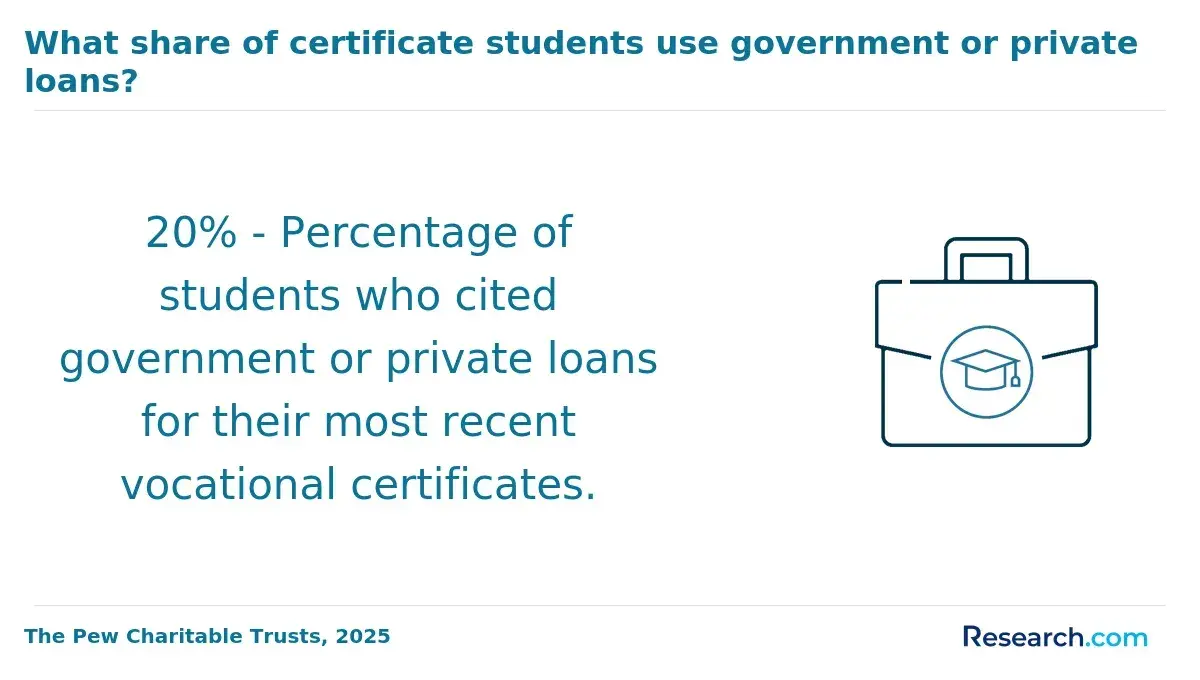
Eligible online students at institutionally accredited nonprofit universities may qualify for federal aid if they meet program and enrollment requirements. Filing the Free Application for Federal Student Aid is generally the starting point for federal grants, Direct Loans, work-study eligibility, and many institutional aid decisions. Eligibility, award size, and loan limits depend on individual circumstances.
Students should build a funding plan that reduces borrowing before relying on private loans. The following sources are worth investigating because technical students may combine several forms of assistance.
- Federal Pell Grants for eligible undergraduate students with financial need
- Federal Direct Subsidized and Unsubsidized Loans for eligible students
- University scholarships for transfer students, adult learners, veterans, or STEM students
- State grants for residents attending eligible institutions
- Employer tuition assistance, particularly for manufacturing, utilities, construction, aerospace, and technology employees
- Professional association and workforce-development scholarships where eligibility applies
Ask the financial aid office whether institutional scholarships apply to online learners and whether enrollment in fewer credits changes eligibility. Also ask whether aid can cover required lab kits, software, certification exams, or travel. These costs may be educationally necessary but are not always covered in the same way as tuition.
Borrow only after comparing the program's total cost, likely completion time, and the roles it can realistically support. Students interested in management after technical experience may eventually consider graduate options such as an MBA no GRE, but a future credential should not be financed before it has a clear career purpose.
How Flexible Are Online Engineering Technology Degree Programs at Nonprofit Universities?
Flexibility is not the same as fully self-paced learning. Most online engineering technology degrees use regular academic terms, assignment deadlines, group projects, and scheduled examination windows. Some programs are primarily asynchronous, meaning students can view lectures and complete work on their own schedule within weekly deadlines. Others require real-time sessions, virtual labs, or occasional campus attendance.
Working students should compare the format at the course level. A program may market itself as online while requiring a few synchronous courses or an in-person capstone. That model can be excellent for hands-on learning, but it must fit the student's work location, travel budget, and availability.
These questions can help determine whether a program's format is genuinely workable:
- Are live sessions required, optional, or recorded for later viewing?
- Are any labs, internships, residencies, or proctored exams completed in person?
- Can students attend part-time, pause enrollment, or take summer terms?
- How often are required courses offered, and what happens if a prerequisite is missed?
- Can students complete projects at an approved employer site or local partner location?
Accelerated programs can suit students with predictable schedules and strong academic preparation. Traditional formats are often better for learners who need time to master technical math, balance variable work hours, or complete an internship. Transfer-friendly bachelor's completion programs may be particularly useful for students who already hold an associate degree in a related technical field.
What Student Support Services Do Nonprofit Universities Provide for Online Engineering Technology Degree Students?
Online students need more than a learning platform. The best support model combines proactive academic advising, responsive technical assistance, library access, tutoring, career guidance, and clear channels for communicating with instructors. Engineering technology students may also need help accessing specialized software, coordinating experiential learning, and planning prerequisite-heavy course sequences.
Evaluate services by asking how they work for distance learners, not simply whether they exist. For example, math tutoring is more useful when evening appointments, online whiteboards, and recorded support are available. Career support is more useful when advisors understand technical resumes, project portfolios, internships, and regional employers.
The services below deserve special attention because they can directly affect persistence and career preparation:
| Service | What strong online support looks like | Why it matters |
| Academic advising | Course plans that account for prerequisites and transfer credits | Helps avoid delayed graduation |
| Technical support | Extended hours and assistance with required platforms or software | Reduces disruption during technical coursework |
| Tutoring | Online help in math, physics, writing, and programming | Supports foundational technical skills |
| Career services | Resume review, interview practice, employer connections, and internship guidance | Helps translate coursework into job-search evidence |
| Accessibility services | Clear process for accommodations in online courses and assessments | Supports equitable participation |
Ask to speak with an online program advisor or current student before enrolling. Their answers can reveal whether support is centralized, easy to reach, and designed for the realities of adult learners rather than primarily for residential students.
Do Online Engineering Technology Degree Programs at Nonprofit Universities Prepare Graduates for In-Demand Careers?
They can, provided the curriculum matches the role and the student develops demonstrable technical skills. Engineering technology graduates may work as engineering technologists, engineering technicians, field service specialists, quality specialists, manufacturing coordinators, construction inspectors, automation technicians, project coordinators, systems support professionals, or technical sales and operations staff. Exact job titles vary by industry and employer.
Automation, advanced manufacturing, infrastructure maintenance, electrification, data-enabled quality control, and cybersecurity-related industrial systems continue to influence technical workforce needs. These trends favor applicants who can work across equipment, software, documentation, safety, quality, and team communication. They do not eliminate the need to match a program's concentration to local and national job requirements.
The U.S. Bureau of Labor Statistics reported a May 2024 median annual wage of $77,180 for electrical and electronic engineering technologists and technicians. This occupation-specific figure should be used as context rather than a promise: wages differ by specialization, experience, region, industry, and whether a position requires a bachelor's degree.
Students can improve career alignment by reviewing job descriptions before selecting a concentration. Look for recurring requirements in your target area, then compare them with the curriculum, laboratory work, certifications, internship options, and capstone expectations.
For a practical career screen, compare these three items before enrollment.
- Target job postings: Identify required degree level, software, certifications, travel expectations, and experience
- Program curriculum: Confirm it teaches the technical systems and tools named by employers
- Career evidence: Ask the school about internships, employer partnerships, portfolio expectations, and career services for online learners
A degree is generally a stronger investment when it builds skills that can be shown through projects, documented lab work, internships, or relevant work experience. Avoid programs that make broad employability claims without explaining the roles, industries, or competencies they support.
Can an Online Engineering Technology Degree From a Nonprofit University Prepare Students for Graduate School?
An online engineering technology bachelor's degree can prepare students for graduate school, but eligibility depends on the receiving program. Graduate admissions offices commonly review institutional accreditation, GPA, prerequisite coursework, quantitative preparation, recommendations, and professional experience. Some engineering master's programs may require calculus, calculus-based physics, or theory-heavy courses that are not included in every engineering technology curriculum.
Students interested in graduate school should plan early. Choose electives that strengthen mathematics, programming, data analysis, research, or discipline-specific theory when available. Keep syllabi and course descriptions because graduate programs may evaluate prerequisites individually, especially when applicants come from applied bachelor's programs.
The right graduate route depends on the long-term objective. A technical master's may fit students who want advanced specialization; an engineering management or MBA program may fit those moving toward supervision; and doctoral study is generally most relevant to research, postsecondary teaching, or high-level organizational leadership.
Students exploring doctoral-level education leadership rather than technical research can compare the cheapest accredited online doctoral programs. That pathway serves different goals from an engineering graduate degree, which is why intended career outcomes should guide the credential choice.
Before assuming a bachelor's degree leads directly to a specific master's, contact the graduate admissions office with your transcript. Ask whether bridge courses are required and whether the program accepts engineering technology graduates for the specialization you want.
How Should Students Compare the Best Online Engineering Technology Degree Programs at Nonprofit Universities?
The best program is the one that meets your target role's education requirements while remaining affordable and realistically completable. A public nonprofit university may offer lower tuition for in-state students, while a private nonprofit may offer more predictable online scheduling, smaller cohorts, or transfer policies that create a better overall value. Neither model is automatically superior.
Build a short list of three to five programs, then compare the factors that affect your actual experience and return on investment. This scorecard identifies the information that should be collected directly from each institution:
| Comparison factor | What to verify | Decision impact |
| Accreditation | Institutional status and, when relevant, ABET programmatic accreditation | Transferability, employer confidence, and potential professional pathways |
| Curriculum | Concentration, labs, software, capstone, and technical electives | Alignment with target jobs |
| Total cost | Tuition, fees, materials, travel, and credits remaining after transfer review | Borrowing and affordability |
| Schedule | Asynchronous work, live requirements, term length, and course availability | Likelihood of timely completion |
| Transfer policy | Credit limits, technical-course acceptance, and articulation agreements | Time to degree |
| Student outcomes | Retention, graduation information, career support, and internship access | Evidence of student progression and preparation |
Use a consistent process after gathering the facts. The goal is to eliminate programs that fail a nonnegotiable requirement before comparing softer preferences.
- Write down your target job title, preferred industry, location, and any licensing or certification requirements.
- Set nonnegotiables for accreditation, maximum total budget, transfer credit, and in-person attendance.
- Request a transfer evaluation and complete-cost estimate from each finalist.
- Compare course sequences, including required labs, capstones, internships, and synchronous sessions.
- Ask admissions and career services for clear answers about online student support and career preparation.
- Select the program with the strongest overall match, not simply the lowest tuition or most recognizable institutional name.
Common mistakes include assuming all nonprofit universities are equivalent, overlooking lab requirements, confusing institutional and programmatic accreditation, and selecting a specialization before reviewing local job postings. Another frequent error is comparing tuition without calculating fees, transferred credits, missed-work travel, and the cost of repeating unavailable courses.
Students who are considering graduate study in entirely different helping professions can also review online SLP master's programs to see how field-specific accreditation and clinical-placement requirements can substantially change an online degree decision.
Other Things You Should Know About Engineering Technology
No. Engineering technology is typically more application-focused and prepares students to implement, test, operate, improve, and troubleshoot technical systems. Engineering programs often emphasize deeper theoretical analysis and may be more directly aligned with certain professional engineer licensure pathways.
Some programs can be completed primarily online, but the answer depends on the specialization. Electronics, manufacturing, construction, and automation programs may require local labs, lab kits, approved workplace projects, internships, proctored exams, or brief campus residencies.
Employers generally focus on whether the degree comes from a recognized institution, whether the curriculum fits the job, and whether applicants can demonstrate relevant skills and experience. Accreditation, projects, internships, certifications, and technical portfolios can strengthen an application.
Requirements vary by degree and specialization. Many programs include algebra, trigonometry, statistics, and applied calculus or calculus. Students interested in graduate engineering programs or licensure-related pathways should verify whether calculus-based mathematics and physics are required.
References
- Online Engineering Degrees https://www.affordablecollegesonline.org/degrees/engineering-programs/
- Paying for a Computer Science Degree | Scholarships, Grants, Loans https://www.computerscience.org/resources/how-to-pay-for-a-degree/
- Best Tuition Free Colleges - OnlineDegree.com https://www.onlinedegree.com/article/best-free-tuition-colleges/
- Online Programs Search https://amspub.abet.org/aps/online-search
- Affordable Accredited Online Colleges https://www.onlineu.com/online-schools/low-tuition
- ABET-Accredited Bachelor's in Electronics Engineering Technology https://www.uagrantham.edu/blog/abet-accredited-electronics-engineering-technology-degree/
- Accredited Online Engineering Technology Degree Programs https://www.onlineengineeringprograms.com/engineering-technology
- College Graduation Statistics [2025]: Total Graduates per Year https://educationdata.org/number-of-college-graduates


